



FDA Warns Public Against Use of Cement in Bean Preservation

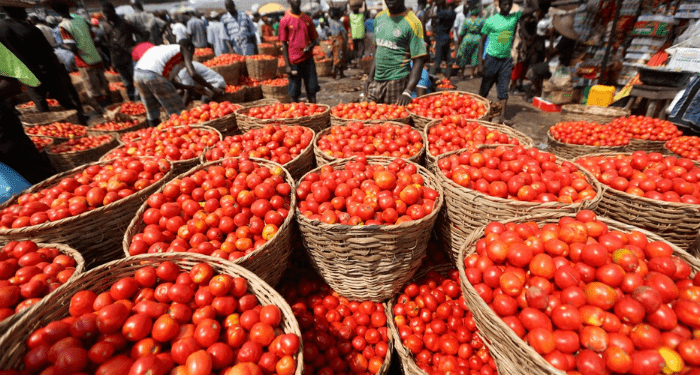
A wave of concern swept across Ghana after a viral video surfaced on social media, allegedly showing the use of a white powdery substance, suspected to be cement, to preserve beans. The footage quickly drew public attention, prompting the Food and Drug Authority (FDA) to issue a firm warning on February 16, 2026. In its press statement, the FDA categorically dismissed the preservation method depicted in the video, stating that it is neither approved nor practiced in Ghana. The authority clarified that the procedure, featuring beans treated with what appeared to be concrete cement, does not align with any food safety or agricultural standards endorsed by Ghana’s Plant Protection and Regulation Services Directorate (PPRSD) of the Ministry of Food and Agriculture. Delving deeper, the FDA revealed that a review of the video suggested the language spoken was not Ghanaian. A translation of the narration exposed a series of unsafe and unhygienic handling practices, including the direct application of chemicals with bare hands and the absence of protective clothing. The video also showed an individual standing directly on a heap of beans without any protective gear, an image that alarmed food safety officials. The FDA stressed that using cement for food preservation is strictly prohibited under Ghana’s regulations. “The FDA, together with its stakeholder institutions, does not approve of food preservation practices that compromise food safety and public health,” the statement emphasized. The authority also condemned poor hygiene and the use of unapproved substances as violations of national food safety standards. Reassuring the public, the FDA made it clear that such hazardous practices are not encouraged or permitted in Ghana. The authority urged farm produce aggregators and retailers to avoid unsafe preservation methods and reminded consumers to remain vigilant. Anyone witnessing suspicious food handling or preservation practices was encouraged to report them to the FDA for swift investigation and possible sanctions. Through this decisive response, the FDA reaffirmed its commitment to protecting public health and maintaining the highest standards of food safety across the country. Source: Apexnewsgh.com
Ghana and Lebanon Forge Stronger Security Ties
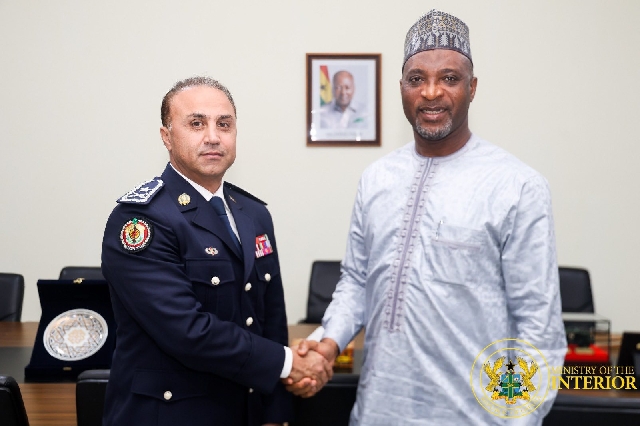
On Monday, the office of Ghana’s Minister for the Interior, Mohammed Mubarak Muntaka, buzzed with diplomatic activity as he welcomed a high-level delegation of Lebanese security officials to Accra. The meeting marked a significant step towards enhanced cooperation between the two countries, focusing on the pressing challenges posed by transnational crime. The Lebanese delegation, led by Ali Samih Jaafar, Consul General of Ghana in Lebanon, included key figures such as Brigadier General Morshed El Hajj Sleiman, Deputy Director of State Security in Lebanon; Colonel Ayman Machmouchi, Head of the Drug Repression Bureau; and Lieutenant Colonel Salah El Hajj, Head of the Office of the Deputy State Security. Their arrival underscored the seriousness with which both nations viewed the growing threat posed by cross-border crime. Discussions during the meeting focused on the major security concerns shared by Ghana and Lebanon. Topics such as cyber fraud, drug trafficking, money laundering, and other emerging threats dominated the agenda. Both sides explored practical ways to foster closer collaboration, with special emphasis on intelligence sharing, capacity building, and joint security operations. Minister Muntaka stressed the importance of global partnerships in the fight against transnational crime, pointing out that sustained international cooperation is crucial for ensuring safety and security. He expressed Ghana’s determination to deepen ties with Lebanon, noting that such engagement is vital for tackling the complex challenges faced by both countries. By the end of the meeting, a renewed commitment was clear: Ghana and Lebanon would work hand-in-hand to address shared security threats and further strengthen diplomatic relations. The day’s engagement set a constructive tone for future collaboration, paving the way for a safer, more secure partnership between the two nations. Source: Apexnewsgh.com
The Minister’s Call: Fugu and Kente as Symbols of Unity
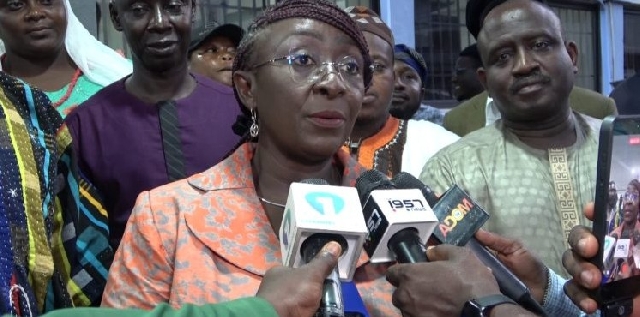
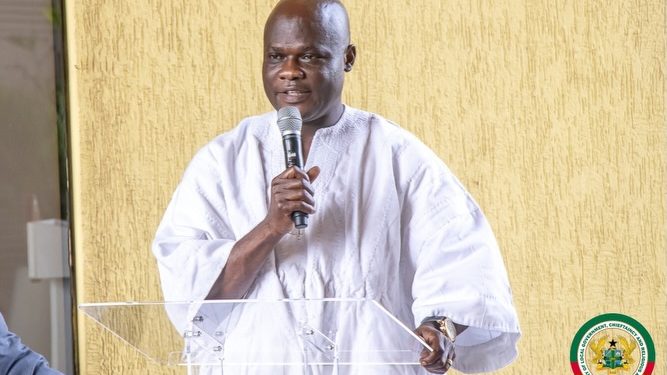
On Wednesday morning, the vibrant energy at the Ministry of Trade, Agribusiness and Industry was unmistakable. Journalists gathered in anticipation as Abla Dzifa Gomashie, the Minister for Tourism, Culture, and Creative Arts, stepped forward with a message that resonated far beyond the walls of the conference room. Her voice carried conviction as she addressed the crowd, urging all Ghanaians to embrace fugu and kente, not as mere ethnic symbols, but as cherished national treasures. Both textiles, she reminded everyone, have been recognised by UNESCO as elements of cultural heritage, a source of pride not just for specific regions, but for the entire nation. The minister’s passionate appeal came at a pivotal moment. The government was ramping up efforts to popularise the wearing of fugu on Wednesdays, a campaign designed to boost local textile patronage and invigorate the domestic industry. The initiative had already begun to capture public imagination, especially after President John Dramani Mahama’s recent appearance in a fugu during his state visit to Zambia. Speaking on the sidelines of a meeting between the Smock Weavers’ Association and ministry officials, Ms. Gomashie explained the significance of “Fugu Wednesday.” She noted with satisfaction how Members of Parliament and other prominent figures had joined the movement, turning the traditional garment into a symbol of national pride. But her message was about more than clothing. “It is not about tribe. It is not about a language. It is about Ghana,” she declared. “For this fugu and kente that have been listed on UNESCO sites as a heritage product that we are offering the world, it should be a rallying round of the red, gold, green, and the black star.” She called on citizens to look beyond regional or ethnic lines and see fugu and kente as enduring expressions of Ghana’s collective identity. “It is not about any particular tribe. It is about what it is that identifies us as Ghanaians. I am using your platform to thank all the people who bought into the idea and wore fugu on Wednesday. Come Wednesday, let’s be even bigger,” she encouraged. With her words, the minister painted a vision of unity, one where every stitch of fugu and kente tells the story of a nation woven together by heritage, pride, and hope for the future. Source: Apexnewsgh.com
Family Demands Answers After Mysterious Killing of Bolgatanga Young Man in Sherigu Forest

The quiet community of Tindonmolgo in Bolgatanga was plunged into mourning after the tragic and brutal killing of 39-year-old Norbert Anamzoya Akupa. Grief and outrage hung heavy in the air as family, friends, and townsfolk gathered for Norbert’s burial, forming a somber procession that wound from the Upper East Regional Hospital morgue to the family home. In a press conference marked by emotion and resolve, family spokesperson Agana Bawa Rashid recounted the chilling events that led to Norbert’s untimely demise. According to the family, Norbert left home on the night of January 30, 2026, after allegedly receiving a call from individuals believed to be police officers. He was never seen alive again. The following morning, early commuters discovered Norbert’s lifeless body on the roadside in the Sherigu forest. The crime scene was both disturbing and perplexing: investigators recovered twenty-four AK-47 bullets, nine shotgun shells, and a police face mask. Norbert’s motorcycle and personal belongings were untouched, suggesting that robbery was not a motive. The sheer number of bullets, the family argued, pointed to a calculated execution. “Why would anyone need 24 bullets to kill one man? This was no random act,” Mr. Agana declared. “If Norbert was suspected of any wrongdoing, due process should have been followed. Ghana is a country of laws, not lawlessness.” The press conference was also a rebuttal to rumors circulating on social media, which sought to tarnish Norbert’s reputation. Mr. Agana dismissed these allegations as baseless and a cruel attempt to justify the killing. “Our brother had no criminal record. He was a peaceful man deserving of protection, not violence.” The family’s pain has been compounded by unanswered questions and a sense of official silence. Despite requests for comment, the Upper East Regional Police Command declined to address the family’s allegations, indicating only that investigations are underway. Still, Norbert’s loved ones are determined to see justice served. They are calling for a transparent, thorough investigation to identify those responsible and to hold them accountable under the law. “We will not rest until the truth is revealed and those behind this heinous act are brought to justice,” vowed Mr. Agana. As the community waits anxiously for answers, Norbert’s legacy lives on in the determination of his family and friends, who have vowed to keep pressing for justice. “You may have taken Norbert from us,” said Mr. Agana, “but his spirit and our fight for justice cannot be silenced.” Source: Apexnewsgh.com/Ngamegbulam Chidozie Stephen
Minority Caucus Demands Urgent Payment to Cocoa Farmers Amid Growing Crisis
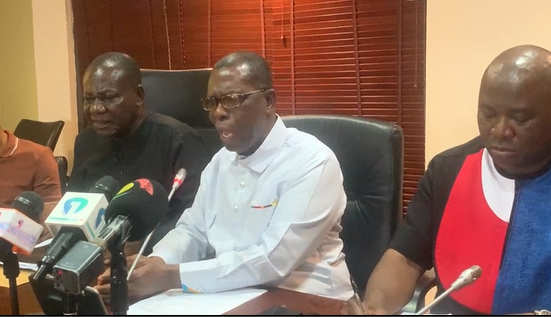
The Ranking Member on Parliament’s Food, Agriculture and Cocoa Affairs Committee, Isaac Yaw Opoku, has sounded the alarm over mounting hardship in Ghana’s cocoa sector, urging the government and the Ghana Cocoa Board (COCOBOD) to immediately pay farmers for beans sold since November 2025. Speaking to journalists in Accra on February 5, Mr. Opoku warned that payment delays are driving both farmers and the industry to the brink of crisis. Mr. Opoku revealed that many cocoa farmers have not received payments for over three months, leaving them unable to afford necessities like medication, school fees, or care for sick relatives. Some, he said, were even forced to forgo Christmas celebrations due to financial strain. The hardship has been compounded by Licensed Buying Companies (LBCs), who, unable to secure reimbursement from COCOBOD for cocoa already delivered, now owe farmers billions of cedis and have had to halt new purchases. “Farmers are being forced to sell on credit, accept heavy discounts, or return home with unsold produce,” Mr. Opoku said, painting a bleak picture of the human and economic toll. He dismissed claims by COCOBOD that sufficient funds had been released as misleading, stating that the reality on the ground was one of financial distress and broken promises. The Ranking Member also criticized the government for failing to deliver on campaign pledges of higher producer prices, noting that the current farmgate price of GH¢3,625 per 64kg bag falls far short of the GH¢6,000–GH¢7,000 per bag promised to farmers before the 2024 elections. He expressed concern over reports that the government might consider reducing the producer price to settle arrears, describing such a move as a betrayal. Beyond the plight of farmers, Mr. Opoku warned that the survival of indigenous cocoa buying companies and transporters is at risk, with capital locked up and operations grinding to a halt. He attributed some of the financial woes to wasteful spending and administrative mismanagement within COCOBOD. The Minority Caucus is demanding immediate payment to cocoa farmers for all outstanding cocoa beans, full reimbursement of LBCs, and prompt settlement of future deliveries. They are also calling for a formal apology from both the government and COCOBOD, insisting that timely payment is not a privilege but a fundamental duty. “Cocoa farmers are not beggars. Paying them on time is an obligation,” Mr. Opoku declared. Source: Apexnewsgh.com
DVLA Reiterates Strict Guidelines for Use of DV Number Plates

The Driver and Vehicle Licensing Authority (DVLA) has issued a firm reminder on the correct use of DV number plates, emphasizing that these plates are strictly reserved for licensed car dealers and vehicle manufacturers and are not intended as a substitute for full vehicle registration. Stephen Attuh, Director of Communication at the DVLA, addressed the issue on the Citi Breakfast Show on Thursday, February 5, in response to increasing public confusion and misuse of DV plates on roads nationwide. He clarified that DV plates are designed for limited, temporary use, such as moving vehicles from a dealer’s lot for repairs, defect fixing, or test drives before final sale. Attuh highlighted a widespread misconception among motorists who believe DV plates can be used indefinitely, even after purchasing a vehicle. He stressed, “You are not required to have a DV plate on your vehicle so long as it is not for purposes of fixing a defect on it or test driving. Once the vehicle is sold to you and you are off the dealer’s facility, you are required by law to register the vehicle to be duly identified before it can be on our roads.” He attributed the growing misuse of DV plates to some car dealers who flout regulations, allowing buyers to use the plates unlawfully. Citing Regulation 23 of Legislative Instrument (LI) 2180, Mr. Attuh underscored that the rules governing trade licences are clear, and any breach is a violation of the law. “The DV plate has many limitations, and its use for ordinary driving is not permitted,” he reiterated. The DVLA’s renewed advisory seeks to curb unlawful practices and ensure that vehicles on Ghana’s roads are properly registered and identifiable, in line with existing legal requirements. Source: Apexnewsgh.com
Ghana and Zambia Sign Landmark Visa Waiver Agreement to Boost Bilateral Ties
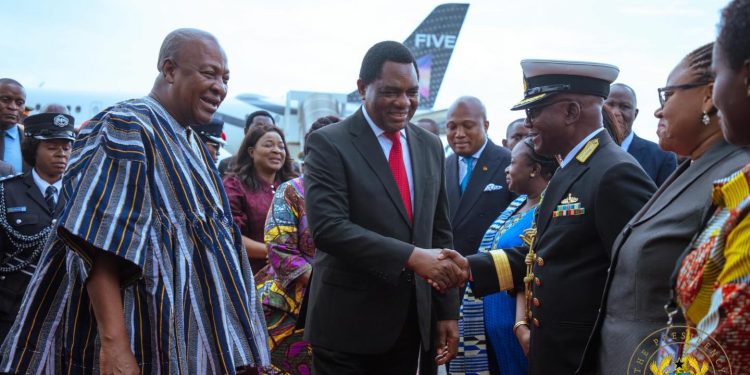
In a historic move to deepen ties and promote seamless mobility, the governments of Ghana and Zambia have signed a landmark visa waiver agreement, allowing citizens of both countries to travel freely without the need for visas. The announcement came during President John Dramani Mahama’s recent three-day state visit to Zambia, where he was welcomed by President Hakainde Hichilema at the Kenneth Kaunda International Airport on February 4. The development was disclosed to the press by Ghana’s Minister for Foreign Affairs, Samuel Okudzeto Ablakwa, who described the visa waiver as one of the most significant outcomes of the high-level visit. Mr. Ablakwa emphasized that the new policy is poised to enhance trade, tourism, investment, and cultural exchange between the two nations, removing long-standing bureaucratic barriers for travelers, including students, businesspeople, professionals, and tourists. According to the Foreign Affairs Minister, the visa-free arrangement was a key directive personally issued by President Mahama as a top priority for the visit. “We are prioritising your smooth mobility, and one of the major outcomes of this state visit is that, for the first time in the history of Ghana-Zambia relations, we are going to have a free visa between our two countries, so you no longer have to stress about visas,” Mr. Ablakwa said. He added that the President had made it clear that the agreement was a non-negotiable condition for the diplomatic trip. The visa waiver agreement signals a new era of cooperation, expected to foster closer diplomatic, economic, and people-to-people relations between Ghana and Zambia. As both countries look to the future, the removal of travel restrictions is set to unlock new opportunities and strengthen the bonds between their citizens. Source: Apexnewsgh.com
Amasaman High Court Reduces Nana Agradaa’s Prison Sentence to 12 Months

The Amasaman High Court has reduced the controversial 15-year prison sentence handed to evangelist Nana Agradaa, citing the original punishment as harsh and excessive. The ruling, delivered this week, affirmed her conviction but lowered her sentence to 12 calendar months, effective from July 3, 2025, the date on which she was initially convicted. Nana Agradaa, a former fetish priestess turned evangelist, was found guilty of charlatanic advertisement and defrauding by false pretence. Her conviction stemmed from a widely broadcast 2022 television appearance in which she claimed to possess spiritual powers that could miraculously double people’s money. Enticed by her promises, several victims handed over large sums of money, only to be disappointed when the promised returns never materialized. While the court acknowledged the seriousness of the offences, it concluded that the original 15-year sentence was disproportionate to the circumstances. Exercising its discretion, the court opted for a downward adjustment, emphasizing the importance of fair and just punishment under the law. With the revised sentence, Nana Agradaa will serve a total of 12 months in prison, marking a significant reduction from her initial punishment while maintaining the court’s stance on accountability for her actions. Source: Apexnewsgh.com
Government Unveils Post-Harvest Initiative to Boost Efficiency and Cut Losses in Agriculture
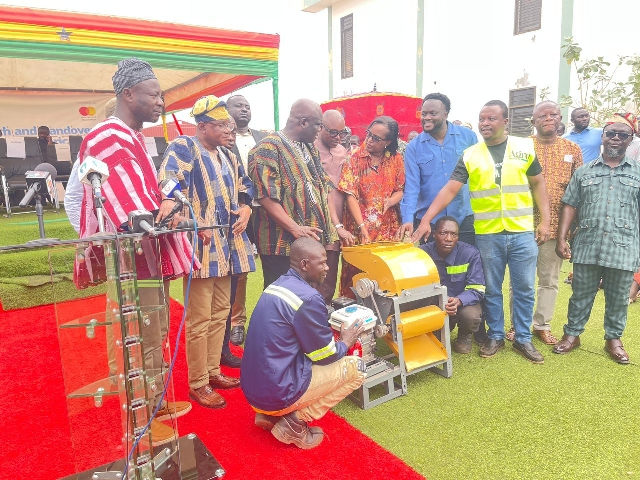
Ghana’s agricultural sector marked a pivotal moment as the Minister for Food and Agriculture, Eric Opoku, reiterated the government’s commitment to building a resilient and efficient food system, one that goes beyond increased production to protecting the hard-earned harvests of farmers. Speaking at the official launch and handover of locally fabricated post-harvest equipment, Minister Opoku described the event as a symbol of Ghana’s deliberate shift towards local innovation, value addition, and sustainability in agriculture. He acknowledged a long-standing challenge: despite investments in boosting output, the country has continued to lose a significant portion of its harvests due to poor post-harvest handling. “Inadequate storage and processing have not only wasted farmers’ effort and income, but have also weakened our national food systems,” the Minister noted. The new initiative seeks to change that narrative by engaging 2,231 youth artisans to fabricate around 300 threshers, 200 for maize and 100 for soybeans, across seven technology solution centres. More than 3,000 farming families nationwide are expected to benefit. Minister Opoku emphasized that the programme is about more than just numbers; it’s about building a skilled workforce to serve Ghana’s agriculture for years to come. The impact will be seen in reduced post-harvest losses, higher farmer incomes, improved produce quality, and stronger rural economies. Sustainability, the Minister stressed, is at the core of the initiative. “Equipment alone is not enough; skills and ongoing technical support are essential,” he said. The programme, therefore, includes comprehensive user training, a technical support system, and the involvement of trained agricultural and engineering graduates to guarantee safety, reliability, and continuity. He underscored that the future of Ghana’s agriculture lies in efficiency, value addition, and the dignity of labour. It also depends on empowering women farmers, equipping young people with relevant skills, and ensuring that every harvest contributes to national development. World Food Programme Country Director praised the initiative as a practical, homegrown solution to Ghana’s persistent post-harvest losses. She noted that significant quantities of maize and soybeans are lost after harvest, undermining incomes, nutrition, and national food security while driving up prices. The WFP supports the holistic approach, which addresses everything from production to processing, storage, and market access. By aligning with Ghana’s Feed Ghana programme and its broader mechanisation agenda, the new initiative promises to enhance food security and transform rural livelihoods for the better. Source: Apexnewsgh.com
Vice President Calls for Empowerment of SMEs, Women, and Youth to Unlock Africa’s Single Market
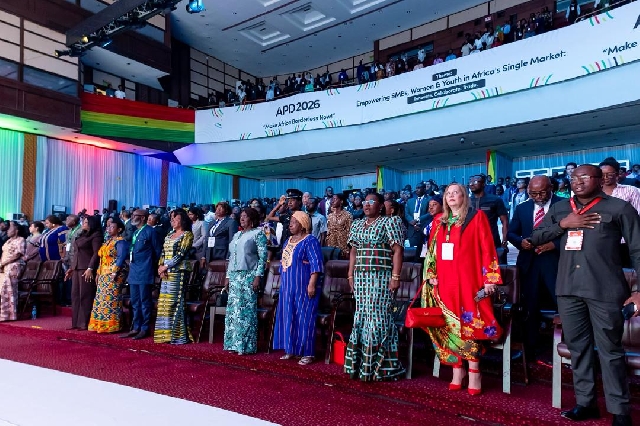
At the Africa Prosperity Dialogues (APD) in Accra on February 4, 2026, Vice President H.E. Prof. Naana Opoku-Agyemang delivered a clarion call for the empowerment of small and medium-sized enterprises (SMEs), women, and young people, positioning them as the driving force behind Africa’s economic transformation. Speaking on behalf of President John Dramani Mahama, Prof. Opoku-Agyemang emphasized that the continent’s future prosperity hinges on shifting away from dependency and fragmented economies toward self-reliance and a unified market. Addressing delegates, she highlighted the critical role of advocacy platforms like the APD in complementing the African Continental Free Trade Area (AfCFTA), headquartered in Accra. These platforms, she noted, foster intra-African trade, investment, and mobility, and are essential for promoting integration and shared growth. Prof. Opoku-Agyemang referenced President Mahama’s recent United Nations address, reiterating that Africa must take charge of its destiny. She stressed that any development excluding youth, women, or small businesses is fundamentally unsustainable, a conviction at the heart of the government’s ‘Reset Agenda.’ Drawing on Ghana’s rich history of Pan-African engagement, she cited initiatives like the Pan-African Festival of Arts and Culture, the Year of Return, and the Diaspora Summit, as well as renewed commitments at the Second AU–CARICOM Summit. These, she said, reflect Ghana’s dedication to bridging both historical and economic divides. Describing the AfCFTA as a historic opportunity, Prof. Opoku-Agyemang pointed to its status as the world’s largest free trade area by number of countries, encompassing a combined market of 1.3 billion people. She underscored the pivotal role of SMEs, which account for roughly 80 percent of employment across Africa, and highlighted the significant contributions of women and youth, women comprising nearly half the workforce and young people over 60 percent of the population, fueling innovation in technology and creative industries. However, she cautioned that fewer than 20 percent of African SMEs currently engage in export trade, and that women and young entrepreneurs face persistent barriers such as limited access to finance, skills, and markets. Without bold action, she warned, African economies risk remaining stuck in low-productivity cycles centered on raw material exports. The Vice President noted that this year’s APD theme, “Empowering SMEs, Women, and Youth in Africa’s Single Market,” highlights the pressing need to address these challenges. She called for sustained investment in infrastructure, innovation, and strong institutions, alongside coordinated industrial strategies, to unlock Africa’s economic potential. Prof. Opoku-Agyemang spotlighted Ghana’s ongoing initiatives, including the 24-Hour Economy and the Big Push infrastructure programme, designed to boost productivity, support trade, and foster regional integration within ECOWAS and the African Union. Concluding her address, she urged African leaders to view borders as instruments for organizing sovereignty in support of shared prosperity, and challenged all participants to ensure that the commitments forged at the dialogue translate into real, concrete outcomes for the continent. Source: Apexnewsgh.com