
UHAS Vice Chancellor Hails Ghana Medical Trust Fund as Lifeline for Cancer Patients
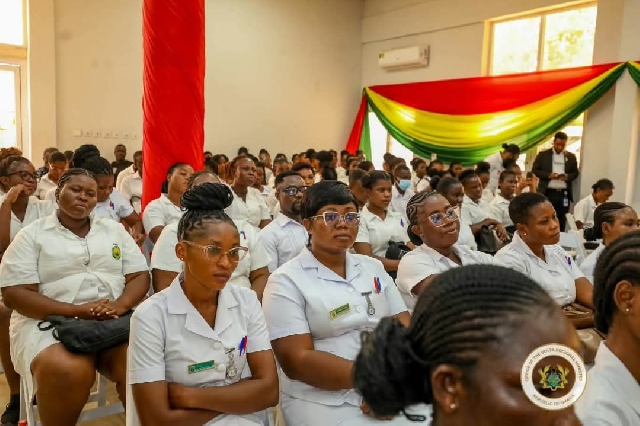
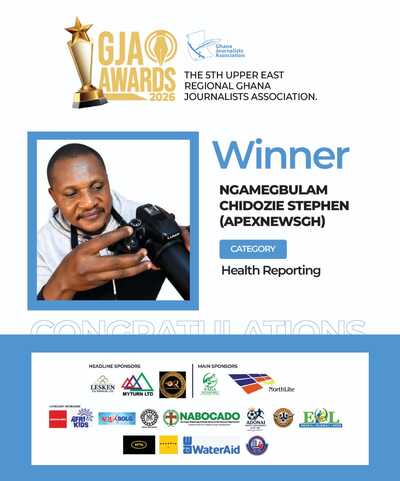
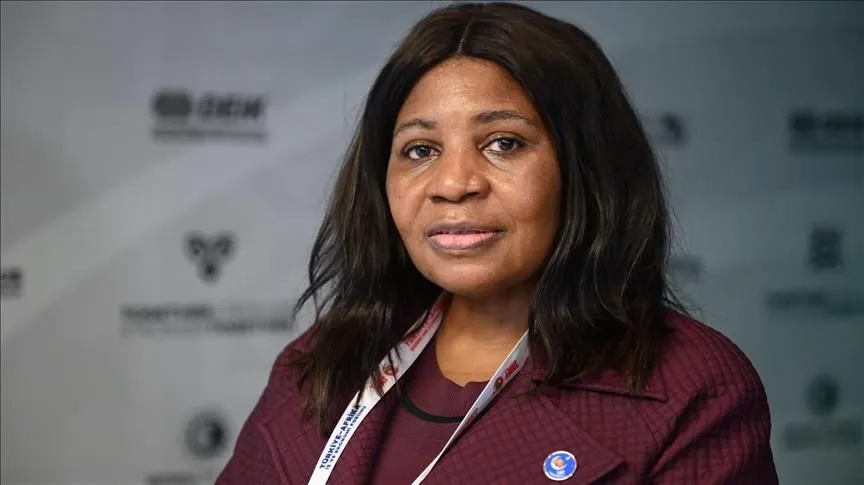
The Vice Chancellor of the University of Health and Allied Sciences (UHAS), Professor Lydia Aziato, has praised the creation of the Ghana Medical Trust Fund, describing it as a crucial step in relieving the heavy financial burdens faced by cancer and chronic disease patients in Ghana. Speaking at a stakeholders’ engagement in Ho, Professor Aziato, herself an experienced oncology and chronic-care nurse, drew from her professional background and research to highlight the dire challenges patients endure. “The cost of cancer treatment remains a major challenge for many patients,” she noted, adding that these difficulties often lead individuals to delay medical care or seek spiritual interventions before turning to professional treatment. Recounting stories from her research, Prof. Aziato shared the harrowing experiences of cancer patients. She recalled one breast cancer patient who was left traumatized after a blunt diagnosis and the prospect of immediate surgery, a scenario she said is all too common. “Some of our women, when they realise they have an anomaly, first go to the church to pray for a miracle,” Prof. Aziato explained, emphasizing that while prayer has its place, it should not replace medical intervention. She stressed that the high costs of chemotherapy, radiotherapy, surgery, and related treatments put lifesaving care out of reach for many. Prof. Aziato expressed hope that the Ghana Medical Trust Fund would support patients unable to afford essential treatments, making a tangible difference in their lives. Welcoming the government’s free primary healthcare initiative as well, she underscored its potential to drive early detection and treatment. “Early detection of cancer significantly improves patients’ chances of survival,” she said, citing her research in which some women diagnosed early survived more than twenty years after their diagnosis. Prof. Aziato urged Ghanaians not to ignore warning signs or assume immunity to cancer, encouraging prompt medical attention for unusual bodily changes. “I want us to detect early because we cannot say we will not get it,” she cautioned. Drawing on her years of research and firsthand encounters with patients, Prof. Aziato reiterated the urgent need for stronger support systems: “Some of the women suffer greatly. You see their breasts like cauliflower, with wounds that bleed.” She expressed deep appreciation to the government for establishing the Ghana Medical Trust Fund, believing it could provide critical support to ordinary Ghanaians struggling with the costs of specialised care. Source: Apexnewsgh.com
Federation of Ghana Traders Calls for Dialogue on Traffitech Rollout and Bus Stop Removals
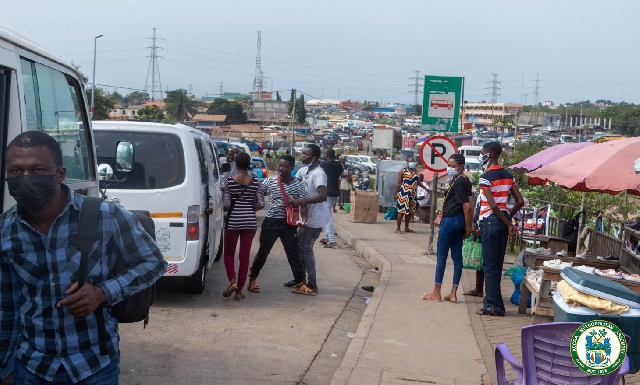
The Federation of Ghana Traders has called on the government to open dialogue with commercial drivers and transport stakeholders amid rising concerns over the implementation of the Traffitech system and the removal of traders and hawkers from bus stops nationwide. In a statement signed by its founder, Takyi Addo, the federation urged authorities to ensure that any enforcement actions at bus stops remain the responsibility of local government officials. “It will be unlawful for commercial drivers to embark on vigilante acts of removing traders from the bus stops. This is the work of the local government authorities,” the federation warned, emphasizing that such enforcement should not fall to private operators. The statement further encouraged the government to engage with commercial drivers and their leadership to address their concerns, foster compliance, and ensure that the rollout of new policies proceeds in an orderly and inclusive manner. Acknowledging that traders and hawkers do not have the legal right to operate at bus stops, the federation nonetheless insisted that, “it’s equally not right for commercial drivers to remove them.” The group called for effective communication and coordination among all relevant authorities, transport operators, and the trading community to prevent disruptions that could impact businesses and consumers alike. On the subject of Traffitech, a technological intervention aimed at improving transport management and enforcement, the federation recognized its potential benefits but stressed that any such system must be introduced alongside broad stakeholder engagement, public education, and clear operational guidelines. The Federation of Ghana Traders closed its statement by appealing for a resolution of traders’ concerns and urging all parties to act responsibly in the national interest. “We remain committed to constructive engagement with the government and all relevant stakeholders to protect the interests of traders and promote a stable business environment,” the statement concluded. Source: Apexnewsgh.com
MITDS: Seven PhD and Two MPhil Students Successfully Complete Viva Process

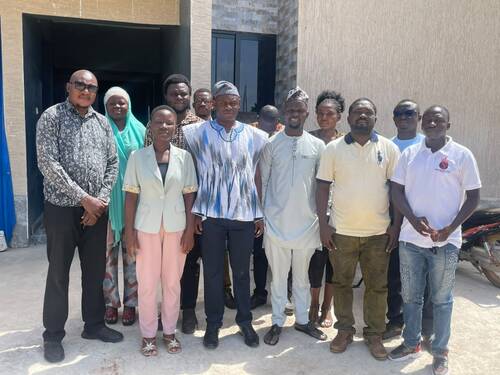
A journey that began nearly four years ago is gradually reaching a significant milestone for nine students of the Millar Institute for Transdisciplinary and Development Studies (MITDS), following the successful completion of their viva examinations. The nine students, comprising seven PhD candidates and two Master of Philosophy (MPhil) candidates, successfully completed their viva process, which commenced on Monday, October 12, 2026, and concluded on Wednesday, October 14, 2026. The exercise marked an important stage in the students’ academic journeys, bringing them closer to the completion of their respective postgraduate programmes after years of dedication, research, and academic commitment. The viva examinations were conducted professionally by the institution, with the participation of both internal and external examiners. Students of the institute and other observers were also present online and some physically present to witness the academic exercise. The process provided an opportunity for the candidates to present and defend their research work before the examining panels, demonstrating their knowledge, research findings, and understanding of their respective areas of study. List of Successful Candidates The seven PhD candidates who completed their viva examinations are: 1. Duut Daniel Janamah 2. Gariba Sato 3. Cletus Chevure 4. Gloria Pamela Adablah 5. Alberta Nana Adjoa Rockson 6. Zume Cletus Puordem 7. Samuel Sekyere The two MPhil candidates are: 1. Abdallah Abdul-Rahaman 2. Joel Daniel Atompoya The successful completion of the viva examinations represents a major academic milestone for the nine candidates, whose efforts over the years have culminated in this important stage of their postgraduate studies. Their achievement is also a moment of pride for the Millar Institute for Transdisciplinary and Development Studies as it continues to provide an environment for advanced learning, research, and intellectual development. The candidates’ successful completion of the viva process marks a significant step forward in their academic pursuits and professional development. Source: Apexnewsgh.com
Vice President Advocates Practical Support for Teachers at 2026 Ghana Teacher Prize
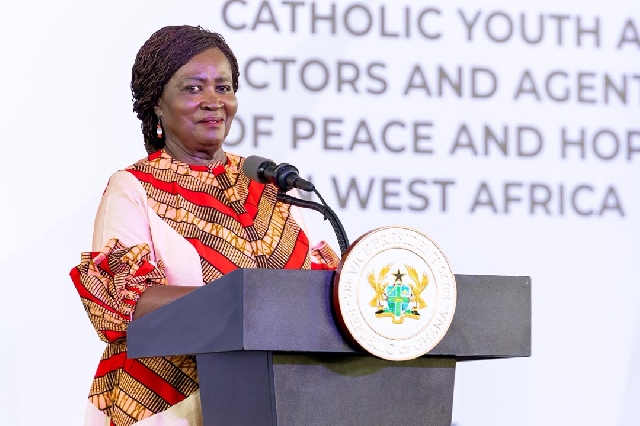
At the 2026 Ghana Teacher Prize ceremony held on Monday, October 5, Vice President Prof. Naana Jane Opoku-Agyemang delivered a heartfelt message on the enduring impact teachers have on their students’ lives. Addressing an audience gathered to honour exceptional educators, she emphasized that the profound responsibility entrusted to teachers must be matched by real, tangible support from the state. “A teacher’s influence on a child can last a lifetime. The responsibility we place on teachers must be matched by practical support,” Prof. Opoku-Agyemang stated, highlighting the crucial role teachers play in nurturing integrity, care, and professionalism in the next generation. She outlined the government’s ongoing investments in education, noting improvements in school infrastructure, the provision of educational resources, and initiatives aimed at enhancing teachers’ welfare. “The Teacher Dabrɛ Initiative seeks to improve accommodation, particularly for teachers serving in underserved communities. We are also working to ease the pressures of double-track schooling and resolve administrative challenges affecting teacher placement, promotions, and remuneration,” she revealed. Acknowledging the rapidly changing world facing today’s children, the Vice President called for classrooms to evolve accordingly. “Teachers must therefore have access to continuous professional development, appropriate technology and the tools required to prepare learners for the realities of the future,” she said. Prof. Opoku-Agyemang also addressed concerns raised by teacher unions, assuring the teaching community that the government is engaging stakeholders to work through their issues collaboratively. “Building the education system we want requires us all to continue working together in the interest of our children,” she said. To conclude the ceremony, the Vice President extended her warmest congratulations to all award recipients and expressed deep appreciation for teachers across Ghana who continue to serve with dedication, often in demanding circumstances. Source: Apexnewsgh.com
Deputy Education Minister Appeals to Striking Teachers to Return as Government Addresses Outstanding Issues
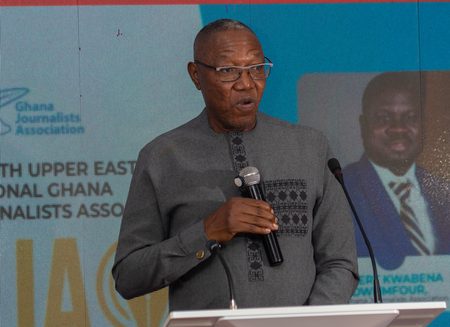
Just at the recent 5th Upper East Regional GJA Awards in Bolgatanga, Deputy Minister for Education, Dr. Clement Apaak, made a heartfelt appeal to pre-tertiary teachers across the country: return to the classroom as government works to resolve the longstanding issues surrounding their promotions, salaries, allowances, and conditions of service. Dr. Apaak acknowledged the legitimacy of the teachers’ concerns, assuring them that government was actively engaging with the teacher unions and relevant state institutions to find lasting solutions. He praised journalists for their vital role in ensuring public accountability and supporting the development of the education sector. Addressing the current impasse, Dr. Apaak explained that the challenges facing teachers—including delays in implementing promotions for those who had passed their exams—were genuine and had not been dismissed by government. He revealed that nearly 80,000 teachers were affected by a data-transmission problem between the Ghana Education Service (GES) and the Controller and Accountant-General’s Department, a glitch that had prevented the timely adjustment of salaries and allowances. Government, he said, had reached an understanding with teacher unions that promotions should be processed automatically, without teachers needing to resubmit documents. He assured teachers that there would be no financial disadvantage, with all payments to be backdated to January 2026. Dr. Apaak also addressed the government’s proposed 20 percent-plus salary incentive for teachers posted to rural and underserved communities—a policy aimed at attracting educators to areas in need. However, he noted that implementation had stalled due to difficulties in defining which communities qualified. To address this, a committee involving the Ministries of Education, Labour Relations and Employment, and the Ghana Statistical Service was being formed to provide the necessary data and criteria. The Deputy Minister further identified the expiration of the collective agreement between teachers and their employer as a source of tension. Negotiations for a new agreement had been delayed, but government had since tasked the Fair Wages and Salaries Commission to engage with teacher union leaders. A high-level meeting involving several ministries and union representatives had also been convened to continue dialogue and seek solutions. Throughout his speech, Dr. Apaak’s message was clear: government remained committed to honouring all legitimate entitlements owed to teachers. “We continue to appeal to the teachers to go back while we work out the modalities,” he said. “We can be assured that what is due them, no matter how long it takes, will become all their arrears.” As negotiations continue, teachers are being urged to return to their classrooms, with assurances that the issues at the heart of the strike are being addressed at the highest levels. Source: Apexnewsgh.com
Upper East Teacher Unions Vow to Sustain Strike Until Demands Are Met
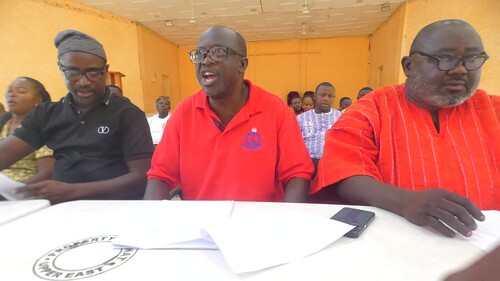
The Upper East Regional leadership of three teacher unions has reaffirmed its support for the ongoing nationwide strike, insisting that teachers will not return to the classroom until outstanding concerns affecting their welfare are addressed. The position was made known at a joint press conference in Bolgatanga addressed by the Upper East Regional Secretary of the Ghana National Association of Teachers (GNAT), Lare Kitonname; the Regional Chairman of the Pre-Tertiary Teachers Union of Ghana (PRETAG), Richard Sunday Yinbil; and the Regional Chairman of the National Association of Graduate Teachers (NAGRAT), John Akunzebe. The union leaders said the industrial action was triggered by several unresolved issues that have created frustration and growing anger among teachers across the country. According to the unions, one of the major concerns is the failure of the authorities to automatically place newly promoted teachers on their appropriate salary scales.They said an agreement reached between the Ministry of Education, the Ghana Education Service (GES), the Controller and Accountant-General’s Department, and the leadership of the teacher unions has not been fully implemented. The unions further complained about the failure to automatically place two cohorts of teachers who successfully passed the aptitude tests conducted in December 2025 and February 2026 on their respective salary scales, with Responsibility, Experience and Service (RES) effective from January 2026. They said the situation had heightened tension among their members. The teacher unions also raised concerns over the failure to implement the deprived area allowance for teachers working in underserved and hard-to-reach communities. They referenced Section 17.2 of the 2024 Collective Agreement, which provides for a review of the deprived area report by the Ministry of Education and the Ghana Education Service, followed by negotiations between the unions and the Fair Wages and Salaries Commission on the applicable allowance. The unions said the required process had not been completed. They described the situation as a disregard for a 2024 ruling by the National Labour Commission and said it also conflicted with a directive attributed to President John Dramani Mahama for teachers working in deprived and hard-to-reach communities to receive a 20 percent allowance on their basic salaries as an incentive to remain in such areas. Another major concern, the unions said, is the delay in negotiating a new collective agreement for teachers. They explained that the existing collective agreement has expired, while negotiations for a new agreement, which they expected to have been concluded by June 2026, remain outstanding. According to them, several engagements with the Fair Wages and Salaries Commission have failed to resolve the matter. The union leaders said the continued delay had become a major source of concern for teachers. The Upper East regional branches of GNAT, PRETAG and NAGRAT therefore declared their full support for the continuation of the industrial action. They maintained that teachers in the region would continue to stand with the national leadership of the unions until their concerns were addressed. The regional leadership stressed that the strike would only be called off when the outstanding demands of teachers were satisfactorily resolved, paving the way for members to return to the classroom. Source: Apexnewsgh.com
GES Appeals to Striking Teachers to End Industrial Action and Safeguard Academic Stability
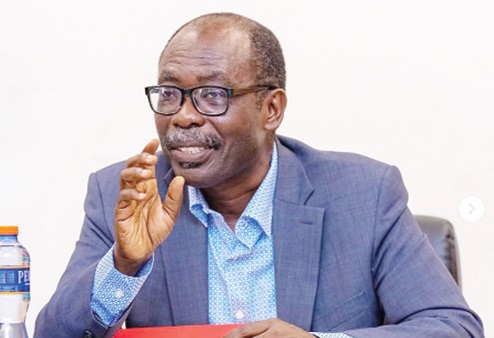
The Ghana Education Service (GES) has issued a heartfelt appeal to pre-tertiary teacher unions, urging them to call off their ongoing strike as government agencies work to resolve their concerns. Director-General Professor Ernest Kofi Davis, addressing the press on Tuesday, September 29, warned that the strike could jeopardize the hard-won stability of the academic calendar. He emphasized that, for the first time in six years, students at all levels had resumed classes within September, marking the return to a predictable and synchronized school year. “This did not happen by accident. It was achieved through hard work,” Professor Davis remarked, highlighting the progress made in restoring stability to Ghana’s education system after years of disruptions. The ongoing strike, declared by GNAT, NAGRAT, and PRETAG, centers on unresolved issues such as unpaid promotion arrears, delays in negotiating a new Collective Agreement, and the non-implementation of the Deprived Area Allowance. The unions launched the industrial action on September 25 after repeated appeals for their demands went unmet. Professor Davis assured teachers that the government, in collaboration with the Ministry of Education, Ministry of Labour, Controller and Accountant-General’s Department, and other stakeholders, is actively working to address their grievances. He cited recent efforts to mechanize teacher promotions as evidence of GES’s commitment to improving conditions for educators. Urging the unions to reconsider their stance, Professor Davis stressed the importance of protecting the academic calendar and called on all stakeholders to support efforts to keep the school year on track. “We wish to associate ourselves with the Ministry of Education’s appeal to teachers to rescind their decision as we work hard to address their issues,” he said. Source: Apexnewsgh.com
Striking Teachers Hold Firm After Talks with Education Minister, Demand Concrete Action

Teachers across Ghana have refused to end their nationwide strike following a meeting with Education Minister Haruna Iddrisu in Accra, insisting that verbal assurances are not enough to address their grievances. The striking teachers, represented by the National Association of Graduate Teachers (NAGRAT) and the Ghana National Association of Teachers (GNAT), have been demanding payment of promotion arrears and progress in stalled negotiations over their conditions of service. Despite the government’s call for patience, union leaders remain unconvinced. During the meeting, Minister Iddrisu and his deputy, Clement Apaak, assured the unions of President John Mahama’s commitment to improving teachers’ welfare. They announced that the Fair Wages and Salaries Commission would meet with the unions the following Tuesday to continue talks on their collective agreement and conditions of service. A validation committee, chaired by the Minister of Employment and Labour, has also been established to verify data on the promised 20 percent rural deprived allowance, scheduled for rollout in January 2027. “We have relayed to them to call off the strike while negotiations continue,” Minister Iddrisu said, emphasizing the government’s intent to implement the rural allowance pending validation and a clear roadmap. However, GNAT President Prosper Tachie, Esq. expressed skepticism after the talks. “What is on paper to show that they will start paying the deprived area allowance by 2027?” he questioned, highlighting the absence of documented commitments. He also lamented the lack of progress in negotiations, noting that expired collective agreements and unpaid allowances remained unresolved, with no clear timeline for settlement. Tachie stated that the unions would only consider ending the strike once a concrete, documented agreement is reached. “If we accept [the timeline], so be it… but it is not just by word of mouth. It is something that we have to see, something concrete.” As negotiations are set to continue next week, the teachers’ unions stand firm in their demand for tangible action before they return to the classroom. Source: Apexnewsgh.com
Teachers’ Unions Poised for Crucial Talks with Government Amid Nationwide Strike
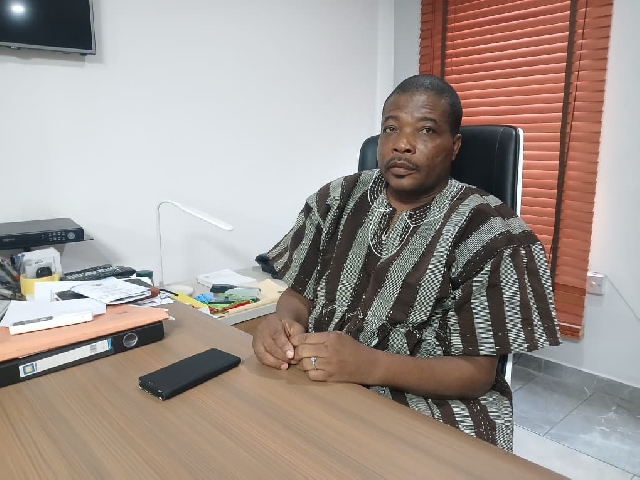
Leaders of Ghana’s pre-tertiary teacher unions are preparing for a pivotal meeting with government officials, hoping to resolve the issues that sparked their nationwide strike. Jacob Anaba, President of the National Association of Graduate Teachers (NAGRAT), assured that the unions are ready to engage in good faith. “Our reason for raising the issues is to resolve them, so if there is an avenue for us to resolve them, we will avail ourselves and make sure that we resolve the issues,” Anaba emphasized in an interview with Citi News. Anaba recounted receiving calls from both the Ministry of Education and the Ministry of Employment, Jobs and Labour Relations, inviting the unions to Monday’s meeting. “We will definitely be at the meeting to try and resolve our issues,” he stated, underscoring the unions’ commitment to dialogue. The talks come on the heels of a major strike declared by NAGRAT, the Ghana National Association of Teachers (GNAT), and the Pre-Tertiary Teachers Association of Ghana (PRETAG). The unions are pressing for payment of promotion arrears and a swift conclusion to protracted negotiations over their conditions of service. Monday’s meeting is expected to center on these core demands and explore possible solutions. The outcome could determine whether teachers continue their industrial action or consider suspending the strike should meaningful progress be achieved at the negotiation table. Source: Apexnewsgh.com
Talensi DCE Assures Schools of Furniture Support, Says Distribution Will Be Driven by Need
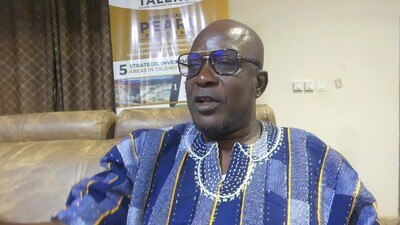
The Talensi District Chief Executive, Hon. John Millim, has assured residents that schools struggling with inadequate furniture will receive support, but stressed that the distribution will be based on verified data rather than political considerations. Responding to concerns over schools such as the primary school at Sawalega, where a citizen reportedly highlighted a severe shortage of furniture, Hon. Millim said the Assembly was already taking steps to address the problem. He disclosed that newly procured dual desks were being assembled and would soon be distributed to schools identified by the District Education Directorate as having the most critical shortages. “We will not just get up, pick chairs and tables and go and distribute them to some community when we don’t have the data from the District Education Directorate.” The DCE said development planning must be evidence-based, explaining that the Assembly relies on the Education Directorate’s data to determine where educational infrastructure and furniture are most urgently required. “Development is a shared responsibility, and wherever we are building a school, we do not just decide to go and build a school for people because they are good to us. We do that in consultation with the Education Directorate.” He further revealed that the Assembly had already procured dual desks, with some undergoing assembly, and promised that distribution would commence shortly. “These dual desks that I have procured… in the next week, by God, we are going to distribute them.” Beyond the immediate furniture challenge, Hon. Millim called for stronger community ownership of public facilities, arguing that providing infrastructure without protecting it undermines development. “Whatever we get today, let’s try to protect it so we can ask for more new things.” He therefore urged teachers, parents and community members to help maintain school facilities, warning that authorities would struggle to justify further investment when existing infrastructure and equipment were allowed to deteriorate. “If we get something today and then we don’t take care of it, we cannot develop a community like that.” The DCE also appealed to stakeholders to present development concerns through constructive engagement rather than partisan confrontation. “Let’s share ideas. You can come to my office and say, ‘This is what I’ve observed at this corner.’ Development is not cut out that way.” He maintained that government alone could not meet every development need and called for collective responsibility among public institutions and communities. “Government cannot do everything. Communities must also play their part by protecting what they receive,” he said. Source: Apexnewsgh.com