


President Mahama Urges Africa to Harness Critical Minerals Boom for Industrial Transformation
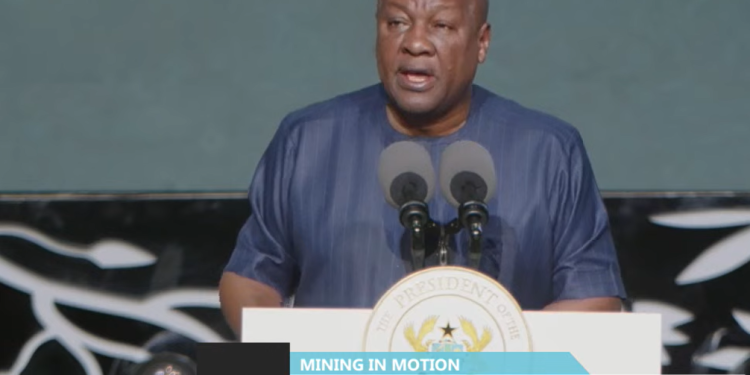
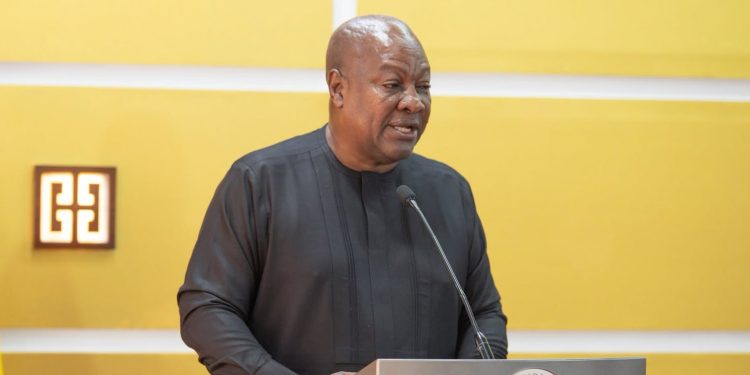
At the opening of the 2026 Mining in Motion Conference at Destiny Arena, President John Dramani Mahama delivered a rallying call to African nations: seize the global surge in demand for critical minerals and use it as a springboard for industrial development. Addressing an audience of industry leaders, policymakers, and investors, President Mahama underscored the need for Africa to move beyond the traditional model of extracting and exporting raw materials. Instead, he advocated for local processing, the development of manufacturing capacity, and the creation of stronger links between the continent’s mineral resources and its domestic industries. “For minerals, this means owning our own resources, extracting them responsibly, and processing them domestically and competitively. It also means linking our mineral value chains to industries that our economies need,” President Mahama stated. He pointed out that the global shift toward cleaner energy is driving up demand for critical minerals—a trend that presents Africa with a unique opportunity to secure a stronger position in manufacturing, supported by investment in skills, technology, and robust supply networks. President Mahama highlighted Ghana’s proactive steps in this direction, referencing the Ghana Integrated Aluminium Development Corporation (GIADEC) and the Ghana Integrated Iron and Steel Development Corporation (GIISDEC). These initiatives aim to create integrated value chains that link mineral extraction to local processing and production, setting a blueprint for other African countries. “As global demand for critical minerals continues to grow, capturing more value at home will be vital,” President Mahama concluded. “Africa must take greater ownership of its resources and ensure that they contribute meaningfully to our industrial future.” Source: Apexnewsgh.com
Asantehene Endorses President Mahama’s Reset Agenda, Hails Push for Local Mineral Value Addition
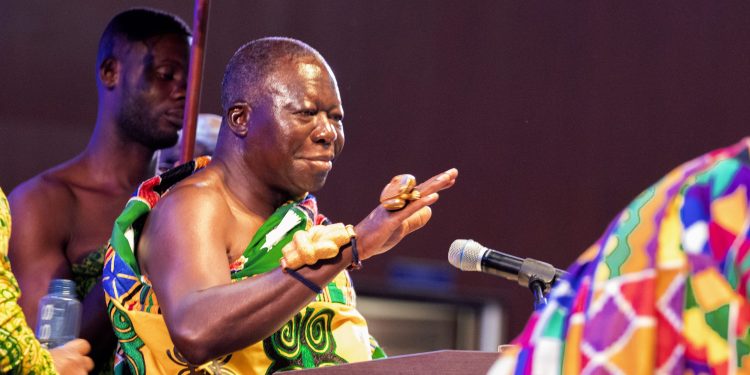
The Asantehene, Otumfuo Osei Tutu II, has thrown his weight behind President John Dramani Mahama’s reset agenda, describing the government’s emphasis on local value addition to Ghana’s mineral resources as a vital step toward true economic transformation. Delivering the endorsement on behalf of the Asantehene at the Mining in Motion conference on Monday, October 19, Nana Okyere Kusi Ntrama, Essumejahene, commended the administration’s determination to shift Ghana away from the export of raw minerals toward domestic processing and industrialisation. He argued that the approach to mineral governance championed by the reset agenda could help the country break free from the cycle of poverty by retaining more value from its natural resources. Nana Okyere Kusi Ntrama highlighted that, since assuming office, President Mahama’s reset agenda has prioritised greater national control over mineral wealth and the development of local processing capacity. “The focus on what Ghana produces from its mineral resources, rather than merely exporting them in their raw state, reflects a long-standing national aspiration to use our natural wealth to drive industrial development,” he stressed. Referencing the ongoing debates surrounding the Ghana Gold Board (GoldBod), he urged that such controversies should not distract from the core objectives of the agenda. “Regardless of the controversies surrounding the Gold Board, there should be no doubt that the nature of the President’s reset agenda takes us right back to the very foundation of our republic, when Dr. Kwame Nkrumah sought to harness our minerals and move to establish a gold refinery in Tarkwa,” he said. Nana Okyere Kusi Ntrama concluded that the current mineral policy direction presents Ghana with a renewed opportunity to build on its legacy by strengthening domestic value addition and ensuring the country secures greater economic benefits from its resources. Source: Apexnewsgh.com
Tensions Rise After Youth Clash at Gbani Gold Mining Site in Upper East Region

Tensions have surged in the Talensi District of the Upper East Region following a violent clash between youth groups from Gban and Namoulog at the Gbani gold mining site. The confrontation has sparked fears of further violence and heightened concerns about security in the area. The incident, which unfolded at the busy mining site, saw groups of young men from the two communities hurling stones at each other. A video shared on Facebook by Ngamegbulam Chidozie Stephen on Saturday, October 10, captured the chaotic scene, with several individuals calling for urgent police intervention to restore order. Community members and local leaders are now calling on security agencies to intervene swiftly to de-escalate tensions and prevent the situation from spiraling out of control. Many fear that without immediate action, the confrontation could lead to more serious unrest at the already volatile mining site. https://www.facebook.com/share/r/1V97vbQAjw/ Source: Apexnewsgh.com
Operation Water Shield Launched to Protect Ghana’s Rivers from Illegal Mining

The National Anti-Illegal Mining Operations Secretariat (NAIMOS) has launched Operation Water Shield, a far-reaching national enforcement campaign designed to safeguard Ghana’s major rivers, watersheds, and other vital water resources from the destructive impacts of illegal mining. Unlike previous one-off raids, Operation Water Shield marks a shift to a sustained, intelligence-led strategy that targets priority river systems, especially those close to downstream communities and water-treatment facilities. The campaign, announced in a statement on Friday, September 11, 2026, will focus on heavily threatened rivers such as the Birim, Ankobra, Tano, Bia, Pra, and Offin, along with affected stretches of the Black and White Volta systems. Strategic source areas and upper catchments critical to downstream water quality will also be given priority. NAIMOS emphasised that the operation will be carried out in partnership with relevant security and state agencies, aiming to protect river sources, deny illegal miners access to riverbanks and waterways, dismantle logistics and financial networks enabling illegal mining, and restore degraded water bodies. Sustained monitoring will be established to prevent reoccupation of cleared areas. “Enforcement under Operation WATER SHIELD will be firm, sustained and uncompromising, within the law,” the Secretariat announced. Illegal miners operating on riverbanks and waterways should expect disruptions to their activities, with equipment such as excavators, changfan machines, Source: Apexnewsgh.com
Ghana Launches Operation WATER SHIELD to Target Illegal Mining Financiers and Equipment Suppliers

The National Anti-Illegal Mining Operations Secretariat (NAIMOS) has unveiled a bold new strategy in the fight against illegal mining, announcing plans to target not just miners, but also the financiers, facilitators, and equipment suppliers fueling the destructive activity known locally as galamsey. In a statement launching Operation WATER SHIELD, NAIMOS outlined a national enforcement campaign aimed at safeguarding Ghana’s major rivers, watersheds, and critical water resources from the ravages of illegal mining. Unlike previous efforts that primarily focused on miners and mining sites, this campaign will pursue the wider criminal and financial networks sustaining galamsey operations. The campaign will increase scrutiny on those who facilitate illegal mining, unauthorized manufacturers of chanfang machines, and individuals or companies that rent or supply excavators, water pumps, and other machinery used in the illicit trade. Enforcement, NAIMOS pledged, will be “firm, sustained and uncompromising, within the law.” Illegal miners working on riverbanks and water bodies should expect their operations to be disrupted, with any seized equipment immobilized or dealt with according to the law. Excavators, chanfang machines, water pumps, and dredging equipment will remain prime targets. Operation WATER SHIELD will focus on some of Ghana’s most threatened river systems, including the Birim, Ankobra, Tano, Bia, Pra, and Offin Rivers, as well as critically impacted sections of the Black and White Volta systems. Strategic source areas and upper catchments, which play a crucial role in downstream water quality, will also receive priority attention. NAIMOS described the campaign as a shift from isolated enforcement actions to a sustained, intelligence-led approach that targets both the source and downstream impact zones of illegal mining. The operation will be conducted in collaboration with security and state agencies to deny illegal miners access to riverbanks and waterways, dismantle their logistics and financing structures, and support the restoration of degraded water bodies. Ultimately, the Secretariat’s goal is to “substantially degrade and contain illegal mining within protected watersheds,” restrict the movement of heavy equipment into sensitive river systems, and disrupt the networks that enable illegal mining to persist. Source: Apexnewsgh.com
Ghana Seeks Deeper Partnerships with China for Value-Driven, Sustainable Mining Future
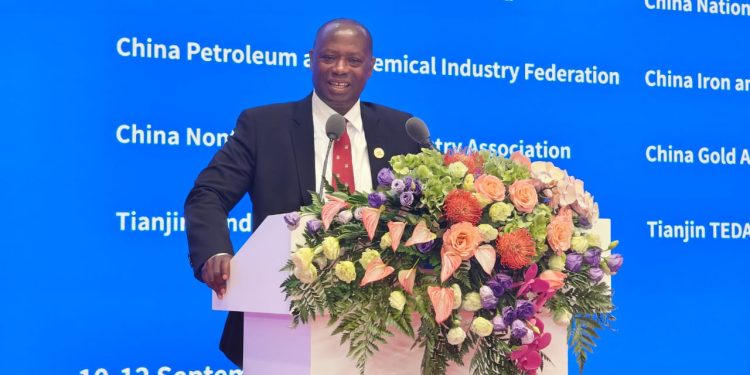
Ghana is charting a new path in its mining sector, calling for stronger partnerships with China and global stakeholders to unlock greater value from its mineral resources. The message was delivered by the Minister for Lands and Natural Resources, Emmanuel Armah-Kofi Buah, at the opening of the 28th China Mining Conference and Exhibition 2026 in Tianjin, China. No longer content with exporting raw minerals, Ghana is seeking cooperation in mineral processing, technology transfer, skills development, and infrastructure to fuel job creation and economic growth. “Our minerals must do more than generate export receipts. They must support value addition, industrial development, skills, jobs and opportunities for our young people,” the Minister emphasized. He stressed that the next chapter of Ghana’s mining industry must prioritize industries, skills, technology, jobs, and stronger communities alongside extraction. To this end, the government is reviewing its minerals and mining framework, formalizing artisanal and small-scale mining, and enhancing transparency and responsible oversight across the gold value chain. Ghana already boasts significant Chinese investments in mining, including Chifeng Gold Group, Shandong Gold, and Zijin Mining. But Mr. Armah-Kofi Buah said future partnerships should go beyond extraction to embrace mineral processing, infrastructure, local supply chains, and skills development. Environmental sustainability also took center stage, with the Minister highlighting measures to combat illegal mining (galamsey), such as the National Anti-Illegal Mining Operations Secretariat (NAIMOS) and the Responsible Cooperative Mining and Skills Development Programme (rCOMSDEP). He appealed for deeper cooperation with China in environmental management, land reclamation, and restoration of mined areas: “A river is not simply an environmental statistic. It is drinking water. It is farming. It is the livelihood of a community. It is an inheritance held in trust for a child not yet born.” Pushing for intelligent mining, Mr. Armah-Kofi Buah outlined Ghana’s efforts to modernize its geological data and digitalize the gold supply chain. He underscored the importance of accurate geological information for attracting investment and ensuring fair negotiations, calling for greater technical exchanges and mining-specific training for Ghanaians. Looking ahead, the Minister said Ghana is focused on refining more gold, advancing an integrated aluminium industry, developing iron ore resources for domestic steel production, and positioning critical minerals for new industries and technologies. This vision will be showcased during Ghana Mining Day at the conference under the theme, “Building Ghana’s Next Frontier: Geology, Value Addition and Investment Partnership.” He invited Chinese and global investors to explore mutually beneficial opportunities, stating, “We have the resources. China has deep experience in capital, technology, processing, infrastructure and industrial development. Between us lies an opportunity to build commercially sound partnerships in which Ghana creates more value at home, investors succeed, communities share in prosperity and both countries emerge stronger.” China’s Vice Premier, He Lifeng, responded by expressing China’s readiness to support developing economies with funding, technology, and fair benefit-sharing through open and transparent partnerships. The 28th China Mining Conference and Exhibition runs in Tianjin from September 10 to 12, 2026, under the theme, “Win-Win Cooperation, Green and Intelligent.” Source: Apexnewsgh.com
Sam George: Galamsey Accounts for 25% of Fibre Network Disruptions in Ghana
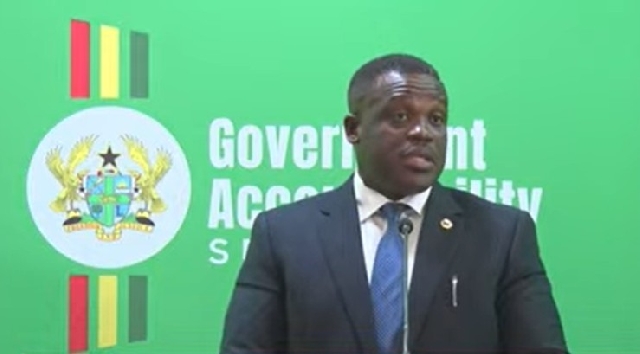
Illegal mining, known locally as galamsey, is fast becoming the unseen saboteur of Ghana’s digital lifelines. At a recent Government Accountability Series event, Communications, Digital Technology and Innovations Minister Samuel Nartey George revealed a troubling statistic: about one in every four fibre-optic cable cuts recorded nationwide can be traced back to the activities of galamsey operators. Beneath Ghana’s bustling towns and quiet villages, a complex web of fibre-optic cables keeps people connected, to each other and to the world. But this vital infrastructure faces a growing threat from those digging for gold. “Twenty-five percent of fibre cuts are a result of galamsey,” Minister George stated. “The telecom industry is one of the worst hit by the activities of galamsey operators.” Unlike road construction crews, who typically alert authorities when their work could disrupt underground cables, illegal miners rarely provide any warning. As they excavate in search of precious minerals, they often damage fibre lines, leaving telecommunications companies scrambling to trace and repair the breaks, often without any idea where to begin. The result is widespread disruption, especially in areas where there are no alternative fibre routes. Voice and data traffic can grind to a halt, leaving entire communities isolated from modern communication. The repercussions ripple far beyond mere inconvenience. Each fibre cut forces telecom companies to deploy teams and equipment at significant cost, straining their resources and threatening the reliability of Ghana’s digital services. Minister George warned that if this trend continues, the backbone of the nation’s telecommunications could be fatally undermined, deepening network disruptions and jeopardizing the country’s digital future. Source: Apexnewsgh.com
Gbane Opinion Leader Raises Security Concerns Over Mining Suspension
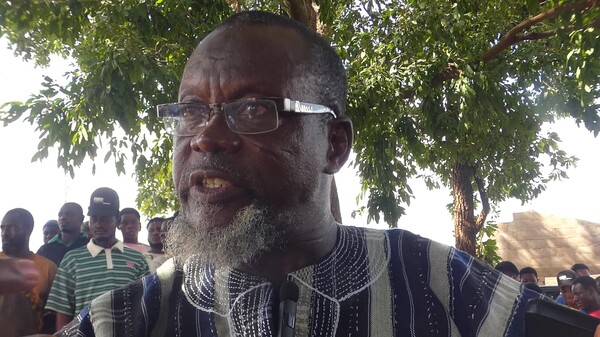
An opinion leader in the Gbane community in the Talensi District of the Upper East Region, Alhaji Fahad Bagremertamme, has expressed concern over the potential security implications following the order by the Inspector of mines ordering Nanlamtaaba Enterprise and Earl International Mining Company to suspend its mining operations. According to Alhaji Fahad, the people of Gbane respect the rule of law and have no objection to the court’s decision if it is implemented according to due process. He, however, questioned the activities of individuals he identified as “Poloo and his associates,” arguing that their actions were creating tension within the community. “We respect the rule of law, and if the judge has said the company should come and work, we have no problem with that because we respect the jurisprudence,” he said. He added that the court’s directive by the Inspector of mines for the company to stop working for two weeks could have serious consequences for the community, particularly given the high level of unemployment and insecurity in the area. Alhaji Fahad said a significant proportion of residents depend directly or indirectly on mining-related activities for their livelihoods, and expressed concern that a sudden suspension of operations could leave many young people without work. “Almost 45 or 50 percent of the people here are working in the mining sector. So, if these guys are asked to stay at home for two weeks, it could bring a lot of disturbance,” he stated. He further raised concerns about the security situation in Gbane, noting that the community has experienced incidents of armed robbery and other security challenges. According to him, there are also concerns surrounding individuals allegedly providing protection for persons involved in the mining dispute. He alleged that some individuals had previously been arrested by the military with AK-47 rifles and sent to court, but said the community was uncertain about the outcome of the case. “These are the same people back there protecting Poloo. So, I don’t know,” he said. The situation, he explained, had heightened fear among residents, particularly those working around mining sites. He recounted concerns about armed individuals allegedly approaching people at mining locations and ordering them to leave, questioning the circumstances under which such actions were taking place. Alhaji Fahad therefore appealed to the government and relevant security authorities to intervene urgently to find a peaceful and lasting solution to the dispute. He warned that if the situation was not addressed, community members could be forced to consider protecting themselves, a development he said could further escalate tensions. He nevertheless stressed that the community’s leadership had been urging the youth to remain calm and avoid retaliation. “We have advised all our youth to calm down and not retaliate. If not for that, by now things could have been worse,” he said. The opinion leader maintained that preserving peace remained the priority, urging the government and security agencies to act swiftly to prevent the mining dispute from developing into a wider security crisis in Gbane. Source: Apexnewsgh.com
Nanlamtaaba PRO Challenges Alliance for Gban Claims, Says Company Is Legally Registered
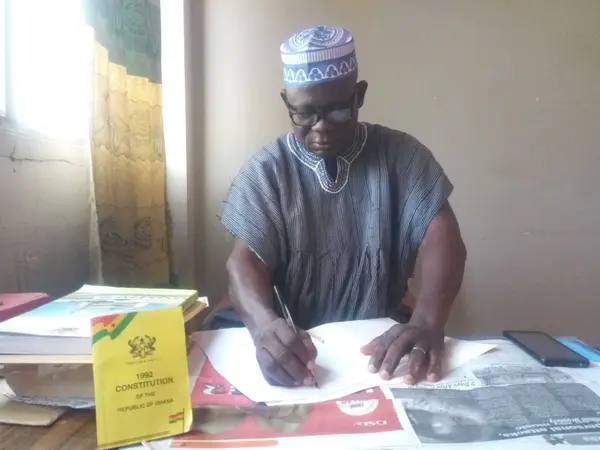
John Yaro, Public Relations Officer (PRO) for Nanlamtaaba Enterprise, has strongly rejected several claims made by the Alliance for Gban Development during its recent press conference over the ongoing mining dispute in the Gbane community of the Upper East Region. Responding to the allegations, Mr. Yaro challenged assertions concerning the mining status and legal standing Zongdaan Boyak Kolog popularly known as Poloo,” as well as claims about security protection allegedly being provided to him. According to him, contrary to claims that Boyak Kolog does not have a mining licence, he is currently operating as a small-scale miner and has been involved in a legal dispute with the Minerals Commission since 2020. He explained that the Minerals Commission had issued a licence in connection with the disputed concession, prompting Boyak Kolog to seek legal redress. “He went to court because the Minerals Commission issued a licence over his licence in 2020. He went to court and obtained an injunction against the Minerals Commission and the so-called international act,” Mr. Yaro stated. He further claimed that the High Court had issued orders restraining certain parties from undertaking activities around the concession involving Nanlamtaaba Enterprise. According to him, the court orders affected the operations of the company and also placed restrictions on certain state officials in relation to the dispute. Mr. Yaro therefore questioned claims that Puyak Kolog was operating without a valid licence. “If he has no licence, how can the Republic give him police protection?” he asked. “The man has no licence. How can police protection be applied in support of him?” He urged journalists and the public to critically examine the various claims being made by the parties rather than accepting allegations without asking questions. The Nanlamtaaba PRO also addressed the issue of security personnel allegedly protecting Boyak Kolog. He disputed suggestions that the individuals providing security were unregistered or unknown entities, insisting that they were private security companies. He also maintained that police presence around the disputed mining area was real, although the personnel might not always appear in uniform. “The police are always with us,” Mr. Yaro said, adding that he personally has police protection wherever he moves. He questioned whether critics expected police officers to be visibly present in uniform before acknowledging their presence. According to him, the security arrangements were intended to maintain peace and protect people within the area rather than demonstrate support for one side of the dispute. Mr. Yaro further said Nanlamtaaba Enterprise had decided to respect the current stop-work directive affecting the parties involved in the dispute. He indicated that the company was prepared to appear before the relevant authorities in Accra to present its case and provide clarification on the issues surrounding its operations. “We have a stop-work order within Earl-International and Nanlamtaaba. We are going by it. We will be invited to Accra, and we will go and make our case,” he stated. He dismissed the Alliance for Gban Development’s allegations as lacking substance, describing them as an attempt to divert attention from the substantive issues surrounding the dispute. “Nanlamtaaba is a registered company,” Mr. Yaro stressed. The latest development adds another layer to the ongoing tensions surrounding mining activities in Gbane, with the two sides presenting sharply different accounts of the legal status of the mining operations, security arrangements and the circumstances surrounding the disputed concession. Source: Apexnewsgh.com
Gbane Youth Petition Mahama Over Mining Dispute, Insecurity and Alleged Assaults
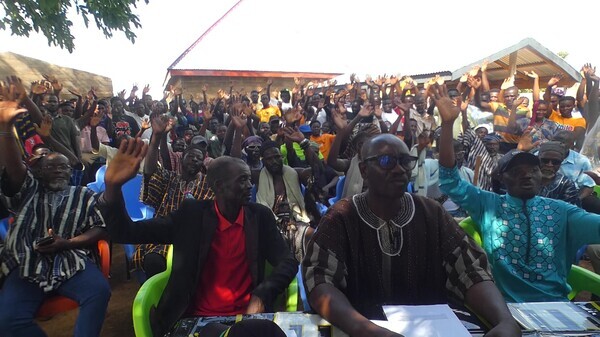
The Alliance for Gban Development, a registered youth organisation, has petitioned President John Dramani Mahama over growing tensions, insecurity and a protracted mining dispute involving Nanlamtaaba Enterprise and Earl International Group Ghana Gold Limited at Gbane in the Talensi District of the Upper East Region. This was revealed on Saturday during press conference organized by a Gban group known as Alliance for Gban Development. The group Secretary Mr. John Kpal who read out the statement, says it represents the concerns of the youth, traditional leaders and residents of Gbane. He raised concerns about what it described as a growing culture of impunity and disregard for regulatory directives amid heightened tensions in the community. At a press briefing, the group also the reveal the situation had become particularly tense over the past eight weeks following the enforcement of a High Court order directing the Ghana Police Service to provide protection for Nanlamtaaba Enterprise to undertake mining activities in the area. The Alliance stressed that while it respected the authority of the courts, it believed the enforcement of judicial decisions must also take into account community safety, peace and stability. According to the group, a Minerals Commission investigative survey conducted in the Gbane area in 2015 established that gold deposits in the area were deep-seated and recommended that the area be reserved for large-scale mining operations. The group said the government subsequently approved the recommendation and blocked out the Gbane area for large-scale mining. Following the acquisition of its mining lease, Earl International reportedly engaged affected small-scale concession holders, with the process facilitated by the Minerals Commission, the Environmental Protection Agency and the Upper East Regional Security Council. The Alliance said that in July 2021, Earl International entered into an agreement with affected small-scale concession owners, including Nanlamtaaba, under which the concessionaires were to receive two per cent of Earl’s gross production twice annually. It further alleged that goodwill payments were also made to affected concession owners. The youth group claimed that Nanlamtaaba’s Managing Director had acknowledged receiving substantial payments from Earl International, although he subsequently indicated that he believed the payments were intended for transportation and related expenses. The group said a High Court in Bolgatanga subsequently issued an interim ruling allowing Nanlamtaaba to undertake mining activities in Gbane, with the Ghana Police Service ordered to provide security. While reiterating its respect for the judiciary, the Alliance questioned the basis for allowing Nanlamtaaba to operate, claiming that records from the Minerals Commission indicate that the company’s 25-acre mining licence expired on May 14, 2025. It further argued that possessing a mining licence alone was insufficient, as mining operators are also required to obtain the necessary operating and environmental permits. The group therefore questioned why Nanlamtaaba was allegedly allowed to continue mining despite what it described as regulatory concerns. A major concern raised at the press briefing was the security arrangements surrounding the enforcement of the court order. The Alliance questioned whether the police were still providing the protection directed by the court, claiming that armed individuals who were neither police officers nor personnel of a registered security company had instead been seen providing security for Nanlamtaaba’s operations. The group alleged that some of these individuals had been involved in confrontations with residents. According to the Alliance, armed personnel carrying pump-action firearms recently entered underground workings belonging to Earl International. During the incident, it said, one of Nanlamtaaba’s armed guards accidentally shot himself in the foot and had to be carried out of the mine by Earl International security personnel. The group said it had photographs and video footage relating to the incident. The Alliance also alleged that three young men from Gbane were recently assaulted by armed security guards allegedly associated with Nanlamtaaba after they were found sitting under a tree near an area claimed by the mining company. According to the group, the incident nearly escalated into a major confrontation before the intervention of military personnel and community elders. The youth organisation said such incidents were creating fear among residents and could potentially trigger wider conflict if not addressed urgently. The group also raised concerns over directives issued by the Chief Inspector of Mines ordering the cessation of mining operations by both Earl International and Nanlamtaaba. It said Nanlamtaaba allegedly continued its activities despite an earlier directive. The Alliance further referred to a September 2, 2026 directive ordering a two-week cessation of operations. While acknowledging the regulator’s authority to suspend mining activities where necessary, the group questioned why the latest directive allegedly affected areas far beyond the disputed concession. It expressed concern about the impact of the shutdown on the estimated 2,000 workers associated with Earl International and their families. The youth group argued that if the dispute concerns a specific area, regulatory restrictions should be limited to that area rather than affecting an entire mining operation. The Alliance said it was not asking President Mahama to overturn the High Court’s decision, stressing that such a decision falls within the jurisdiction of the judiciary. Instead, it called on the government to ensure that the court’s order for state security was properly implemented. Among its demands, the group called for: The provision of professional, uniformed security personnel to enforce the court order where necessary. The removal of what it described as untrained armed guards from the area. Enforcement of directives issued by the Minerals Commission and the Chief Inspector of Mines. Investigations into the alleged assault of the three Gbane youths. Investigations into alleged seizure of property and the reported underground shooting incident. Prosecution of persons found culpable of criminal offences. An explanation from the Ghana Police Service regarding its alleged acceptance of a motorbike reportedly seized by private actors. Immediate measures to prevent the mining dispute from escalating into an inter-community conflict. “We Are Restraining Our Youth” The Alliance warned that the continued tensions could have serious consequences if the state failed to intervene. It said community elders and residents had so far exercised restraint and worked to prevent