


President Mahama Announces Construction of 30 New E-Blocks to Boost Secondary Education
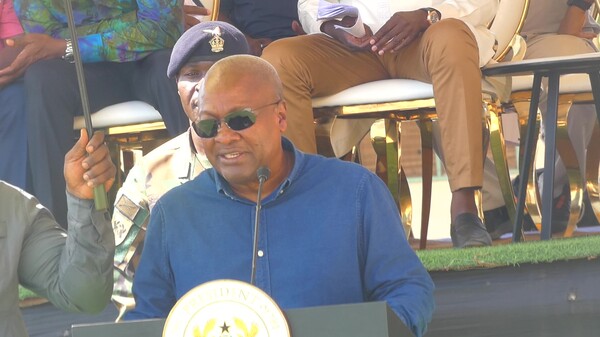
During a stop in the Paga Constituency of the Upper East Region as part of his Resetting Agenda programme, President John Dramani Mahama unveiled a bold new plan to expand access to secondary education across Ghana. Addressing a gathering of community leaders and residents, President Mahama announced his government’s commitment to construct 30 brand new E-blocks, modern secondary school facilities, across the country. “We’re going to build another 30 new E-blocks from scratch,” President Mahama declared. “While we work to complete the previously abandoned projects, these 30 new schools will be entirely new additions.” He explained that many of the new E-blocks will be located in high population density areas, particularly in major cities, so that they serve as community-based schools. “This means children will be able to walk from home to secondary school,” he said, emphasizing the convenience and accessibility the new schools would offer urban families. President Mahama also noted that, while many E-blocks started during his previous term were situated in rural districts, the latest phase would focus on addressing the growing needs of urban communities. The initiative is expected to significantly boost enrollment and ease congestion at existing schools, offering more students the opportunity to pursue quality secondary education within their own neighborhoods. However, President Mahama commissioned the newly completed E-block in Paga Source: Apexnewsgh.com/Ngamegbulam Chidozie Stephen
Paga Pio Appeals to President Mahama for Key Infrastructure and Security Upgrades- Says They Are living in Fear
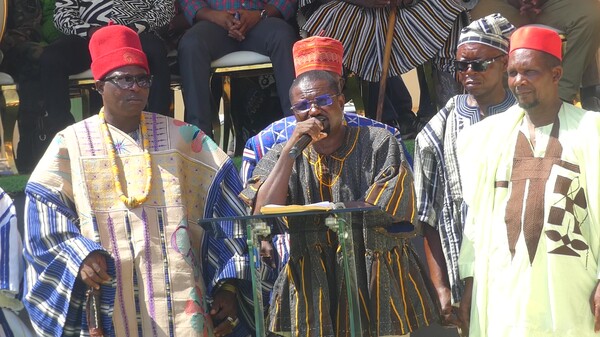
During President John Dramani Mahama’s Resetting Agenda visit to the Paga Constituency, the Paga Pio seized the opportunity to present a series of heartfelt appeals aimed at addressing pressing needs in the area. At the top of the list was the completion of the Agenda 111 district hospital project, which the Paga Pio described as “dear to our hearts.” He passionately urged both the President and the Minister of Health to prioritize the hospital’s completion for the benefit of Paga and the surrounding communities. Turning his attention to transport and safety, the Paga Pio highlighted the challenges posed by the limited space at the Custom Park on the Paga border. The current facility struggles to accommodate the heavy trucks, many carrying petroleum products or explosives bound for Burkina Faso and Mali, that cross the border daily. To temporarily ease congestion, he revealed that some trucks had been diverted to nearby filling stations during the President’s visit. However, he called for a permanent solution: expanding the Custom Park, ideally doubling its size, to better handle the influx and keep the highway clear for local commuters. The Paga Pio also appealed for the construction of a critical bridge linking major towns in the district, noting that the absence of a bridge has, for over five years, made travel impossible during the rainy season. Further, he requested that the Burkina Faso township be connected to the Ghana Water Company Limited network to ensure a constant and reliable water supply, as is enjoyed by other towns. Recognizing rising security concerns in the border region, the Paga Pio called for an increased presence of security agencies, including police, army, and customs officers, and the establishment of more offices and facilities to support them. He emphasized the importance of these measures in light of the volatility in neighboring countries and the risks associated with cross-border activities. The Paga Pio’s appeals reflect the community’s urgent needs for infrastructure, water, and security, and he expressed hope that President Mahama’s ongoing Resetting Agenda would bring meaningful change to the region. Source: Apexnewsgh.com/Ngamegbulam Chidozie Stephen
Upper East Region Schools to Receive Major Upgrades Under STAR-J Programme
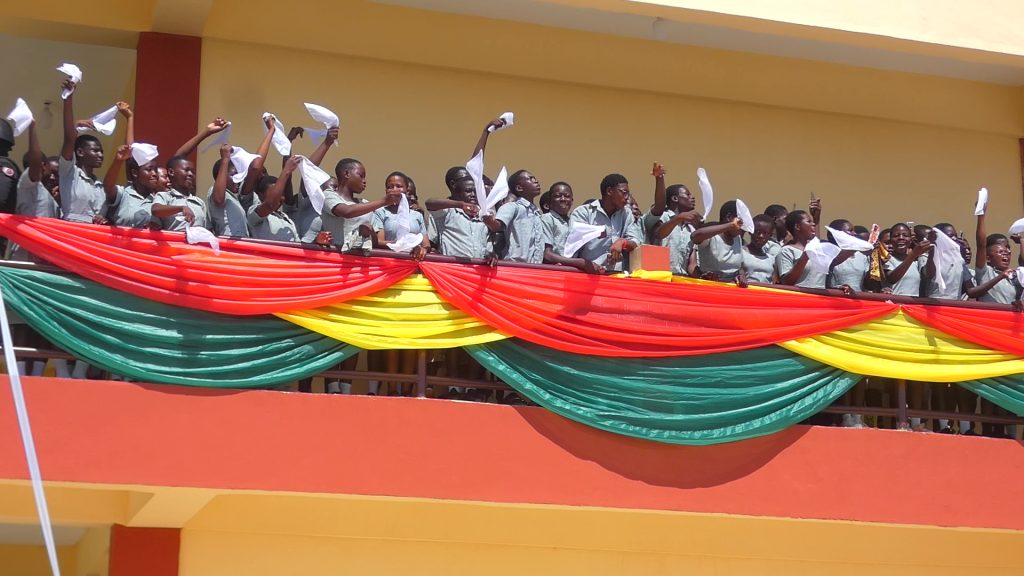
Excitement is building across the Upper East Region as Education Minister Haruna Iddrisu has announced a sweeping package of improvements for local secondary schools under the government’s STAR-J infrastructure programme. The initiative, worth 2.8 billion Ghana cedis, is set to transform the educational landscape of the region between now and December 2027. The announcement came in Paga during President John Dramani Mahama’s Resetting Agenda tour, coinciding with the commissioning of a new E-Block facility, a symbol of the government’s ongoing investment in education. Among the schools selected for major upgrades are Bolgatanga Central Technical Institute, Gambibgo Community Day Senior High School, Binduri Community SHS, and Garu Community Day SHS. These schools will benefit from new facilities and upgraded science laboratories, giving students better learning environments and expanded academic opportunities. Minister Iddrisu also emphasized the importance of inclusive infrastructure, making a special appeal for the construction of boarding facilities at Paga Senior High School. He stressed that ensuring adequate accommodation for both boys and girls is crucial to making sure no student is left behind in the region’s educational progress. The STAR-J programme is poised to usher in a new era for secondary education in the Upper East, providing the resources and infrastructure needed to accommodate growing enrollments and meet the demands of modern academic standards. Source: Apexnewsgh.com/Ngamegbulam Chidozie Stephen
Education Minister Unveils Major Infrastructure Boost During Presidential Visit
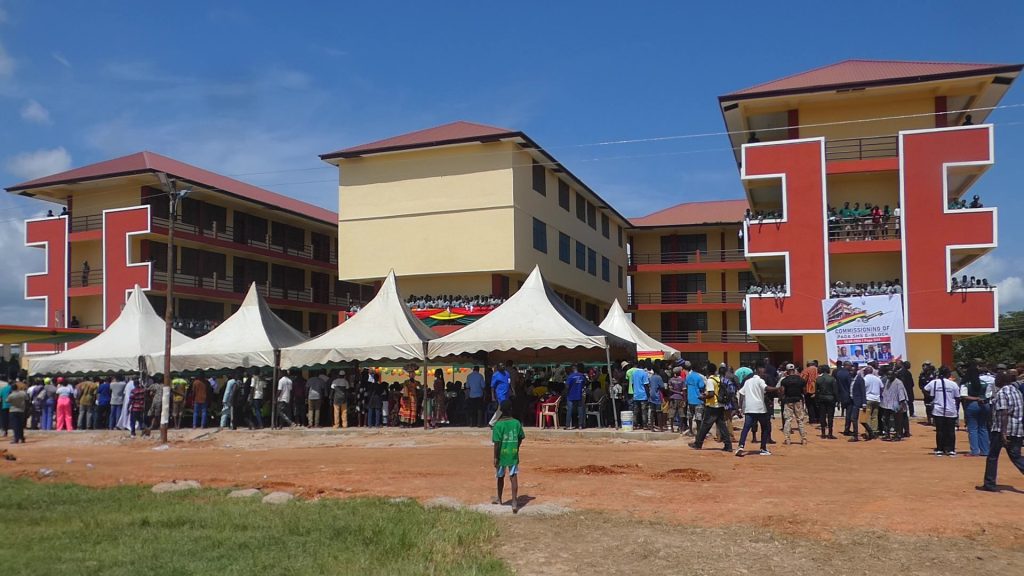
It was a day of optimism and anticipation in Paga as the Education Minister, Hon. Haruna Iddrisu, delivered news set to transform the educational landscape of the Upper East Region during President John Dramani Mahama’s Resetting Agenda tour. Standing before an eager crowd, Minister Iddrisu framed the President’s return as a “democratic dividend,” bringing long-awaited benefits to the people. He pointed to the commissioning of the previously abandoned e-block as a symbol of renewed commitment to educational access. “To deny these young people their required infrastructure is to deny them opportunity,” he said, noting the dramatic increase in secondary school enrollments, from 1,800 students to as many as 4,000 in some schools, since 2018. In a landmark announcement, the Minister revealed that, starting next academic year in September, Berger Senior High School would be upgraded to a fully-fledged institution, equipped to serve both local and national needs. This transformation, he explained, is part of President Mahama’s broader STAR-J program, a comprehensive, well-funded initiative aimed at expanding access to secondary education nationwide. Between now and December 2027, the STAR-J program will inject 2.8 billion Ghana cedis into secondary school infrastructure. Schools across the Upper East Region, including Bolgatanga Central Technical Institute, Gambibgo Community Day SHS, Binduri Community SHS, and Garu Community Day SHS, are set to benefit, either through new facilities or upgraded science laboratories. Iddrisu also appealed for the construction of boarding facilities for boys and girls at Paga Senior High School, ensuring no student is left behind. The Minister highlighted President Mahama’s track record of building strong institutions, referencing the establishment of the Scholarship Authority, which will now work alongside the GETFund to administer scholarships with greater transparency and accountability. Medical education was also in focus, with plans to expand university access and demystify the path to becoming a doctor. On the perennial issue of student feeding, Iddrisu assured the gathering that uncapped GETFund resources would ensure seamless food supply, eliminating disruptions to the academic calendar and ending the practice of using classrooms as storage spaces. Looking ahead, the Minister confirmed that President Mahama had directed his economic team to finalize the funding modalities for a new GETFund, with a bill to be presented before Parliament in January 2027. “President John Dramani Mahama’s leadership is about building viable institutions and responding to the real needs of Ghana’s youth,” Iddrisu concluded. Source: Apexnewsgh.com/Ngamegbulam Chidozie Stephen
Petroleum Tanker Drivers Begin Three-Day Strike Over Poor Yard Conditions at Kumasi Depot
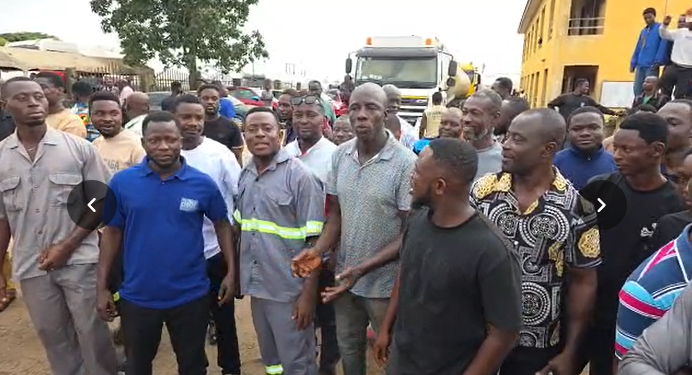
Members of the Ghana National Petroleum Tanker Drivers Union have launched a three-day sit-down strike, protesting what they describe as the worsening and hazardous state of the parking yard at the Kumasi Bulk Oil Storage and Transportation (BOST) Depot. The drivers accuse BOST officials of neglecting urgent calls to rehabilitate the yard, which has become increasingly unsafe, especially during rains. Union members say the situation not only endangers their safety but also hampers their ability to efficiently carry out their duties. Beyond the deplorable yard conditions, the drivers have also raised concerns about persistent fuel shortages during offloading at the depot. They attribute these shortages to faulty machinery and equipment used for offloading petroleum products, a problem they say has gone unaddressed despite repeated complaints. Union leaders report that multiple engagements with BOST management have yet to yield solutions. Now, with their grievances unresolved, the drivers have resorted to industrial action, sparking fears of fuel supply disruptions. Industry observers warn that if the strike is prolonged, it could trigger widespread fuel shortages across the country. Dominic Brenya, Chairman of the Ghana National Petroleum Tanker Drivers Union, affirmed that the strike will continue until their concerns are addressed. The union is demanding immediate intervention to rehabilitate the yard and repair faulty offloading equipment to ensure safety and operational efficiency. Source: Apexnewsgh.com
Ghana Water Ltd Refutes Claims of Withholding River Pollution Data
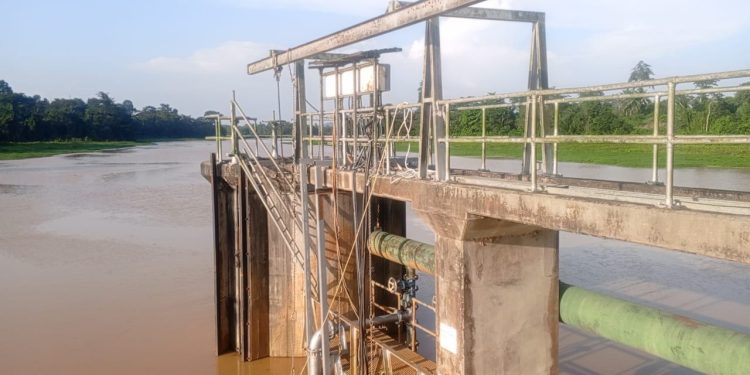
Ghana Water Ltd (GWL) has firmly denied allegations that its staff were threatened or instructed to withhold data on river turbidity and pollution levels, responding to accusations that surfaced in a video circulating on social media involving a Joy News journalist. In a statement released on Monday, August 17, 2026, GWL described the allegations as inaccurate and misrepresentative of the company’s mandate and operations. The utility company clarified that it routinely conducts internal turbidity tests as part of its water treatment processes and shuts down treatment plants whenever turbidity levels surpass established safety thresholds. However, GWL emphasized that it does not hold official data on the quality of natural river bodies. “GWL does not hold official data on natural river bodies,” the statement read, noting that the responsibility for monitoring and maintaining turbidity data lies with the Water Resources Commission (WRC) and the Environmental Protection Agency (EPA). Addressing additional claims made by the journalist, GWL stated that its records showed no evidence of the journalist visiting the Kwanyako treatment plant, contradicting assertions that access to information was denied. The company also rejected rumors that the Presidency had issued any directive instructing GWL to withhold river turbidity data. “It is therefore totally untrue that the Presidency has directed GWL to withhold river turbidity data,” the statement stressed. GWL encouraged the public to distinguish between the specific mandates of the water utility, the WRC, and the EPA when interpreting reports about river pollution and turbidity. The company urged viewers and readers to approach the claims presented in the viral video with caution. Source: Apexnewsgh.com
It is better to complete Agenda 111 than to spend money on a national cathedral—Attorney General
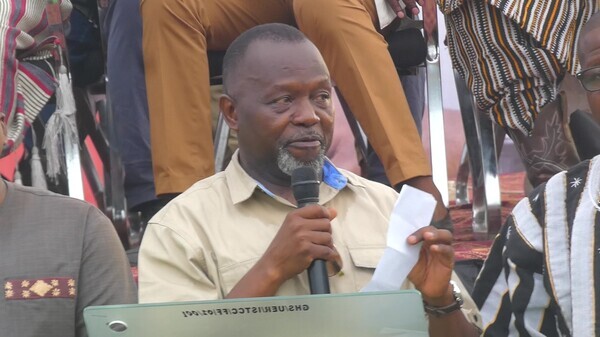
Attorney General and Minister of Justice, Dr. Dominic Ayine, has called for a stronger focus on finishing the government’s flagship Agenda 111 hospital projects rather than allocating resources to the construction of a national cathedral. Speaking during the launch of the FREE PRIMARY HEALTH CARE initiative in Bolgatanga East on Thursday, Dr. Ayine, who also serves as Member of Parliament for the constituency, underscored the urgent need to prioritize healthcare infrastructure. Addressing President and guests, Dr. Ayine revealed his persistent efforts to ensure that the uncompleted Agenda 111 hospital in Bolgatanga East receives the attention it deserves. “I have been on the neck of my colleague, the Health Minister, to ensure that it is completed. Today, I had to exercise my authority as Attorney General to obtain the list of districts included in the Agenda 111 completion program, and Bolgatanga East Zuarungu was right there,” he stated. Dr. Ayine contrasted the unfinished hospital with ongoing discussions about funding the national cathedral, referencing a recent report he received. “You don’t build a house of God in the manner in which they went about it. The money that was spent on the national cathedral, according to a report from PWC, could have been used to complete the district hospital,” he said. He concluded with a clear message: “It is better to complete Agenda 111 than to spend money on a national cathedral.” Dr. Ayine’s remarks come amid renewed debate over national priorities, as calls for the completion of critical healthcare projects grow louder across the country. Source: Apexnewsgh.com
Police Call for Timelier Information Sharing from MTN to Tackle Digital Crime
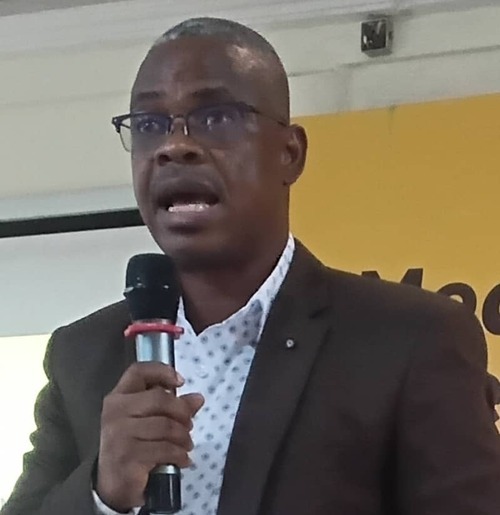
At the 2026 MTN Media Editors Forum in Tamale, the Northern Deputy Regional Crime Officer, ASP Richard Ackumey, addressed a growing concern for law enforcement: delays in accessing crucial information from telecommunications companies. Speaking candidly to the assembled media and MTN representatives, ASP Ackumey highlighted the evolving nature of crime in the digital age and the critical need for close collaboration between security agencies and telcos. “We rely so much on the telcos,” he explained. “Crime has evolved, and much of it now takes place within the digital space. To gather evidence and get to the root of these incidents, we need seamless cooperation with the telecommunications sector.” ASP Ackumey pointed out that legal frameworks such as the Data Protection Act and other regulations protecting citizens’ privacy can sometimes hinder timely information sharing, even when court orders are obtained. “While we understand these laws are vital for customer protection, they also constrain telcos in releasing information needed for ongoing investigations,” he said. “Our main challenge has been the timely release of information. Whenever we submit requests, especially court orders, we expect a swift response from the telcos.” Despite these challenges, ASP Ackumey acknowledged that the relationship between the police and MTN has generally been positive. He expressed optimism that continued dialogue and cooperation would lead to more efficient crime-fighting in the future. “We look forward to more fruitful discussions like this and to building a safer Ghana together,” he concluded. Source: Apexnewsgh.com
MTN Ghana Celebrates Growth, Community Impact, and Commitment to Digital Equality at 2026 Editors Forum
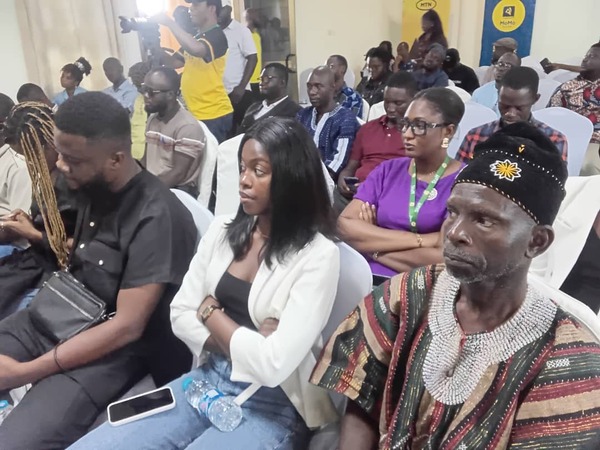
At the 2026 Editors Forum in Tamale, Emmanuel Afutu, MTN Senior Manager for Network Implementation, highlighted MTN Ghana’s impressive growth and its dedication to national development and digital inclusion. Sharing the company’s first half 2026 results, Afutu reported that service revenue surged by 32.3 percent to 15.0 billion Ghana cedis, EBITDA rose by 47.1 percent to 9.3 billion, and profit after tax increased by 46.8 percent to 5.1 billion. “These numbers are not just a celebration of our performance, they symbolize our ability to invest in our network, create jobs, support communities, and contribute to Ghana’s progress,” Afutu said. In the first half of the year, MTN Ghana paid 5.6 billion cedis in direct and indirect taxes, plus 384.7 million in fees and levies, underlining the company’s role in national development. Beyond financial success, Afutu emphasized MTN’s ongoing investment in people through the MTN Ghana Foundation, which supports education, health, and economic empowerment. He cited the MTN Skills Academy and the Heroes of Change initiative, which rewards extraordinary community leaders and changemakers across the country. This year, the overall Heroes of Change winner will receive 400,000 cedis, with category winners earning 200,000 cedis each, and all finalists receiving 100,000 cedis. Afutu further spotlighted MTN’s community outreach, mentioning volunteer-driven WASH initiatives in schools across 16 regions and health screenings in hospitals such as Sola and Niga Zanga. “These interventions may seem simple, but they reflect our commitment to being present and supportive in every community we serve,” he said. Recognizing ongoing challenges around access, affordability, and digital literacy, Afutu called for continued collaboration among government, regulators, educational institutions, business, and communities. “Technology should be an equalizer,” he said, stressing MTN’s belief in digital equality so that every child, whether in Napanduri, Tamale, or Accra, has the opportunity to thrive. He also underscored MTN’s commitment to sustainability, detailing the company’s four-pillar ESG agenda and the recent launch of Sustainability Month under the theme ‘Small Actions, Big Impact.’ Afutu remarked, “Our success and Ghana’s progress are connected in a sustainable way. Sustainability is part of how we do business.” As MTN marks thirty years in Ghana, Afutu expressed gratitude to the media, government, regulators, customers, and communities: “Thirty years ago, our ambition was simply to connect people. Today, we connect people to opportunities, education, healthcare, and financial services. As Ghana grows, we will grow with Ghana.” He concluded by thanking all stakeholders for their support over the past three decades and inviting them to join MTN on the next stage of its journey, promising that the company’s story will remain deeply intertwined with Ghana’s future. Source: Apexnewsgh.com
MTN Expands Network Across Northern Ghana, Pushing for Digital Inclusion and Opportunity
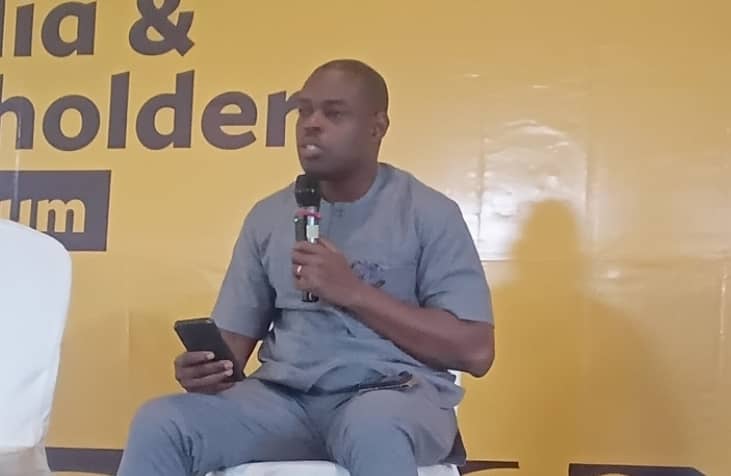
At the 2026 Editors Forum held in Tamale, Emmanuel Afutu, MTN Senior Manager for Network Implementation, unveiled ambitious plans to strengthen digital connectivity across northern Ghana. In his address, Afutu outlined MTN’s ongoing commitment to expanding its network, revealing that the company is currently constructing 38 new sites in the Northern Region, 17 in the Savannah Region, 14 in the Upper East Region, and 11 in the North East Region. Nationwide, MTN’s target is to complete 500 new sites, one of the largest expansions in the company’s recent history. But Afutu was quick to point out that MTN’s vision extends beyond simply increasing coverage. “Our measure of success is not just the number of sites we build, but the opportunities these sites create,” he told the gathered editors. “Connectivity means a farmer can reach new markets, a student can access online education, a digital business can receive payments anywhere, and families can stay connected no matter how far apart they are.” Afutu emphasized that MTN sees itself as an integral part of Ghana’s social and economic future. “Connectivity without opportunity is not enough. That’s why digital inclusion is so important to us. People must not only have access to technology, but also the skills and opportunities to use it to improve their lives.” Highlighting the impact of mobile money, Afutu shared that in the first half of 2026, mobile money transaction value grew by 44.4%, while active users increased by 3.1%, and transaction volumes and mobile revenue both rose by 23.3%. “For millions of Ghanaians, mobile is no longer just a payment service, it has become a tool for business, for saving, and for participating in the digital economy,” he noted. “Market women can now travel without carrying cash, knowing their funds are secure even if their phone is lost.” Afutu also acknowledged the growing importance of cybersecurity and data privacy as more Ghanaians embrace digital services. He reaffirmed MTN’s commitment to protecting customer information and strengthening the trust that underpins the company’s relationship with its users. “A stronger business supports a stronger Ghana,” Afutu concluded. “But none of these investments would be possible without a sustainable business model. We remain dedicated to building not just a bigger network, but a brighter digital future for all Ghanaians.” Source: Apexnewsgh.com