
Nabdam DCE Charts Bold Path to Transform Education Infrastructure
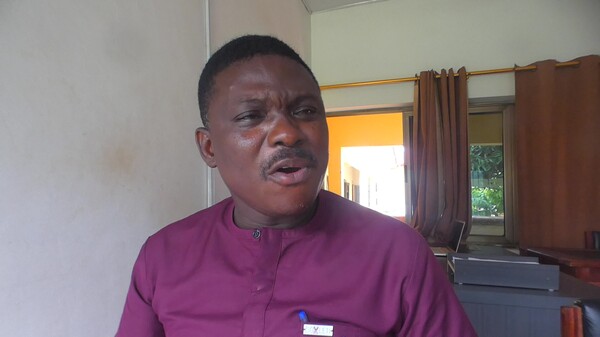
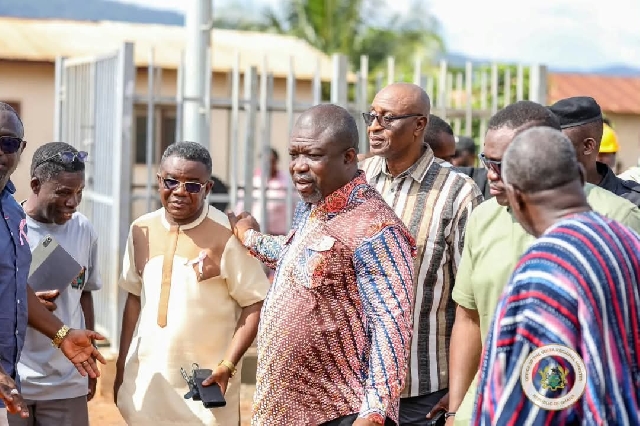
In Nabdam District, Hon. Francis Tobig, the District Chief Executive (DCE), is spearheading an ambitious campaign to transform the face of education. An educationist by profession, Hon. Tobig’s passion is personal, after more than 20 years teaching at Kongo Senior High School, he knows firsthand the struggles of overcrowded classrooms, broken furniture, and the daily challenges teachers and students face. During an exclusive interview on SPEAKOUT UPPER EAST with Apexnewsgh’s Ngamegbulam Chidozie Stephen, Hon. Tobig painted a vivid picture of both the hurdles and the hope now shaping education in Nabdam. A Teacher’s Vision “I have lived it,” Hon. Tobig shared, reflecting on his years in the classroom. “That’s why I am committed to making a real difference.” His background gives him a unique perspective on what schools truly need, not just buildings, but environments where learning can thrive. Building for the Future Under his leadership, the Assembly is rolling out a series of major infrastructure projects: A new three-unit classroom block, complete with a Head Teacher’s office, storeroom, ICT laboratory, library, staff room, and an eight-seater KVIP toilet facility. A fresh Junior High School at Damolgo, bringing education closer to more children. At Nkuziesie, a two-unit KG block with office, store, five-seater KVIP, and gender-friendly urinals, plus a protective fence and shed. Rehabilitation of classroom blocks at Nangodi Cluster of Schools and demolition of old KG blocks at Pelungu to improve safety and learning environments. Upgrades to the ICT lab at Kongo, including burglar-proofing and painting. Water for Learning Recognizing that good infrastructure means little without the basics, the Assembly is tackling water shortages. The Nabdam Education Directorate is being connected to a mechanized water system, and five new mechanized boreholes with overhead tanks are scheduled for institutions like Sakote Teachers’ Quarters and Kongo KG. More Schools, More Access Procurement is underway for further projects, such as a primary school at St. John’s School in Sakote and an educational facility at Potin. Though a new ultra-modern chief’s palace has been completed at Nkuziesie, Hon. Tobig made clear this was separate from the education push. Furniture: Filling the Gap, Fostering Care Furniture shortages have long plagued Nabdam’s schools. “It’s not just about providing desks,” the DCE emphasized, “but taking care of what we have.” This year, 1,000 pieces of furniture, 600 dual desks and 400 single desks, are being procured, with another 1,000 planned for 2026. But Hon. Tobig is equally focused on maintenance. After visiting a classroom full of broken furniture, he vowed to work with the Education Directorate to establish a robust maintenance system, so resources last longer and serve more students. Raising the Bar: Academic Performance Despite these improvements, academic performance remains a concern. Hon. Tobig expressed disappointment that only one student reached an aggregate of 20 in the 2025 BECE, far from his ambitious target. “We must do better,” he said. He pledged continued engagement with schools and parents, challenging them to raise their expectations and outcomes. A District on the Move Hon. Tobig’s leadership is turning vision into concrete action. From new classrooms and water systems to furniture and maintenance, Nabdam’s schools are changing for the better. As the DCE and his team press forward, the hope is clear: every child in Nabdam deserves a school that inspires learning, and a future filled with possibility Source: Apexnewsgh.com
School Infrastructure, Teacher Accommodation Top Talensi DCE’s Education Agenda
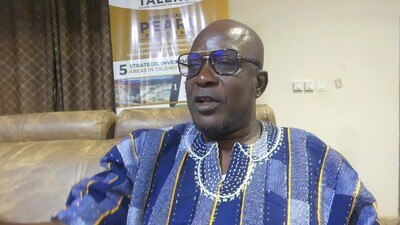
The Talensi District Chief Executive (DCE), Hon. John Millim Nabwomya, has pointed out number of interventions and achievements recorded in the education sector since taking over as District Chief Executive Hon. Nabwomya made the disclosure during an exclusive engagement with Ngamegbulam Chidozie Stephen of Apexnewsgh on the “SPEAKOUT UPPER EAST” programme. According to the DCE, the Talensi District Assembly, with support from the government and other stakeholders, has undertaken a number of projects aimed at improving teaching and learning, providing educational infrastructure and addressing some of the challenges confronting teachers and pupils in the district. Hon. Nabwomya said the Assembly has completed a school block at Gazore under the Social Cohesion (SOCO) programme. Although the facility is yet to be formally handed over, he said it is already being used by pupils. He further disclosed that the Assembly has commissioned a three-unit classroom block with an office at Gbey in the Gazore area. Another three-unit classroom block at Gatu is also expected to be handed over shortly, he said. The DCE also highlighted the completion and handover of a three-unit classroom block at the Tongo Senior High Technical School in the Baare Electoral Area. According to him, the facility includes an office for the head of the school and a changing room for girls and was also completed under the SOCO programme. Hon. Nabwomya said the Assembly has also procured educational furniture to improve the learning environment in schools across the district. He disclosed that approximately 1,200 dual desks have been procured, alongside 24 hexagonal tables for kindergarten pupils and about 240 chairs. He said the furniture was being assembled and prepared for distribution to beneficiary schools. The DCE further spoke about the Assembly’s response to rainstorm damage that affected several schools in the district. He explained that a heavy rainstorm in May caused significant damage to a number of school buildings, with some roofs ripped off. The Assembly, he said, used its internally generated funds (IGF) to begin repairing some of the affected schools. However, he noted that the situation at Gare Primary School became particularly challenging after another heavy rainstorm in August caused further damage to a section of the school that had already been affected. Faced with limited resources, Hon. Nabwomya said he sought assistance from benevolent individuals, including Dr. Martin Kolbil Yamborigya, the Commissioner in charge of Domestic Tax Revenue at the Ghana Revenue Authority. He said the Assembly’s engineers were instructed to assess the damage and prepare an estimate for the rehabilitation. According to the DCE, the affected school block was eventually reroofed using what he described as high-quality aluminium roofing sheets. He said the facility has since been put back into use. Hon. Nabwomya identified teacher accommodation as one of the major challenges affecting education delivery in the district. He explained that teachers posted to remote communities sometimes come from other regions and are faced with difficulties securing accommodation close to their schools. According to him, where teachers are forced to live in nearby towns and travel long distances to their schools every day, valuable teaching time could be lost. To address the challenge, he said the Assembly is conducting feasibility work towards constructing 10 self-contained rooms for teachers, together with a mechanised borehole, a 3,500-litre polytank mounted on a concrete stand and electricity. The proposed accommodation facilities, he explained, will be located at strategic points to serve teachers from clusters of surrounding communities. He said one such facility is currently being commissioned, while preparations are underway for two additional projects. The DCE explained that the cluster approach would allow teachers stationed in nearby communities to access accommodation without necessarily having to travel long distances from larger towns. The Assembly, according to Hon. Nabwomya, has also been supporting programmes organised by the District Education Directorate to promote girl-child education. He cited recent support provided for a Girl Child Day programme organised by the Girl Child Coordinator at the District Education Office. The initiative, he said, was aimed at encouraging girls to remain in school and supporting efforts to reduce challenges that could lead to girls dropping out. Hon. Nabwomya said the interventions form part of the Assembly’s broader commitment to improving educational infrastructure, teacher welfare and the learning environment across Talensi District. He expressed appreciation to the government, development partners, traditional authorities, individuals and other stakeholders whose support, he said, has contributed to the progress recorded in the education sector. The engagement formed part of Apexnewsgh’s “SPEAKOUT UPPER EAST” programme, which provides a platform for district-level leaders to account to residents on development initiatives, achievements and challenges. Source: Apexnewsgh.com
Friends of Prosper Renovated Nyariga Doone Girls Primary School From Scratch to Finish — Mr. John Akaribo School Founder
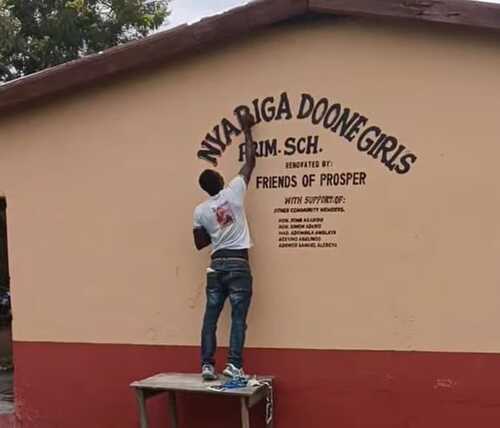
The founder of Nyariga Doone Girls Primary School, Mr. John Akaribo, has categorically confirmed that the recent renovation of the school was fully undertaken and sponsored by Friends of Prosper, with support from Dr. Prosper Ayinbila Awuni. Mr. Akaribo made the confirmation during an exclusive engagement with Apexnewsgh, following the need to establish the actual individuals and organisation responsible for the renovation of the school. According to him, the school was established in 1998 as a girls-only institution, with the aim of providing educational opportunities specifically for girls in the community. He explained that, over the years, the school infrastructure had deteriorated significantly, prompting the school authorities to seek assistance for its rehabilitation. Mr. Akaribo disclosed that his other school, together with the head of the school, had previously written to the Member of Parliament for the area, Isaac Adongo, seeking support to rebuild and renovate the school. He said it was in response to the concerns raised about the deteriorating state of the school that Friends of Prosper intervened. “Friends of Prosper came and heeded to our cry. They came and realised that there was a need to renovate the school, which was about 26 years old,” Mr. Akaribo said. He explained that although the initial expectation was for the organisation to undertake minor works such as plastering and patching, an assessment of the school’s condition convinced the sponsors to undertake a complete facelift. “They thought they could have just done some plastering and patching and other things, but they realised that they needed to give it a complete facelift, and they came and did that,” he stated. According to the founder, the renovation included the removal and replacement of the school’s old and deteriorating roof, which had been in use for decades. He stressed that Friends of Prosper provided the personnel and resources required to execute the project, including carpenters, masons and painters. “They brought their own carpenters, their own mason and their own painters. Everything was sponsored by Friends of Prosper,” he confirmed. Mr. Akaribo further clarified that the community did not finance the renovation works. He said his personal contribution was mainly to facilitate access to water and electricity for the workers during the execution of the project. “I was the one they called. They came and did everything. My role was to ensure that I got water for them and electricity for them,” he explained. Mr. Akaribo, who described himself as a pensioner, said he did not have the financial capacity to undertake the renovation himself. He therefore reiterated that the project was executed entirely by Friends of Prosper, with support from Dr. Prosper Ayinbila Awuni. “Yes, that is correct. Friends of Prosper came and executed the project,” he categorically confirmed. He added that members of Friends of Prosper were at the school to officially inscribe their name on the renovated facility to acknowledge their contribution. The clarification by the school’s founder is expected to settle questions regarding the identity of the organisation and individuals responsible for the renovation of the Nyariga Doone Girls Primary School. However, as part of the investigation, Apexnewsgh further contacted Anyane, the carpenter contracted to undertake the reroofing of the school. He confirmed that he was contacted by Friends of Prosper to inspect the school and prepare an estimate for the roofing works. According to Anyane, after submitting his estimate, he was provided with money two days later to purchase the required roofing materials. He explained that his initial assessment indicated that about 10 sheets of zinc roofing material would be required. However, when he was preparing to commence the work, he discovered that the existing roofing wood had become weak and was no longer strong enough to support the new roof. Anyane said he immediately contacted Friends of Prosper and informed them about the condition of the existing roofing structure. According to him, Friends of Prosper responded by making additional funds available for him to purchase new roofing wood to ensure that the roofing work was properly executed. He further told Apexnewsgh that following the completion of his work, Dr. Prosper Ayinbila Awuni personally paid him his workmanship. Another independent confirmation came from Nyaba, the mason contracted to undertake the cement-related works at the Nyariga Doone Girls Primary School. Nyaba also confirmed to Apexnewsgh that the renovation project was undertaken by Dr. Prosper Ayinbila Awuni with support from Friends of Prosper. His account independently corroborates the earlier confirmation given by the school’s founder, Mr. John Akaribo, who had categorically stated that Friends of Prosper responded to the school’s appeal for assistance and undertook the renovation. The testimonies from the school’s founder, the carpenter and the mason therefore provide separate accounts pointing to Friends of Prosper, with support from Dr. Prosper Awuni, as the financiers and organisers behind the recently completed renovation works at the Nyariga Doone Girls Primary School. Apexnewsgh’s investigation remains focused on establishing the facts surrounding the project and ensuring that credit for the intervention is accurately attributed to those who contributed to its successful completion. The investigation was conducted to set the record straight following a social media debate initiated by one Nayikuu, who claimed that he was responsible for the recent renovation of the Nyariga Doone Girls Primary School. However, accounts provided by the individuals engaged by Apexnewsgh during the investigation indicate that the renovation was undertaken by Dr. Prosper Awuni, with support from Friends of Prosper. The testimonies from the school’s founder and the artisans who directly worked on the project independently corroborated this account. Source: Apexnewsgh.com
Parents in Binduri District Demand Answers as WAEC Fails to Account for BECE Maths Answer Sheets

Parents in the Binduri District of Ghana’s Upper East Region are voicing growing concerns after the West African Examinations Council (WAEC) failed to account for the Mathematics objective answer sheets of 165 candidates who sat for the 2026 Basic Education Certificate Examination (BECE). The missing answer sheets, belonging to students from six schools, Benguri Junior High School (JHS), Christian Academy, Yaligun JHS, Amazing Grace JHS, Good Friends International JHS, and Gumyoko JHS, have sparked fears that the affected candidates could miss out on placement in Senior High School (SHS). The SHS placement process is already underway, intensifying anxiety among parents and students alike. Aruk Gabriel, a parent whose child is among those affected, explained to Citi News that parents initially believed the delay in releasing results was a routine matter that would be resolved in time for SHS placement. However, after following up with education authorities in Bolgatanga, they learned that the Mathematics objective answer sheets could not be found. “Now, are they saying that our children should wait? Should they not go to school until they find the papers, mark them and release the results so that we know whether they will get placement? By then, it will be too late,” Mr. Gabriel lamented. The uncertainty surrounding the missing answer sheets has left 165 candidates and their families in limbo. Parents are now urging the Ministry of Education and WAEC to take immediate action to locate the answer sheets, mark them, and release the results before the SHS placement process concludes. The affected families warn that any further delays could unfairly hinder the educational prospects of their children, and are calling for urgent intervention to resolve the crisis. Source: Apexnewsgh.com
NCPTA Warns Parents: Don’t Pay Unauthorized Fees for SHS Prospectus Items
The National Council of Parents-Teachers Associations, Ghana (NCPTA), has sounded a strong warning to parents of first-year Senior High School (SHS) students: do not pay GHS1,617 to EduPack PGL for prospectus items. This follows reports that EduPack PGL, also known as Prospectus Ghana Limited, has been urging parents to pay for a package, including a metal trunk, plastic chop box, Macintosh mattress, and pillow, for collection on SHS campuses. The company allegedly circulated messages via SMS, WhatsApp, and other channels, and is accused of invoking the name of the Ghana Education Service (GES) to legitimize their offer. In a statement issued on Wednesday, September 9, 2026, the NCPTA clarified that the Ghana Education Service had not approved this arrangement, stating, “GES Management has NOT sanctioned, directed or authorized any parent to engage EduPack PGL.” The association instructed parents clearly: “DON’T PAY! We instruct all Ghanaian parents NOT TO PAY ANY MONEY OR BUY ANY ITEM FROM EDUPACK PGL.” The NCPTA emphasized that parents have the right to buy prospectus items from the open market, as has always been the practice. “Every parent retains the full and unqualified liberty to purchase prospectus items on the open market,” the statement added. The association also raised concerns about the attempt to force parents to buy items from a single source at a fixed price on school premises, calling it “illegal commercialization of school admission.” While commending the GES for distancing itself from the practice, the NCPTA called for even stronger action. They urged the GES to use its legal and administrative powers to warn and sanction any school heads who permit such sales, and to consider taking legal action against EduPack PGL and any entity allegedly misusing the GES logo to defraud parents. “Punish the real culprit so others will learn,” the NCPTA stated. Parents were also advised to stay alert and report any such incidents to the NCPTA Secretariat and the GES. The statement was signed by the General Secretary of the NCPTA, Gapson Kofi Raphael. Source: Apexnewsgh.com
Robert Sampana Elected Upper East Regional President Of Association Of The Deaf
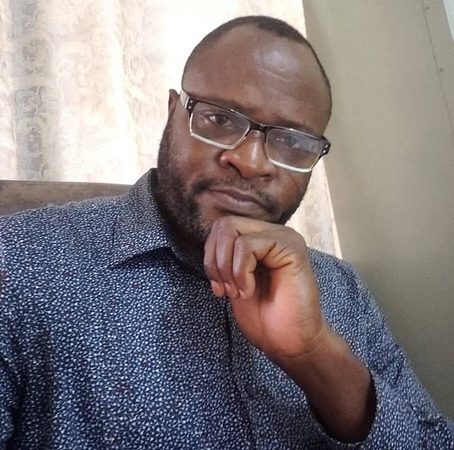
The Upper East Regional Association of the Deaf (UERAD), a regional branch of the Ghana National Association of the Deaf, has ushered in a new chapter of inclusive leadership following the election of Robert Sampana as its new Regional President. Sampana, a native of Talen Teng from Datoko, brings strong community ties and a firm commitment to advancing the rights and welfare of Deaf people in the Upper East Region. His election is expected to strengthen advocacy for greater inclusion and accessibility, particularly through the mainstreaming of Ghanaian Sign Language (GSL) interpretation at public programmes and engagements. A key priority of his administration will be to address communication barriers that often prevent Deaf persons from accessing vital information and participating fully in public life. Sampana also intends to build stronger partnerships with non-governmental organisations (NGOs), Metropolitan, Municipal and District Assemblies (MMDAs), and healthcare institutions to promote the inclusion of Deaf people in development programmes and improve their access to essential healthcare services. Through these collaborations, his administration seeks to ensure that Deaf persons are not only represented but are also adequately informed, consulted and given equal opportunities to benefit from public services. The new leadership is therefore expected to position UERAD as a stronger voice for the Deaf community while championing a more inclusive and accessible Upper East Region. Source: Apexnewsgh.com
BOGISS PTA Condemns Alleged Defilement, Demands Justice and Reassures Parents
The Parent-Teacher Association (PTA) of Bolgatanga Girls Senior High School (BOGISS) has broken its silence amid recent media reports and public concern over the alleged defilement of a student involving two security personnel attached to the school. In a strongly-worded statement signed by Professor Albert Luguterah and Stanley Akamiri Abopaam, BOGISS PTA Executive, the Association voiced deep concern and unequivocally condemned the alleged abuse. “No child entrusted to the care of BOGISS should ever suffer any form of sexual abuse, exploitation, or harm,” the PTA declared, describing the allegations as extremely disturbing. The PTA commended the swift action taken by authorities, including the arrest of the two suspects by the Ghana Police Service and their interdiction by the Ghana Education Service (GES). The Association called for a full, transparent, and expeditious investigation, stressing that the harshest sanctions must be applied to anyone found culpable under the law. Beyond seeking justice, the PTA appealed to the GES, Department of Social Welfare, and child-protection agencies to provide the affected student with counselling, medical care, and protection. They emphasized that the student’s welfare, dignity, and educational future must be safeguarded throughout the process and that any decisions affecting her status as a student should prioritize her best interests. The PTA also addressed the media, supporting the right to report on the case but cautioning against speculative or unbalanced coverage. They urged journalists and commentators to distinguish between confirmed facts and allegations, avoid prejudicing the investigation, and refrain from actions that could traumatize the student or unfairly implicate school authorities who have acted responsibly. To parents and guardians, the PTA offered reassurance that student safety remains their top priority. The Association is working with school management and the GES to review and strengthen safeguarding protocols, including stricter vetting of security staff, tighter access controls, and clearer reporting channels for concerns. Periodic safety audits are also planned to ensure a secure environment for all students. “We will not relent in holding all stakeholders accountable,” the statement emphasized, “to ensure that every child at BOGISS learns, boards, and grows in an environment that is safe, secure, and protective of her dignity.” The PTA encouraged anyone with concerns to report them promptly to school management, the PTA executive, or the appropriate authorities, pledging continued engagement and transparent communication with all stakeholders. Source: Apexnewsgh.com
GES Suspends Two Watchmen, Hands Case to Police After Alleged Sexual Assault at Bolgatanga Girls SHS
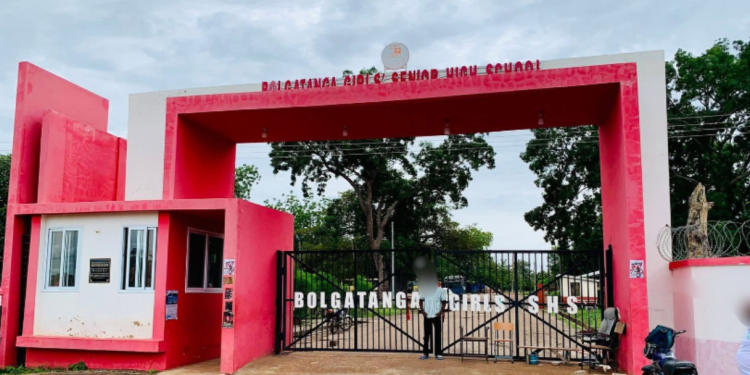
The Ghana Education Service (GES) has taken swift action in the wake of an alleged sexual assault involving a special needs student at Bolgatanga Girls Senior High School. Two watchmen at the school have been interdicted and handed over to the Police to assist with ongoing investigations into the incident. According to a statement released by the GES on Thursday, August 20, the student, who was on medication and had suffered a relapse that day, required medical attention. It was during this vulnerable period that the alleged assault took place, prompting immediate intervention from the school authorities and the GES. The GES has emphasized that a thorough investigation is underway to establish the facts of the case, and that the outcome will guide any further sanctions in accordance with the GES Code of Conduct and the laws of Ghana. In the interim, the Service has urged all staff to uphold the highest standards of professionalism, prioritizing the safety, dignity, and wellbeing of every student. “Management cautions that the Service will not tolerate any conduct that compromises the safety and wellbeing of students,” the statement stressed, assuring parents, guardians, and the public that the matter is being treated with the utmost seriousness. Source: Apexnewsgh.com
President Mahama Announces Construction of 30 New E-Blocks to Boost Secondary Education
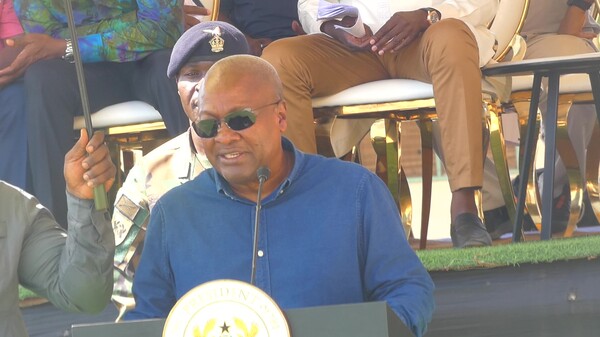
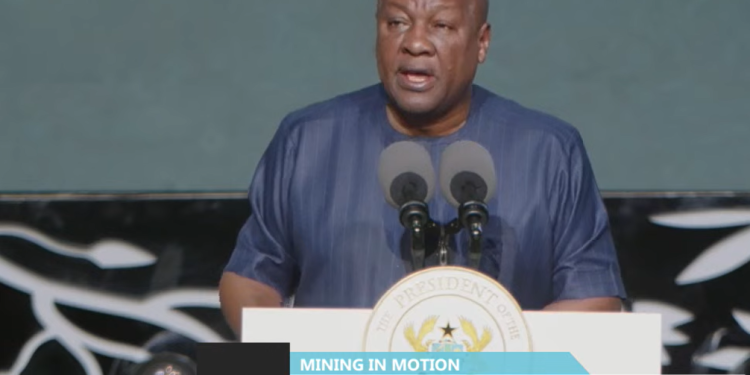
During a stop in the Paga Constituency of the Upper East Region as part of his Resetting Agenda programme, President John Dramani Mahama unveiled a bold new plan to expand access to secondary education across Ghana. Addressing a gathering of community leaders and residents, President Mahama announced his government’s commitment to construct 30 brand new E-blocks, modern secondary school facilities, across the country. “We’re going to build another 30 new E-blocks from scratch,” President Mahama declared. “While we work to complete the previously abandoned projects, these 30 new schools will be entirely new additions.” He explained that many of the new E-blocks will be located in high population density areas, particularly in major cities, so that they serve as community-based schools. “This means children will be able to walk from home to secondary school,” he said, emphasizing the convenience and accessibility the new schools would offer urban families. President Mahama also noted that, while many E-blocks started during his previous term were situated in rural districts, the latest phase would focus on addressing the growing needs of urban communities. The initiative is expected to significantly boost enrollment and ease congestion at existing schools, offering more students the opportunity to pursue quality secondary education within their own neighborhoods. However, President Mahama commissioned the newly completed E-block in Paga Source: Apexnewsgh.com/Ngamegbulam Chidozie Stephen
Upper East Region Schools to Receive Major Upgrades Under STAR-J Programme
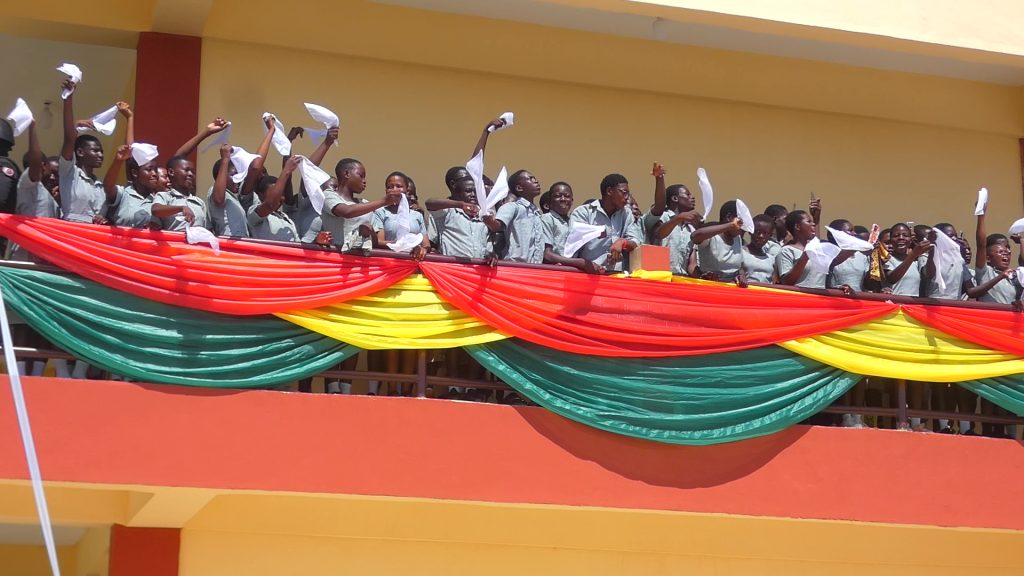
Excitement is building across the Upper East Region as Education Minister Haruna Iddrisu has announced a sweeping package of improvements for local secondary schools under the government’s STAR-J infrastructure programme. The initiative, worth 2.8 billion Ghana cedis, is set to transform the educational landscape of the region between now and December 2027. The announcement came in Paga during President John Dramani Mahama’s Resetting Agenda tour, coinciding with the commissioning of a new E-Block facility, a symbol of the government’s ongoing investment in education. Among the schools selected for major upgrades are Bolgatanga Central Technical Institute, Gambibgo Community Day Senior High School, Binduri Community SHS, and Garu Community Day SHS. These schools will benefit from new facilities and upgraded science laboratories, giving students better learning environments and expanded academic opportunities. Minister Iddrisu also emphasized the importance of inclusive infrastructure, making a special appeal for the construction of boarding facilities at Paga Senior High School. He stressed that ensuring adequate accommodation for both boys and girls is crucial to making sure no student is left behind in the region’s educational progress. The STAR-J programme is poised to usher in a new era for secondary education in the Upper East, providing the resources and infrastructure needed to accommodate growing enrollments and meet the demands of modern academic standards. Source: Apexnewsgh.com/Ngamegbulam Chidozie Stephen