



President Mahama Condemns Handling of Student Violence Against Teachers, Demands Systemic Change
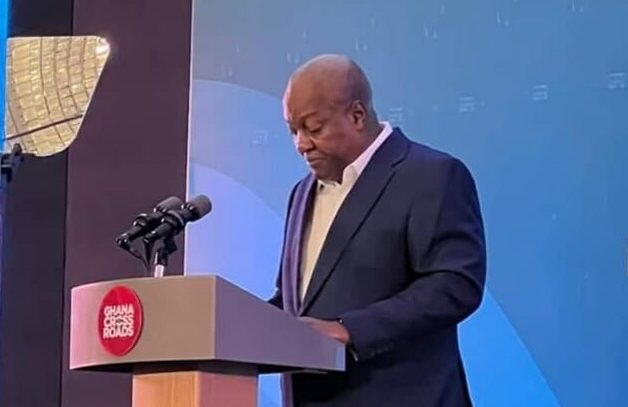
President John Dramani Mahama has brought renewed national focus to the troubling issue of violence against teachers, expressing grave concern over the way such cases are handled in Ghana’s schools. His remarks came during an address to the Ghana National Association of Teachers (GNAT) Delegates Conference, where he referenced a widely circulated video from October 2025 showing students at Kade Senior High School assaulting a mathematics teacher. The attack reportedly occurred after the teacher intervened to stop exam malpractice. President Mahama did not hide his disappointment with the aftermath of the incident. Despite the assault being reported to police, no official disciplinary or legal action was taken against the perpetrators. Instead, the matter was quietly settled following discussions between the teacher and the students’ parents. The President questioned this approach, arguing that acts of violence against teachers should be treated as criminal offenses, not private disputes. He went further to criticize the reliance on monetary compensation as a means of resolution, pointing out that financial settlements fail to deliver true justice or deter future misconduct. According to President Mahama, even if the teacher opted not to pursue further action, the students involved should have faced the justice system and received corrective measures. At the very least, he suggested, the students should have been required to prove good conduct over a specified period as a demonstration of accountability. President Mahama concluded his address with a strong message of solidarity for educators, pledging his administration’s unwavering commitment to safeguarding teachers and decisively addressing any acts of aggression against them. His call for systemic change has reignited a national conversation on how best to protect those at the heart of Ghana’s education system and ensure that justice is served when they are wronged. Source: Apexnewsgh.com
GTEC Orders University of Ghana to Reverse 2025/2026 Fee Hikes Over Procedural Breaches

The Ghana Tertiary Education Commission (GTEC) has stepped in to halt fee increases at the University of Ghana, instructing the institution to immediately reverse all hikes for the 2025/2026 academic year. The directive, contained in a letter dated January 5, 2026, was signed by GTEC’s Director-General, Prof. Ahmed Abdulai Jinapor, and addressed to the university’s Vice-Chancellor. According to the Commission, the University of Ghana had raised student fees by about 25% and introduced new charges for the academic year without obtaining the required approvals. This, GTEC emphasized, defied an earlier directive from November 2025 that barred public universities from raising fees without parliamentary consent. GTEC’s letter demanded the prompt reversal of all fee increments and the suspension of newly introduced levies. For students who have already paid the higher fees, the Commission ordered that the overpaid amounts be credited to their accounts for the next academic year. Final-year students, meanwhile, are to receive refunds for any excess payments. All existing dues, including SRC and GRASSAG charges, must revert to the 2024/2025 levels. New fees such as the 75th Anniversary charges and Development Levies are to be suspended unless they were already in place last year. The University of Ghana has been given a deadline of January 12, 2026, to submit proof of full compliance to GTEC. The Commission made it clear that any failure to comply would result in strict regulatory action. Any deviation from the directive would require written authorisation from the Minister for Education. Dr. Clement Apaak, Deputy Minister for Education, has been appointed as the point of contact between the Ministry and the University on this matter. GTEC closed its communication by reaffirming its commitment to enforcing the fees Act and promoting transparency and accountability in the determination of fees across Ghana’s tertiary institutions. Source: Apexnewsgh.com
The Broken Chalkboards
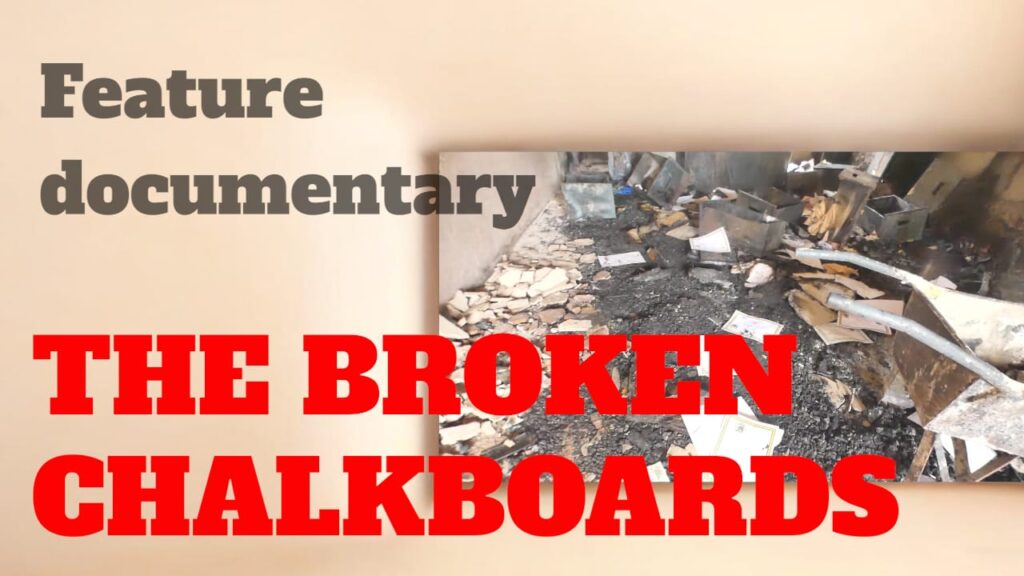
Feature Documentary by Ngamegbulam Chidozie Stephen The sun rises early over Ghana’s Upper East Region, casting a golden hue over the flat plains and scattered school compounds. For generations, these institutions, forty-nine senior high schools and several technical and vocational centers, have stood as beacons of hope, preparing the young for brighter futures. But in recent times, a cloud has settled over these grounds. What once were sanctuaries of learning have become, with troubling frequency, sites of unrest. Desks overturned, windows shattered, staffrooms vandalized, student riots, once rare, have become alarmingly common, leaving educators, parents, and leaders searching for answers It began as a whisper, a phone stolen in a dormitory, a rumor of unfair punishment, or the discontent over a meager meal. But these minor sparks soon flared into flames. Reports from ApexNewsGH revealed a disturbing trend: students, once lauded as the torchbearers of the region’s future, were now, in too many cases, undermining their very schools through acts of defiance and destruction. At the Technical and Vocational Education and Training (TVET) office, the atmosphere was somber. Mr.William Aduum, the regional director, sat behind his desk, stacks of disciplinary reports at his elbow. “Parents are not allowed to give phones to their wards to bring to school,” he explained. “But the students sneak them in. They hide them. When a phone is stolen, investigations begin, by the students themselves. Bullying follows. And when a student is pushed too far, trouble seeks him out.” Such incidents, he noted, were no longer isolated. “Every administration since the Fourth Republic has seen at least one or two riots. These disrupt academic activities and leave lasting scars on the educational landscape.” To understand the surge, one must look beyond the headlines. Professor David Miller, President of the Miller Institute for Transdisciplinary and Development Studies, had spent years studying youth behavior. “Rioting in schools, especially second-cycle institutions, is on the ascendancy nationwide,” he said gravely. “There are several causes. The abuse and misuse of drugs is a major one, both in and outside school. Habits formed at home follow students back to the classroom, poisoning the environment.” Professor Miller listed seven factors behind the unrest, four major, cross-cutting causes and three more specific to individual institutions. Alongside drugs, he identified breakdowns in communication, lack of awareness about the consequences of actions, and shifting generational expectations. “This generation is complex, sensitive, and active,” he said. “We need to reform how we communicate with them. Many don’t understand the full impact of their actions.” Reverend Thomas Abukari Thomas, chairman of the Upper East Regional Christian Council, echoed these concerns. As head pastor of the Baptist Church in Bolgatanga, he saw firsthand the devastation wrought by riots. “The government has spent huge sums on infrastructure, which we desperately need. Yet, students destroy these scarce resources, often over misunderstandings or misinformation.” The role of discipline, or the lack thereof, soon surfaced as a recurring theme. Honorable. Volmeng David Nansong, Upper East Regional Secretary for the Parent-Teachers Association, was blunt: “The abolition of corporal punishment is at the root of this. Teachers are afraid to enforce discipline. Back in the day, strikes and riots were rare. Now, security forces have to camp on campus to prevent unrest from spreading. The Ghana Education Service should reintroduce demotion and promotion based on behavior. Students must know there are consequences.” Yet, even as some called for a return to old methods, others pointed to deeper fractures. Alhaji Sumalia Issaka, Chairman of the Upper East Regional Peace Council, spoke of a worrying trend: tribal divisions among students, which sometimes determined who could become a senior prefect or even a headmaster. “If you’re not a Kassena-speaking boy, you can’t be senior prefect in Navrongo. If you’re not Gurune, you can’t lead in Big Boss. This tribalism is spreading to staff appointments too.” In the midst of turmoil, some students tried to uphold the values their schools instilled. One young student from Zamse, known among peers as an “Elephant,” spoke candidly. “It’s unbearable for those of us who want to learn. We’re influenced by friends into acts we don’t support. If you speak out, you become a target. Sometimes, even the innocent end up paying fines for acts they did not commit. We need more education about the dangers of such behavior.” Francis Adingo, President of the Upper East Youth Association, agreed that grievances, if genuine, should be addressed through proper channels. “There are rules and regulations. Peaceful demonstrations are within our rights, but vandalism is not. Substance abuse is a big part of the problem. And parents are often unconcerned; some don’t even check what their children take to school. Weapons have been found in dormitories. Students have burned down dorms, libraries, places meant for their own growth.” With tensions mounting, school leaders scrambled to respond. The regional TVET director, William Aduum, doubled down on counseling. “We’ve mandated all schools to strengthen their guidance and counseling units. One counselor looking after 2,000 students isn’t enough. I’m visiting schools myself to see how we can improve.” Mr. Razak Abdul Korah, Upper East Regional Director of Education, described the escalating riots as a “major concern for all stakeholders.” Investigations were underway, but he believed the ultimate solution lay in civic education. “Some students don’t realize the long-term consequences of their actions. We need to educate and re-educate them, bring in career people and those who have struggled with drugs to share their stories. We used to have civic education in schools. It’s time to bring it back.” Other voices, like that of social justice advocate Mr. Nyeya Yen, pointed to practical causes. “Poor food is a major trigger. A hungry man is an angry man. Corruption, poor salaries, and theft of school supplies all play a role. Sometimes, cooks take food home, and students are left with less. This can lead to riots.” The Upper East Regional Minister, Honorable Donatus Atanga Akamugri, had seen the unrest up close. “Since I took over, I’ve dealt with
New Desks, New Hope: How a Simple Intervention Is Changing Learning at Tengzuk JHS
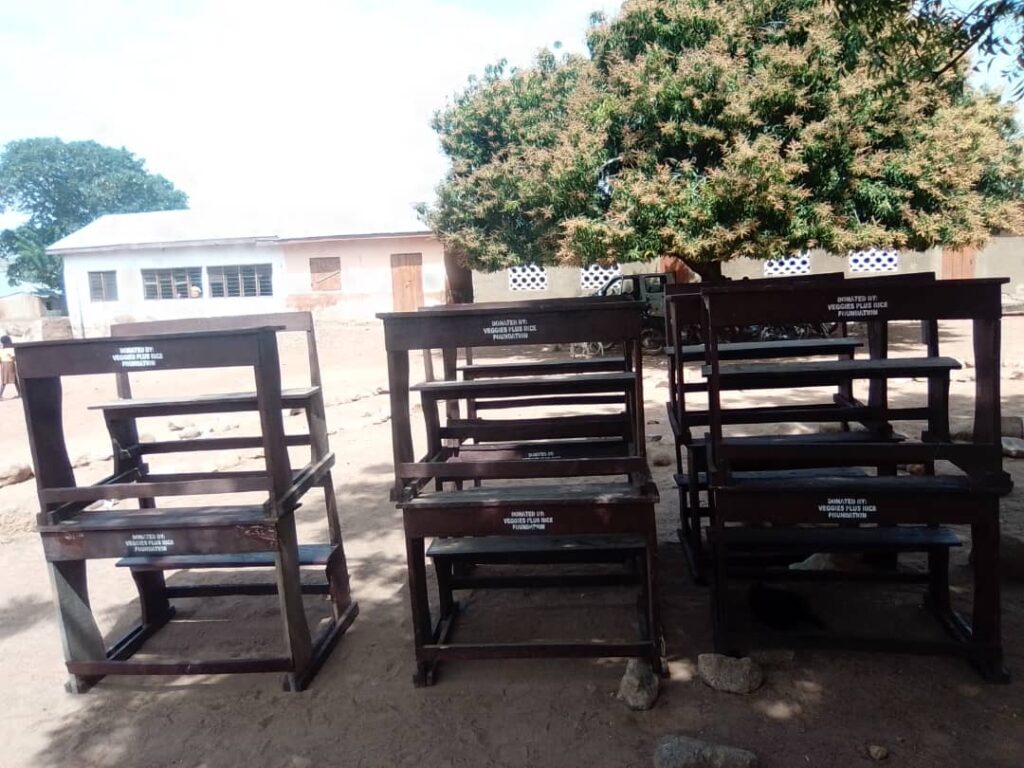
For years, the start of a new academic journey at Tengzuk Junior High School in the Talensi District of the Upper East Region came with an unexpected burden for parents and pupils alike. Beyond exercise books, uniforms, and school fees, pupils transitioning from Basic Six to Junior High School were required to provide something most families could scarcely afford: their own desks. In this rural farming community, where many households depend on subsistence agriculture, the cost of purchasing furniture often proved overwhelming. Some parents struggled for months to raise the money, while others had no option but to delay their children’s admission into Junior High School altogether. For those who managed to enrol, the reality in the classroom was far from ideal. Pupils sat two to a desk meant for one, while others perched on the floor, balancing their books on their laps as teachers tried to conduct lessons. “It was difficult to concentrate,” one pupil recalled. “Sometimes you are tired before the lesson even begins because you have nowhere comfortable to sit.” Teachers at the school say the furniture shortage affected not only students’ comfort but also the quality of teaching and learning. Crowded seating arrangements limited classroom movement, reduced participation, and made it difficult for teachers to effectively monitor pupils’ work. Over time, the situation began to take a toll on academic performance and attendance. That reality, however, has begun to change. Relief came when the Veggies Plus Rice Foundation, with support from the National Youth Authority (NYA) and the Handy Hand Initiative, donated ten dual desks to Tengzuk Junior High School. The intervention, though modest in numbers, has had a significant impact on the school community, restoring dignity to pupils and easing the financial pressure on parents. Receiving the desks on behalf of the school, the Headteacher of Tengzuk JHS, Mr. Victor Nambok, could not hide his appreciation. “This intervention is timely and very important to us,” he said. “The lack of furniture has been one of our biggest challenges. On behalf of the staff, pupils, and parents, I want to say a big thank you to the donors. We assure you that the desks will be put to good use and properly maintained.” For parents, the donation represents more than just furniture—it is a lifting of a heavy burden. No longer will families be forced to choose between feeding their households and buying desks for their children. Some parents described the previous requirement as discouraging, particularly for large families with several school-going children. “When your child completes Basic Six, you should be happy,” a parent noted. “But instead, you start worrying about where to get money for a desk. This support has brought us relief.” A member of the Veggies Plus Rice Foundation, Ms. Helena Akologo, explained that the Foundation’s mission is rooted in supporting vulnerable individuals and communities, particularly in the areas of education and social welfare. “We identified Tengzuk JHS because of the serious furniture deficit affecting teaching and learning,” she said. “Education is the foundation of development, and no child should be denied quality learning because they cannot afford a desk. This is part of our small contribution to improving lives, and we hope to do more in the future.” The impact of the intervention was evident in the excitement of the pupils. Smiling faces filled the classroom as students eagerly occupied the new desks, some experiencing the comfort of proper seating for the first time in their school lives. “This will help us learn better,” a pupil said. “Now we can write well and pay attention in class.” Another added that having a desk makes school feel more serious and motivating. “It makes us feel important and ready to learn,” she said. The donation ceremony also provided an opportunity for mentorship and guidance. The Upper East Regional Director of the National Youth Authority, Mr. Francis Takyi-Koranteng, commended the Veggies Plus Rice Foundation for partnering with the Authority to support education at the grassroots level. He used the occasion to speak directly to the pupils, cautioning them against substance abuse, violence, and indecent behaviour. Emphasising personal responsibility and discipline, he reminded them that education alone is not enough without good character. “You are the future leaders of this country,” he told the students. “Stay away from drugs, violence, and behaviours that can destroy your dreams. Focus on your studies and build yourselves into responsible and successful adults.” His message echoed the NYA’s ongoing campaign theme: “Aspire to be a responsible, successful adult – say no to drugs, violence and inappropriate behaviour; your future is in your hands.” As lessons resumed under improved conditions, the atmosphere at Tengzuk Junior High School felt renewed. While challenges remain, the donation of desks has restored hope and reaffirmed the power of targeted community interventions. For the pupils of Tengzuk JHS, a simple piece of furniture has become a symbol of opportunity—proof that when communities, organisations, and institutions come together, even small acts of kindness can make a lasting difference in the lives of young learners. Source: Apexnewsgh.com/Prosper Adankai/Contributor
GTEC Halts Bolgatanga Technical University Council Decisions
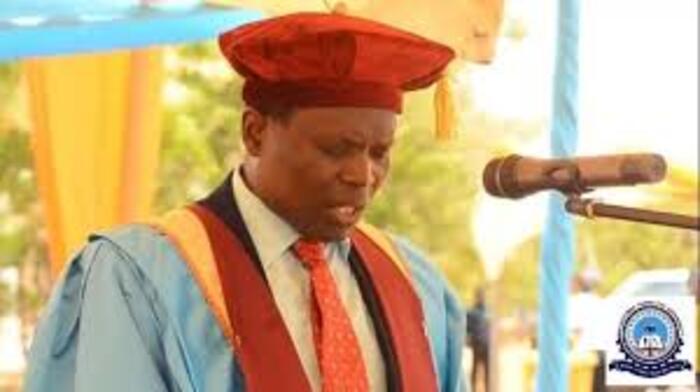
In an unfolding drama at the Bolgatanga Technical University, the Ghana Tertiary Education Commission (GTEC) has stepped in to halt major decisions made by the university’s Governing Council concerning the fate of its Vice Chancellor and Registrar. It all began with a circular dated December 15, 2025. The Chairman of the Governing Council, Dr. Bishop Akolgo, instructed Professor Samuel Erasmus Alnaa, the Vice Chancellor, to proceed on a one-year accumulated leave, starting December 19, 2025. The council explained its directive as a standard governance practice, designed to create an atmosphere of calm, reflection, and institutional healing. However, GTEC responded swiftly, raising concerns about the unprecedented nature of the decision. The Commission warned that directing a Vice Chancellor to take a year-long leave based on petitions was not only unusual but could also have unforeseen negative consequences for the university. GTEC underscored the significance of the Vice Chancellor’s office, stressing that such directives should not be issued through a mere circular to the university community. The same council meeting also resolved to appoint Mr. Richard Abugre Atia, the Acting Registrar, as the substantive Registrar effective January 1, 2026. Yet, GTEC revealed that Mr. Atia had not met the required pass mark set by the university’s interview panel for the position. In light of these developments, GTEC has ordered that both decisions made at the emergency council meeting on December 11, 2025, be immediately stayed. The Commission has also demanded all related information and documentation, including the grounds for the Vice Chancellor’s leave and the interview report for the Registrar position, be submitted to GTEC by Friday, December 19, 2025, for further examination and guidance on the next steps. The intervention by GTEC underscores the critical role of oversight in tertiary education governance, as stakeholders await the Commission’s final advice on the matter. Attached below are full details from the GTEC letter and that of the Council Chairman of the Bolgatanga Technical University STAY OF ACTION ON DECISIONS OF THE GOVERNING COUNCIL OF THE BOLGATANGA TECHNICAL UNIVERSITY The attention of the Ghana Tertiary Education Commission (GTEC) has been drawn to a circular dated 15th December, 2025 addressed to the University Community emanating from the office of the Council Chairman on the above subject. In the said circular, the Vice Chancellor (VC) of the university is directed to take his accumulated leave informed by some petitions received at the university. Sir, the Commission finds this directive unprecedented and potentially problematic as that can create unforeseen negative consequences. This is because, the office of the Vice Chancellor is a very important office within the university architecture and directing the occupant of such an office through a circular to the university community to proceed on leave is unacceptable. Again, in the referenced circular, Mr. Richard Abugre Atia, the Acting Registrar of the University, is deemed to have been appointed the substantive Registrar effective 1st January, 2026. Sir, GTEC is reliably informed that Mr. Richard Abugri Atia did not make the pass mark as set by the interview panel constituted to conduct interviews for that position. Informed by the above, the Commission hereby directs that the two decisions reached at the emergency council meeting held on the 11th of December, 2025 be STAYED. The Commission further requests that all necessary information and documentation leading to the Vice Chancellor being asked to take his accumulated leave, and the interview report for the position of Registrar, should be presented to GTEC for study and advice on the next line of action latest by Friday, 19th December, 2025. In the meantime, Professor Samuel E. Alnaa remains the substantive Vice Chancellor of the Bolgatanga Technical University and is deemed to be at post until he decides to take his annual leave. Also, Mr. Richard Abugre Atia cannot assume office as Registrar until all the issues bordering on his appointment are resolved. Yours faithfully, Prof Ahmed Jinapor Abdulai Dear Prof Alnaa. DIRECTIVE TO PROCEED ON ACCUMULATED LEAVE The Governing Council at its meeting held on 11th December, 2025 considered matters relating to institutional stability, staff morale, and the ongoing efforts to restore a peaceful and conducive environment for academic work and administrative operations. Council also reviewed your accumulated annual leave entitlement since your appointment in May, 2018 to date which has thus accrued a one-year leave in accordance with the provisions of the Labour Act, 2003 (Act 65l) and the University’s Human Resource Policy. In line with standard governance practice in tertiary institutions and guided by the need to create a calm atmosphere for reflection, reconciliation, and institutional healing, Council hereby directs that you proceed on your accumulated leave effective 19th December 2025 to 18th December 2026. The purpose of this leave period is to: Allow you the opportunity for well-deserved rest and reflection; Provide space for ongoing peace and reconciliation processes to take root; Enhance confidence-building measures across the University community. During your leave, the Pro Vice Chancellor shall act in accordance with the University Statutes. We appreciate your service to the University and trust that this intervention will contribute positively to our collective objective of ensuring harmony, restoring confidence, and promoting the stability required for the University’s transformational agenda. We count on your cooperation. Respectfully, Dr Bishop Akolgo Chairman, Governing Council Source: Apexnewsgh.com
Education Ministry Denies Reports of 13th-Month Salary for Teachers

The Ministry of Education has refuted claims circulating on the Opera News platform that the Minister for Education, Alhaji Haruna Iddrisu, announced plans to introduce a 13th-month salary for teachers. In an official statement, the Ministry described the report as false and misleading, stating unequivocally that the Minister has made no such announcement at any public forum or official engagement. The Ministry characterized the publication as a deliberate attempt to misinform the public and falsely attribute statements to the Education Minister. While reaffirming the government’s commitment to improving the welfare and working conditions of teachers, the Ministry emphasized that no proposal for a 13th-month salary has been introduced or supported by Hon. Haruna Iddrisu. The Ministry has called on Opera News to retract the publication and issue a public apology to both the Minister and the public. It further advised the public to disregard the report and avoid sharing unverified information, assuring that all official policies and announcements will be communicated solely through the Ministry’s recognized and authorized channels. Source: Apexnewsgh.com
Balungu-Ganlagrum Primary Breaths New Life with Donated Desks
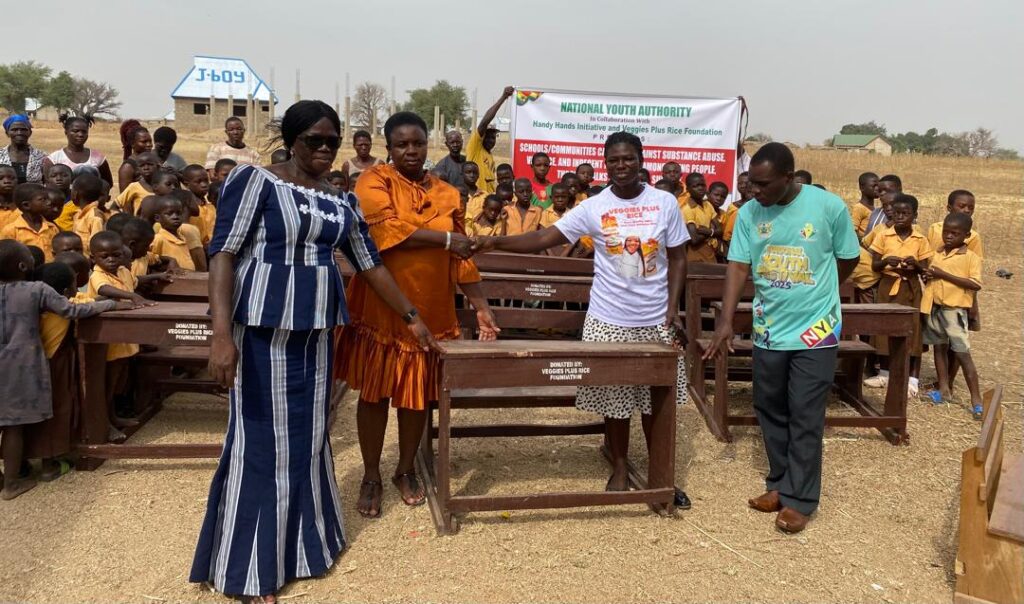
Balungu-Ganlagrum, a rural community in the Bongo District of Ghana’s Upper East Region, has received a modest but life-changing boost to basic education through a targeted philanthropic intervention aimed at restoring dignity to learning spaces for young pupils. The Balungu-Ganlagrum D/A Primary School, established in 2016 through communal effort, has long struggled with inadequate infrastructure and a severe shortage of furniture. With no external funding at its inception, parents and community members moulded mud blocks to construct temporary classrooms. Over time, these structures collapsed, leaving pupils without permanent classrooms and forcing many to learn under trees or sit on bare ground during lessons. The situation adversely affected teaching and learning, contributing to absenteeism and, in some cases, pupil dropouts. Some children were compelled to walk long distances to neighbouring communities in search of better learning conditions, exposing them to safety risks. In response to these challenges, Veggies Plus Rice Foundation, in partnership with Upper Hand Initiatives and the National Youth Authority (NYA), donated ten dual desks to the school. The intervention followed an assessment of deprived schools in the Bongo District, which identified Balungu-Ganlagrum D/A Primary School as a priority beneficiary due to its acute furniture deficit. The donation forms part of the Foundation’s corporate social responsibility initiatives, designed to support underserved communities through practical, needs-based solutions. For the school, which has an enrollment of 81 pupils and six teachers, the desks provide immediate relief and a more conducive learning environment for young learners. A visit by GBC URA Radio revealed the extent of the school’s infrastructural challenges. Kindergarten and lower primary pupils currently study under trees due to the lack of classrooms, while upper primary classes are combined in limited spaces, resulting in multigrade teaching driven more by necessity than by educational planning. Presenting the desks, representatives of the partner organisations emphasised the importance of improving basic learning conditions, particularly at the foundational level of education. Speaking on behalf of Veggies Plus Rice Foundation, Madam Elizabeth Alenye reaffirmed the Foundation’s commitment to supporting vulnerable communities through targeted interventions that directly address pressing needs. The Headteacher of the school, Madam Philomina Atinga Azumah, expressed profound gratitude to Veggies Plus Rice Foundation, Upper Hand Initiatives, and the National Youth Authority for the timely support. She noted that while the school’s inclusion in the Ghana School Feeding Programme has helped sustain enrolment, quality education also requires adequate furniture and permanent classroom infrastructure. She appealed to government agencies, development partners, and philanthropic organisations to come to the aid of the school with additional desks, teaching and learning materials, and classroom facilities. Community leaders also used the occasion to highlight broader development needs. PTA Chairman Ben Ataweera Atinga called on the National Youth Authority to introduce skills training programmes for youth in the area, while PTA Organiser Abalungu Akan-melog underscored the need for reading materials to strengthen literacy and sustain pupils’ interest in education. The Upper East Regional Director of the National Youth Authority, Francis Takyi-Koranteng, commended Veggies Plus Rice Foundation for its commitment to grassroots development and for collaborating with the Authority to support a truly deserving school. Although limited in number, the donated desks have restored a sense of dignity and hope to the Balungu-Ganlagrum D/A Primary School. The intervention highlights how targeted philanthropy, driven by partnership and local needs, can make a tangible difference in communities on the margins. For the children of Balungu-Ganlagrum, the desks represent more than furniture—they symbolise empathy, opportunity, and the belief that every child deserves a fair start in life through access to quality education. Source: Apexnewsgh.com/Prosper Adankai/Contributor
MTN Global Graduate Programme Develops Over 500 Leaders Since Inception
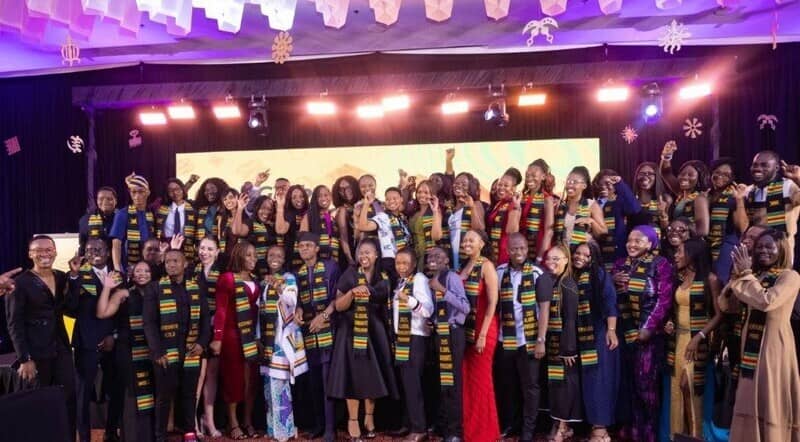
MTN Ghana has successfully graduated 80 young professionals from its 2025 Graduate Development Program, an initiative designed by the telecommunications company to promote the inclusion of women in the business. The graduation ceremony, held on November 20, 2025 at the Marriott Hotel in Accra, brought together participants from across MTN’s African markets. Abdallah Ibrahim, the Acting Chief Human Resource Officer for MTN Ghana, emphasized MTN’s intentional strategy to increase the number of women in its workforce. “We have leveraged the Graduate Development Programme to drive female representation within the company. About 60% of the graduate delegates are women and a key initiative in our quest to reach 50% female representation by 2030,” he stated. Abdallah confirmed that this intentional approach is already transforming the organization, highlighting the notable increase in the overall representation of women in recent years. “Since we began this journey to increase female representation at MTN Ghana, we have added approximately 5% more females to the workforce since we started monitoring our progress in 2020. Today, we stand at about 43% representation of females within our organization,” he said. Sylvia Owusu-Ankomah, Chief Executive Officer of the Telecoms Chamber, commended MTN for its dedication to developing African talent, especially the large number of women in the graduating class, in her keynote speech. “It’s exciting to see that over 60% of today’s graduates are women,” she commented, urging the graduates to stay true to themselves in a competitive digital age. Kagiso Malepe, Manager of the MTN Global Graduate Programme, explained that one of the main challenges and opportunities is bringing together individuals from different countries, cultures, and backgrounds under a common identity. “Our biggest task is harmonizing diverse perspectives and helping participants immerse themselves in MTN’s organizational culture. With MTN operating across multiple markets, the message of one culture, one MTN is fundamental,” he said. The 80 graduates, representing 18 countries across Africa, received certificates and are expected to take roles within MTN that support MTN’s goal of developing future African leaders in technology, digital services, and business innovation. Source: Apexnewsgh.com
Ghana Considers Sending English Teachers to Colombia in Bid to Deepen Bilateral Ties

The government of Ghana has announced plans to explore a new partnership with the Republic of Colombia that could see Ghanaian English teachers sent to support language instruction in South America. The initiative was revealed by Vice President Prof. Jane Naana Opoku-Agyemang during a courtesy call from Colombian Vice President Francia Elena Márquez Mina, who is visiting Ghana for three days to strengthen relations between the two nations. During the meeting, Prof. Opoku-Agyemang highlighted the success of the current programme in which Colombian educators teach Spanish in Ghana. She suggested that this collaboration could be expanded so that Ghanaian teachers would have the opportunity to offer English lessons in Colombian schools. “Ghana particularly values Colombia’s enduring support for the teaching of the Spanish language in Ghana. It’s a programme that has significantly enhanced institutional capacity and deepened cross-cultural understanding,” the Vice President noted. She referenced the recent graduation ceremony for the programme’s 12th edition, held on December 11, as further evidence of its impact. “I was asking that we expand that path to send teachers of English from Ghana to Colombia, too,” she said. Prof. Opoku-Agyemang also spoke about a range of ongoing cooperation agreements between Ghana and Colombia, including joint projects in immigration, agriculture, education, political consultations, air services, technical cooperation, sports, and youth development. She called for greater efforts to build on these frameworks and deepen the partnership. “Our two countries have signed agreements and are undertaking joint projects in several areas,” she remarked, underscoring the breadth of collaboration already underway. Looking to the future, the Vice President emphasized the importance of exploring additional opportunities, particularly in trade, cultural exchange, and tourism, to boost economic growth for both countries. She noted Colombia’s expertise in biodiversity-driven innovation, creative industries, and agro-processing, while highlighting Ghana’s dynamic investment landscape and expanding markets in agriculture, energy, and services. As part of the visit, the Ghana Investment Promotion Centre (GIPC) hosted a business seminar for the Colombian delegation, further advancing efforts to promote investment and deepen cooperation between the two nations. With both governments expressing a commitment to broaden educational and economic ties, the proposed teacher exchange programme stands as a symbol of the growing partnership and mutual support between Ghana and Colombia. Source: Apexnewsgh.com
Outcry as BECE Fees Rise by 24%: Private Schools Lead Protest
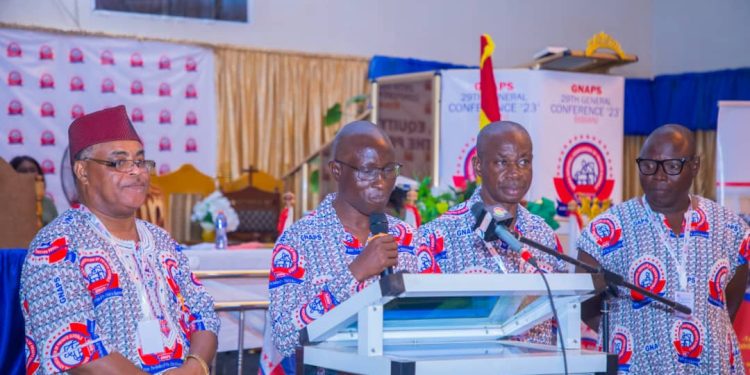
The Ghana National Association of Private Schools (GNAPS) has called on the West African Examinations Council (WAEC) to immediately reverse its planned 24.24% increase in the Basic Education Certificate Examination (BECE) registration fee. The fee is set to rise from GHC282.35 in 2025 to GHC350.82 in 2026, a move GNAPS said threatens the educational progress of hundreds of candidates in private schools across the country. In a statement issued on Thursday, December 11, 2025, GNAPS urged WAEC to halt the hike and engage in broad consultations with stakeholders, including the association, to determine a fair and justifiable fee. The group also called on the Ministry of Education and the Parliamentary Select Committee on Education to intervene to protect economically disadvantaged children from being excluded from Basic 9 education. “Swift action is essential to maintain the trust and goodwill of parents, private schools, and the broader education community in the government’s commitment to affordable, accessible, and equitable education,” the statement said. GNAPS noted that while WAEC justified last year’s fee increases by citing inflation, exchange rates, port charges, and fuel costs, national economic indicators have recently stabilised. For instance, inflation fell from 8% in October 2025 to 6.3% in November 2025, while the Cedi has remained relatively stable. GNAPS described this year’s hike as “economically indefensible” and “punitive.” The Association also criticised WAEC for failing to consult the non-state education sector, whose candidates bear the brunt of the fee increases. According to GNAPS, such unilateral decisions undermine principles of transparency, collaboration, and sensitivity to the socioeconomic realities faced by parents and schools. Over the past five years, GNAPS has warned that rising BECE registration fees have increasingly hindered Junior High School completion rates, particularly in lower-income communities. The Association stressed that excessive fees risk forcing hardworking parents to withdraw their children from school. GNAPS affirmed its commitment to protecting the educational rights of disadvantaged children and expressed readiness to engage WAEC, the Ministry of Education, and other stakeholders to reverse the planned fee increase. Source: Apexnewsgh.com