
Education Minister Unveils Major Infrastructure Boost During Presidential Visit
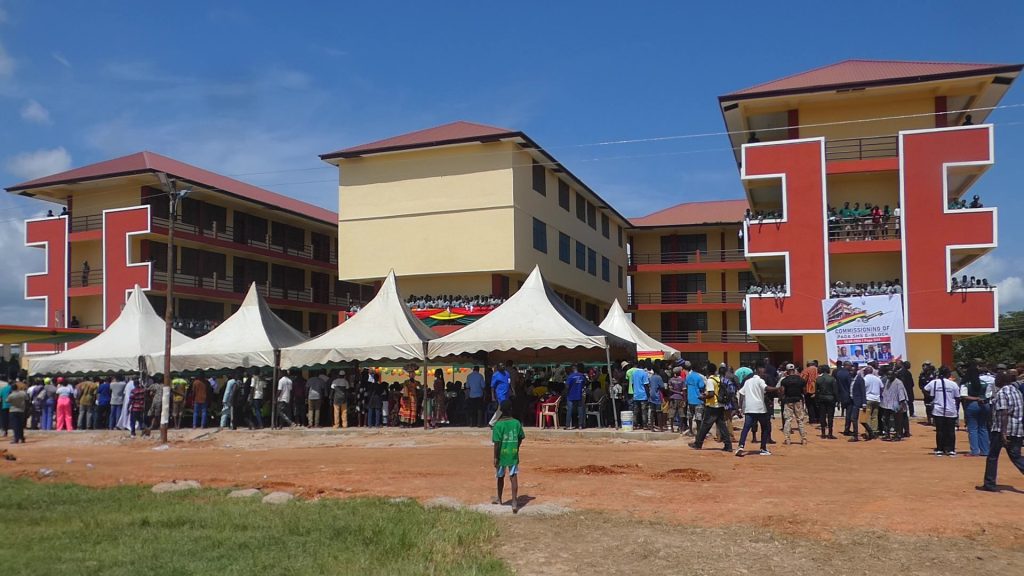
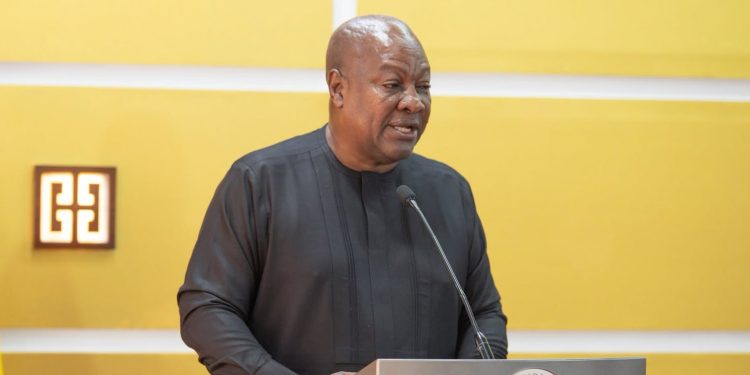
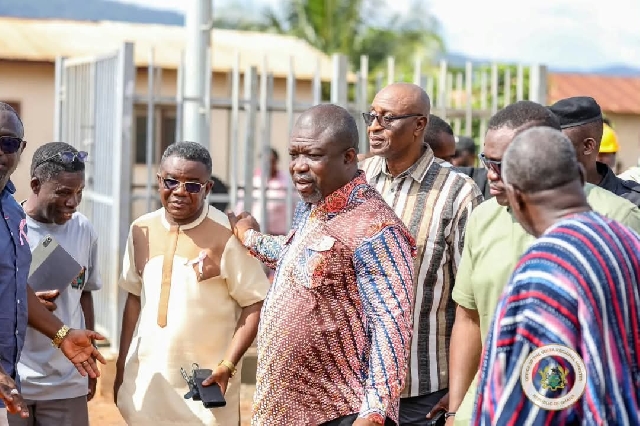
It was a day of optimism and anticipation in Paga as the Education Minister, Hon. Haruna Iddrisu, delivered news set to transform the educational landscape of the Upper East Region during President John Dramani Mahama’s Resetting Agenda tour. Standing before an eager crowd, Minister Iddrisu framed the President’s return as a “democratic dividend,” bringing long-awaited benefits to the people. He pointed to the commissioning of the previously abandoned e-block as a symbol of renewed commitment to educational access. “To deny these young people their required infrastructure is to deny them opportunity,” he said, noting the dramatic increase in secondary school enrollments, from 1,800 students to as many as 4,000 in some schools, since 2018. In a landmark announcement, the Minister revealed that, starting next academic year in September, Berger Senior High School would be upgraded to a fully-fledged institution, equipped to serve both local and national needs. This transformation, he explained, is part of President Mahama’s broader STAR-J program, a comprehensive, well-funded initiative aimed at expanding access to secondary education nationwide. Between now and December 2027, the STAR-J program will inject 2.8 billion Ghana cedis into secondary school infrastructure. Schools across the Upper East Region, including Bolgatanga Central Technical Institute, Gambibgo Community Day SHS, Binduri Community SHS, and Garu Community Day SHS, are set to benefit, either through new facilities or upgraded science laboratories. Iddrisu also appealed for the construction of boarding facilities for boys and girls at Paga Senior High School, ensuring no student is left behind. The Minister highlighted President Mahama’s track record of building strong institutions, referencing the establishment of the Scholarship Authority, which will now work alongside the GETFund to administer scholarships with greater transparency and accountability. Medical education was also in focus, with plans to expand university access and demystify the path to becoming a doctor. On the perennial issue of student feeding, Iddrisu assured the gathering that uncapped GETFund resources would ensure seamless food supply, eliminating disruptions to the academic calendar and ending the practice of using classrooms as storage spaces. Looking ahead, the Minister confirmed that President Mahama had directed his economic team to finalize the funding modalities for a new GETFund, with a bill to be presented before Parliament in January 2027. “President John Dramani Mahama’s leadership is about building viable institutions and responding to the real needs of Ghana’s youth,” Iddrisu concluded. Source: Apexnewsgh.com/Ngamegbulam Chidozie Stephen
Rethinking Development: How Millar Open University is Putting African Culture at the Heart of Higher Education
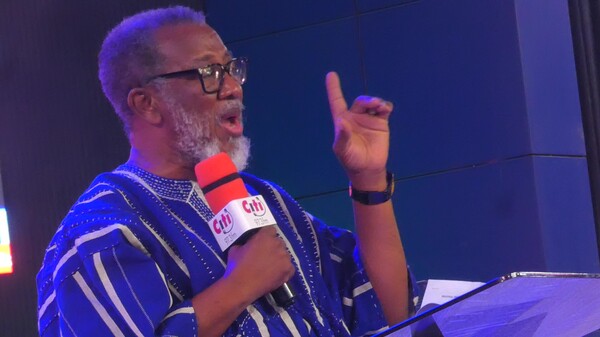
Since time immemorial, Africa’s cultural identity has been defined by its most vibrant symbols: the thunder of drums, the kaleidoscope of traditional fabrics, the aroma of local cuisine, and the spirited energy of dance and festival. Yet, beyond these visible expressions lies a deeper, often overlooked dimension: culture as a living science and a reservoir of collective knowledge that shapes how communities govern, manage resources, confront climate change, and define wellbeing itself. This is the intellectual frontier being explored at Millar Open University, a pioneering institution that is challenging mainstream approaches to higher education by placing African culture at the epicenter of knowledge production and development. For Professor David Millar, the university’s founder and guiding voice, the reduction of culture to mere spectacle obscures its true power: its ability to organize societies, solve problems, and inform every facet of daily life. “Culture isn’t just about art or entertainment,” Professor Millar insists. “It is a science, a system of knowledge that equips communities to respond to challenges.” At Millar Open University, the case is made that development cannot be separated from culture. Every project, whether in healthcare, governance, finance, or environmental protection, unfolds within a cultural context. This means that imported solutions, no matter how well-intentioned, risk failure if they ignore the knowledge systems and values of the people they seek to help. Professor Millar’s argument upends a longstanding hierarchy in global knowledge production. While Western science is often treated as the universal standard, indigenous knowledge is relegated to folklore or belief. But what if science itself can be interpreted through a cultural lens? At Millar Open University, the answer is a resounding yes: the institution advocates for a multicultural approach to science, where different societies, European, Asian, African, can each contribute their intellectual traditions to a richer, more nuanced understanding of the world. “Take Western science and view it through a cultural perspective,” Millar explains. “This justifies the idea of multicultural science.” This approach aligns with global debates on decolonisation, reparations, and the legitimacy of African knowledge systems. The university views these not as side issues, but as central to the way knowledge is produced and validated. Professor Millar points to the important but often underrecognized work of African Studies centers at the University of Ghana and elsewhere, arguing that such conversations need to move from the academic margins to the mainstream. Millar Open University’s commitment to flexibility is as radical as its intellectual vision. Unlike many open universities that rely exclusively on distance learning and massive enrollment, Millar’s model blends physical and virtual engagement in a monthly rhythm. Students, most of whom are already employed professionals, engage in remote learning for most of the month, then converge on campus for intensive, face-to-face sessions. This structure caters to adults juggling work, family, and academic ambitions. Around 98 percent of PhD students and 70 percent of master’s students are employed before enrolling. Rather than serving as a launchpad for young people entering the workforce, the university acts as a transformative platform for professionals seeking to challenge and expand the knowledge they already possess. Perhaps most distinctively, the university promotes “unlearning and relearning.” Students are encouraged not just to acquire new skills, but to question received wisdom and reconsider their fields from indigenous perspectives. An accountant might explore local financial traditions; a doctor might study non-communicable diseases through alternative frameworks. The aim is not to reject conventional knowledge, but to interrogate its universality and foster intellectual pluralism. Located in Ghana’s eastern corridor, Millar Open University deliberately maintains a rural orientation, even as it attracts urban students. The goal is to offer education outside the usual urban-centric models and professional networks, making advanced study accessible without requiring relocation or loss of employment. Flexible fee arrangements and limited scholarships make the institution more accessible, though it relies primarily on tuition for sustainability. The university’s approach finds its most profound expression in its relationship with indigenous communities. Professor Millar challenges the notion that development should be measured solely by material wealth. In many communities, wellbeing is defined by social relationships, happiness, and communal belonging, not just by cars, homes, or bank balances. Recognizing these values makes traditional knowledge and institutions relevant to contemporary debates about development and climate change. Sacred landscapes and traditional institutions are treated as vital sources of environmental knowledge. Customary rules protecting forests, groves, and water bodies reflect centuries of climate adaptation, long before the concept entered global policy discourse. Instead of asking only what communities can learn from modern science, Millar Open University asks what science can learn from communities that have managed their ecosystems for generations. To illustrate these ideas, Professor Millar often references “The Gods Must Be Crazy,” using its story of a Coca-Cola bottle’s disruptive arrival in a remote community as a metaphor for development’s unintended consequences. The lesson: technology or aid is not inherently beneficial. Its impact depends on the cultural system it enters. While ICT is central to Millar Open University’s model, enabling research supervision and communication, the institution deliberately preserves monthly in-person sessions. For a university that sees culture as lived experience, face-to-face engagement remains essential. With 14 years of operation, national accreditation, and academic affiliations, including a partnership with the University for Development Studies, Millar Open University is not an academic outlier. Its research networks extend to Zimbabwe, South Africa, the Netherlands, and beyond, positioning its cultural approach within a global intellectual conversation. The university’s success is not measured in job creation, but in the transformation of professional practice. Its graduates, already positioned in academia, public administration, and other sectors, bring new ways of thinking to their fields. A health worker might integrate biomedical and indigenous knowledge; a policy-maker might draw on traditional concepts of governance and wellbeing; a researcher might see a shrine as a form of ecological management. Ultimately, Millar Open University’s radical proposition is that culture is not just about what people do, but how they know and live. It challenges the separation of African culture from science, policy, and
GES to Address Rising Indiscipline in Senior High Schools; Odorgonno SHS Appeals for Science Lab Support

The Ghana Education Service (GES) has expressed deep concern over the increasing cases of indiscipline among senior high school students and is set to take decisive action to curb the trend. Deputy Director-General of the GES, Professor Smile Dzisi, announced that the Service will convene a national stakeholder engagement in Sunyani, the Bono Regional capital, next week to investigate the root causes of student misconduct and devise effective strategies to address the issue. Speaking to the media during the 86th anniversary celebration of Odorgonno Senior High School, Prof. Dzisi emphasized that the GES is committed to ensuring accountability among students. She noted that while parents could be held responsible in certain situations, severe cases, such as serious destruction of property or other major offences, may require students to face legal consequences. “Any student that will be caught will be severely punished. Or any staff that will be caught condoning such actions will be severely punished. It’s important to agree on the way forward,” Prof. Dzisi stated. Meanwhile, authorities at Odorgonno Senior High School are appealing for urgent support to build a new science laboratory. Currently, the school is forced to use its dining hall as a science lab, a situation that has led to frequent breakage of laboratory equipment and hampered practical science lessons. The school also lacks a practical centre for visual arts students, further constraining hands-on learning. Headmaster Patrick Mensah has called on stakeholders, organisations, and individuals to help address these critical infrastructure challenges, stressing the need for improved facilities to enhance the quality of education at Odorgonno Senior High School. Source: Apexnewsgh.com
Government Unveils Bold GH₵3 Billion Plan to End Double-Track System in Senior High Schools
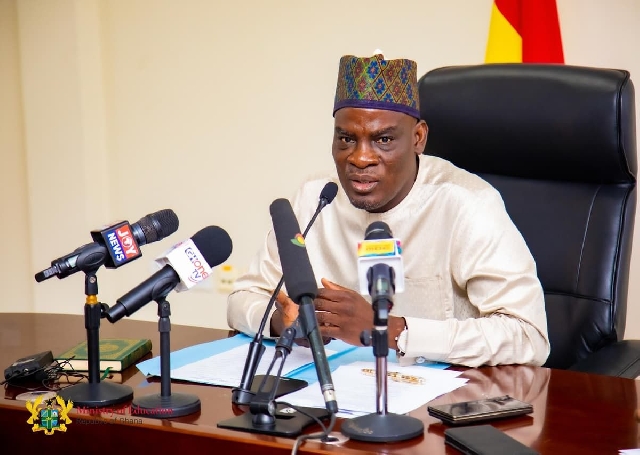
A major milestone is on the horizon for Ghana’s education sector as the government finalizes an ambitious capital investment strategy aimed at permanently ending the double-track academic calendar in Senior High Schools (SHSs) nationwide. Education Minister Haruna Iddrisu is set to unveil the cabinet-approved GH₵3 billion infrastructure development programme at the eagerly awaited Government Accountability Series. The initiative, described as a definitive blueprint for the future of secondary education, seeks to close the chronic accommodation and classroom deficits that first led to the adoption of the dual-track system. According to Felix Kwakye Ofosu, Minister of State in charge of Government Communications, the massive infrastructure build-out will be a focal point during the upcoming mid-year review of the national education sector. The plan significantly expands on previous localized funding efforts, combining an immediate GH₵1 billion allocation from the Ghana Education Trust Fund (GETFund) with additional global support facilities. Government officials confirm that the infrastructure drive is designed to resolve space shortages across affected schools, paving the way for the complete phase-out of the split-semester system by 2027. The double-track calendar was initially introduced as a stopgap to accommodate the surge in student enrollment following the launch of the Free SHS policy. However, persistent infrastructure bottlenecks have forced many top-tier schools to maintain the alternating schedule, drawing criticism from parents and administrators frustrated by unpredictable academic timetables. Minister Iddrisu’s forthcoming master plan will offer a detailed roadmap for upgrading lower-tier schools, expanding hostel facilities, and constructing new classroom blocks. The goal is clear: to ensure all SHS students can attend classes and enjoy regular vacations together, marking the end of the double-track era and heralding a new chapter in Ghana’s educational journey. Source: Apexnewsgh.com
GES Orders Temporary Closure of Yendi Schools to Honour Late Dagbon Overlord
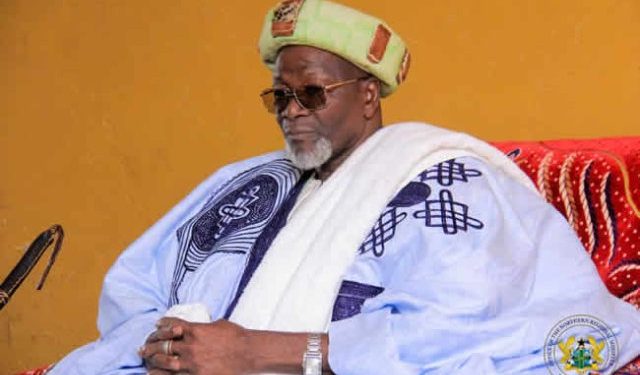
The Ghana Education Service (GES) has announced the temporary closure of all public and private schools within the Yendi Municipality to allow students and staff to observe the funeral rites of the late Overlord of the Dagbon Kingdom, Ndan Yaa-Naa Abukari II. In a statement released on Tuesday, July 14, the GES said the directive took effect from midday Monday, July 13, and will remain in force until Thursday, July 16. Full academic activities are expected to resume on Friday, July 17. The Service explained that the decision followed consultations with the Northern Regional Director of Education, the Director-General of GES, the Yendi Municipal Chief Executive, and the Gbewaa Palace. The closure aims to honour the late King and show respect for the cultural heritage and traditions of the Dagbon people during the mourning period. GES instructed all students and staff within the municipality to observe the mourning, expressing confidence that parents, school authorities, and stakeholders would cooperate with the directive. Yendi Municipal Chief Executive Muniru Sogri confirmed the decision to Citi News, explaining that the government approved the closure to enable residents, including the school community, to participate in activities marking the passing of the Dagbon Overlord. “Following the demise of the King of Dagbon, the Overlord, Yaa-Naa Abukari II, a decision was taken that to mourn the death of the King, public schools and also private schools have to close down,” he said. Meanwhile, the Dagbon Traditional Council has announced that the third-day Islamic prayers for the late Yaa-Naa Abukari II will be held at the Gbewaa Palace in Yendi on Thursday, July 16, at 10:00 a.m. The Council has invited the public to attend and offer prayers for the late Dagbon Overlord. Source: Apexnewsgh.com
Engage the Military to Build Pavilions: Prof. David Millar’s Solution to Eradicate Schools Under Trees
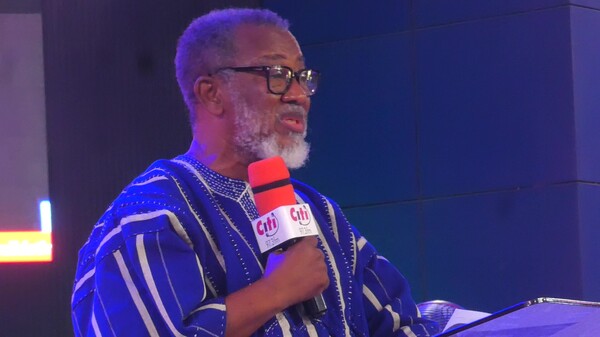
At the last session of the recent launch of the PEARL (Prosperity through Enterprise, Agriculture, Resilience and Livelihoods) Framework, a bold 10-year plan set to transform Ghana’s regions through agriculture, enterprise, and responsible mining, an urgent and innovative proposal stirred the room. Professor David Millar, President of the Millar Institute for Transdisciplinary and Development Studies, who also doubles as the Chairman of the launch, presented an important suggestion to the President’s Representative, Mr. Augustus Obuadum Tanoh (Presidential Adviser on the 24-Hour Economy and Accelerated Export Development), and the Deputy Education Minister, Hon. Clement Apaak, with a message both practical and visionary. With a voice marked by concern, and hope, Prof. Millar painted a troubling picture: nearly 5,000 basic schools across Ghana are still operating under trees or in crumbling structures. This crisis, he explained, strikes hardest in rural and underserved communities, where children are forced to learn in punishing conditions with no protection from the elements, scant furniture, and constant disruptions. But Prof. Millar brought more than a lament, he brought a solution. “If we engage the military, specifically the engineering regiments who have already proven their capability building highways, to construct simple but durable pavilions, we could remove all schools from under trees in record time,” he declared. The military, he argued, can rapidly build thousands of such structures, far faster and more cost-effectively than traditional contractors. “Furniture and other amenities can come later. The priority must be getting children into proper shelters.” Prof. Millar reminded his audience of historical precedent: “Years ago, under Rawlings and the NDC, pavilions were built for junior secondary schools, simple one-block structures that are now used as classrooms. Originally designed as open carpentry workshops, these pavilions have stood the test of time.” His vision is methodical and inclusive: “We should start from the north, where the need is greatest, and gradually eliminate all schools under trees as we move southwards. The military’s field engineers regiment is both cheaper and faster. There are about eight field units, these could be deployed across Upper East, Upper West, and beyond. Since we already know where these schools are, soldiers could build pavilions one after another, moving steadily toward the coast.” Prof. Millar’s proposal is clear: only by harnessing the speed and efficiency of the military can Ghana end the era of schools under trees, a solution that would be a landmark achievement for government, the military, and, above all, for Ghana’s children. Source: Apexnewsgh.com
GTEC Warns Public Against Unrecognised Tertiary Institutions and Certificates
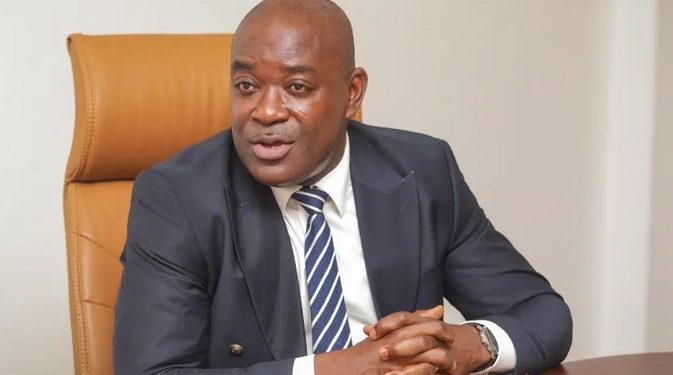
The Ghana Tertiary Education Commission (GTEC) has issued a strong caution to the public, urging prospective students, employers, and stakeholders to avoid enrolling in or accepting certificates from 80 tertiary institutions that are currently not recognised by the Commission due to quality assurance concerns. In an official statement released on Thursday, June 25, 2026, GTEC emphasized the importance of due diligence when considering academic programmes or qualifications from these institutions. “The Ghana Tertiary Education Commission (GTEC) wishes to inform the public that the institutions listed below are currently not recognised by the Commission due to various quality assurance concerns. Accordingly, the public is advised to exercise due diligence about any certificates issued by these institutions,” the statement read. The unrecognised institutions span several countries, including Ghana, the United States, India, Switzerland, and more. Among the list are names such as Universidad Azteca (Mexico), Indian School of Management and Studies (India), Breyer State Theology University (USA), Debest College of Science, Arts and Business (Ghana), and Atlantic International University (USA), among others. GTEC’s warning highlights the growing issue of unaccredited institutions offering tertiary education and issuing certificates that may not be valid for employment or further studies. The Commission reiterated its commitment to upholding educational standards and protecting the interests of students and employers in Ghana. Prospective students are encouraged to consult the official GTEC website or contact the Commission directly to verify the accreditation status of any tertiary institution before enrolling. Employers are also advised to scrutinize academic certificates to ensure they are issued by recognised and accredited institutions. The full list of unrecognised institutions is available through GTEC and includes 80 entities across several countries, underscoring the need for vigilance in the higher education sector. No. Institution Country 1 Universidad Azteca Mexico 2 Indian School of Management and Studies India 3 Breyer State Theology University USA 4 Debest College of Science, Arts and Business Ghana 5 Osiri University USA 6 Atlantic International University USA 7 Faith University Seminary (FUS) Ghana 8 Christian University College Monrovia Liberia 9 Rhema Bible Training College (RBTC) USA 10 Universidad Empresarial de Costa Rica Costa Rica 11 Selinus University of Sciences and Literature Italy 12 Crown University International Chartered USA 13 Monarch Business School Switzerland 14 City University Cambodia 15 Kesmond International University USA 16 Washington University of Barbados Barbados 17 London Academy of Technology and Management UK 18 IICSE University USA 19 Doxa Open University Ghana 20 Brainae University USA 21 University of Haana Germany 22 Christian Leadership University USA 23 International Institute of Church Management Inc. USA 24 Electrical and Mechanical Engineering Training School Ghana 25 Louisiana Baptist University & Seminary USA 26 Tech Global University Andorra 27 International Christian University Nigeria 28 LIGS University Hawaii, USA 29 Swiss Management Centre University Switzerland 30 Quest International University Ghana 31 Isles International University Ireland 32 Kingsnow University USA 33 New Life Bible College and Seminary USA 34 East Bridge University France 35 Texila American University Guyana 36 Vision International University USA 37 Keisie International University USA 38 Dublin Metropolitan University UK/Cyprus 39 Logos University USA 40 University of America USA 41 Kazian School of Management India 42 University of Northwest USA 43 Akamai University Hawaii, USA 44 Trinity Graduate School of Apologetics and Theology (TGSAT) India 45 American Bible University USA 46 California Creek University USA 47 Delta International University USA 48 National Institute of Business Management (NIBM) India 49 Southern California International University USA 50 Quetzalcoatl University of Veracruz Mexico 51 Swiss International Management Academy Switzerland 52 IBM Institute of Management India 53 Dunster Business School Switzerland 54 World Academy for Research and Development (WARD) UK 55 American Management University USA 56 All Nations Church International University Texas, USA 57 Freedom University and Theological Seminary USA 58 Global Theological University USA 59 Jorasome International University Zambia 60 Kingdom Living Bible Institute Kumasi, Ghana 61 Global Professional College Effiduase, Ghana 62 London School of Management and Technology (LSMT) UK 63 European Institute of Management and Technology Switzerland 64 Volta University College Ghana & Nigeria 65 United Nigeria University College Nigeria 66 Open International University Nigeria 67 Marquis Open University Italy 68 Alliance International University Zambia 69 All Saints American University Liberia 70 Colombia International University USA 71 American Management University USA 72 University of the Nations Hawaii, USA 73 Brookside University Barbados 74 Pacific International University USA 75 American University of Sovereign Nations USA 76 Brussels Capital University Türkiye 77 Richmond Open University Nigeria 78 Freie und Private Universität Herisa Switzerland 79 OAA Consulting Limited Kumasi, Ghana 80 Competency School of Business Administration (COSBA) Kumasi, Ghana Source: Apexnewsgh.com
Education Ministry Urges Vigilance as Drug Networks Infiltrate Ghanaian Schools

The Ministry of Education has issued a strong call to action for teachers and school authorities nationwide to intensify monitoring of students in response to alarming signs that drug networks are making inroads into Ghana’s basic and secondary schools. The warning comes on the heels of intelligence gathered by the Narcotics Control Commission (NACOC), which revealed that drug-related activities are increasingly shifting from the streets into educational environments. Recent enforcement operations have uncovered a rise in the use of opioids and tramadol among young people, sparking concern among educators and policymakers. Speaking to the media on June 25, Deputy Minister for Education, Dr. Clement Apaak, described the trend as part of a broader drug abuse crisis confronting both Ghana and the world. He emphasized the urgent need for intervention and outlined ongoing collaboration between the Ministry, the Ghana Education Service (GES), and the Ghana Technical and Vocational Education and Training (TVET) Service to strengthen surveillance, prevention, and support systems in schools. “Teachers are at the frontline of this fight, they are the first to notice changes in students’ behaviour and can help prevent drug-related activities from gaining ground in our schools,” Dr. Apaak explained. He called on teachers and school administrators to be proactive in searching students’ bags and personal belongings as part of efforts to maintain discipline and ensure campus safety. “We have empowered school managers to conduct thorough checks of luggage, trunks, and chop boxes brought into dormitories,” he added, noting that these measures are a continuation of government efforts to restore discipline in the education sector. Dr. Apaak stressed that tackling the rising threat of drug abuse and trafficking in schools will require coordinated action from teachers, parents, school leaders, and security agencies alike. The Ministry’s latest appeal highlights the urgent need for vigilance to protect students and maintain safe learning environments across the country. Source: Apexnewsgh.com
Education Minister Warns of Strain on GETFund as Nearly Half of 2026 Budget Allocated to Free SHS and Student Feeding

Education Minister Haruna Iddrisu has sounded a note of caution regarding the sustainability of the Ghana Education Trust Fund (GETFund), revealing that almost half of its 2026 budget has been committed to supporting the Free Senior High School (Free SHS) programme, with a significant share going toward student feeding. Speaking before Parliament on Thursday, June 18, Minister Iddrisu disclosed that 42 percent of GETFund’s locally generated revenue is now earmarked for Free SHS, a trend he believes could jeopardize the Fund’s ability to fulfill its wider educational responsibilities. He explained that the increasing reliance on GETFund resources, particularly for school feeding, risks crowding out investments in crucial areas such as educational infrastructure, basic education, and other strategic initiatives. Minister Iddrisu urged lawmakers to reconsider the current financing framework. He emphasized the importance of ensuring that GETFund remains focused on its core mandate: strengthening foundational learning, especially in literacy and numeracy. According to him, these foundational skills are essential for improving long-term educational outcomes across Ghana. He advocated for a review of the existing funding arrangement, arguing that this would help preserve resources for infrastructure expansion and key educational programmes, while still supporting efforts to improve learning at the basic education level. The minister’s remarks came during a wider parliamentary debate on education financing and the sustainability of major government interventions. During the discussion, Abena Osei-Asare, the Member of Parliament for Atiwa East, echoed these concerns. She questioned the decision to channel such a large share of GETFund resources into student feeding, arguing that this expenditure falls outside the Fund’s primary mandate. Osei-Asare warned that dedicating so much of the Fund’s revenue to feeding programmes could reduce the amount available for core investments like school infrastructure. The debate highlighted growing concerns among policymakers about how to best balance the competing funding needs of the Free SHS programme, infrastructure development, and foundational education initiatives. Established to drive educational progress across Ghana, the GETFund has traditionally financed projects such as school buildings, scholarships, and programmes aimed at expanding access to quality education. The current debate signals a renewed focus on ensuring that the Fund can continue to meet these crucial objectives in the years ahead. Source: Apexnewsgh.com
Ghana Secures $300 Million World Bank Support to Transform Secondary Education
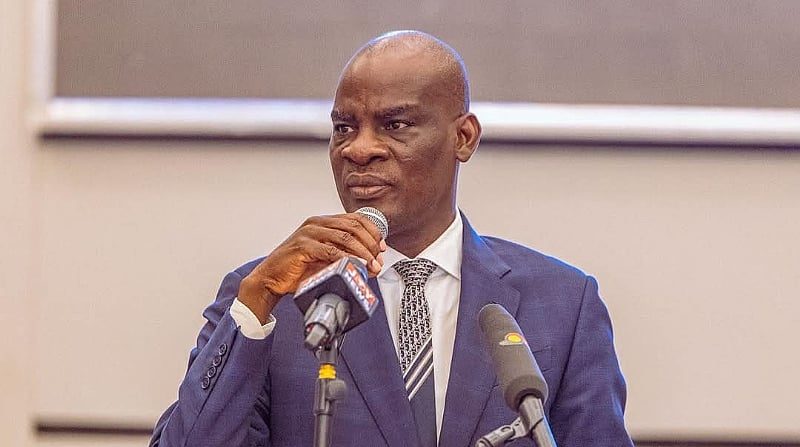
In what looks like a major boost for Ghana’s educational reform agenda, the Ministry of Education has announced that the World Bank has approved a US$300 million financing package to support the implementation of the Transformative Secondary Education for Access, Results and Relevance for Jobs (STARR-J) Project. Unveiled in a statement on June 16, 2026, the ministry revealed that the STARR-J Project aims to strengthen the country’s secondary education system by widening access, enhancing quality and relevance, and tackling infrastructure challenges that have emerged with the expansion of the Free Senior High School (SHS) policy. A key focus of the new project is the government’s pledge to end the double-track system in senior high schools nationwide, a system introduced to accommodate increased enrolment under the Free SHS programme. Through targeted investments in school infrastructure, improved learning environments, and greater operational efficiency, the government expects that by 2027, no secondary school in Ghana will operate under the double-track arrangement. Education Minister Haruna Iddrisu described the World Bank’s approval as a transformative investment in Ghana’s youth and future workforce. “This initiative will expand learning opportunities, improve school conditions, better align secondary education with the needs of the labour market, and address the infrastructure deficit linked to Free SHS,” he said. The Ministry of Education extended its gratitude to World Bank Country Director Robert Taliercio O’Brien, the World Bank education team, and the Ministry of Finance, led by Dr. Cassiel Ato Forson, for their instrumental support in securing the funding. According to the ministry, the STARR-J Project underscores the government’s ongoing commitment to providing equitable access to quality secondary education, and to preparing students with the knowledge and skills they need for a rapidly changing world. Source: Apexnewsgh.com