



GNAT Condemns Assault on Teachers by WASSCE Candidates at Kade, Urges Educators to Prioritise Safety

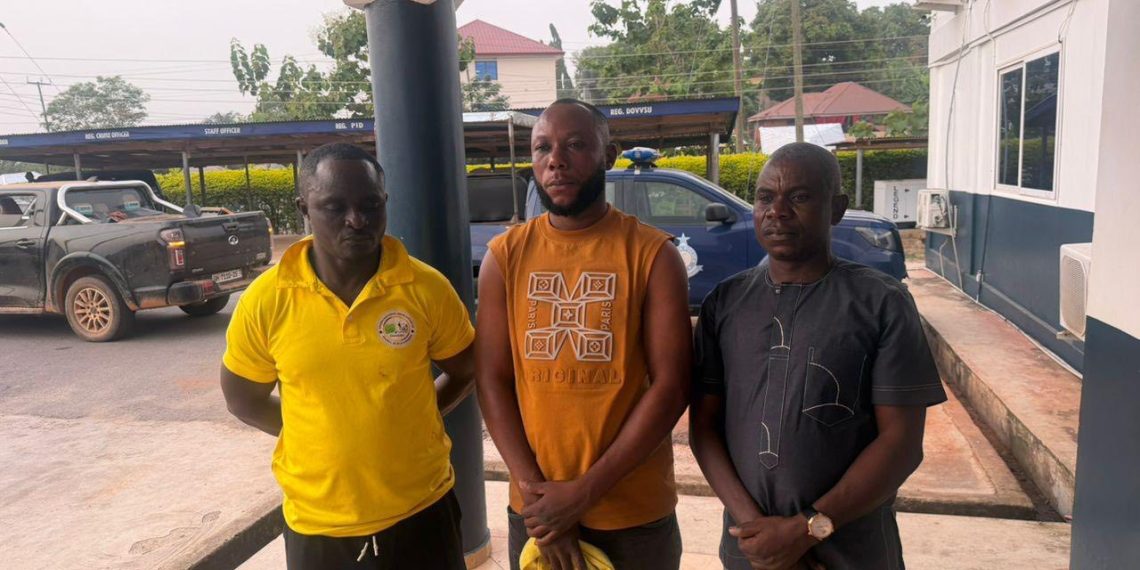
The Ghana National Association of Teachers (GNAT) has strongly condemned a recent assault on several teachers by WASSCE candidates at Kade in the Eastern Region. The incident reportedly occurred at night following the release of examination results, when a group of candidates, frustrated by their poor performance, blamed teachers who had refused to permit cheating during the exams. Speaking to the media, GNAT General Secretary Thomas Tanko Musah denounced the attack and urged all educators to protect themselves in situations of potential danger. “If at any point you feel your life is at risk, you are within your rights to leave. Notify your superiors and exit the environment. The Labour Law supports this, and we expect our members to act accordingly,” he advised. Mr. Musah also issued a stern warning to the People’s National Party (PNP) Presidential Candidate, Janet Nabla, urging her to refrain from making accusations against teachers regarding the WASSCE results. He cautioned that remarks blaming or provoking hostility towards educators are unacceptable. “Individuals like Janet Nabla must be mindful of their statements. Do not fuel public anger against teachers. If you have nothing constructive to add, refrain from attacking professionals who are doing their work,” he stated. GNAT is calling for calm and has reaffirmed its commitment to defending teachers who face threats or unjust criticism, urging society to support and respect the teaching profession. Source: Apexnewsgh.com
MTN Ghana Marks 16 Days Of Activism Against Gender-Based Violence Under The Theme “Unite To End Digital Violence Against Women And Children.”

MTN Ghana is observing this year’s 16 Days of Activism Against Gender-Based Violence with the theme “Unite to End Digital Violence Against Women and Children.” The campaign is taking place in various parts of the country. During the launch event with over 100 students from the Police Depot Cluster of Schools at Tesano, Adwoa Afriyie Wiafe, MTN Ghana’s Chief Corporate Services and Sustainability Officer, emphasized that this year’s campaign aims to protect everyone, especially women and children, from digital violence. She mentioned that MTN is working closely with the Domestic Violence and Victim Support Unit (DOVVSU) and the Cyber Security Authority to raise awareness about the risks and impact of harmful online behaviors. “We are already familiar with physical forms of gender-based violence. However, as more of our life is spent online, so has abuse also moved to the digital space, showing up as cyberbullying, harassment, and other harmful online actions, most of which disproportionately affect women and girls,” Madam Wiafe stated. Adwoa Wiafe emphasized that while MTN strives to ensure everyone benefits from a modern, connected life, it also bears the responsibility of making the internet a safe space. “Being connected should be a positive and empowering experience. Anything that causes harm or negativity is something we must all work together to eliminate,” she said. ACP Owusuaa Kyeremeh, Director of DOVVSU, highlighted the rising danger of digital violence and its serious effects on women and girls. “With a single click, someone can spread harmful videos, steal personal information, or send threats that infringe on another person’s freedom,” she explained. She emphasized that girls and young women are especially vulnerable to harassment, pressured to share sexual content, experience hacking, and face non-consensual distribution of private images, many of which go unreported. She urged students not to be bystanders and challenged them to become the generation that stops digital violence. MTN and DOVVSU are conducting various awareness activities nationwide to raise understanding of digital safety. These efforts include coordinated radio interviews in the regions, school debates on preventing digital violence, film screenings, victim support information sessions, and community engagement focused on online safety and violence prevention. The launch also featured an interactive session on cyber hygiene and cybersecurity tips, led by Superintendent Emmanuel Gyebi, Director of Cybercrime, along with a representative from MTN. The most engaged student of the day was awarded a tablet as a prize. The 2025 campaign reinforces MTN Ghana’s commitment to promoting responsible digital behavior while ensuring that the internet remains a safe and empowering space for everyone, especially women and children. Source: Apexnewsgh.com
Prof. Joshua Alabi Challenges GTEC’s ‘Fake’ Label on SMC Doctorates

At a recent ceremony where Prof. Joshua Alabi, former Vice Chancellor of the University of Professional Studies, Accra (UPSA), was honored with an honorary degree for his transformational leadership, he took a moment to challenge the Ghana Tertiary Education Commission’s (GTEC) recent declaration regarding doctorate degrees from the Swiss Management Centre (SMC). Prof. Alabi questioned GTEC’s blanket branding of SMC-awarded doctorates as “fake,” arguing that such a sweeping pronouncement overlooks the historical and regulatory context in which many Ghanaians obtained these qualifications. He recalled that, at the time, numerous professionals—including UPSA lecturers, enrolled in SMC’s doctoral programmes based on assurances from the then National Accreditation Board (NAB), now GTEC, which gave recognition and registration to SMC in Ghana. “Many of these professionals undertook their studies based on the assurances and information available from our national regulator,” Prof. Alabi stated during his acceptance speech. He described it as both unfair and damaging to brand the qualifications of hardworking Ghanaians as “fake” when they acted in good faith, relying on documentation from state authorities. Prof. Alabi highlighted that these SMC graduates are not just ordinary professionals, but also respected academics and leaders—former Vice-Chancellors, advisors to governors, Deans, Heads of Departments, and lecturers. He also revealed that UPSA had carried out rigorous due diligence before allowing its lecturers to pursue doctoral studies at SMC. The university’s verification process included: Confirmation from the then NAB (now GTEC) Additional validation through the Swiss Embassy in Ghana Direct institutional verification in Switzerland “These steps were taken meticulously to ensure that the institution met the necessary standards before any UPSA lecturer was allowed to enrol,” he emphasized. Prof. Alabi concluded by urging GTEC to communicate regulatory decisions with clarity, fairness, and sensitivity, especially when such statements can have serious implications for the careers and reputations of Ghanaian professionals and academics. Source: Apexnewsgh.com
Drop in WASSCE 2025 performance – Reality check and opportunity for correction?
Last week, the West African Senior School Certificate Examination (WASSCE) released the 2025 results, sparking intense debate across the country. After years of impressive pass rates under the Free Senior High School (Free SHS) policy, this year’s results show a sharp decline in performance. Passes in Core Mathematics pass rates fell from 66.86% in 2024 to 48.73%, while Social Studies dropped from 71.53% to 55.82%. English and Integrated Science recorded slight declines but remained relatively stable, according to the results. For many watching developments in the education sector, this downturn raises a critical question: Is this a sign of falling quality in our schools, or the result of a deliberate crackdown on examination malpractice? For me, this decline is not a failure. It could signal a necessary correction. Historic surge in infractions Between 2017 and 2024, statistics show that the country’s WASSCE results were plagued by systemic malpractice, with the West Africa Education Council (WAEC) data showing sharp increases. From 2021 to 2024 alone, 146,309 candidates were implicated in cheating schemes. Cheating incidence rose by more than six folds, from 10,386 cases in 2021 to 62,046 in 2024. In effect, 13.6% of candidates who sat for the 2024 WASSCE exams were implicated in exam malpractices! The data show that common infractions between this period included collusion, smuggling of foreign materials, impersonation, and digital leaks via social media platforms such as WhatsApp and Telegram platforms. WAEC’s five-year statistics further reveal that over 532,000 subject results were withheld and nearly 39,000 cancelled in 2024 alone, with hundreds of entire results annulled annually. Despite these disturbing statistics, prosecutions were historically rare until recent years. Integrity push It can be recalled that following the years of exam malpractices, the Ghana Education Service (GES) and the Ministry of Education this year vowed a zero-tolerance stance on cheating ahead of the exams. Invigilators and supervisors were warned of immediate dismissal if found aiding malpractice, while candidates were urged to rely on their preparation rather than leaked materials. It appears the exam body, WAEC followed through, given the outcome of the exams. The results showed that WAEC cancelled subject results for 6,295 candidates, annulled entire results for 653 candidates, and withholding results for hundreds more. Outside exams, investigations into alleged collusion in 185 schools are ongoing. Notably, 35 individuals, including 19 teachers, have faced prosecution, with 19 already convicted. This unprecedented enforcement contrasts sharply with previous years, when civil society groups like Africa Education Watch (Eduwatch) repeatedly flagged systemic malpractice with little consequence. It does appear that for too long, we allowed a culture of shortcuts to thrive to be able to present a particular image about our education system and its products. Eduwatch’s Executive Director,Mr Kofi Asare, has long argued that unrealistic performance targets for schools and political pressure to showcase the Free Senior High School (SHS) program’s success fueled widespread cheating. Mr Asare once cautioned that the education system had shifted toward prioritising exam scores over real learning and urged the adoption of technology-driven solutions, such as installing CCTV cameras in examination halls, to restore integrity. Free SHS and quality debate The Free SHS policy undeniably expanded access, lifting financial barriers for hundreds of thousands of families. As a son of humble beginnings, I am fully aware of how financial burdens kill dreams, partly explaining why I have supported hundreds of brilliant needy students and underprivileged people to access education and opportunities that fund schooling. But critics say the rush for quantity under the Free SHS and the general attempt to present the program as the best, insulates it from proper critique necessary to strengthen quality and sustain it. It is recalled that university lecturers reported alarming gaps in foundational skills among Free SHS graduates, with some institutions even considering entrance exams to bridge deficits. “We’ve sacrificed quality for quantity,” Professor Martin Oteng Ababio, a senior University of Ghana lecturer, lamented in September 2024, citing overcrowded lecture halls and underprepared students. This year’s results may therefore reflect a system recalibrating from inflated grades to genuine merit as explained by both the GES and the Ministry of Education. That is why this year’s results is not a failure but a painful and necessary correction. Why academic integrity matters Education is the bedrock of national development. When certificates lose credibility, the entire economy suffers, from employers questioning graduate competence to universities lowering standards to accommodate ill-prepared entrants. Ghana cannot afford to produce “excellent grades but hollow minds,” as the nonprofit, LEADIF warned in its call for radical transparency in exam administration. Integrity in assessment ensures that success is earned, not bought or leaked. It rewards hard work, builds confidence, and nurtures a generation equipped for innovation and leadership. For businesspeople and education advocates like us, this is the moment to champion quality over quantity and to invest more in teacher training, infrastructure, and technology that supports honest learning. Way forward While it is important to find the root cause the 2025 WASSCE results to be able to institute measures against a repeat, it is advisable to detach politics and emotions from the debate and focus on how to reset the entire education system to regain the confidence of external stakeholders. In the meantime, we must continue to maintain the crackdown on malpractice with transparent sanctions, invest in stronger teaching through smaller classes, better resources, and continuous teacher training, and remove politics from education so performance reflects learning, not scorecards. At this turning point, one truth stands out: discipline and integrity are non-negotiable if we are to raise a generation capable of leading national progress. The real question is not whether the drop in performance is embarrassing, but whether we have the courage to accept it as the price of restoring credibility to our education system. The writer is a philanthropist and businessman Source: By Seidu Agongo
Agogo Presbyterian Women’s College SRC Appeals for Intervention Following Principal’s Resignation

The Students’ Representative Council (SRC) of the Agogo Presbyterian Women’s College of Education has formally appealed to the Moderator of the General Assembly of the Presbyterian Church of Ghana to intervene in the recent resignation of the college’s Principal, Rev. Dr. Grace Sintim Adasi. In a letter addressed to the Moderator, the SRC voiced deep concern over the sudden departure of Rev. Dr. Adasi, describing it as an event that has sparked anxiety among both students and staff. The council highlighted the Principal’s significant role in fostering the college’s stability, academic growth, and overall development. The SRC pleaded with the Moderator to engage with Rev. Dr. Adasi and encourage her to reconsider her decision, stressing that her continued leadership is crucial to maintaining unity and ensuring the smooth functioning of the institution. “We strongly believe her continued leadership will promote unity, continuity, and the overall welfare of the college community,” the SRC stated in the letter, which was signed by SRC President H.E. Adwoa Serwaa Bonsu and Secretary Hon. Alice Gyamfua. The letter also expressed confidence in the Moderator’s wisdom and dedication to the well-being of all Presbyterian educational institutions. The SRC concluded by expressing hope that with timely intervention from church leadership, a positive resolution would be reached for the benefit of the college community. Source: Apexnewsgh.com
Education Minister Raises Alarm Over Misuse of Student Tablets

The Minister of Education, Haruna Iddrisu, has voiced grave concerns in Parliament following reports that some students are using government-distributed tablets for non-academic activities, including accessing pornographic content. Addressing Parliament on Thursday, November 27, Minister Iddrisu revealed that while the government had signed a $337 million contract to provide digital learning tools to all free Senior High Schools nationwide, only about 980,000 out of the 1.3 million tablets distributed have been fully deployed and remain to be properly customised and restricted for educational use. “I inherited a contract with about 337 million US dollars, where some 1.3 million tablets were to be distributed across the country to all free senior high schools in the country so that learners can have access to digital tools. I’m told that the deployment of that is around 980,000,” he explained. The Minister admitted that his attention had been drawn to the misuse of the devices. “Mr Speaker, my attention was drawn to the fact that many of the devices are not customised and the students are using them for other purposes, including pornography, which is not acceptable.” Haruna Iddrisu assured Parliament that the government is treating the matter with the utmost seriousness. “Mr Speaker, the government is taking a high view of it, and there must be restrictions as to what the tablets can be used for, and they should be used strictly for the purpose of study,” he stated, underscoring the need for tighter controls and monitoring to ensure the tablets fulfill their intended academic purpose. Source: Apexnewsgh.com
Education Minister Announces Ambitious Funding Reforms for Special Needs Education in Ghana
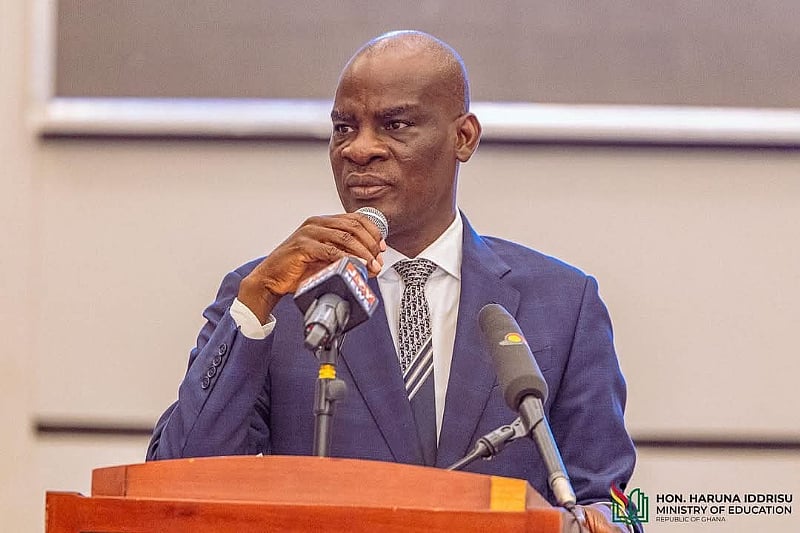
The Minister for Education, Mr. Haruna Iddrisu, has unveiled plans for a sweeping reform of special needs education funding in Ghana, promising enhanced financial support and better learning conditions for students with disabilities. During a meeting with heads of special needs and integrated schools, Mr. Iddrisu emphasized the urgent need for a more robust and dependable funding framework tailored specifically to children with disabilities. “We are preparing a Cabinet Memo for the attention of the President and my colleagues in Cabinet to take a major decision on the future of special needs education in Ghana,” he announced. The Minister revealed that the government is considering an annual allocation of between GHS 65 million and GHS 100 million for special needs education, with funding expected from the Ghana Free Education Fund (GFAN). As part of the reforms, he proposed doubling the unfeeder grant from GHS 8 to GHS 15 per student per day to address rising costs and ensure adequate support for learners with disabilities. Mr. Iddrisu reaffirmed the government’s commitment to making Ghana’s free education policy fully inclusive for all special needs learners. He highlighted the necessity of investing in critical infrastructure, increasing accessibility in schools, and providing modern assistive devices to foster a more supportive learning environment. Attendees were also briefed that the amended GFAN Act will include a provision for free tertiary education for persons with disabilities, widening access to education at all levels. Encouraging open discussion, the Minister urged participants to speak candidly, saying, “Be as brutally frank as possible,” before leaving for a parliamentary committee meeting. The proposed reforms mark one of the most ambitious efforts in recent years to transform special needs education and promote equity in Ghana’s educational system. Source: Apexnewsgh.com
NDC Legal Director and Advocacy Groups Intensify Calls for Religious Freedom in Ghana’s Mission Schools
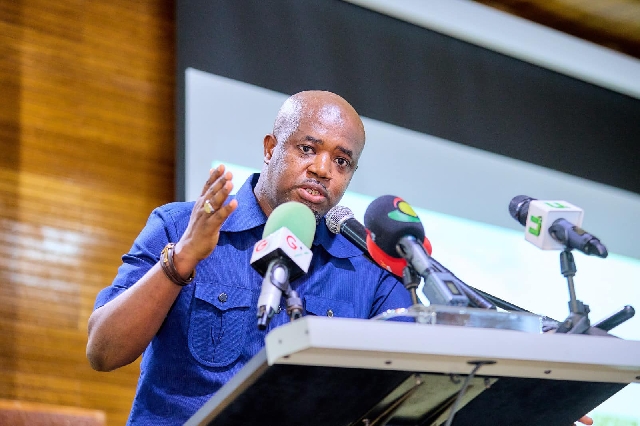
The Director of Legal Affairs of the National Democratic Congress (NDC), Mr. Godwin Tameklo, has joined the growing chorus advocating for Muslim students in mission schools to be allowed to freely practice their faith. Mr. Tameklo, reflecting on the issue, argued that making room for religious expression should be a straightforward matter within school communities. Using a practical example, he noted that if a school with 2,000 students can find space for about 100 Muslim students to break their fast or pray, it should be possible to accommodate their needs “without animosity.” He questioned why simple acts like wearing a hijab should be contentious in institutions meant to foster tolerance and unity. Mr. Tameklo further emphasised that small accommodations can significantly promote peaceful coexistence and mutual respect, which are essential for national harmony and an inclusive educational environment. Meanwhile, the Patriotic Muslim Front (PMF) and LeadGate Foundation have sharply criticised the Deputy Attorney-General, Dr. Justice Srem-Sai, over his official submission in the high-profile case of Shafic Osman v. The Board of Governors of Wesley Girls SHS, the Ghana Education Service & the Attorney-General. In a joint statement, the organisations expressed “profound disappointment and utter dismay” at the Deputy A-G’s call for dismissal of a suit seeking constitutional protection for Muslim students at Wesley Girls’ Senior High School. The lawsuit, brought by Shafic Osman, seeks a Supreme Court declaration that a school policy restricting Muslim students from fulfilling key religious duties is unconstitutional. The PMF and LeadGate Foundation described the state’s legal stance as “a shocking abdication” of its constitutional role to guarantee religious freedom. The case highlights longstanding complaints that Wesley Girls’ SHS prohibits Muslim students from daily prayers, Friday congregational prayers, fasting during Ramadan, wearing religious attire, and celebrating Islamic festivals. The advocacy groups allege that students are even required to participate in Methodist worship services, in violation of their religious rights. Osman’s suit asks the Supreme Court to rule that these restrictions amount to religious discrimination, violating several provisions of the 1992 Constitution. PMF and LeadGate Foundation outlined four major concerns with the A-G’s legal approach: mischaracterising Wesley Girls’ SHS as a private institution, selectively applying constitutional rights, abdicating the state’s duty to prevent discrimination, and risking a dangerous precedent that could marginalise minority religious groups in public schools. The groups have called on the Attorney-General to withdraw what they deem a “prejudiced” submission and file a revised case that upholds constitutional guarantees. They also urged religious leaders, civil society, and human rights advocates to speak out in defense of religious freedom in Ghana’s schools. “The soul of our nation’s democracy is at stake,” the joint statement concluded, calling on all Ghanaians to support the protection of religious rights for every student. The statement was signed by Alhaj Mohammed Haruna and Sheikh Iddrisu Abdullai Alhassan for the Patriotic Muslim Front and LeadGate Foundation. Source: Apexnewsgh.com
Breaking News: Bolgatanga Technical Institute Recalls Students After Campus Unrest, Imposes Damage Fee
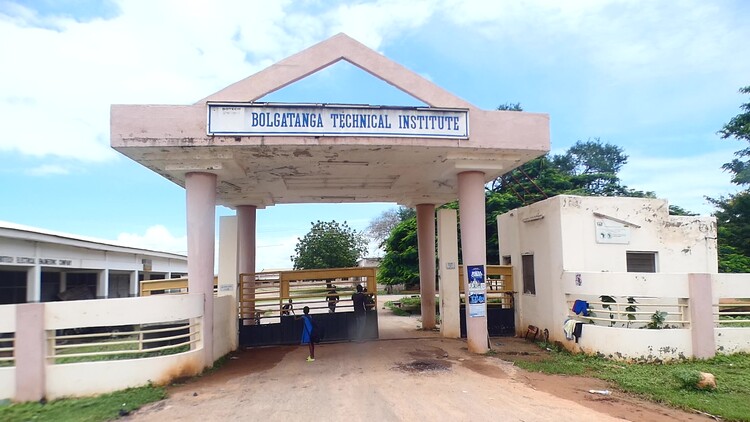
The management of Bolgatanga Technical Institute has ordered all second- and third-year students to return to campus immediately following recent disturbances that resulted in extensive property damage. According to school authorities, each male student must pay a GH¢1,000 damage fee before resuming classes. This directive comes after an assessment of destruction linked to a violent student riot that occurred from Thursday, August 14, to Friday, August 15, 2025, which saw several parts of the school, including the senior headmaster’s office and the library, set ablaze. School officials explained that the decision is aimed at restoring discipline and ensuring a smooth resumption of academic activities. Management has also indicated that additional measures will be put in place to maintain order and prevent similar incidents in the future. Source: Apexnewsgh.com
Katon360 Ushers in a New Era of Learning with Smart Classroom Block at Ghanasco
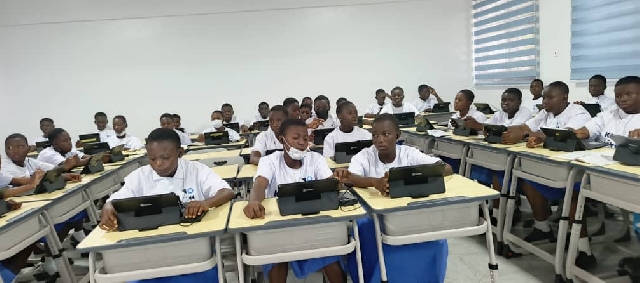
A new chapter in Ghana’s educational journey was written as Katon360, a pioneering educational technology platform, unveiled a state-of-the-art smart electronic classroom block at Ghana Senior High School (Ghanasco). The inauguration, which coincided with Ghanasco’s 65th anniversary, marked a milestone in the country’s drive toward digital learning and future-ready instruction. The impressive two-storey digital learning facility, powered entirely by the Katon360 ecosystem, stands as a symbol of innovation. It boasts 10 smart classrooms, a technical room, a lecture hall, charging and repairs rooms, and a host of auxiliary spaces. Each classroom is equipped with advanced digital tools, and the entire block runs on solar power, ensuring uninterrupted teaching and learning. A key feature of the initiative is the distribution of tablets to every student, devices preloaded with academic materials designed to support three years of continuous digital learning. The tablets, part of a comprehensive digital rollout, come with internet connectivity and are programmed to restrict access to unauthorised content, focusing students’ attention on their studies. The historic facility was inaugurated by President John Dramani Mahama, who hailed the project as a glimpse into the future of education in Ghana. Addressing staff, students, and invited guests, President Mahama underscored the importance of adaptation and innovation in the nation’s education sector. “Our education system is undergoing a crucial transformation, anchored on technology and future-ready teaching methods,” he said. He further noted that strengthening digital education is at the heart of ongoing curriculum reforms, ensuring every learner acquires vital technological skills. According to President Mahama, Ghanasco’s new smart classroom is an early sign of the government’s ambition to roll out similar digital solutions nationwide. He encouraged students to use their new devices responsibly and avoid distractions from inappropriate online content. Lawrence Hornovo, the Ghana Smart School Project Lead for Katon360, described the project as “a school of the future.” He highlighted the facility’s 21st-century learning environment, complete with smart screens, air conditioning, reliable solar power, and a robust internet connection. “Every student receives a tablet, charging cabinets are available, and our maintenance framework ensures every device stays functional,” Hornovo said. He reassured parents that all devices are strictly monitored, with academic work as their sole purpose. Katon360 has also implemented a digital helpdesk and district-level technician support, with a one-year warranty for factory defects. Repairs for accidental damage are managed on-site, ensuring minimal disruption to learning. Teachers at Ghanasco are already feeling the impact. Physics teacher Eric Addai called the smart board “one of the best teaching experiences” of his career. “You can prepare and upload lessons in advance, and even teach remotely if needed. The students are more engaged, and the system is highly efficient, though we still face some internet connectivity challenges,” he said. Katon360’s innovations extend beyond the classroom. The platform’s Kanton Meet virtual meeting system enables remote teacher collaboration and administrative meetings, further modernizing school operations. For students, the transformation has been profound. Science student Iman Jeswinde Ismaila Abdul-Fatawu shared, “When I came here, I thought lessons would be like junior high, but the Katon360 app made learning easier and more enjoyable. With tablets and facilitator support, our understanding has improved tremendously. We are grateful for this opportunity.” The Ghanasco Smart Classroom Block represents the second Katon360 facility in Ghana and the first in the northern region. With the government’s renewed commitment to digital education, Katon360’s footprint is expected to expand, opening a new world of technology-driven learning for thousands of students across the country. Source: Apexnewsgh.com