






Institutional Suppliers Picket Ministry of Education Over Unpaid Free SHS Debts
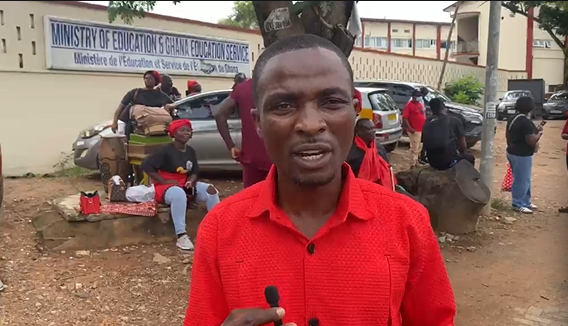
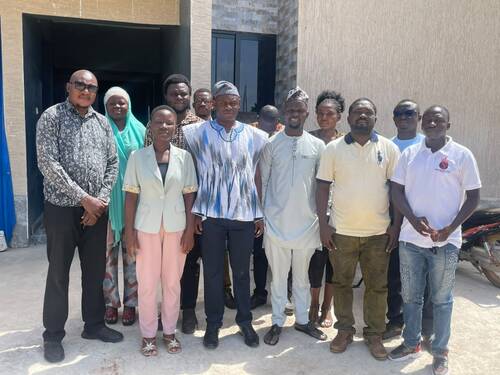
The National Association of Institutional Suppliers (NAIS) staged a peaceful picket at the Ministry of Education, demanding urgent payment of debts owed to its members under the government’s Free Senior High School (Free SHS) programme. According to the association, the government owes suppliers approximately GH¢50 million for uniforms, house dresses, and school clothing delivered to senior high schools across the country since 2023. The mounting arrears have left many suppliers in a precarious financial situation. NAIS National President, Emmanuel Ayivor, expressed frustration over the prolonged delay in payments, noting that many members relied on bank loans to fulfil government contracts. As cash flow worsens, some suppliers are now struggling to keep their businesses afloat and retain their workers. “Most of us are working with loans and currently the banks are taking over our properties because we are unable to pay,” Ayivor said during the picket. The association is demanding the settlement of two years’ arrears and has called on the government to release all outstanding funds without further delay. NAIS emphasized that the picketing was meant to highlight the hardship faced by suppliers and to press for immediate action from authorities. The demonstration underscores the growing financial strain on businesses providing essential goods and services to the education sector, as suppliers await a government response to their demands. Source: Apexnewsgh.com
Nabdam MP Dr. Mark Kurt Nawaane Commissions Construction of 1No.2 Unit KG Block at Nkusiezie
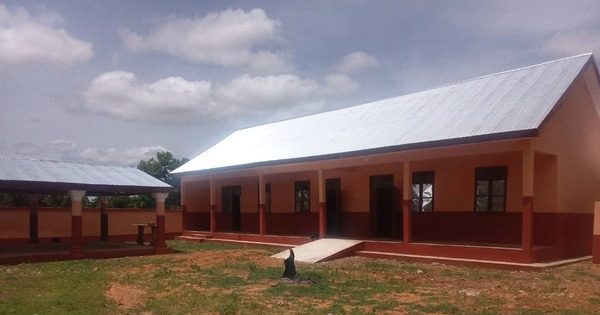
Excitement filled the air in Nkusiezie as community members, chiefs, and local leaders gathered to witness a significant milestone in the area’s educational journey. The Nabdam Member of Parliament, Dr. Mark Kurt Nawaane, stood before the gathering to commission the construction of a new two-unit kindergarten block, a facility complete with an office, storeroom, five-seater KVIP toilets, and two-unit gender-friendly urinals. Dr. Nawaane, in his address, highlighted the far-reaching impact of the project, linking it to former President Mahama’s educational policy. “This project falls in line with President Mahama’s vision to increase the number of pupils attending kindergarten. We all know the importance of early childhood education; it is during these formative years that children develop essential skills. We teach them how to speak, write, read, sing, and even instruct them in our local language, nurturing their cognitive and social abilities.” He emphasized that research shows children who benefit from quality kindergarten education tend to excel as they move through primary, secondary, and even tertiary levels. “President Mahama is committed to kindergarten education, and that is why we’ve allocated about 10 percent of the common fund towards educational projects such as this.” Dr. Nawaane extended his gratitude to the assembly for championing the policy, and heaped praise on the contractor for delivering quality work. “You can see the good work that has been done,” he noted, inviting the young contractor to stand and be recognized by the crowd. “I also want to thank the chief and people of the community for embracing this project. Community acceptance and cooperation are what make successful implementation possible.” He concluded by assuring the community that maintenance of the facility would be a priority, so that generations of children would benefit from a safe and welcoming learning environment. The event marked not just the commissioning of a building, but the start of brighter educational prospects for the youngest members of Nkusiezie. Meanwhile, the contractor of the project, Mr. Jacob Azumah of Winmailes Company Ltd, expressed satisfaction with the support he received from the assembly and community members. According to him, he was able to meet the construction deadline because of the community’s support and cooperation. The event was honoured by opinion leaders, assembly officials led by the DCE, and GES officials, all of whom commended the initiative and pledged their continued commitment to the advancement of education in Nkusiezie. Source: Apexnewsgh.com
Ngamegbulam Takes Anti-Drug Campaign to Zorkor Tarongo Primary School

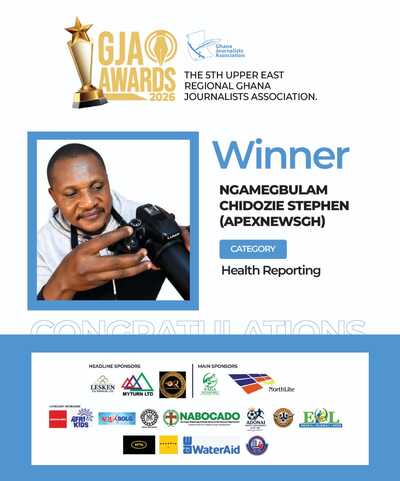
In a determined effort to combat youth drug and alcohol abuse, Mr. Ngamegbulam Chidozie Stephen, Editor-in-Chief of ApexNewsGH, has extended his advocacy to the Zorkor Tarongo Primary School in the Bongo District of Ghana’s Upper East Region. Mr. Ngamegbulam’s visit forms part of his broader mission to reach young people early and steer them away from the dangers of substance abuse. The award-winning journalist is no stranger to this cause. In 2025, he produced a powerful documentary titled “Swallowed by Drugs,” which highlighted the harsh realities and struggles faced by youths ensnared by addiction. Drawing from his research and experience, he addressed students, teachers, community leaders, and parents at Zorkor Tarongo Primary School, raising awareness about the escalating problem of drug and alcohol abuse among young people in the area. During the engagement, Mr. Ngamegbulam urged parents and guardians to closely monitor their children, emphasizing the rising trend of youth involvement in substance abuse within the Bongo District. He warned that early exposure to drugs such as tramadol, cannabis, Red Red, and other substances could derail the ambitions of children, jeopardizing their dreams of becoming doctors, nurses, journalists, or teachers. He appealed to students to look up to successful role models within their community, pointing out that these individuals achieved their positions through hard work and discipline, not through substance abuse. “If they had indulged in drugs or alcohol, they wouldn’t be where they are today,” he asserted. The sensitization event was well received by both the school authority and the community leadership. Naba Abelizire Ayeta II, the Chief of the area, expressed gratitude for Mr. Ngamegbulam’s initiative, describing the campaign as essential for every parent in Tarongo. Hon. Akelinyana Peter, Assemblyman for Tarongo/Atiabiise Electoral Area, also lauded Mr. Ngamegbulam as a dedicated youth ambassador who is using his media platform to change lives. He urged parents to heed his advice to guide their children towards responsible adulthood. The Headmistress of Zorkor Tarongo Primary School, Madam Azeko Mary Ngoomah, echoed these sentiments, noting the importance of regular educational outreach on drug and alcohol abuse, which she said is becoming increasingly prevalent in schools. Mr. Ngamegbulam’s visit underscores the urgent need for collective community action to protect the dreams and futures of young people from the devastating impact of substance abuse. Source: Apexnewsgh.com
Zorkor Tarongo D/A KG and Primary School—A Legacy in Need of Revival
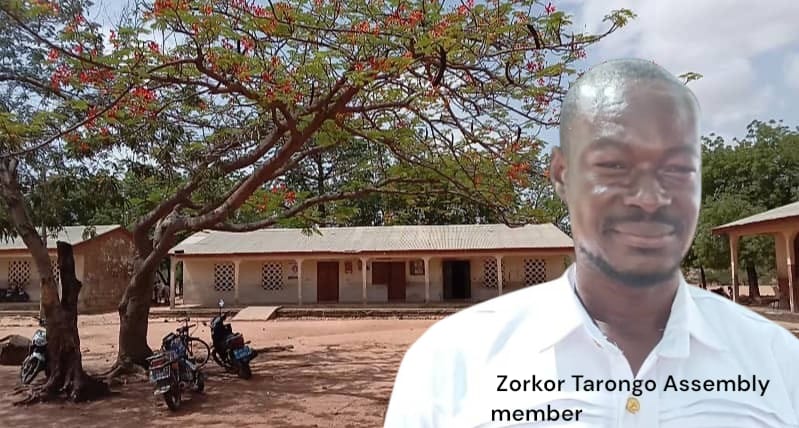
Once upon a time, in the heart of the Bongo District, stood Zorkor Tarongo D/A KG and Primary School, a proud institution established in 1956. As the oldest school in the district, it has long served as the foundation for many prominent personalities, not just within the region, but across all of Ghana. Over the decades, its classrooms have nurtured future leaders, respected professionals, and notable figures such as regional ministers, MPs, and District Chief Executives, all of whom once walked its humble corridors. Yet, despite this rich legacy, the school’s current state tells a different story. The passage of time has not been kind. Years of neglect have left the buildings dilapidated. The infrastructure is crumbling, and the proud walls that once echoed with the laughter and dreams of children now bear the scars of time and relentless rainstorms. Roofs have been torn away, and doors and windows that were once broken have only recently been replaced. Furniture is scarce, and the needs remain many. During an exclusive engagement with Apexnewsgh, Hon. Akelinyana Peter Akugre, the Tarongo/Atiabiise Electoral Area assembly member, voiced his deep concern. He expressed his gratitude for the efforts of the Bongo MP and the Naidvar Trust NGO, whose support has helped replace some doors and windows. “I am aware that many dignitaries passed through this school. Today, they are successful members of society, including the Upper East Regional Minister. I appeal to Hon. Donatus Akamugri, Professor Atintono, Awinsira Wilbert Nam-katoti, and other notable alumni, including a former DCE, to come to the aid of Zorkor Tarongo Primary School.” He continued, emphasizing that as the oldest school in the Bongo District, much has broken down and urgently needs replacement. “Rainstorms have damaged the roof, but with the help of our MP and Naidvar Trust, we have made some progress. Korea Food for the Hungry International (KFHI) also contributed by providing a borehole for the school. Still, the school remains neglected by the very people it once shaped.” Hon. Akugre made a heartfelt plea to former students, including Gaaga Akayeri Azitariga, Bongo’s first MP under the Fourth Republic, and many others. “Please, visit your old school and see its current condition. If you can help us renovate it, I would be deeply grateful. I know you will listen, as you always have.” And so, the story of Zorkor Tarongo D/A KG and Primary School continues, a legacy waiting to be revived, calling on its sons and daughters to breathe new life into its aging walls. Source: Apexnewsgh.com
“Anapoka and Anaba in the Path of the Trees” Launches at Zorkor Tarongo Primary School

A dream takes root as a new book, written by Cristiane Tavares and illustrated by the school’s own children, promises to nurture both young minds and the environment. Under the shade of hope and the watchful eyes of chiefs, assembly members, and proud community elders, a quiet revolution began at the Zorkor Tarongo Primary School. The occasion was the launch of a very special book: “Anapoka and Anaba in the Path of the Trees.” But this was no ordinary book launch. The author, Cristiane Tavares, had penned the tale, yet the true magic came from the children themselves, for it was their bright, imaginative illustrations that brought the story to life. The book follows two local children, Anapoka and Anaba, on a mission to heal their world by planting trees, one seedling at a time. As the crowd gathered, the Executive Director of Naidvar Trust, Augustine Akugre, rose to speak. His voice carried a quiet determination. “My vision,” he said, “is to see Zorkor Tarongo Primary become the best school in the entire Bongo District.” He then revealed something extraordinary: the book is being sold across the world, and every bit of profit flows back directly to the school. The headmistress, Madam Azeko Mary Ngoomah, could barely contain her joy. For six years, Naidvar Trust had stood by her school like a faithful friend. But today, the gratitude spilled over. “If not because of Naidvar Trust,” she declared, her voice thick with emotion, “we would never have had the opportunity to sit on these dual desks.” She gestured to the furniture around her, a simple gift that had changed their daily reality. The event drew a constellation of dignitaries: the revered chief of Zorkor Tarongo, Naba Abelizire Ayeta II; the Tarongo Assembly member, Hon. Akelinyana Peter Akugre; an old student, Nyaaba Awine Ibrahim; and countless community members who filled the grounds. As the sun climbed higher over the primary school, “Anapoka and Anaba in the Path of the Trees” was officially launched, not just as a book, but as a promise. A promise that with every page turned and every tree planted, a little school in Zorkor Tarongo would grow stronger, greener, and full of possibility. Source: Apexnewsgh.com
Unpaid Allowances Threaten to Halt School Feeding in Krachi East, Leaving Thousands of Pupils at Risk

In Krachi East Municipality, the future of daily school meals for thousands of pupils hangs in the balance, as cooks and caterers under the Ghana School Feeding Programme threaten to halt their services over months of unpaid allowances. For many of these cooks, responsible for preparing meals for public basic schools, working without pay has become the norm. Despite the financial strain, they have continued to serve the children, often dipping into their personal savings or taking out loans just to keep the kitchens running. Madam Mariama Adisah, one of the affected cooks, shared her frustration: “We have been patient for too long. Some of us borrowed money just to continue cooking for the children because we know many of them depend on the meals. If the money is not paid soon, we will have no option but to stop.” Repeated appeals and discussions with programme caterers have brought only empty promises, with no funds disbursed to date. Now, the cooks and caterers have issued a final ultimatum, unless the government settles their outstanding allowances, they will withdraw their services, leaving pupils without their much-relied-upon meals. Caterers, who asked to remain anonymous, confirmed that they have received no financial support from the government since they joined the programme. The prolonged delays in payments have forced many to operate on borrowed funds, credit purchases, or dwindling personal resources. The situation has become critical, with food suppliers now demanding cash upfront due to unpaid debts, making it increasingly difficult to secure basic ingredients like rice, beans, oil, and fish. “We have been using our own money because we didn’t want the children to go hungry, but things have become extremely difficult. Traders are refusing to supply on credit because previous debts have not been settled,” one caterer explained. The rising cost of food and transport has only deepened their troubles, leaving many indebted to both traders and financial institutions. The cooks and caterers warn that, without immediate government intervention, they will have no choice but to suspend their services, an action that threatens to disrupt academic work and jeopardize the welfare of thousands of children who rely on the programme for daily nutrition. They are urgently appealing to the government, the Ministry of Gender, Children and Social Protection, and the National School Feeding Secretariat to release the outstanding funds and save the school feeding programme from collapse in Krachi East. Source: Apexnewsgh.com
Alagumgube Association Rallies Behind “LA Buuri Yela” at Official Launch

In a colourful ceremony that blended academic excellence with community pride, the official launch of “LA Buuri Yela”, a new Ghanaian language book for Basic Schools approved by the National Council for Curriculum and Assessment (NaCCA), was held to honour the remarkable dedication of author Issaac Akariborga. The event was not just a book launch but a celebration of perseverance. Mr. Akariborga, a past student of the School of Languages and currently a university student, wears another vital uniform: that of an officer with the Ghana National Fire Service. His ability to juggle academic advancement, public service, and authorship drew enthusiastic praise from attendees, who hailed him as an inspiration for promoting Ghanaian language education under the newly approved curriculum. Strong community backing came from the Alagumgube Association, which demonstrated its commitment by donating GH₵10,000 plus an additional GH₵400 to ensure the launch’s success. Speaking on behalf of the association’s founder and members abroad, PRO Paulina Adabre reaffirmed the group’s unwavering support for education and community development. Presiding over the programme, chairman Naba Sadick Ayine commended the Alagumgube Association for its numerous community development projects. The climax of the event came when the Ghana Education Service Director officially accepted the book, applauding Mr. Akariborga for his hard work and significant contribution to education in Ghana. Source: Apexnewsgh.com
Professor Christian Agyare Appointed as New Vice-Chancellor of KNUST
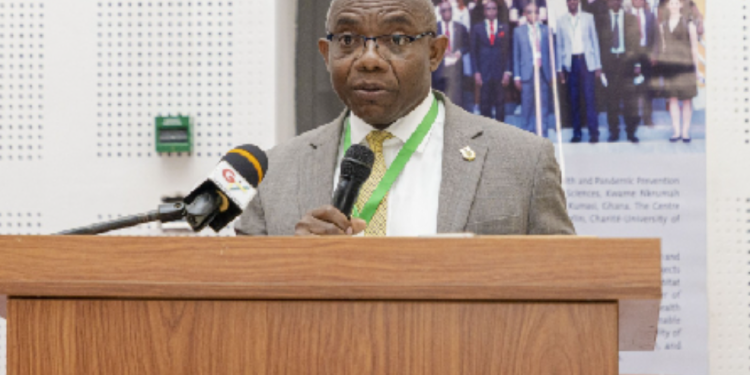
The Kwame Nkrumah University of Science and Technology (KNUST) has ushered in a new chapter in its leadership, announcing the appointment of Professor Christian Agyare as the university’s next Vice-Chancellor. His four-year term is set to begin on August 1, 2026, and will run until July 31, 2030. The announcement was made in an official notice released by the Registrar, Benjamin B. Owusu, on May 13, 2026, following the University Council’s 292nd Special Meeting. According to the statement, the Council’s decision followed careful consideration of the Search Committee’s report on candidates for the position. Professor Agyare, a distinguished Professor of Pharmaceutics and the current Provost of the College of Health Sciences at KNUST, emerged as the Council’s choice for the university’s top office. The leadership transition comes at a time of heightened public interest, with recent reports alleging political interference in the selection process. KNUST, however, firmly rejected these claims as false and misleading, asserting that the search and appointment were conducted professionally, transparently, and in keeping with established institutional procedures. Professor Agyare is widely respected in academic and research circles for his significant contributions to pharmaceutical sciences and higher education administration. His appointment is being seen as a move that promises continuity, integrity, and a renewed focus on academic excellence at KNUST. Source: Apexnewsgh.com
The Ghana Education Service to Release 2025 Teacher Promotion Exam Results Today

On Wednesday, May 13, 2026, anticipation runs high among teachers across Ghana as the Ghana Education Service (GES) announces the official release of the 2025 Teacher Promotion Examination results. According to a statement from GES management, the much-awaited results will be available online from 3:00 p.m. today. Earlier this year, thousands of teachers aspiring for promotion within the education sector sat for the rigorous examination, a key requirement in the GES promotion process. The Service has directed all candidates to check their results exclusively through the official GES website once the portal goes live later this afternoon. In its statement, GES management congratulated all teachers who participated in the examination, acknowledging their dedication to professional advancement. The Service further encouraged candidates to carefully follow the outlined procedures for accessing their results online. The release of these results marks a significant moment for educators nationwide, bringing clarity and closure to the promotion process and setting the stage for the next chapter in their careers within Ghana’s education sector. Source: Apexnewsgh.com
GES Urges Integrity as WASSCE Theory Papers Begin Tomorrow
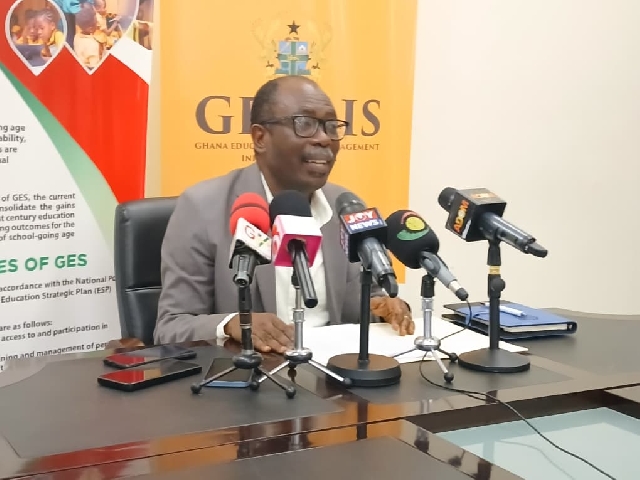
In Ghana, anticipation and anxiety filled the air for over half a million students preparing for the start of the West African Senior Secondary Certificate Examinations (WASSCE) theory papers. In a pivotal press conference, Ghana Education Service (GES) Director-General, Prof. Ernest Kofi Davis, addressed the nation with a strong message: uphold honesty, shun malpractice, and let true learning shine. Prof. Davis, standing at the podium before a sea of reporters and cameras, did not mince words. “Examination malpractice undermines the very foundation of our education system,” he declared. “It distorts the assessment of students’ true abilities and compromises the credibility of our certificates.” His warning resonated with students, teachers, and parents alike, as he outlined the significant consequences of cheating, not only for individuals but for the nation’s reputation. This year, a record 509,862 candidates, 225,274 boys and 284,588 girls, will converge at 1,017 centers across the country. Prof. Davis acknowledged their hard work and sacrifices, urging them to rely on their preparation and integrity rather than shortcuts or external help. “Prepare well and do your best,” he encouraged, “for there are strict measures in place to prevent cheating.” To reinforce the message, the GES has partnered with security agencies to ensure a safe and orderly environment at all exam centers. Supervisors and invigilators were reminded of their duty to remain impartial and professional, with a stern warning: anyone found aiding malpractice will face severe sanctions. In a final act of vigilance, the GES published hotlines (020-136-0789 and 020-136-0786) for the public to report any instances of exam malpractice, reinforcing a collective responsibility to protect the integrity of the WASSCE. As thousands prepare themselves for the exams, the call from GES is clear: let honesty and hard work lead the way, for the future of Ghana depends on it. Source: Apexnewsgh.com