





Journalist Calls for Routine Drug Testing in Schools to Curb Student Indiscipline

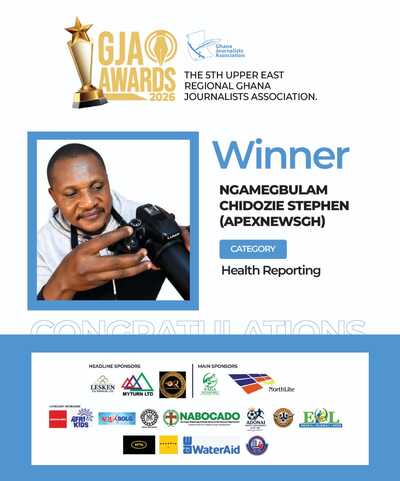
In a compelling opinion shared with the public, Mr. Ngamegbulam Chidozie Stephen, Editor-in-Chief of Apexnewsgh, is sounding the alarm on the growing crisis of drug and alcohol abuse among students in Ghana’s educational institutions. According to Mr. Ngamegbulam, this troubling trend is not only fueling riots and widespread property damage but is also undermining discipline in junior high, senior high, and tertiary schools across the country. Citing a 2025 study that revealed over 60% of senior high school students in certain regions have used drugs or alcohol, often starting between the ages of 16 and 18, Mr. Ngamegbulam is urging the government to take action. His proposal: mandatory drug and alcohol testing for all students seeking admission into junior high, senior high, and tertiary institutions in partnership with the Ghana Education Service (GES). He believes this testing should be a regular, periodic exercise, not just a one-time event, to ensure sustained accountability and to act as a deterrent against substance abuse. Mr. Ngamegbulam references the recent turmoil at Bolgatanga Technical Institute (BOTECH), which faced repeated closures due to student riots and planned attacks, as a stark warning of the consequences of unchecked substance abuse in schools. “If students know they will be tested regularly, it will serve as a deterrent,” he argues. Furthermore, he suggests that any student who tests positive for drugs or alcohol three consecutive times should face suspension, a policy he believes would restore discipline. He advocates for this approach to be implemented collaboratively by the GES and the Narcotic Control Commission, ensuring a robust and effective drug and alcohol testing regime nationwide. The ultimate aim, in Mr. Ngamegbulam’s view, is to prevent students from becoming liabilities to themselves and their communities, and instead foster environments where learning and personal growth can flourish. For Mr. Ngamegbulam, the message is clear: unless bold and coordinated action is taken against drug and alcohol abuse, Ghana’s schools face further disruption and the risk of losing a generation’s potential. Regular drug and alcohol testing, along with strict disciplinary measures, could be the solution to restoring order and safeguarding the future of Ghana’s youth. This, he insists, is a conversation the nation can no longer afford to postpone. Source: Apexnewsgh.com
Seven Arrested Over Alleged BECE Exam Malpractice at Kyebi Amanfrom
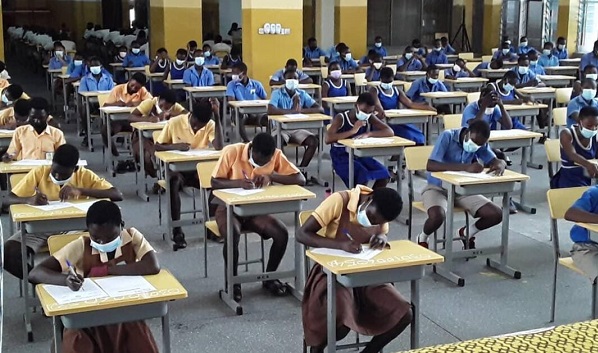
Seven individuals, including two headteachers, two teachers, a senior examination supervisor, and invigilators, have been granted police enquiry bail after their arrest over alleged examination malpractice during the ongoing Basic Education Certificate Examination (BECE) at the Kyebi Amanfrom Basic School examination centre in Abuakwa South Municipality, Eastern Region. The arrests were carried out by the Kibi Divisional Police Command in collaboration with officials from the West African Examinations Council (WAEC), following an operation prompted by suspicions of malpractice. Sources indicate that WAEC officials, conducting an unannounced monitoring exercise at various examination centres, allegedly caught the senior examination supervisor and invigilators taking photographs of examination question papers with their mobile phones. The suspects were reportedly apprehended on the spot and handed over to Kyebi Police for investigations. Preliminary checks on their mobile phones allegedly revealed that the examination questions were being forwarded to headteachers, who then collaborated with teachers to solve them before passing the answers back to candidates in the examination hall through the supervisor and invigilators. Further police investigations led to the arrest of the headteacher and a teacher from Kyebi Odumase Presby School, as well as the headteacher and a teacher from Okanta Presby Basic School. The senior supervisor and invigilators arrested earlier are said to have assisted police in identifying the other suspects. Representatives from teacher unions later visited the divisional police command and reportedly secured police enquiry bail for the seven suspects, assuring authorities that they were not flight risks and would cooperate fully with ongoing investigations. As part of the bail conditions, police confiscated all the suspects’ mobile phones and directed them to report to the station daily while investigations continue. Source: Apexnewsgh.com
GTEC Orders Immediate Reinstatement of Bolgatanga Technical University Vice Chancellor Amid Ongoing Investigation

The Ghana Tertiary Education Commission (GTEC) has ordered Professor Erasmus Samuel Alnaa, Vice Chancellor of Bolgatanga Technical University (BTU) in the Upper East Region, to resume his duties with immediate effect, even as an official investigation into alleged procurement breaches continues. This directive, issued in a letter dated May 4, 2026, and signed by GTEC Director-General Prof. Ahmed Jinapor Abdulai, takes precedence over earlier decisions by the university’s Council, which had placed Prof. Alnaa on suspension. The letter, obtained by Apexnewsgh, makes it clear that GTEC’s order overrides all previous communications from the BTU Council regarding Prof. Alnaa’s position. Prof. Alnaa’s ordeal began on December 12, 2025, when the Council Chairman instructed him to proceed on accumulated leave. This was soon followed by an updated directive on January 22, 2026, and, ultimately, a formal suspension on February 16, 2026, pending investigations into alleged violations of the Public Procurement Act, 2003 (Act 663), as amended, and the Public Financial Management Act, 2016 (Act 921). As a result, BTU has operated without its substantive Vice Chancellor for nearly three months, until GTEC’s intervention. In its letter, the Commission emphasized the need for uninterrupted administration at the university, stating, “The Ghana Tertiary Education Commission directs you [Prof. Erasmus Samuel Alnaa to resume work as the Vice Chancellor of Bolgatanga Technical University with immediate effect, while the investigations into the alleged breaches of procurement continue.” GTEC further assured Prof. Alnaa that any outstanding issues at the university would be addressed in due course, encouraging his continued cooperation with the process. Copies of the letter were sent to the Minister of Education, the BTU Council Chairman, the Chairman of VCTU-G, the Chairman of the Parliamentary Select Committee on Education, and the Registrar of BTU, signaling that all relevant stakeholders have been duly informed of the Commission’s directive. Source: Apexnewsgh.com
The Minister of Education Intervenes in BTU Crisis
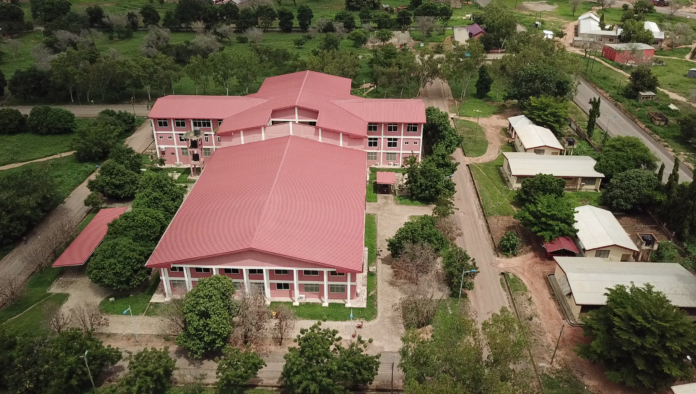
The Minister of Education has summoned key officers from Bolgatanga Technical University (BTU) to an emergency meeting in Accra, intensifying the ongoing crisis at the institution. The urgent directive was conveyed through a letter dated May 7, 2026, signed by Dr. Emmanuel Newman, Director of Tertiary on behalf of the Minister, and obtained by Dreamz News. The letter instructed the Chairman of the Governing Council, Government Nominees of the Council, the Vice Chancellor, the Pro Vice Chancellor, the Registrar, and the Finance Officer of BTU to appear before the Minister at his Conference Room on Tuesday, May 12, 2026, at 10:00 am. The reason for the emergency meeting stems from allegations of procurement breaches at BTU. The Ministry’s letter revealed that the Minister had been reliably informed of an emergency Council meeting at the university, planned for the same date, to deliberate on a report concerning these alleged breaches. However, Dr. Newman, writing on the Minister’s behalf, left no room for ambiguity; he ordered that the Council meeting “is to be STAYED.” Adding weight to the meeting’s significance, the Chairman of the Parliamentary Select Committee on Education and the Director General of the Ghana Tertiary Education Commission (GTEC) were also invited to participate in the high-level discussions. This latest move is yet another episode in the escalating turmoil at Bolgatanga Technical University. In recent days, the university witnessed the suspension of its Vice Chancellor, Prof. Erasmus Samuel Alnaa, followed by a counter-directive from GTEC demanding his immediate reinstatement. The Minister’s intervention signals the gravity of the situation and the government’s determination to resolve the crisis at BTU. Source: Apexnewsgh.com
MTN GHANA BRIDGES ACADEMIA AND INDUSTRY WITH HANDS-ON TECH EXPERIENCE FOR 200+ STUDENTS
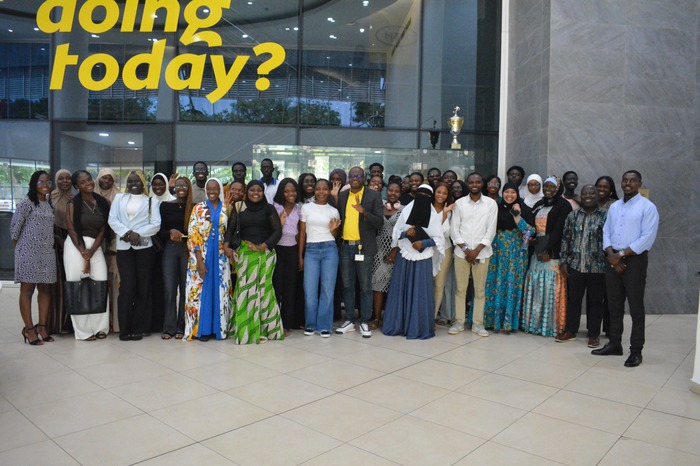
MTN Ghana has hosted more than 200 students from various educational institutions in Accra for an engaging, hands-on technology immersion at MTN House, bringing classroom theory to life and fuelling interest in STEM and digital innovation. Students from Ashesi University, Ghana International School, Cradle Star Academy, and Kinderland School explored MTN Ghana’s rich history, core values, customer-focused innovations, and digital transformation agenda. They were introduced to the company’s sustainability and social impact initiatives, spanning education, youth empowerment, and community development. A key highlight of the visits was a tour of MTN Ghana’s Network Operations Centre (NOC) and data centres. Students gained firsthand exposure to the advanced technology, systems, and expertise powering seamless connectivity for millions daily, offering a rare look into how MTN ensures network performance, security, and resilience. Speaking on the initiative, the Chief Corporate Services and Sustainability Officer at MTN Ghana, Adwoa Wiafe, noted, “Hosting students at MTN House reflects our commitment to shaping Ghana’s digital future. As we deliver our Ambition 2030 strategy, we are deepening investments in youth development through programmes like the Bright Scholarship, the MTN Digital Skills Academy, and collaborations on the One Million Coders Programme and the Girls in ICT initiative led by the Ministry of Communications, Digital Technology and Innovation.” Paschal Paaga, Manager for IT Projects Implementation, emphasised the importance of experiential learning. ‘’By opening our doors, we are helping to bridge the gap between academia and industry. We want young people to see the real-world impact of technology and be inspired to pursue careers in STEM.” For many participants, the experience was transformative. Maame Sapomaa, a Level 300 Information Systems student from Ashesi University, shared, “The visit was incredibly inspiring. Everything we have learned in the classroom came to life, and we were exposed to new concepts beyond our studies. It has motivated me even more to pursue a career in technology.” As MTN Ghana advances its Ambition 2030 vision, the company remains committed to driving digital inclusion, platform-led innovation, and building strategic partnerships that support Ghana’s long-term socio-economic development. Source: Apexnewsgh.com
Upper East Region Prepares for 2026 BECE: Over 22,000 Students Set to Write Exams
The first Monday of May 2026 dawned with a buzz of anticipation across Ghana’s Upper East Region. In every town and village, families and teachers rallied around their young scholars as the Ghana Education Service (GES) announced the start of the Basic Education Certificate Examination (BECE). This year, 22,326 candidates are preparing to take this pivotal exam from May 4th to May 11th, a crucial gateway to senior high school. The Regional Education Directorate has orchestrated this massive undertaking across 95 examination centres, ensuring that every district and municipality is included. For thousands of junior high school students, the BECE is not just another test; it’s a milestone marking their readiness to step into the next phase of academic life. Among the candidates, the majority, 19,381 students, hail from public schools, with the girls (10,994) outnumbering the boys (8,387). Private schools have also contributed 2,945 candidates, including 1,557 girls and 1,388 boys. This continued rise in female participation has been celebrated by education stakeholders as evidence of successful initiatives to empower girls through education. Bolgatanga Municipality stands out as the region’s academic powerhouse, registering 2,974 candidates spread across 14 centres. Not far behind are the Bongo District with 2,085 candidates and the Kassena-Nankana West District with 1,936 candidates. Other districts with strong showings include Bawku Municipality (2,038), Talensi District (1,577), and Bawku West District (1,499). However, the numbers also reveal significant variation. Builsa South District will send only 719 candidates to the exam halls, the lowest in the region. Binduri District and Bolgatanga East District report 1,036 and 711 candidates, respectively. In Nabdam District, every one of the 756 candidates comes from a public school, with not a single private school student among them. Meanwhile, the GES has issued a stern reminder to all candidates: discipline and integrity must guide their actions. The Directorate has implemented strict monitoring systems and warned that all forms of malpractice will be met with serious consequences. “Candidates are advised to remain focused, prepare adequately, and avoid any form of examination malpractice,” the statement stressed. As the examination week kicks off, the Upper East Region stands united in support of its young learners, hopeful that this year’s BECE will be a testament to both academic achievement and the growing opportunities for all, especially girls, in education. Source: Apexnewsgh.com
Bongo Beo Tankoo Assembly Member Issues Caution and Encouragement Ahead of 2026 BECE

The Assembly Member for Beo Tankoo Electoral Area in the Bongo District, Upper East Region, Hon. Akolgo Emmanuel, has delivered a heartfelt message to candidates, parents, and the community ahead of the 2026 Basic Education Certificate Examination (BECE). In his statement, Hon. Emmanuel described the examination season as a significant milestone marked by both anticipation and concern. He stressed the importance of creating a safe and supportive environment for candidates, urging organizers and communities to refrain from hosting “pens down” parties, street jams, or alcohol-related celebrations . “Such unsupervised and inappropriate gatherings expose our children to considerable risk,” he cautioned, referencing a tragic incident in the district last year when two candidates lost their lives in a motor accident en route to a celebration. “No celebration is worth the life of a child,” he emphasized. Addressing parents and guardians, Hon. Emmanuel strongly advised against providing mobile phones to candidates, warning that it facilitates examination malpractice and undermines the integrity of the educational system. “Let us instill confidence and courage in our children to give their best effort, and desist from aiding them to engage in dishonest acts,” he urged. He also encouraged families to celebrate responsibly, suggesting modest family gatherings and moments of prayer over risky outings or alcohol-fueled parties. To the BECE candidates themselves, Hon. Emmanuel reminded them of the value of their lives and the years of effort they have invested in their education. “Say no to alcohol, reckless riding, and examination malpractice. Your true ‘pens down’ celebration will be receiving your results and progressing to Senior High School with dignity and pride,” he stated. He extended condolences to the families in Balungo who lost loved ones after last year’s final paper, hoping such a tragedy would never be repeated. Hon. Emmanuel concluded his message by wishing all 2026 BECE candidates in Beo and across the Bongo District the very best, urging them to write with integrity, remain safe, and make their families and the nation proud. “Your future begins now, protect it,” he affirmed. Source: Apexnewsgh.com
GES Launches Nationwide Crackdown on Examination Malpractices

The Ghana Education Service (GES) has launched a nationwide campaign to combat examination malpractices, recognizing the growing threat such acts pose to national development and the integrity of the country’s education system. Mr. Richard Ayitey, National Examination Coordinator at the GES Headquarters, underscored the seriousness of the issue, noting a disturbing increase in incidents of cheating and fraud during examinations. “Examination malpractice is a criminal act, and this year, we will not spare anyone, be it a teacher, non-teacher, or any individual, who tries to undermine the examination process. It’s affecting our quality of education and drastically impacting student performance,” Mr. Ayitey asserted. He further explained that the prevalence of exam fraud has encouraged students to become complacent and less motivated to study. “When students believe they can rely on malpractice, it makes them lazy and less likely to develop the skills to become future writers or thinkers. This year, we want students to prepare properly and take their studies seriously.” To address the problem, GES is enforcing strict measures at examination centers. Only supervisors will be permitted on the premises, minimizing the risk of external influence or assistance to candidates. Supervisors and invigilators have also been instructed to maintain heightened vigilance to ensure incident-free and malpractice-free examinations. Razak Z. Abdul-Korah, Upper East Regional Education Director, described a recent stakeholder forum as part of the nationwide effort to raise public awareness and build consensus on solutions. “As of yesterday, eight regions had completed similar forums, and the rest will soon follow. This initiative is meant to mobilize collective action against exam malpractices,” he explained. The Regional Director emphasized that robust material and security arrangements are in place for upcoming examinations. He called on teachers, school leaders, and the wider community to take the campaign seriously and to help spread the message. “Certifying students whose integrity is in doubt undermines our entire education system. We must all play our part to tackle this menace.” The forum also featured collaboration with the police, who shared strategies to deter and detect malpractices. A multi-level monitoring team, including national and regional officials, will oversee the conduct of exams across the country. “Today’s engagement was impactful and has given us hope. However, it is crucial that the message reaches every educator and student. The media’s role in amplifying this campaign is vital,” Abdul-Korah added. Other educational stakeholders from both private and public schools also contributed ideas and pledged their support for the crackdown. With concerted effort from all parties, GES hopes to restore integrity and excellence to Ghana’s examination process. Source: Apexnewsgh.com
TEWU Urges Government to Address Security Staff Concerns at Upper East Workshop

Mr. Matthew Abeaba Abereniya, Principal Industrial Relations Officer (IRO) of the Teachers and Educational Workers Union (TEWU) in the Upper East Region, shared insights at a recent workshop organized for educational sector staff, including new recruits. Mr. Abereniya explained that the workshop was designed to refresh participants on security matters and update them on new security issues affecting educational institutions. “This workshop is an opportunity for our members to cross-fertilize ideas, share security tactics, and discuss ways to manage their various associations more effectively,” he said. He emphasized the importance of collaboration, particularly in addressing challenges such as kidnapping, student abscondment, and unauthorized intrusions on school campuses. The TEWU officer highlighted that the union includes a diverse range of professionals, metrons, accountants, security personnel, supply chain officers, administrators, and others, who all benefit from such knowledge sharing. “From time to time, these groups come together to share ideas to improve their work and ensure the safety of students, staff, and property,” Mr. Abereniya noted. Representing the General Secretary and National Officers, Mr. Abereniya said his presence was meant to motivate and encourage participants, reinforcing the union’s commitment to their welfare. However, he drew attention to a pressing issue: overtime allowances. “The government has denied our members their overtime allowance for some time now, and they are becoming increasingly agitated. Their salaries are already meagre, and yet they risk their lives, sometimes braving harsh conditions, to protect school property and ensure safety.” Mr. Abereniya called on the media to help amplify the union’s concerns, urging the government to address the matter urgently. “We expect the government to expedite action. Our members deserve to be compensated fairly for their dedication and sacrifices,” he concluded. Source: Apexnewsgh.com
GES Releases Funds to Support 2026 WASSCE Practicals in Senior High Schools

In a move to ensure the smooth conduct of this year’s West African Senior School Certificate Examination (WASSCE) practicals, the Ghana Education Service (GES) has announced the release of funds to all Senior High Schools (SHS) and Senior High Technical Schools (SHTS) nationwide. The announcement was made on Tuesday, April 21, 2026, by the Head of Public Relations at GES, Daniel Fenyi. According to Mr. Fenyi, the funds are intended to cover the fees for the 2026 WASSCE practical examinations. He explained that the financial support is meant to fully cover all practical exams scheduled for the year, including the provision of required materials and other essential resources. “This payment ensures that all practical examinations scheduled for the 2026 WASSCE are fully supported, including the provision of the required materials and other essential resources,” the statement noted. GES emphasized that the release of these funds is to facilitate a smooth and well-coordinated examination process. By doing so, the Service hopes to enable students to focus on their academic work without the added worry of practical exam expenses, thereby lightening the financial load on parents and guardians. The Service also sounded a note of caution to regional, district, and school authorities, urging them to ensure that the funds are used strictly for their intended purpose. GES underscored the importance of efficiency and accountability in the use of these resources. To further promote transparency, GES assured the public that it would closely monitor how the funds are utilized throughout the exam period. “Management will continue to monitor the utilisation processes to ensure compliance and to maintain high standards in the administration of the examination,” the statement read. In closing, the Ghana Education Service expressed its gratitude to all stakeholders for their continued cooperation in advancing quality education and reaffirmed its commitment to creating an environment conducive to student success. Source: Apexnewsgh.com