

Bank of Ghana Unveils 2025 Financial Stability Review, Emphasizes Vigilance Amid Emerging Risks
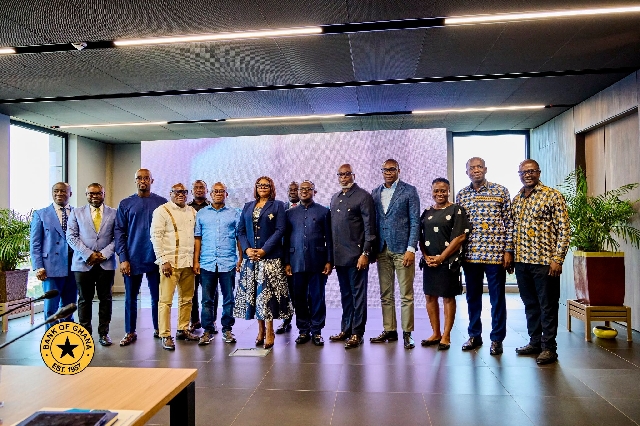
The Bank of Ghana ushered in a new chapter of transparency and oversight with the official launch of the 2025 Financial Stability Review, the flagship publication of the Financial Stability Advisory Council. The ceremony, held on Friday, May 15, 2026, brought together key stakeholders to assess the current health and resilience of Ghana’s financial sector under the theme: “From Stress to Stability: Staying on Course.” In her address on behalf of the Governor, Second Deputy Governor Matilda Asante-Asiedu praised the continued resilience of Ghana’s financial system. She reaffirmed the central bank’s unwavering commitment to maintaining stability, reinforcing public confidence, and safeguarding the integrity of the sector. However, Asante-Asiedu cautioned that new risks are beginning to emerge, subtly shaping the outlook for the financial sector. “Some risks are emerging in the outlook. Financial institutions are reassessing their business models to adapt to evolving conditions and avoid disruptions to the stable trajectory we have enjoyed,” echoed Governor Johnson Pandit Asiama in remarks included in the report. The 2025 Financial Stability Review highlights how regulators are proactively working with financial institutions to ensure they adjust their strategies in response to changing economic conditions. The report underscores ongoing efforts to preserve stability across the banking and financial services sector, even as the landscape continues to evolve. With this new publication, the Bank of Ghana signals its continued vigilance and readiness to respond to challenges, ensuring that Ghana’s financial sector remains robust and trusted in the face of uncertainty. Source: Apexnewsgh.com
Ghana’s Growing Reliance on Costly Liquid Fuels Threatens Energy Sector Stability, Says CEMSE Analysis

In 2025, the story of Ghana’s energy sector took a worrying turn. A new analysis by the Centre for Environmental Management and Sustainable Energy (CEMSE), led by Benjamin Nsiah, revealed mounting concerns over the country’s increasing dependence on expensive liquid fuels to keep the lights on. For years, Ghana’s power plants have relied on natural gas as their main source of fuel, with liquid fuels such as Heavy Fuel Oil (HFO), Diesel Fuel Oil (DFO), and Light Crude Oil (LCO) serving as backup during gas shortages. But as the supply of natural gas faltered between 2021 and 2025, backup fuels became the mainstay. The cost of this shift has proven staggering. The CEMSE report found that thermal generation continues to dominate Ghana’s electricity sector, making up about 70 percent of the nation’s dependable generation capacity by 2025. As gas supply disruptions became more frequent, power producers increasingly turned to liquid fuels, at a steep financial cost. The numbers tell a dramatic story. In 2025, the use of Heavy Fuel Oil for power generation surged to 133,237 metric tonnes, a jaw-dropping 947 percent increase from the previous year. The bill for this HFO alone was estimated at US$80.6 million. Diesel Fuel Oil, which had been used only sparingly in 2021 and 2022, saw a significant jump in consumption, with costs reaching US$32.39 million in 2025. Light Crude Oil imports for power plants also soared, from US$36.57 million in 2024 to about US$116.8 million in 2025, a 210 percent spike. Altogether, the combined cost of HFO, DFO, and LCO for the year hit an eye-watering US$229.89 million, translating to roughly US$19.16 million in monthly expenditure. CEMSE’s analysis warned that these escalating costs are not fully accounted for in Ghana’s electricity tariffs. This means the government is forced to rely heavily on petroleum levies to keep the sector afloat, further straining public finances. The report attributed the growing reliance on liquid fuels to persistent deficits in natural gas supply, a trend, it warned, that jeopardizes the financial sustainability of the entire energy sector. With the threat of mounting debt and instability looming, CEMSE called for urgent action. The Centre urged policymakers to address gas supply challenges, diversify the country’s energy sources, improve fuel procurement practices, and reduce Ghana’s exposure to expensive liquid fuels. Only through these steps, the report emphasized, can Ghana secure a more stable and affordable energy future. Source: Apexnewsgh.com
Hajia Charity Rahinatu Asoemah Empowers Bolgatanga Dressmakers with Sewing Machines and Cash Donation

At the 2026 graduation ceremony of the Bolgatanga Central Zone One branch of the Ghana National Tailors and Dressmakers Association (GNTDA), hope and opportunity took center stage. The guest of honor, Hajia Charity Rahinatu Asoemah, Former Upper East Regional Women’s Organizer of the NDC and Deputy Director General of Warehouse of NADMO, made a generous donation of 30 sewing machines and GH₵5,000 cash to the association. Hajia Charity explained that her donation was aimed at supporting the association’s mission to train more young people, particularly young women, in the craft of dressmaking. “As a daughter of this region, I understand the challenges many young ladies face in their daily lives. For some, even having three square meals a day is a struggle. That is why seeing all of you, young graduates, standing before me today is deeply meaningful. I know it has not been easy to get here, and for that, I say a big congratulations to every one of you”. She told the gathering. She commended GNTDA for its steadfast commitment to equipping the youth with valuable, employable skills and encouraged the association to further expand its training programs. Addressing the apprentices, Hajia Charity urged the youth, especially young women, to take their handiwork seriously, emphasizing the potential for vocational training to pave the way for a brighter future. “I want to admonish the youth of this region, especially the ladies, to take their handiwork seriously and become better people in the future,” she advised. Pledging her ongoing support, Hajia Charity promised to assist the association whenever the need arises. The ceremony was also marked by the graduation of 73 apprentices from the Bolgatanga Central Zone One branch. Leaders of the association took the opportunity to call on government authorities to prioritize support for local dressmakers, encouraging efforts to help new graduates establish their own businesses locally rather than seeking opportunities elsewhere. Source: Apexnewsgh.com
BoG and SEC Roll Out Bold Digital Finance Reforms to Position Ghana as Africa’s Fintech Leader
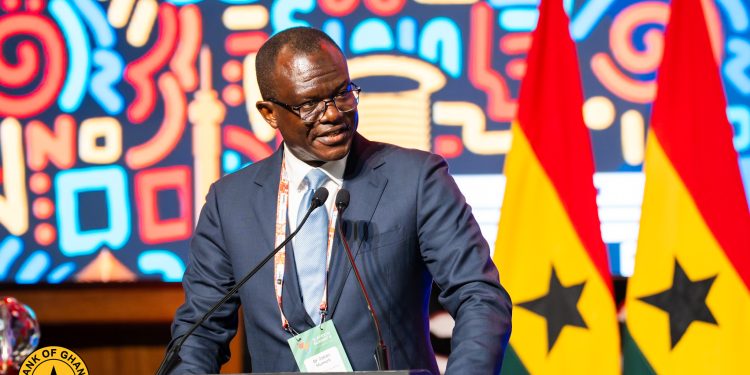
Ghana is taking decisive steps to strengthen its place in Africa’s growing digital economy, as the Bank of Ghana (BoG) and the Securities and Exchange Commission (SEC) unveiled major reforms aimed at transforming the country into a leading digital finance hub on the continent. The announcements were made during the 3i Africa Summit, where policymakers and financial industry leaders outlined plans to improve instant payment systems, regulate virtual assets, and tighten controls within the fintech lending space. Delivering closing remarks at the summit, the First Deputy Governor of the Bank of Ghana, Dr. Zakari Mumuni, stressed that Africa’s next financial breakthrough will depend on how effectively countries connect their payment systems across borders. According to him, many African countries have already built successful mobile money and digital payment platforms, but the lack of integration between national systems continues to slow down the continent’s digital trade ambitions. Dr. Mumuni explained that the challenge facing Africa is no longer about creating new financial innovations, but rather scaling existing systems to work seamlessly together. He noted that harmonized standards and interconnected payment infrastructure would make it easier for money to move freely across African borders. He cautioned that without deliberate collaboration among African nations, the dream of a unified digital market could remain unattainable. He further urged leaders and regulators to focus on building interconnected systems instead of isolated financial structures. Meanwhile, the Securities and Exchange Commission has moved to formalize Ghana’s virtual asset industry with the introduction of a regulatory sandbox framework for Virtual Asset Service Providers (VASPs). The SEC said the initiative, established under the Virtual Asset Service Providers Act, 2025 (Act 1154), will allow companies operating in the virtual asset space to test innovative products and services under regulatory supervision for a period of 12 months. The Commission explained that the sandbox arrangement is intended to promote responsible innovation while ensuring investor protection and maintaining market integrity. Companies that successfully meet the regulatory requirements during the testing phase may eventually receive full operational licenses. In another significant move, the Bank of Ghana also announced plans to strengthen credit risk management within the fintech sector through mandatory data sharing among financial technology companies. The central bank believes the initiative will help reduce the activities of habitual loan defaulters and lower lending risks by incorporating fintech borrowing data into Ghana’s credit reporting system. Dr. Mumuni emphasized the importance of building financial systems that not only expand access to credit but also promote responsible borrowing and lending practices. Participants at the summit agreed that Africa’s digital finance sector has reached a stage where action and implementation must now take precedence over experimentation and pilot projects. Closing the summit, Dr. Mumuni urged stakeholders to move beyond discussions and commit to practical execution, insisting that the real success of the 3i Africa Summit would be determined by the concrete actions taken after the event. Source: Apexnewsgh.com
Ghana’s Financial Revolution: Making Women’s Ventures ‘Investment-Ready’ for the World

In the bustling markets and roadside stalls across Ghana, millions of women work tirelessly, yet most remain invisible to the formal banking system. But a shift is coming. “Our goal is to ensure these ventures are ‘investment-ready’ for the global stage,” a spokesperson for Chartered recently declared, capturing a growing consensus among financial leaders. Still, the reality of the “unbanked” female entrepreneur is stark. Despite national economic gains, countless women in the informal sector find themselves locked out of traditional loans. Experts argue that until Ghana dismantles its deeply rooted “collateral culture”, which demands physical assets most women don’t possess, many will remain trapped, relying on high-interest informal lenders who circle like vultures. Enter Dr. Elizabeth Zormelo, a fierce advocate for female financial literacy. She doesn’t mince words. “Credit is the fuel, but financial literacy and market access are the engine,” Dr. Zormelo explains, her voice carrying the urgency of someone who has watched too many small businesses flicker and die. “The Women’s Development Bank must be paired with aggressive training to ensure these businesses don’t just survive, but dominate.” Her message arrives at a pivotal moment. The Bank of Ghana is preparing to release new guidelines on gender-disaggregated data reporting,a tool that will finally reveal, in stark numbers, who gets loans and who doesn’t. The message to the financial sector is unmistakable: the future of Ghana’s economic growth is female, and the cost of exclusion is a price this nation can no longer afford to pay. Source: Apexnewsgh.com
Governor Asiama Calls for Stronger Digital Finance Ecosystem at 3i Africa Summit
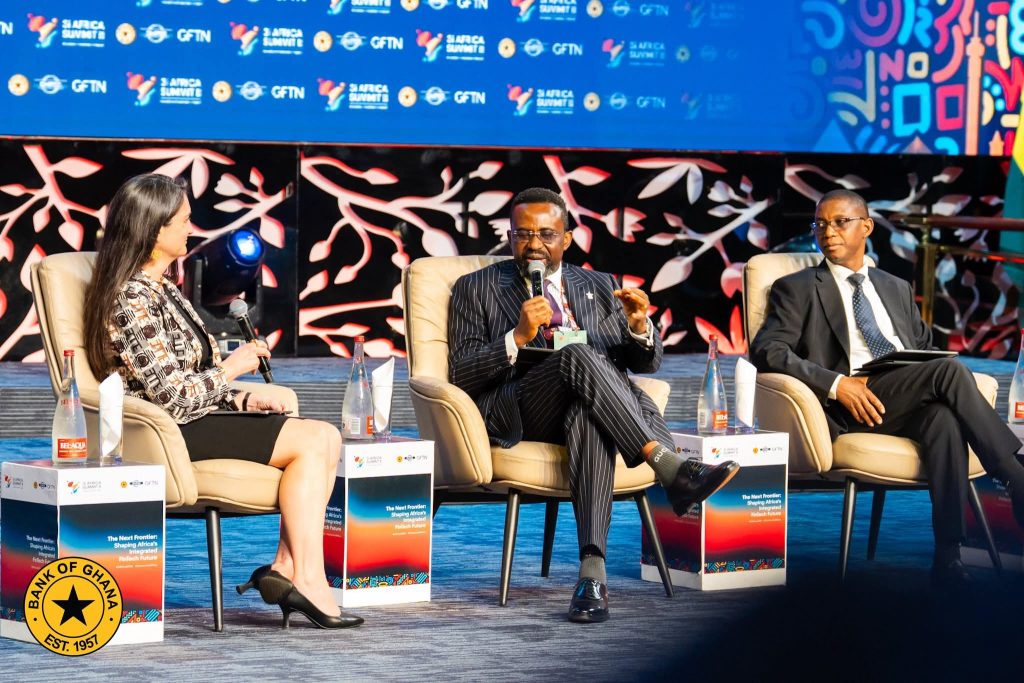
Bank of Ghana Governor, Dr. Johnson Pandit Asiama, has urged African fintech institutions to move beyond simply increasing access to digital financial services and focus on delivering real value and measurable impact across the continent. Delivering the keynote address at the opening of the 3i Africa Summit held at the Destiny Arena in Accra on May 6, 2026, Dr. Asiama said digital finance is becoming increasingly important in building a resilient and inclusive fintech ecosystem in Africa. According to the Governor, nearly 49 per cent of adults in sub-Saharan Africa now own digital financial accounts, a sign of significant progress in financial inclusion. However, he stressed that the next stage of growth should concentrate on scalability, efficiency, and the meaningful use of financial services rather than just access. Dr. Asiama explained that the future of digital finance would go beyond basic payment systems to include digital credit, embedded finance, supply chain finance, and cross-border financial services. He noted that these innovations must particularly support women, micro, small and medium-sized enterprises (MSMEs), and players within the informal sector. He also highlighted several challenges affecting the growth of Africa’s fintech space, including fragmented markets, high transaction costs, and weak regulatory coordination. To address these issues, the Governor called for stronger collaboration among institutions and improved connectivity across financial systems and markets. The Bank of Ghana Governor further outlined measures being implemented by the central bank to strengthen digital finance in the country. These include the development of a regulatory framework for virtual assets, the issuance of digital credit guidelines, progress toward open banking, and efforts to promote cross-border fintech operations. Source: Apexnewsgh.com
MobileMoney Fintech LTD, MTN Ghana to Lead Fintech Conversations at 3i Africa Summit 2026
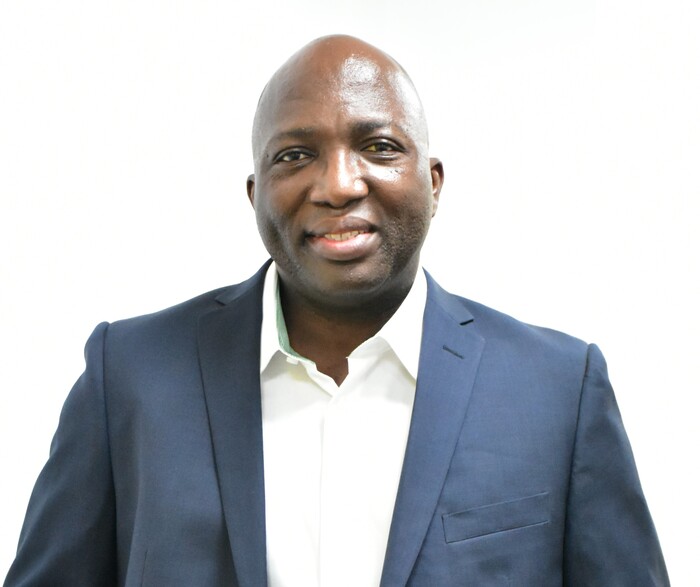
MobileMoney Fintech LTD (MMFL) and MTN Ghana will play leading roles at the 2026 edition of the 3i Africa Summit, one of the continent’s foremost gatherings of fintech innovators, policymakers, regulators, and institutional investors. The summit will be held from May 6 to May 8, 2026, at the Destiny Arena in Accra, Ghana, under the theme “The Next Frontier: Shaping Africa’s Integrated FinTech Future.” At the opening of the summit, MTN Group President & CEO Ralph Mupita will take part in a fireside chat on “The Future of Digital Finance in Emerging Markets,” as African economies accelerate investment in digital financial infrastructure. Senior Vice President, MTN Group—WECA, Ebenezer Twum Asante, will also contribute to discussions on how mobile money, embedded finance, and telecom-led ecosystems are expanding access to financial services across Africa and beyond. Shaibu Haruna, CEO of MobileMoney Fintech LTD, will deliver a keynote on “Strengthening Consumer Protection in High-Velocity Credit & Banking Markets,” examining the growing need for robust safeguards as digital credit and mobile banking services scale rapidly across Africa’s emerging markets. Adoma Owusu, General Manager, Fintech Business Development & Expansion, MTN Group Fintech, will join a panel on “Beyond Trading: Creating Real Utility in Africa,” exploring how virtual assets are being applied to address real-world challenges across payments, financing, and service delivery. Beyond the keynotes, Sylvia Otuo Acheampong, Chief Products & Services Officer of MMFL, and Angela Mensah-Poku, Chief Enterprise Business Officer of MTN Ghana, will add further executive leadership to the summit, moderating panel sessions across the three-day programme. Commenting on the summit, Shaibu Haruna, CEO, MobileMoney Fintech LTD, said the event reflects both the continent’s momentum and MMFL’s commitment to responsible, people-centred financial innovation. “Africa is no longer waiting for the world to define its financial future; we are actively building it. At MobileMoney Fintech LTD, we understand that speed and scale in digital finance must always be matched by responsibility. The 3i Africa Summit is exactly the kind of platform where those conversations must happen, and we are proud to be part of shaping that dialogue,” he said. Now in its third year, the 3i Africa Summit has established itself as a premier continental platform anchored in Innovation, Investment, and Impact. The 2026 edition signals Africa’s shift from observation to structured implementation—integrating virtual assets, tokenisation, artificial intelligence, open banking, and digital public infrastructure to build more resilient financial systems. MMFL and MTN Ghana’s participation underscores the companies’ commitment to responsible financial innovation and to ensuring that Africa’s rapid fintech growth translates into lasting, inclusive economic impact for consumers across the continent. Source: Apexnewsgh.com
MTN GHANA BRIDGES ACADEMIA AND INDUSTRY WITH HANDS-ON TECH EXPERIENCE FOR 200+ STUDENTS
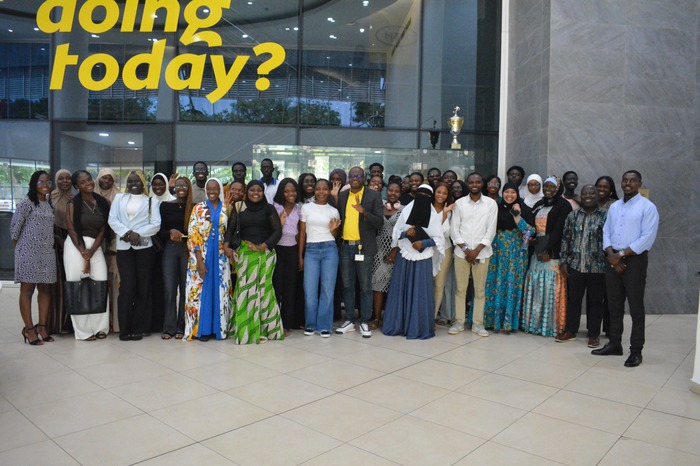
MTN Ghana has hosted more than 200 students from various educational institutions in Accra for an engaging, hands-on technology immersion at MTN House, bringing classroom theory to life and fuelling interest in STEM and digital innovation. Students from Ashesi University, Ghana International School, Cradle Star Academy, and Kinderland School explored MTN Ghana’s rich history, core values, customer-focused innovations, and digital transformation agenda. They were introduced to the company’s sustainability and social impact initiatives, spanning education, youth empowerment, and community development. A key highlight of the visits was a tour of MTN Ghana’s Network Operations Centre (NOC) and data centres. Students gained firsthand exposure to the advanced technology, systems, and expertise powering seamless connectivity for millions daily, offering a rare look into how MTN ensures network performance, security, and resilience. Speaking on the initiative, the Chief Corporate Services and Sustainability Officer at MTN Ghana, Adwoa Wiafe, noted, “Hosting students at MTN House reflects our commitment to shaping Ghana’s digital future. As we deliver our Ambition 2030 strategy, we are deepening investments in youth development through programmes like the Bright Scholarship, the MTN Digital Skills Academy, and collaborations on the One Million Coders Programme and the Girls in ICT initiative led by the Ministry of Communications, Digital Technology and Innovation.” Paschal Paaga, Manager for IT Projects Implementation, emphasised the importance of experiential learning. ‘’By opening our doors, we are helping to bridge the gap between academia and industry. We want young people to see the real-world impact of technology and be inspired to pursue careers in STEM.” For many participants, the experience was transformative. Maame Sapomaa, a Level 300 Information Systems student from Ashesi University, shared, “The visit was incredibly inspiring. Everything we have learned in the classroom came to life, and we were exposed to new concepts beyond our studies. It has motivated me even more to pursue a career in technology.” As MTN Ghana advances its Ambition 2030 vision, the company remains committed to driving digital inclusion, platform-led innovation, and building strategic partnerships that support Ghana’s long-term socio-economic development. Source: Apexnewsgh.com
Bank of Ghana Defends Financial Health Amid Scrutiny Over 2025 Losses

The Bank of Ghana (BoG) has moved to reassure the public and policymakers about its financial strength following heightened scrutiny of its 2025 accounts, which revealed a significant GH¢15.6 billion loss. Addressing concerns on Channel One TV’s “Face to Face” on Tuesday, May 5, BoG’s Head of Communications, Bernard Otabil, maintained that the central bank remains fully capable of fulfilling its mandate despite the reported losses. Otabil explained that the institution’s financial position should be understood within the unique context of central banking, where policy effectiveness is prioritized over profitability. “We are policy solvent,” he stated. “If in doubt, you always have to look at the cash flow position. The accounts presented came with other supporting documents, all laid out transparently. There’s nothing to suggest the Central Bank cannot continue its business as usual, nor will any significant part of its operations be curtailed in the foreseeable future.” He pointed to the BoG’s “policy solvency” figure, approximately 5.5 billion, as evidence of the bank’s resilience. According to Otabil, policy solvency demonstrates the Bank’s capacity to fund and sustain its monetary policy operations, including managing liquidity and maintaining price stability across the economy. The BoG’s 2025 financial results have sparked public and political debate, with critics raising concerns about the scale of the central bank’s losses and its negative equity position. However, Otabil urged commentators to interpret these numbers in context, noting that central bank balance sheets often reflect the costs involved in stabilizing economies during turbulent times. He stressed that the central bank’s ability to operate effectively remains unaffected, dismissing suggestions that its financial standing could undermine its core mandate. “If you look at what has been put there, it gives you a strong sense that the Central Bank is still functioning as expected,” he assured. Source: Apexnewsgh.com
Majority in Parliament Criticises Akufo-Addo Government Over Failure to Achieve Macroeconomic Stability Amid BoG Losses

The Majority in Parliament has publicly criticised the Akufo-Addo administration for what it describes as a failure to achieve macroeconomic stability, pointing to the Bank of Ghana’s cumulative losses of over GH₵80 billion between 2022 and 2024 as evidence of persistent economic challenges. Addressing journalists, Eric Afful, Chairman of Parliament’s Economy and Development Committee and Member of Parliament for Amenfi West, outlined a series of economic hurdles that, in his view, have contributed to the central bank’s reported loss of GH₵15.6 billion in 2025. He argued that despite these significant operational losses, the country’s economic fundamentals remain weak. “Inflation surged to a peak of 54.13% in 2022 before easing to 23.84% by the end of 2024. The Ghana cedi continued to depreciate, reaching approximately GH₵14 to a dollar by December 2024, a depreciation of about 19.7%,” Afful stated. He further noted that gross international reserves were only sufficient to cover around four months of imports, standing at $9.3 billion in 2024. Afful also highlighted the central bank’s deteriorating equity position, revealing that negative equity stood at GH₵64.34 billion in 2023, improving only marginally to negative GH₵61 billion in 2024. “Despite all these losses, we have not seen a corresponding improvement in the economy’s fundamentals,” he remarked. He argued that the losses recorded in 2025 should not be viewed in isolation but rather as part of ongoing policy interventions intended to stabilise the economy. “Given these considerations, the 2025 outcomes must be understood as the continuation of a deliberate and necessary policy intervention,” Afful explained. The Majority’s critique comes at a time of heightened scrutiny over the government’s economic management, with many stakeholders calling for renewed efforts to address inflation, currency depreciation, and the central bank’s financial health. Source: Apexnewsgh.com