
Ghana Seeks Deeper Partnerships with China for Value-Driven, Sustainable Mining Future
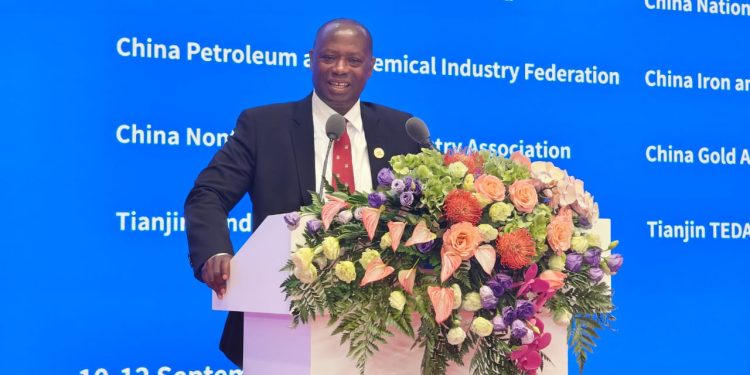
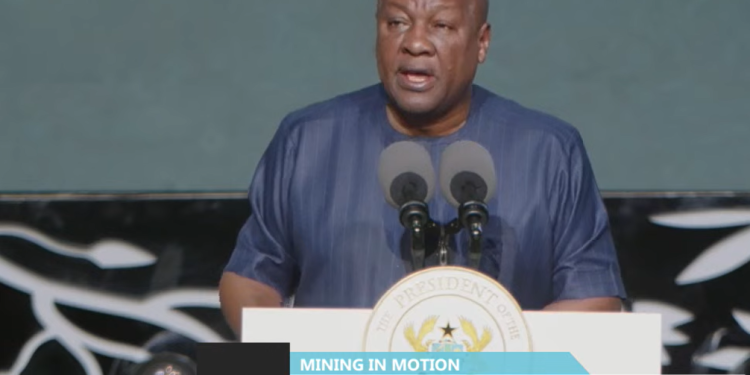
Ghana is charting a new path in its mining sector, calling for stronger partnerships with China and global stakeholders to unlock greater value from its mineral resources. The message was delivered by the Minister for Lands and Natural Resources, Emmanuel Armah-Kofi Buah, at the opening of the 28th China Mining Conference and Exhibition 2026 in Tianjin, China. No longer content with exporting raw minerals, Ghana is seeking cooperation in mineral processing, technology transfer, skills development, and infrastructure to fuel job creation and economic growth. “Our minerals must do more than generate export receipts. They must support value addition, industrial development, skills, jobs and opportunities for our young people,” the Minister emphasized. He stressed that the next chapter of Ghana’s mining industry must prioritize industries, skills, technology, jobs, and stronger communities alongside extraction. To this end, the government is reviewing its minerals and mining framework, formalizing artisanal and small-scale mining, and enhancing transparency and responsible oversight across the gold value chain. Ghana already boasts significant Chinese investments in mining, including Chifeng Gold Group, Shandong Gold, and Zijin Mining. But Mr. Armah-Kofi Buah said future partnerships should go beyond extraction to embrace mineral processing, infrastructure, local supply chains, and skills development. Environmental sustainability also took center stage, with the Minister highlighting measures to combat illegal mining (galamsey), such as the National Anti-Illegal Mining Operations Secretariat (NAIMOS) and the Responsible Cooperative Mining and Skills Development Programme (rCOMSDEP). He appealed for deeper cooperation with China in environmental management, land reclamation, and restoration of mined areas: “A river is not simply an environmental statistic. It is drinking water. It is farming. It is the livelihood of a community. It is an inheritance held in trust for a child not yet born.” Pushing for intelligent mining, Mr. Armah-Kofi Buah outlined Ghana’s efforts to modernize its geological data and digitalize the gold supply chain. He underscored the importance of accurate geological information for attracting investment and ensuring fair negotiations, calling for greater technical exchanges and mining-specific training for Ghanaians. Looking ahead, the Minister said Ghana is focused on refining more gold, advancing an integrated aluminium industry, developing iron ore resources for domestic steel production, and positioning critical minerals for new industries and technologies. This vision will be showcased during Ghana Mining Day at the conference under the theme, “Building Ghana’s Next Frontier: Geology, Value Addition and Investment Partnership.” He invited Chinese and global investors to explore mutually beneficial opportunities, stating, “We have the resources. China has deep experience in capital, technology, processing, infrastructure and industrial development. Between us lies an opportunity to build commercially sound partnerships in which Ghana creates more value at home, investors succeed, communities share in prosperity and both countries emerge stronger.” China’s Vice Premier, He Lifeng, responded by expressing China’s readiness to support developing economies with funding, technology, and fair benefit-sharing through open and transparent partnerships. The 28th China Mining Conference and Exhibition runs in Tianjin from September 10 to 12, 2026, under the theme, “Win-Win Cooperation, Green and Intelligent.” Source: Apexnewsgh.com
Port Congestion, New Fees, and a Surge in Containers: The Story of Ghana’s Shipping Challenge
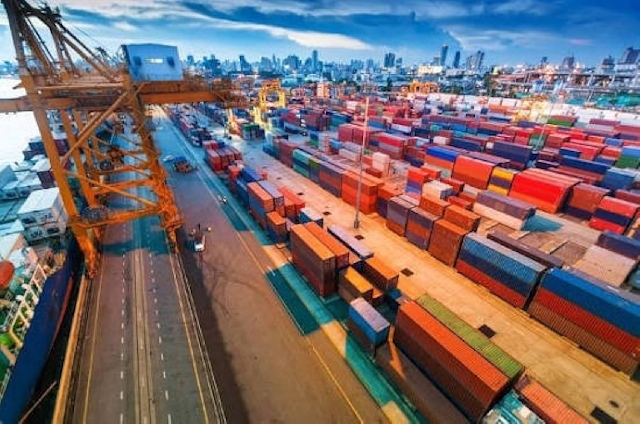
The atmosphere at Ghana’s ports has never been more charged. Shipping companies and their agents have received a clear directive from the government: begin collecting the approved GH¢720 Container Administrative Charge immediately, no exceptions. This hard stance was revealed by Transport Minister Joseph Bukari Nikpe during an interview on Channel One TV’s The Point of View. His position followed a recent court ruling that dismissed an attempt to block the implementation of the new fee. “Before we will agree, they will have to be collecting or charging the GH¢720 as we communicated to them before we can sit together with them,” Minister Nikpe stated, emphasizing that compliance with the directive is a prerequisite for any further negotiations. The GH¢720 charge, he clarified, is the regulatory ceiling for the Container Administrative Charge applied to all import and export containers, calculated per Twenty-Foot Equivalent Unit (TEU). Despite the firm approach, the government is keeping the door open for dialogue. Minister Nikpe assured shipping companies that discussions could resume, but only after they have started applying the fee as stipulated by the authorities. Meanwhile, a new challenge has emerged: an unprecedented surge in container traffic at Ghana’s ports. According to Minister Nikpe, container volumes have shot up by almost 100 percent, a level not seen in the past twenty years. This dramatic increase has led to significant congestion, especially at the Meridian Port Services (MPS) Terminal in Tema. The congestion has caused delays in cargo clearance and put immense pressure on available terminal space. To address the bottlenecks, the government is taking action on several fronts. Efforts are underway to remove containers that have overstayed at the port, and shipping lines are being urged to evacuate empty containers that continue to occupy valuable space. In a bid to ease the pressure, the Railway Development Authority has been enlisted to temporarily move some of the containers to alternate terminals. Additionally, the Ghana Ports and Harbours Authority has been instructed to acquire two more cranes to speed up cargo handling and reduce delays. As the shipping industry adapts to these new realities, all eyes are on the government and port authorities to see if these interventions will restore smooth operations and keep Ghana’s trade flowing. Source: Apexnewsgh.com
Bank of Ghana Rolls Out Tougher Penalties for Dud Cheque Offenders
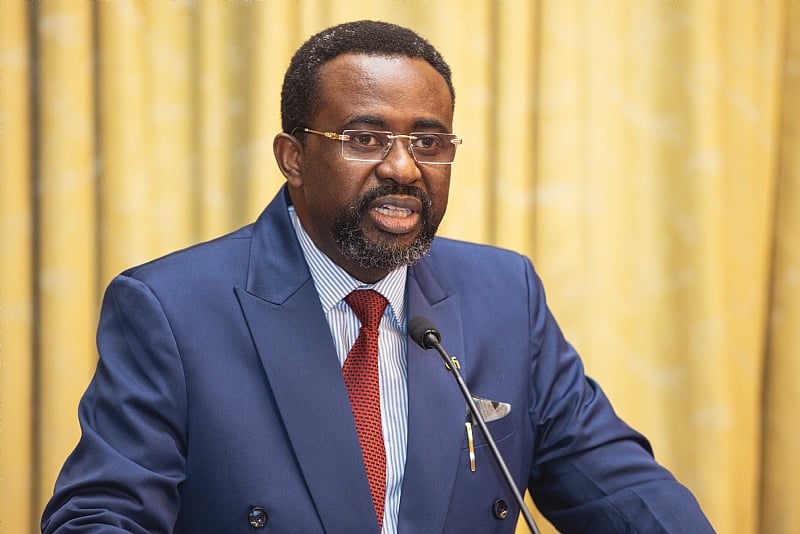
The Bank of Ghana (BoG) has introduced a new, tiered penalty system aimed at curbing the issuance of dud cheques, a move designed to protect the integrity of the country’s financial system and encourage responsible banking. Under the revised rules, a dud cheque is defined as one that cannot be honoured due to insufficient funds in a customer’s account. If such a cheque is issued, the bank will reject and return it, and the account holder could face legal action in addition to financial penalties. For first-time offenders, the BoG mandates a penalty of 10% of the cheque’s face value. Offenders will also receive a formal warning outlining the ramifications of future violations. Banks are required to report these cases to both the Credit Reference Bureaus (CRBs) and the central bank. The penalties increase for repeat offenders. A second dud cheque issued within a year of the first attracts a 15% penalty and a renewed warning, with the incident again being reported to CRBs and the BoG. A third offence within the same period will result in a 20% penalty. After the third strike, consequences stiffen significantly: the customer will be banned from issuing cheques for at least three years and denied access to new credit facilities for one year. The BoG will notify all banks and Specialised Deposit-Taking Institutions of the sanction, ensuring the ban is enforced across the sector. The BoG warns that these offences can damage a customer’s creditworthiness, making it harder and more expensive to borrow in the future. Banks must notify customers of a cheque-issuing ban within five working days and recall all unused cheque books, refraining from issuing new ones until the sanction is lifted. Customers who fail to return unused cheque books within ten working days face even stiffer penalties, including a possible ban on operating any current account and inclusion in the BoG’s Directory of High-Risk Cheque Issuers. The central bank is urging all customers to be vigilant about their account balances and not to issue cheques based on anticipated funds unless they are certain the money will be available. Keeping accurate records of issued cheques and their expected presentation dates, and alerting one’s bank in the event of insufficient funds, are also strongly advised. Source: Apexnewsgh.com
Government to Introduce Biometric Verification for SIM Registration Before End of 2026
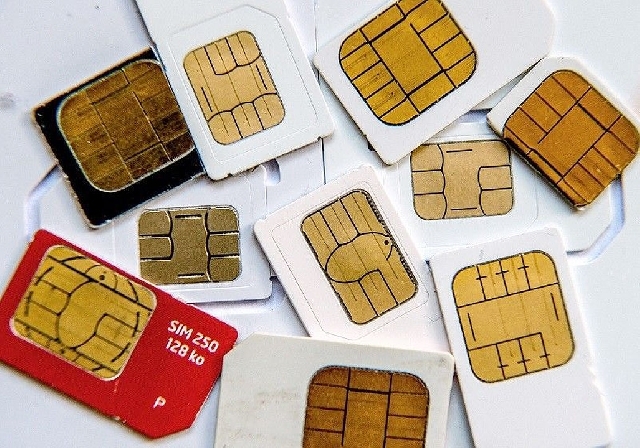
Ghana is set to take a significant leap in digital security, as the government prepares to roll out biometric verification for SIM card registration before the end of 2026. Communications, Digital Technology and Innovations Minister Samuel Nartey George made the announcement at the Government Accountability Series held at Jubilee House in Accra on Monday, September 7. Minister George revealed that Parliament has passed the Legislative Instrument (LI) on SIM registration, clearing the way for this next phase. The new biometric system will require subscribers to provide unique identifiers, such as fingerprints, when registering their SIM cards. This move, he explained, is intended to strengthen the identification of subscribers and enhance the integrity of Ghana’s SIM registration database. “The work is far from finished, and I will not pretend otherwise. But the direction is unmistakable, the results are measurable, and the resolve of this Ministry is unshaken,” Mr George said, underscoring the government’s commitment to improving regulatory frameworks as technology evolves. Authorities believe the introduction of biometric verification will make it much harder for individuals to use fraudulent identities to register SIM cards. It will also improve the traceability of subscribers, helping Ghana’s telecommunications sector combat crime and strengthen national security. With the passage of the LI, the Ministry is expected to collaborate closely with the National Communications Authority (NCA) and telecom operators to roll out the biometric system before the year’s end. Subscribers will be allotted a window to complete the verification process, with possible sanctions for those who fail to comply. This bold step signals a new chapter in Ghana’s digital transformation journey, one focused on security, accountability, and the responsible management of digital identities. Source: Apexnewsgh.com
Nabdam MP Donates 15 Sewing Machines to Centre for National Culture
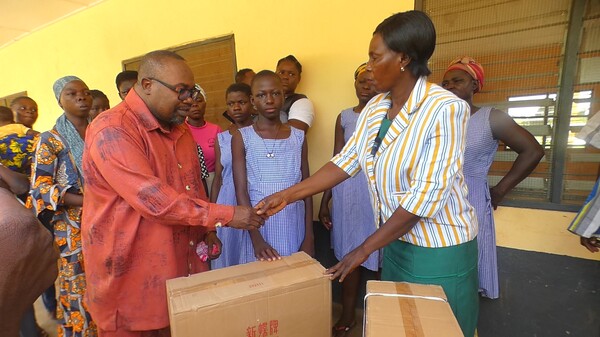
The Member of Parliament for the Nabdam Constituency, Dr Mark Kurt Nawaane, has donated 15 sewing machines to the Centre for National Culture in the Nabdam District to support vocational training for young people, particularly young women. The donation follows an inspection of the centre by the MP, during which he observed the challenges confronting the facility and the lack of equipment needed to effectively train the youth in various vocational skills. Speaking at the presentation ceremony, Dr Nawaane said the initiative was largely community-driven and had been championed by the Nabdam District Director of the Centre for National Culture, Madam Gladys Ayamga. According to him, Madam Ayamga had been working over the past six months to organise young women to acquire vocational skills but faced difficulties securing the necessary equipment. He said after visiting the centre and witnessing the situation firsthand, he decided to seek support to provide the needed sewing machines. “When I went back to Accra, I tried to look around and, thanks to God, today I am donating 15 sewing machines to the centre. This is a community-initiated activity.” Dr Nawaane stressed the importance of vocational and technical education, noting that not every young person must necessarily pursue university education. He said Ghana needed more people with practical and technical skills to meet the demands of the economy. “Not everybody is supposed to learn and go to university and go and do academic work. Currently, what we lack in Ghana is technical skills. What we lack in Ghana is vocational skills,” he said. In addition to the sewing machines, Dr Nawaane announced a financial support of GH¢5,000 to assist the centre in its training activities and enable the beneficiaries to explore additional vocational areas, including weaving. He also encouraged the centre to introduce other practical skills such as hairdressing and promised to support efforts to expand vocational training opportunities across the district. The MP expressed hope that within the next two to four years, the centre would have a larger number of students acquiring different vocational skills. He further urged the beneficiaries to take proper care of the sewing machines and use them strictly for their intended purpose. “These machines are set up for you to use them to learn. Take good care of them. Make sure that you learn and learn and learn. That is just what we expect from you,” he said. The Nabdam District Director of the Centre for National Culture, Madam Gladys Ayamga, expressed gratitude to Dr Nawaane for responding to the centre’s appeal for assistance. She said efforts to secure sewing machines for the trainees had previously proved unsuccessful despite repeated attempts to obtain support. “I am so grateful to him in the sense that he is able to come out to assist these youth. In fact, it’s not easy. I’ve been with them, struggling to get sewing machines to even equip them for the training,” she said. Madam Ayamga explained that the centre plans to expand its training programmes beyond dressmaking to include beading, hand-tassel weaving and other vocational skills. She, however, appealed for further support to enable the centre to extend its programmes to more communities in the district. According to her, distance remains a major challenge for young people from communities such as Sakote who wish to benefit from the training. She therefore called for support to establish or expand training opportunities in other parts of Nabdam so that young people would not have to travel long distances to access vocational education. Genesis of the Vocational Training Madam Ayamga explained that the vocational training initiative dates back to her time working with the Centre for National Culture in Bolgatanga, where she was involved in the hand-weaving and sewing departments. She said the experience enabled her to train several young people, some of whom later joined the Centre for National Culture as workers. She disclosed that in 2024, the centre trained 15 young women in dressmaking and five others in hand-tassel weaving. After completing their training, some beneficiaries received sewing machines and continued practising their trades within their respective communities. Others subsequently followed her to Nabdam, where they continued their training and graduated in 2025. Madam Ayamga said following the graduation, she appealed to the MP and the Nabdam District Assembly for support to recruit and train more young people. She also said the programme had opened its doors to persons with disabilities and other young people seeking opportunities for self-employment. She cited the example of a trainee who had previously learned dressmaking but returned to the centre to acquire additional skills in hand-tassel weaving. Madam Ayamga said the ultimate goal was to equip young people with practical skills that could enable them to become self-reliant and improve their livelihoods. The centre is expected to continue expanding its vocational programmes as it mobilises additional support and equipment for trainees across the Nabdam District. Source: Apexnewsgh.com
Pump Price Movements Mark September’s First Pricing Window
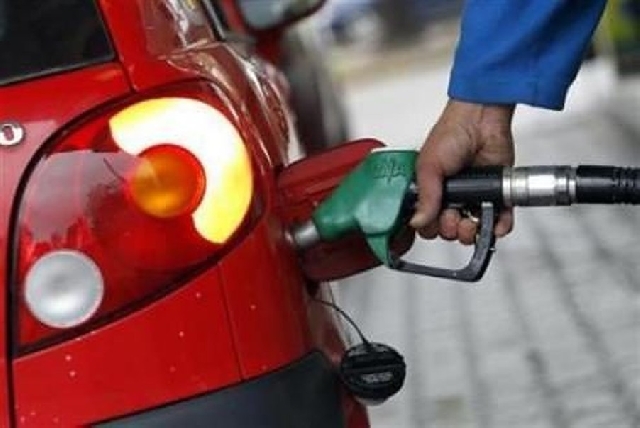
As the first pricing window of September unfolds, Ghana’s fuel landscape is witnessing a flurry of price adjustments by major Oil Marketing Companies (OMCs), each charting its course in response to international and local market pressures. It all began quietly, with most OMCs, except Star Oil, holding their pump prices steady, despite projections that petrol and diesel prices would climb in the new pricing period. But Star Oil soon broke the silence, announcing its second price hike for September’s first window. The company raised the price of diesel from GH¢16.97 to GH¢17.26 per litre, and petrol from GH¢14.97 to GH¢15.43 per litre, while keeping RON 95 unchanged at GH¢17.97 per litre. Star Oil attributed these changes to rising international prices for refined petroleum products, even as the Ghana cedi showed signs of strength. In contrast, state-owned GOIL chose not to adjust its prices, maintaining those set in the previous window. Petrol at GOIL outlets remains at GH¢15.43 per litre, diesel at GH¢17.26, and Super XP 95 at GH¢17.97. The company explained its decision as an effort to offer consumers some relief at the pumps amid the ongoing price volatility. Shell, another major player, also held its ground, keeping petrol at GH¢15.99 and diesel at GH¢17.59 per litre. Its premium V-Power fuel is retailing at GH¢17.99 per litre. Meanwhile, TotalEnergies nudged its petrol price upward from GH¢15.99 to GH¢16.18 per litre, though its diesel price remained at GH¢17.59. Excellium 95, the company’s premium offering, continues to sell at GH¢17.99 per litre. These price movements reveal the complex, competitive dance among Ghana’s OMCs as they react to international refined product prices, shifts in the cedi’s strength, and each other’s strategies. With Brent crude hovering above $95 a barrel due to renewed tensions in the Middle East, the specter of further pump price hikes looms if global market pressures persist. Regulatory agencies are also active. For September’s first window, the National Petroleum Authority (NPA) has raised the price floors, the minimum legal prices at which OMCs and LPG Marketing Companies can sell fuel. Petrol’s floor is now GH¢14.53 per litre (up from GH¢13.92 in August’s second window), and diesel’s floor is GH¢15.60 per litre (up from GH¢15.19). Only LPG saw a slight decrease, slipping to GH¢10.85 per kilogram. These regulated floors set a baseline but exclude various industry premiums and margins, which each company determines independently within the guidelines. To cushion consumers, the government has extended a GH¢2 per litre reduction in the regulatory margin on diesel into September’s window. This ongoing intervention aims to soften the blow from rising international prices as OMCs revise their pump prices. As the month unfolds, all eyes will be on the pumps, and the international markets, to see if further adjustments lie ahead. Source: Apexnewsgh.com
Importers and Exporters Association Applauds GoldBod and Bank of Ghana for Enhancing Forex Stability
The Importers and Exporters Association of Ghana (IEAG) has lauded the Ghana Gold Board (GoldBod) and the Bank of Ghana (BoG) for their significant roles in stabilising the country’s foreign exchange market and promoting economic resilience. At a press conference, IEAG Executive Director Samson Asaki Awingobit highlighted the benefits that a steady foreign exchange environment brings to Ghana’s business community. He explained that the recent stability in the forex market had made it easier for importers and exporters to plan ahead, manage risks, and engage in international trade with greater certainty. Awingobit credited GoldBod’s trading policies for bolstering Ghana’s foreign exchange reserves and improving legitimate businesses’ access to hard currency. He also praised the Bank of Ghana for its commitment to macroeconomic and financial stability, singling out the recent reduction in interest rates as a welcome relief for businesses that rely on credit to fund their operations. Quoting the Bank of Ghana’s Financial Stability Review, Awingobit noted that the average lending rate fell from 30.3 percent in December 2024 to 20.5 percent by the end of 2025, a development he described as a “major boost” for importers and exporters in need of working capital. He urged both GoldBod and the BoG to maintain and expand their efforts to sustain foreign exchange stability and lower borrowing costs, particularly as the festive season approaches, a time when demand for foreign currency, credit, and imported goods typically rises. The IEAG emphasised that ongoing monetary and regulatory support would be critical in helping businesses navigate seasonal trade pressures and foster long-term economic growth. Source: Apexnewsgh.com
Ghana Gas Charts Expansion Path, Eyes Onshore Pipeline to Boost Power and Industry
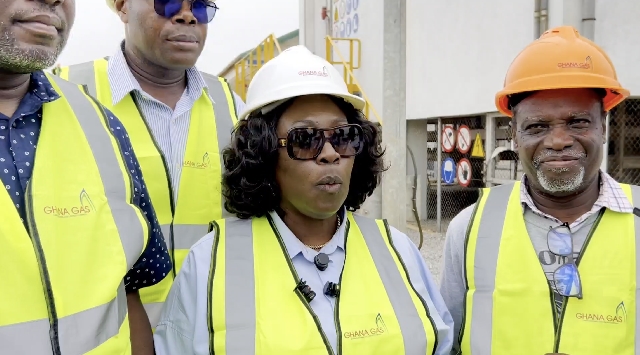
The Ghana National Gas Company (GNGC) is gearing up for a major expansion drive, aiming to reinvest its strong financial gains to boost operational efficiency and make gas more accessible for power generation and industry. Chief Executive Officer Judith Adjobah Blay announced that the company’s next focus will be on expansion and reinvestment, following its recent financial success. “That is the next phase, beyond profit, there is expansion and reinvestment into Ghana Gas,” she stated. Central to these plans is a proposed onshore pipeline project that would stretch from Takoradi to Tema, extending the supply of gas from the Atuabo processing facility beyond the Western Region. The pipeline would traverse the Central and Eastern regions, ultimately reaching the industrial hub of Tema. GNGC anticipates that the expanded infrastructure will support industrial growth along the pipeline’s route by making gas more available to businesses and factories in those areas. The company’s ambitious expansion plans were showcased during an industrial tour by the commissioners and management of the Public Utilities Regulatory Commission (PURC), GNGC’s economic regulator. Richard Kirk-Mensah, Head of Corporate Communications at Ghana Gas, said the visit provided PURC with an invaluable opportunity to witness the company’s operations and expansion projects firsthand. “Their visit aims to give them insight into Ghana Gas’s operations, particularly the expansion projects at their sites. Rather than just presenting slides and discussing verbally, allowing them to see the facilities and the ongoing work firsthand will give them a better understanding of the company’s plans and activities,” Kirk-Mensah explained. With its sights set on expansion and reinvestment, Ghana Gas is positioning itself as a key driver of Ghana’s industrial and power sectors, promising increased availability and reliability of gas supply for years to come. Source: Apexnewsgh.com
Parliament to Probe $1.7 Billion Gold Board Loss, Summon GOLDBOD CEO

Parliament is set to open an inquiry into the reported US$1.7 billion loss recorded by the Ghana Gold Board (GOLDBOD) under the Domestic Gold Purchase Programme (DGPP). The move follows a formal motion filed by the Minority Caucus, seeking a parliamentary investigation and the summoning of GOLDBOD Chief Executive Sammy Gyamfi to provide explanations regarding the controversial transactions. Speaker of Parliament Alban Bagbin confirmed the development, stating that parliamentary scrutiny would help clarify whether the reported $1.7 billion (GHS22 billion) constitutes a genuine financial loss or a policy-related cost associated with the DGPP’s implementation. “With the motion they have filed, which was received in my office on the 21st of August, 2026, just three days ago, I have gone through the motion myself and I intend to admit the motion because we have to at least have an end to litigation as to whether it’s a loss or it’s a cost,” he said. Bagbin explained that the parliamentary process would allow lawmakers to thoroughly examine the issue and bring clarity to the public. He added that Ghanaians would have the opportunity to follow the proceedings and form their own informed opinions. “This House will have the opportunity to go through it. And please, Ghanaians are very intelligent people. They will listen, they will read in between the lines and they will make their decisions,” he said. The upcoming inquiry is expected to provide much-needed transparency and accountability on the financial management of the DGPP and the reported multi-billion dollar loss. Source: Apexnewsgh.com
World Bank Warns Majority of Ghanaians Still in Poverty Amid Uneven Economic Growth
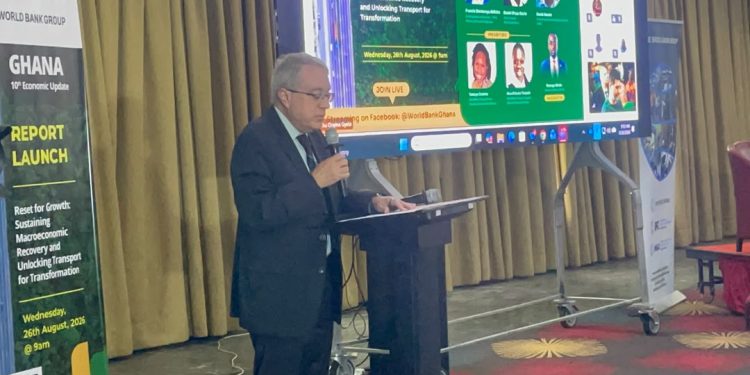
Despite recent economic growth, more than half of Ghanaians continue to live in poverty, according to new findings from the World Bank. At the launch of the World Bank Group’s 10th Ghana Economic Update, Dr. Robert Taliercio O’Brien, Division Director for Ghana, Liberia, and Sierra Leone, revealed that 56.4% of Ghanaians remain poor, with growing spatial disparities highlighting a worrying disconnect between the country’s economic performance and everyday living conditions. “56.4% of Ghanaians remain in poverty. And spatial disparities are widening,” Dr. Taliercio O’Brien stated. He pointed out that while Ghana has recorded headline growth, the benefits have yet to reach a broad base of the population. “It’s a disconnect between the headline growth that is yet to reach most of the population,” he added. The World Bank’s report also cited the structure of Ghana’s economic growth as a major concern. According to Dr. Taliercio O’Brien, the sectors driving growth have limited capacity to create jobs, a problem that is becoming more pronounced as Ghana’s youthful population enters the labour market. “Growth is led by sectors with limited employment absorption relative to its growing young population entering the labour market in the next decade,” he explained, describing the situation as a “structural imbalance that also demands urgent attention.” The findings underscore the need for targeted policy interventions to ensure that economic gains translate into real improvements in living standards for all Ghanaians, not just a select few. Source: Apexnewsgh.com