

Government Announces Commencement Date for Energy Sector Levies (Amendment) Act

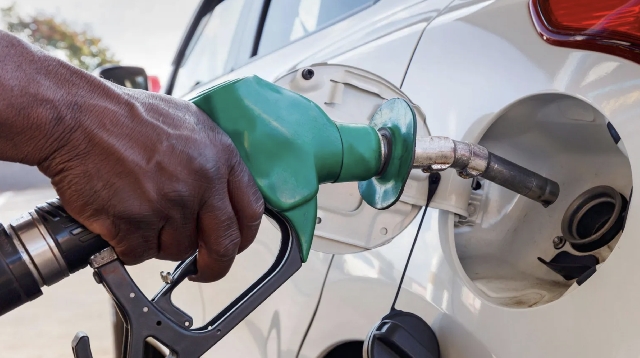
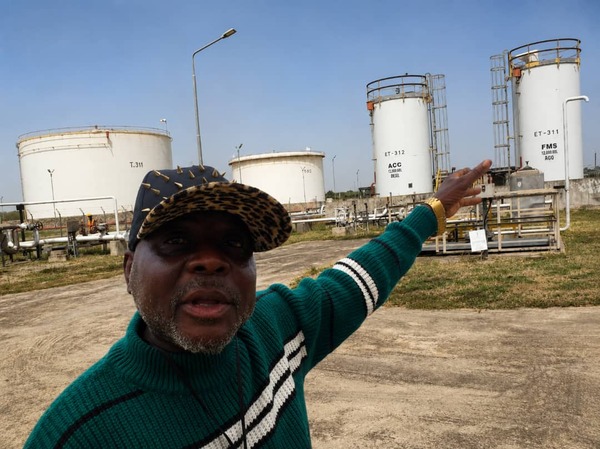
The government has announced that the implementation of the Energy Sector Levies (Amendment) Act, 2025 (Act 1141), will officially commence on Wednesday, July 16, 2025. Apexnewsgh reports The decision was made in consultation with the Ministry of Finance and the Ministry of Energy, following a comprehensive review of current market indicators. The amended law introduces revised rates for the Energy Sector Shortfall and Debt Repayment Levy (ESSDRL) across several petroleum products. These changes are expected to help close funding gaps and support the repayment of legacy debts in the energy sector. The revised rates include an increase in the levy on petrol (PMI) from GH¢0.95 to GH¢1.95 per liter, and an increase in the levy on diesel (AGO) from GH¢0.93 to GH¢1.93 per liter. The Ghana Revenue Authority (GRA) has encouraged stakeholders in the petroleum downstream sector to take note of the new rates and make the necessary adjustments to their pricing structures ahead of the effective date. The GRA also noted that the revised levies are expected to generate additional revenue to help settle outstanding debts and support critical energy infrastructure. The Energy Sector Levies were originally introduced to address persistent financial shortfalls in the energy sector. Officials say they will continue to monitor the impact of the revised levies and maintain engagement with industry players to ensure smooth implementation. The commencement of the Energy Sector Levies (Amendment) Act is expected to have a significant impact on the energy sector, and the government is working to ensure a seamless transition. The revised levies are part of the government’s broader efforts to maintain economic stability while addressing the financial needs of the energy sector. Source: Apexnewsgh.com/Ngamegbulam Chidozie Stephen
Ghana’s Inflation Rate Drops to 13.7% in June 2025, Lowest Since December 2021
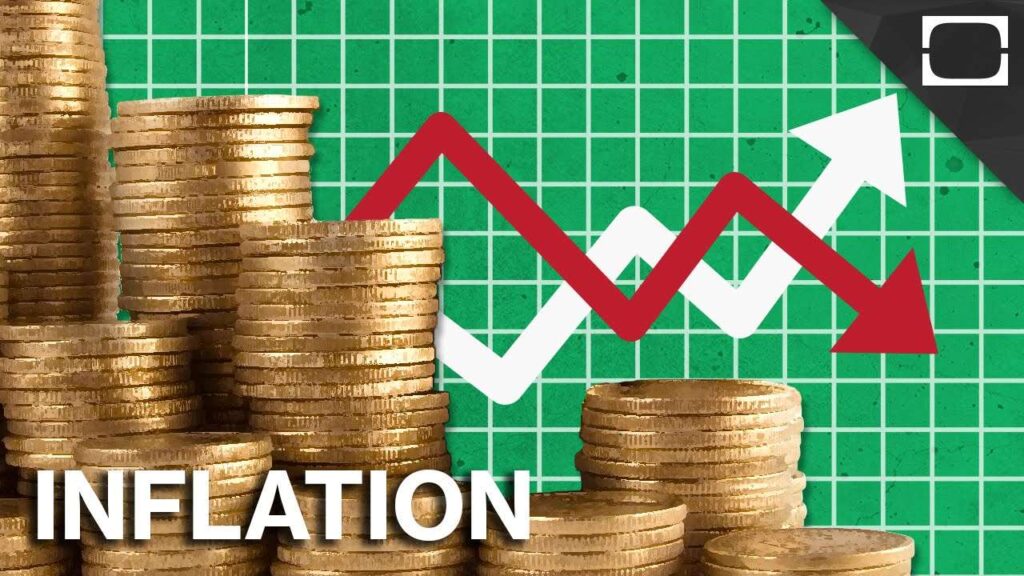
Ghana’s year-on-year inflation rate for June 2025 has dropped significantly to 13.7 percent, marking the country’s inflation rate has dropped to its lowest level since December 2021. Apexnewsgh reports The latest figures released by the Ghana Statistical Service (GSS) on July 2 show a sharp fall from the 18.4 percent recorded in May, driven largely by easing food prices and a general slowdown in price increases across key consumer categories. According to Government Statistician, Dr. Alhassan Iddrisu, the decline is attributed to a significant reduction in inflationary pressures that have weighed on the economy in recent months. “For the first time in a while, we are recording a month-on-month deflation of 1.2 percent between May and June, suggesting a real and sustained shift in price levels,” Dr. Iddrisu noted during a press briefing in Accra. Food inflation fell by 6.5 percentage points to 16.3 percent, down from 22.8 percent in May, while non-food inflation also eased to 11.4 percent from the previous 14.4 percent. However, regional disparities remain stark, with the Upper West Region recording the highest inflation rate at 32.3 percent, largely driven by rising food and utility costs. In contrast, the Bono Region posted the lowest at 8.4 percent. Dr. Iddrisu called for the use of more localized, granular data in policy planning to help address these regional imbalances and sustain the national disinflationary trend. The consistent decline over the past six months offers a hopeful sign for policymakers and businesses alike, especially as the government targets single-digit inflation by early 2026. The decline in inflation is expected to provide relief to consumers and businesses and could potentially boost economic growth and stability. As the government continues to work towards achieving single-digit inflation, the latest figures offer a positive outlook for the economy. Source: Apexnewsgh,com/Ngamegbulam Chidozie Stephen
24-Hour Economy Initiative Open to Public Scrutiny, Says Special Advisor Goosie Tanoh
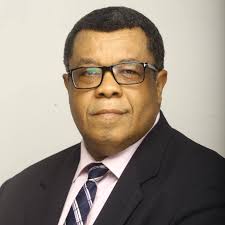
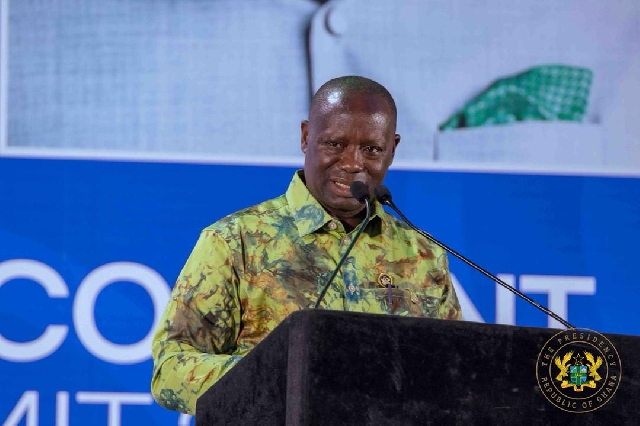
The Special Advisor on the 24-Hour Economy, Goosie Tanoh, has emphasized that the newly launched policy initiative is open to public scrutiny and evolving input, describing criticism as vital to its success. Speaking at the official launch of the programme on Wednesday, July 2, Mr. Tanoh said the 24-Hour Economy is a dynamic, science-driven initiative rooted in social democratic values and designed to adapt to the needs of a changing national environment. “We at the secretariat are confident that we will continue to receive constructive criticism and suggestions for further improvement,” Mr. Tanoh said. “Criticism is always welcome. We see the 24-hour programme as a living programme, enriched in science and firm social democratic principles, but flexible enough to respond tactically to a changing environment.” The Special Advisor noted that the initiative’s long-term success will depend on continuous learning, flexibility, and the willingness to revise strategies based on feedback and evolving circumstances. “This is the only way a programme can transform our society in the short, medium, and long term,” Mr. Tanoh added. Mr. Tanoh also la country also praised President John Dramani Mahama’s leadership, describing him as a visionary committed to building a resilient economy anchored in responsible entrepreneurship and inclusive growth. “We can say without a doubt that our President is a true champion of responsible entrepreneurship and national transformation,” he said. “We, as a country, we, as a people, have what it takes to succeed.” The 24-Hour Economy initiative seeks to unlock Ghana’s productivity potential by promoting around-the-clock business activity, increasing employment, and ensuring more efficient use of national infrastructure and resources across sectors. The programme is expected to create a robust platform for job creation, industrial expansion, and economic resilience. By embracing criticism and feedback, the government hopes to refine the initiative and ensure its long-term success. With a focus on responsible entrepreneurship and inclusive growth, the 24-Hour Economy initiative has the potential to transform Ghana’s economy and improve the lives of its citizens. Source: Apexnewsgh.com/Ngamegbulam chidozie Stephen
Plastic Product Prices Set to Rise as GPMA Announces 7% Increase
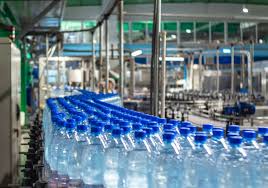
Consumers in Ghana should prepare for a hike in the prices of plastic products, as the Ghana Plastic Manufacturers’ Association (GPMA) has announced a 7% price increase on all locally manufactured plastic goods, effective July 1, 2025. Apexnewsgh reports In a statement signed by the Association’s President, Ebbo Botwe, the GPMA attributed the price adjustment to the recent implementation of a 5% Excise Tax on locally produced plastic products. The Association noted that the move, while regrettable, has become necessary to cushion manufacturers against the added tax burden imposed by the new government policy. The GPMA has urged businesses, retailers, and consumers to take note of the adjustment and plan accordingly. According to the Association, the price increase is unavoidable, given the current economic conditions and the rising costs of doing business in Ghana. The announcement comes amid growing concerns about the cost of doing business in the country, particularly within the manufacturing sector. Energy costs, raw material prices, and regulatory fees continue to climb, making it challenging for manufacturers to maintain their prices. As a result, consumers can expect to pay more for plastic products, including packaging materials, household items, and other essentials. The GPMA’s decision highlights the need for stakeholders to adapt to the changing economic landscape and find ways to mitigate the impact of rising costs on their businesses and customers. Source: Apexnewsgh.com/Ngamegbulam Chidozie Stephen
Ghana Secures $360 Million Financing from World Bank to Boost Economic Resilience
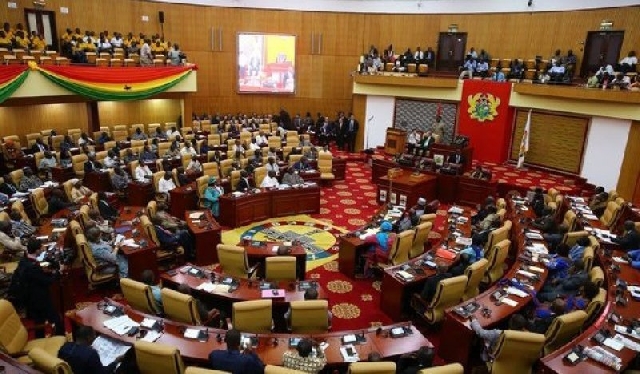
Parliament has approved a $360 million financing agreement between the Government of Ghana and the International Development Association (IDA) of the World Bank Group. Apexnewsgh reports The facility aims to support Ghana’s post-crisis recovery and build long-term economic resilience. The financing arrangement is part of the Second Resilient Recovery Development Policy Financing (DPF) operation and will focus on three core areas: restoring fiscal sustainability, strengthening financial and energy sector stability, and enhancing social, climate, and economic resilience. Specifically, the funds will be used to improve domestic revenue mobilization, enhance public financial management, and promote greater debt transparency. Additionally, the facility will support efforts to ensure financial sector oversight, boost the operational and financial sustainability of the energy sector, and expand social protection, addressing gender disparities and integrating climate responsiveness into national development planning. The $360 million facility is provided on highly concessional terms, including a 1.25% service charge, zero interest, a five-year grace period, and a 30-year repayment schedule. According to the Finance Committee, chaired by Hon. Isaac Adongo, the terms are consistent with Ghana’s medium-term debt strategy and pose no significant risk to the country’s debt sustainability. The financing forms part of a wider package of World Bank support for Ghana, which also includes the technical assistance and investment lending. The financing builds on the first Resilient Recovery DPF and complements reforms under the ongoing IMF programme. Parliament’s adoption of the motion paves the way for the Ministry of Finance to access the funds and begin implementation of key policy measures. Source: Apexnewsgh.com/Ngamegbulam Chidozie Stephen
Ghana Attracts Billions in Chinese Investment, Creates Thousands of Jobs
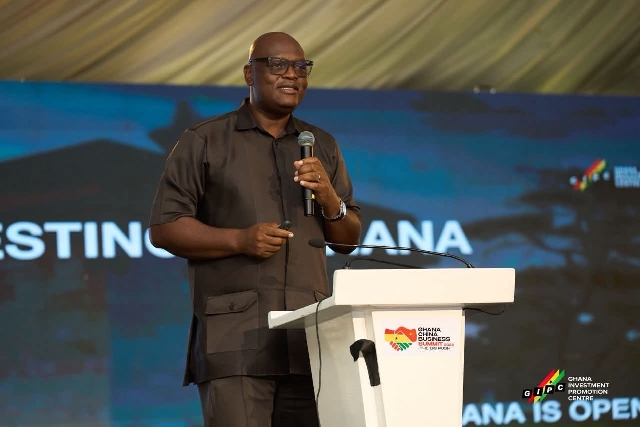
Ghana has attracted a staggering US$3.9 billion in Chinese foreign direct investment (FDI) over the past decade, resulting in the execution of 424 projects across the country and creating over 39,000 jobs. This was revealed by Mr. Simon Madjie, Chief Executive Officer of the Ghana Investment Promotion Centre (GIPC), at the Ghana-China Business Summit in Accra. According to Mr. Madjie, the largest portion of the funds, approximately US$2.7 billion, went to the manufacturing sector, followed by the general trading, construction, and services sectors. He also noted a growing Chinese interest in strategic areas such as industrial zones, logistics, energy, and infrastructure, positioning Ghana as a gateway to West Africa’s regional market. Mr. Madjie described Ghana as one of Africa’s most resilient and investor-friendly destinations, highlighting the country’s stable business environment that continues to attract key development partners. To foster long-term growth, he urged Ghanaian and Chinese companies to form consistent partnerships, emphasizing the potential for mutual benefit and growth. The Ghana-China Business Summit provided a platform for business leaders and investors to explore opportunities and strengthen ties between the two countries. With billions of dollars in investment and thousands of jobs created, Ghana’s relationship with China continues to yield positive results for the country’s economy. Source: Apexnewsgh.com
Ghana Cracks Down on Illegal Gold Trading with New Licensing Regime
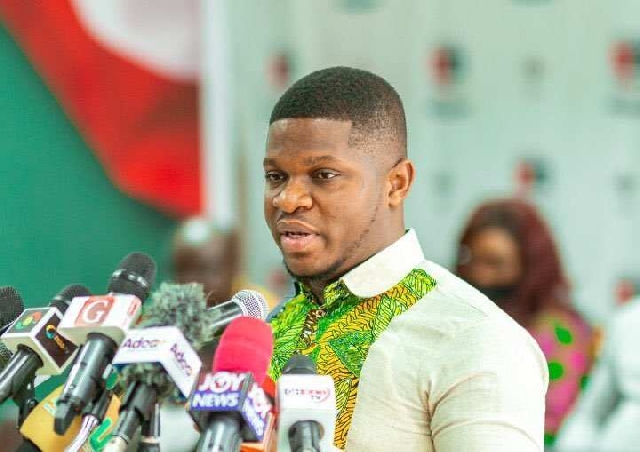
The Ghana Gold Board has officially launched the full implementation of its new gold trading licensing regime, marking a significant milestone in the government’s efforts to formalize the gold trading industry and maximize revenue for the state. The new regime, backed by the Ghana Gold Board Act, 2025 (Act 1140), aims to eliminate illegal gold trading and smuggling across the country. At a press conference in Accra, the Chief Executive Officer of the Ghana Gold Board, Sammy Gyamfi, emphasized that only individuals and entities with valid licenses issued by the Board can legally trade gold in Ghana. He clarified that the new law overrides all previous licenses issued by the defunct Precious Minerals Marketing Company (PMMC) and the Ministry of Lands and Natural Resources, rendering them null and void. Mr. Gyamfi warned that unlicensed trading constitutes a criminal offense punishable by fines and jail terms, quoting Section 63 of Act 1140. “Anyone found trading gold without a Gold Board license commits an offense and is liable, upon summary conviction, to a fine of not less than 50,000 and not more than 200,000 penalty units, or imprisonment for a term between five and ten years, or both,” he said. To enforce compliance, a Gold Board Task Force will be inaugurated on July 8, 2025, with police-level powers to detect and halt illegal gold trade, smuggling, and price manipulation. The Ghana Gold Board has received over 300 applications for various licenses, with more than 240 licenses approved so far. The application process remains open on a rolling basis, but unlicensed individuals and firms are barred from operating in the interim. The Board has fully digitized the licensing process, ensuring transparency and efficiency. Mr. Gyamfi urged all stakeholders to comply with the new licensing regime and support efforts to build a responsible, transparent, and economically beneficial gold trading system in Ghana. Source: Apexnewsgh.com
Five More Arrested in GRA-SML Corruption Scandal
The Office of the Special Prosecutor (OSP) has arrested five more individuals as part of its ongoing investigation into suspected corruption and related offences connected to revenue assurance contracts between the Ghana Revenue Authority (GRA) and Strategic Mobilisation Ghana Ltd (SML). The arrests bring the total number of individuals detained to eight, including high-profile former public officials and associates of SML. Those newly arrested include Evans Adusei, Chief Executive Officer of SML; Philip Mensah, former Deputy Commissioner (Legal) at GRA and current Legal Consultant to SML; Kofi Nti, former Commissioner-General of GRA; and Joseph Kuruk and Faustina Adjorkor, both officials of the Public Procurement Authority. Three of the individuals were detained overnight after failing to meet bail conditions, while all five were subsequently granted bail. The OSP’s probe focuses on the legality of the contracts awarded to SML, the procurement processes involved, and the financial implications for the state. The investigation also seeks to verify claims by SML that its operations have led to significant revenue savings for the government. The arrests follow the earlier detention of other former top GRA officials, including Rev. Dr. Ammishaddai Owusu-Amoah, former Commissioner-General of GRA; Isaac Crentsil, former Commissioner of Customs and current General Manager at SML; and Christian Tetteh Sottie, former Technical Advisor at GRA and current Managing Director of SML. The OSP’s investigation is ongoing, with the latest arrests indicating a deepening probe into the scandal. The outcome of the investigation will determine the next steps in the case, and it remains to be seen how the scandal will unfold. The arrests have sent shockwaves through the country, with many calling for accountability and transparency in government contracting. Source: Apexnewsgh.com/Ngamegbulam Chidozie Stephen
Three Former GRA Officials Detained in SML Scandal Probe

Three former top officials of the Ghana Revenue Authority (GRA) are currently in custody in connection with the ongoing probe into the Strategic Mobilisation Limited (SML) scandal. Rev. Dr. Ammishaddai Owusu-Amoah, a former Commissioner-General, Dr. Isaac Crentsil, a former Commissioner of Customs, and Christian Tetteh Sottie, a former technical advisor to the Commissioner-General, were arrested and interrogated by the Office of the Special Prosecutor (OSP). According to sources at the OSP, Dr. Crentsil and Tetteh Sottie now hold positions at SML, the company at the center of the corruption investigation. Dr. Crentsil is currently the General Manager at SML. The trio reportedly spent the night in National Intelligence Bureau (NIB) cells after failing to meet their bail conditions. The SML scandal involves questionable transactions and irregularities in contracts awarded to the company. An investigative documentary by former journalists of The Fourth Estate uncovered that SML received over $141 million in government payments despite breaching procurement laws. The company could not provide credible evidence to back claims of substantial revenue savings for the state. Central to the scandal is a 2023 consolidated contract valued at over $100 million annually and valid for five years, engineered by then-Finance Minister Ken Ofori-Atta. Ofori-Atta has since been declared wanted over alleged corruption and related offenses linked to the deal. Dr. Crentsil played a pivotal role during the initial contract stages between GRA and SML, serving as Commissioner of Customs from 2017 to 2019 and later as a technical advisor to the Ministry of Finance. The Special Prosecutor’s investigation is ongoing, with the three former GRA officials being held in custody as part of the probe. The outcome of the investigation will determine the next steps in the case, and it remains to be seen how the scandal will unfold. Source: Apexnewsgh.com/Ngamegbulam Chidozie Stephen
New VRA Board Inaugurated to Spearhead Ghana’s Energy Transition
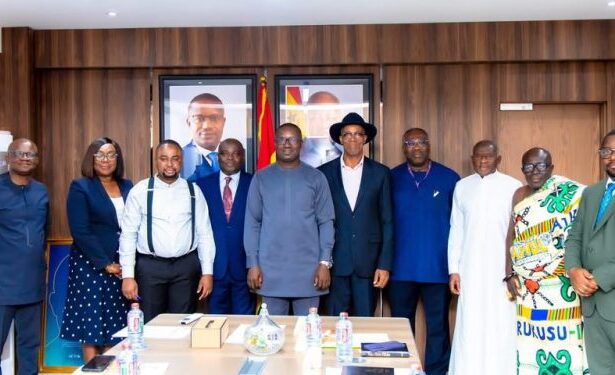
The Minister for Energy and Green Transition, John Abdulai Jinapor, has inaugurated the reconstituted governing board of the Volta River Authority (VRA), following their appointment by President John Dramani Mahama in consultation with the Council of State. The ceremony, held in Accra on Monday, June 23, marked a significant milestone in Ghana’s energy sector. The Minister stressed the board’s critical role in steering Ghana’s flagship power utility through the nation’s accelerating energy transition agenda. “This board has been entrusted with the task of improving VRA’s operations, optimising hydro and thermal assets, and firmly anchoring renewable initiatives within the Authority’s core mandate,” Jinapor said. He emphasized that VRA must work to be the lead institution when it comes to power generation. The Minister outlined key strategic priorities for the new board, including operational revitalization, accelerated green transition, human capital and local capacity, and public and stakeholder engagement. Jinapor assured the board of the government’s continued commitment and support, stating, “The Ministry will give you the needed support to deliver on your mandate.” On behalf of the members of the Board, the Chairman, Ing. Jabesh Amissah-Arthur, expressed appreciation to the President for the appointment and assured that the Board will work to its full capability to salvage the dwindling fortunes of VRA. “The fortunes of VRA have stagnated and dwindled over the years as a result of government policies,” he noted. “We will provide strategic guidance and direction to bring VRA back as the lead power generator in the sub-region and Africa.” The members of the new governing board of the Volta River Authority are: Ing. Jabesh Amissah-Arthur (Chairman) Ing. Edward Ekow Obeng-Kenzo (Ag. Chief Executive) Dr. Lawrence Ofosu Adjare Collins Dauda (MP) Fred Kwesi Agbenyo (MP) Lawyer Wonder Victor Kutor Awulai Attibrukusu III Lawyer Peggy Addo The inauguration of the new board marks a new chapter in VRA’s history, and the government expects the board to deliver on its mandate and drive Ghana’s energy transition agenda forward. Source: Apexnewsgh.com/Ngamegbulam Chidozie Stephen