


Small-Scale Miners Make Progress in Meeting Gold Trading License Deadline

The Concerned Small Scale Miners Association is confident about meeting the June 21 deadline set by the Ghana Gold Board (GoldBod) for compliance with the new gold trading license regime. After an initial extension was granted due to documentation delays, the association’s President, Michael Kwadwo Peprah, reports significant progress. According to Peprah, the Environmental Protection Agency (EPA) has streamlined its processes, establishing additional offices at the district level to support existing structures. This development has greatly reduced the time required to obtain necessary clearances for gold trading licenses. Peprah noted that relevant state institutions are now prioritizing the GoldBod licensing process, accelerating the regularisation of small-scale miners nationwide. With these improvements, the association is optimistic about meeting the June 21 deadline. The Ghana Gold Board had warned that June 21 would be the final deadline for compliance, with no further extensions allowed. The association’s progress suggests that its members are well on track to meet the requirements, ensuring their continued participation in the gold trading industry. Source: Apexnewsgh.com/Ngamegbulam Chidozie Stephen
Ghana’s Economy Gets Boost as Fitch Ratings Upgrades Credit Score

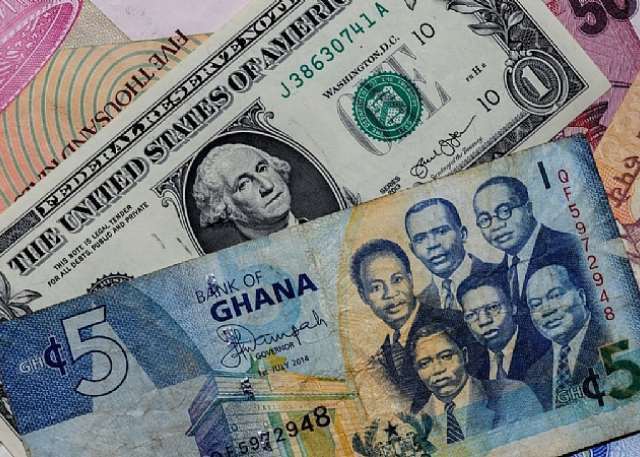
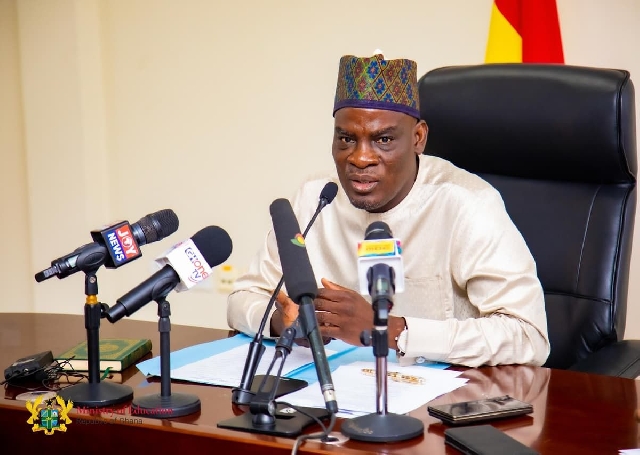
Ghana’s Finance Minister, Dr. Cassiel Ato Forson, has hailed the recent credit rating upgrade by Fitch Ratings as a significant milestone in the country’s economic recovery journey. Fitch upgraded Ghana’s Long-Term Foreign-Currency Issuer Default Rating (IDR) from CCC to B- with a Stable Outlook, citing progress in debt restructuring, improved macroeconomic stability, and signs of sustained fiscal discipline. Dr. Forson described the upgrade as a clear sign of growing investor confidence in Ghana’s economic recovery. In a statement on his Facebook wall, he assured Ghanaians that this achievement is just the beginning of broader economic revitalization efforts being pursued by the government under President John Dramani Mahama’s “RESET” agenda. “We are unwavering in our resolve to revive the economy and deliver lasting relief, full and shared prosperity to the good people of Ghana,” Dr. Forson said. The Finance Minister emphasized that the government remains committed to restoring macroeconomic stability, lowering inflation, ensuring debt sustainability, and creating inclusive opportunities for all citizens. Dr. Forson highlighted recent gains, including increased investor confidence, exchange rate stabilization, and gradual disinflation, as evidence of the success of prudent policy decisions and structural reforms. He called for a collective national effort and trust, promising that the government will continue to work tirelessly to rebuild the economy, restore hope, and improve livelihoods across the country. The credit rating upgrade marks a new chapter in Ghana’s economic journey, and Dr. Forson’s statement serves as a testament to the government’s determination to drive economic growth and prosperity for all citizens. Blow is FITCH story Fitch Ratings – Hong Kong – 16 Jun 2025: Fitch Ratings has upgraded Ghana’s Long-Term Foreign-Currency Issuer Default Rating (IDR) to ‘B-‘ from ‘Restricted Default’ (RD). The Outlook is Stable. A full list of rating actions is at the end of this rating action commentary. Key Rating Drivers Relations with Commercial Creditors Normalised: The upgrade of Ghana’s Long-Term Foreign-Currency IDR to ‘B-‘ from ‘RD’ reflects Fitch’s assessment that Ghana has normalised relations with a significant majority of external commercial creditors. Ghana restructured its USD13.1 billon Eurobonds in October 2024. About USD2.6 billion of non-performing external debt still needs to be restructured. Of this, Fitch considers USD700 million to be commercial debt, representing 5% of total external commercial debt initially included in the restructuring perimeter. Ghana is negotiating with these outstanding commercial creditors, and we assess holdout risks as small. Debt Restructuring Near Completion: Ghana ratified the memorandum of understanding on the restructuring of its bilateral official debt in January 2025, covering USD5.1 billion. Of the USD2.6 billion of external debt that still needs to be restructured, USD1 billion is due to supranational entities and USD840 million is due to creditors that Fitch considers official. We expect Ghana will fully complete its external debt restructuring by end-2025. Past Fiscal Slippage; Declining Deficits: The primary fiscal deficit (commitment basis) widened to 3.9% of GDP in 2024 from 0.2% in 2023, against a target of a 0.5% surplus, consistent with Ghana’s record of large fiscal slippages in election years. The arrears accumulated in 2024 are still being audited, and this commitment deficit may be revised down. The new administration targets a 1.5% primary surplus in 2025, mostly driven by primary expenditure reduction. We expect inflation-related expenditure pressures will contribute to a more gradual fiscal consolidation path. We forecast a primary surplus of 0.5% of GDP in 2025 and 0.9% in 2026 and an overall deficit of 3.6% in 2025 and 3.2% in 2026 on a commitment basis, after 7.9% in 2024. Manageable Debt Service Obligations: We forecast foreign-currency-denominated debt service (including domestic US dollar-denominated bonds) will reach 1.2% of GDP (USD1.2 billion) in 2025 and 1.4% (USD1.9 billion) in 2026, assuming a restructuring of the remaining claims in 2025, with interest payments of 0.5% of GDP in 2025 and 0.4% in 2026. The rebound in unencumbered international reserves in 2024, to USD6.8 billion and our expectation of continued accumulation in 2025 and 2026, supports Ghana’s ability to meet these obligations. We forecast local-currency debt service (excluding T-bill refinancing) will reach 3.8% of GDP in 2025 and 3.9% in 2026. Of this, 3.6% and 3.7% is interest payments. T-bond principal payments will increase to 2.2% of GDP in 2027 with the first domestic debt exchange programme (DDEP) bond maturities. We believe Ghana will be able to meet these obligations, based on our assumption that the T-bond market will be reopened in 2025, with an expected drop in inflation helping normalise market conditions. Liquidity Risks: We expect the interest/revenue ratio will remain broadly stable, at 26% in 2025 and 2026, from 25% in 2024 and a peak of 48% in 2021. This will be driven by a declining stock of debt, offset by resumption of interest payments on external commercial debt and a step-up in coupon payments on the DDEP, with the weighted average coupon on the DDEP bonds increasing to 9.1% in 2025 from 5.4% in 2024. The interest/revenue ratio is above the ‘B’ and the ‘C’/’D’ medians of 13% and 16%, respectively, and is a key constraint on the rating. Ghana had deposits of 4% of GDP at end-2024, and we project the government will slowly rebuild fiscal buffers, to 4.6% of GDP in 2026. Yields on T-bills have dropped significantly in recent months, reducing immediate liquidity risks. Our view of local-currency debt servicing conditions supports the upgrade of the Long-Term Local-Currency IDR. Falling Debt: Strong nominal GDP growth, fiscal consolidation, remaining debt restructuring, and much larger than anticipated exchange rate appreciation in recent months will contribute to public debt falling to 60% of GDP in 2025 and 2026, from 72% in 2024 and a peak of 93% in 2022 when Ghana announced its intention to default. This compares with our 2026 ‘B’ median forecast of 51%. Current Account Surpluses, Reserve Accumulation: We forecast the current account surplus (CAS) will narrow from a record high of 4.3% of GDP in 2024 to 1.1% in 2026, on our assumption of increased imports driven by economic growth, and a projected decline in key export prices. This is a
Fuel Prices to Remain Stable Despite Middle East Tensions
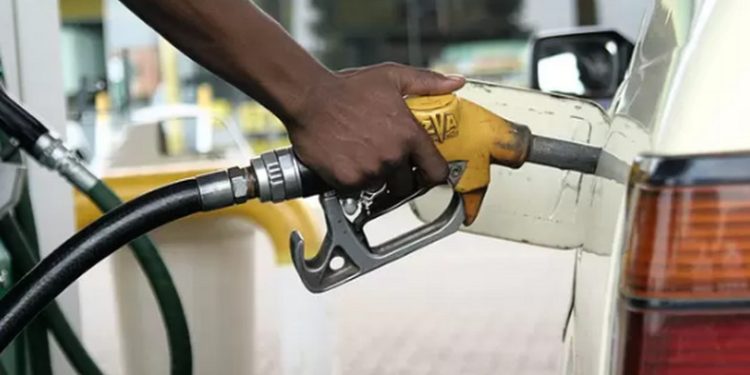
Fuel prices are expected to remain stable in the second pricing window of June, despite escalating geopolitical tensions in the Middle East, particularly between Iran and Israel. Apexnewsgh reports According to the Chamber of Oil Marketing Companies (COMAC), recent developments in the region are unlikely to have an immediate impact on fuel prices at the local pump. The Chief Executive Officer of COMAC, Dr. Riverson Oppong, attributed this stability to the lag between global market fluctuations and domestic pricing mechanisms. “Despite fuel prices going up over the weekend because of the Iranian-Israeli war, our forecast does not capture those movements,” he explained. Dr. Oppong added that the same delay applies when global prices fall, and it takes time for landing prices to be changed. For the current week, Dr. Oppong expects “cool prices” at the pump level, as marketers will be selling old stocks or products that have already been locked in and paid for. “We are going to sell old stocks or people who have locked in products and paid for it already or may have signed some commercial agreement,” he stated. In a related development, the Ministry of Energy and Green Transition has announced a temporary suspension of new petroleum levies that were scheduled to take effect this month. The Energy Sector Levies (Amendment) Act, 2025 (Act 1141), which proposed a GH₵1 increase per litre on petroleum products, will not be implemented on the planned date of June 16, 2025. The Ministry’s spokesperson, Richmond Rockson, explained that the postponement is a response to recent volatility in global oil prices and forms part of broader efforts to contain inflation and shield consumers from further price hikes. The decision is expected to provide relief to consumers and help stabilize fuel prices in the short term. Source: Apexnewsgh.com/Ngamegbulam Chidozie Stephen
GRA Postpones Implementation of Energy Sector Levies
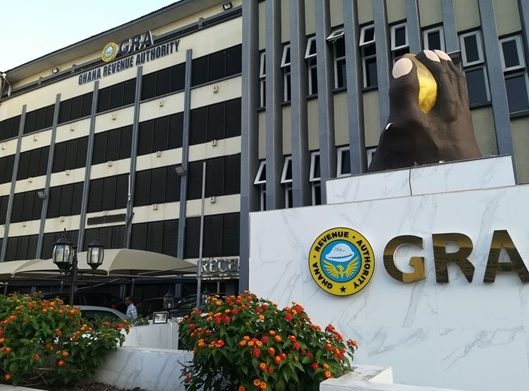
The Ghana Revenue Authority (GRA) has announced the postponement of the implementation of Tariff Interpretation Order (TIO) No. 2025/004 relating to the Energy Sector Levies (Amendment) Act, 2025 (Act 1141). The directive, initially scheduled to take effect from June 16, 2025, would have seen an increase in the Energy Sector Shortfall and Debt Repayment Levy (ESSDRL) on selected petroleum products. The Commissioner-General, Mr. Anthony Kwasi Sarpong, issued the directive following instructions from the Minister of Finance after consultations with key stakeholders in the petroleum and energy sectors. The postponement is to allow for further stakeholder engagement and preparations ahead of the implementation. The GRA will communicate the new effective date for the levy adjustment in due course. The directive has been circulated to all ports and Customs stations, including internal offices, to ensure a smooth transition. The move is expected to provide temporary relief to importers, fuel distributors, and consumers while the government continues to fine-tune the implementation framework for the amended levy. The GRA’s decision demonstrates its commitment to engaging with stakeholders and ensuring a well-coordinated implementation of tax policies. Source: Apexnewsgh.com/Ngamegbulam Chidozie Stephen
IMF to Closely Monitor Ghana’s Currency Gains
The International Monetary Fund (IMF) has announced that it will closely examine Ghana’s recent currency gains during future reviews of the country’s economic reform agenda under the Extended Credit Facility (ECF). The Ghanaian cedi has appreciated significantly against major foreign currencies in recent weeks, reversing a trend of persistent depreciation. This development comes amid renewed investor confidence and improved foreign exchange inflows. According to IMF Communications Director Julie Kozack, the Fund is closely tracking key macroeconomic indicators, including exchange rate movements, to ensure Ghana’s economic targets remain on course. Kozack emphasized that future programme reviews will allow the IMF team to carefully evaluate the evolving macroeconomic and financial conditions. This assessment will confirm whether the programme’s targets remain appropriate and achievable. The IMF’s continued monitoring of Ghana’s economic performance underscores its commitment to supporting the country’s economic stability and growth. Market analysts note that sustained gains will depend on continued fiscal discipline and robust reforms under the IMF-supported programme. The Ghanaian government must maintain its commitment to implementing sound economic policies and reforms to ensure the country’s economic stability and growth.¹ The IMF’s ECF programme is designed to support Ghana’s economic reform efforts, providing financial support and technical assistance to help the country achieve macroeconomic stability and sustainable growth. The programme’s success will depend on the government’s ability to implement its commitments and maintain a disciplined fiscal policy. Source: Apexewsgh.com
China Deepens Economic Ties with Africa through Zero-Tariff Policy

China has announced a new zero-tariff policy for exports from 53 African countries with which it maintains diplomatic relations, solidifying its economic foothold across the continent. Apexnewsgh reports The initiative, however, excludes Eswatini, the only African nation that recognizes Taiwan, reflecting Beijing’s commitment to its One China policy. The announcement follows high-level talks between Chinese Foreign Minister Wang Yi and African officials in Changsha, Hunan Province, and was formalized in a joint communiqué. This move is part of China’s broader effort to position itself as Africa’s principal trade and investment partner amidst escalating global trade tensions, particularly with the US. The joint statement criticized rising protectionist measures in global trade, specifically targeting US President Donald Trump’s tariffs, and called for a return to dialogue and multilateralism in resolving disputes. The US has imposed steep tariffs, reaching up to 50%, on imports from several African nations, including Ghana, South Africa, Mauritius, Lesotho, Botswana, and Madagascar. In contrast, China’s zero-tariff policy aims to boost Africa’s export competitiveness while helping Chinese state-owned enterprises mitigate weakening domestic demand. China’s move is seen as a strategic bid to reinforce economic alliances with African countries seeking alternatives to Western markets and financing. As Africa’s largest bilateral lender and dominant force in infrastructure development, the removal of tariffs is expected to further cement China’s influence. African governments are increasingly pivoting toward the East for trade, development, and diplomatic cooperation. This isn’t the first time China has offered tariff exemptions to African countries. In 2003, China extended zero-tariff treatment to 30 African least-developed countries (LDCs) for 190 products. The latest initiative builds upon this, granting zero tariffs on 100% of products for all LDCs that maintain diplomatic relations with Beijing. The policy adds 140 new products to the list, including rice, wheat, sugar, cotton, and wood products. While the zero-tariff policy presents opportunities for African countries, its benefits may be limited by the nature of trade between China and Africa. Most African LDCs export raw materials like minerals and oil to China, meaning the policy mainly boosts unprocessed, low-value goods exports. To fully benefit, African LDCs need to improve their manufacturing and processing capacities to export higher-value goods. Source: Apexnewsgh.com/Ngamegbulam Chidozie Stephen
NCA Suspends Operations of Asaase Radio, Wontumi Fm and Other FM Stations
The National Communications Authority (NCA) has ordered the immediate suspension of operations by more than 60 FM broadcasting stations across the country, including prominent outlets such as Asaase Radio and Wontumi FM. Apexnewsgh reports The enforcement action targets stations found to be operating with expired authorizations, unpaid license fees, or failure to meet set-up conditions stipulated under the Electronic Communications Act and its accompanying regulations. A recent audit by the NCA, backed by a ministerial directive, revealed widespread non-compliance among the affected stations. The reasons for suspension include: 28 stations operating with expired authorizations 14 stations that received authorization but failed to set up operations within two years 13 stations operating under provisional authorization despite paying required fees 7 stations with pending final authorization due to non-fulfillment of requirements Checks by this platform indicate that Asaase Radio is currently off air. The suspension has sent shockwaves through the broadcasting industry, with many stations scrambling to comply with regulatory requirements. The NCA has reiterated that all broadcasters must comply fully with licensing obligations to remain operational. The authority assured the public that it will continue its monitoring and enforcement efforts to ensure adherence to broadcasting standards. Source: Apexnewsgh.com/Ngamegbulam Chidozie Stephen
Ghana’s 24-Hour Economy Policy to Kick Off on July 1
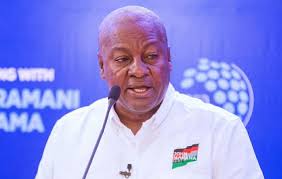
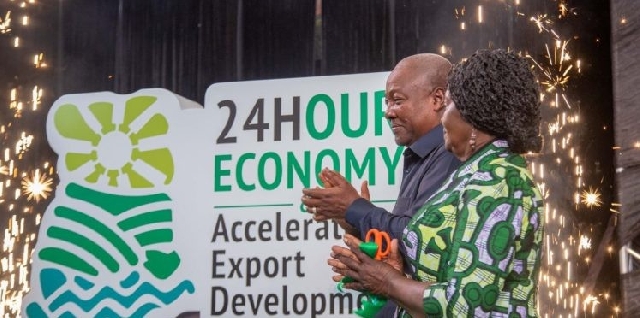
President John Dramani Mahama has announced that his administration’s much-anticipated 24-hour economy policy will officially commence on July 1, 2025. Apexnewsgh reports The policy aims to enhance productivity and job creation in Ghana. Speaking at the official opening of the 2025 Ghana Horticulture Expo in Accra, President Mahama announced that Tema and Takoradi Ports will soon operate on 24-hour shift schedules, a key feature of the flagship policy. The President emphasized that the 24-hour port operations will be instrumental in positioning Ghana’s horticulture sector as a driver of export-led growth. “Our ports will work around the clock. This is central to our vision for economic transformation,” President Mahama stated. “It will accelerate export processes, create thousands of new jobs, and strengthen our macroeconomic foundation.” The initiative aligns with the government’s broader goal of turning agriculture, particularly horticulture, into a cornerstone of the national economy. “Upgrading the operational efficiency of our ports is critical to making Ghana a competitive export hub. It sends a clear signal to investors that we are serious about business,” President Mahama added. The President reaffirmed his government’s commitment to boosting foreign exchange earnings through enhanced value addition and seamless logistics, especially in key sectors like agriculture, agro-processing, and manufacturing. The 24-hour economy policy, he said, is not just about longer working hours but about building a resilient, inclusive, and dynamic economic system that works for all Ghanaians. Source: Apexnewsgh.com/Ngamegbulam Chidozie Stephen
TDC Ghana to Embark on Comprehensive Property Audit
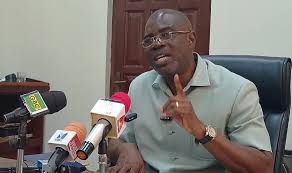
The Managing Director of TDC Ghana Limited, Mr. Courage Makafui Nunekpeku, has announced plans to launch a comprehensive property audit aimed at reclaiming lands and assets currently under expired or unlawfully extended leases. Apexnewsgh reports Speaking on The Class Morning Show, Mr. Nunekpeku explained that the exercise is part of broader efforts to restore TDC’s control over key properties, some of which are being misused or occupied by individuals and organizations without proper authorization. “We are going to embark on a massive property audit very soon to recover some of these factories and real estate spaces. There are too many people sitting on TDC lands with expired leases, some even claiming to act on our behalf without any mandate,” Mr. Nunekpeku stated. The audit aims to identify and reclaim properties that are not being used for their intended purpose or are being occupied without proper authorization. Since assuming office just over 100 days ago, Mr. Nunekpeku has moved swiftly to revamp both TDC’s operations and image. The TDC head office recently underwent significant renovations, all funded by external stakeholders rather than TDC’s own resources. “We didn’t use TDC money for this. Our stakeholders—people we’ve supported over the years—stepped in and gave us air conditioners, landscaping, vehicles, dispatch bikes… all to help us give TDC a fresh and professional look,” he noted. Regarding recent staffing issues, Mr. Nunekpeku confirmed that several appointments and promotions made by the previous administration were reversed in line with a directive from the Chief of Staff. He clarified that the decision was based on financial considerations rather than personal motives. “We had to comply with that directive. However, with the rollout of the 24-hour economy policy and expanded responsibilities, we have reabsorbed some staff into critical departments,” he explained. Looking ahead, the TDC boss emphasized his commitment to increasing TDC’s housing stock, improving property management systems, and delivering enhanced services to residents of Tema and other regions. “We are focused on cleaning up our property records, expanding housing, and repositioning TDC as a leader in real estate development in Ghana,” Mr. Nunekpeku affirmed. Source: Apexnewsgh.com/Ngamegbulam Chidozie Stephen
Attorney General Refuses to Release Memo on Bank of Ghana Governor Case

The Attorney General and Minister for Justice, Dr. Dominic Ayine, has declined to release a memo cited as the basis for discontinuing the prosecution of Bank of Ghana Governor, Dr. Johnson Asiama. Dr. Ayine cited provisions of the Right to Information Act in rejecting the request. The memo in question was allegedly authored by the Prosecution Division of the Attorney General’s Office, advising former Attorney General Godfred Yeboah Dame to discontinue the case due to concerns about its prosecutorial strength. However, God, Fred Dame, has publicly disputed the existence of this memo. Suame MP John Darko filed a formal question on the floor of Parliament requesting that the memo be made available for scrutiny. However, Dr. Ayine declined, stating that the Right to Information Act prohibits the release of internal legal opinions and advice. The Attorney General’s response sparked a heated debate in the House, with members from both sides weighing in on the legal and political implications. Minority Leader Alexander Afenyo-Markin argued that the existence of the memo is a matter of public knowledge, and therefore, it should be disclosed. Majority Chief Whip Rockson-Nelson Dafeamekpor sharply criticized the Minority Leader for suggesting that Parliament bypass provisions of the Right to Information law. The debate highlighted the complexities and challenges of balancing transparency and confidentiality in governance. The debate took a dramatic turn when Ranking Member on the Health Committee, Dr. Ayew Afriyie, attempted to make a statement on the ongoing strike by the Ghana Registered Nurses and Midwives Association, despite the Speaker’s earlier ruling disallowing it. First Deputy Speaker Bernard Ahiafor ordered the marshal to remove Dr. Afriyie from the chamber, prompting scenes of chaos. Source: Apexnewsgh.com/Ngamegbulam Chidozie Stephen