
President Mahama Announces Procurement Process for New Wa Airport
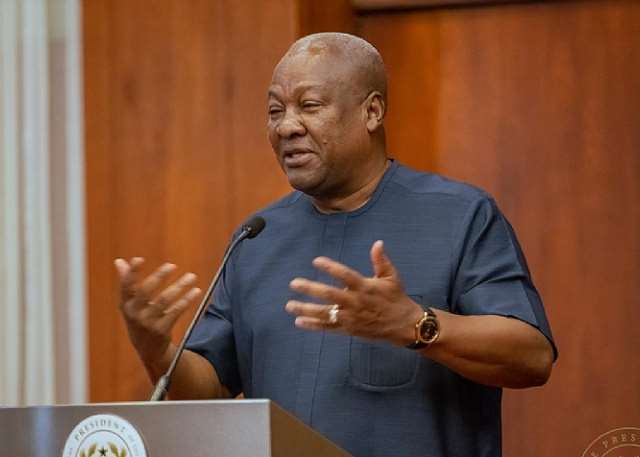
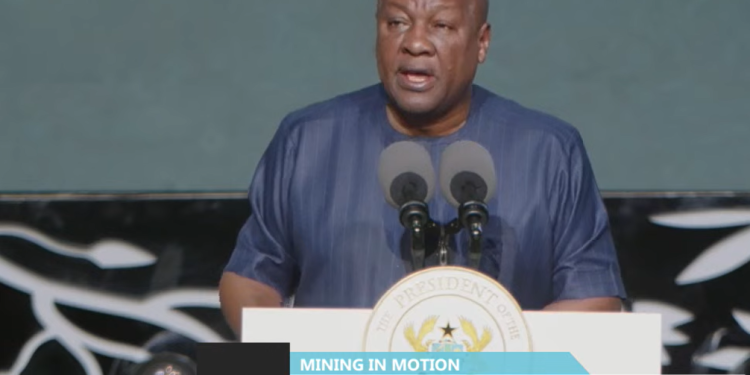
President John Dramani Mahama has revealed plans to commence the procurement process for the construction of a new airport in Wa, Upper West Region, as part of the government’s broader agenda to enhance transport infrastructure and position the region as a key commercial and logistics hub. The announcement was made during a courtesy call by the Upper West Regional House of Chiefs at the Jubilee House on Wednesday, July 8. President Mahama emphasized the government’s commitment to investing in road, rail, and air transport to improve nationwide connectivity. He explained that all necessary documentation for the Wa Airport project has been submitted to the Public Procurement Authority for approval, setting the stage for the procurement phase to begin. “We are improving transport and logistics all over the country, including the railways, the roads, and air travel. And as you would have heard, we are currently about to go to the Public Procurement Authority for authorization to begin procurement for the new airport in Wa,” President Mahama stated. Highlighting the Upper West Region’s strategic position as a gateway to the Sahel, President Mahama noted that enhanced transport infrastructure is vital for expanding trade, economic activity, and regional integration. The new airport is expected to boost mobility, support business growth, and complement the government’s larger infrastructure development plans across Ghana. Source: Apexnewsgh.com
DVLA Refutes Claims of GH¢308,300 Loss in Mobile Money Theft Case Involving Former National Service Person

The Driver and Vehicle Licensing Authority (DVLA) has firmly denied reports suggesting it lost GH¢308,300 in an alleged mobile money theft case involving a former National Service person. The Authority clarified that the funds in question were neither owned by the DVLA nor taken from its accounts. This clarification comes in the wake of the ongoing prosecution of Ebenezer Ghartey, a former National Service person later contracted by the DVLA, who is currently standing trial at the Accra Circuit Court. Ghartey is accused of unlawfully transferring GH¢308,300 from the MTN merchant account of a DVLA administrative officer into his personal mobile money wallet. He has pleaded not guilty to a charge of stealing. According to the prosecution, Ghartey allegedly used part of the funds to purchase a Hyundai Elantra saloon car, a 50-inch Samsung television, and finance other personal expenditures. The court, presided over by Mrs. Emmanuella Sarah Asmah, granted him bail set at GH¢100,000 with three sureties, including one with landed property and another who is a public servant earning at least GH¢5,000 monthly. Ghartey must also report to the case investigator twice weekly as the matter has been adjourned to August 4, 2026. In response to public concerns and media reports, the DVLA issued a statement on Tuesday, July 7, stressing that the alleged theft was a private matter involving individuals and had no connection to the Authority’s finances or official activities. The DVLA reassured the public that its financial management systems remain robust and unaffected by the case. The Authority urged media outlets and the public to report accurately on the matter to prevent any misconception that public funds were misappropriated. It also reaffirmed its commitment to transparency and pledged to cooperate fully with law enforcement agencies should its involvement be required during the ongoing investigation. Source: Apexnewsgh.com
NACOC Boss Raises Alarm Over Public Demand for Rewards in Exchange for Drug Crime Tips

The Director-General of the Narcotics Control Commission (NACOC), Major General Maxwell Obuba Mantey, has voiced concern over a growing trend among some members of the public who now demand financial rewards before sharing information on suspected drug activities. Speaking before Parliament’s Assurances Committee on Tuesday, July 7, 2026, Major General Mantey highlighted the critical importance of citizen intelligence in the fight against narcotics trafficking. His remarks come amid renewed scrutiny of Ghana’s role in international drug trafficking, following the recent seizure of 320 kilogrammes of methamphetamine hidden in a charcoal shipment from Ghana and intercepted in Australia. Major General Mantey stressed that drug traffickers are constantly developing new tactics to evade law enforcement, making close cooperation between NACOC and the public more essential than ever. “Each day, the traffickers evolve new strategies and try to go ahead of us. They connect, and they cooperate among themselves as to how to outwit them,” he explained. While NACOC relies heavily on intelligence from the public to disrupt drug networks, Major General Mantey expressed concern about the expectation of monetary compensation attached to some tips. “Ghanaians now have become a bit demanding so when they send you intelligence, they demand money,” he noted, recalling an incident where an individual sought a house in exchange for providing information. Despite these challenges, Major General Mantey assured the Assurances Committee that the Commission remains committed to working with citizens and all stakeholders in the ongoing battle against narcotics trafficking. He said the agency would continue to pursue intelligence-led operations, even as traffickers adapt with new methods and networks. These comments come as Ghanaian security agencies intensify efforts to disrupt international drug networks, following a series of cases involving narcotics shipments linked to Ghana. Authorities, including Interior Minister Muntaka Mohammed Mubarak, have consistently encouraged citizens to provide credible information to support anti-drug operations, emphasizing that public intelligence plays a vital role in successful drug busts. Major General Mantey concluded that continued collaboration between NACOC and the public would be crucial in preventing Ghana from becoming a transit hub for international drug trafficking. Source: Apexnewsgh.com
Auditor-General Uncovers Over GH¢7.4 Million Paid to Deceased Pensioners

The Auditor-General has revealed a troubling case of payroll irregularities, uncovering that more than GH¢7.4 million was paid out to four deceased pensioners, sparking renewed concerns about lapses in Ghana’s pension administration system. Details of this finding are contained in the latest Report of the Auditor-General on the Public Accounts of Ghana for Ministries, Departments and Other Agencies (MDAs) for the year ended December 31, 2025. According to the report, a total of GH¢7,494,975.34 was disbursed to the four pensioners after their deaths between February 2019 and March 2026, a clear violation of Regulation 88 of the Public Financial Management Regulations, 2019 (L.I. 2378). In response, the Auditor-General has recommended that the Controller and Accountant-General recover the full amount, along with interest calculated at the prevailing Bank of Ghana rate, from the next-of-kin of the deceased pensioners. Any funds recovered are to be paid into the Auditor-General’s Recoveries Account at the Bank of Ghana. The report further cautions that if the money cannot be recovered, legal proceedings should be initiated against both the bankers involved and the next-of-kin of the deceased pensioners. This revelation is part of a broader pattern of payroll irregularities identified in the 2025 audit of MDAs, as the Auditor-General intensifies efforts to strengthen accountability and protect public funds. Source: Apexnewsgh.com
Security Interests Registrations Surge by 26.7% in 2025 – Bank of Ghana Report
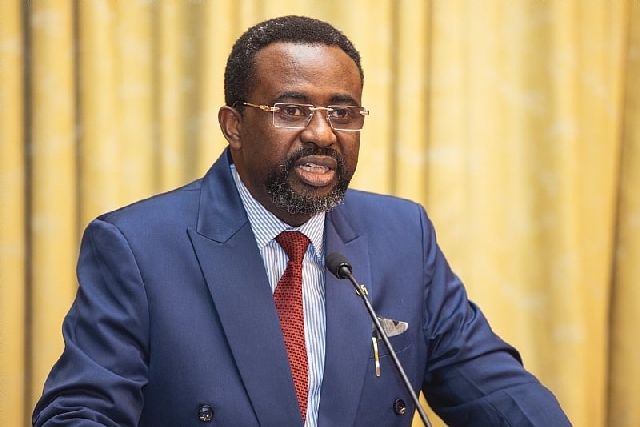
Ghana witnessed a significant rise in the number of security interests registered in 2025, reaching 484,059, an increase of 26.7% from the 382,215 registrations recorded in 2024. This development was highlighted in the Bank of Ghana’s 2025 Annual Report and Financial Statements. According to the report, the commerce and finance sector dominated secured lending, accounting for 88.9% of all transactions in 2025. The agriculture, forestry, and fishing sector followed with 4%, while the services sector contributed 3%. The total value of secured loans granted during the year surged to GH¢148.3 billion, up from GH¢60.9 billion in 2024. Banks were responsible for GH¢94.5 billion worth of these loans. Activity at the Collateral Registry also intensified, with the number of searches conducted rising by 11.7% to 72,901 in 2025, compared to 65,267 the year before. Registered collateral assets grew by 21.7%, reaching 584,000 in 2025, up from 479,707 in 2024. The report noted that cash remained the most commonly accepted form of collateral, followed by inventories or stock of goods, and company and business assets. The Collateral Registry issued 200 Memoranda of No Objection certificates in 2025 to support the realisation of security interests in collateral, marking a 33.6% drop from the 301 certificates issued in 2024. A total of 105,029 registrations were discharged during the year, with Savings and Loans Companies recording the highest volumes of registrations, searches, and discharges. The data reflects growing confidence in Ghana’s secured lending environment, as well as increased activity across key economic sectors. Source: Apexnewsgh.com
Ghana Settles US$700 Million Eurobond Ahead of Schedule, Boosting Investor Confidence
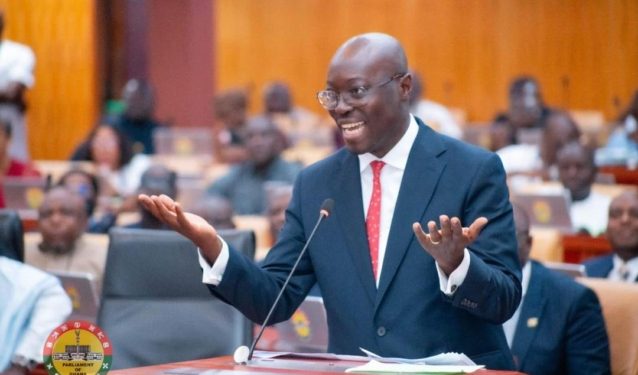
The Government of Ghana has made headlines by fully settling a US$700 million Eurobond obligation ahead of schedule, a move the Ministry of Finance says demonstrates the country’s commitment to prudent public debt management and macroeconomic stability. According to a statement from the Ministry, the payment, completed on Thursday, July 2, 2026, comprised US$525.2 million in principal repayments and US$174.8 million in interest payments. This latest settlement brings Ghana’s total payments to Eurobond holders to US$2.1 billion since January 2025, reflecting the country’s ongoing efforts under its Eurobond Debt Exchange Programme. The Ministry of Finance emphasized that the repayment was carried out through the government’s planned financing arrangements, avoiding any undue pressure on Ghana’s foreign exchange reserves. “The payment was made through the Government’s planned financing arrangements without undue pressure on the country’s foreign exchange reserves,” the Ministry noted. Government officials believe this early repayment will further reduce Ghana’s outstanding external debt burden and strengthen investor confidence as the country continues to advance fiscal and macroeconomic reforms. The Ministry highlighted that meeting the Eurobond obligation ahead of schedule underscores the government’s dedication to maintaining sound public debt management practices and safeguarding macroeconomic stability as Ghana implements its economic recovery programme. This milestone payment comes as Ghana works to restore international investor confidence following the successful completion of its external debt restructuring and the ongoing implementation of reforms under the IMF Policy Coordination Instrument (PCI). The Ministry of Finance reiterated its commitment to sound public financial management, vowing to continue timely servicing of the country’s debt obligations while prioritizing fiscal sustainability. The Ministry also extended its appreciation to Ghanaians for their patience, support, and continued confidence as the government pursues policies aimed at restoring economic stability and rebuilding market trust. Source: Apexnewsgh.com
Prof. David Millar Challenges Planners to Rethink the Meaning of Markets at PEARL Launch
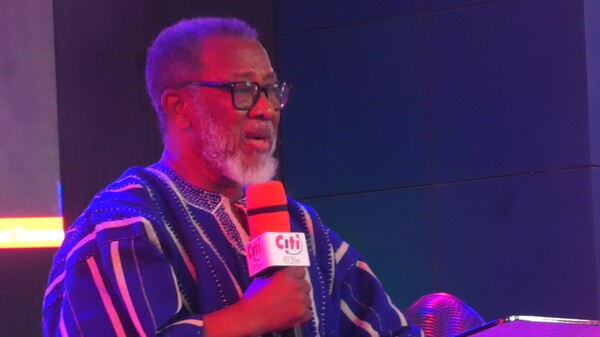
At the grand launch of Prosperity through Enterprise, Agriculture, Resilience and Livelihoods (PEARL) framework, a visionary 10-year framework plan for the Upper East Region, Professor David Millar, serving as Chairman, took center stage to address the congregation. The initiative, spearheaded by the Regional Coordinating Council, drew stakeholders from across the region, eager to hear from one of its most respected academics. As he spoke, Prof. Millar offered a thought-provoking perspective on the heart of economic development. “A market economy,” he began, “is just a space and a place.” He paused, glancing around the room before continuing, “I’ve heard comments like, ‘Oh, they are just building markets.’ But marketing, as many great economists will affirm, is a transaction arena. You don’t even need a physical structure for a market to exist, it’s all about transactions.” To illustrate, he pointed to the example of gold. “If there were no market for gold, we wouldn’t even be talking about it. No one would be struggling to sell it. That is the essence of a market.” Prof. Millar then turned to the concept of a 24-hour economy, a term buzzing in policy circles. “For us, at my university, the 24-hour economy is not just about a structural m arket. It’s about a transactional space, and we are positioning ourselves to contribute to this broader discourse.” He emphasized that the real value lies in the transactional spaces created for the benefit of the entire economy. “Physical structures can be labeled NDC or NPP,” he cautioned, referencing the leading political parties, “but the economy itself is more generic, more nationalist. I hope the planners capture this in their designs.” With a gentle challenge, Prof. Millar urged the planners not to fall into the trap of viewing markets as mere buildings equipped with electricity and cell towers. “The true price of the challenge,” he concluded, “is to look beyond the visible structures and focus on the vibrant transactions that drive our economy.” His words set a thoughtful tone for the event, reminding everyone present that the future of the Upper East Region depends not just on what is built, but on how people connect, trade, and innovate within those spaces. Source: Apexnewsgh.com
Talensi MP Urges Upper East to Embrace Local Products, Education, and Strategic Investment at PEARL Launch
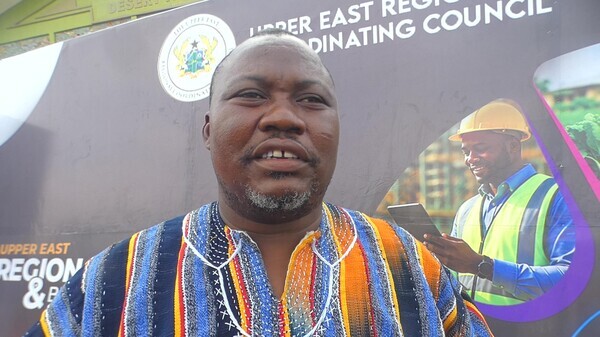
At the launch of the Prosperity through Enterprise, Agriculture, Resilience and Livelihoods (PEARL) Framework in Bolgatanga, the atmosphere was filled with hope for a brighter future. Among the many voices shaping the event was Hon. Daniel Mahama, Member of Parliament for Talensi District, who shared candid reflections and a vision for the region’s development. Hon. Mahama emphasized the importance of making the PEARL initiative a practical reality. “To ensure the success of this initiative, we must engage all relevant authorities and educate our people about the importance of health, agriculture, and economic opportunities in the Upper East. Understanding the process and benefits will help us achieve our goals,” he stated. He highlighted the region’s unique strengths, not just in agriculture, but also in mining and the potential to revive local factories. For Hon Mahama, empowering education is equally vital for the region’s transformation. “First, we must grasp the main purpose and benefits of health and become true advocates for our own progress,” he said. He called for an attitudinal change: “Let’s patronize products made in the Upper East, our smocks, shea butter, hats, and especially our locally grown rice, just as other countries proudly use their local produce.” Hon Mahama encouraged citizens to celebrate traditional foods and crafts, noting that greater support for local industries would boost both culture and the economy. As a Member of Parliament, he shared his commitment to promoting the Upper East at every opportunity, advocating for economic policies that favor the region and maximize its advantages, especially in resource-rich sectors like mining. He also touched on the importance of a common trade platform and fair tariffs within Africa to ensure that local businesses are protected and can thrive. “We need to protect indigenous enterprises and make sure opportunities are accessible to our people,” he said. Hon Mahama also highlighted the value of technical and vocational trades, encouraging youth to consider skilled trades as viable and rewarding career paths. In closing, Hon. Mahama urged all stakeholders to work together, support local products, and use every available opportunity to advance the Upper East Region. His message was clear: real transformation depends not just on policies and investments, but on pride in local culture, practical skills, and strategic action for sustainable growth. Source: Apexnewsgh.com
Gold Fortune Group Eyes Investment in Upper East Region Following PEARL Launch
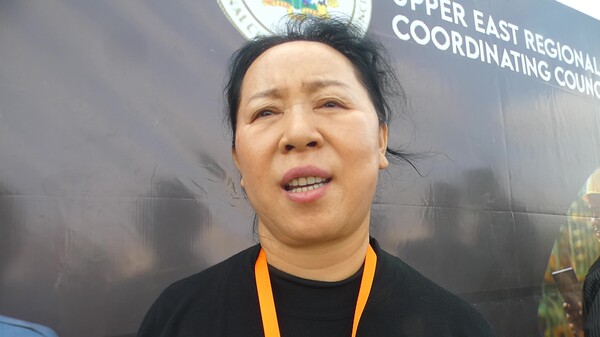
The spirit of optimism was palpable in Bolgatanga as the PEARL Framework, Prosperity through Enterprise, Agriculture, Resilience and Livelihoods, was unveiled to chart a bold new course for the Upper East Region. Among the many local and international guests was Ding Fan Lin, Executive Director of the Gold Fortune Group Company, who expressed a keen interest in bringing her company’s expertise and investment to the region. In an interview with Apexnewsgh following the event, Ding Fan Lin shared her first impressions and the company’s intentions. “It is our first time here, so we want to study the market and understand the opportunities,” she said. “From what I have seen, I believe our business can thrive in the Upper East Region. There are many possibilities for cooperation, and I am confident we can contribute to economic growth here.” The launch of the PEARL Framework attracted both local and foreign companies, all eager to explore ways to support the region’s transformation. For Gold Fortune Group, the event marked the beginning of a potential journey toward investing in and collaborating with the Upper East’s growing business landscape. With leaders like Ding Fan Lin expressing confidence in the region’s future, the Upper East is quickly emerging as an attractive destination for investment and partnership, offering hope for a new era of prosperity and development. Source: Apexnewsgh.com Email: apexnewsgh@gmail.com Phone: 0256336062
Upper East Regional Minister Call for Investors at PEARL Launch
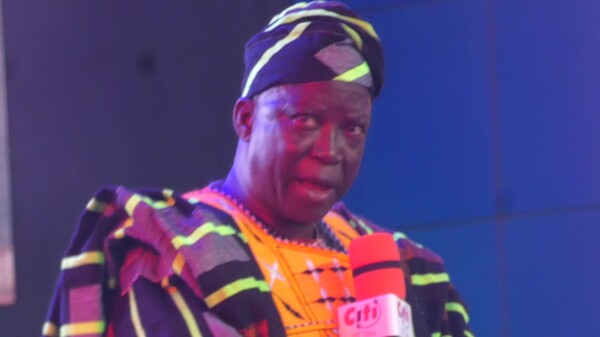
Fountain Gate auditorium in Bolgatanga on Monday was buzzed with anticipation as leaders, investors, traditional rulers, and citizens gathered for the launch of the PEARL Framework, Prosperity through Enterprise, Agriculture, Resilience and Livelihoods. At the heart of the event, Regional Minister Mr. Donatus Akamugri Atanga delivered a stirring speech that set the tone for a new era in the Upper East Region’s development journey. With a spirit of gratitude and optimism, Minister Atanga welcomed all guests, expressing appreciation for their support and belief in the region’s potential. He acknowledged the presence and encouragement of national leaders, investors, and development partners, calling their participation “a powerful affirmation of commitment to inclusive national development.” Setting the stage for the forum, Minister Atanga declared this gathering a defining moment, a pivot from focusing on challenges to celebrating resilience, culture, resourcefulness, and opportunity. “Our true identity is found in the resilience of our people, the productivity of our farmers, the ingenuity of our entrepreneurs, the richness of our culture, the abundance of our natural resources, and the immense opportunities that await strategic investments,” he proclaimed. The PEARL Framework, he explained, is the region’s bold, ten-year blueprint for transformation. Spanning all fifteen districts and aiming to mobilize over GH¢8.6 billion in investments, PEARL is designed to unlock opportunities in enterprise, agriculture, industrialization, infrastructure, and human capital development. Its goal: a competitive, resilient, and inclusive economy that contributes meaningfully to Ghana’s national transformation. Minister Atanga highlighted the region’s recent gold discoveries and the rise of major mining companies, stressing that these developments must become catalysts for broad-based prosperity. “The mineral wealth beneath our soil must become a catalyst for prosperity across agriculture, health, education, infrastructure, enterprise development, and improved livelihoods for every household in our Region,” he asserted. Yet, he warned, “Mining alone cannot deliver the transformation we seek.” True progress, he said, depends on building a diversified, innovative economy, strengthening industries, investing in people, and forging strategic partnerships. He called for investment across sectors, including agriculture, agribusiness, renewable energy, manufacturing, tourism, housing, technology, and logistics. The minister outlined flagship initiatives to be discussed at the forum: the completion of the Tamne Irrigation Dam, revival of key agro-processing factories, establishment of an Agricultural Technical University, and upgrades to regional hospitals and educational infrastructure. He emphasized the importance of behavioral and attitudinal change, insisting that infrastructure and investment would only bear fruit if matched by a culture of productivity, discipline, and responsibility. Minister Atanga underscored that the success of PEARL would require “collective commitment, shared responsibility, and sustained collaboration.” He extended heartfelt thanks to sponsors, partners, traditional leaders, and all contributors, recognizing that their efforts had made the forum, and the region’s new vision, possible. To the youth and women of the Upper East, he offered special encouragement. “PEARL is, above all, an investment in your future. Your creativity, enterprise, innovation, and leadership will be indispensable to the success of this Framework.” In closing, Minister Atanga called on all present to become partners in the region’s transformation, emphasizing hope, unity, and action over complacency or rhetoric. “Together, let us build an Upper East Region that is prosperous, resilient, competitive, peaceful, and inclusive, one that creates opportunities for its people and contributes meaningfully to Ghana’s transformation and sustainable development.” With the launch of PEARL, the Upper East Region has taken a decisive step towards a brighter, more inclusive future, one defined by collaboration, vision, and the determination to leave no community behind. Source: Apexnewsgh.com