


PEARL: Presidential Message Charts Bold Path for Upper East at Development Forum
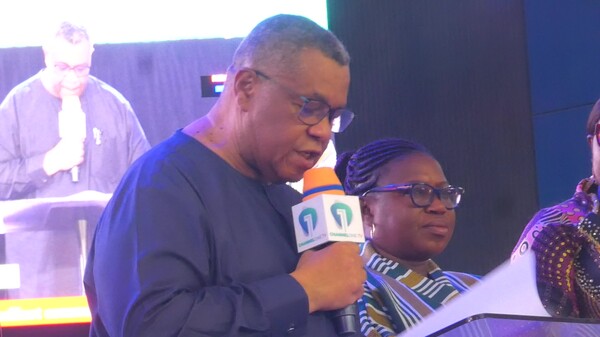
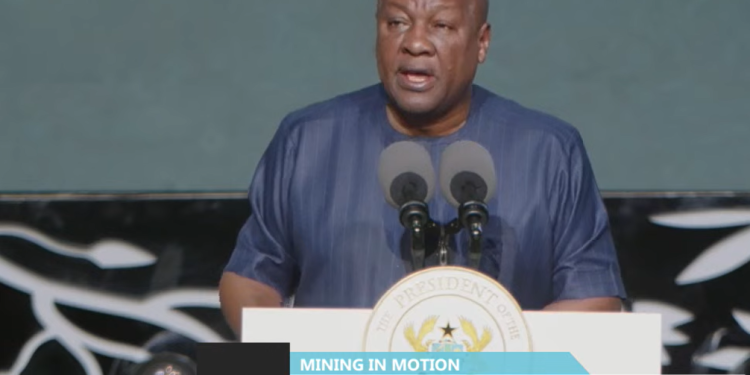
The atmosphere in Bolgatanga was charged with anticipation as the Upper East Regional Development and Business Forum and Exhibition commenced, a landmark event that drew government officials, traditional leaders, entrepreneurs, and development partners from across Ghana and beyond. Representing President John Dramani Mahama, Mr. Augustus Obuadum Tanoh, Presidential Adviser on the 24-Hour Economy and Accelerated Export Development, delivered a powerful address that both honored the region’s heritage and set a bold vision for its future. Mr. Tanoh began with warm greetings from the President, expressing regret at his absence due to pressing national duties while commending the regional leadership, the PEARL Technical Working Committee, and development partners for organizing the forum. He highlighted the significance of the 24-Hour Economy and Accelerated Export Development Programme, a national initiative to transform Ghana’s productive sectors by fostering value addition, local processing, and quality job creation. Since its launch, the programme has mobilized over $11 billion in investment and targeted 1.7 million quality jobs, with the Upper East Region standing as a vital component of this nationwide push. Turning to the heart of the occasion, Mr. Tanoh praised the PEARL Framework, Prosperity through Enterprise, Agriculture, Resilience and Livelihoods, as a 10-year, regionally driven strategy with a GHS 8.6 billion investment portfolio. He noted that PEARL was conceived by and for the people of the Upper East, reflecting their aspirations and priorities. The government’s role, he emphasized, is to be a committed partner: aligning national policy, investment, and support behind the region’s own vision for transformation. Drawing on the region’s legacy, Mr. Tanoh recounted its centuries-old role in trans-Saharan trade, its world-renowned crafts and music, and its history of integrated industrial ventures like the Zuarungu Meat Factory and Pwalugu Tomato Factory. He stressed the importance of learning from these integrated models, where agriculture, processing, and downstream industries were linked from the outset, when designing PEARL’s new projects. Such integration, he argued, is key to sustaining industrial growth and maximizing local benefits. Mr. Tanoh underscored the region’s unique strengths: fertile lands, abundant minerals, a resilient people, and a strategic location as Ghana’s northern gateway. He described emerging opportunities in gold, clay, limestone, and granite, and called for responsible development that moves beyond extraction to build value-adding industries and decent jobs for the people. He celebrated the completion of the Tamne Irrigation Dam, the expansion of Tono, and the planned transformation of the Fumbisi Rice Valley as pivotal steps toward year-round agriculture and food security. Mr. Tanoh also highlighted plans for an Agricultural Technical University and the proposed Bolgatanga Airport, both set to elevate the region’s status as a hub for trade, education, and investment. On behalf of President Mahama, Mr. Tanoh gave three assurances: once the PEARL Framework is validated, national institutions will integrate its priority projects into Ghana’s development agenda; the government will deepen regional empowerment and partnership; and the President himself will champion the region’s investment-ready projects on the global stage. He called on all stakeholders to scrutinize, refine, and strengthen the Framework over the forum’s three days, ensuring its proposals withstand rigorous review and deliver lasting results. To investors, he extended an invitation to explore the region’s opportunities, form partnerships, and support innovation and job creation. In closing, Mr. Tanoh praised the traditional authorities for their commitment to peace and stability, recognizing that sustainable development thrives only in such conditions. He officially declared the Upper East Regional Development and Business Forum and Exhibition open, wishing blessings on the region and the nation. With the PEARL Framework as its roadmap, the Upper East Region now stands poised to shape its own destiny, guided by visionary leadership, community ownership, and national partnership. Source: Apexnewsgh.com
Builsa South Showcases Its Riches as the Food Basket of the North at PEARL Framework Launch
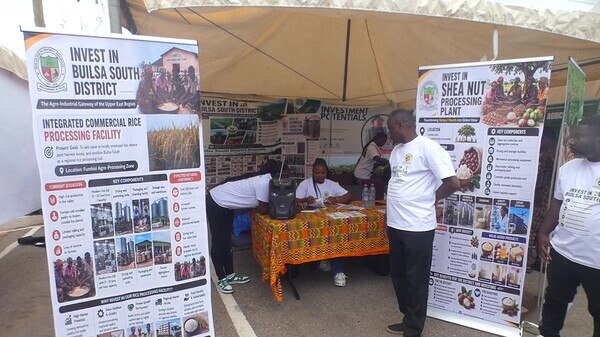
The vibrant town of Bolgatanga today played host to the unveiling of the PEARL (Prosperity through Enterprise, Agriculture, Resilience and Livelihoods) Framework, a 10-year blueprint for transforming the Upper East Region. Amidst the energy and optimism of the event, officials from the Builsa South District Assembly seized the opportunity to highlight their district’s unique strengths on a regional and national stage. Speaking passionately on behalf of the Assembly, Jafar Mohammed Saeed did not mince words as he described Builsa South as the undisputed food basket of the North. “Wherever you are, far or near, the very best place for your investments in agri- and agro-processing, or any agri-business, is Builsa South. No doubt about that,” he declared in an interview with Apexnewsgh. Saeed pointed to the district’s vast commercial rice valleys, emphasizing that farming here was not a matter of a few acres, but of hundreds and hundreds of acres ripe for cultivation. “Every farmer, far and near, can take advantage of our resources,” he said. He called on investors to explore opportunities in irrigation, noting that with the right facilities, Builsa South could unlock year-round farming and move beyond their heavy reliance on seasonal rains. But the district’s offerings extend far beyond rice. Saeed proudly highlighted Builsa South’s reputation for quality honey, especially from the Donninga area, making it the destination of choice for health-conscious consumers and commercial buyers alike. He also pointed to opportunities in shea butter production, livestock rearing, and other agricultural ventures. “Whether you’re looking for bulls, sheep, goats, or any livestock in commercial quantities, Builsa South is the place to be,” he said. Saeed was quick to assure potential investors that Builsa South has created a welcoming, enabling environment for business. “We are ready and eager to work with anyone willing to invest. You will find a stress-free investment environment here,” he promised. As the PEARL Framework charts a bold path for the Upper East Region from 2026 to 2035, Builsa South stands out as a beacon of agricultural potential and opportunity, ready to feed Ghana and attract the investment needed to fuel its growth. Source: Apexnewsgh.com
Samson Awingobit Asaki Rallies Stakeholders for Upper East Transformation at PEARL Framework Launch

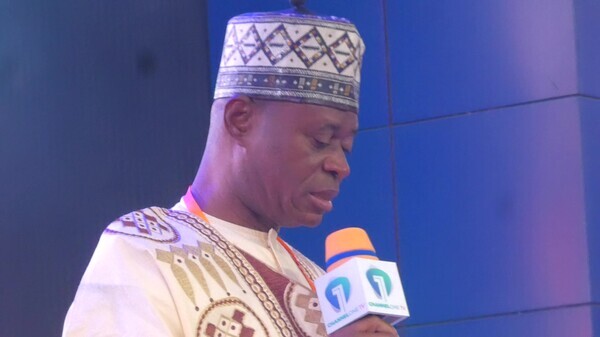
It was a momentous day as Samson Awingobit Asaki, Executive Secretary of the Importers and Exporters Association of Ghana, stood before an eager audience at the launch of the PEARL (Prosperity through Enterprise, Agriculture, Resilience and Livelihoods) Framework. The air was thick with hope and ambition as Mr. Asaki addressed the gathering, marking the beginning of a bold 10-year journey to transform the Upper East Region through agriculture, enterprise, and responsible mining from 2026 to 2035. With pride, Mr. Asaki acknowledged the honor bestowed upon his Association to serve as Co-Organizer of the landmark event. “This Forum, under the theme ‘Charting the Course for PEARL – Prosperity through Enterprise, Agriculture and Regional Livelihoods,’ is not just another conference,” he declared. “It is a bold declaration that the Upper East Region is ready to take its rightful place as a strategic destination for investment, industrialization, agribusiness, trade, and entrepreneurship.” He praised the vision behind the PEARL Framework, which he described as a demonstration of purposeful leadership and a commitment to creating sustainable economic opportunities in the region. He reminded the audience that no nation could achieve meaningful economic transformation without strengthening its productive sectors, improving trade competitiveness, and connecting local producers to both regional and international markets. Highlighting the potential of the Upper East Region, Asaki pointed to its resources, from agriculture and agro-processing to shea, livestock, textiles, handicrafts, and cross-border commerce. “What is required,” he explained, “is strategic investment, infrastructure development, value addition, access to finance, and efficient market linkages.” He emphasized that such progress could only be achieved through partnerships. Asaki reaffirmed the Association’s commitment to working with government, local authorities, development partners, and the private sector to unlock new trade opportunities for businesses across the region. Mr. Asaki further commended the renewed national focus under President John Dramani Mahama’s administration, which prioritized revitalizing local production, promoting agriculture, and creating decent jobs through private sector growth. He applauded the government’s drive to improve the business environment, enhance trade facilitation, and modernize Ghana’s ports and logistics ecosystem, all of which would help position the country as the preferred gateway for regional trade under the African Continental Free Trade Area (AfCFTA). Looking to the future, Asaki encouraged local entrepreneurs to embrace innovation, improve product quality, and seize emerging opportunities in export and regional commerce. “The future belongs to businesses that are competitive, export-ready, and resilient,” he said, urging development partners and investors to recognize the Upper East Region’s wealth of opportunities and hardworking people. Bringing his speech to a close, the Executive Secretary assured the Regional Coordinating Council of the Importers and Exporters Association’s unwavering commitment. “We stand ready to support initiatives that promote enterprise development, expand exports, facilitate investment, and create sustainable prosperity for the people of the Upper East Region,” he declared, setting the stage for a decade of transformation and shared success. Source: Apexnewsgh.com
PEARL: The Ministry of Lands and Natural Resources Urges Upper East to Invest in Human Capital
The occasion was the launch of the PEARL (Prosperity through Enterprise, Agriculture, Resilience and Livelihoods) Framework, a bold 10-year plan aiming to transform the region through agriculture, enterprise, and responsible mining from 2026 to 2035. Representing the Sector Minister Emmanuel Armah Kofi Buah, Deputy Minister Alhaji Yusif Sulemana delivered a message that resonated deeply. He urged the people of Upper East to unite and focus on investing in their greatest asset: human resources. “When mining companies come calling for local projects or new recruits, we must be ready,” he said, emphasizing that technology and money alone were not enough. “If you lack the skilled people to recruit, the opportunity will pass you by.” With gold recently discovered in commercial quantities in 10 out of 15 districts, hopes are high that mining will bring jobs and prosperity. Yet, Mr. Sulemana cautioned that attracting mining investments is only the first step. “Jobs for local people aren’t guaranteed unless we develop the skills mining companies need,” he explained. “If we aren’t prepared, companies will look elsewhere for talent.” He called on all stakeholders, government, local authorities, and community leaders, to prioritize investment in education, skills training, and workforce development. Only by equipping residents with the necessary expertise, he argued, can the region fully benefit from the economic opportunities ahead. Mr. Sulemana reaffirmed the ministry’s commitment to supporting the PEARL Framework and partnering in environmental projects that advance the region’s sustainable development. “Whatever environmental projects the Upper East is undertaking, we want to be part of it,” he said, pledging his support on behalf of the Ministry. As the Upper East Region embarks on this transformative journey, the message from the Ministry is clear: investing in people is the key to unlocking the full benefits of the region’s natural riches. By working together and preparing the local workforce, the region can ensure that prosperity reaches every community. Source: Apexnewsgh.com
Ministry Unveils PharmaVax Programme to Transform Ghana’s Pharmaceutical Sector
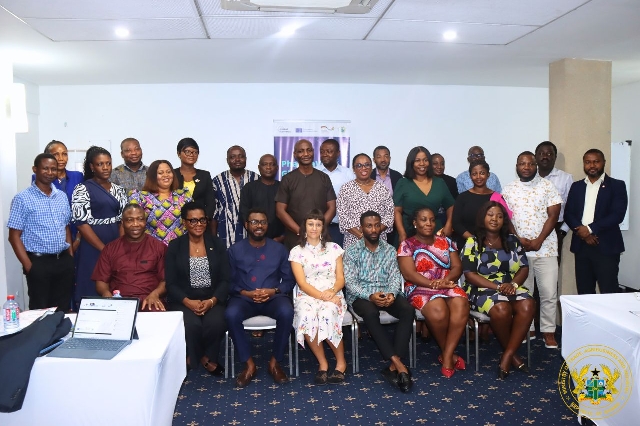
The Ministry of Trade, Agribusiness and Industry has announced a bold new initiative to revolutionize Ghana’s pharmaceutical sector through the launch of the PharmaVax Programme. The programme, which was outlined at a meeting in Accra on Thursday, 25th June 2026, aims to strengthen governance, attract investment, and expand market opportunities for local manufacturers. According to the ministry, the PharmaVax Programme is anchored on four key pillars: strengthening governance institutions within the pharmaceutical sector; enhancing public-private dialogue between government and industry; improving the environment for foreign direct investment and trade; and promoting greater transparency in investment conditions and authorization processes. Speaking on behalf of the Hon. Minister Elizabeth Ofosu-Adjare, the Director of Administration, Mr. Yaw Sakyi, emphasized the government’s commitment to making Ghana the pharmaceutical manufacturing hub of the sub-region. He noted that the new Pharmaceutical Policy would provide the necessary implementation systems to ensure the sector’s growth. Mr. Sakyi also expressed gratitude to the European Union and the German Ministry for Economic Cooperation and Development for their financial support of €415,437.78. As part of the initiative, Mr. Godfred Gobah, Head of the Pharmaceutical Manufacturing Development Unit, stated that the Ministry would actively engage the private sector and participate in both local and international events. These efforts are designed to boost the visibility of Ghana’s pharmaceutical industry and create new market access opportunities. The Ministry expects the PharmaVax Programme to lay a solid foundation for achieving several strategic objectives by 2030. These include doubling the export value of pharmaceutical products within the ECOWAS market and increasing the market share of locally produced pharmaceuticals from 30 percent to 60 percent. Working in partnership with GIZ Ghana, the European Union, and other key stakeholders, the Trade Ministry is focused on building a robust ecosystem to drive the growth and global competitiveness of Ghana’s pharmaceutical sector. Source: Apexnewsgh.com
The Bongo District Director of Health Assures Public: “Everything is Under Control” After Watermelon Incident

On Friday, the Bongo District Director of Health, Estella Abazesi, reassured the public that the situation was under control after 12 individuals were hospitalized at St. Clement Hospital in Bongo following the consumption of watermelon. Speaking to Apexnewsgh, Director Abazesi recounted how her team responded swiftly to the incident. “So, it’s last night that we also had the information. This morning, our team went to the facility to get some detailed information about what happened. We met about 12 clients at St. Clement Hospital in Bongo, and they are all doing well now,” she said. According to the Director, all the affected individuals shared a common history: they had eaten watermelon on the 24th of the month. Shortly after, they experienced vomiting and diarrhea, resulting in their admission to the hospital. Interestingly, two members of the same household who did not consume the watermelon remained healthy and showed no symptoms. Further inquiries revealed that the patients had eaten different meals that evening before consuming the watermelon. Unfortunately, Abazesi noted, “There is no leftover of the watermelon whatsoever, so we can’t really take a sample for testing. We just have to keep our ears on the ground to see what happens further.” Director Abazesi assured that, as of now, all patients are stable and recovering. “No one has the symptoms now. They are all pending for discharge, except one who will be referred due to a pre-existing condition.” The origin of the watermelon was also traced. “The watermelon was bought from the northeast, in Walewale,” she explained. “We need to keep our ears on the ground to see whether this is a larger issue. If it’s related to the watermelon, we’ll find out, but for now, all the clients are doing well.” Health officials plan to continue monitoring the situation, even after the patients are discharged. “We still do follow-ups to ensure they remain healthy,” Abazesi said. When asked about efforts to trace the source of the watermelon, Abazesi acknowledged that they were yet to meet the man who purchased it. “We will stay in touch with the assemblyman to gather more information about exactly where the watermelon was bought. Once we reach him, we can further our investigation.” Director Abazesi concluded on a reassuring note, emphasizing that the health team remained vigilant and would keep the public informed as they continued to investigate the incident. Source: Apexnewsgh.com
MTN Ghana Redefines Home Internet Experience With Unlimited Fibre Packages

As part of MTN’s commitment to enabling digital inclusion and improving everyday life, MTN Ghana has introduced new speed-based Unlimited Fibre packages aimed at giving households faster internet connectivity, greater flexibility and better value as demand for reliable home broadband continues to grow across the country. The refreshed packages offer customers speeds of up to 100Mbps, 300Mbps and 500Mbps, enabling homes to support multiple online activities simultaneously, including remote work, virtual learning, video streaming, gaming and smart home applications. The new plans, available to both new and existing fibre customers, come with unlimited data and flexible subscription options designed to meet the needs of different households and internet users. Speaking on the new offering, Richard Acheampong, Chief Home Officer of MTN Ghana, said the packages were developed in response to changing customer needs and the increasing reliance on high-speed internet in homes. He said ” Home Internet connectivity has become an essential part of everyday life. Whether it is supporting children with online learning, enabling professionals to work remotely, helping entrepreneurs run their businesses or allowing families to stay connected and entertained, customers need a service that can keep pace with their lifestyles”. “As MTN marks 30 years of impact in Ghana, we are committed to ensuring that every home has access to reliable, high- speed internet that empowers people to live, learn and work better”, he added. The new fibre plans provide customers with the freedom to choose speeds that best suit their needs while enjoying the convenience of unlimited browsing. Under the revised packages, customers can subscribe to the GHS299 plan per month and enjoy speeds of up to 100Mbps. GHS444 plan per month and enjoy speeds of up to 300Mbps, GHS999 plan per month and enjoy speeds to 500Mbps. Customers who opt for longer subscription periods will also benefit from discounted rates. Quarterly subscriptions attract a five per cent discount, while semi-annual and annual subscriptions offer discounts of seven per cent and ten per cent respectively. The packages can be purchased through the MyMTN App, MTN’s Self-Service Portal and the *5057# shortcode. The introduction of the new speed-based Unlimited Fibre packages reinforces MTN Ghana’s efforts to provide innovative connectivity solutions that respond to the evolving needs of households while supporting digital inclusion and economic growth. Source: Apexnewsgh.com
PURC Announces Electricity and Water Tariff Increases Effective July 1, 2026

Consumers in Ghana will see higher electricity and water bills from July 1, 2026, following an upward review of utility tariffs announced by the Public Utilities Regulatory Commission (PURC). The decision comes as part of the Commission’s third-quarter tariff review, with electricity rates rising by 3.49 percent across the board and water tariffs increasing by 0.85 percent. In a statement issued on Monday, June 22, the PURC explained that the adjustments are part of its mandate to conduct quarterly reviews, ensuring that tariffs reflect changes in key operational factors affecting utility providers. The latest review took into account fluctuations in the cedi-dollar exchange rate, inflation, the electricity generation mix, and the cost of natural gas used for power production. To determine the new tariffs, PURC applied a weighted average exchange rate of GHS11.2228 to one US dollar for the third quarter of 2026, reflecting a slight 0.2 percent depreciation of the cedi compared to the previous period. The Commission also cited a three-month average inflation rate of 3.43 percent, down from 4.17 percent in the second quarter, and a 1.58 percent drop in the average cost of natural gas, now at USD7.9708 per MMBtu. The hydro-thermal generation mix remained unchanged, with 20.9 percent of electricity generated from hydro sources and 79.1 percent from thermal plants. Based on these indicators, PURC approved a 3.49 percent increase in electricity tariffs for all residential, non-residential, and special load customers. For residential users, the lifeline tariff for those consuming up to 30 kilowatt-hours per month will rise from 86.9Gp to 89.93Gp per kilowatt-hour. Water tariffs will also go up by 0.85 percent for all categories of customers, including residential, commercial, industrial, public institutions, and bulk users. The residential lifeline tariff for water consumption up to five cubic metres will increase from 593.49Gp to 598.54Gp per cubic metre. PURC said the quarterly adjustments are designed to maintain the real value of tariffs and ensure the financial viability of utility providers, allowing them to continue delivering reliable services. The Commission emphasized its commitment to monitoring service providers’ performance and enforcing regulatory standards to guarantee value for money and improved service delivery. The PURC expressed gratitude to stakeholders for their ongoing support and noted that details of the new tariffs will be published in the Gazette and on the Commission’s website. Source: Apexnewsgh.com
British Actress Among Three Charged After $296 Million Meth Seizure Linked to Ghanaian Shipment in Australia

Australian authorities have charged three people, including a British actress, after intercepting about 320 kilograms of methamphetamine hidden in a shipment from Ghana, an operation that prevented drugs worth an estimated A$296 million from flooding Australian streets. Emaa Hussen, 34, known for roles in an EastEnders spin-off and a Jason Statham film, was arrested and appeared in a Sydney court on Thursday. She faces charges of attempting to import a commercial quantity of methamphetamine into Australia and was previously denied bail after being charged with attempting to possess a commercial quantity of a border-controlled drug, an offence that can result in life imprisonment. The case began in April 2026, when Australian Border Force (ABF) officers at Sydney’s Port Botany detected irregularities in two shipping containers arriving from Ghana. Declared as bags of charcoal, the containers were subjected to x-ray scans, revealing a white crystalline substance. Initial tests confirmed it was methamphetamine, and further forensic examination verified that the consignment contained approximately 320 kilograms of the illicit drug. In a controlled operation, authorities removed the drugs but allowed the shipment to proceed to a storage facility in Girraween on April 20, 2026. There, investigators allege Hussen supervised a group of men as they unpacked the container. Some of the bags were then loaded into a vehicle and taken to a house in Blacktown. Shortly afterward, Australian Federal Police (AFP) officers executed a search warrant at the Blacktown property, arresting Hussen and seizing 32 bags allegedly used to conceal the meth, along with electronic devices and a notebook now undergoing forensic analysis. The investigation quickly expanded. In South Australia, AFP officers executed a search warrant at an Oakden residence on April 30, 2026. There they arrested a 30-year-old woman and a 32-year-old man, accusing them of trying to rent storage units in Sydney with false identities to facilitate the illegal operation. Both appeared before the Adelaide Magistrates Court on May 1, 2026, charged with dealing in identification information to aid drug possession and failing to comply with a court order under the Crimes Act. They were remanded in custody and are scheduled to reappear in court on September 2, 2026. AFP Detective Acting Superintendent Trevor Robinson said authorities were still working to identify the full network behind the attempted importation. “This operation highlights the agility of the AFP and our partners to investigate complex matters across jurisdictions and stop organised crime syndicates in their tracks,” Robinson stated. He emphasized that the seizure, which equates to an estimated 3.2 million street deals, demonstrates the AFP’s ability to operate seamlessly across borders. ABF Superintendent Jared Leighton commended the vigilance of border officers in detecting increasingly sophisticated smuggling tactics. “Criminal syndicates will go to great lengths to disguise illicit drugs, including embedding them in everyday goods like charcoal, but our highly skilled officers are trained to see beyond these attempts,” he said. Leighton stressed the importance of close collaboration with law enforcement partners to hold traffickers accountable and protect Australian communities. Investigations into the broader network and the origins of the shipment remain ongoing. Source: Apexnewsgh.com
Controller and Accountant-General Unveils Plan to Recover Student Loan Debts from 4,000 Public Sector Workers
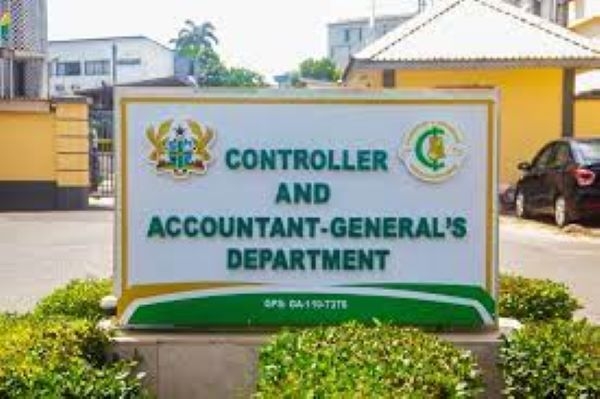
At the launch of the 20th anniversary celebrations for the Student Loan Trust Fund (SLTF), Controller and Accountant-General Kwesi Agyei made a significant revelation: nearly 4,000 public sector employees currently on the government payroll have outstanding student loan debts. Addressing the assembled audience, Mr. Agyei explained that his department is now partnering with the SLTF to develop a more robust system for recovering these loans. The plan, he revealed, is to implement payroll deductions, ensuring that repayments are made directly from the salaries of beneficiaries who work in the public sector. Mr. Agyei emphasized the importance of strengthening loan repayment mechanisms to safeguard the sustainability of the student loan scheme. “Ensuring that loans are repaid is the only way the Fund can continue to support future generations of students,” he noted, highlighting the revolving nature of the Fund. According to Mr. Agyei, the partnership between the Controller and Accountant-General’s Department (CAGD) and the SLTF will make it easier to identify public sector workers who are beneficiaries of the student loan scheme, and to recover outstanding debts efficiently through the government payroll platform. He further explained that, once all necessary legal and regulatory frameworks are in place, the loan repayments could become statutory deductions, just like PAYE taxes and SSNIT contributions. This, he said, will improve compliance and streamline the recovery process for the SLTF. Discussions on the details of the arrangement, he disclosed, will soon begin between the CAGD and the Student Loan Trust Fund. Mr. Agyei expressed confidence that the initiative will not only strengthen loan recovery efforts, but also protect the integrity of the Fund and ensure that more students can continue to benefit from financial support for higher education. Source: Apexnewsgh.com