



Government to Sacrifice GH¢200 Million in Revenue to Keep Fuel Prices Down

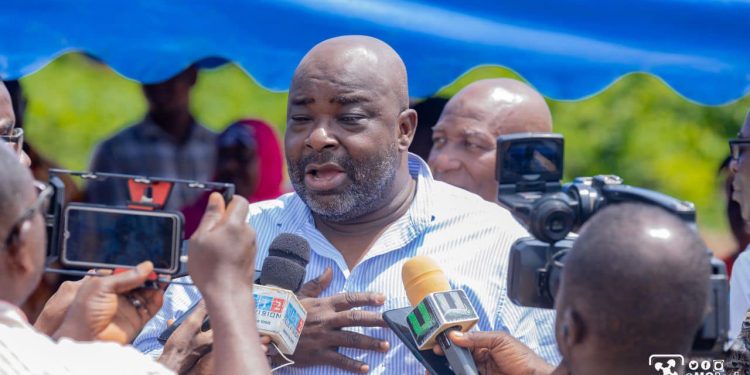
The government is prepared to walk away from an estimated GH¢200 million in revenue, and it says it has no regrets about it. The sacrifice, officials insist, is the price of putting citizens first in the face of relentless global fuel price pressures. Spokesperson for the Ministry of Energy, Richmond Rockson, disclosed on Wednesday, April 15, while speaking to the media about the government’s decision to reduce fuel prices at the pump. The intervention, he explained, was taken deliberately and with full awareness of its cost to the national purse, at a time when international petroleum prices are already trending sharply upward. Rockson pointed to geopolitical tensions in the Middle East as the primary force driving global crude oil prices higher, noting that the ripple effects have been felt acutely in Ghana, where ex-pump prices have climbed steadily in recent weeks. Against that backdrop, he said, the President and Cabinet made a conscious choice to absorb the pain on behalf of Ghanaians rather than pass it on to consumers. “This will lead to a net loss of about GH¢200 million that could have accrued to the government, but it is a necessary sacrifice to bring relief to the people of Ghana,” Rockson stated plainly. The practical effect of that sacrifice becomes visible at the pump from April 16, 2026, when the government begins absorbing GH¢2.00 per litre on diesel and GH¢0.36 per litre on petrol in the upcoming pricing window. The relief is targeted squarely at households, transport operators, and businesses, groups that have borne the brunt of rising fuel costs in recent months. The measure, approved by Cabinet, is set to run for one month. During that period, authorities will keep a close eye on developments in the global oil market and determine whether the situation warrants further action. A statement issued by the Presidency on Wednesday reaffirmed the government’s commitment to price stability, the protection of livelihoods, and the broader goal of sustaining Ghana’s economic recovery amid persistent external headwinds. It is a significant financial concession, and the government is making clear it views it not as a loss, but as an investment in the welfare of its people. Source: Apexnewsgh.com
Transport Operators Hold Off on Fare Hikes as Government Steps In to Cushion Fuel Costs
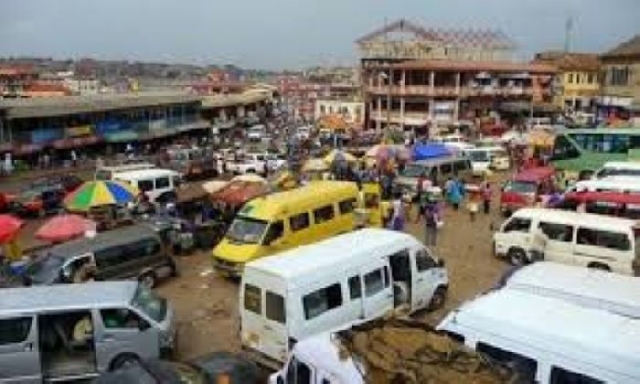
Ghanaian commuters can breathe a temporary sigh of relief. Road transport operators have officially announced a suspension of planned fare increases, following emergency government interventions designed to cushion the impact of soaring petroleum prices on drivers and the travelling public. In a joint press release issued on April 15, 2026, the Ghana Private Road Transport Union (GPRTU) and the Ghana Road Transport Coordinating Council (GRTCC) acknowledged the severe operational pressures brought on by rising global crude oil prices, pressures they attributed in large part to the ongoing US–Israel–Iran conflict, which has sent shockwaves through international energy markets. The announcement comes in the wake of an emergency Cabinet meeting held on April 9, 2026, during which the Government of Ghana moved swiftly to contain the fallout. Among the measures agreed upon were the reduction and suspension of specific margins on petroleum products during the upcoming pricing window, as well as collaborative discussions with the Ministry of Transport aimed at stabilising prices for both the general public and transport operators. For the transport unions, the government’s response was enough, for now, to pull back from the brink of a fare increase that would have added yet another burden to ordinary Ghanaians already navigating a difficult economic climate. The GPRTU and GRTCC expressed confidence that the interventions, if sustained, would deliver meaningful relief to drivers struggling with the day-to-day cost of keeping their vehicles on the road. In the meantime, the leadership of both unions has called on all transport operators across the country to hold the line, urging them to refrain from imposing any fare increases while the effectiveness of the government’s measures is carefully monitored. The press release was signed by Mr. Godfred Abulbire, General Secretary of the GPRTU, and Mr. Emmanuel Ohene Yeboah, General Secretary of the GRTCC, both of whom reaffirmed their organisations’ commitment to the welfare of drivers and commuters alike. Looking ahead, the operators made clear that the current calm is contingent on broader conditions improving. They expressed hope for a swift resolution to the international conflicts that continue to destabilise global oil markets, warning that lasting pricing stability in Ghana ultimately depends on the restoration of order in the world’s energy supply chains. For now, the fare freeze holds, but the operators have made it equally clear that they are watching closely, and that their patience is tied directly to the government’s ability to deliver on its promises. Source: Apexnewsgh.com
Ghana’s Central Bank Chief Challenges IMF to Move Faster on African Debt Relief
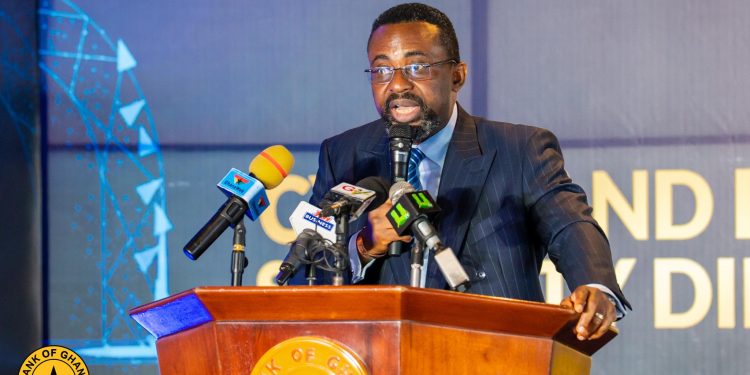
Ghana’s central bank governor has issued a pointed challenge to the International Monetary Fund, demanding swifter debt relief and more powerful crisis response tools, warning that the continent’s economies are buckling under pressures that the Fund’s current mechanisms are simply too slow to address. Bank of Ghana Governor Johnson Pandit Asiama delivered the appeal on Tuesday during a meeting of the African Consultative Group in Washington, making clear that the time for incremental adjustments had passed. What Africa needs, he argued, is a fundamental “step-change” in how the IMF responds to debt distress, climate shocks, and the tightening of global financial conditions. “African economies continue to operate in an exceptionally challenging macroeconomic environment,” Asiama told the gathering, laying out a stark picture of high debt vulnerabilities, shrinking fiscal space and a relentless succession of external shocks. He pointed specifically to spillovers from the conflict in the Middle East, which he said had worsened inflation and placed severe strain on external balances across the continent. His words resonated in a room where frustration had been building. African policymakers at the meeting made clear they believe the pace of international financial support is falling dangerously short of the scale of the region’s challenges, a sentiment Asiama gave voice to with unusual directness. At the heart of his critique was the IMF’s existing debt resolution machinery, including the Group of 20’s Common Framework, which he described as too slow and too rigid for the urgency of the moment. Delays in restructuring, he warned, were not merely administrative inconveniences; they were prolonging uncertainty, chilling investment, and keeping countries locked out of international capital markets long after they should have regained access. “Time-bound restructurings anchored in credible comparability of treatment are essential,” Asiama said, calling for stronger participation by private creditors and clearer rules on burden-sharing, two areas where progress has historically stalled. He also took aim at how IMF programme design handles delays caused by creditor coordination problems, arguing firmly that such delays should not be recorded as policy failures on the part of borrowing countries. It was a pointed rebuke of a framework that African nations have long felt places an unfair burden on the most vulnerable parties in any restructuring process. Asiama’s demands extended well beyond debt restructuring. He pressed for broader reforms to the IMF’s policy framework, including improved debt sustainability assessments for low-income countries and wider deployment of the Fund’s Integrated Policy Framework. He urged faster implementation of the IMF’s “three-pillar approach” for countries facing or at risk of crisis. He called for increased use of the Fund’s balance sheet to support vulnerable economies, through scaled-up concessional financing, the institutionalisation of Special Drawing Rights reallocation, and a more responsive Resilience and Sustainability Trust. “Recent shocks have exposed the need for emergency financing that is adequately resourced and readily accessible,” he said, in what amounted to a direct call for the IMF to match its rhetoric on African development with tangible, timely action. Rounding out his address, Asiama stressed the importance of capacity-building support in areas including domestic revenue mobilisation, public financial management and financial regulation, with particular attention to emerging risks tied to digital finance and cyber threats, sectors where many African economies remain exposed. His remarks come at a moment of acute pressure for the continent. Rising borrowing costs, slowing global growth and escalating climate disruptions are converging to test the resilience of economies that, in many cases, have yet to recover from the shocks of recent years fully. The IMF has not yet formally responded to the calls. But with debt restructuring and crisis financing set to dominate global economic discussions in the months ahead, Asiama’s voice, and Africa’s, will be difficult to ignore. Source: Apexnewsgh.com
Cut the “Dumsor Levy” by Half — COPEC Urges Government for Immediate Fuel Relief

Ghana’s Chamber of Petroleum Consumers (COPEC) is calling on the government to slash the Energy Sector Shortfall and Recovery Levy, popularly known as the “dumsor levy”, by 50 percent for a limited period, as part of a package of measures aimed at bringing down fuel costs for ordinary Ghanaians. The proposal was contained in a statement released on Friday, April 10, in response to the government’s ongoing review of taxes and levies within the petroleum price build-up, a review that has raised public expectations of relief at the pumps. Under COPEC’s proposal, the levy would be temporarily reduced from GH¢1 to 50 pesewas per litre, a cut the Chamber says would translate directly into a 50 pesewa reduction in fuel prices for consumers. According to COPEC, the impact would be immediate and tangible, significantly reducing household expenditure on transport and energy at a time when public anxiety over rising fuel costs and the prospect of renewed power outages is running high. COPEC framed the proposal not just as consumer relief, but as a strategic balancing act for the government. By retaining half of the levy rather than scrapping it entirely, authorities would continue to collect revenue to support the energy sector and keep power plants running, reducing the risk of costly emergency power procurement and protecting industrial productivity. The Chamber argued that sustaining a revenue stream, even at half the current rate, would also help shield long-term tax revenues from the kind of disruption that a complete removal of the levy might trigger. COPEC was candid about the limits of its own proposal. A 50 percent cut in the levy would inevitably reduce funds set aside for servicing energy sector debts, and could slow planned maintenance activities if the intervention stretches beyond its intended window. That is precisely why, the Chamber stressed, the reduction must be strictly time-bound. COPEC proposed a one-month window, a timeframe it described as sufficient to deliver meaningful economic relief while remaining short enough to avoid long-term disruptions to the energy sector. The Chamber argued that such targeted, time-limited measures demonstrate genuine responsiveness to public concerns without sacrificing fiscal prudence. Urging policymakers to act with urgency, COPEC called on the government to give the proposal serious consideration as part of its broader short-term strategy to cushion consumers against rising global petroleum prices. Source: Apexnewsgh.com
Port Transport Drivers Call Off Strike After Breakthrough Talks with Ghana Shippers’ Authority
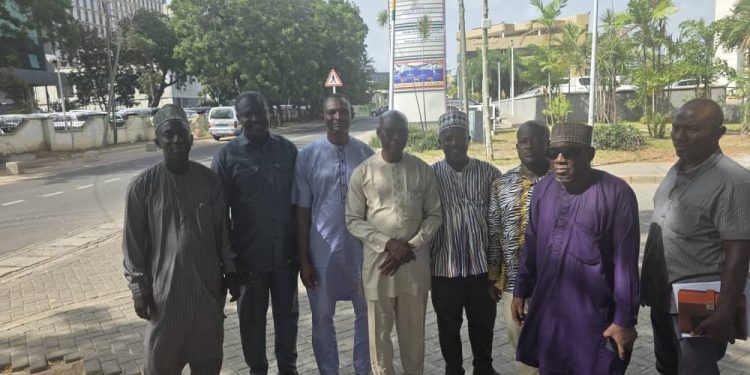
A threatened sit-down strike by port transport drivers has been averted following a productive emergency meeting between the Joint Association of Port Transport Drivers (JAPTU) Ghana and the Ghana Shippers’ Authority (GSA). The strike, which had been planned in protest against new regulatory measures affecting port transport operators, was called off after both parties reached a consensus on the key issues that had sparked the standoff. Speaking to Citi News on Monday, April 13, JAPTU’s Executive Secretary Ibrahim Musah explained that a critical clarification from the government played a decisive role in resolving the tension. Drivers had harboured concerns that the GSA’s planned registration exercise was aimed at individual operators, a prospect that had alarmed many within the sector. Those fears, Musah said, were put to rest. The government made clear that the registration exercise targets corporate transport entities, not individual drivers. That single clarification, he noted, addressed one of the most significant grievances that had been driving JAPTU toward industrial action. With the assurance on the table, JAPTU’s leadership announced its decision to withdraw the strike in the interest of continued dialogue and constructive engagement. The agreement reached goes beyond simply standing down the strike. As part of the understanding between the two parties, the Ghana Shippers’ Authority is expected to facilitate further discussions between JAPTU and the Minister of Roads and Highways on concerns surrounding the new axle load control regime, an issue that remains a live concern for transport operators. JAPTU’s leadership expressed optimism that the ongoing engagements will lead to a more inclusive approach to policy implementation within the transport sector, signalling a shift from confrontation to collaboration. Musah was generous in his praise for how the GSA handled the situation. “The leadership of JAPTU Ghana is happy to announce that we are calling off our intended sit-down strike after a very fruitful dialogue session with the leadership of the Ghana Shippers’ Authority,” he said. “We want to also take this opportunity to commend the Chief Executive of the Ghana Shippers’ Authority and his team members for the swift manner in which they reacted to the concern that we brought up,” he added. The resolution is expected to ease tensions across the port transport industry and ensure the smooth movement of goods through Ghana’s ports as consultations between all parties continue. Source: Apexnewsgh.com
Warehouses Full, Promises Empty: Asutsuare Rice Farmers Cry Out for Help
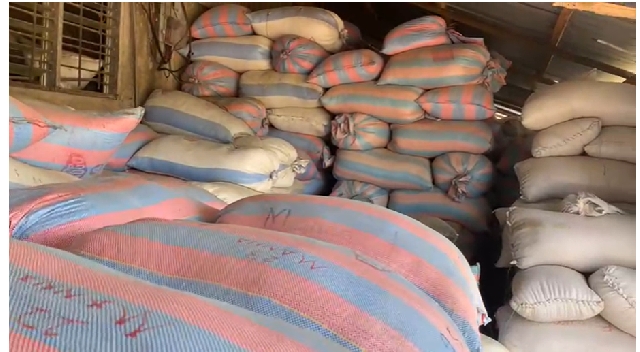
Rice farmers in Asutsuare, Kadjanya, and Akuse in the Shai Osudoku District of the Eastern Region are sinking into a financial crisis, as large quantities of harvested rice sit unsold and post-harvest losses mount with each passing day. The situation is most acute at the Asutsuare rice irrigation scheme, one of Ghana’s major rice-producing hubs, spanning over 4,000 hectares and supporting thousands of smallholder and commercial farmers. Warehouses have been filled to capacity, leaving farmers with no choice but to leave excess produce exposed to the elements, where it risks spoilage. Despite significant investments in mechanisation and irrigation, farmers say the absence of a reliable market is steadily eroding their hard work and livelihoods. The hardship has gone beyond financial strain. Reports indicate that a farmer identified as Zola allegedly died by suicide after struggling to repay a bank loan tied to his farming activities, a tragic development that has cast a dark shadow over the farming communities. Authorities have yet to publicly confirm the details surrounding the incident. The story of Zola, however, has put a human face on what might otherwise be seen as an economic statistic, underscoring the very real and personal consequences of the crisis gripping the region. Philip Akpoka Anumah, President of the Osudoku Rice Farmers Association, has been vocal about the pricing crisis at the centre of the problem. He pointed out that buffer stock authorities are offering just GHS350 per bag, a figure that falls below production costs, meaning farmers are effectively selling at a loss. The situation is made worse by the continued influx of imported rice, which farmers say is suppressing demand for locally produced rice and driving prices even lower. Adding to the frustration is what farmers describe as unfulfilled assurances from the highest levels of government. The Minister for Food and Agriculture, Eric Opoku, and the Minister for Finance, Cassiel Ato Forson, reportedly visited the area and pledged interventions, including buffer stock purchases. Those promises, farmers say, have yet to translate into action, deepening their sense of abandonment. Compounding the crisis further, rehabilitation works on sections of the irrigation scheme have stalled, leaving more than a thousand farmers idle for over a year, unable to farm, unable to earn, and increasingly unable to cope. With their backs against the wall, the farmers are now issuing an urgent call for government intervention. Their demands are straightforward: improved market access, fair and realistic pricing for their produce, and the completion of long-delayed infrastructure projects. They warn that continued inaction will not only devastate local rice production but could permanently damage rural livelihoods across the district, a consequence, they say, that the government cannot afford to ignore. Source: Apexnewsgh.com
Ghana’s Growth to Slow in 2026, But Stability Holds Firm — World Bank
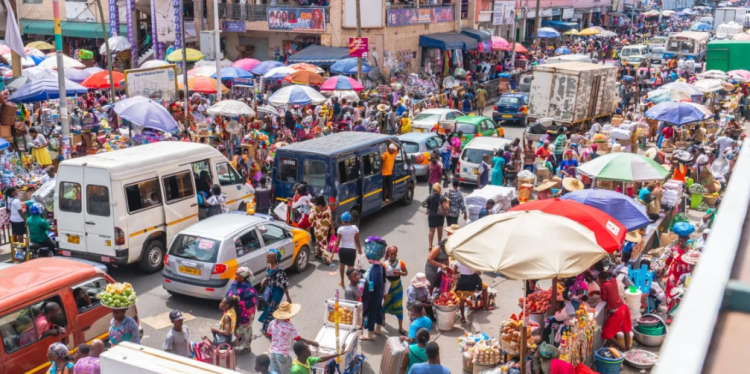
Ghana’s economy is set to cool slightly this year, with the World Bank forecasting GDP growth of 4.8 percent in 2026, down from an estimated 6.0 percent in 2025. The dip signals a moderation in momentum following a strong post-pandemic rebound, but it is not a cause for alarm, stability, rather than rapid expansion, is now the defining theme of Ghana’s economic trajectory. According to the Bank’s latest Africa Economic Update, the slowdown is driven by tightening domestic conditions and mounting external pressures, even as the country’s broader macroeconomic fundamentals continue to improve. Inflation on the Way Down One of the brighter spots in the outlook is inflation. The World Bank projects Ghana’s end-of-year inflation rate for 2026 at around 9 percent, firmly consolidating the country’s position in single-digit territory. This continued disinflation is expected to be underpinned by improved currency stability, tight monetary policy, and easing external pressures, a combination that should provide meaningful relief to households and businesses alike. A Mixed Picture for Business For the private sector, the outlook cuts both ways. On one hand, weaker domestic demand, cautious investment sentiment, and global economic uncertainty could constrain expansion across key sectors. On the other, easing inflation holds the potential to boost consumer purchasing power and reduce operational costs for firms — offering a silver lining amid the broader slowdown. The World Bank, however, sounded a note of caution: Ghana remains exposed to global shocks, including commodity price volatility, uncertain financial conditions, and geopolitical risks affecting trade and energy markets. Left unmanaged, these risks could erode both growth and inflation gains. Ghana in a Regional Context Ghana’s moderation mirrors broader trends across the continent. Sub-Saharan Africa’s growth is projected at 4.1 percent in 2026, unchanged from 2025, though the World Bank warns that downside risks are mounting. The region’s recovery from successive global shocks is losing steam, with growth projections revised downward by 0.3 percentage points from the October 2025 forecast. Heightened geopolitical tensions in the Middle East, heavy debt-service burdens, and deep structural challenges are all weighing on growth and job creation across the region. The report further highlights that escalating conflicts, including attacks on energy facilities and disruptions to global shipping routes, have intensified these risks considerably. Steady, Not Spectacular Despite the projected slowdown, Ghana’s medium-term outlook remains relatively stable, with growth expected to hover around 5 percent in subsequent years and recover gradually over time. The World Bank’s data paints a picture of a country entering a phase of measured recovery, one where consolidating gains and building resilience takes precedence over chasing rapid expansion. For Ghana, the road ahead may be steadier than it is swift, but the direction remains firmly forward. Source: Apexnewsgh.com
AfCFTA Could Lift 40 Million Out of Poverty by 2035 — But Key Barriers Remain, Says World Bank
The African Continental Free Trade Area (AfCFTA) holds the promise of raising real incomes across the continent by 7–9% and pulling 40 million people out of extreme poverty by 2035, but that promise remains largely unfulfilled, the World Bank has warned. Launched in January 2021, the AfCFTA is a landmark trade agreement among African Union member states designed to create a single continental market for goods and services. Despite its ambitious vision, the World Bank’s April 2026 Africa Economic Update paints a sobering picture: the agreement’s transformative impact has yet to materialise. According to the report, unlocking the full potential of the AfCFTA will not happen on its own. It will require frontrunner countries to take the lead on implementation, backed by robust monitoring, strict enforcement of commitments, and targeted investment in regional public goods. The World Bank was candid about where the real obstacles lie. “While tariff reductions under the AfCFTA will help intraregional trade, the most significant constraints stem from internal trade costs,” the report noted. These internal costs include inadequate transport and logistics infrastructure, inefficient customs and regulatory systems, limited digitalisation, and high domestic finance and logistics expenses, structural challenges that tariff cuts alone cannot resolve. Adding to these hurdles, non-tariff barriers such as selective export bans remain widespread across the region, further dampening the flow of trade between African nations. Looking ahead, the World Bank urged that Phase II of the agreement prioritise investment, intellectual property, competition policy, and the meaningful inclusion of women and youth in trade, areas seen as critical to tackling the deep-rooted internal cost barriers. Even so, the Bank struck a note of caution, warning that implementation is likely to be gradual given the substantial investment requirements and the need for far-reaching institutional and regulatory reforms. The message from the World Bank is clear: the AfCFTA’s potential is real and significant, but turning that potential into tangible gains for African people will demand sustained political will, coordinated action, and long-term investment across the continent. Source: Apexnewsgh.com
OSP Raids Five Fuel Depots in Sweeping Probe into Ghana’s Petroleum Sector Corruption

Ghana’s Office of the Special Prosecutor (OSP) has launched a sweeping crackdown on alleged corruption in the country’s petroleum downstream sector, conducting coordinated searches at five major fuel depots and seizing a trove of documents and electronic materials in the process. The operation, part of an ongoing investigation, targeted evidence linked to the suspected under-declaration of petroleum imports and the falsification of product types, practices that industry observers say carry significant financial consequences for the Ghanaian state. According to findings referenced in the OSP’s second half-year report, the probe has already implicated one Bulk Oil Distribution Company and 16 Oil Marketing Companies (OMCs) in the diversion of condensate and marine gasoil. So far, approximately GHS8.5 million has been recovered in connection with these activities. But the figures may only scratch the surface. Estimates suggest that Ghana could be losing as much as GHS2 billion annually through tax-related leakages in the petroleum downstream sector alone. Adding to the concern, around GHS680 million spent each year on premix fuel subsidies may not be reaching the intended beneficiaries, raising fresh questions about accountability across the supply chain. The OSP’s investigation points to a broader and more troubling pattern of alleged infractions, including tax evasion and the deliberate manipulation of product classifications during depot transfers. Preliminary findings go further still, suggesting the possibility of coordinated actions involving certain industry players and officials embedded within key regulatory and state institutions, among them the National Petroleum Authority (NPA), the Ghana Revenue Authority (GRA), and the National Security Secretariat. These alleged collaborations are said to have facilitated widespread misreporting and illicit financial flows over time. The revelations have drawn sharp reactions from civil society. The Centre for Environmental Management and Sustainable Energy (CEMSE) described the findings as deeply concerning and indicative of systemic challenges that have long plagued the sector. Its Executive Director, Benjamin Nsiah, announced that CEMSE, in partnership with the Institute of Energy Policy and Research, is preparing to launch a public accountability campaign in the coming weeks, a move aimed at sustaining pressure for transparency and reform. The OSP has confirmed that investigations remain ongoing, with further actions to be determined by the outcome of the probe. For many Ghanaians, the unfolding case is a test of whether the country’s anti-corruption institutions can deliver meaningful accountability in one of its most strategically important sectors. Source: Apexnewsgh.com
Ghana’s Crude Oil Output Hits Six-Year Low as PIAC Calls for Urgent Investment
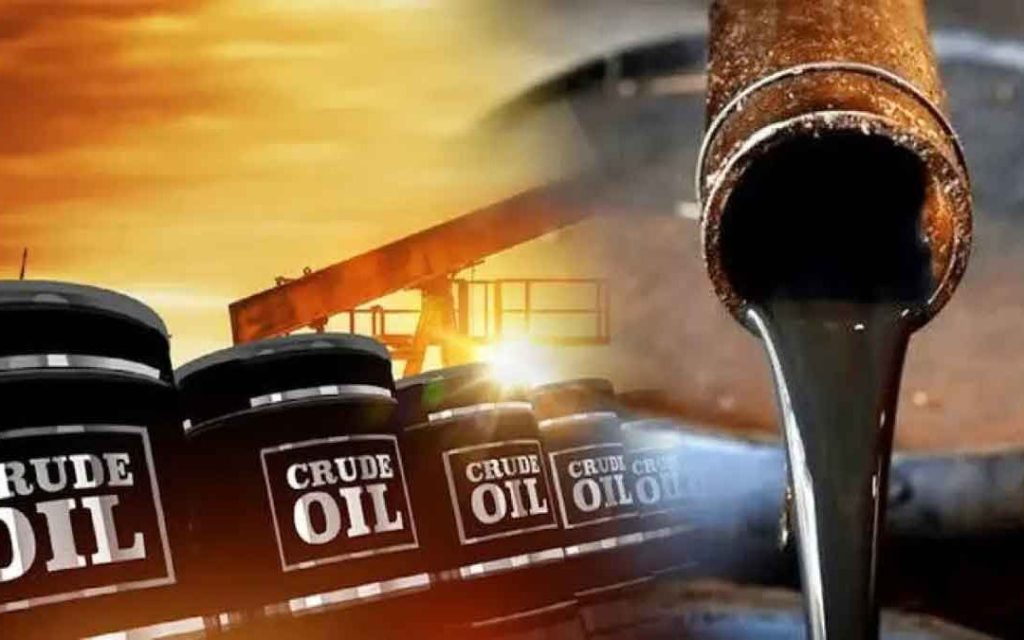
Ghana’s crude oil production has declined for the sixth consecutive year, sliding from a peak of 71.4 million barrels to just 37.3 million barrels in 2025, a compounded annual average decline of 9%, according to the 2025 Annual Report by the Public Interest and Accountability Committee (PIAC). The alarming figures were presented on Wednesday, April 8, when PIAC Chairman Richard Ellimah stepped before the public to highlight the growing crisis gripping the country’s petroleum sector. With each passing year, Ghana’s oil output has continued its downward spiral, raising serious concerns about the nation’s long-term energy revenue and economic stability. “In 2025, crude oil production declined for the sixth consecutive year, falling from a high of 71.4 million barrels to 37.3 million barrels. This represents a compounded annual average decline of 9%, which should be a concern for every Ghanaian,” Ellimah warned. The PIAC Chairman did not stop at sounding the alarm; he came up with recommendations. He urged the government to strengthen its collaboration with the Petroleum Commission to attract fresh investment into the sector and help reverse the troubling downward trend. Central to his recommendations was a call for developing a dedicated framework to boost investment in existing producing fields, with particular attention to the Tweneboa, Enyenra, and Ntomme (TEN) field, where output has consistently underperformed expectations. Beyond reviving existing fields, Ellimah also pressed the government to take proactive steps to court additional investors into Ghana’s oil sector, a move he believes is critical to stabilising and ultimately growing production levels. As Ghana grapples with dwindling oil revenues, the message from PIAC is clear: without decisive action and meaningful investment, the country risks watching its petroleum fortunes continue to erode. Source: Apexnewsgh.com