Germany’s President Pledges €65 Million Support and Deeper Ties During Landmark Ghana Visit

President of the Federal Republic of Germany, Frank-Walter Steinmeier, reaffirmed his country’s enduring partnership with Ghana during a three-day state visit marked by historic milestones and new pledges of support. Addressing dignitaries at the seat of government, President Steinmeier hailed Ghana as “a living democracy, a key regional actor, and an important partner for Germany in West Africa.” His visit, the fourth since becoming president, was especially significant as it marked 50 years of German–Ghanaian development cooperation. Central to the visit was the announcement of a €65 million (about GH₵823 million) support package, newly approved by the German Bundestag, for a range of development projects in Ghana. President Steinmeier explained that this funding would bolster joint initiatives in health, digital innovation, and vocational training. “Together, we are creating the foundations for sustainable economic development that will benefit both Ghana and Germany,” he said. The German leader emphasized his country’s commitment to Ghana’s youth, pointing to ongoing programs designed to equip young Ghanaians with skills in healthcare, pharmaceuticals, and the digital economy. He also highlighted efforts to expand renewable energy and improve energy efficiency—areas where Germany’s expertise continues to play a key role. President Steinmeier announced a new agreement for regular high-level consultations between the two countries, covering bilateral, regional, and global issues of mutual concern. On the economic front, he noted that Ghana had become one of Germany’s most important partners in sub-Saharan Africa. Bilateral trade grew by more than 25 percent last year, reaching €626 million (GH₵8.3 billion)—a testament to deepening commercial ties. Citing Ghana’s stability, educated workforce, English-language advantage, and geographical proximity to Europe, the president described the country as an attractive destination for German investors. He was accompanied by a delegation of business leaders from sectors including infrastructure, technology, and medical innovation, all seeking to explore opportunities in Ghana. Scientific collaboration was another highlight, with President Steinmeier praising partnerships like the Kumasi Centre for Collaborative Research in Tropical Medicine, where Ghanaian and German researchers work together on vaccine research and epidemic prevention. Germany is also supporting the expansion of a vocational training centre and a new nursing school near Kumasi, which will train 200 specialised nurses annually for Ghana’s health sector starting next year. Education remains a pillar of the partnership, with over 1,500 Ghanaian students and researchers benefiting from German Academic Exchange Service (DAAD) scholarships in 2024. President Steinmeier reiterated Germany’s support for academic exchange and capacity building. Turning to regional security, the German president commended Ghana’s leadership in promoting peace and stability in West Africa, pledging continued support for joint efforts against terrorism and transnational crime in the Sahel. He also reaffirmed Germany’s backing for Africa’s permanent representation on the United Nations Security Council. President Steinmeier’s itinerary included meetings with young tech entrepreneurs in Accra and a tour of Kumasi to inspect joint projects and interact with researchers and trainees—a testament to the expanding scope and promise of Ghana–Germany relations. “We have many common tasks ahead of us, and I am convinced that there is still a great deal of potential in our partnership that we will continue to build together,” he concluded. Source: Apexnewsgh.com

Arrest of GRA Legal Head Deepens Controversy Over SML Revenue Assurance Contract

The ongoing controversy surrounding the multi-million-dollar revenue assurance contract between the Ghana Revenue Authority (GRA) and Strategic Mobilisation Ghana Limited (SML) took a dramatic turn this week, as the Office of the Special Prosecutor (OSP) arrested Freeman Sarbah, the Acting Head of Legal at the GRA. The arrest, which was publicly confirmed by the OSP, marks a significant escalation in the high-profile investigation into alleged corruption and obstruction of justice linked to the deal. According to a statement released by the OSP, Mr. Sarbah is under investigation for suspected corruption and corruption-related offences, as well as obstruction of justice, in connection with the GRA–SML contract. The contract, designed to enhance revenue monitoring in Ghana’s petroleum downstream sector, has attracted intense public scrutiny in recent months due to concerns about its cost, scope, and procurement process. While the OSP has not disclosed specific details of Mr. Sarbah’s alleged conduct, officials noted that his arrest forms part of a wider probe into irregularities and possible acts of corruption surrounding the agreement. The Special Prosecutor’s office emphasized that investigations are ongoing and appropriate action will be taken based on their findings. The SML contract has been a lightning rod for criticism from civil society organizations, anti-corruption campaigners, and members of the public, many of whom have questioned its overall value to the state and called for greater transparency. The OSP’s investigation has already seen several officials and corporate representatives invited for questioning, but Mr. Sarbah’s arrest stands out as the most significant development to date. In a parallel development, the GRA last week issued an official statement confirming that SML Ghana Limited had fully executed its contractual obligations under its agreements with the Authority, directly countering claims that the company was paid for “no work done.” The clarification was provided in a letter dated October 14, 2025, signed by Mr. Sarbah himself prior to his arrest. The letter detailed the findings of an internal GRA review covering the period from January 2019 to December 2024. According to the review, SML Ghana performed Transaction Audit, External Price Verification, and Revenue Assurance activities in the petroleum downstream sector in accordance with the contracts. “The Authority’s records and accompanying technical documentation confirm that SML Ghana Limited undertook work related to the assigned services,” the letter stated, adding that all relevant reports and evidence are available for inspection. The GRA’s statement, which comes after months of political debate and public scrutiny, asserted that all payments made to SML were based on verified deliverables. The Authority further explained that all disbursements to the company during the period under review were properly documented, reconciled, and approved in accordance with standard financial procedures. While the Transaction Audit and External Price Verification agreement was terminated in November 2024, SML’s Downstream Petroleum Revenue Assurance contract remained active until June 2025, when it was suspended following the launch of the OSP investigation. The GRA’s clarification significantly shifts the public narrative, indicating that SML Ghana did, in fact, deliver on its contractual obligations, despite ongoing controversy. However, the arrest of Mr. Sarbah has deepened uncertainty, raising new questions about the management of public contracts and the commitment of authorities to accountability and transparency. As the OSP continues its investigation, the case remains a focal point for public debate on corruption, governance, and the prudent use of state resources. Both the Special Prosecutor and the GRA have pledged to uphold due process and transparency as the inquiry unfolds, leaving Ghanaians and observers awaiting further developments in this unfolding saga. Source: Apexnewsgh.com  

Upper East Minister Calls for Action on Electricity Access at PURC Public Engagement

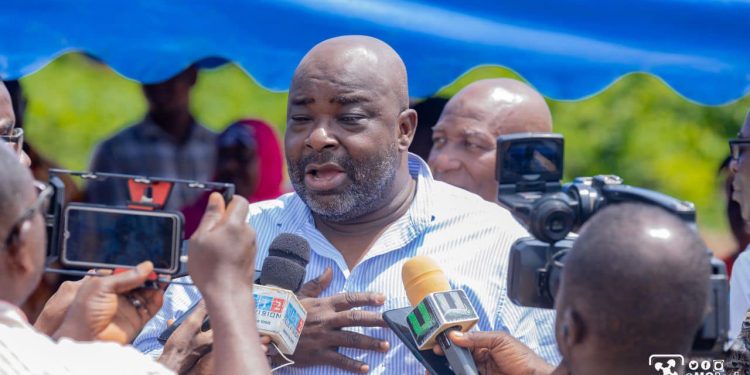
At a well-attended public engagement organized by the Public Utilities Regulatory Commission (PURC), the Upper East Regional Minister delivered a candid and urgent message about the region’s persistent infrastructure challenges. Addressing an audience of local residents, officials, and stakeholders, the Minister emphasized that access to reliable electricity and public water is not a luxury, but a crucial foundation for the region’s economic and social advancement. “Electricity isn’t just about lighting our homes—it powers our schools, hospitals, and businesses. Without it, our communities cannot thrive or compete,” the Minister asserted. He revealed that as of the end of February, the Upper East Region’s electricity coverage stood at just 66.5%. This figure, he noted, is far below the national average of 89%, leaving over 800 communities and sections across the region still disconnected from the national grid. The Minister described this gap as a significant barrier to progress, holding back local businesses, limiting educational opportunities, and weakening healthcare delivery. “These numbers are more than statistics. They represent families, students, and entrepreneurs who are cut off from the opportunities that reliable infrastructure brings,” he said. During his speech, the Minister took the opportunity to make a direct appeal to the Minister of Energy and the Green Transition. He called on them to review and address all outstanding issues related to the World Electricity Committee—a body in which many Upper East communities actively participated, but from which numerous areas have yet to see tangible benefits. “I urge the Ministry to ensure that no community is left behind. Many of our people were promised inclusion, but the reality on the ground tells a different story,” the Minister continued. He also highlighted the broader consequences of infrastructure exclusion, pointing out that inadequate access to electricity and water widens regional inequality and stifles the aspirations of residents. The Minister cited examples of businesses struggling to operate, students unable to study after dark, and health centers grappling with unreliable power. The Minister praised the PURC for providing a platform where citizens’ voices could be heard and for encouraging open dialogue between government, service providers, and the public. He concluded by reaffirming his commitment to advocating for equitable infrastructure development and called for collective action to bridge the gap. “Let’s work together to ensure that every corner of the Upper East enjoys the benefits of reliable electricity and water. This is how we build a stronger, more inclusive region,” he said. The engagement ended with a sense of urgency and hope, as residents and leaders alike agreed that closing the infrastructure gap is vital for the Upper East’s sustainable development. The Minister’s address was a rallying cry, echoing the collective desire for progress and inclusion. Source: Apexnewsgh.com/Ngamegbulam Chidozie Stephen

GFD Members in Talensi receive items for improved livelihood

In the Talensi District, members of the Ghana Federation of the Disability Organisations (GFD) have received some items to meet their daily needs. The Disability Fund Management Committee, under the leadership of Chairman Clement Sampana, had organized a comprehensive support program aimed at empowering persons with disabilities (PWDs) to become self-reliant and active contributors to their communities. The first phase of the day’s activities unfolded in an open field alive with anticipation. Clement stood at the front, addressing journalists and beneficiaries alike, his words clear and purposeful. “Just last week, we distributed some items, and today we are here again, handing over about 60 animals, goats and sheep, to 26 beneficiaries. Each recipient receives a token to help with transportation, ensuring their new livestock reaches home safely.” For the recipients, the livestock meant far more than an asset; it represented a path toward independence. Many had long struggled with the challenges of disability and poverty, often forced to rely on charity or the kindness of neighbors. Now, clutching ropes tied to bleating goats or sheep, they looked ahead with hope. The animals would provide income through breeding, milk, or resale, and, more importantly, a sense of dignity through work. But the morning’s generosity was only part of the story. The group soon moved to the assembly conference hall for the next phase of the initiative. Here, another ten PWDs waited eagerly, knowing that the support they were about to receive had been tailored to their unique needs and dreams. The committee distributed pumping machines, sewing machines, refrigerators, and other essential business equipment, items carefully matched to the ambitions and requests of each beneficiary. Clement made it clear that this was not a blanket handout, but a targeted investment in people’s futures. “We don’t just hand out items. If you haven’t requested a tool, we don’t buy it, because it must serve your needs,” he explained. “Today, as you receive these items, we want you to use them to start or grow your business. The goal is for you to earn your own income, support your family, and stand tall in your community.” Clement’s message throughout was one of empowerment, but also accountability. “We don’t want to see any of you begging on the streets or vulnerable to exploitation for small amounts of money. These items are your stepping stones to independence. Use them wisely, grow your businesses, and one day, you’ll be able to support not just yourselves, but others as well.” He also stressed the importance of responsibility. “If, after some time, we find that you’ve sold the items or left them idle, we’ll have to reclaim them. If you sell what we’ve given, we’ll ask you to return the proceeds, or face further action. But if you put them to good use and we see progress, we’ll be back with even more support. Our help doesn’t end today; it grows with your effort and success.” The initiative is funded through the disability common fund, a resource designed to support the economic inclusion of PWDs. Clement handed over each item with a handshake and a word of encouragement, reminding recipients, “These are your items. Use them well, and when we return, we hope to see the difference they’ve made in your lives.” For many in Talensi living with disability, daily life is a challenge not just of health, but of opportunity. A lack of resources had often meant being left behind, with few chances to build a business or support a family. This distribution, however, marked a turning point: a shift from dependency and pity to genuine empowerment and partnership. By day’s end, the signs of change were everywhere. Some recipients led their new goats and sheep home, while others tested out the heft of a new sewing machine or reviewed plans for their small businesses. Those who received cash grants began planning the next steps for their ventures. Throughout, the mood was one of gratitude, optimism, and possibility. As the gathering concluded, Clement offered a closing message: “This is only the beginning. If you make good use of what you’ve received, we’ll be back to support you again. Let’s work together to build a future where everyone, regardless of ability, can thrive.” Beneficiaries could not hide their excitement after they were handed their individually requested items. They further expressed gratitude to the assembly and the Disability Fund Management Committee for their intervention. Source: Apexnewsgh.com

Leprosy: Upper East Region recorded 188 official cases between 2019 to September 2025

Between January 2019 and October 2025, the Upper East Region of Ghana quietly recorded 188 cases of leprosy, a disease as old as civilization, yet as misunderstood and feared as ever. Apexnewsgh reports These numbers, dry on paper, conceal stories of courage and struggle, of families fractured and communities forever changed. At the center of this unfolding story is Eric Dakura, the Disease Control Officer at the Upper East Health Directorate, whose daily work illuminates the dark corners where leprosy still hides. Eric’s insight and passion were brought to light in the documentary “Pains of the Forgotten: Leprosy, Stigma, and Resilience,” produced by Ngamegbulam Chidozie Stephen of ApexNewsGH. With a clinical calm that betrays deep empathy, Eric decoded the disease for viewers: “Leprosy is a disease of the skin and the nerves. If you don’t get the treatment early, it will affect your nerves and finally lead to the wasting of your feet or your fingers, and that can lead to disability.” Unlike most diseases, leprosy’s touch is silent. Its symptoms can take years—sometimes three, five, even twenty- to appear after infection. “It’s not like any other disease that when you get infected within a week or two weeks, you get the signs and symptoms,” Eric explains. “It can be in you for over three years, up to twenty or even more years until it begins to manifest.” The first warning is often a pale, painless patch on the skin. Because these patches neither itch nor hurt, they are easily dismissed—until the disease has already begun its devastating work. “Leprosy doesn’t cause pain,” Eric says. “That is why you can see somebody with their fingers being chopped off, but there is no pain… if you even put them into fire, they will never feel anything because the nerves are all destroyed.” The destruction of nerve endings is what makes leprosy so dangerous and so easy to miss. Eric recalls a haunting case from his rounds: “A girl found a three-inch nail in her foot last year. She didn’t even know it was there because all the nerves were affected.” By the time many are diagnosed, the disease has already stolen their ability to feel, to move, or even to recognize when they are hurt. Early detection remains the greatest challenge. “We always get to know leprosy at a later stage, when the hands and the feet are gone. We don’t want to be recording cases at that stage because it means that our surveillance system is not the best.” The region now grades leprosy cases by disability: some show no deformities, some suffer numbness, while others arrive with missing fingers, feet, or affected eyes. Leprosy is endemic in all districts, but certain areas—like Bongo—have become persistent hotspots. There is progress, though: the annual number of new cases has dropped, from 32 in 2020 to just 16 currently on treatment. Yet Eric cautions that declining numbers are not always comforting. “If we record a lot of cases, it’s also good—meaning we are fishing out the hidden cases and treating them. But if we feel the numbers are declining, that could also be dangerous. We must always be on the watch.” Leprosy respects no boundaries. It is not hereditary, nor confined to the poor or the old. “Seventy percent of cases are male, but the youngest can be just two years old,” Eric shares. “There is no age that is exempted. Everybody, males, females, we are all at risk of getting it.” Yet there is hope, because leprosy is curable. “Leprosy is curable. That has always been the slogan. Just come, we’ll treat you and you’ll be fine,” Eric says, his tone unwavering. The medication, though costly for the government, is provided free of charge. “Wherever you are, the medicine can come to you, even your home.” But for all the medical progress, the greatest struggle is not clinical, but social. The shadow of stigma still looms large. “If you are affected, and unfortunately you lose your legs, there’s no way the person will be able to make life meaningful for himself. Even my own children, they dissented me. People that I used to eat with, they can’t eat with me,” Eric recounts, echoing his patients’ pain. He urges empathy and shared responsibility: “The fact that it hasn’t manifested in you doesn’t mean you don’t have it. So we just have to believe each other as people. When somebody has a problem, that is also your problem.” Often labeled a “disease of the poor,” leprosy’s grip is strengthened by poverty and neglect. “Almost all the people who are largely affected are people who come from poor living conditions. Eighty to ninety percent of the cases are in Africa. Because Africa is highly impoverished,” Eric explains. Still, hope guides his work. Through outreach, education, and persistent surveillance, the region edges closer to a day when leprosy is history. “If we get to a point where in a population of about 10,000, only one person is likely to have it, that is the aim,” Eric says. “So, in years to come, a generation will come that will not suffer from this kind of disease.” Until then, the story of leprosy in Ghana’s Upper East is one of vigilance, hope, and the unyielding human spirit, a story that, thanks to people like Eric Dakura, is no longer shrouded in shadows but moving steadily toward the light. WATCH THE VIDEO DOCUMENTARY: Source: Apexnewsgh.com/ Ngamegbulam Chidozie Stephen

Unmasking Leprosy: The Vigil of Eric Dakura in Ghana’s Upper East

In the Upper East Region Health Directorate, Eric Dakura carries a burden few understand. As the disease control officer for leprosy and neglected tropical diseases, Eric’s days are filled with the stories and scars of those too often overlooked. His mission is clear: to confront the truth about leprosy, dispel the myths that shroud it, and rally his community to vigilance. Eric’s perspective comes not from textbooks, but from years on the ground—a reality he shared in the eye-opening documentary, “Pains of the Forgotten: Leprosy, Stigma, and Resilience,” produced by Ngamegbulam Chidozie Stephen of ApexNewsGH. “Leprosy is a disease of the skin and nerves,” Eric explains to viewers. “If you don’t get treatment early, it will affect your nerves and finally lead to the wasting of your feet or fingers. That can lead to a disability.” Unlike other diseases, leprosy creeps. “It takes a longer time for someone affected with leprosy for you to see the signs and symptoms,” Eric says. “It can be in you for over three years, sometimes up to five, ten, or even twenty years before manifesting.” The stealth of the disease is part of its cruelty. By the time patches appear on the skin, often painless and easily ignored, the damage may have already begun. Eric describes the devastation with a clarity that stirs the heart. “It comes in the form of patches all over your body. The unfortunate thing is those patches don’t pain. You can see somebody with fingers being chopped off, but there’s no pain. If you even put them into fire, they will never feel anything because the nerves are all destroyed.” He recalls shocking moments discovered through his medical rounds: “Three-inch nails have penetrated people’s feet without them knowing. The nerve that is supposed to signal pain is destroyed, so we often detect leprosy at the later stage, when the hands and feet are gone. We don’t want to be recording cases at that stage because it means our surveillance system is not the best.” The tragedy, Eric insists, is that it doesn’t have to be this way. Early detection is possible, if only people know what to look for and seek help without fear. “You might see a patch on your body that doesn’t hurt, don’t ignore it. If you have a relative who has ever had leprosy, the probability of contracting it in the family is higher. It’s a slow-acting disease.” Yet, the path to diagnosis is often littered with hurdles. “Most clinicians are not able to detect leprosy early, mistaking it for other skin conditions. It’s a disease that cannot be managed by any other medicine apart from the special drugs designed to cure it,” Eric explains. The lack of awareness among both the public and some professionals allows leprosy to hide in plain sight, surfacing only when it’s too late. Perhaps the greatest enemy, Eric says, is not the bacteria, but stigma. “One of the biggest challenges with leprosy is stigma. If you have it, people around you may not want to come close because they feel they could also be infected. But leprosy is curable. Just come, we’ll treat you and you’ll be fine.” Eric works hard to spread this message of hope. He reminds everyone that leprosy treatment is free and accessible to all, with no hidden costs. “There is no cost component attached to leprosy treatment. It has always been free, irrespective of how long you take it. If you have skin conditions that are not responding to treatment, consult your health facility.” The Upper East Region, Eric reports, has seen progress. “We currently have ten cases under treatment, a significant improvement from previous years. If we record a lot of cases, it means we are fishing out the hidden cases and treating them. But we must never let our guard down.” Eric is quick to confront the misconceptions that have allowed leprosy to fester in secrecy. “Leprosy is not hereditary, nor is it a ‘poor man’s disease’ alone. It can affect anyone, at any age. But poverty increases vulnerability because of poor living conditions.” Eric’s determination remains undimmed. He ends with a call to action, one he repeats to every community he visits: “Stigma and late detection are our biggest enemies. ‘Leprosy is curable’ is our slogan. Let’s all do our part to detect, treat, and eliminate this disease from our communities.” In the story of leprosy in Ghana’s Upper East, Eric Dakura is more than a health officer, he is a sentinel. His vigilance, empathy, and unflagging hope offer a path forward, one where the pain of the forgotten gives way at last to healing and acceptance. WATCH THE VIDEO DOCUMENTARY BELOW: Source: Apexnewsgh.com/Ngamegbulam Chidozie Stephen

Breaking the Chains of Stigma: Tahiru Suleman’s Fight for Inclusion in Bongo

Where the red earth stretches beneath acacia trees and the air hums with the rhythm of rural life, one man’s voice rises above the silence that too often surrounds the lives of leprosy survivors. Apexnewsgh reports Tahiru Suleman, the Assistant Assembly Member for the Awukabisi Electoral Area, is on a mission to transform not just policies, but hearts and minds. Tahiru’s journey began with a simple but painful observation: “In our community and electoral area, we have a lot of people suffering from leprosy. Just within my electoral area, I can pinpoint about four or five people who are infected.” Yet the challenges facing these individuals go far beyond their diagnosis. Their true struggle is against an invisible enemy: stigma. This hard reality was laid bare in the documentary “Pains of the Forgotten: Leprosy, Stigma, and Resilience,” produced by Ngamegbulam Chidozie Stephen of ApexNewsGH. Tahiru, speaking with a blend of compassion and urgency, described what he saw: “These people go through a lot. When they are seen in public, people run away from them. Some even think that if the saliva of someone with leprosy touches them, they will be infected.” For those living with leprosy, every day is a test of endurance. Beyond the pain of their disease is the pain of rejection. Tahiru detailed the myths that persist, deeply rooted in local lore: “Some people think leprosy is a curse from certain families, but that is not true. Leprosy can attack anybody.” To make his point, he shared the story of a close colleague who, despite years of good health, unexpectedly contracted leprosy. “If someone had told him in the past that he would have this disease, he wouldn’t have believed it.” The stigma is isolating. Many affected individuals lose their livelihoods, shunned not just by neighbors but sometimes even by their own families. “Because of the disease, some of them cannot do any active work. Even within their families, people don’t want to associate with them. For some, even getting food to eat is a big problem,” Tahiru explained, his voice heavy with empathy. Moved by these injustices, Tahiru has become an outspoken advocate for change. He passionately calls upon health authorities, NGOs, and the general public to intensify education about leprosy. “What they need is love, not rejection. We must all help fight the stigma.” But Tahiru’s campaign does not end with leprosy. He recognizes that those living with Neglected Tropical Diseases (NTDs) across Bongo face similar challenges. “I think it is our responsibility as Assembly Members to educate the community members about the ongoing stigmatization and discrimination against people living with NTDs in our communities,” he said. Public education, he believes, is the most effective antidote to fear and ignorance. “There is a need for people to know the dangers of discriminating against these people.” Yet, progress is not easy. Tahiru describes the frustration of working alone: “Our challenge has to do with community members not listening to us individually in this direction.” His answer is to build partnerships with health workers, who bring not only expertise but also credibility to community education efforts. “There is a need for health workers to make themselves available for such exercises in the community.” For Tahiru, real change will come only when local leaders, health professionals, and ordinary citizens unite in purpose and compassion. He envisions a future where those affected by NTDs can walk freely, participate fully, and live with dignity. “Ending stigma requires a united front,” he insists. “Only then can we create an environment where those affected can live with dignity and hope.” The seeds of change are already being planted, thanks to organizations like the Development Research and Advocacy Centre (DRAC). With support from Anesved Fundación, DRAC has drilled ten boreholes in Bongo and nearby communities, bringing clean and safe water to thousands. Water health committees now teach hygiene practices that are essential to fighting NTDs and breaking cycles of disease. But perhaps DRAC’s most transformative work lies in economic empowerment. Basket weaving and soap-making are not merely trades; they are lifelines. DRAC supplies materials, offers training, and connects artisans directly to buyers. “Buyers come to the community to purchase baskets, and we provide materials and training,” explains Executive Director Jonathan Adabre. For many, these initiatives restore not just income, but pride, purpose, and belonging. The story of Bongo’s leprosy patients and NTD survivors is, at its heart, a story of resilience. It is written in the determined footsteps of nurses on their rounds, the laughter of women weaving baskets, and the hope that flows with every borehole drilled. It is a story that calls for more than sympathy—it demands action, understanding, and a commitment to never again let these lives be forgotten. As the sun sets over Bongo, Tahiru Suleman’s voice continues to echo, a reminder that the true measure of a community is found in how it treats its most vulnerable. His fight is not just for awareness, but for acceptance; not just for support, but for solidarity. In breaking the chains of stigma, Bongo can become a place where everyone belongs, and where dignity is a right, not a reward. WATCH THE VIDEO DOCUMENTARY BELOW: Source: Apexnewsgh.com/Ngamegbulam Chidozie Stephen

DRAC’s Mission to Eradicate Neglected Tropical Diseases in Ghana’s Upper East

The quiet battle against Neglected Tropical Diseases (NTDs) is gathering new momentum. At the forefront of this fight is the Executive Development Research and Advocacy Centre (DRAC), an organization determined to bring health, hope, and dignity to some of the country’s most marginalized people. Apexnewsgh reports The story of DRAC’s mission unfolds in the documentary “Pains of the Forgotten: Leprosy, Stigma, and Resilience,” where Executive Director Jonathan Adabre shares his vision for a future free of the pain and stigma that have haunted families for generations. “We want to talk about the early manifestations of diseases like leprosy, meningitis, and yaws,” he explains. “If community members can recognize the signs, understand transmission, and know what treatment looks like, we can stop these illnesses before they destroy lives.” For decades, myths and misinformation have allowed diseases like leprosy to spread in silence. Many in the region still believe leprosy is hereditary, passed from mother to child—a belief that Adabre is determined to dispel. “Leprosy can take up to 20 years to show symptoms,” he clarifies. “A mother may unknowingly transmit it, and when her child develops symptoms much later, people assume it’s genetic. That’s the misconception we want to kill.” But the battle is not fought with education alone. DRAC’s strategy is deeply rooted in community collaboration. Chiefs, queen mothers, and local opinion leaders are enlisted as partners in the fight against stigma and discrimination. “We want affected persons to live dignified lives,” Adabre insists. “They should participate in community activities, share their views, and not be sidelined by fear.” Yet, changing minds is only part of the challenge. Inadequate sanitation and water access fuel the spread of NTDs. “Without water, people can’t wash, bathe, or keep their clothes clean. Transmission happens quietly,” Adabre notes. With support from the Anesvad Foundation, DRAC has drilled boreholes in several communities and established wetlands committees to manage these vital resources. The ripple effects are already being felt. A recent baseline survey conducted by DRAC revealed a sobering fact: 97% of respondents still practice open defecation, perpetuating health risks and undermining efforts to contain disease. To address this, DRAC is working closely with community health management committees and local leaders, pushing for behavioral change and better sanitation practices at every level. But health is only the foundation, DRAC recognizes that a future free of NTDs depends on economic empowerment as well. In many villages, basket weaving is part of the cultural heritage, but a lack of capital and market access keeps families in poverty. DRAC’s solution is to provide not just materials but direct connections to buyers, ensuring that the fruits of local labor reach wider markets. Training in soap and detergent making complements this initiative, promoting hygiene and providing an extra source of income. Crucially, DRAC’s work is shaped by the voices of those directly affected. “In this country, we have the habit of not listening to people before providing support,” Adabre observes. To change this, DRAC is helping form associations so that those living with NTDs, and their caregivers, can advocate for themselves. They share stories of stigma and exclusion, and highlight missed opportunities, such as the government’s LEAP program, which too often passes them by. Access to health care is another barrier DRAC is determined to break down. By partnering with the National Health Insurance Scheme (NHIS), the organization is bringing registration and renewal services directly to vulnerable populations, ensuring no one is left behind for lack of paperwork or travel money. The impact of DRAC’s approach is already apparent. Adabre recalls a striking moment from an awareness session: “An assembly member told us, ‘Are these signs really leprosy? I see them on my wife.’ When she was tested, it came back positive. That shows why early detection is critical.” For Mr. Adabre, the national goal is clear: “We want to eradicate skin NTDs in Ghana. It doesn’t take much, just consistent commitment and attention to the most vulnerable.” Through a blend of awareness-raising, improved water and sanitation, economic opportunity, and access to healthcare, DRAC is not just fighting disease; they are building resilience, breaking the cycle of stigma, and restoring hope to communities long forgotten. Their story is a call to action: that with compassion, partnership, and persistence, even the most neglected battles can be won. Source: Apexnewsgh.com/Ngamegbulam Chidozie Stephen

I don’t know why God gave me a disease that people don’t respect—Mr. Ayuumbeo leprosy patient, cries

Once upon a time, in the lively community of Bongo Soe, Mr. Adombire Ayuumbeo was the embodiment of diligence and pride. The sun’s first rays often found him by the dam near his house, tending to rows of tomatoes and vegetables. His farm was a patchwork of green, a source of sustenance for his family and a modest income from the surplus sold in the market. But farming was only a part of his industrious life; Mr. Ayuumbeo also spent hours cutting firewood and harvesting roofing grass, always ensuring his household’s needs were met. His hands, once strong and skilled, provided security, comfort, and hope to those who depended on him. This story, however, took a drastic turn. Leprosy crept silently into Mr. Ayuumbeo’s life, robbing him of the very tools of his trade, his fingers. The disease did not merely bring pain and disfigurement; it stripped him of his ability to work, leaving him “idle and helpless.” Once a man who never sat still, he now found himself confined to his home, watching the world move on without him. “When I remember the way I used to work and support my family, tears start pouring from my eyes,” Mr. Ayuumbeo confided in the documentary “Pains of the Forgotten: Leprosy, Stigma, and Resilience,” produced by Ngamegbulam Chidozie Stephen of ApexNewsGH. “Now I can’t farm, I can’t cut firewood, I can’t do anything. Sometimes I think I should die than to live.” For Mr. Ayuumbeo, the greatest agony is not only physical, but also the heavy shroud of stigma that leprosy brings. Once greeted with respect, he now feels abandoned and judged by the very people he once called neighbors and friends. “You don’t have anything, and your body too makes it hard to mingle with people. People stigmatize you. I don’t know why God gave me a disease that people don’t respect.” The sense of isolation is profound. The silence from others echoes louder than his disability, and the weight of judgment is heavier than any load he once carried from the fields. Despite these trials, Mr. Ayuumbeo tries to hold onto gratitude. “I thank God that the sores have healed and I can walk without difficulty. But I cannot do what I used to do.” His gratitude is laced with sorrow—a longing for lost strength, lost routine, and lost purpose. Each day, he wakes to face both the physical limitations of his body and the invisible barriers erected by society’s misunderstanding. His thoughts often return to his family. With a wife and children looking to him for support, the burden of helplessness is magnified. He worries about their future, how to keep them fed, clothed, and safe. “When I was active, I used to pay taxes. Now I cannot work, but I still belong to the government. I vote. I have my voter ID. The government of Ghana owes me and my family. If there’s any way they can help us sustain our lives, they should do it.” His appeal is not just for himself, but for every leprosy survivor who has been left behind, still a citizen, still deserving of dignity and support. Mr. Adombire’s story is woven into the larger tapestry of Bongo’s leprosy survivors—a tapestry colored by pain, but also by resilience and hope. Organizations like the Development Research and Advocacy Center (DRAC) are working to ensure that people like Mr. Ayuumbeo are not forgotten. DRAC’s efforts go beyond charity; they are about rebuilding lives. With the drilling of ten boreholes, clean water is now within reach for many who once struggled. Water health committees educate communities about hygiene, crucial in the fight against neglected tropical diseases. But perhaps most remarkable is DRAC’s commitment to economic empowerment. Training sessions in basket weaving and soap-making provide patients and caregivers with skills, materials, and, most importantly, a renewed sense of purpose. “Buyers come to the community to purchase baskets, and we provide materials and training,” says Jonathan Adabre, DRAC’s Executive Director. These initiatives are more than income; they are threads of dignity, restoring connections to the community and to self-worth. Across Bongo, the story of leprosy is changing. It is no longer solely a tale of suffering, but one of resilience written in the determined footsteps of a nurse on his rounds, in the laughter of women weaving baskets, and in the hope that arrives with every borehole drilled. Yet, Mr. Ayuumbeo’s plea still rings out, a call for compassion, inclusion, and meaningful action. His journey, and that of so many others, is a reminder that the scars of leprosy go beyond the physical. It is up to all, the community, government, and organizations, to ensure these lives are lifted from the silence of stigma into the light of dignity and support. Only then will the story of Bongo’s leprosy survivors be one not just of what was lost, but of what can still be regained. WATCH THE DOCUMENTARY VIDEO Source: Apexnewsgh.com/Ngamegbulam Chidozie Stephen

The Unseen Battles of Leprosy Survivors in Bongo

For ten long years, Matilda Nyaaba endured a mysterious torment. In her quiet village of Bongo Balungu, life was punctuated by fainting spells, nosebleeds, and unexplainable pain. Apexnewsgh reports Each episode left her weaker, and each visit to yet another health facility only compounded her confusion. What was this invisible enemy that drained her strength and hope, year after year? No one seemed to have an answer. Matilda’s ordeal was brought to light in the documentary “Pains of the Forgotten: Leprosy, Stigma, and Resilience,” produced by Ngamegbulam Chidozie Stephen of ApexNewsGH. Her story, like those of many leprosy sufferers, was one of searching in the dark. Even as her family stood by her, her neighbors whispered, eyed her with suspicion, and kept their distance. Some said she was cursed; others assumed she had HIV. To protect herself from the sting of their words, Matilda began to retreat indoors, leaving her home only for the most essential of chores. The isolation bit deeper than the disease itself, eroding her spirit and sense of belonging. It was only after a particularly harrowing episode, a collapse so severe she was rushed to the hospital, that a turning point arrived. There, a disease control officer finally recognized the signs of leprosy and placed Matilda on a monthly treatment regimen. For the first time, hope flickered in her life. The medicine brought relief, but not certainty. Supplies at the hospital ran out from time to time, and Matilda would wait anxiously for a call or a visit, never knowing when the next dose would arrive. Still, she persevered. Her wish was simple: that no one else should have to wander in confusion or suffer in silence as she had. Matilda’s journey reveals a truth often overlooked: the wounds of leprosy are as much emotional and social as they are physical. The pain of exclusion, the silence of misunderstood suffering, and the longing for dignity weigh heavily on those afflicted. Her resilience is a quiet call for compassion, understanding, and real action, so that no one else in her community will have to endure the same lonely road. Aniah’s Journey Through Leprosy’s Trials In the village of Bongo Soe, another story of quiet resilience unfolds. Aniah Lamisi was once a farmer whose days were filled with the rhythm of the land. She took pride in the sweep of her hoe, the bounty of her harvest, and the strength of her hands. Farming gave her purpose, connection, and identity. But leprosy crept into her life without warning, first as a tingling in her fingers, then as a relentless force that twisted and weakened her hands. Tasks that once came easily, cooking, fetching water, and gathering firewood, became daily struggles. The simple act of lifting a water container to her head was now a painful ordeal. Cooking over a fire brought blisters instead of warmth. With her hands disfigured, her independence slipped away, and Aniah found herself an observer in her own life, unable to work or contribute as she once did. The loss went deeper than the physical. Though her neighbors did not reject her outright, the shame of asking for help, of reaching out with altered hands for food, wounded her pride. She withdrew from communal life, carrying her pain in silence. Like Matilda, Aniah’s only hope was regular medication—but the health center’s supplies were unreliable. Some months, she received her treatment; other times, she waited in vain, watching her health and hope falter. Each missed dose was a reminder of how fragile her world had become. Yet Aniah’s spirit refused to break. In rare quiet moments, she counted her blessings: a body that still allowed her to dress herself, fleeting moments of calm, and the knowledge that others faced even greater struggles. She dreamed of something more, a chance to learn a trade, to regain purpose, to earn her own living. Vocational training, she thought, could be a bridge back to dignity and self-respect. While Matilda and Aniah’s stories are deeply personal, they are not unique. Across Bongo and its surrounding communities, many battle the same invisible foe, facing not just disease but the crushing weight of stigma, poverty, and uncertainty. But hope comes not only from within. Organizations like the Development Research and Advocacy Center (DRAC) are changing the landscape for leprosy patients. With ten boreholes drilled in affected areas, access to clean water is no longer a dream. Water health committees teach hygiene, helping prevent further spread of neglected tropical diseases. Most transformative are DRAC’s economic empowerment programs, training in basket weaving and soap-making, providing materials, and connecting patients with buyers. For women like Aniah and Matilda, these opportunities are more than a source of income; they are a path back to belonging and pride. The story of Bongo’s leprosy survivors is one of resilience, not just suffering. It is written in Matilda’s quiet hope, in Aniah’s determination, in every basket woven and every borehole drilled. It is a story that demands not pity, but recognition and commitment. For these women and countless others, the journey continues toward healing, dignity, and a future where no one must walk alone in the shadows. WATCH THE DOCUMENTARY VIDEO; Source: Apexnewsgh.com/Ngamegbulam Chidozie Stephen