


Momo Restructuring Protects Value And Paves Way For Future Listing – MMF Chairperson Assures Shareholders
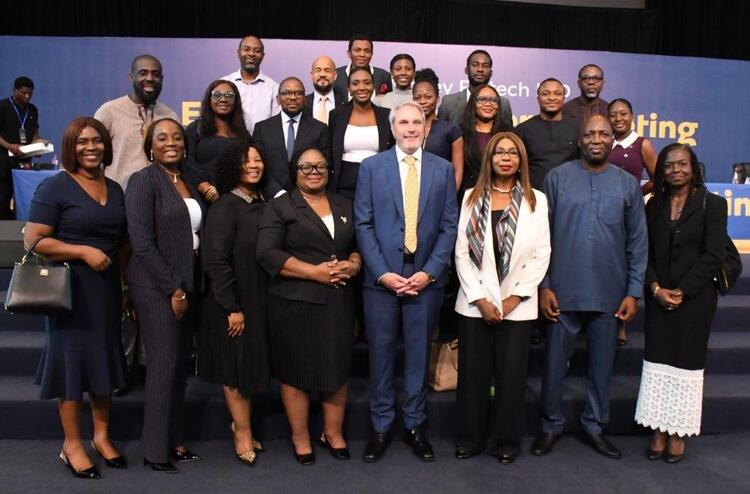
Madam Victoria Bright, Chairperson of MobileMoney Fintech LTD (MMF), has assured shareholders that the ongoing restructuring of the Mobile Money (MoMo) business is aimed at protecting the value of their investments, while setting the stage for future growth and an eventual listing on the Ghana Stock Exchange (GSE). The restructuring is also aimed at addressing the requirement under Ghana’s Payment Systems and Services Act, 2019 (Act 987), for a minimum of 30 percent Ghanaian ownership for all dedicated electronic money issuers. Addressing shareholders and beneficiaries at the Extraordinary General Meeting (EGM) held virtually and in person on Monday, December 1, 2025 at the University of Professional Studies Auditorium, Accra, she explained that although MMF is a newly incorporated company, the business it will operate is not new as it is built on over a decade of innovation and impact through Mobile Money Limited (MML). She stated that MMF has two shareholders: MTN Dutch Holdings B.V. (representing the MTN Group interest) and the MTN Ghana Fintech Trust (the Trust), which holds the interests of all minority shareholders of Scancom PLC and preserves their rights, value, and ensures transparent representation until the MoMo business is listed on the GSE. MMF would thus provide the MoMo business the appropriate structure, focus, and enhanced governance that serves shareholders and beneficiaries better while creating long-term value for all stakeholders. With respect to shares and dividends, she explained that the shareholding of Scancom PLC would be mirrored in MMF. Madam Bright stressed that after listing, beneficiaries would hold their shares directly and separately in each of Scancom PLC and MMF and would continue to receive dividends from both companies. Until then, the voting rights of the beneficiaries in the MoMo business would be exercised through the Trust on their behalf, with the Trust voting as instructed by the beneficiaries. Dr. Ishmael Yamson, the Board Chairman of Scancom PLC, took his turn to address the attendees of the EGM and stated that “the MoMo business remains one of the strongest engines of growth, innovation and financial inclusion in our company and in Ghana. Localising it properly, thoughtfully and transparently is an investment in its future and in your future as shareholders.” He noted further that this structure would provide a clear path and time frame for the future listing of the MoMo business, which is expected within the next three to five years. Following the overwhelming approval of the beneficiaries and shareholders of MMF in favour of the merger of MMF and MML, Madam Bright informed attendees at the EGM that Scancom PLC will commence the necessary processes to bring finality to the merger. She noted that completion is subject to final regulatory approvals, including approval from the Bank of Ghana. Source: Apexnewsgh.com
Controversy Erupts Over Upper East Regional Airport Project as Alagumgube Association Cries Foul Over Betrayal
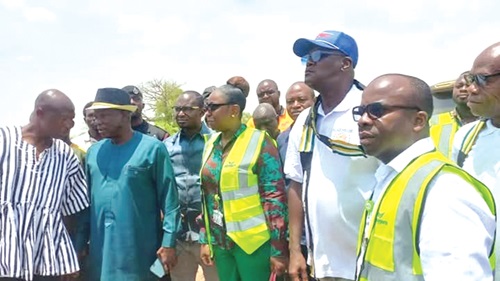
A simmering controversy has erupted over the much-anticipated Upper East Regional Airport project, with the region’s leading advocacy group, the Alagumgube Association, accusing the Regional Minister, Donatus Atanga Akamugri, of sidelining them at a critical stage of the project’s development. The dispute has cast a shadow over what many hoped would be a unifying milestone for the Upper East, threatening to undermine the hard-won cooperation between local communities, traditional leaders, and government agencies. At the heart of the storm is Mr. Gabriel Agambila, the founder of the Alagumgube Association. Since the inception of the airport agenda, Agambila and his group have been the driving force behind the project, mobilizing funds for land documentation, facilitating community engagement, and overseeing technical preparations. Their efforts have included everything from extending the proposed runway and repairing access roads to performing traditional rites when construction encroached upon a sacred grove. “We have gone far beyond advocacy,” Agambila said in a recent interview on Apexnewsgh’s ‘SPEAKOUT UPPER EAST.’ “We funded the extension of the runway, performed necessary rites, bought gravel for road repairs, and kept the community together.” However, Agambila now alleges that the Association has been unfairly excluded from the latest and most crucial stages of documentation. According to him, the Regional Minister orchestrated the signing of key documents in Accra without Alagumgube’s knowledge or consent. “I haven’t signed any document. Yet the documents are in Accra with all signatures. The landowners told me they signed, and I personally confirmed in the office of the CEO of the Ghana Airport Company that the documents had arrived,” Agambila recounted, his voice laced with frustration and disbelief. He claims that although his name appeared as a signatory, he never appended his signature to the final paperwork. The fallout has been immediate and intense. Chiefs and landowners, who have worked hand-in-hand with the Association for years, were reportedly so angered by the perceived betrayal that some threatened to withdraw their lands from the project. “I had to personally plead with them to keep faith in the process,” Agambila revealed. For him, the pain of exclusion is not just personal—it is communal. “It’s like an insult. We invested energy, money, and our reputation. Only to be treated as though we don’t matter.” Agambila’s personal sacrifices underscore the depth of his commitment. He gave up his job in the United States and spent nearly a year in Ghana, living among the communities, negotiating with landowners, and smoothing the sometimes-rough edges of local politics. “I confronted the Minister. He told me the documents were needed urgently. But who could have done it faster than someone who left his job and family abroad to fight for this project?” he asked, still incredulous at the turn of events. The Association’s exclusion, Agambila suspects, may be rooted in political maneuvering. According to him, the individual who submitted the documents on behalf of the region was introduced as a “party person,” suggesting that loyalty to political interests may have trumped years of grassroots engagement. “We are doing this for the region. Ministers come and go. This project outlives politics,” he insisted, reaffirming Alagumgube’s non-partisan stance. “Our advocacy is not for any party or individual. It is for the benefit of the whole Upper East.” Despite the setback, Agambila and the Alagumgube Association are not giving up. He disclosed that new investors have already shown interest in the airport project and are awaiting meetings with the Minister for Roads and the Ghana Airport Company to discuss the way forward. “We won’t relent. The region is fighting, and Alagumgube is fighting. If we secure the benefits, they are for the people, not for any individual,” he declared. The Association’s continued commitment has been welcomed by local stakeholders, many of whom see Alagumgube as the glue holding together the complex coalition of chiefs, landowners, business leaders, and residents who have championed the airport agenda for years. “Without Alagumgube, this project would not have come this far,” said one local chief, speaking on condition of anonymity. “They have been at the forefront, ensuring that everyone is consulted and every concern addressed.” As the controversy unfolds, residents across the Upper East are watching with a mixture of hope and apprehension. The airport is widely regarded as a potential game-changer for the region, promising improved connectivity, economic growth, and new opportunities for trade and tourism. However, there are fears that political disagreements and exclusionary tactics could derail the project at the last minute. “We need unity now more than ever,” said a community elder in Bolgatanga. “The airport is for all of us, not for a select few.” Observers say the dispute highlights the delicate balance between grassroots advocacy and political authority in major infrastructural projects. While government support is essential for securing funding and regulatory approval, the sustained involvement of local champions like the Alagumgube Association is often what ensures long-term success and community buy-in. For now, the future of the Upper East Regional Airport project hangs in the balance. Agambila remains optimistic but cautious, urging all parties to put aside personal and political interests for the greater good. “This is about the region’s future. Let us not lose sight of what brought us together in the first place,” he concluded. As negotiations continue and fresh investors prepare to engage with government agencies, the people of the Upper East region are left hoping that wisdom will prevail, and that the airport project, years in the making, will finally take flight without leaving its original champions behind. Source: Apexnewsgh.com
PURC Announces New Tariff Increases for Electricity and Water Effective January 2026

The Public Utilities Regulatory Commission (PURC) has announced new increases in electricity and water tariffs, effective January 1, 2026. The move follows the Commission’s multi-year tariff review process for the period 2026 to 2030. Under the new structure, electricity tariffs will rise by 9.86 percent across all customer categories, while water tariffs will see a 15.92 percent increase over the next five years. The PURC explained that the adjustments are necessary for utility providers to meet critical investment needs, enhance sector competitiveness, and ensure long-term protection for consumers through improved service delivery. The review also introduces quarterly tariff adjustments to account for external factors such as exchange rate movements, inflation, fuel prices, and changes in the power generation mix. Additionally, the Commission has rolled out mini-grid tariffs to boost electricity access in island and hard-to-reach communities, with costs integrated into the Volta River Authority’s revenue requirements. The PURC noted that the decision followed extensive stakeholder consultations, public hearings, and a thorough assessment of proposals from utility companies. The Commission assured the public that it will continue to monitor service providers closely to ensure efficiency, value for money, and strict compliance with regulatory standards. Source: Apexnewsgh.com
SIC Insurance PLC Defies Economic Headwinds with Stellar 2024 Performance
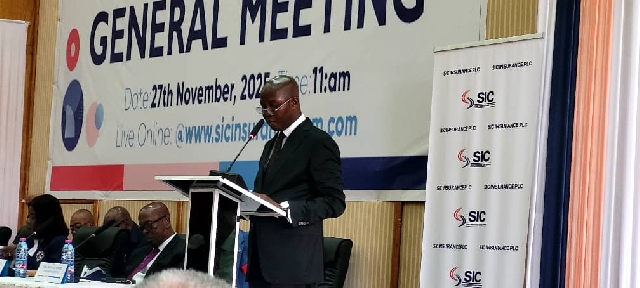
The State Insurance Company (SIC) PLC has delivered an impressive financial performance for the 2024 fiscal year, overcoming a turbulent global and domestic economic climate marked by heightened inflation, sharp currency depreciation, and wavering investor confidence. The announcement was made at SIC’s 18th Annual General Meeting (AGM), presided over by the company’s Chairman, Mr. Bernard Ahiafor, MP. Presenting the Annual Report and Financial Statements for the year ended December 31, 2024, Mr. Ahiafor emphasized the company’s unwavering focus on strategic discipline and execution, even as economic uncertainty persisted worldwide. The global economy in 2024 continued to feel the aftershocks of the COVID-19 pandemic, ongoing geopolitical tensions, and tightened monetary policies. While inflation retreated slightly in advanced markets, many developing economies, including those in Africa, struggled with mounting debt, limited capital inflows, and volatile currencies. Ghana was no exception. The Ghanaian cedi depreciated by 28% against the US dollar, a sharp contrast to the 9.78% loss recorded in 2023. Inflation climbed to 23% in November 2024, according to the Ghana Statistical Service, signaling progress from the 2022 peak of 54.1%, yet underscoring the economy’s fragile recovery. The Domestic Debt Exchange Programme (DDEP) continued to weigh on investor confidence, affecting liquidity and disposable incomes. Despite these challenges, Ghana’s insurance industry showed robust growth in 2024. The general insurance sector saw notable increases in gross written premiums, especially in motor, fire, and engineering lines. Industry-wide, insurers paid out approximately GHS 1.8 billion in claims, underscoring their steadfast commitment to policyholder protection. SIC Insurance PLC’s financial results stood out in the sector: * Insurance Revenue: GHS 559.5 million (49.9% growth from 2023) * Profit Before Tax: GHS 83.2 million (2023: GHS 22.8 million) * Profit After Tax: GHS 53.4 million — a 316.9% year-on-year increase * Shareholders’ Funds: GHS 670.4 million (up 40.1%) * Earnings Per Share: GHS 0.2730 (2023: GHS 0.0655) * Return on Shareholders’ Funds: 7.9% (2023: 2.6%) The Chairman credited this performance to prudent underwriting, robust risk management, and disciplined cost control, while commending management and staff for their steadfast dedication. In recognition of these achievements, the Board of Directors has proposed a dividend of GHS 0.0511 per share, pending shareholder approval. A significant milestone for the year was SIC Insurance’s full implementation of IFRS 17, the new global accounting standard for insurance contracts. The company now stands among a select few in the industry to achieve this, enhancing transparency and comparability with international peers. In 2024, SIC also reinforced its Enterprise Risk Management (ERM) framework, with a keen focus on emerging risks such as cyber threats, credit exposures, and macroeconomic instability, and measures designed to ensure resilience in a complex environment. Looking ahead, SIC Insurance PLC is cautiously optimistic. With insurance penetration in Ghana hovering around 1%, significant opportunities for industry expansion remain. The company aims to leverage digital transformation, inclusive insurance initiatives, and ongoing government reforms to drive its next phase of growth. “SIC Insurance PLC enters 2025 with a strong capital base, a clear growth strategy, and a high-performing workforce,” Mr. Ahiafor declared. “We are poised to deliver lasting value to shareholders, customers, and the wider Ghanaian community.” He closed by expressing heartfelt appreciation to clients, shareholders, regulators, partners, and staff—acknowledging their vital role in SIC’s enduring success. Source: Apexnewsgh.com
Traders Group Blames Soaring Prices on Corruption at Ghana’s Ports
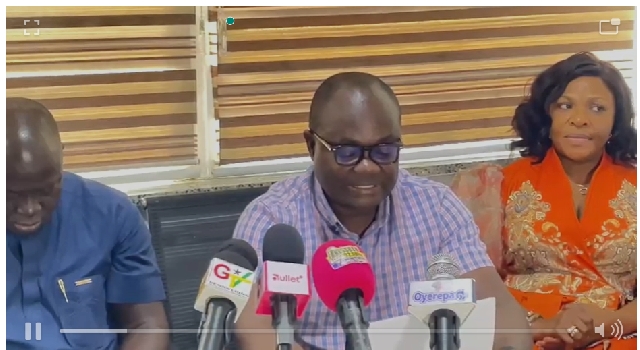
The persistent surge in prices of goods across Ghana has been linked to alleged bribery and corruption within the Customs Division of the Ghana Revenue Authority (GRA), according to the Traders Advocacy Group Ghana (TAGG). Speaking at a press conference in Accra, TAGG President Daniel Kwadwo Amoanteng revealed that the rising cost of importing goods is no longer solely a matter of official duty charges. Instead, he said, traders are being forced to pay “hidden payments” demanded by some customs officers at the country’s ports. These unofficial charges, Amoanteng stressed, are pushing traders to hike retail prices in order to recover their increased expenses. Amoanteng noted that many TAGG members have complained of extortion, delays, and unnecessary obstacles during the clearance of goods. He pointed to a specific case involving Prince Daniels Mensah Odai, the head of the Ashanti Region Task Force, who allegedly intercepted two containers cleared in Accra, accused the importer of undervaluation, and demanded GHS 120,000, eventually settling for GHS 40,000 paid via mobile money and cash. After the incident was reported, the officer reportedly tried to legitimize the payment by depositing it into state coffers. TAGG has called on the government to take immediate action by cleaning up operations at the ports, increasing oversight, and addressing corruption within the customs service. The group maintains that without such interventions, the cycle of rising import costs and higher consumer prices is likely to continue unabated. Source: Apexnewsgh.com
Traders Group Accuses Customs Task Force of Systematic Extortion in Ashanti Region
A storm is brewing in Ghana’s business community as the Traders Advocacy Group Ghana (TAGG) has leveled grave accusations of extortion against members of the Ghana Customs Division Task Force operating under the Ghana Revenue Authority in the Ashanti Region. At a press conference in Accra, TAGG President David Kwadwo Amoateng painted a picture of a task force gone rogue. What began as an initiative to improve post-clearance checks and ensure fairness for importers, he claimed, has mutated into a machinery for systematic extortion. “Traders initially welcomed the task force, but its operations have fundamentally transformed into an extortion force,” Amoateng said. The group alleges that funds collected from importers under the pretext of revaluation assessments are siphoned back to Accra, creating incentives for senior officers to perpetuate the existence of these task forces. TAGG questioned the necessity of the force, arguing that Ghana Customs already has robust systems in place for valuation and duty collection. “If Customs were prioritising the national interest and implementing their existing mechanisms efficiently, why would an additional task force be necessary?” Amoateng asked. TAGG spotlighted a case it described as emblematic of the wider problem, involving an officer named Prince Daniels Mensah Odai—allegedly the head of the Ashanti Region Task Force. According to the group, Odai intercepted two containers lawfully cleared in Accra, accused the importer of undervaluation, and demanded GHS 120,000 before settling for GHS 40,000, paid through a combination of mobile money and cash. The payment was later deposited into state coffers, purportedly to cover tracks after the incident was reported. Mr. Amoateng suggested this may be only the tip of the iceberg, asking, “How many other importers have fallen victim to this officer?” He also warned that the practice of inflating recovery figures to create the illusion of robust revenue collection is a recurring problem. TAGG delivered a stern message to the new administration, reminding it that similar issues had eroded public confidence under the previous government. The group outlined a four-point demand: immediate investigation into the allegations, a comprehensive audit of all Customs task forces, transparent systems to eliminate extortion, and an independent reporting channel for traders. Cautioning that official statistics on revenue “recoveries” may mask the true nature of the task force’s operations, TAGG concluded that rooting out corruption within Customs is essential for restoring trust, enabling business growth, and supporting the government’s broader reform agenda. Source: Apexnewsgh.com
Deloitte Warns Bank of Ghana’s NPL Target is Ambitious, Calls for Aggressive Recovery Measures
Deloitte Ghana has sounded a note of caution over the Bank of Ghana’s drive to slash non-performing loans (NPLs) to 10% by the end of 2026, describing the target as ambitious and warning that it will require aggressive recovery actions by banks, even as recent trends show improving asset quality. In its analysis following the presentation of the 2026 national budget, the auditing firm described the banking sector’s ability to meet this goal as a crucial test for Ghana’s broader financial stability. The warning comes on the back of positive momentum: Ghana’s NPL ratio has already declined from 22.8% in 2024 to 20.4% as of September 2025, thanks to a stronger cedi, loan write-offs, recoveries, and moderate credit growth. Still, under new NPL reduction guidelines, all regulated financial institutions are now required to submit board-approved strategies outlining how they plan to manage and reduce bad loans over the next year. Deloitte’s report also highlighted a marked improvement in credit conditions, with average lending rates falling from 30.6% in 2024 to 22.7% in 2025, and projected further declines as macroeconomic stability strengthens. On restructuring, Deloitte pointed to a major turnaround at the National Investment Bank (NIB) following government interventions, which included GH¢450 million in cash, GH¢1.5 billion in marketable bonds, and GH¢500 million in Nestlé Ghana shares. These measures have transformed NIB’s negative capital adequacy to a robust 23%, fully restoring compliance and enabling the bank to refocus on supporting SMEs and expanding its transaction capacity. Deloitte further noted that government plans to recapitalize other state-owned banks could help reinforce sector stability, protect depositor confidence, preserve jobs, and prepare these institutions for future listing on the Ghana Stock Exchange. Source: Apexnewsgh.com
IMF Warns Ghana’s Fight Against Corruption Is at a Breaking Point Amid Chronic Underfunding
Ghana’s battle against corruption is facing a critical threat, with the nation’s key accountability institutions “severely weakened” by persistent underfunding, according to the 2025 IMF Governance Diagnostic Report. The report, conducted in September 2023, cautions that the country’s anti-corruption architecture is approaching a breaking point unless urgent reforms are implemented. The IMF’s findings reveal that major institutions, including the Office of the Special Prosecutor (OSP), the Economic and Organised Crime Office (EOCO), and the Commission on Human Rights and Administrative Justice (CHRAJ), regularly receive less than half of their budgets as approved by Parliament. As a result, agencies tasked with investigating corruption, prosecuting financial crimes, safeguarding public funds, and protecting whistleblowers are left struggling without the basic resources they need to operate effectively. Despite annual budgetary allocations, the report points out that actual disbursements from the Ministry of Finance fall far short, leaving institutions unable to recruit staff, maintain investigations, upgrade technology, or conduct specialised prosecutions. Even the OSP, established to spearhead high-profile corruption cases, is forced to seek clearance from the Ministry of Finance before hiring or paying its own staff, an arrangement the IMF describes as fundamentally incompatible with operational independence. Beyond the financial shortfall, the IMF warns of deep structural vulnerabilities. Ghana’s anti-corruption framework is described as “fragmented, overlapping and exposed to political influence,” with harmful duplication of mandates among the OSP, EOCO, and CHRAJ. The lack of clear coordination protocols, the report says, creates confusion, delays investigations, and allows political actors to exploit institutional weaknesses. The Attorney-General’s sweeping constitutional authority over all prosecutions further undermines the prosecutorial autonomy of agencies like EOCO and the OSP, rendering their independence “more symbolic than guaranteed.” The IMF points to recent high-profile incidents, such as the resignation of the first Special Prosecutor and the removal of the Auditor-General, as evidence of mounting political pressure on Ghana’s anti-corruption bodies. While Ghana has made gains through digitalisation, access-to-information reforms, and improved procurement laws, the IMF asserts that these steps are overshadowed by the deeper structural issues. The report concludes that, without decisive reforms, including guaranteed financing, clearer mandates, and effective insulation from political interference, corruption will continue to drain public revenue, scare off investors, and undermine Ghana’s prospects for economic recovery. Source: Apexnewsgh.com
GNPC and Explorco Refute Allegations Over Data Submission in Springfield Asset Valuation

The Ghana National Petroleum Corporation (GNPC) and its subsidiary, GNPC Explorco, have issued a strong denial of recent allegations suggesting their involvement in the submission of outdated or secondary data for valuing Springfield Exploration and Production Limited’s interest in the West Cape Three Points Block 2 (WCTP-2). These allegations resurfaced following a press release from the Ministry of Energy and Green Transition, which claimed that GNPC and Explorco provided 2020 data, previously used in an arbitration case, instead of more recent 2024 appraisal data for valuation purposes. In a detailed statement released on Monday, GNPC and Explorco dismissed the claims as both misleading and inaccurate. They clarified that they never supplied U.S.-based consultancy Sewell & Associates with any secondary data from the 2020 Aryeetey Report. Instead, the corporations pointed out that the Sewell report itself includes a disclaimer confirming that all data used was supplied exclusively by Springfield. GNPC and Explorco further stated that they had received no communication from Springfield regarding the submission of such data and were unaware that Springfield had commissioned the valuation. Responding to the accusation that the same dataset contributed to Ghana losing an international arbitration case, GNPC insisted that the use of 2020 data was “solely Springfield’s” decision. Neither GNPC nor Explorco, they emphasised, influenced or directed the data used for the Sewell valuation. The corporations also highlighted that Sewell’s disclaimer noted the absence of raw geoscience data for the relevant block, and the firm relied on a 2020 GNPC estimate as provided by Springfield. This, they said, clearly demonstrates they were not responsible for the data supplied. Dismissing further accusations, GNPC and Explorco insisted they did not withhold updated 2024 primary data, maintaining they “were not in control of the process” and could not have concealed any information. They also rejected claims of an attempt to inflate valuations, stressing they had no involvement in the data submission process. Addressing a separate allegation that more than US$700 million of state funds were at risk due to manipulated or discredited information, GNPC described this as entirely false. The Corporation asserted that it has never valued Springfield’s asset at US$700 million nor advised the government to make payments on such a basis. Rather, internal evaluations are routine commercial assessments considering various scenarios, not final valuation recommendations. GNPC affirmed that the government is commencing a transparent process to recruit a competent technical firm and transaction advisor to conduct an independent valuation of the WCTP-2 and related assets, using the most current data available. The Corporation reassured the public that all decisions regarding the Springfield asset have been transparent and are conducted in the best interest of the Ghanaian people. The statement was issued by the Corporate Affairs Division of GNPC. Source: Apexnewsgh.com
King Tackie Teiko Tsuru II Graces AAAG Conference in Accra, Champions Financial Accountability for Africa’s Future
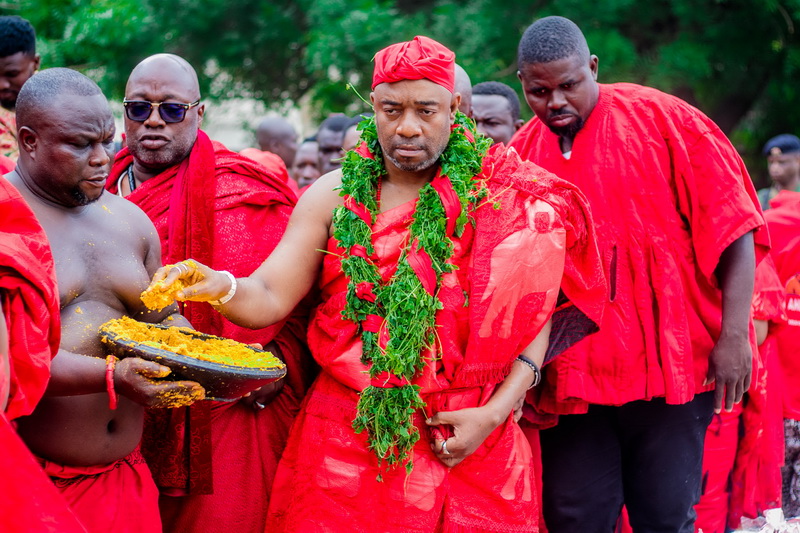
Accra came alive as His Royal Majesty King Tackie Teiko Tsuru II, Ga Mantse, graced the opening of the 3rd Annual Conference of the African Association of Accountants General (AAAG), serving as the esteemed Special Guest of Honour. The prestigious event brought together Accountants General, finance leaders, policymakers, and public sector innovators from across Africa and beyond. Their mission: to deliberate on crucial reforms aimed at strengthening Public Financial Management (PFM) systems and driving economic prosperity across the continent. The conference, themed “Africa of Tomorrow: Positioning Public Finance Management (PFM) for Economic Prosperity,” focused on aligning PFM structures with Africa’s development agenda. Discussions centred on enhancing accountability and harnessing digital tools to improve financial governance, all while ensuring PFM systems support sustainable growth. In his keynote remarks, King Tackie Teiko Tsuru II applauded the organisers for prioritising financial accountability and institutional reform. He underscored the vital role effective PFM plays in Africa’s pursuit of sustainable economic transformation. The Ga Mantse called on African governments to invest in capacity building, modern financial systems, and transparent governance practices to build public trust and foster inclusive growth across the continent. Attracting a diverse delegation of experts and practitioners, the conference is expected to yield actionable recommendations to help countries strengthen fiscal discipline, improve resource mobilisation, and ensure value for money in public expenditure, key steps toward Africa’s economic future. Source: Apexnewsgh.com