




GTA CEO Visits Victims of Amedzofe Canopy Walk Accident, Pledges Support and Enhanced Safety
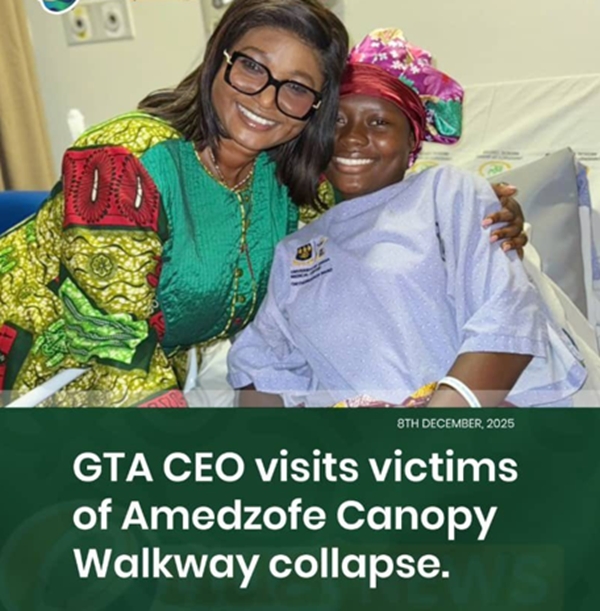
The Chief Executive Officer of the Ghana Tourism Authority (GTA), Maame Efua Houadjeto, has paid a compassionate visit to victims of the recent canopy walk accident at Amedzofe in the Volta Region. During her visit, Maame Efua Houadjeto spent time with the injured individuals receiving treatment, offering heartfelt sympathies on behalf of the Authority and the wider tourism sector. She wished the victims a swift recovery and assured them that the GTA is committed to supporting them through their healing process. The GTA CEO also praised the medical team for their prompt and effective response to the incident and pledged that the Authority would enhance safety measures at tourist sites nationwide to prevent similar accidents in the future. The accident, which occurred earlier in the week, involved a group of visitors who sustained various injuries on the popular canopy walkway. Authorities have confirmed that investigations are ongoing to determine the cause of the accident and to implement measures that will safeguard visitors going forward. The Ghana Tourism Authority reiterated its dedication to prioritising visitor safety while continuing to promote the growth of domestic tourism. Source: Apexnewsgh.com
Graduate Unemployed Nurses and Midwives Association Set to Protest Over Delayed Postings
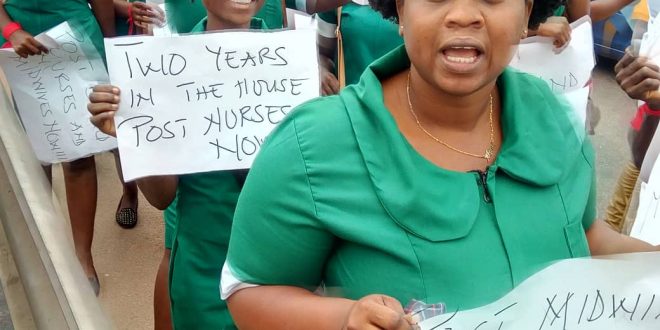
The Graduate Unemployed Nurses and Midwives Association has announced plans to stage a protest in response to what it calls the government’s prolonged delay in posting its members, some of whom have been waiting at home for up to five years. A demonstration scheduled for this week was postponed after the association was unable to finalise security arrangements with the Greater Accra Regional Police Command. Despite this setback, frustration among unemployed graduates continues to grow. Speaking to the media, December 9, 2025, Gamal Osman, a member who completed his nursing training in 2021, described the hardship faced by many. “I have been in the house for four years. I completed school in 2021. We are all stranded. Remember, completing school and depending on someone is not easy. How to even buy water is not easy,” he lamented. The association maintains that it will persist with all lawful means to press for the immediate posting of its members until the government addresses their concerns. Source: Apexnewsgh.com
GMA President Urges Immediate Action to Address Barriers to Rural Doctor Postings

President of the Ghana Medical Association (GMA), Professor Ernest Yorke, has called on the government to swiftly resolve persistent challenges that deter newly deployed doctors from accepting postings in underserved areas. His appeal comes in the wake of Health Minister Kwabena Mintah Akandoh’s decision to grant newly assigned doctors an extra week to assume duty, after data revealed that 70 percent had not reported to their posts. The Minister described the initial turnout as “deeply troubling,” with the Upper East and Upper West regions recording no arrivals as of Friday, November 28. In an interview on Wednesday, December 3, 2025, Prof. Yorke explained that reluctance among doctors to move to remote locations stems primarily from poor incentives, inadequate facilities, and limited opportunities for career advancement. He argued that pairing government expectations with meaningful incentives would increase the willingness of doctors to serve in deprived areas. “It’s a chicken-and-egg situation. Incentives could motivate sacrifice, or sacrifice could attract incentives. Ideally, we should pursue both,” Prof. Yorke remarked. While the GMA continues to encourage its members to accept rural postings, Prof. Yorke emphasised that the government must recognise their sacrifices by offering suitable compensation and support. He noted that other countries reward doctors who accept assignments in hard-to-reach areas and suggested Ghana could adopt a similar approach. He also revealed that the Ministry of Health already possesses a GMA-designed “Deprived Area Incentive” framework, which is yet to be implemented. Another barrier, Prof. Yorke highlighted, is the limited access to postgraduate training in deprived regions, which often forces doctors to pay substantial fees to specialise. This, he said, is a further deterrent for those considering rural postings. Beyond staffing, Prof. Yorke stressed the importance of completing healthcare infrastructure projects, particularly the abandoned Agenda 111 facilities. “We need more than personnel; we need functional facilities. Why not partner with the private sector to finish these hospital projects?” he suggested. He noted that while reporting rates in Greater Accra, Central, and Ashanti regions remain relatively stable, many other regions continue to struggle with severe shortages. Prof. Yorke concluded by urging the government to engage in broader consultations with stakeholders and the public to develop sustainable solutions that will guarantee equitable healthcare delivery across the nation. Source: Apexnewsgh.com
Minister of Health Denies Claims of Punitive Rural Postings for Medical Officers
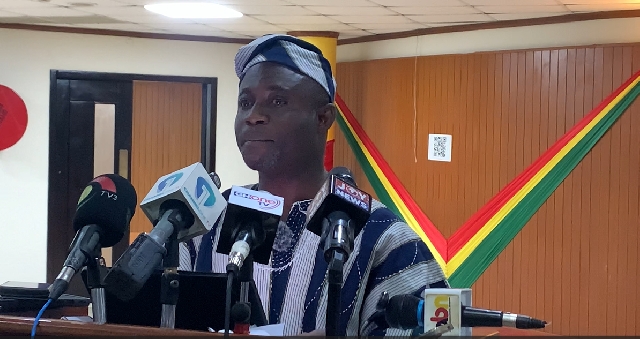
The Minister of Health, Kwabena Mintah Akandoh, has firmly rejected allegations that newly deployed medical officers are being punished by their postings to rural and underserved districts. Instead, he insists the exercise is a crucial step to ensure equitable access to healthcare nationwide. Addressing journalists in Parliament, Mr. Akandoh clarified that the deployment strategy is focused on prioritising communities with the greatest need, particularly in the Upper East and Upper West regions, where some health facilities have gone months without a single doctor present. “This is not punishment; it is national service,” the Minister stated. “Doctors must be posted where they are needed most. This is how we save lives and strengthen healthcare access for all Ghanaians.” He disclosed that newly posted medical officers assigned to the two northern regions have been given a one-week deadline to report to their duty stations or formally communicate any inability to do so. No exceptions, he added, will be granted outside the established process. Mr. Akandoh appealed to chiefs, Members of Parliament, district assemblies, and other local stakeholders to actively welcome and support the doctors in their new communities. “When they feel welcomed and supported, they stay longer and serve better,” he noted. The Minister further assured that the government remains committed to providing incentive packages to boost morale, especially for those serving in deprived or hard-to-reach areas. These incentives are part of wider efforts to make rural postings more attractive and sustainable. “Incentives are not handouts; they are tools to strengthen service. Doctors serving in hard-to-reach areas deserve support, and the government is listening,” he said. Expressing confidence in the commitment of the newly deployed officers, Mr. Akandoh described the assignments as a vital component of national duty. “Ghana is counting on you. Serve where you are needed most,” he urged. Source: Apexnewsgh.com
U.S. Commits $150 Million to Zipline for Expanding Medical Drone Deliveries Across Africa

The United States Government has announced a commitment of up to $150 million to Zipline International Inc., aiming to expand access to life-saving medical supplies, including blood, vaccines, and essential medicines, to as many as 15,000 health facilities across Côte d’Ivoire, Ghana, Kenya, Nigeria, and Rwanda. The announcement was made during a U.S. Embassy digital press briefing on Tuesday, December 2. This initiative is part of the U.S. Department of State’s America First Global Health Strategy, which seeks to maximize value for U.S. taxpayers by reducing waste, eliminating dependency, and ensuring development assistance aligns with U.S. foreign policy objectives. According to Jeff Graham of the U.S. Department of State, the strategy places a strong focus on delivering critical medical products to populations in remote and underserved areas. Partnering with Zipline, an American robotics and drone technology firm, is central to modernizing the U.S. approach to global health aid. Under the agreement, the U.S. will support Zipline’s expansion of advanced, American-made robotics to overcome the slow and unreliable logistics that often hinder timely medical deliveries in rural communities. Graham described the initiative as a significant step towards strengthening health systems, enabling rapid responses to disease outbreaks and emergencies, while also supporting U.S. manufacturing and job creation in partner nations. Although the U.S. contribution is described as modest, beneficiary governments will eventually take over operational responsibilities for their national health delivery networks. Zipline is set to open new distribution centers in the five participating countries, with Rwanda expected to double its daily delivery capacity, ultimately enabling the network to reach up to 130 million people across Africa. Caitlin Burton, CEO of Zipline Africa, explained that Zipline operates autonomous, all-weather drones day and night, delivering a centralized, on-demand medical supply chain that is far more efficient than traditional logistics systems. Supported by organizations like the Elton John AIDS Foundation, Zipline has demonstrated that its delivery model is both cost-effective and highly impactful. The new U.S. partnership is projected to allow Zipline to expand its reach to national scale in all five countries, creating an estimated 1,000 jobs and generating over $1 billion in annual economic gains across the partner nations. Burton emphasized Zipline’s mission to build health systems capable of ending preventable deaths from HIV, maternal mortality, and severe malnutrition by leveraging a single high-performing logistics network. Burton noted that government investments will be tailored to each country’s priorities and health needs, and that Zipline works closely with governments to identify access gaps in remote and underserved communities. “This system is meant to operate nationwide and at the scale required to deliver volumes of medical products that can actually change health outcomes. We now know how to solve challenges like maternal mortality and malnutrition, and the network is built to meet those goals,” she stated. While the U.S. provides initial capital, governments are expected to cover the predictable, long-term operating costs. The model is designed to replace multiple expensive, disease-specific programs with one unified delivery network that addresses a range of health challenges. “With this system, you’re not funding a single program or a one-off intervention. You’re ensuring that essential medical products reach patients wherever they are, including communities where distance or stigma might prevent people from seeking care,” Burton added. Source: Apexnewsgh.com
Accra’s Mayor Launches GH¢100-a-Day Sanitation Drive for Festive Season

Accra’s Mayor, Michael Kpakpo Allotey, has announced a new initiative that will see the Accra Metropolitan Assembly (AMA) pay individuals GH¢100 daily to help spruce up the city in preparation for the festive season. The opportunity, which specifically targets unemployed young people, was revealed by the mayor as he led a citywide exercise to paint kerbs along major roads—a move aimed at beautifying the capital and enhancing nighttime safety ahead of Christmas. Mayor Allotey encouraged interested individuals to visit the Accra Metropolitan Assembly and join the cleaning and beautification teams. Participants will receive GH¢100 a day for a period of 30 days for their work. The sanitation and beautification exercise commenced on Saturday, November 29, 2025, and involves painting kerbs along medians and road shoulders stretching from John Evans Atta Mills High Street to Independence Avenue. The effort is expected to improve visibility, eliminate dark spots, and give Accra a brighter, more welcoming appearance at night. Speaking to journalists during the operation, Mayor Allotey said the kerb painting is being combined with an intensive citywide sweeping campaign. Already, 190 personnel have been deployed across the metropolis, with plans to employ an additional 400 young people to scale up the operation and create more job opportunities. He explained that the freshly painted kerbs will significantly improve road safety by making medians and road edges easier for drivers to spot, reducing the risk of accidents on major routes. The mayor stressed that the initiative is part of the assembly’s broader commitment to ensuring Accra is clean, vibrant, and welcoming during the festive period. Mayor Allotey called on residents and business operators to support the ongoing sanitation drive by keeping their surroundings clean. During the exercise, he also cautioned a man for sweeping waste from a pharmacy frontage onto the pavement, warning that such actions are punishable by the Sanitation Court. Source: Apexnewsgh.com
WHO Sounds Alarm on Gender-Based Violence as Global Crisis Persists
The World Health Organisation (WHO) has sounded a grave warning over the ongoing crisis of gender-based violence (GBV), calling it a public health emergency that continues to devastate the lives of one in three women around the world. In a statement released to mark the International Day for the Elimination of Violence Against Women, WHO underscored the profound and lasting physical, mental, sexual, and reproductive health consequences faced by survivors. The organisation also highlighted the often-unseen toll on children who witness violence at home, leaving them at greater risk for emotional and behavioural issues. WHO noted that health workers are frequently the first—and sometimes the only—professionals whom survivors turn to for support. This reality, the organisation stressed, underscores the urgent need for robust, survivor-centred health systems capable of responding to the complex needs of those affected by GBV. In the Eastern Mediterranean Region, WHO EMRO reiterated its ongoing support for Member States by training healthcare providers, strengthening system-wide responses, and improving cross-sector coordination to ensure that no survivor is left unseen or unsupported. The statement drew attention to the heightened risks faced by women and girls in emergency settings, such as refugees and those displaced by conflict, who are vulnerable to violence both online and offline. Women and girls with disabilities, WHO added, confront even greater obstacles in seeking help. Reaffirming its commitment, WHO called for inclusive, accessible, and safe health services where every woman and girl can seek care and support with dignity and without fear. Source: Apexnewsgh.com
CDS Visits Injured Soldiers at 37 Military Hospital, Pledges Support and Safety Review
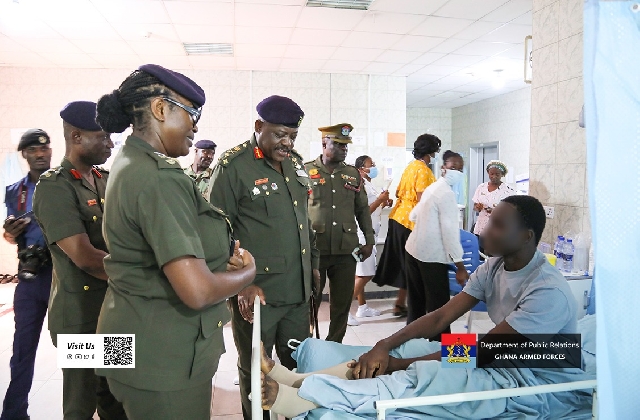
Lieutenant General William Agyapong, Chief of the Defence Staff (CDS), has paid a compassionate visit to military personnel recuperating at the 37 Military Hospitals after a recent vehicular accident between Salaga and Tamale. The accident, which occurred late last week, involved a military vehicle carrying duty-bound personnel. Several officers sustained injuries of varying severity and were promptly airlifted to Accra for specialised treatment. On Monday, 24 November 2025, Lt. Gen. Agyapong met with the wounded soldiers, extending the Ghana Armed Forces’ unwavering support and personally commending the hospital’s medical team for their rapid and professional response. He assured the injured officers that every effort would be made to provide them with the best possible care. The CDS also announced that a full investigation would be launched to determine the cause of the accident and to review safety protocols for troop movement and operations. The families of those injured voiced their gratitude for the visit and the ongoing commitment shown by the Armed Forces’ leadership to the welfare of its personnel. Source: Apexnewsgh.com
Police Arrests Murder Suspect at Kibi

According to a press release by the Public Relations Unit of the Ghana Police Service Eastern South, DSP David Fianko-Okyere reported that on Sunday, November 16, 2025, the Eastern South Regional Police Command arrested Kwame Arhin, also known as Abompe, a 37-year-old carpenter, at a bush near Kibi Presbyterian College of Education. The arrest followed a distress call received on Saturday, November 15, 2025, alleging the murder of a man at Kibi Newtown. The police deployed teams of detectives, including the Crime Scene Management team, to the crime scene near the Kibi Court Complex to commence investigations. At the scene, the police found the body of a male adult identified as Jonas Baah Sarpong. The scene was processed, and the body was removed and deposited at the Kibi Government Hospital morgue before being transferred to the Police Hospital in Accra for preservation and autopsy. Preliminary investigations indicate that the deceased was a security guard at the Kibi Presbyterian College of Education, where a misunderstanding between him and suspect Kwame Arhin led to the latter slashing the victim’s throat with a cutlass and absconding. The suspect is in custody and is being processed for court, while investigations are ongoing. Source: Apexnewsgh.com
Government Delegation Consoles Families of El-Wak Stadium Stampede Victims
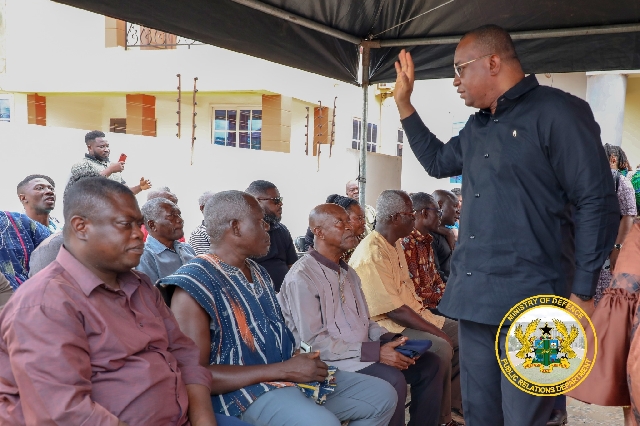
The Deputy Minister for Defence, Mr. Ernest Brogya Genfi, on Thursday led a high-level government delegation to visit and console the families of those who lost their lives in the tragic El-Wak Stadium stampede. Mr. Brogya Genfi was joined on the visit by the Greater Accra Regional Minister, Mr. Linda Obenewaa Akweley Ocloo; the Minister for Gender, Children and Social Protection, Dr. Agnes Naa Momo Lartey; and several other senior government officials. The visit formed part of the government’s ongoing efforts to commiserate with the bereaved families and provide much-needed emotional and logistical support during this difficult time. Speaking on behalf of the President and Commander-in-Chief of the Ghana Armed Forces, H.E. John Dramani Mahama, Mr. Brogya Genfi described the stampede as a “deeply unfortunate tragedy” that has left the entire nation in mourning. He reaffirmed the government’s strong commitment to stand by the affected families and assured them that they would not be left to bear their painful loss alone. “The government stands with you in these trying moments,” Mr. Brogya Genfi stated, adding that further arrangements and support measures would be communicated to the families in due course. The government has indicated that additional announcements will be made as investigations continue and support interventions are finalised. Source: Apexnewsgh.com