
‘Massacre’ in Sudan kills at least 53 including 14 children and 15 women
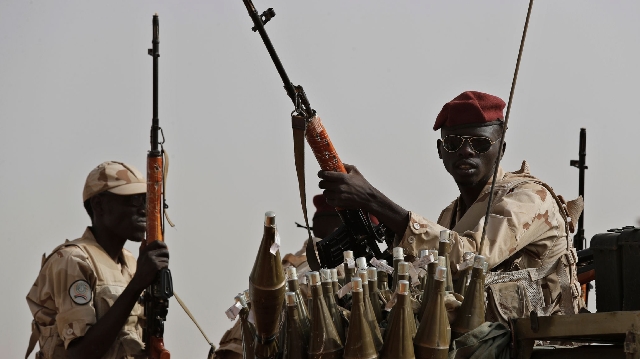
At least 53 people, including 14 children and 15 women, have been killed in an attack on a displacement shelter in a besieged city in North Darfur. The Sudan Doctors’ Network said Sudanese paramilitaries were behind the shelling attack, which also wounded another 21 people, including five more children. The strike by the Rapid Support Forces (RSF) hit the al Arqam Home, which shelters displaced families in Al Fashir, the capital of North Darfur province, the group said. The attack, late on Friday, was the latest deadly onslaught on Al Fashir, which has been for months the epicentre of the war between the Sudanese military and the paramilitaries. A spokesperson for the doctors’ network – a group of medical professionals tracking the Sudanese civil war – described the attack as a “massacre”. A statement said: “This massacre represents a continuation of the scorched-earth policy practised by the Rapid Support Forces against civilians, in flagrant violation of all international norms and laws.” Al Fashir is being targeted by the RSF as it pushes to claim full control of the Darfur region as a base for its parallel government, after the military recaptured the capital Khartoum and other key sites in central Sudan. Close to a million people are facing famine in Al Fashir and surrounding camps, as the RSF enforces a full blockade, launching armed attacks on volunteers and aid workers risking their lives to bring in food. Inside the city, thousands are bombarded by almost daily shelling from surrounding RSF troops. | Reuters (Pic): Families displaced by RSF attacks have been forced into shelters across North Darfur, such as this one in the town of Tawila The RSF has physically reinforced its siege with a berm – a raised earth mound. First spotted by Yale Humanitarian Research Lab, the berm is visible from space. The city, the Sudanese military’s last stronghold in Darfur, has been under siege for more than a year. The UN and other aid groups warn that 260,000 civilians remain trapped in Al Fashir, even after most of its population fled RSF attacks on it and its surroundings. Sudan plunged into chaos when simmering tensions between the military and the RSF exploded into open fighting in April 2023 in Khartoum and elsewhere. The fighting has turned into a full-fledged civil war that has killed tens of thousands of people, displaced more than 14 million people from their homes and pushed parts of the country into famine. The devastating conflict has been marked by atrocities, including mass killings and rape, which the International Criminal Court is investigating as war crimes and crimes against humanity. Source: news.sky.com
Putin Warns West Against Dismantling Security Pacts, Urges Dialogue to Avert New Arms Race
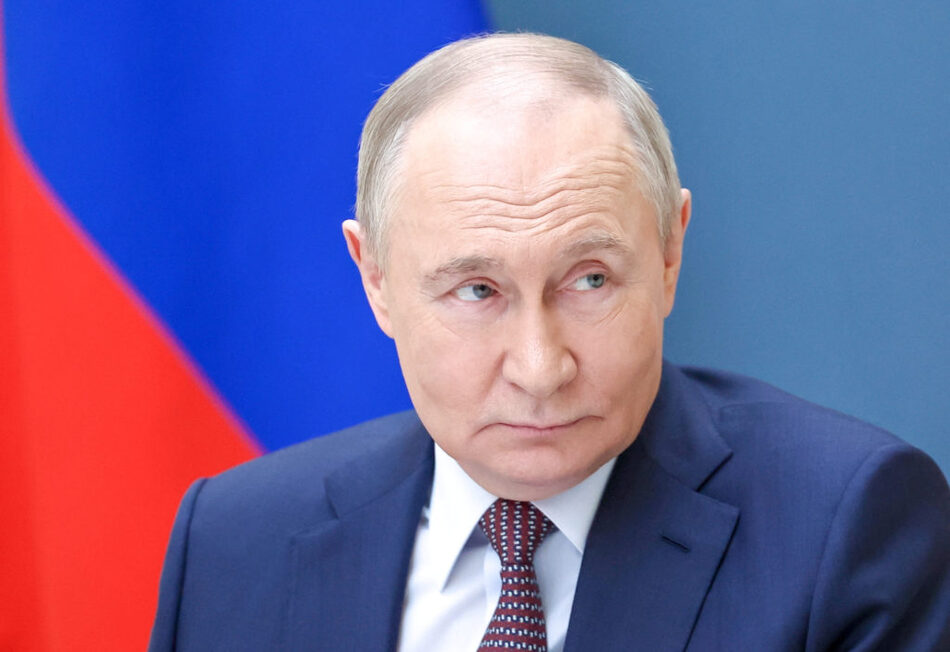
Russian President Vladimir Putin has issued a stark warning to Western nations, accusing them of dismantling decades-old frameworks for international security and cautioning of the risk of a new arms race if meaningful dialogue is not restored. Speaking on the future of nuclear stability, Putin lamented the near collapse of the system of U.S.-Soviet and U.S.-Russian arms control agreements, blaming their demise on “destabilising doctrines and military-technical programs” pursued by the West. He emphasized that these agreements had long served as the bedrock of global security, but that their gradual erosion has left the world in a precarious position. Putin stressed that Russia remains fully capable of responding to any security threat, citing as an example Moscow’s decision to end its unilateral moratorium on deploying ground-based short- and intermediate-range missiles. This move, he explained, was a direct reaction to the deployment of similar U.S. and allied weapons in Europe and the Asia-Pacific region. Despite his criticism of Washington, Putin indicated that Russia would continue to observe the central limits of the New Strategic Arms Reduction Treaty (New START) for one year beyond its scheduled February 5, 2026, expiry, provided that the United States refrains from actions that would undermine strategic stability. “Renouncing the legacy of this treaty would be a grave and short-sighted mistake,” Putin warned, underlining that abandoning New START would undermine global non-proliferation efforts. He also expressed concern about U.S. plans to expand missile defence, including the potential deployment of interceptors in space, calling such actions destabilising. Putin argued that Russia’s proposal to maintain the New START limits could help preserve stability and lay the groundwork for renewed dialogue, but only if Washington reciprocates with a similar spirit and works to ease broader tensions. He concluded by insisting that Moscow’s stance is not aimed at escalation, but at ensuring predictability, restraint, and the preservation of global strategic balance. Source: Apexnewsgh.com
Police Launch Nationwide Search After Official Land Cruiser Stolen From Force Headquarters In ….
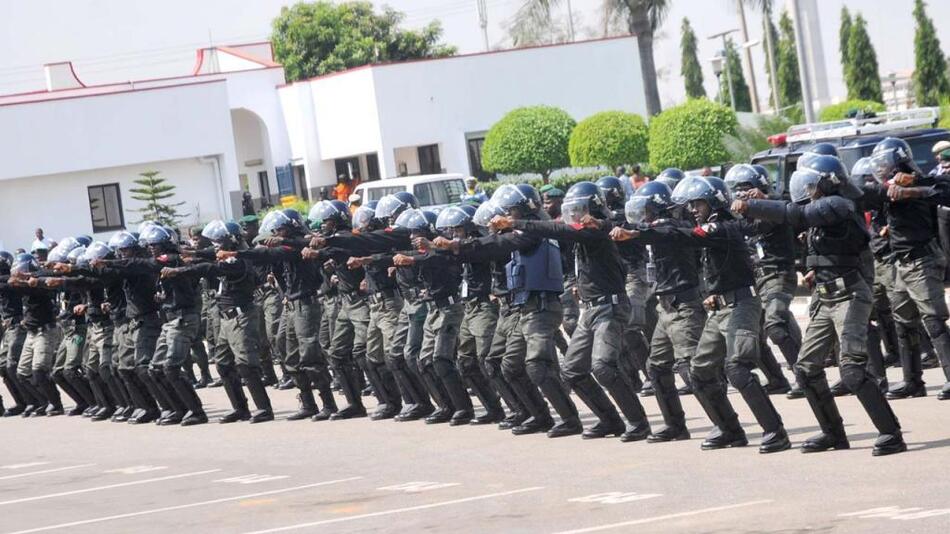
The Nigeria Police Force has reported the theft of one of its official vehicles, a Toyota Buffalo Land Cruiser, from the premises of Force Headquarters in Abuja. According to an internal wireless message circulated by the Commissioner of Police (DFA, Katsina Command), the vehicle, with chassis number JTELU71JX0B027126 and registration number NPF 5594 D, went missing on July 28, 2025. The stolen vehicle was assigned to the Department of Operations at the Force Headquarters, located at Louis Edet House, and was declared missing after it was removed from the official parking lot. The announcement relayed information from the Force Criminal Investigation Department (FCID) and instructed all area commands, divisional police officers, and formations across Nigeria to be on high alert for the missing Land Cruiser. Police authorities have confirmed that the case is under active investigation. Security operatives nationwide have been urged to treat the matter as “very important” and to report any information that could assist in recovering the vehicle. The internal message emphasized the urgency of the matter and called for immediate dissemination of details to all relevant police units for a coordinated response. Source: Apexnewsgh.com
Israel lists 77 Countries That Boycotted Netanyahu’s UN Speech in Protest over Gaza War
Israeli Prime Minister Benjamin Netanyahu’s address to the United Nations General Assembly drew global attention, not for his words, but for the conspicuous absence of listeners. According to figures released by Israel on Saturday and reported by YNET, 77 national delegations either skipped the session entirely or staged a coordinated walkout as Netanyahu began to speak. The 41-minute speech was delivered to a visibly sparse audience. All of Israel’s immediate neighbours, Egypt, Jordan, Lebanon, and Syria, were among those who stayed away, joined by Saudi Arabia, Turkey, Iran, and dozens of other countries spanning Latin America, Africa, and the Pacific. The mass protest underscored the growing diplomatic rift over Israel’s actions in Gaza, where over 65,000 Palestinians have been killed in more than two years of conflict, and the entire enclave of over two million people faces a dire humanitarian crisis. Officials clarified that not every absence was a boycott; some delegates missed the morning session, while others, like Jordan and Egypt, chose not to take their seats without participating in the walkout. Pakistan’s delegation left the hall in protest but remained on the sidelines to listen. In contrast, Bahrain and the United Arab Emirates, signatories to the Abraham Accords, remained seated despite tensions over the Gaza war. International and Arab media zeroed in on the dramatic walkout, highlighting the empty chamber rather than Netanyahu’s pledge to “finish the job” against Hamas. Iran’s Supreme Leader, Ali Khamenei, amplified the protest on social media, calling Israel “the most despised and isolated regime.” Israel’s own assessment acknowledged that the boycott demonstrated its deepening diplomatic isolation, as frustration with the Gaza conflict continues to mount worldwide. The list of absent or protesting countries included Spain, Brazil, South Africa, Ireland, Malaysia, Indonesia, Kuwait, Qatar, Oman, and many others from across the globe. Source: Apexnewsgh.com
President Mahama Declares “The Future is African” at UN General Assembly, Urges Global Recognition of Africa’s Role
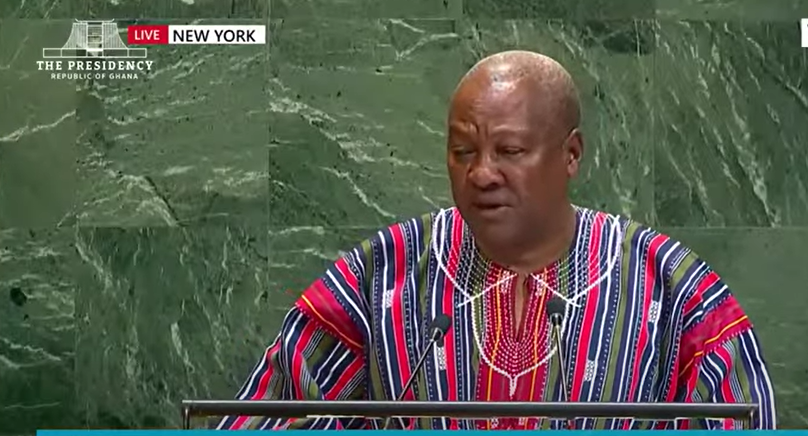
President John Dramani Mahama has boldly proclaimed that the future of the world belongs to Africa, urging the international community to acknowledge the continent’s rising influence in shaping global development and transformation. Addressing world leaders at the 80th Session of the United Nations General Assembly on Thursday, September 25, Mahama spotlighted demographic trends positioning Africa as a central force in humanity’s future. “According to this organisation’s own projections, by the year 2050, more than 25% of the world’s population is expected to come from the African continent. Additionally, by 2050, one third of all young people, aged 15 to 24, will be residing on the African continent,” he stated. Mahama underscored that Africa’s growing, youthful population is more than just a number, it’s a clear signal that the continent will drive global innovation, economic growth, and progress. “So, you see, the future is African,” he declared, adding with emphasis, “Allow me to say this once again, a little louder for the people in the back. The future is African!” He went on to highlight Africa’s current role as a catalyst for change across various sectors, challenging persistent global narratives that overlook the continent’s contributions. “Already today, Africa is a catalyst for human potential and development, as well as for economic reform and ecological stability. Africa is a catalyst for systemic change,” Mahama noted. Acknowledging that some may find this perspective challenging, Mahama pointed to the lingering effects of colonialism, racism, and imperialism. “If this reality, which is fact-based and straightforward, seems provocative or unsettling, perhaps it’s because you’re viewing it through the lens of centuries of racism, colonialism, imperialism, and the resulting implicit bias,” he said. President Mahama’s address served as a clarion call for the world to recognise and embrace Africa’s pivotal role in driving the future of humanity. Source: Apexnewsgh.com
Elon Musk’s father accused of sexually abusing his children and stepchildren
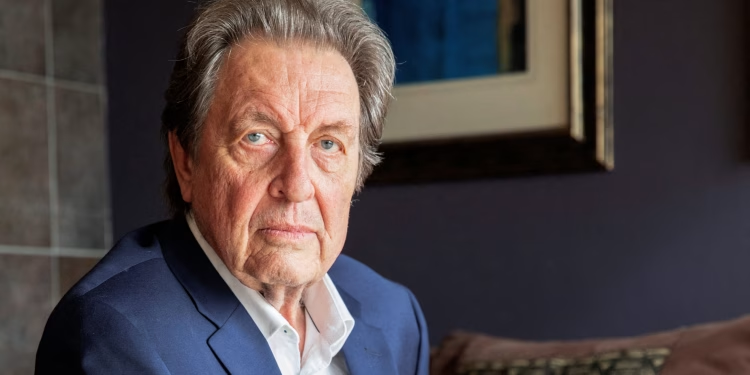
Errol Musk, the 79-year-old father of tech billionaire Elon Musk, has been accused of sexually abusing five of his children and stepchildren since 1993, the New York Times reported on Tuesday. The outlet said those allegations could be why the entrepreneur, who temporarily served as an adviser to the second Trump administration, rarely mentions his father – and that family members of Elon Musk have reached out for help, prompting him to sometimes take action to intercede. Errol Musk dismissed the allegations reported by the Times out of hand, telling the publication they were “nonsense” and “false”. He did not immediately respond to requests for comment from the Guardian. Citing personal letters, emails, and interviews with family members, the Times said that Errol Musk, who has at least nine children and stepchildren and has been married to three women, “maintains a powerful grip over much of the family”. The Times said Elon Musk did not respond to the publication’s requests for comment. Judging from court records, personal correspondence, social workers and interviews with family members, the Times said the earliest accusation against Errol Musk was in 1993, when his four-year-old stepdaughter told relatives he had touched her at the family house. A decade later, the stepdaughter said she caught him sniffing her dirty underwear, the Times reported, adding that some family members have also accused him of abusing two of his daughters and a stepson. Composite of pictures of Elon Musk as a child and adult. Three separate law enforcement investigations were opened, the outlet said, citing police and court records, as well as family members’ accounts. Two of the inquiries ended without action, while it is unclear what happened in the third investigation. “There was no evidence because this is nonsense,” Errol Musk said in a statement to the Times, saying “the reports are false”. He accused family members who were “putting the children up to say false things” and that they were trying to extort Elon, his eldest son. Elon Musk has described a difficult relationship with Errol on the rare occasion when he has commented on his father. He told Rolling Stone in 2017 that his father had done “almost every evil thing you could possibly think of”. In the profile, Musk said he had gone to live with his father at age 10 while his younger siblings, Kimbal and Tosca, stayed with their mother. “I felt sorry for my father, because my mother had all three kids. He seemed very sad and lonely by himself. So I thought, ‘I can be company,’” he said. He continued: “I didn’t really understand at the time what kind of person he was … It was not a good idea.” Without going into specifics, he told the publication, “My dad will have a carefully thought-out plan of evil. He will plan evil.” Source: The Guardian
Tinubu Refuses To Quit Smoking Habit Despite Intervention Attempts By Close Allies, Sources Say
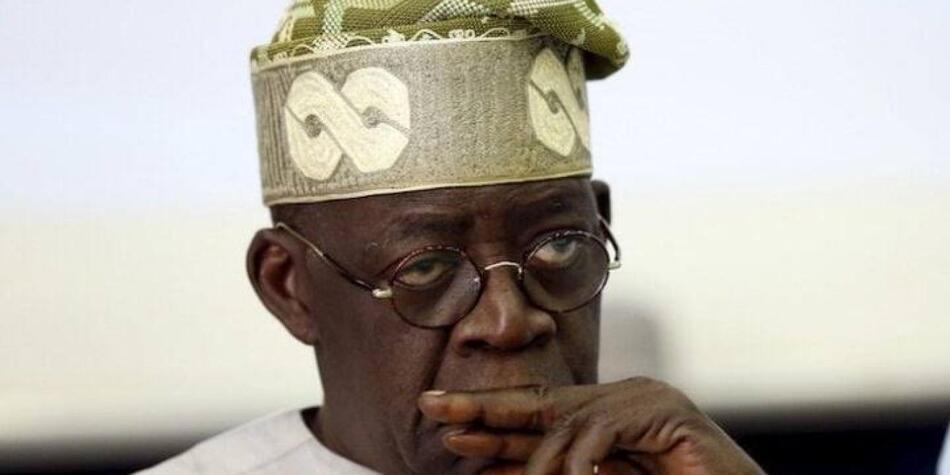
Since taking office in May 2023, Tinubu has made about 40 international international trips, some of which are believed to be for medical reasons. President Bola Tinubu has reportedly continued his smoking habit, despite repeated efforts by those around him to persuade him to quit, SaharaReporters has learned. Sources close to the President said that Tinubu remains committed to smoking and has resisted attempts by aides and associates to help him give up the habit. The sources noted that, while concern has been raised over the health implications, the President has so far refused to change his behavior. “Tinubu’s smoking addiction is an issue. The President is still smoking, and despite efforts to get him to stop, he has refused,” one of the sources said. SaharaReporters learnt that the President’s handlers, concerned about the issue, believe that as a national leader, Tinubu’s personal health choices are matters of public interest. Since taking office in May 2023, Tinubu has made about 40 international trips, some of which are believed to be for medical reasons. Tinubu’s frequent international travel has sparked persistent speculation about his health, especially given the number of trips to Europe, especially France and the UK. While many of these visits are officially described as “working trips” or “diplomatic engagements,” SaharaReporters has reported that some may have included medical consultations. The Presidency has occasionally issued reassurances, stating that the President is “fit and capable,” but these statements have not fully quelled public concern. In June, the Senior Special Assistant to the President on Foreign Affairs and International Relations, Ambassador Sola Enikanolaye, disclosed that President Bola Tinubu had undertaken 36 foreign trips since assuming office. Providing a mid-term review of the administration’s foreign policy record, Enikanolaye noted that the trips, which began after Tinubu’s inauguration on May 29, 2023, spanned Africa, Europe, Asia, the Middle East, and the Americas. According to him, the President’s destinations included Benin Republic, Chad, Ghana, Senegal, Guinea, Equatorial Guinea, Kenya, Ethiopia, South Africa, Tanzania, France, the United Kingdom, Germany, the Netherlands, the Vatican, the United States, Brazil, Qatar, the United Arab Emirates, Saudi Arabia, India, and China. Source: Saharareporters
Nnamdi Kanu’s Hearing Advanced to Sept 26: Court to Rule on Release Application
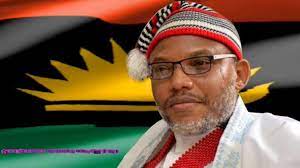
The Federal High Court in Abuja has brought forward the court date for the trial of Nnamdi Kanu, leader of the Indigenous People of Biafra (IPOB), to address his application for release In a significant development, the Federal High Court in Abuja has rescheduled the trial date for Nnamdi Kanu, leader of the Indigenous People of Biafra (IPOB), moving the hearing forward from October 10 to September 26. The new date, set by Justice James Omotosho, will allow the court to address Kanu’s urgent application for release. The main terrorism trial against Kanu had originally been slated to resume on October 10, 2025, with a ruling expected on the no-case submission filed by Kanu’s lawyers after the Federal Government had presented its case against him. However, recent developments have accelerated court proceedings to consider pressing health concerns raised by Kanu’s legal team. Earlier in September, the Federal High Court adjourned a separate application from Kanu’s lawyers requesting his transfer to the National Hospital for urgent medical treatment. This adjournment came as Justice Musa Liman’s tenure as a vacation judge ended on the final day of the Federal High Court judges’ vacation. In support of the application, Emmanuel Kanu, the IPOB leader’s younger brother, submitted an affidavit describing his brother’s life-threatening heart condition and the inadequacy of current medical facilities at his place of detention. During the hearing, Kanu’s senior counsel, Uchenna Njoku, told the court that the Federal Government’s lawyers had only that morning served a 37-page counter-affidavit, leaving little time for review. Njoku requested additional time to study the document, while lead government counsel Adegboyega Awomolo agreed, expressing regret that the matter had not been scheduled sooner. Justice Liman, acknowledging the urgency and seriousness of the health concerns, agreed to hear the case but ultimately returned it to the Central Registrar for reassignment, as his jurisdiction as a vacation judge was lapsing. He stressed in the case file that the matter was urgent and should be scheduled for hearing by Justice James Omotosho before the next date of the main trial. The rescheduled hearing on September 26 is expected to focus on Kanu’s application for release, given the gravity of his health condition, as the legal battle between Kanu and the Federal Government continues to unfold. Source: Apexnewsgh.com
Deal is done to keep TikTok in the US, says Trump
A deal has been made between the US and China to keep TikTok running in the US, according to President Donald Trump. “We have a deal on TikTok, I’ve reached a deal with China, I’m going to speak to President Xi on Friday to confirm everything up,” Trump told reporters as he left the White House for a state visit to the UK. The social media platform, which is run by Chinese company ByteDance, was told it had to sell its US operations or risk being shut down. However, Trump has repeatedly delayed the ban since it was first announced in January. Later on Tuesday, he ordered the deadline extended again, until 16 December. The US president said a buyer will be announced soon. The Wall Street Journal reported that under a deal being negotiated between the US and China, TikTok’s U.S. business would be controlled by an investor consortium that would include tech company Oracle, private equity firm Silver Lake, and venture capital firm Andreessen Horowitz. In a new US entity created under the deal, US investors would hold a roughly 80% stake and Americans would dominate the board, with one member selected by the US government, according to the Journal, which cited people familiar with the matter. US users, meanwhile, would move to a new app, currently in the testing phase, that will have content-recommendation algorithms using technology licensed from ByteDance. TikTok’s algorithms are a top reason for the app’s success. Earlier, CNBC reported the deal would include a mix of current and new investors, and would be completed in the next 30 to 45 days. It also said Oracle would keep its existing agreement to host TikTok servers inside the US. That had been one of the main concerns of American lawmakers, over worries about data being shared with China. On Monday, a US trade delegation said it had reached a “framework” deal with China amid wider trade negotiations in Madrid. China confirmed a framework agreement but said no deal would be made at the expense of their firms’ interests. After the talks, Wang Jingtao, deputy head of China’s cyberspace administration, suggested in a press conference that the agreement included “licensing the algorithm and other intellectual property rights”. He added: “The Chinese government will, according to law, examine and approve relevant matters involving TikTok, such as the export of technology as well as the license use of intellectual property.” After initially calling for TikTok to be banned during his first term, Trump has reversed his stance on the popular video-sharing platform. In January, the US Supreme Court upheld a law, passed in April 2024, banning the app in the US unless its Chinese parent company ByteDance sold its US arm. The US Justice Department has said that because of its access to data on American users, TikTok poses “a national-security threat of immense depth and scale”. However, ByteDance has resisted a sale, maintaining its US operations are completely separate, and says no information is shared with the Chinese state. TikTok briefly went dark in January, but this lasted for less than a day before the initial ban was delayed. The deadline for a sale has since been extended four times, and the latest delay to the ban is due to end on 16 December. Source: BBC
Mexico mulls 50% tariff on Chinese car amid US
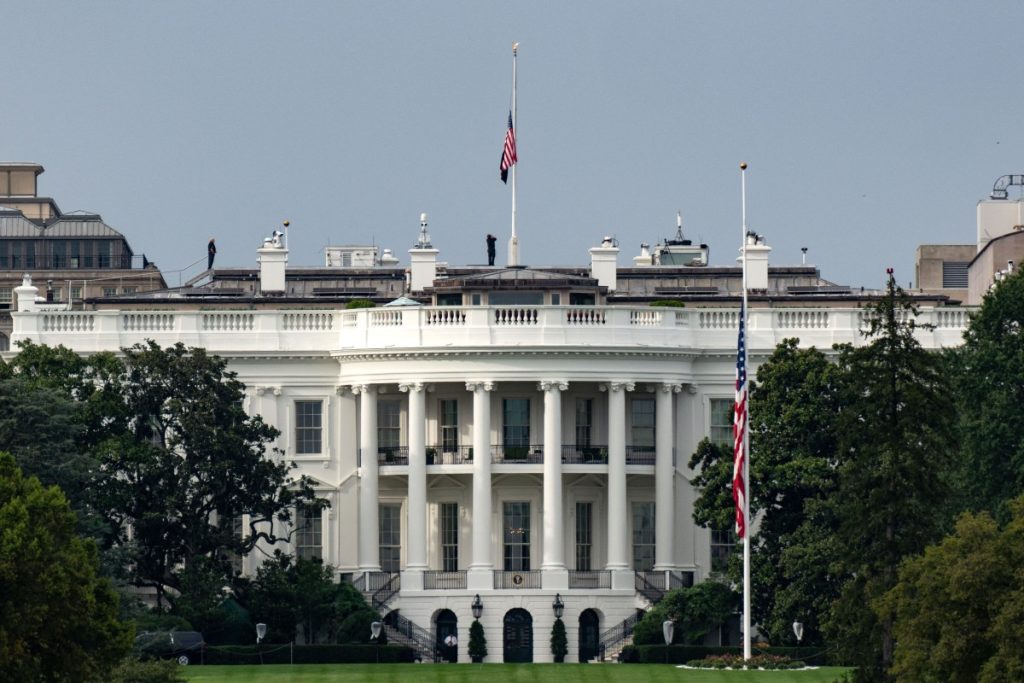
Mexico, under pressure not to serve as a back door for Chinese goods entering the United States, has proposed a 50 per cent duty on car imports from the Asian giant — up from 15-20 per cent. The initiative, contained in a bill submitted by the government to Congress, seeks to assuage US President Donald Trump — who has repeatedly urged trading partners to increase duties on China — while also bolstering Mexico’s industrial sector. The White House has said Chinese producers are abusing a free-trade deal between the United States, Mexico and Canada to send goods northward over the Mexican border tariff-free. Beijing criticised the proposed tariffs on Thursday, with a foreign ministry spokesman saying, without mentioning the United States, that China “firmly opposes any coercion.” So This Happened (EP 335) reviews: Tinubu says Nigeria met 2025 revenue target in August Mexican President Claudia Sheinbaum has also complained of the impact of Chinese imports on domestic manufacturing, and the bill says the increased tariff will seek to protect 19 industrial sectors considered “strategic.” It also proposes raising tariffs on other countries with which Mexico has no trade agreement. Mexico replaced China in 2023 as the United States’ largest trading partner, with the Latin American country’s northern neighbour buying more than 80 per cent of its exports. It sends nearly three million automobiles to the United States a year, including cars and trucks assembled by US auto companies in Mexico. China said it opposed any restriction that “undermines China’s legitimate rights and interests.” “China attaches great importance to the development of China-Mexico relations, and hopes that Mexico will move forward in the same direction with China,” Lin told a regular news briefing in Beijing on Thursday. Light vehicle imports from China would be subject to a 50 per cent tariff, and auto parts between 10 and 50 per cent, if the bill is approved. The bill, announced by the economy ministry on Wednesday, said the changes sought to “protect the national industry in strategic sectors, replace imports from Asia with domestic production” and “improve Mexico’s trade balance.” The initiative should protect 325,000 jobs in strategic industries and create thousands more, the ministry said. Two out of every 10 light vehicles sold in Mexico are Chinese, according to official data. Sales in the sector grew by 10 per cent last year. Several auto giants, including America’s General Motors and Ford, Germany’s Volkswagen and Japan’s Nissan, Honda, and Toyota, have factories in Mexico. According to the wording of the bill, South Korea, India, Indonesia, Russia, Thailand and Turkey would also be affected by the tariff increases. Trump has imposed a 25 per cent tariff on car imports, with exemptions for vehicles with US content assembled in Mexico. Sheinbaum’s ruling party holds a majority in Congress, and the bill is likely to pass. AFP