



A Rocha Ghana Disputes Minister’s Claims on Forest Reserves’ Integrity

A Rocha Ghana, an environmental NGO, has challenged the Minister of Lands and Natural Resources, Samuel Jinapor’s recent statements on the condition of Ghana’s forest reserves. Apexnewsgh reports Despite the Minister’s assurance in Parliament that he was satisfied with the management and integrity of the country’s forest reserves, A Rocha Ghana argues that his claims contradict available public information. The NGO highlighted the severe impact of illegal mining activities (galamsey) and illegal logging, which have not been addressed or restored. They pointed to numerous reserves, including Krokosua, Sui River, and Tano Suraw Extension, that have suffered extensive damage. Field assessments indicate that the Forestry Commission struggles with daily illegal activities, lacking logistical or operational support. A Rocha Ghana also disputed the Minister’s reminder of the government’s declaration of river bodies as RED ZONES for mining, citing the issuance of licenses in 2022 and 2023 for areas overlapping critical water bodies. Rivers such as the Ankobra, Pra, Tano, and Ofin are suffering from severe pollution, impacting local communities’ health and agriculture. The NGO’s statement concludes that the Minister’s claim of maintained ecological integrity is implausible, given the ongoing issues and lack of effective management. A Rocha Ghana urges the government to take concrete actions to address these environmental concerns and protect Ghana’s forest reserves and water bodies. Read the full statement by A Rocha Ghana below: Answering a specific question in Parliament on 23 February about the State of Ghana’s Forest Reserves, the Honourable Minister for Lands and Natural Resources, Samuel Jinapor gave a statement that appears inconsistent with publicly available information. A Rocha Ghana wishes to highlight these inconsistencies and fill a few of the gaps to ensure Ghanaians have a clearer picture of the state of Ghana’s Forest Reserves. This action has also become necessary considering all attempts to get an audience to discuss these matters have proved futile. Our concerns and observations are presented in line with the main sub-sections as identified in the Minister’s statement to the Honourable House. Ecological Integrity of Ghana Forest Reserves The Minister stated that the ecological integrity of Ghana’s Forest Reserves has largely been maintained. This is a moot point. With the extensive damage from galamsey, clear felling and farming in some forest reserves yet to be restored, this statement is farfetched. Forest Reserves such as Krokosua, Sui River, Tano Suraw Extension, Afao Hills, Upper Wassaw, Anhwiaso West and East, Supuma Shelterbelt, Tano Offin, and Denyau Shelterbelt all appear to be lacking ecological integrity due to extensive damage. Further, in mid-January, forest sites Denyau Site 1,2 and 3, Supoma Site 1 and 2, Ntakem 1 and 2, and forest reserves of Numereso, Bepo Tintin, Kubi, Watreso, Adamso, Bunsu, Brechakrom, Amponuase, Apapraman, Hiayeya, Pomposo were all reported to be live galamsey sites. We urge the President and Lands Minister to explain the meaning of “cordoned off all Forest Reserves” and rid them of illegal mining, a statement they continue to repeat but the meaning is far from clear. From our checks on the ground, the Forestry Commission is still struggling on a day to day basis to keep out illegal activities from our Forest Reserves, without any new logistical or operational support added to the existing set-up. What is different now? Transparency in the state of Ghana’s Forest Reserves is critical, especially as this will promote targeted restoration and reforestation actions. Forest Entry Permits for Mining in Forest Reserves The Honourable Minister stated a total of six Forest Entry Permits have been issued for mining in Forest Reserves and listed them all. However, this list is incomplete. Asante Gold announced on 3 August 2021 that the Government of Ghana had just granted the company a Forest Entry Permit covering all forest areas within its Kubi mining lease. Besides being left off the list, it also appears the Permit was given after the President’s strict ban on new Forest Entry Permits for mining. In clarifying the President’s bans, the Minister stated in April 2021 that “moving forward, the Forestry Commission should not issue Forest Entry Permit for purposes of mining in Forest Reserves. The process is such that the final permit one requires in order to be able to mine in a Forest Reserve is a Forest Entry Permit. The President got us issued this instruction which says that no more issuance of Forest Entry Permits and so as from I think about two weeks ago there cannot be fresh mining in Forest Reserves…if you get a mining lease and you go to the Forestry Commission, the door is shut”. The Asante Gold permit came 4 months after this ban. Koantwi Mining Company’s 2023 Mining Lease over a large portion of the Anhwiaso East Forest Reserve is also a matter of concern. A statement by the Minerals Commission in 20225 suggests that Koantwi’s 2020 Forest Entry Permit listed by the Minister was for the 2020 Mining Lease ML2/176 across a southern portion of the Anhwiaso East Forest Reserve. According to the MinCom repository, however, Koantwi Mining was recently granted a 30-year Mining Lease (ML-LAYER/222)7 covering a much larger part of the Anhwiaso East Forest Reserve, commencing 7 February 2023. Available information shows the application was made on 12 December 2022. How did Koantwi get its Forest Entry Permit for this mining lease? The Minister also did not mention the Mining Lease to Unipower Mining Company that would require a Forest Entry Permit as it includes a southwest portion of the Boin Tano Forest Reserve (ML2/47), commencing 19 May 2022. It is possible there are others as well. River Bodies declared Red Zones for mining The Minister also reminded Parliament that government has declared river bodies as RED ZONES for mining, referring to the President’s strict April 2021 ban on mining in or near water bodies as well as in Forest Reserves. Despite this ban, the Minerals Commission has given out several licences in 2022 and 2023 that straddle critical water bodies, including at the exact locations already decimated by galamsey. The rivers include
13 Individuals Remanded for Illegal Mining in Jimmirah Forest Reserve

The Nkawie Circuit Court has remanded 13 individuals for engaging in illegal mining activities in the Jimmirah Forest Reserve at Amangoase, located in the Atwima Mponua District of the Ashanti Region. Apexnewsgh reports The accused face charges for unlawfully entering and mining in the protected area, which is currently undergoing critical afforestation efforts. The Forest Services Division in Nkawie has been working to rehabilitate Compartment 18 of the Jimmirah Forest Reserve in partnership with a private developer. However, the area has recently been invaded by illegal miners seeking gold, threatening the success of the afforestation initiative. Local residents of Amangoase collaborated with Forestry Commission officers to address the illegal activities, leading to the arrest of the 13 miners. They have been remanded in police custody and are scheduled to appear in court again on August 6, 2024. The case highlights the ongoing challenges of illegal mining in protected areas and the importance of community-led efforts to combat environmental degradation. The Forestry Commission and local authorities will continue to work together to protect the Jimmirah Forest Reserve and ensure the success of afforestation initiatives. Source: Apexnewsgh.com Thanks for reading from Apexnewsgh as a news publishing website from Ghana. We encourage you to freely share this story via social media platform and follow us on; Facebook on APEXNEWSGH-Tv or Please contact Apexnewsgh.com on email apexnewsgh@gmail.com for your credible news publications. Contact: 0248250270/0256336062
NPP National Communication Director Speaks on Mining Activities in Ghana

The National Communication Director of the New Patriotic Party (NPP), Richard Ahiagba, has shared his views on the party’s position on mining activities in Ghana. Apexnewsgh reports In a recent interview, Ahiagba acknowledged that the issue of mining is a complex one, but emphasized that the government’s efforts to address it have not entirely failed. According to Ahiagba, the government has made significant progress in regularizing small-scale mining through the community mining schemes, which have allowed Ghanaians to leverage the resource and work legally. However, he noted that some civil society organizations have raised concerns that the community mining schemes have become a cover for illegal mining activities. Ahiagba emphasized that the government is working to streamline the mining sector and provide alternative avenues for those engaged in illegal mining. He pointed out that the Minister for Lands and Natural Resources has convened a national consultative meeting with stakeholders in the small-scale mining sector and has issued a directive banning all prospecting in areas that are prone to environmental degradation. When asked about the party’s campaign to prosecute illegal miners, Ahiagba explained that the core message is to ensure that mining is done in a responsible and sustainable manner. He emphasized that the government is committed to finding a solution to the issue of illegal mining and is working to provide alternative livelihoods for those affected. Source: Apexnewsgh.com Thanks for reading from Apexnewsgh as a news publishing website from Ghana. We encourage you to freely share this story via social media platform and follow us on; Facebook on APEXNEWSGH-Tv or Please contact Apexnewsgh.com on email apexnewsgh@gmail.com for your credible news publications. Contact: 0248250270/0256336062.
Joyce Bawa Mogtari Criticizes NPP’s Stance on Mining Activities

Joyce Bawa Mogtari, Special Aide to former President John Dramani Mahama, has expressed her disapproval of the New Patriotic Party’s (NPP) position on managing mining activities in Ghana. Mogtari argued that the government’s approach to mining has been ineffective and lacks accountability. She pointed out that despite the government’s claims to be tackling illegal mining, they have failed to take responsibility for their actions and have instead resorted to blaming others. Mogtari questioned the government’s decision to spend $58 million on the National Cathedral project while neglecting pressing issues in the mining sector. Mogtari emphasized that former President Mahama has consistently demonstrated his commitment to finding a lasting solution to the issue of illegal mining. She noted that Mahama amended the Minerals and Mining Act to protect and preserve the environment and has spoken out against illegal mining on various platforms. Mogtari also highlighted the need for a collaborative approach to addressing illegal mining, involving stakeholders in affected communities. She expressed concern that the government’s current approach has not worked in tandem with local leaders and has instead led to the destruction of equipment and livelihoods of small-scale miners. Source: Apexnewsgh.com Thanks for reading from Apexnewsgh as a news publishing website from Ghana. We encourage you to freely share this story via social media platform and follow us on; Facebook on APEXNEWSGH-Tv or Please contact Apexnewsgh.com on email apexnewsgh@gmail.com for your credible news publications. Contact: 0248250270/0256336062.
Minerals Commission Refutes Allegations of Improper Mining Concessions
The Minerals Commission has dismissed allegations made by the Member of Parliament for Bole-Bamboi, Yusif Sulemana, against the Lands and Natural Resources Minister, Samuel A. Jinapor. Apexnewsgh reports Sulemana claimed that Jinapor granted mining concessions to foreign entities without proper consultation, leading to tensions in the Bole-Bamboi constituency. In a press statement on Monday, June 24, the Commission described the allegations as baseless and unfounded, emphasizing that no mineral rights can be granted without consulting relevant persons and institutions affected by the mineral operations. The Commission highlighted its commitment to following legal and regulatory procedures, ensuring all relevant parties are consulted and given the opportunity to voice their concerns. According to the Mining Act, 2006 (Act 703) and the Minerals and Mining (Licensing) Regulations, 2012 (L.I. 2176), the Commission publishes a notice in the Gazette and serves copies to relevant landowners, Chiefs, Metropolitan, Municipal and District Assembly (MMDA), and other interested groups and stakeholders, allowing them to raise concerns. The Commission urged the public to disregard the false narrative propagated by the MP, reiterating its commitment to transparency and legal procedures in granting mineral rights. The statement emphasized that the Commission follows strict guidelines to ensure all relevant parties are consulted, and their concerns are addressed. The allegations by Sulemana claimed that the Ministry of Lands and Natural Resources allocated lands to over 7 large-scale miners without proper stakeholder consultations, leading to clashes between youth and soldiers guarding the mining sites. However, the Minerals Commission’s statement reaffirmed its dedication to upholding the law and ensuring responsible mineral operations. Source: Apexnewsgh.com Thanks for reading from Apexnewsgh as a news publishing website from Ghana. We encourage you to freely share this story via social media platform and follow us on; Facebook on APEXNEWSGH-Tv or Please contact Apexnewsgh.com on email apexnewsgh@gmail.com for your credible news publications. Contact: 0248250270/0256336062.
UER: RCC to Return Remaining Funds to Earl International Group Ghana Limited –RCC Reveals

The Chief Director of the Upper East Regional Coordinating Council, Alhaji Abubakari Inusah, has announced that funds paid into the council’s dormant account by Earl International Group Ghana Limited to facilitate settling of Small-Scale Miners in Gbane a community in the Talensi District, will be returned to the company. Apexnewsgh reports This decision he said, follows an agreement with the company’s lawyer and is related to a settlement with small-scale miners who released their concessions to Earl International. According to Alhaji Inusah, almost all small-scale miners have received their payments, except for three individuals – Bolga Naba, Charles Ndanbon (NPP Regional Organizer and Managing Director of Yenyeya Mining Enterprise), and one other unnamed person. The funds, currently in the council’s account, have been investigated by the Ghana Police and EOCO, and the report is available upon request. The RCC Director clarified that Hon. Stephen Yakubu’s role was limited to facilitating the process, and his actions were not improper. The return of the funds has brought relative peace to the region, and the council is committed to transparency in its dealings. This announcement was made during a maiden engagement between the Regional Minister, Hafiz Bin Salih, and journalists. Source: Apexnewsgh.com Thanks for reading from Apexnewsgh as a news publishing website from Ghana. We encourage you to freely share this story via social media platform and follow us on; Facebook on APEXNEWSGH-Tv or Please contact Apexnewsgh.com on email apexnewsgh@gmail.com for your credible news publications. Contact: 0248250270/0256336062.
Cocoa Farmers Protest Illegal Mining in Ellembelle District

Cocoa farmers in the Ellembelle District took a bold stand against illegal mining on Saturday, June 1, 2024, decrying the destruction of their farms and water sources. Apexnewsgh reports Led by Benjamin Azachie, the farmers stormed a mining site at Sendu to protest the devastating impact of “galamsey” operations. The farmers presented a petition to the Ellembelle Member of Parliament, Emmanuel Armah-Kofi Buah, pleading for intervention to halt the forced takeover of cocoa farms by illegal miners. They expressed concerns about the pollution of water sources, destruction of cocoa and runner farms, and annexation of their farms for illegal mining purposes. The once-clear River Fia has been heavily polluted due to the influx of illegal mining activities in the Nyamebekyere-Sendu area. The farmers’ livelihoods are being devastated, and their water bodies contaminated. The protest highlights the urgent need for action to protect the environment and the farmers’ rights. The leaders of the protest urged the government to take swift action to address the issue, ensuring that the cocoa farmers can continue to work without the threat of illegal mining. The demonstration was a powerful display of the farmers’ determination to protect their land and livelihoods. Source: Apexnewsgh.com Thanks for reading from Apexnewsgh as a news publishing website from Ghana. We encourage you to freely share this story via social media platform and follow us on; Facebook on APEXNEWSGH-Tv or Please contact Apexnewsgh.com on email apexnewsgh@gmail.com for your credible news publications. Contact: 0248250270/0256336062.
Africa Loses Billions as Gold Smuggling to UAE Surges

A recent report by Swissaid, a development aid and advocacy organization, reveals that gold smuggling out of Africa, primarily to the United Arab Emirates (UAE), has skyrocketed over the past decade. Apexnewsgh reports In 2022 alone, an estimated 435 tonnes of gold, worth over $30 billion, was illegally smuggled out of Africa, with the UAE being the main destination. According to the report, the UAE has accepted over 2,500 tonnes of smuggled gold, valued at $115 billion, over the past decade. This massive flow of gold underscores the significant growth of small-scale, or artisanal, mining, which now involves millions of people and produces volumes of gold comparable to industrial mining. Experts warn that this large-scale smuggling indicates a vast parallel illicit economy vulnerable to money laundering, terrorist finance, and sanctions evasion. The UAE’s role in gold laundering has been criticized, as large quantities of smuggled gold gain legal existence by transiting through the country. Swissaid’s analysis identified 12 African countries involved in smuggling 20 tonnes or more of gold per year. The report also highlights discrepancies between declared exports and imports, which do not exist for other major gold-importing countries like Switzerland and India. In response to accusations, a UAE Ministry of Economy spokesperson claimed that the country cannot be held accountable for other governments’ export records. However, critics argue that the UAE’s lack of effective regulation enforcement contributes to the problem. The surge in gold smuggling is attributed to the doubling of gold prices since 2009, leading to an increase in artisanal mining. Swissaid estimates that artisanal and small-scale gold mining in African countries produced between 443 and 596 tonnes of gold in 2022, with over 70% not being declared. The report emphasizes the need for more effective regulation and enforcement to combat gold smuggling and ensure that artisanal miners receive fair value for their extracted gold. Source: Apexnewsgh.com Thanks for reading from Apexnewsgh as a news publishing website from Ghana. We encourage you to freely share this story via social media platform and follow us on; Facebook on APEXNEWSGH-Tv or Please contact Apexnewsgh.com on email apexnewsgh@gmail.com for your credible news publications. Contact: 0248250270/0256336062.
Cardinal Namdini receives massive criticisms after donating 14,000 exercise books to communities in Talensi.

A recent donation of 14,000 books by Cardinal Namdini, a gold mining company operating in the Talensi District of the Upper East Region, has sparked an unexpected wave of criticism. Apexnewsgh reports The company’s gesture, aimed at supporting local education, has been met with disparaging comments from residents and well-meaning individuals from the region, who have labeled the donation as an “embarrassment.” The criticism has been directed not only at the mining company but also at the media platform that reported the story. Many have questioned the media outlet’s decision to cover the donation, implying that they must have lacked more substantial news to report. The donation ceremony, which was attended by the District Chief Executive, a Chief, and a Queen Mother, was captured in photos that showed the DCE smiling as they gratefully receiving the books from a Cardinal Namdini official. This public display of appreciation contradicts the negative comments, which seem to be driven by an unrealistic expectation of what constitutes a worthy donation. For Cardinal Namdini, the donation was a way to honor their corporate social responsibility initiatives in the area. However, the media platform that reported the story was not spared from the criticism, with people questioning whether they lacked good news to report. Read some of the comments below: Source: Apexnewsgh.com
Talensi Miners Will Hold Bawumia Accountable for Mining Policies– Talensi NPP Parliamentary candidate
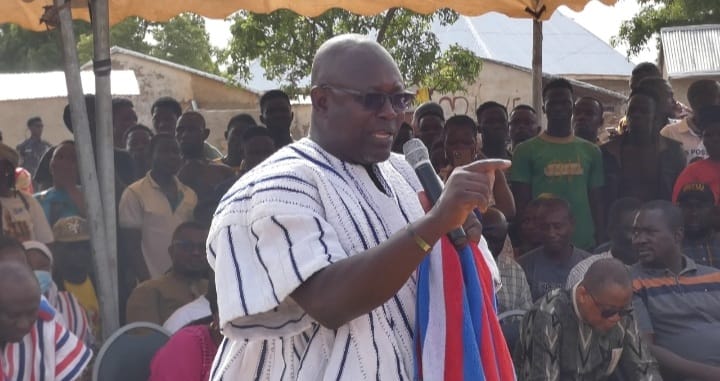
The Talensi Parliamentary candidate for the governing New Patriotic Party (NPP), Robert Alibo, has cautioned that the people of Talensi, particularly miners in the Gbane area, will hold Dr. Mahamudu Bawumia accountable for his mining policies if he becomes President in 2025. Apexnewsgh reports Alibo made this statement following Dr. Bawumia’s recent visit to Gbane, where he addressed small-scale miners and outlined his mining policy. The visit was seen as timely, and the message resonated with the miners, who were eager to hear his plans for the sector. According to Alibo, Dr. Bawumia’s policy promises to support local miners by granting them concessions and licenses to produce locally. However, he warned that if implemented, the policy would allow foreign investors to repatriate their profits back to their countries, such as China and Australia, while local miners would be expected to keep their gains within the country. During his visit, Dr. Bawumia officially endorsed Alibo as the NPP Parliamentary candidate for Talensi and urged the people to support him in winning the seat for the party. Meanwhile, Alibo’s warning serves as a reminder that the people of Talensi will be watching closely to ensure that Dr. Bawumia’s policies benefit the local community and not just foreign interests. However, these are Dr. Bawumia’s mining policy proposals Build strong collaboration between the government and all stakeholders. Properly plan and coordinate programmes aimed at dealing with illegal mining. Empower communities to protect their lands against illegal miners. Support small-scale miners with funding. Enforce relevant laws without fear or favour. Build the capacity of local miners to understand sustainable mining. On the other hand, Dr. Bawumia proposes the following measures to ameliorate the problems associated with small-scale mining in Ghana. Decentralise the Minerals Commission (MINCOM) and the Environmental Protection Agency (EPA). Establish District Mining Committees to issue temporary licenses. Establish a Minerals Development Bank to provide small-scale miners, access to finance. Introduce vocational and skills training programmes to build the capacity of small-scale miners. Regulate the small-scale mining sector to promote sustainable practices. Source: Apexnewsgh.com Please contact Apexnewsgh.com on email apexnewsgh@gmail.com for your credible news publications. Contact: 0248250270/0256336062.