
NDC Sets October Dates for Constituency Elections, Urges Calm and Order
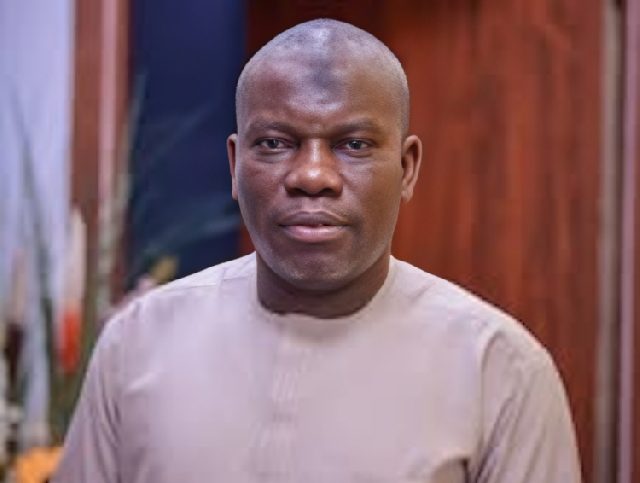
The National Democratic Congress (NDC) has announced that its constituency-level elections will be held on October 24 and 25, with party officials emphasizing the importance of peace and order throughout the process. Mahdi M. Gibrill, the party’s Director of Elections and IT, shared the news in a recent media engagement. According to Mr. Gibrill, the electoral guidelines have been carefully crafted to ensure that the upcoming polls are smooth, transparent, and free from conflict. “The arrangements and guidelines put in place are intended to ensure that the constituency elections are conducted smoothly, peacefully, and without unnecessary misunderstandings or conflict,” he stated. Mr. Gibrill also appealed to party members and supporters to exercise restraint in their language and behavior during the electoral period. “We are appealing to all party members to be mindful of their language and conduct and to avoid insults or actions that could create tension and undermine the peace of the elections,” he cautioned. Urging broad participation, he encouraged all members to respect the laid-down procedures and contribute to a peaceful, transparent, and orderly election. “We expect all members to conduct themselves responsibly and ensure that the elections are peaceful, transparent, and orderly,” Mr. Gibrill concluded. Source: Apexnewsgh.com
President Mahama Calls Urgent Security Summit to Tackle Ghana’s Border Vulnerabilities
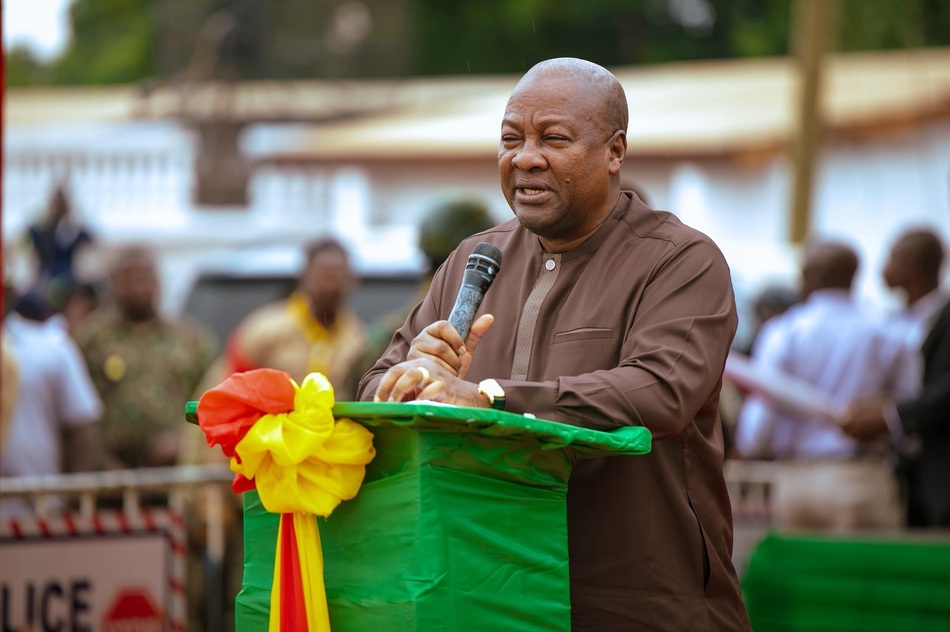
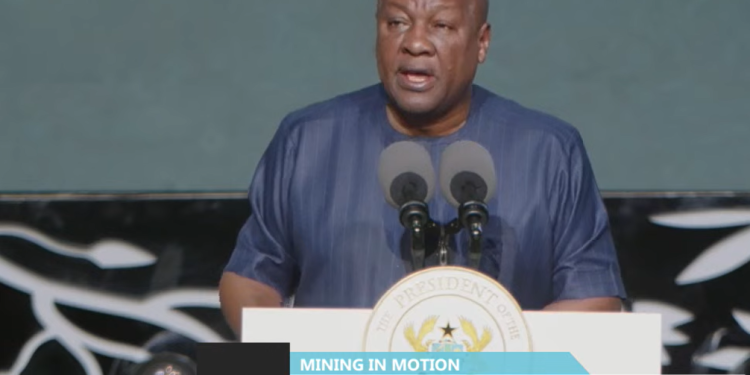
In response to rising concerns over the use of Ghana’s ports, airports, and land borders for trafficking illicit drugs, President John Dramani Mahama has summoned a high-level meeting of key security and regulatory agencies. The urgent summit is set for Thursday, September 17, 2026, at 12:30 PM at Jubilee House, Ghana’s seat of government. According to an invitation from Callistus Mahama, Secretary to the President, the meeting will bring together the nation’s top security, intelligence, port, and aviation authorities. The agenda is focused on identifying vulnerabilities in Ghana’s border security system, strengthening intelligence-sharing, enhancing cargo and passenger screening, improving inter-agency coordination, and deploying advanced technologies to disrupt narcotics trafficking. Amid growing concerns about Ghana being used as a conduit for narcotic drugs, the heads of several key institutions have been asked to attend in person, each accompanied by a relevant technical officer. Invitations have gone out to the Ministry of Finance, Ministry of Foreign Affairs, Ghana Ports and Harbours Authority, Customs Division of the Ghana Revenue Authority, Ghana Shippers’ Authority, Ghana Maritime Authority, Ghana Navy, National Intelligence Bureau, Ghana Police Service-Criminal Investigations Department/Interpol, Narcotics Control Commission, and Ghana Airports Company Limited. Terminal scanner operators, Meridian Port Services Limited and Ghana Link Network Services Limited, have also been summoned. Each institution is required to present a brief assessment of current security gaps and propose actionable recommendations for improving intelligence sharing, surveillance, screening, and joint enforcement operations. The invitation underscored the urgency of the gathering, citing the serious national-security implications of narcotics trafficking and calling for the personal attendance of the heads of all invited organizations. As Ghana seeks to safeguard its borders and reputation, the meeting is expected to produce decisive strategies for tightening security and curbing the flow of illicit substances through the country. Source: Apexnewsgh.com
MP Sosu Urges Protection of Ghana’s Image Amid Major Cocaine Seizure
It was a week of concern and reflection for Ghana as news broke that French customs had intercepted nearly 3.9 tonnes of cocaine, worth about $260 million, from a container of plastic waste shipped from Ghana to the port of Dunkirk. The staggering seizure sent shockwaves through international media, and at home, it led to a firm call for action from the Member of Parliament for Madina, Francis-Xavier Kojo Sosu. In a recent media interview, Sosu emphasized that Ghana’s hard-earned international reputation must not be tarnished by the misdeeds of a few. “Our nation’s global standing is a precious asset,” he stressed, “and we cannot allow the actions of individuals seeking to enrich themselves illegally to undermine our collective integrity.” Sosu urged authorities to launch a thorough investigation into the shipment and to ensure that anyone found responsible is swiftly brought to justice. He pointed out that under President John Dramani Mahama, Ghana had worked tirelessly to position itself as a respected leader in global diplomacy. He further commended the Foreign Affairs Minister, Samuel Okudzeto Ablakwa, for his ongoing efforts to project Ghana as a beacon of integrity and democracy in Africa. The MP’s remarks highlighted a deep concern: that the actions of a few must never be allowed to overshadow the honesty and diligence of the many. “We must stand united in transparency, accountability, and strict enforcement of the law,” Sosu concluded, “to protect the international reputation that Ghana has worked so hard to build.” Source: Apexnewsgh.com
NDC’s Hon. Atiah David aka “The General” declares intent to contest Bolgatanga East Communication officer position
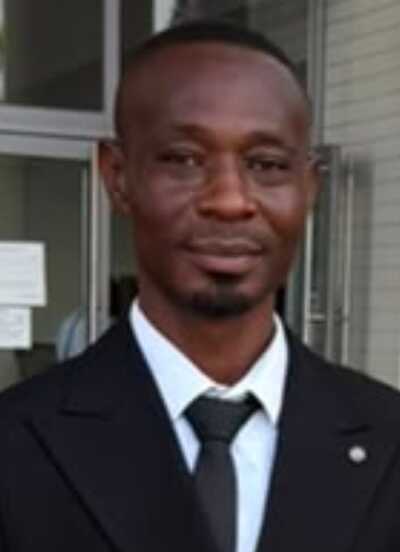
A leading member of the National Democratic Congress (NDC) in the Upper East Region, Hon. Atiah David , has declared his intention to contest for the communication officer position. Hon. Atiah David have served in several positions in the National Democratic Congress for over twelve (12) years ranging from Constituency Youth secretary, Constituency deputy secretary, Constituency treasurer, campaign team member, director of party orientation and research, member of Constituency elections committee, TEIN Member, Regional PRO for proforum( teachers front upper East region) and a member of Constituency and regional communications team etc. In student leadership, Hon. Atiah David has served as the SRC financial secretary in Gbewaa training college in 2012 and also as the SRC General Secretary at Valley View University in the year 2016. In a declaration issued on Tuesday, September 15, 2026, Hon. David said the decision follows months of broad and intense consultations with stakeholders and party elders in the constituency and the region. “After months of broad and intense consultation to contest the Bolga East communication officer position, on this day 15th September 2026 I, Hon. Atiah David therefore declare my intention to go ahead with my long-time ambition to assist with the communication strategy and commanding the narrative through simplifying the policies of the party in the Region,” he stated. Hon.Atiah David said his leadership will be rooted in honesty, transparency and accountability. According to him, political communication requires someone with a clear strategy that will help deciminate the policies and programs of the party to the average voter and citizen. He stated that his experience, competency and leadership capacity makes him the right candidate to lead the party’s communication machinery. He pledged to bring on board all communicators within the branches and resource them for prudent and effective communication ahead of the 2028 general elections. The communication officer position is a key role in the party’s administrative structure, responsible for decimination of the party’s ideology, policies and programs. Source: Apexnewsgh.com
Finance Minister Pledges Full Funding for Accra-Kumasi Expressway by December 2026
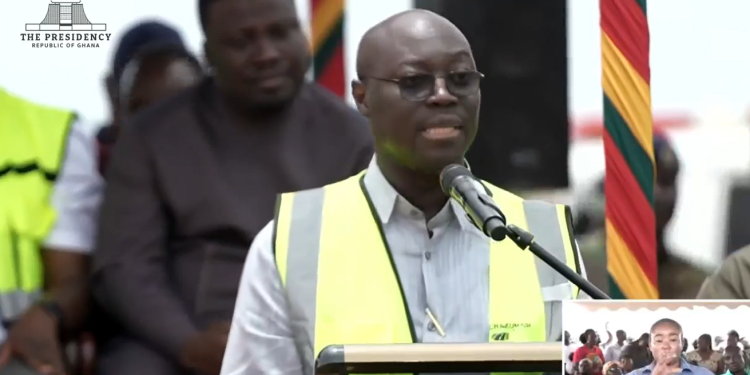
At a pivotal ceremony marking the handover of the 175.6-kilometre right-of-way for the Accra-Kumasi Expressway, Finance Minister Dr. Cassiel Ato Forson delivered welcome news: the full amount required for the ambitious expressway project will be ready by December 2026. Addressing officials and stakeholders on Monday, September 14, Dr. Ato Forson underscored the government’s unwavering commitment to securing all necessary resources. He revealed that the government had made significant arrangements to mobilise funding domestically, ensuring the project would proceed smoothly without financial roadblocks. Crucially, Dr. Forson assured the nation that the government would not resort to external borrowing to finance the expressway. “This handover clears the way for an expressway that will cut travel time and transport cost, improve road safety and set a new standard for our infrastructure delivery. As your Minister for Finance, I want to use this opportunity to assure the nation that the entire amount needed for the construction of this expressway will be ready by December 2026. For the avoidance of doubt, we will not borrow a Pesewa for this construction,” he declared. The announcement sets the stage for the next phase of the 198.7-kilometre expressway, a transformative road project expected to bolster connectivity between Ghana’s southern and central regions. The expressway promises to improve the flow of people and goods between Accra and Kumasi, reduce travel times and costs, and alleviate pressure on existing roads. Equipped with modern infrastructure, the project is also expected to significantly enhance road safety and meet rising traffic demands along one of the nation’s most important transport corridors. Dr. Ato Forson’s assurance of full domestic funding signals a new era in Ghana’s approach to infrastructure—one focused on sustainability and fiscal responsibility. Source: Apexnewsgh.com
President Mahama to Honour 48 Engineers Regiment for Early Completion of Accra-Kumasi Expressway Clearing
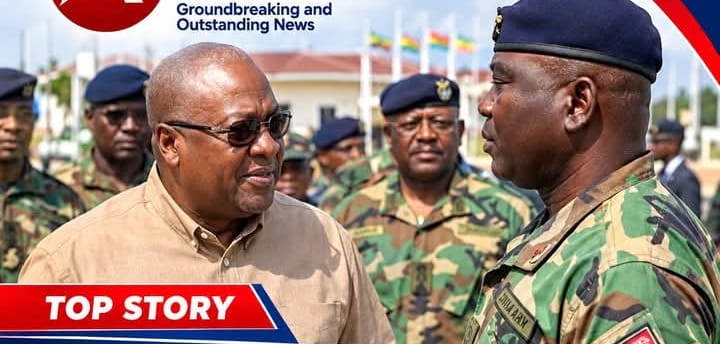
President John Dramani Mahama has revealed plans to confer a prestigious national honour on the 48 Engineers Regiment for their exemplary work in clearing the route for the much-anticipated Accra-Kumasi Expressway, ahead of schedule. On Monday, September 14, 2026, the government officially received the 175.6-kilometre cleared route from the military, marking a crucial milestone in preparations for the expressway’s construction. Addressing the handover ceremony, President Mahama lauded the regiment for completing the ambitious clearing exercise in just 19 weeks, a full week earlier than the 20 weeks originally planned. “In 20 weeks, I’m pleased to announce to the whole country Ghana that our armed forces have accomplished this mission. One week ahead of schedule, they did it in 19 weeks,” President Mahama told the gathering, his voice filled with admiration. The newly cleared path stretches from Ablekuma in the Greater Accra Region to Sewua in the Ashanti Region, carving through dense forests and traversing rivers and streams. President Mahama highlighted the scale of the achievement: “From Ablekuma in Greater Accra to Sewua in Ashanti Region, within 19 weeks, 175.6 kilometres of road passing through virgin forests, crossing rivers and streams, our Ghana Armed Forces can today announce to all of us as they say in military jargon, mission accomplished.” As a mark of recognition, the President announced, “I have given instructions that at the next national honours, which we shall do to mark the 70th anniversary of independence of the Republic of Ghana, the engineers regiment of the Ghana Armed Forces shall receive an Order of the Companion of the Volta.” The early completion of the clearing phase paves the way for the next stage of the Accra-Kumasi Expressway project. The planned expressway will eventually span 198.7 kilometres, providing a modern six-lane connection between Ghana’s capital and its second-largest city, an upgrade expected to boost economic activity and ease movement between the regions. With this recognition, the 48 Engineers Regiment stands as a symbol of dedication and efficiency, setting the tone for the transformative infrastructure project that lies ahead. Source: Apexnewsgh.com
Surge in Support: Dr. Ato Forson Overtakes Rivals in NDC’s 2028 Flagbearer Poll
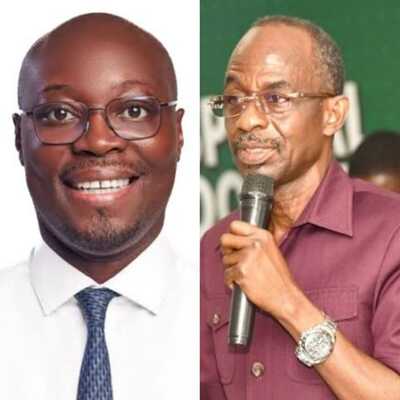
The Minister for Finance, Dr. Cassiel Ato Forson, has surged ahead in the race to lead the National Democratic Congress (NDC) into the 2028 presidential election. According to the latest poll conducted by Global InfoAnalytics, Dr. Ato Forson has experienced a remarkable 10-percentage-point leap in delegate support, rising from 22% in July to 32% in September. The story of this political momentum began to unfold when the Executive Director of Global InfoAnalytics, Mussa Dankwah, took to Facebook on Monday, September 14, 2026, to share the newest polling figures. The data revealed a significant shift in the NDC’s internal dynamics, with Dr. Forson now holding a commanding nine-point lead over his closest rival, NDC National Chairman Johnson Asiedu Nketia. In stark contrast to Dr. Forson’s rise, Asiedu Nketia’s support has slipped from 27% in July to 23% in September, a four-point drop that has altered the landscape of the contest. Despite Dr. Forson’s impressive gains, the poll highlighted that the race is far from settled. A substantial 28% of delegates remain undecided, though this is a slight decrease from the 30% recorded two months prior. The uncertainty among delegates suggests that while Dr. Forson enjoys new momentum, the outcome could still be swayed in the coming months. Further down the list, the Minister of Education, Haruna Iddrisu, saw his support dip by a point to 5%. Vice President Professor Naana Jane Opoku-Agyemang and Chief of Staff Julius Debrah each garnered 4%, reflecting modest declines from 7% and 5% respectively. Professor Joshua Alabi improved slightly to 2%, while Eric Opoku, the Minister for Food and Agriculture, remained steady at 1%. The poll, which surveyed 3,615 NDC delegates between September 11 and 13, 2026, boasted a 99% confidence level and a margin of error of ±2.17 percentage points. Analysts say these numbers reveal more than just a shift in percentages, they point to a changing tide within the NDC. Dr. Ato Forson stands out as the only leading contender to record a double-digit increase in support, signaling a potential realignment of power as the party looks ahead to 2028. As the dust settles on these latest figures, the focus now turns to how each contender will work to consolidate their support among the still-undecided delegates. With the race for the NDC’s flagbearer wide open, the coming months promise to be pivotal in shaping the party’s future. Source: Apexnewsgh.com
Roads Minister Calls for Innovative Funding and Private Sector Role to Bridge Ghana’s Transport Gap

Minister for Roads and Highways, Governs Kwame Agbodza, has called for fresh approaches to financing and delivering Ghana’s transport infrastructure, urging a greater role for the private sector to help close the country’s widening infrastructure gap. Speaking at the 2026 Transport Sector Review Conference in Ho, Volta Region, Mr. Agbodza argued that traditional public financing was no longer sufficient to develop and maintain the roads, bridges, and other critical transport links Ghana needs. The conference, held under the theme “Financing and Delivery of Resilient Transport Infrastructure and Services: A Big Push for Sustainable Economic Transformation,” gathered policymakers, development partners, private-sector representatives, transport unions, academia, and industry experts to chart the sector’s future. According to the minister, Ghana must mobilise additional resources, improve spending efficiency, strengthen asset management, and build an environment that attracts private capital. “The government would explore innovative and predictable financing mechanisms to ensure sustainable funding for infrastructure development and maintenance,” he said. Mr. Agbodza stressed that transport infrastructure should be seen as vital economic connectors, not just physical assets—enabling people, businesses, farmers, and communities to play their part in national growth. “This is why the government has placed the Big Push infrastructure programme at the centre of its development agenda,” he said. Launched in September 2025, the Big Push programme represents a bold national investment drive aimed at plugging infrastructure gaps and supporting economic transformation. Achieving its goals, Mr. Agbodza noted, will require effective financing, efficient project execution, and responsible asset management. The Minister also urged engineers and technical professionals to devise simpler, more cost-effective designs that do not sacrifice quality, durability, or safety. “Engineering solutions should take into consideration Ghana’s financial realities while ensuring that infrastructure remained fit for purpose and capable of serving the needs of communities over the long term,” he emphasised. Mr. Agbodza further called for managers of major transport facilities to prioritise safety and accessibility. He advocated for clear emergency exit signage and proper lighting, especially to aid travellers with visual impairments, stating, “Improving accessibility and safety should form an integral part of infrastructure planning rather than being treated as an afterthought.” He concluded by highlighting the necessity of strong collaboration among government, technical institutions, private-sector actors, and other stakeholders to mobilise the resources and expertise needed to transform Ghana’s transport sector. Source: Apexnewsgh.com
Education Minister Challenges Minority Leader on Claims of Crisis in School Placements

Education Minister Haruna Iddrisu has pushed back against claims by Minority Leader Alexander Afenyo-Markin that Ghana’s education sector is facing a crisis over school placements. Speaking on TV3’s “New Day” morning programme, as monitored by Gordon Sackitey, Mr. Iddrisu acknowledged that the government is indeed under significant pressure to respond to the concerns of students and parents, particularly in relation to the placement process. However, he cautioned against labelling the situation as a crisis, arguing that similar challenges have persisted under previous administrations. “Inadequate, for example, I’m struggling with placements. I am. As Minister, I would accept that we have come under overwhelming pressure to respond and be responsive to the needs of Ghanaian students and parents. But it does not mean we should exaggerate it as a crisis,” Mr. Iddrisu stated. A former Minority Leader himself, Mr. Iddrisu also addressed the current Minority leadership, emphasizing that the office carries significant responsibility and requires careful communication and consultation. He commended Mr. Afenyo-Markin’s performance but urged him to consult more widely and work collaboratively with his team. “The Honourable Osahen Alexander Afenyo-Markin is doing well but on a few enterprises of the Minority leadership, he needs to be doing more consultation and work with a team,” he said. Mr. Iddrisu further questioned whether the challenges being described as a crisis were new to Ghana’s education system, asking, “So when the Honourable Afenyo says crisis, did the crisis start one and a half years ago or…? He should provide answers.” Defending Ghana’s democratic credentials, the Minister described the country as a beacon of hope in Africa and stressed the importance of protecting its democratic ethos. He reiterated that the Office of the Minority Leader should be guided by facts and truth, stating, “The Office of the Minority Leader is a very important office. So when you are not sure, don’t speak.” The exchange comes amid renewed political debate over ongoing challenges in the education sector, especially the placement of students into Senior High Schools. Source: Apexnewsgh.com
Minority Demands Full Documentary Evidence on South Africa Evacuation Expenditure

The Minority in Parliament has intensified its demand for the government to provide comprehensive documentation detailing the costs incurred during the voluntary evacuation of Ghanaians from South Africa amid recent xenophobic attacks. The renewed call comes after a September 7 briefing by the Minister for Foreign Affairs, Samuel Okudzeto Ablakwa, who revealed that the government spent GH¢49.7 million to evacuate 1,964 Ghanaians from South Africa. While the Minority welcomed the disclosure, they insist that the minister’s statement must be substantiated with verifiable records that would allow Parliament and the public to independently confirm the expenditure. Deputy Ranking Member on Parliament’s Foreign Affairs Committee, Nana Asafo Adjei Ayeh, had previously filed a Right to Information (RTI) request seeking details of the evacuation, including full expense records and information on the individuals and organisations that contributed to the exercise. Addressing the press on Thursday, September 10, Asafo Adjei Ayeh clarified that the Minority is not seeking any private information about evacuees but is calling for documents necessary to verify the government’s financial account. “Nobody is asking government to publish passport, medical diagnosis, bank account numbers or other unnecessary private information. We are asking for enough documentary information to verify the public account,” he explained. The Minority supports the government’s decision to assist citizens wishing to return home and acknowledged the Foreign Affairs Minister’s disclosure as a positive step. However, they argue that public figures announced at a press conference are not sufficient for proper verification. According to Asafo Adjei Ayeh, the government’s claims that the operation is complete, all liabilities settled, 1,964 people evacuated, and GH¢49,721,786 spent must be supported by relevant financial and operational records. “If the books are closed, then let’s open the books. Let the travel ledger reconcile with the payment ledger. Let the first phase manifest reconcile with the final first phase number. Let every commercial batch reconcile with the ticket and invoice,” he urged. He added, “We do not need accusations where documents can provide answers. We do not need speculation where accounts can be established.” The Minority is therefore calling on the government to make a full documentary account of the evacuation operation available, arguing that such transparency would boost public confidence and demonstrate responsible use of public funds. Source: Apexnewsgh.com