



Converting NIB, adb to DBG would’ve been ‘very costly’ – Ofori-Atta
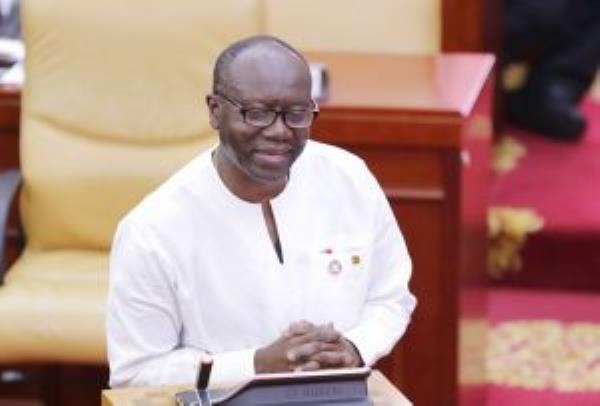
Finance Minister Ken Ofori-Atta has explained that the government decided to set up the Development Bank Ghana (DBG) from the scratch rather than converting one of the state-owned commercials banks such as National Investment Bank (NIB) and the Agricultural Development Bank (adb) for that purpose because it would have been too costly going for the latter option. DBG is an integral feature of the GH¢100-billion Ghana Cares ‘Obaatampa’ Project, which is seeing to the revitalisation of the Ghanaian economy following the onset of COVID-19. The Ministry of Finance and the European Investment Bank (EIB) recently signed an agreement for the provision of a €170-million facility for the establishment of DBG. This signing event took place on Wednesday, 19 May 2021, when President Nana Addo Dankwa Akufo-Addo held a meeting with the President of EIB, Dr Werner Hoyer, as part of his official visit to Belgium. The €170-million facility, according Dr Hoyer, is the largest facility provided by EIB for the establishment of a development bank in Africa or for any other project, for that matter, on the continent. Speaking at the signing ceremony, President Akufo-Addo noted that “the Development Bank Ghana is going to play a very important part in the rapid economic transformation of Ghana, following the onset of COVID-19.” According to him, “we want to restructure the economy, and move it from being a mere producer and exporter of raw materials, to one that places much greater emphasis on value addition activities. We see this Bank (DBG) as one that will play a pivotal role in this”. Dr Hoyer, for his part, was confident that the establishment of DBG will help unlock opportunities for growth in Ghana, as well assist in the rapid recovery of the Ghanaian economy from the ravages of COVID-19. He noted that the establishment of the Bank is in line with the objectives of the European Union, and will help develop Ghana’s private sector, agri-business, manufacturing and ICT initiatives. While describing the decision to establish DBG as “a wise one”, the EIB President added that the bank sees the partnership with Ghana as a fruitful one, indicating that the EIB will follow keenly the development and workings of DBG in Ghana. Some critics, however, raised issues about the move to set up a new bank after the government, through the Bank of Ghana, collapsed some nine local banks in the financial sector clean-up exercise during President Akufo-Addo’s first term of office. One of those critics is A Plus, who questioned why the Akufo-Addo administration spent more than GHS21 billion “to collapse banks that needed about GHS9 billion to survive” but now “borrowing 170 million euros to establish a new national bank when you already have NIB which is struggling; adb which is struggling”, as well as GCB Bank and CBG. “Ghana beyond aid but you are borrowing money to start a national bank”, A Plus observed. Addressing such criticisms at a press conference on Thursday, 20 May 2021, Mr Ofori-Atta said: “Work on the DBG started in 2018 with a task force of industry experts established by the government to recommend the best approach to establish a modern and dynamic development bank”. Based on the recommendation of the task force, he said the government decided to set up DBG “as a new non-deposit-taking-wholesale-bank under the Companies Act”. DBG, as a wholesale and non-deposit taking bank, Mr Ofori-Atta added, “requires no branch network and minimal staff”. “It will, therefore, be very costly – financially and in terms of closure of branches and employment loss – to try to convert adb or NIB into a viable modern development bank”, he noted. “The advantage we foresee of a greenfield approach is that one gets to start from a clean slate, with no legacy financial, governance and other issues. This allows us to focus on the future and move straight into setting up DBG equipped with modern and sound design principles”, Mr Ofori-Atta explained. According to him, the greenfield approach also has the potential to attract more private and international institutional capital “as we have witnessed with EIB’s €170 million facility”. “It also the government’s plan to attract other shareholders, both domestic and international, so as to increase DBG’s capital base and also reduce the government’s share over time”, he added. Read the Finance Minister’s full statement below: A New Engine for Ghana’s Economic Transformation Good Evening Ladies and Gentlemen of the media, senior staff of the Ministry. It is a pleasure to hold a press conference today on the back of the President of the Republic, Nana Akufo-Addo signing of a €170m loan agreement with the European Investment Bank in Brussels yesterday. As it was captured, the European Investment Bank, among other international development institutions, are supporting our effort to establish a new development finance institution here in Accra, the Development Bank Ghana (DBG). DBG is a key pillar in our efforts to quickly recover from the effects of the COVID-19 pandemic and quickly resume our economic transformation path as articulated in the Ghana CARES/Obantanpa Programme. It is intended to be a model institution that supports the financial system to play its role in supporting the private sector to expand and create jobs. DBG will help address two important constraints in our financial system, namely the lack of long-term funding, and the lack of adequate funding to the productive sectors of the economy. Currently, less than 15% of loans given out by banks are for 5 years or longer, making investment in long gestation project very difficult for our private sector. The agriculture and manufacturing sectors receive around 4% and 8%, respectively, of banks loans compared to their shares in GDP and employment and potential for driving economic transformation. Primary Focus Areas of DBG will be: Agribusiness, with a focus on off-farm value-chain activities Manufacturing ICT, software, and allied services, including Business-Process Outsourcing, and Tourism Boosting homeownership through affordable and longer tenure Mortgage Finance DBG is not similar to the existing commercial banks that we have
SIM re-registration: ‘Ill-informed Bawumia’ using wrong approach to tackle e-money fraud — Haruna Iddrisu

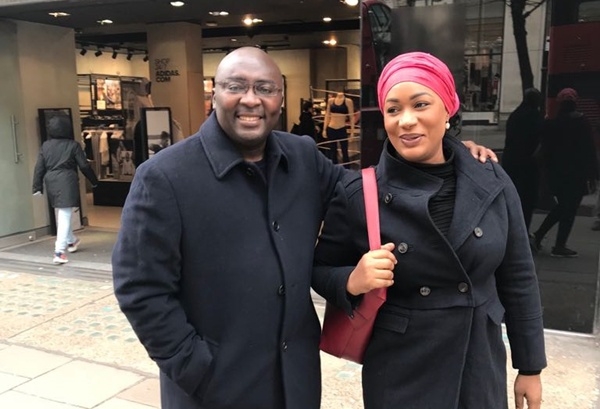
Minority leader, Haruna Iddrisu, has lashed out at the Vice President, Dr. Mahamudu Bawumia over his recent comments about SIM card re-registration in Ghana. Dr. Bawumia, while speaking at the 5th Ghana CEO Summit in Accra, said in June 2021, all mobile phone users in the country would be expected to re-register their SIM cards or risk having their phone numbers deactivated. According to Haruna Iddrisu, undertaking a SIM re-registration exercise will not solve the issue of Mobile Money fraud as expected by Dr. Bawumia. He said the Vice President is “ill-informed, inept and highly naive,” with that assumption. “The solution to the challenges of fraud within the electronic money ecosystem goes beyond SIM registration,” he said. “We hold the view that the mandatory re-registration of SIMS provides no substantial benefit in the fight against electronic money fraud, and will face practical challenges such as inbound travellers who require a SIM card without a national ID,” he added. Haruna Iddrisu, in explaining why he believes the plan as announced by Dr. Bawumia is impracticable, said the suggestion that only the Ghana card would be accepted as an identification document for the exercise will mean that many Ghanaians will be left out since they do not have the card, while others who registered for the card are yet to receive them. “The number of issued cards is only a pale shadow of the eligible population. The reality is that there have been only 17 million registrations done of the Ghana Card. This represents 55% of our population. An even smaller proportion of the population has actually received their cards. It needs no saying therefore, that there are practical difficulties associated with the card as it is facing systemic and operational difficulties in its rollout,” Haruna Iddrisu said. Again, he argued that attacks on mobile money vendors are more of a bigger challenge that needs to be addressed and that cannot be tackled by re-registration of SIM. He also made a case about the poor timing of the exercise especially in the wake of the COVID-19 pandemic, adding that the government needs to be transparent and ensure full disclosure if the exercise is expected to be undertaken. “If the Vice President really desires simple solutions, he should consider instructing the BoG and the NCA to set key performance indicators for the mobile network operators (MNPs) about electronic money fraud and with consequences for breaches.” “The Vice President should urge subtly or overtly the MNOs to invest – proportionate to market share in advanced cybersecurity systems including additional personnel. These have been known to achieve monumental success stories in other jurisdictions with similar ecosystems.” Haruna Iddrisu expressed his conviction that a re-registration exercise will achieve very little and impose unnecessary burden on the citizenry. Apexnewsgh.com/Ghana/Ngamegbulam Chidozie Stephen Please contact Apexnewsgh.com on email apexnewsgh@gmail.com for your credible news publications. Contact: 05555568093
BoG releases list of approved electronic money issuers and payment service providers
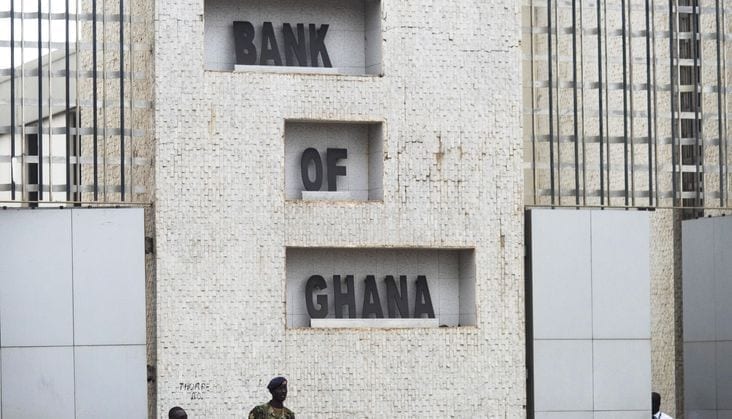
The Bank of Ghana (BoG) has released the list of approved electronic money issuers and payment service providers. The central released the list following the passage of the Payment Systems and Services Act, 2019 (Act 987) and the publication of Notice number BG/GOV/SEC/2020/07 on Licensing Application Pack for Payment Service Providers. “The Bank of Ghana announces for the information of the general public that the institutions listed below have received regulatory approval to operate as payment service providers: Institution Lic Please contact Apexnewsgh.com on email apexnewsgh@gmail.com for your credible news publications. Contact: 0555568093
GHANA’S GDP GROWTH RATES FOR SELECTED YEARS

Table 2: GDP Growth Rates – 2010 – 2019 YEAR GDP GROWTH RATE % 2019 6.48 2018 6.26 2017 8.14 2016 3.45 2015 2.18 2014 2.9 2013 7.31 2012 9.29 2011 14.05 2010 7.9 Data Source: World Bank (as cited in Macrotrends, 2020) Figure 2: GDP Growth Rates – 2010 – 2019 Data Source: World Bank (as cited in Macrotrends, 2020) Ebenezer Ashley (PhD), Chartered Economist / Business Consultant Apexnewsgh.com/Ghana/ngamegbulam Chidozie Stephen Please kindly contact Apexnewsgh.com on Email: apexnewsgh@gmail.com for your credible news publications