
Joint action needed to secure recovery – IMF
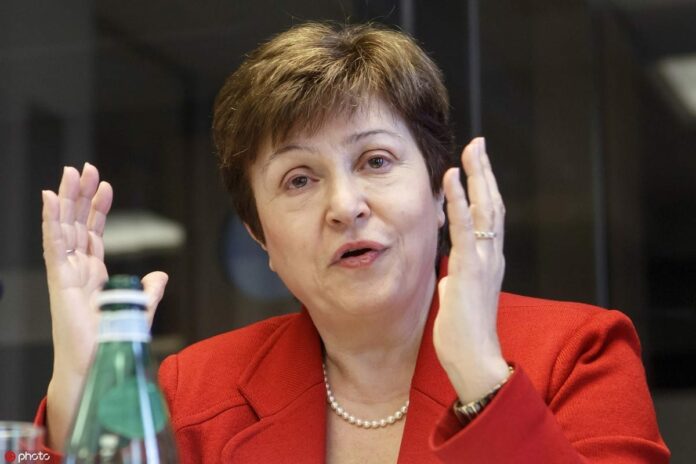
G20 should lead in sharing vaccine doses, helping developing countries financially, and committing to reaching net-zero carbon emissions by mid-century. When G20 leaders gather in Rome this weekend, they can take inspiration from the bold design of the meeting venue, known as La Nuvola. Just as the architect created a striking new space, global leaders must take bold action now to end the pandemic and create space for a more sustainable and inclusive economy. The good news is that the foundations for recovery remain strong, because of the combined effect of vaccines and the extraordinary, synchronized policy measures led by the G20. Yet our progress is held back especially by the new virus variants and their economic impact, as well as supply-chain disruptions. G20 leaders have a once-in-a-generation opportunity to move the carbon needle. The IMF recently reduced its global growth forecast to 5.9 percent for this year. The outlook is highly uncertain, and downside risks dominate. Inflation and debt levels are rising in many economies. The divergence in economic fortunes is becoming more persistent, as too many developing countries are desperately short of both vaccines and resources to support their recoveries. So, what should be done? Our new report to the G20 calls for decisive actions within each economy. For example, monetary policy should see through transitory increases in inflation, but be prepared to act quickly if risks of rising inflation expectations become tangible. Here, clear communication of policy plans is more important than ever to avoid adverse spillovers across borders. Carefully calibrating monetary and fiscal policies, combined with strong medium-term frameworks, can create more room for spending on healthcare and vulnerable people. These calibrations can deliver quick benefits through 2022. After that, growth-enhancing structural reforms provide the bulk of added gains—think of labor market policies that support job search and retraining, and reforming product market regulations to create opportunities for new firms by reducing barriers to entry. Such a package of short-to-medium-term policies could boost aggregate real GDP in the G20 by about $4.9 trillion through 2026. First, end the pandemic by closing financing gaps and sharing vaccine doses. The pandemic remains the biggest risk to economic health, and its impact is made worse by unequal access to vaccines and large disparities in fiscal firepower. That’s why we need to reach the targets put forward by the IMF, with the World Bank, WHO, and WTO—to vaccinate at least 40 percent of people in every country by end-2021, and 70 percent by mid-2022. But we are still behind: some 75 nations, mostly in Africa, are not on track to meet the 2021 target. To get these countries on track, the G20 should provide about $20 billion more in grant funding for testing, treatment, medical supplies, and vaccines. This additional funding would close a vital financing gap. We also need immediate action to boost vaccine supply in the developing world. While G20 countries have promised more than 1.3 billion doses to COVAX, fewer than 170 million have been delivered. Thus, it is critical that countries deliver on their pledges immediately. Equally important is swapping delivery schedules for doses already under contract, allowing the buyer with more urgent needs to go first. Countries with high vaccination coverage should swap delivery schedules with COVAX and AVAT to speed up deliveries to vulnerable countries. We must take these and other measures to save lives and strengthen the recovery. If COVID-19 were to have a prolonged impact, it could reduce global GDP by a cumulative $5.3 trillion over the next five years, relative to the current projection. We must do better than that! Second, help developing countries cope financially. Even as the global recovery continues, too many countries are still hurting badly. Think of how the pandemic caused a spike in poverty and hunger, lifting to more than 800 million the number of people who were undernourished in 2020. In this precarious situation, vulnerable nations must not be asked to choose between paying creditors and providing health care and pandemic lifelines. Indeed, some of the world’s poorest countries have benefited from the temporary suspension of sovereign debt payments to official creditors, initiated by the G20. Now we must speed up the implementation of the G20’s Common Framework for debt resolution. The keys are to provide more clarity on how to use the framework and offer incentives to debtors to seek Framework treatment as soon as there are clear signs of deepening debt distress. Early engagement with all creditors, including the private sector, and faster timelines for debt resolution will make a difference in the role and attractiveness of the Common Framework. Providing help to deal with debt is important, but it’s not enough. Given their massive financing needs, many developing nations will need more support with raising revenue, as well as more grants, concessional financing, and liquidity support. Here the IMF has stepped up in unprecedented ways, including through new financing for 87 countries and a historic allocation of Special Drawing Rights of $650 billion. Countries have already benefitted from holding the new SDRs as part of their official reserves. And some are using part of their SDRs for priority needs, such as vaccine imports, boosting vaccine production capacity, and supporting the most vulnerable households. We are now calling on countries with strong external positions to voluntarily provide part of their allocated SDRs to our Poverty Reduction and Growth Trust, increasing our ability to provide zero-interest loans to low-income countries. Third, commit to a comprehensive package to reach net-zero carbon emissions by mid-century. New IMF staff analysis projects that increasing energy efficiency and transitioning to renewables could be a net job creator, because renewable technologies tend to be more labor-intensive than fossil fuels. In fact, a comprehensive investment plan with a combination of green supply policies could lift global GDP by about 2 percent this decade—and create 30 million new jobs. In other words, as we strive to reach net-zero emissions, we can boost prosperity—but only if we act together and help ensure a transition that benefits all. The most vulnerable within societies and among countries will need more help making the
Ghana recorded positive growth rate of 0.9% in 2020 – Kyei Mensah Bonsu

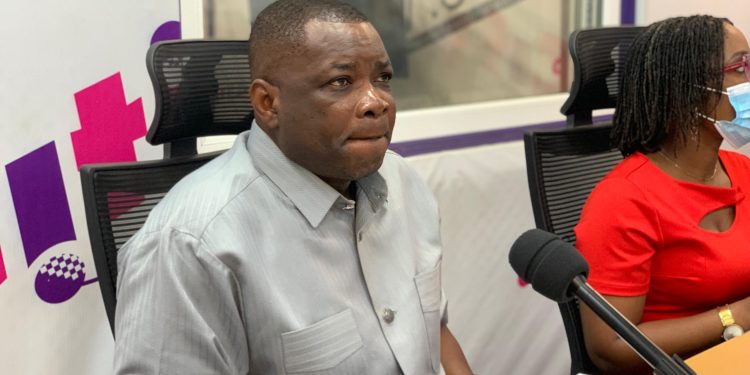
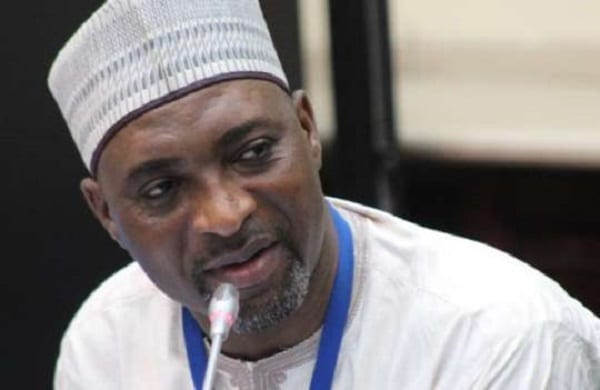
Majority Leader and the caretaker Minister for Finance Osei Kyei-Mensah-Bonsu has disclosed that the country recorded a positive growth rate of 0.9% in 2020. According to him, this is contrary to negative projections made by the International Monetary Fund (IMF) and other bodies. Mr. Kyei-Mensah-Bonsu made this known when he appeared before Parliament to present the government’s budget statement for 2021. According to him, this was achieved through the prudent management of the economy by the Akufo-Addo administration. “I stand here on behalf of the President to present to the House, the state of the economy and how we have managed to mitigate and survive the pandemic with a projected positive growth rate of 0.9% in 2020, contrary to fears of a negative growth rate as experienced in many countries,” he said. Why did Osei Kyei Mensah-Bonsu read the budget? Ken Ofori-Atta, who served as Finance Minister in Akufo-Addo’s first term from 2017 to 2021, was nominated by President Akufo-Addo in January 2021 to serve in the same portfolio in his second term, but he is yet to be vetted by Parliament’s Appointments Committee due to health reasons. Ahead of his scheduled date for vetting, the Finance Ministry announced in a statement on February 14, 2021, that Ken Ofori-Atta was being flown to the UK to receive medical attention after suffering complications from COVID-19. According to the ministry, he recovered from the disease but suffered some complications later. His constitutional duty of delivering the 2021 Budget Statement and Economic Policy in Parliament has already been tasked to Osei Kyei-Mensah-Bonsu. Economy to rebound strongly as GDP growth nears 5% President Nana Akufo-Addo during the state of the nation address said Ghana is expected to have a GDP growth rate of about 5 percent following a year affected by the COVID-19 pandemic. According to him, this is in line with the 4.9 percent growth projection made by the Finance Ministry in 2020. “We expect GDP growth to rebound strongly this year to nearly 5 percent; above the IMF’s 2021 January projection of 3.2 percent for sub-Saharan Africa for 2021,” the President said. The global economy is projected to grow by 5.5 percent in 2021 and 4.2 percent in 2022. citinewsroom Please contact Apexnewsgh.com on email apexnewsgh@gmail.com for your credible news publications. Contact: 0555568093