




GMOs are Tools of New Colonialism– Professor Felix Longi
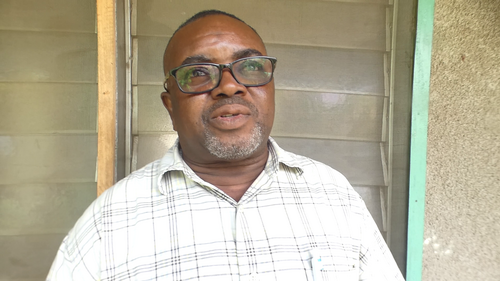
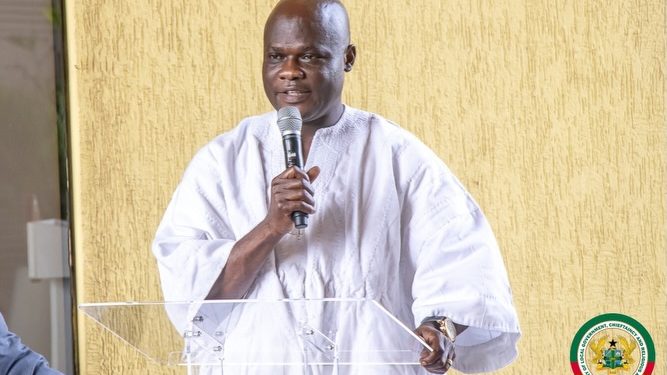
Associate Professor Felix Y. T. Longi of the University of Development Studies has sounded a warning against the use of Genetically Modified Organisms (GMOs) in Ghana’s agricultural sector. Apexnewsgh reports Speaking at a regional stakeholders’ dialogue organized Millar Institute for Transdisciplinary and Development Studies at the northern regional capital Tamale on Monday, July 8, 2024, Prof. Longi described GMOs as “tools of new colonialism” designed to maintain Ghana’s dependence on its former colonial masters. The renowned historian emphasized that the adoption of organic manure, such as grass biochar, is critical to breaking free from the shackles of colonialism. He noted that many farmers in northern Ghana are unable to produce their own seeds and are forced to rely on perpetual seed suppliers, perpetuating the cycle of dependence. Prof. Longi believes that by embracing grass biochar and organic manure, Ghana can decolonize its agricultural sector, enrich its lands, and produce bio-organic food. He urged researchers to focus on this critical area to promote indigenous knowledge systems and break away from Westernized colonial ideas that have hindered Ghana’s progress. The professor’s call to action resonates with the need for sustainable and self-sufficient agricultural practices in Ghana. As the country moves forward, it is essential to prioritize indigenous knowledge systems and environmental sustainability over colonialist ideologies that have hindered progress for far too long. Source: Apexnewsgh.com Thanks for reading from Apexnewsgh as a news publishing website from Ghana. We encourage you to freely share this story via social media platform and follow us on; Facebook on APEXNEWSGH-Tv or Please contact Apexnewsgh.com on email apexnewsgh@gmail.com for your credible news publications. Contact: 0248250270/0256336062
Prof. Felix Y. T. Longi Advocates for Grass Biochar Adoption in Ghana

Associate Professor Felix Y. T. Longi, a social historian at the University of Development Studies, has thrown his weight behind the promotion of grass biochar as a sustainable alternative to traditional charcoal. Apexnewsgh reports Speaking at a regional stakeholders’ dialogue organized by the Millar Institute for Transdisciplinary and Development Studies on Monday, July 8, 2024 in Tamale , Prof. Longi emphasized the enormous benefits of grass biochar, including environmental protection, climate change mitigation, and improved agricultural production. He envisioned a future where a consortium of like-minded individuals would come together to organize a national or international conference to share research findings and best practices on grass biochar. By adopting grass biochar, Ghana can reduce its reliance on fuel wood and chemical fertilizers, which have harmful environmental and health impacts. Prof. Longi also pointed the importance of decolonizing knowledge production and promoting indigenous knowledge systems. He believes that by embracing grass biochar and organic manure, Ghana can break free from the shackles of colonialism and develop a more sustainable and self-sufficient agricultural sector. The historian emphasized that the time has come for Ghana to take steps towards self-reliance and environmental sustainability, citing examples of other countries that have successfully made the transition. He urged stakeholders to support the grass biochar initiative, which he believes has the potential to transform Ghana’s agricultural landscape. Source: Apexnewsgh.com Thanks for reading from Apexnewsgh as a news publishing website from Ghana. We encourage you to freely share this story via social media platform and follow us on; Facebook on APEXNEWSGH-Tv or Please contact Apexnewsgh.com on email apexnewsgh@gmail.com for your credible news publications. Contact: 0248250270/0256336062
GhaFFaP President Advocates for Sustainable Practices and Grass Biochar Application
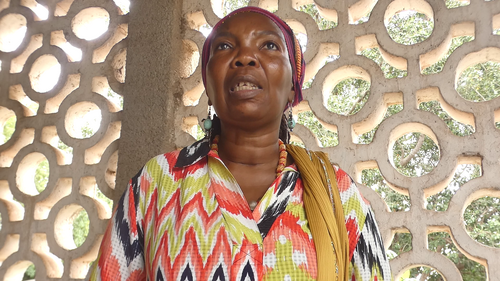
The National President of the Ghana Federation of Forest and Farm Producers (GhaFFaP) and a leader for Savannah Women Farmer Association (SWFA), Madam Alima Sagito Saeed, has stressed the need for sustainable practices and the application of grass biochar to improve soil fertility and promote environmentally conscious farming methods. Apexnewsgh reports Speaking at a stakeholders’ dialogue in Tamale, Madam Alima highlighted the federation’s goal of ensuring its members achieve the best possible outcomes from their investments in land and farming practices. She noted that soil fertility has become a significant issue affecting farmers but emphasized that alternatives like grass biochar can provide opportunities for improvement. The GhaFFaP president further emphasized the importance of adopting environmentally conscious practices to ensure sustainability and highlighted the federation’s efforts to restore sustainable practices and promote knowledge management over the past four years. According to Madam Alima, the federation has collaborated with the Millar Institute for Transdisciplinary and Development Studies, a research and knowledge management institution, to produce sustainable products and promote sustainability awareness. The stakeholders’ dialogue brought together state institutions, community development organizations, and partners to discuss alternative approaches to restoring forests, lands, and livelihoods. Madam Alima stressed the importance of adding value to grassroots initiatives and promoting sustainable practices to ensure a sustainable future for farming communities. She believes, the application of grass biochar, as introduced by the Millar Institute, is seen as a key solution to improving soil fertility and promoting sustainable farming practices. “By adopting this approach, farmers can improve their yields, reduce environmental degradation, and contribute to sustainable agriculture practices in Ghana”. She stressed Source: Apexnewsgh.com Thanks for reading from Apexnewsgh as a news publishing website from Ghana. We encourage you to freely share this story via social media platform and follow us on; Facebook on APEXNEWSGH-Tv or Please contact Apexnewsgh.com on email apexnewsgh@gmail.com for your credible news publications. Contact: 0248250270/0256336062
Grass Biochar: Project Supervisor Advocates for Sustainable Agriculture Practices
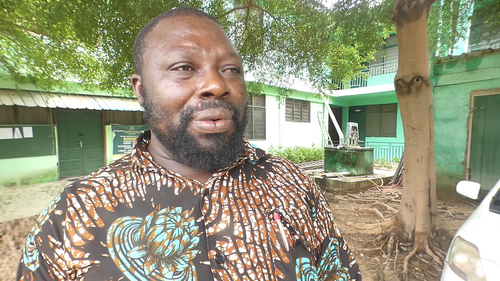
Dr. Maxwell Tengolzor Ba-an, the Charcoal Briquette and BioChar Project Supervisor at Millar Institute for Transdisciplinary and Development Studies (MITDS), recently spoke at a regional workshop in Bolgatanga, emphasizing the importance of biochar in sustainable agriculture. Apexnewsgh reports The workshop brought together stakeholders from various organizations to discuss policies and strategies for climate change mitigation, sustainability, and agriculture. Dr. Ba-an highlighted the benefits of biochar, a product made from grass, which can be used as a sustainable alternative to chemical fertilizers. He explained that biochar improves soil fertility, structure, and water-holding capacity, making it an effective tool for environmental sustainability and climate change mitigation. The project, which has received funding for two years, aims to train women in rural communities to produce biochar and use it to improve their crops. Dr. Ba-an emphasized that biochar is a cost-effective and environmentally friendly solution for rural farmers, unlike chemical fertilizers which are expensive and harmful to the soil. The project has already seen success in the Northern region, where five men’s groups have been trained to produce biochar. Dr. Ba-an expressed his hope for the project to influence national policies and promote sustainable agriculture practices. In his role as field supervisor, Dr. Ba-an oversees the training of women in the production and use of biochar. He emphasized the importance of empowering women in agriculture and promoting sustainable practices to protect the environment and mitigate climate change. The biochar project is a step towards achieving sustainable agriculture and environmental sustainability in Ghana. With its potential to improve soil fertility, reduce chemical fertilizer use, and mitigate climate change, biochar is an innovative solution for rural farmers and a promising tool for sustainable development. Source: Apexnewsgh.com Thanks for reading from Apexnewsgh as a news publishing website from Ghana. We encourage you to freely share this story via social media platform and follow us on; Facebook on APEXNEWSGH-Tv or Please contact Apexnewsgh.com on email apexnewsgh@gmail.com for your credible news publications. Contact: 0248250270/0256336062.
Grass BioChar is extremely important for soil regeneration and fertility–Abena Offen-Gyimah

Abena Offen-Gyimah of THE BEELA PROJECT has hailed Prof. David Millar’s BioChar innovation as a timely solution for farmers struggling with soil regeneration and fertility in the context of climate change. Apexnewsgh reports Speaking after a regional workshop in Bolgatanga, she emphasized the importance of supporting farmers in adopting sustainable practices. “BioChar is extremely important for soil regeneration and fertility, and it’s essential to support farmers in finding ways to regenerate soil health with minimal chemical inputs,” she said. “I think this initiative is excellent, and I’m excited to see its implementation across various communities in the Upper East.” Abena stressed the need for demonstrations and awareness campaigns to educate farmers on the benefits of BioChar, particularly in utilizing grass that would otherwise be burned or buried. She believes that government adoption and policy support are crucial for long-term sustainability and encouraging farmers to adopt BioChar practices. “To make it sustainable, government needs to adopt a policy on BioChar, support farmers who use it, and reward them for their efforts,” she said. “Incorporating local governance and traditional leaders in the implementation process will also be essential.” The BioChar innovation has the potential to transform agriculture in Ghana, and with government support, it could become a game-changer for farmers struggling with climate change. Source: Apexnewsgh.com Thanks for reading from Apexnewsgh as a news publishing website from Ghana. We encourage you to freely share this story via social media platform and follow us on; Facebook on APEXNEWSGH-Tv or Please contact Apexnewsgh.com on email apexnewsgh@gmail.com for your credible news publications. Contact: 0248250270/0256336062
Locally Sourced Grass Biochar Offers Sustainable Solution for Soil Fertility–Prof. David Millar
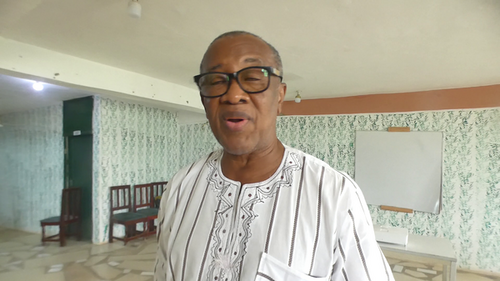
Professor Millar, President of the Millar Institute for Transdisciplinary and Development Studies (MITDS), has highlighted the significance of grass biochar in improving soil fertility, particularly in rural areas. Apexnewsgh reports Speaking at a regional workshop in Bolgatanga, Prof. Millar emphasized that the resources required for biochar production are readily available at the local level, unlike chemical fertilizers. The MITDS, in collaboration with Ghana Federation of Forest and Farm (GhaFFap)/ Forest and Farm Facilities(FFF) is implementing three major projects: grass paper production, charcoal production, and tree planting for reforestation and water conservation. While paper production requires industrial-scale investment, charcoal and biochar production can be done at the community level, empowering farmers to take ownership of their soil fertility. Prof. Millar stressed that a ten-year funding commitment for these projects could lead to a significant environmental impact in the northern region of the country. By charring grass, farmers can create natural fertilizer, reducing the need for chemical fertilizers and the risk of bush fires. This approach also promotes natural regeneration and carbon sequestration, with calculated benefits. Cost-benefit analyses have shown that using biochar is more economical than chemical fertilizers, and the resources required are readily available to farmers at little to no cost. This sustainable solution has the potential to improve livelihoods and mitigate environmental degradation and climate change. Source: Apexnewsgh.com Thanks for reading from Apexnewsgh as a news publishing website from Ghana. We encourage you to freely share this story via social media platform and follow us on; Facebook on APEXNEWSGH-Tv or Please contact Apexnewsgh.com on email apexnewsgh@gmail.com for your credible news publications. Contact: 0248250270/0256336062.
BioChar Innovation: A Game-Changer for Kessena Nankana West District–NADMO Director

Mr. Asoriya Albert, District NADMO Director of Kessena Nankana West, has embraced the BioChar innovation as a revolutionary solution for his community’s development. Apexnewsgh reports Speaking at a recent workshop organized by the Millar Institute in Bolgatanga, he expressed his enthusiasm for the technology, which converts waste materials into valuable resources. “This program is telling me to use my own waste material to make myself better and my people better,” he said. “I’m interested in learning the technology of making BioChar, and I believe I can make money from it.” Mr. Albert highlighted the challenges his district faces with bushfires and grass burning, which pose a significant threat to their livelihoods. He expressed his gratitude to the Millar Institute for introducing this innovation, which he believes will help his community convert waste into a valuable resource, reducing the risk of fires and generating income. “This knowledge is worth more than money,” he emphasized. “I’m willing to learn and adopt this technology to improve my life and the lives of my people.” The BioChar innovation has the potential to transform the Kessena Nankana West District, providing a sustainable solution for waste management, income generation, and environmental protection. With enthusiastic leaders like Mr. Albert on board, the future looks bright for this community. Source: Apexnewsgh.com Thanks for reading from Apexnewsgh as a news publishing website from Ghana. We encourage you to freely share this story via social media platform and follow us on; Facebook on APEXNEWSGH-Tv or Please contact Apexnewsgh.com on email apexnewsgh@gmail.com for your credible news publications. Contact: 0248250270/0256336062.
Grass Biochar: Community Resource Management Executive Secretary Lauds Prof. Miller’s Biochar Innovation
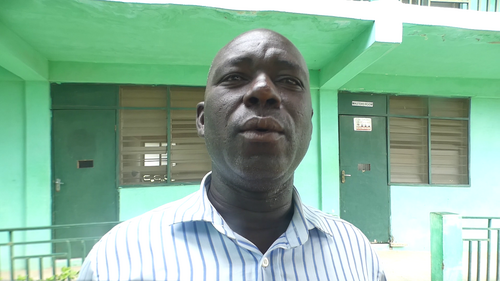
Mr. Pwamebam Frank, Executive Secretary of Community Resource Management, has praised Prof. Miller’s biochar innovation, hailing it as a game-changer for the region. Apexnewsgh reports Speaking at a regional stakeholder workshop organized by the Millar Institute in Bolgatanga, Upper East regional capital, Mr. Frank noted that the innovation will significantly reduce the costs of chemical fertilizers, leading to improved health and economic benefits for the community. Economic and Environmental Benefits Mr. Frank highlighted the numerous benefits of biochar, including reduced chemical consumption, improved health, and increased food sovereignty. He also noted that the innovation will help protect the environment by reducing deforestation and pollution in water bodies. Empowering Communities Mr. Frank encouraged the adoption of biochar, citing its potential to improve education and livelihoods. He emphasized that the innovation is demand-driven and can be easily adopted by farmers, leading to increased yields and reduced costs. Call to Action Mr. Frank urged the Institute and Prof. David Millar to continue researching and promoting biochar, exploring its diverse uses, including biochar powder for tea and other products. He expressed his gratitude for the innovation and its potential to bring economic benefits to individuals and the community. In summary, Mr. Pwamebam Frank has lauded Prof. Millar’s biochar innovation as a revolutionary solution for sustainable agriculture, economic growth, and environmental protection in the Upper East region and beyond. Source: Apexnewsgh.com Thanks for reading from Apexnewsgh as a news publishing website from Ghana. We encourage you to freely share this story via social media platform and follow us on; Facebook on APEXNEWSGH-Tv or Please contact Apexnewsgh.com on email apexnewsgh@gmail.com for your credible news publications. Contact: 0248250270/0256336062.
Pwalugu Multi-Purpose Dam Advocacy Brief
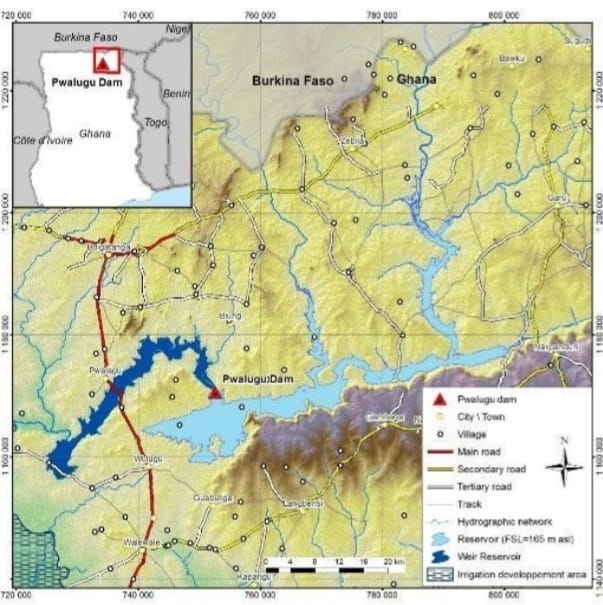
Put together by Prof. David Millar ((20th May, 2024)) 1.0 CONTEXT AND HISTORY OF THE PROJECT Pwalugu project was firstly studied in 1993 at a prefeasibility level, along with two other schemes on the White Volta River (Kulpawn and Daboya) and one project on the Oti River (Juale). Pwalugu project was recommended as a priority project to foster economic development in Northern Ghana. In 2013, the Volta River Authority (VRA) – the main power generation company in Ghana, solely owned by the Government of Ghana (GoG) – and TRACTEBEL signed a contract for the feasibility and detailed design studies of the Pwalugu Multipurpose Dam Project (PMDP). The Pre-Feasibility and Feasibility Studies were respectively completed in May 2014 and January 2016. The ESIA carried out by Mott McDonald highlighted important impacts related to the large dam reservoir. In response to concerns about the environmental and social impact of the original dam height of 40m, the VRA requested TRACTEBEL to conduct complementary studies to assess different project options. This led to the reduction of the dam height to 35m. In 2019, Government of Ghana decided to implement the project and mandated TRACTEBEL and SRC Consulting to carry out the Environmental and Social Impact Assessment Study (ESIA) and the Resettlement Action Plan (RAP) of the Pwalugu Multipurpose Dam Project (PMDP). In its final design, the PMDP is intended to contribute to the economic development of Northern Ghana by several means: Developing the irrigation potential of the White Volta plains; Mitigating floods downstream of the dam; Generating power to be injected on the northern end of the national grid; Developing other economic activities on the reservoir, such as fishery. 1.1 Pwalugu Multipurpose Dam Project (PMDP) includes: A composite dam made of a rolled compacted concrete (RCC) dam in the central valley/riverbed, rockfill dam with clay core on the left Bank and an earth dam with clay core on the right bank. The maximum dam height is about 60 m asl, with a crest elevation set at 168m asl and 1.8 km long; A gated spillway equipped with 6 gates; Two bottom outlets with sills located at the dead storage level (137 m asl); Two power intakes (one per turbine) located at 137.10m asl; In order to be operated in case of maintenance of the two turbines, an independent outlet is set for the environmental flow located near the intakes of the two turbines at 137m asl. A Hydro-Power Plant located at the toe of the dam on the left bank with an installed capacity of 59.6 MW. The plant will comprise 2 Kaplan-type turbines with single capacity of 29,8, supplying an average 176 GWh/year of which 100 GWh will be delivered with 95% reliability every year; An irrigation weir located 50 km downstream of the main dam. The weir is composed by a concrete structure for the canal intake, a concrete primary weir to evacuate the normal operating flows and earthen gabion secondary weir to act as a spillway when floods occur. The weir is 1 km long with a crest elevation set at 133 m asl; A 161-kV power transmission line 15km long from the switch yard to the existing Tamale-Bolgatanga Transmission line. A 20,000ha irrigation development area located downstream of the weir (which is not part of the present ESIA); A Solar Plant with an installed capacity of 50 MW (which is not part of this ESIA). A base camp is planned to house the project owner and contractor’s personnel during the construction period and to accommodate the operating personnel during the project’s operational life. The PMDP will create two reservoirs: A main reservoir upstream of the main dam with a 2,6 billion m3 storage capacity and a 263 km² surface area, the FSL is set at 165m asl and the Maximum water level is set at 165.23 masl. A weir reservoir upstream of the weir with a maximum surface area of 81km2 (corresponding to the area flooded for a 1 in 1000 return period flood) 1.2 Dam alternatives study In 2018, the VRA requested Tractebel to investigate five alternative scenarios (Alternatives 1 to 5) in addition to the one studied earlier throughout the Feasibility Study (Alternative 0). In the previous studies, the dam design was driven by the maximisation of the energy generation and the development of 20,000 irrigated hectares in the downstream floodplain. The purpose of the alternatives study was to compare different alternative schemes with a dam sized for irrigation as the primary operational purpose. The 5 alternatives were: Alternative 0: baseline scenario that corresponds to the Feasibility Study design with a main dam with an FSL =170m asl, a diversion weir and irrigation area of 20,000ha; The arrangement of Alternative 1 with a dam elevation set at FSL = 151m asl; Alternative 2 differs from Alternative 1 by the location of the axis of the main dam, which is set on the so called “upstream axis” identified at the pre-feasibility study stage with a FSL at 158.5 m, a diversion weir and an irrigation area of 20,000ha; Alternative 3 is made of one unique reservoir. This unique dam is located on the irrigation weir axis studied and investigated during the Feasibility Study (FSL= 140.5 m asl). The irrigated areas remain the same; Alternative 4: Located on the same site as Alternative 3, Alternative 4 dam crest is determined so that the reservoir can store enough water to irrigate 5,000 Ha by gravity (FSL= 137.5m asl). The dam is designed to allow future heightening of the dam permitting the extension of the irrigated area up to 20,000 Ha. dam axis that corresponds to the Feasibility Study irrigation weir axis The arrangement of Alternative 5 (current design) is similar that of the baseline scenario (Alternative 0), only the dam height differs. FSL = 165m asl; With a dam crest located 5 meters below that of Alternative 0, Alternative 5 generates slightly less energy (-15%) but also limits the social and environmental impacts as its total reservoir area is reduced
The MITDS Journey
In 1990, Professor David Millar, the President of the Millar Institute for Transdisciplinary and Development Studies (MITDS), had a vision to create an Open University. This vision he shared with his wife, Mrs. Lydia Mamata Millar. With great determination, they both acquired a piece of land for the school facility. Professor and Mrs. Millar worked tirelessly towards their dream, and in 2014, he officially launched the Millar Institute for Transdisciplinary and Development Studies (which he first registered Open University). He became the Foundation President of the Institute and has been its President. He firmly believed that every long journey begins with a first step and that every night ultimately gives way to a new day. Located in Yikene, a community in the Bolgatanga Municipal, MITDS quickly became known as the first private and Open University in the Upper East Region of Ghana. Despite the presence of several local universities in Ghana that have established partnerships with external universities under the Open University Concept, the landscape of tertiary education in Ghana such as MITDS was significantly influenced by Prof. Anamoah-Mensah’s report in 2006. This report challenged Ghanaian universities to transition from traditional on-campus, satellite campus, and distance learning models to Open University Systems. In response to this call, Prof. Millar and his institution, the MITDS (Millar Institute for Tertiary Development Studies), emerged as one of the first fully Ghanaian-owned institutions to address the recommendations put forth by Prof. Anamoah-Mensah. MITDS has taken steps to ensure that it operates within a duly composed and functional Council, ensuring transparent governance. Furthermore, the various structures and programs offered by the institute have obtained the necessary Accreditations Affiliation of MITDS since inception has always been granted by University for Development Studies (UDS). Hence they have since been awarding the degrees. Ghana Tertiary Education Commission (GTEC) provided the legal status of institutional accreditation and reaccreditation, program accreditation and reaccreditation, and institutional audits thus far. In 2014, MITDS was established as an institution. Four years later, in 2018, they held their first graduation ceremony for the inaugural class of students. However, the institution faced challenges in attracting students, leading to low enrollment numbers. According to records from MITDS in 2018, the student population was 105. Out of the total number, 4 students deferred their programmes and 26 were irregular for various reasons. At that time, female enrolment was 30%, which fell short of the school’s target of 50%. To address this issue, Professor Millar, the head of MITDS, announced during the graduation ceremony that they had made the decision to gradually phase out their undergraduate programs, starting with no longer accepting Level 100 or Level 200 students. This decision was described as a temporary measure, and Prof. Millar mentioned that they would assess the situation and reactivate the program if circumstances improved. Currently, MITDS is focusing on expanding their offerings of Master’s and PhD programs. To further promote research, they also actively pursued research grant opportunities that include scholarships for students. In 2018, Professor Millar enthusiastically announced that MITDS has designed and is now offering Post-Graduate Certificate Courses. These courses were developed in response to the high demand from individuals already employed and seeking career-oriented short courses. As a result, MITDS has introduced a range of six-month Post-Graduate Certificate Courses, including: – Policy and Strategy Studies – Information and Informatics – University Administration – Advanced Business Administration – International Relations – Agri-Business Studies In 2018, MITDS collaborated with the University of Bern in Switzerland and engaged in a two-year Community-based Sustainable Food Programme in Kalbeon and Gowrie-Kunkwa. Additionally, MITDS collaborated with ECOLAND Germany (BMZ) to prepare for a Diploma Programme in hands-on Organic Farming and Bio-dynamic Agriculture, which was expected to conclude in October 2021. Professor Millar expressed his satisfaction in giving back to these communities, who have been long-standing partners and social laboratories for MITDS. He also promised to continue cooperation with them whenever the opportunity arises. In response to the One District One Factory policy of the New Patriotic Party, MITDS has identified seven potential projects for implementation. We are currently working towards securing buy-ins for these projects. The projects include: The GARWASI Project (formerly known as the Grass for Charcoal Project). This project has been expanded to include the development of paper for paper bags and toilet rolls using the same technology. Expansion of the Groundnut Sector under Irrigation. Transformation of Groundnut vines into organic fertilizer. Addressing the challenges posed by Fulani Herdsmen. Transformation of the Bolgatanga Meat Factory into a multi-purpose Abattoir. Development of the Bamboo plant for the production of matchsticks and toothpicks. Linking the Wulugu Ranching project with Nasia Rice Production. Establishment of the Pwalugu multi-vegetable Factory. Implementation of the Walewale Organic Fertilizer Factor In 2022, Professor Millar and the MITDS introduced a groundbreaking innovation involving grass. During his graduation speech, Professor Millar announced that MITDS’s flagship program, aimed at promoting a grass economy in northern Ghana has resulted in remarkable accomplishments. These accomplishments include: – The development of Grass Charcoal Briquette (GARWASI PROJECT), an alternative to tree-charcoal in the pursuit of sustainable renewable energy. This project has garnered attention from the FAO, leading to the signing of a ten-month contract worth Ghs 400,000. This contract will enable the introduction of this technology to five communities on a pilot basis, with the potential to expand to twelve additional communities. – Another noteworthy milestone is the successful transformation of everyday grasses into brown paper, which can be utilized for various purposes. In 2018, the school made the exciting announcement that its second and third internal refereed journal, the Ghana Journal for Culture and Development (CULTRAD), had been released for public consumption. Additionally, during that same period, the school published four essential course books, specifically designed for the Masters and PhD programs. These books are readily available for purchase. A few years ago, the institute established a unit dedicated to editing, proofreading, and restructuring final post-graduate thesis works, particularly PhD theses, into published books. This process is similar to what is practiced