


DRAC’s Mission to Eradicate Neglected Tropical Diseases in Ghana’s Upper East
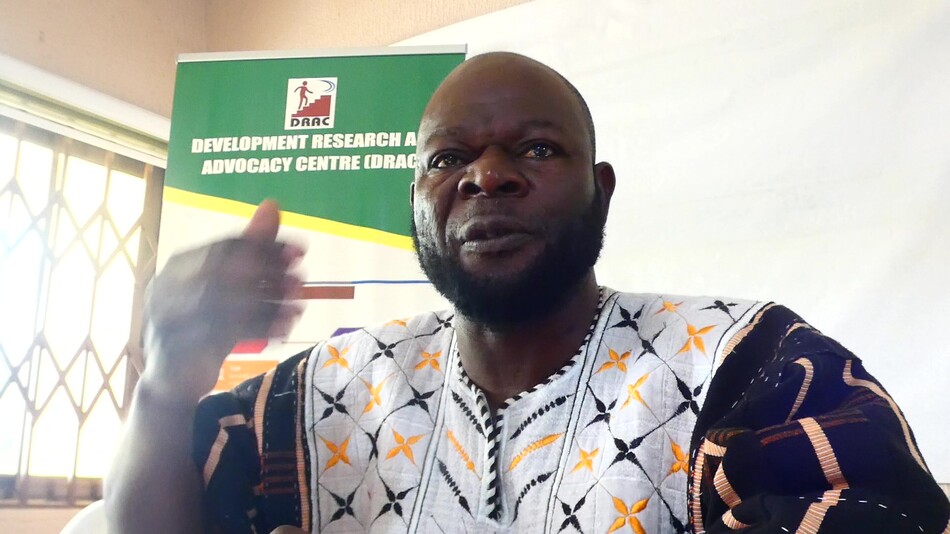
The quiet battle against Neglected Tropical Diseases (NTDs) is gathering new momentum. At the forefront of this fight is the Executive Development Research and Advocacy Centre (DRAC), an organization determined to bring health, hope, and dignity to some of the country’s most marginalized people. Apexnewsgh reports The story of DRAC’s mission unfolds in the documentary “Pains of the Forgotten: Leprosy, Stigma, and Resilience,” where Executive Director Jonathan Adabre shares his vision for a future free of the pain and stigma that have haunted families for generations. “We want to talk about the early manifestations of diseases like leprosy, meningitis, and yaws,” he explains. “If community members can recognize the signs, understand transmission, and know what treatment looks like, we can stop these illnesses before they destroy lives.” For decades, myths and misinformation have allowed diseases like leprosy to spread in silence. Many in the region still believe leprosy is hereditary, passed from mother to child—a belief that Adabre is determined to dispel. “Leprosy can take up to 20 years to show symptoms,” he clarifies. “A mother may unknowingly transmit it, and when her child develops symptoms much later, people assume it’s genetic. That’s the misconception we want to kill.” But the battle is not fought with education alone. DRAC’s strategy is deeply rooted in community collaboration. Chiefs, queen mothers, and local opinion leaders are enlisted as partners in the fight against stigma and discrimination. “We want affected persons to live dignified lives,” Adabre insists. “They should participate in community activities, share their views, and not be sidelined by fear.” Yet, changing minds is only part of the challenge. Inadequate sanitation and water access fuel the spread of NTDs. “Without water, people can’t wash, bathe, or keep their clothes clean. Transmission happens quietly,” Adabre notes. With support from the Anesvad Foundation, DRAC has drilled boreholes in several communities and established wetlands committees to manage these vital resources. The ripple effects are already being felt. A recent baseline survey conducted by DRAC revealed a sobering fact: 97% of respondents still practice open defecation, perpetuating health risks and undermining efforts to contain disease. To address this, DRAC is working closely with community health management committees and local leaders, pushing for behavioral change and better sanitation practices at every level. But health is only the foundation, DRAC recognizes that a future free of NTDs depends on economic empowerment as well. In many villages, basket weaving is part of the cultural heritage, but a lack of capital and market access keeps families in poverty. DRAC’s solution is to provide not just materials but direct connections to buyers, ensuring that the fruits of local labor reach wider markets. Training in soap and detergent making complements this initiative, promoting hygiene and providing an extra source of income. Crucially, DRAC’s work is shaped by the voices of those directly affected. “In this country, we have the habit of not listening to people before providing support,” Adabre observes. To change this, DRAC is helping form associations so that those living with NTDs, and their caregivers, can advocate for themselves. They share stories of stigma and exclusion, and highlight missed opportunities, such as the government’s LEAP program, which too often passes them by. Access to health care is another barrier DRAC is determined to break down. By partnering with the National Health Insurance Scheme (NHIS), the organization is bringing registration and renewal services directly to vulnerable populations, ensuring no one is left behind for lack of paperwork or travel money. The impact of DRAC’s approach is already apparent. Adabre recalls a striking moment from an awareness session: “An assembly member told us, ‘Are these signs really leprosy? I see them on my wife.’ When she was tested, it came back positive. That shows why early detection is critical.” For Mr. Adabre, the national goal is clear: “We want to eradicate skin NTDs in Ghana. It doesn’t take much, just consistent commitment and attention to the most vulnerable.” Through a blend of awareness-raising, improved water and sanitation, economic opportunity, and access to healthcare, DRAC is not just fighting disease; they are building resilience, breaking the cycle of stigma, and restoring hope to communities long forgotten. Their story is a call to action: that with compassion, partnership, and persistence, even the most neglected battles can be won. Source: Apexnewsgh.com/Ngamegbulam Chidozie Stephen
I don’t know why God gave me a disease that people don’t respect—Mr. Ayuumbeo leprosy patient, cries
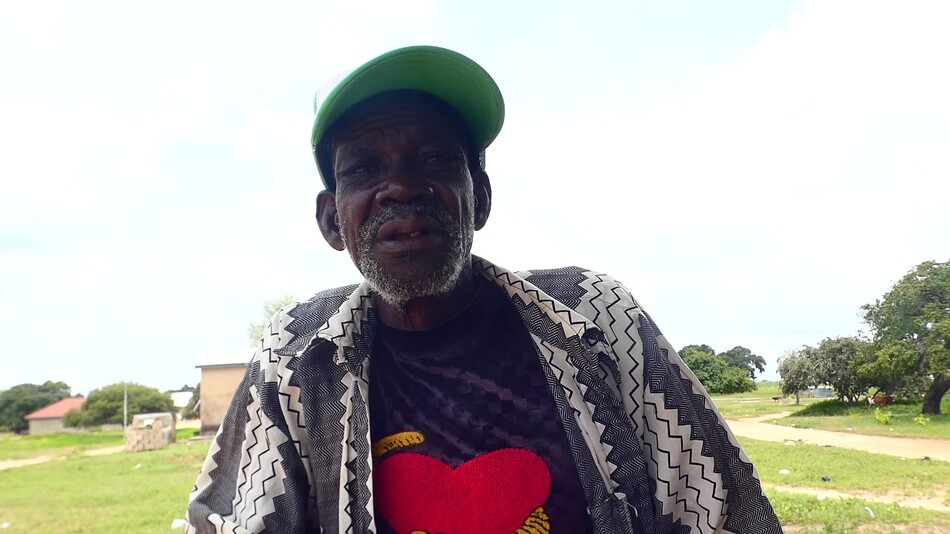
Once upon a time, in the lively community of Bongo Soe, Mr. Adombire Ayuumbeo was the embodiment of diligence and pride. The sun’s first rays often found him by the dam near his house, tending to rows of tomatoes and vegetables. His farm was a patchwork of green, a source of sustenance for his family and a modest income from the surplus sold in the market. But farming was only a part of his industrious life; Mr. Ayuumbeo also spent hours cutting firewood and harvesting roofing grass, always ensuring his household’s needs were met. His hands, once strong and skilled, provided security, comfort, and hope to those who depended on him. This story, however, took a drastic turn. Leprosy crept silently into Mr. Ayuumbeo’s life, robbing him of the very tools of his trade, his fingers. The disease did not merely bring pain and disfigurement; it stripped him of his ability to work, leaving him “idle and helpless.” Once a man who never sat still, he now found himself confined to his home, watching the world move on without him. “When I remember the way I used to work and support my family, tears start pouring from my eyes,” Mr. Ayuumbeo confided in the documentary “Pains of the Forgotten: Leprosy, Stigma, and Resilience,” produced by Ngamegbulam Chidozie Stephen of ApexNewsGH. “Now I can’t farm, I can’t cut firewood, I can’t do anything. Sometimes I think I should die than to live.” For Mr. Ayuumbeo, the greatest agony is not only physical, but also the heavy shroud of stigma that leprosy brings. Once greeted with respect, he now feels abandoned and judged by the very people he once called neighbors and friends. “You don’t have anything, and your body too makes it hard to mingle with people. People stigmatize you. I don’t know why God gave me a disease that people don’t respect.” The sense of isolation is profound. The silence from others echoes louder than his disability, and the weight of judgment is heavier than any load he once carried from the fields. Despite these trials, Mr. Ayuumbeo tries to hold onto gratitude. “I thank God that the sores have healed and I can walk without difficulty. But I cannot do what I used to do.” His gratitude is laced with sorrow—a longing for lost strength, lost routine, and lost purpose. Each day, he wakes to face both the physical limitations of his body and the invisible barriers erected by society’s misunderstanding. His thoughts often return to his family. With a wife and children looking to him for support, the burden of helplessness is magnified. He worries about their future, how to keep them fed, clothed, and safe. “When I was active, I used to pay taxes. Now I cannot work, but I still belong to the government. I vote. I have my voter ID. The government of Ghana owes me and my family. If there’s any way they can help us sustain our lives, they should do it.” His appeal is not just for himself, but for every leprosy survivor who has been left behind, still a citizen, still deserving of dignity and support. Mr. Adombire’s story is woven into the larger tapestry of Bongo’s leprosy survivors—a tapestry colored by pain, but also by resilience and hope. Organizations like the Development Research and Advocacy Center (DRAC) are working to ensure that people like Mr. Ayuumbeo are not forgotten. DRAC’s efforts go beyond charity; they are about rebuilding lives. With the drilling of ten boreholes, clean water is now within reach for many who once struggled. Water health committees educate communities about hygiene, crucial in the fight against neglected tropical diseases. But perhaps most remarkable is DRAC’s commitment to economic empowerment. Training sessions in basket weaving and soap-making provide patients and caregivers with skills, materials, and, most importantly, a renewed sense of purpose. “Buyers come to the community to purchase baskets, and we provide materials and training,” says Jonathan Adabre, DRAC’s Executive Director. These initiatives are more than income; they are threads of dignity, restoring connections to the community and to self-worth. Across Bongo, the story of leprosy is changing. It is no longer solely a tale of suffering, but one of resilience written in the determined footsteps of a nurse on his rounds, in the laughter of women weaving baskets, and in the hope that arrives with every borehole drilled. Yet, Mr. Ayuumbeo’s plea still rings out, a call for compassion, inclusion, and meaningful action. His journey, and that of so many others, is a reminder that the scars of leprosy go beyond the physical. It is up to all, the community, government, and organizations, to ensure these lives are lifted from the silence of stigma into the light of dignity and support. Only then will the story of Bongo’s leprosy survivors be one not just of what was lost, but of what can still be regained. WATCH THE DOCUMENTARY VIDEO Source: Apexnewsgh.com/Ngamegbulam Chidozie Stephen
The Unseen Battles of Leprosy Survivors in Bongo
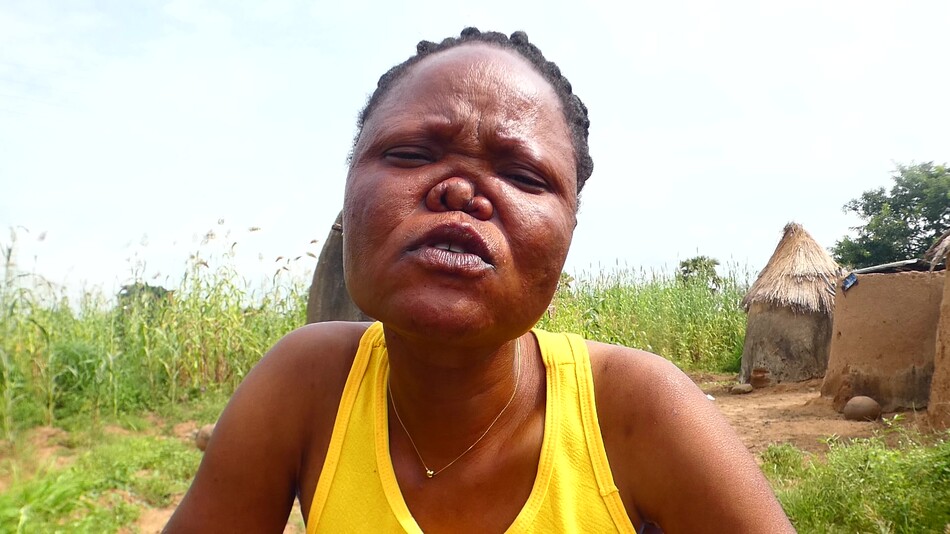
For ten long years, Matilda Nyaaba endured a mysterious torment. In her quiet village of Bongo Balungu, life was punctuated by fainting spells, nosebleeds, and unexplainable pain. Apexnewsgh reports Each episode left her weaker, and each visit to yet another health facility only compounded her confusion. What was this invisible enemy that drained her strength and hope, year after year? No one seemed to have an answer. Matilda’s ordeal was brought to light in the documentary “Pains of the Forgotten: Leprosy, Stigma, and Resilience,” produced by Ngamegbulam Chidozie Stephen of ApexNewsGH. Her story, like those of many leprosy sufferers, was one of searching in the dark. Even as her family stood by her, her neighbors whispered, eyed her with suspicion, and kept their distance. Some said she was cursed; others assumed she had HIV. To protect herself from the sting of their words, Matilda began to retreat indoors, leaving her home only for the most essential of chores. The isolation bit deeper than the disease itself, eroding her spirit and sense of belonging. It was only after a particularly harrowing episode, a collapse so severe she was rushed to the hospital, that a turning point arrived. There, a disease control officer finally recognized the signs of leprosy and placed Matilda on a monthly treatment regimen. For the first time, hope flickered in her life. The medicine brought relief, but not certainty. Supplies at the hospital ran out from time to time, and Matilda would wait anxiously for a call or a visit, never knowing when the next dose would arrive. Still, she persevered. Her wish was simple: that no one else should have to wander in confusion or suffer in silence as she had. Matilda’s journey reveals a truth often overlooked: the wounds of leprosy are as much emotional and social as they are physical. The pain of exclusion, the silence of misunderstood suffering, and the longing for dignity weigh heavily on those afflicted. Her resilience is a quiet call for compassion, understanding, and real action, so that no one else in her community will have to endure the same lonely road. Aniah’s Journey Through Leprosy’s Trials In the village of Bongo Soe, another story of quiet resilience unfolds. Aniah Lamisi was once a farmer whose days were filled with the rhythm of the land. She took pride in the sweep of her hoe, the bounty of her harvest, and the strength of her hands. Farming gave her purpose, connection, and identity. But leprosy crept into her life without warning, first as a tingling in her fingers, then as a relentless force that twisted and weakened her hands. Tasks that once came easily, cooking, fetching water, and gathering firewood, became daily struggles. The simple act of lifting a water container to her head was now a painful ordeal. Cooking over a fire brought blisters instead of warmth. With her hands disfigured, her independence slipped away, and Aniah found herself an observer in her own life, unable to work or contribute as she once did. The loss went deeper than the physical. Though her neighbors did not reject her outright, the shame of asking for help, of reaching out with altered hands for food, wounded her pride. She withdrew from communal life, carrying her pain in silence. Like Matilda, Aniah’s only hope was regular medication—but the health center’s supplies were unreliable. Some months, she received her treatment; other times, she waited in vain, watching her health and hope falter. Each missed dose was a reminder of how fragile her world had become. Yet Aniah’s spirit refused to break. In rare quiet moments, she counted her blessings: a body that still allowed her to dress herself, fleeting moments of calm, and the knowledge that others faced even greater struggles. She dreamed of something more, a chance to learn a trade, to regain purpose, to earn her own living. Vocational training, she thought, could be a bridge back to dignity and self-respect. While Matilda and Aniah’s stories are deeply personal, they are not unique. Across Bongo and its surrounding communities, many battle the same invisible foe, facing not just disease but the crushing weight of stigma, poverty, and uncertainty. But hope comes not only from within. Organizations like the Development Research and Advocacy Center (DRAC) are changing the landscape for leprosy patients. With ten boreholes drilled in affected areas, access to clean water is no longer a dream. Water health committees teach hygiene, helping prevent further spread of neglected tropical diseases. Most transformative are DRAC’s economic empowerment programs, training in basket weaving and soap-making, providing materials, and connecting patients with buyers. For women like Aniah and Matilda, these opportunities are more than a source of income; they are a path back to belonging and pride. The story of Bongo’s leprosy survivors is one of resilience, not just suffering. It is written in Matilda’s quiet hope, in Aniah’s determination, in every basket woven and every borehole drilled. It is a story that demands not pity, but recognition and commitment. For these women and countless others, the journey continues toward healing, dignity, and a future where no one must walk alone in the shadows. WATCH THE DOCUMENTARY VIDEO; Source: Apexnewsgh.com/Ngamegbulam Chidozie Stephen
A Journey of Compassion: The Unsung Heroes Battling Leprosy in Bongo
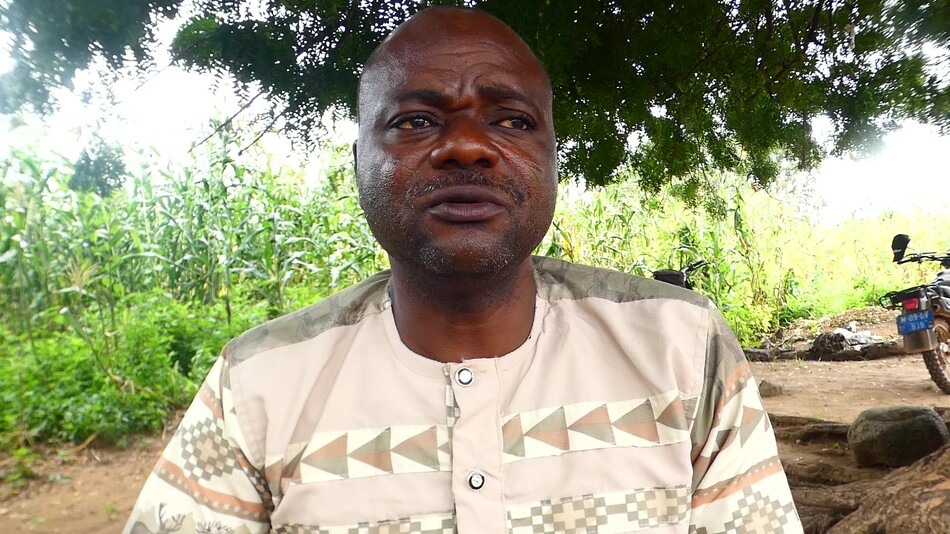
A battle is being fought, a struggle not only against disease, but against stigma, neglect, and despair. At the center of this fight is staff nurse David Asamani of the Bongo Soe Health Center, whose daily acts of compassion have transformed the lives of leprosy patients who have been forgotten by society. Apexnewsgh reports David Asamani is not just a nurse. To those he cares for, he is a lifeline, a confidant, and sometimes even family. While many health workers draw the boundaries of their duties at the clinic doors, Asamani’s responsibilities stretch far beyond. For him, the well-being of his patients does not end with the administration of medicine; it is a holistic mission that takes him across dusty roads and into the humble homes of those suffering from leprosy. The story of his devotion was brought to light during the documentary “Pains of the Forgotten: Leprosy, Stigma, and Resilience,” produced by Ngamegbulam Chidozie Stephen of ApexNewsGH. Asamani’s words echo the silent struggles of the people he serves: “Anytime I go to give them the medicine, I can see the suffering they are suffering,” he shares. The pain he describes is not just physical—but a deep emotional and social wound inflicted by poverty, isolation, and stigma. Many of Asamani’s patients live in the shadows, their disabilities making even the most basic tasks, cooking, cleaning, and earning a living, almost insurmountable. “Some of them will tell you they don’t even have food to eat while taking the medicine. Most of them don’t have anyone to help with household chores or economic activities; they just struggle on their own despite their disabilities.” One day, a new challenge arose. The district office called on leprosy patients to renew their health insurance and register for the government’s LEAP program. For most, this would mean a simple trip to town. But for these patients, left unsupported by family and shunned by their communities, it was an impossible journey. Asamani refused to let circumstances defeat them. “I had to use my motorbike to carry three of them to the district,” he recalls. The image is striking, a single nurse balancing duty and compassion, ferrying his patients toward a lifeline they could not reach alone. But compassion alone cannot fill empty medicine cupboards. Asamani’s dedication is tested time and again by the persistent shortages of vital drugs for leprosy and other neglected tropical diseases (NTDs). “Sometimes when patients need the medicine most, it is not available. By the time it comes, the harm has already been caused,” he laments. His plea is simple but urgent: “We will be grateful if the medicines could be available at all times. That will be very helpful.” Despite the government providing treatment for free, the reality on the ground is a different story. Attention is often focused elsewhere, and NTD patients find themselves at the bottom of the list. “Our concentration is on other diseases, neglecting these people. Meanwhile, these diseases cause a lot of economic challenges in our society. If we don’t take good care of them today, tomorrow you don’t know who might be affected,” Asamani warns, his voice carrying both frustration and hope. To Asamani, the fight against leprosy is not just medical, it is humanitarian. Each home visit, each ride on his motorbike, each moment spent listening to a patient’s worries, is a step toward restoring dignity and hope. His story is a powerful reminder that treating disease means more than dispensing drugs—it means confronting the poverty, stigma, and neglect that allow such illnesses to flourish. Yet, Asamani is not alone. The fight against leprosy in Bongo is bolstered by the work of the Development Research and Advocacy Center (DRAC), led by Executive Director Jonathan Adabre. DRAC’s approach is as holistic as Asamani’s devotion. With support from Anesved Fundación, DRAC raises awareness about the early signs of leprosy, elephantiasis, and yaws. “Many believe leprosy is genetic, but it takes up to 20 years to manifest. That misconception must end,” says Adabre. Their campaigns battle not only illness, but ignorance. DRAC’s impact is tangible. The organization has drilled ten boreholes across affected communities, ensuring access to clean and safe water. They have set up water health committees that teach hygiene practices, crucial in the fight against NTDs. But perhaps most transformative is their focus on economic empowerment. DRAC organizes training sessions in basket weaving and soap-making, providing materials and connecting patients and caregivers to markets. “Buyers come to the community to purchase baskets, and we provide materials and training,” Adabre notes. For many, these initiatives offer more than an income; they restore a sense of worth, dignity, and belonging. The story of Bongo’s leprosy patients is one of resilience, not just suffering. It is written in the determined footsteps of a nurse on his rounds, the laughter of women weaving baskets, and the hope that comes with every borehole drilled. It is a story that calls for more than sympathy; it demands action, understanding, and a commitment to never again let these lives be forgotten. WATCH THE VIDEO DOCUMENTARY: Source: Apexnewsgh.com/Ngamegbulam Chidozie Stephen
Stigmatization in Bongo is very high—District NTDs Focal Person
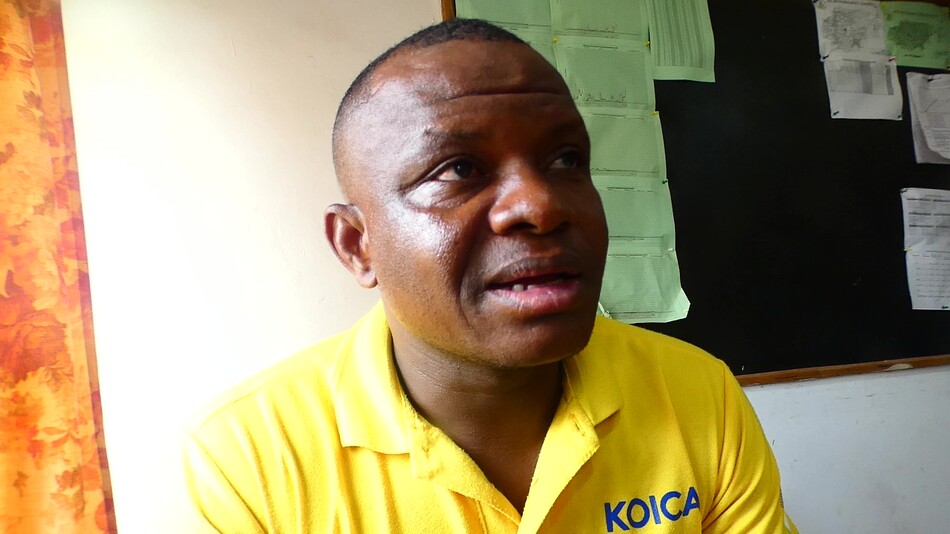
In the heart of Ghana’s Upper East Region, the Bongo District is fighting a quiet but devastating battle. Over the last six years, this rural district has recorded a deeply worrying rise in leprosy cases, with 57 new cases reported from 2019 to September 2025. For many, the word “leprosy” conjures up images from distant history books, but in Bongo, it is a daily reality, one made worse by stigma and isolation. This troubling revelation came from Mr. Kpankpari Wononuo Bismark, the District Neglected Tropical Diseases (NTDs) Focal Person, in the documentary “Pains of the Forgotten: Leprosy, Stigma, and Resilience” produced by Ngamegbulam Chidozie Stephen of ApexNewsGH. In a candid conversation, Mr. Bismark described the situation as “alarming,” drawing attention to the many layers of hardship leprosy patients endure beyond their diagnosis. “Stigmatization in Bongo is very high,” Mr. Bismark lamented. “Some patients are isolated, left in separate rooms, made to live alone. This worsens their mental health.” For many, the fear of being shunned by neighbors and loved ones is just as crippling as the disease itself. Some wait until their symptoms are too severe to hide, seeking help only when sores and deformities make life unbearable. “When we identify leprosy early, we can treat it within nine months,” Mr. Bismark explained. “But when patients report late with sores and deformities, the damage remains for life.” The consequences of this fear-driven delay are profound. Advanced leprosy often leaves patients with lifelong disabilities, making it impossible for them to farm or work. In a region where most people depend on their hands to earn a living, the economic toll can be just as devastating as the physical suffering. “Most of them cannot do meaningful work because of deformities,” Mr. Bismark said. “That is why interventions from NGOs that provide small capital for farming, weaving, or soap-making are so helpful. These initiatives help reduce idleness and restore dignity.” But the challenges don’t end with stigma and economics. Mr. Bismark also pointed to the struggles of accessing medicine, which must be requested from the regional health directorate and sometimes runs out. Still, he remains optimistic about the impact of treatment: “The good thing is that when we start the medicine, transmission to others is minimized, even though sometimes we run out of drugs briefly.” The changing climate also brings fresh hardships for leprosy patients. During the harsh dry season, cracked skin can lead to open sores that quickly become infected. Without easy access to clean water and proper hygiene, these sores can become septic, threatening not just health but life itself. “NTDs are neglected diseases, and sadly, the people suffering from them are also neglected,” Mr. Bismark noted. “Many patients live far from clean water sources, making hygiene very difficult.” Water, sanitation, and hygiene (WASH) remain critical challenges. In remote villages, fetching water involves long, painful journeys, a heavy burden for those already weakened by disease. This lack of WASH infrastructure leaves patients especially vulnerable to complications and further social exclusion. Despite these daunting obstacles, hope persists in the form of early detection and community support. “Leprosy is airborne, and elephantiasis is caused by mosquito bites. Everyone is at risk. That is why we keep telling the community: support patients, don’t stigmatize them, because you never know when you could also be affected,” Mr. Bismark urged. The fight against leprosy in Bongo is not waged by government alone. Non-governmental organizations like the Development Research and Advocacy Center (DRAC), led by Executive Director Jonathan Adabre, are helping to fill the gap. DRAC’s holistic approach tackles both the practical and social sides of the disease. “With support from Anesved Fundación, we raise awareness about early signs of diseases like leprosy, elephantiasis, and yaws,” Adabre explained. “Many believe leprosy is genetic, but it takes up to 20 years to manifest. That misconception must end.” DRAC’s projects are as varied as they are vital. The organization has drilled ten boreholes across affected communities, ensuring that more families have access to clean, safe water. They have also formed water health committees to educate locals on hygiene practices, crucial for managing NTDs. But perhaps their most transformative work lies in supporting economic empowerment. DRAC provides training and materials for basket weaving and soap-making, linking patients and caregivers to markets. “Buyers come to the community to purchase baskets, and we provide materials and training,” Adabre says. These initiatives offer more than income; they restore a sense of purpose and connection. The story of leprosy in Bongo is one of pain, but also of resilience and hope. It is a reminder that diseases like leprosy do not just attack the body, they disrupt families, livelihoods, and entire communities. Breaking the cycle requires more than medicine. It calls for compassion, early detection, and the kind of holistic support that brings patients out of the shadows and back into the embrace of their community. As Bongo continues its fight, the district’s journey stands as a testament to the power of partnership, awareness, and above all, human dignity. WATCH THE VIDEO DOCUMENTARY BELOW: Source: Apexnewsgh.com/Ngamegbulam Chidozie Stephen
Bolgatanga Welcomes First-Ever Passport Application Centre Inaugurated

In a momentous step toward inclusive development and improved public service delivery, the Ministry of Foreign Affairs and Regional Integration, under the leadership of Hon. Samuel Okudzeto Ablakwa, has officially inaugurated the Bolgatanga Passport Application Centre (PAC) in the Upper East Regional capital. Apexnewsgh reports This landmark initiative forms part of the government’s broader commitment to decentralising passport services, thus ensuring that every Ghanaian, regardless of geographic location, enjoys equitable access to essential documentation. For decades, residents of the Upper East Region and its surrounding communities faced significant hurdles in obtaining or renewing their passports. The closest PACs were located in Tamale and Kumasi, forcing applicants to embark on long, costly, and often inconvenient journeys, sometimes spanning over three hours, just to complete the process. For a region with a population exceeding 1.3 million, this meant countless hours lost, added financial burdens, and unnecessary risks on the road. The opening of the Bolgatanga PAC signals an end to these challenges. Speaking at the commissioning ceremony, Hon. Ablakwa acknowledged the historical significance of the day: “This is the first time in the history of the Upper East Region that we are opening a Passport Application Centre. Today, we are making history. It should not have taken us this long, but as they say, better late than never.” He further emphasized that development must be inclusive and not limited to a select few regions: “Government services must be made available to all parts of Ghana so that all of us can feel a part of our national progress and transformation.” The story of the Bolgatanga PAC is also one of community spirit and collaboration. The Alagumgube Association, a local group with its founder, Gabriel Agambila, played a pivotal role by mobilizing resources to assist in the renovation of the facility, originally a Ghana Commercial Bank property. The bank readily handed over the building for conversion, removing all obstacles to the project. Regional authorities also demonstrated keen interest, with the regional minister reaching out for the Ministry’s approval and support. Hon. Ablakwa praised the sense of unity, stating, “What we celebrate today is a mark of togetherness, of unity, of community support where we all come together.” The Minister was quick to commend the Ministry’s staff, who undertook long journeys and tireless nights to ensure that the new centre met the exacting standards required for a modern passport office. This included directors from various departments, Finance, Passport, Consulate in Humanitarian Affairs Bureau (COHAB), and Information Public Affairs Bureau (IPAP), alongside private partners and courier companies, all combining their efforts for a seamless launch. The Bolgatanga PAC is a key milestone in a nationwide agenda. Until now, seven regions in Ghana lacked a passport application centre. With the new addition, that number is down to six, and Hon. Ablakwa has set an ambitious target: by the end of 2025, every one of Ghana’s 16 regions will have its own PAC. “We are putting in the resources, we are putting in the effort, and I am very confident that by the end of this year, all 16 regions in Ghana will have passport application centers,” he assured. This commitment, he explained, stems from the government’s belief that development must be inclusive, reaching every corner of the country. He reminded attendees that the acquisition of a passport is a right, not a privilege, for every Ghanaian citizen. The Bolgatanga PAC is not just about access; it also represents a leap forward in security and efficiency. Ghanaian passports are now highly sought after, particularly following successful negotiations for visa waivers and the country’s removal from the US sanction list. As a result, demand for Ghanaian passports has surged, particularly in border regions like Upper East, which shares a boundary with Burkina Faso. Hon. Ablakwa assured the public that robust security protocols are in place to prevent fraudulent passport acquisition. All PACs across Ghana are networked and powered by advanced AI technology. “Once you are blacklisted here in Bolga, immediately, in real time, you are blacklisted at all passport application centers across the country,” he explained, highlighting a new era of digital vigilance. “We have retrained all our passport application offices. There is absolutely no way that we are going to allow the Ghanaian passport to be easily obtained by any foreigner.” The Minister also discussed a suite of customer-focused reforms designed to make the passport process more convenient than ever. Notably, applicants no longer need to return to the PAC to receive their passports; instead, Ghana Post now delivers completed passports directly to applicants’ homes or offices. An e-tracking system allows applicants to monitor the status of their applications in real time. Additionally, the Ministry guarantees that passports will be ready within 15 working days, with an expedited service available for those who need their documents even faster, sometimes in as little as three days. The Bolgatanga PAC is equipped to issue Ghana’s latest generation of chip-embedded passports, compliant with International Civil Aviation Organization (ICAO) standards. These modern documents offer enhanced security features and durability, ensuring their holders enjoy a smooth experience both locally and internationally. Hon. Ablakwa demonstrated the effectiveness of the new system by surprising the first seven citizens of Bolgatanga, who had earlier completed their biometrics, with their new chip-embedded passports—ready in under five days. “We mean business,” he declared, “This is not some white elephant commissioning. Once we commission, the passport application officials will start work immediately. And those of you who don’t have passports can apply immediately.” Residents of the Upper East Region seeking passport services can now contact the Bolgatanga PAC via email at ipab@mfa.gov.ghOpens a new window or by phone at +233 240 913 284 and +233 240 793 072. For updates and further information, the Ministry maintains an active presence on its official X (Twitter) handle, @GhanaMFA. Citizens are encouraged to take advantage of the Ministry’s online application platform for faster, more efficient processing and to utilize the new centre for all passport-related needs. The inauguration of the
ApexnewsGh’s Ngamegbulam Chidozie Shines Again — Crowned 2024 Best Environment Reporter at Upper East GJA Awards
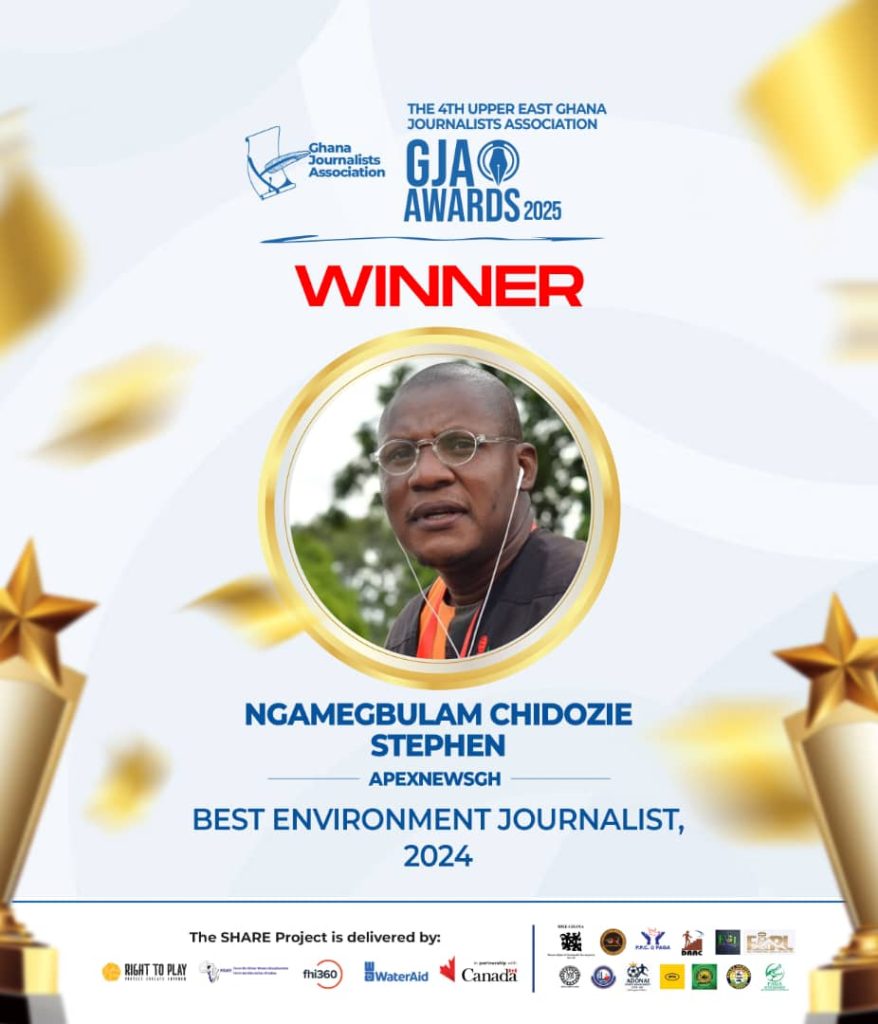
The night of Friday, October 10, 2025, at Blue Sky in Bolgatanga East, was filled with applause and pride as multiple award-winning journalist Ngamegbulam Chidozie Stephen of ApexnewsGh once again etched his name into Ghana’s journalism history. He was crowned Best Environment Reporter at the 2025 edition of 4th Upper East Region Ghana Journalist Association (GJA) Awards for his outstanding contributions to environmental reporting and climate change awareness. Ngamegbulam’s recognition came on the strength of his powerful feature, “The Power of Grass Biochar in Sustainable Agriculture and Mitigating Climate Change,” a deeply researched report that shed light on how simple, locally available materials could help farmers combat the high cost of fertilizers while restoring soil fertility. The journalist’s compelling documentary showcased the voices of farmers and experts across the northern regions, offering practical solutions to one of Ghana’s most pressing agricultural challenges. His storytelling, rooted in empathy and scientific insight, drew widespread praise from both the public and the award judges. According to the judging panel, chaired by Professor David Millar, President of the Millar Institute for Transdisciplinary and Development Studies, the competition received 43 strong submissions. Still, Ngamegbulam’s work stood out for its depth, creativity, and relevance. Other judges included Dr. Samuel Adadi Akapule and Ms. Fatima Anafu-Astanga. This latest honor adds to Ngamegbulam’s growing list of accolades. In 2019, he won Regional Best Human Rights Reporter; in 2022, he took home Best Climate Change Reporter; and in 2023, he reclaimed the Human Rights Reporter award. His national recognition came in 2024 when he was named Best Reporter (Online/Wire Service Category) at the 2nd Inclusive & Anti-Conflict Journalism Awards, cementing his place as one of Ghana’s leading digital journalists. Reflecting on his journey, many say Ngamegbulam’s success is no surprise. His work consistently blends passion, advocacy, and meticulous research, qualities that have made his voice indispensable in Ghana’s media landscape. The 2025 GJA Awards, themed “Upholding Public Trust: The Role of the Media in Promoting Accountable Governance in the Upper East Region,” was supported by The SHARE Project, implemented by partners including FHI 360, WaterAid, and the Government of Canada. As the night drew to a close, the applause that followed his name was more than just for another award, it was for a journalist whose pen continues to shape conversations, influence policy, and inspire action toward a more sustainable future. Source: Apexnewsgh.com
Talensi DCE Disburses 102 Sheep to Empower 51 Persons with Disabilities
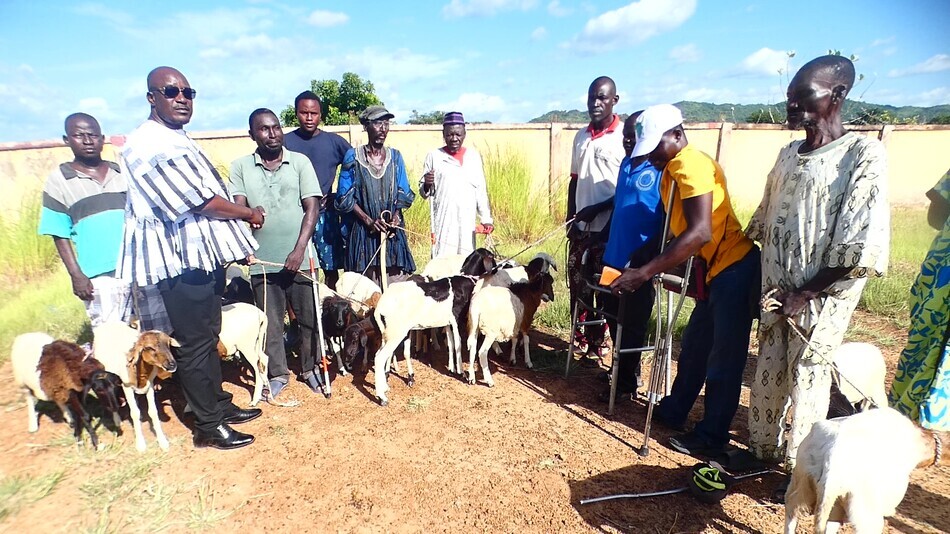
The District Chief Executive (DCE) for Talensi, John Millim Nabwomya, has handed over 102 sheep to members of the Ghana Federation of Disability Organisations (GFD) in the Talensi District of the Upper East Region as part of efforts to empower persons with disabilities (PWDs) through sustainable livelihood projects. Out of the 51 beneficiaries, each received two female sheep. Speaking during the handing-over ceremony, the DCE stressed that the initiative is aimed at providing income-generating opportunities for PWDs. “What you have just witnessed here is a handover of livestock to people living with disabilities of whatever kind, for them to also improve upon their livelihood. These animals are meant for them to rear. That’s why they keep on increasing. That’s how they can also help themselves.” Mr. Nabwomya explained that the 102 sheep have already been distributed with the guidance of leaders of the disability group to ensure fair allocation. “It depends on the number. This has already been shared among them. They have a leader, so before the sharing, the leader comes through with them on how it will be distributed. Someone can get one, and by the next two years, the person can have up to three or four. Somebody can also get two. It depends on how they and their leaders can distribute them.” He further emphasized the Assembly’s role in supporting PWDs to achieve self-reliance. “We are supposed to facilitate and help them get whatever they are supposed to acquire, and that’s what we have just done.” The gesture, which falls under the Disability Common Fund, is part of an ongoing effort to reduce dependency among PWDs in Talensi and provide them with practical tools to improve their living conditions. Meanwhile, the President of the Federation in the district, Clement Sampana, explained that the support is tailored to meet the needs of individual members, ranging from livestock for rearing to equipment for small-scale businesses. “We have pumping machines, we have sewing machines. And then other matters,” Mr. Sampana said. “Today we are giving out animals. Those who applied for animals to be reared in their houses as an income-generating activity are the ones benefiting today.” He clarified that the initiative is not a loan scheme but a grant to support the livelihoods of PWDs. “The disability fund is for persons living with disability. So it is a grant. They are not going to pay back. It’s to empower them to generate small, small incomes for their upkeep.” To ensure accountability, Mr. Sampana noted that beneficiaries are properly sensitized before receiving items, while monitoring mechanisms are in place. “Before the disbursement, these persons are engaged and properly sensitized. The committee also has a monitoring mechanism. By December, all the beneficiaries will be visited to find out how the support has been doing for them.” He added that outstanding beneficiaries stand a chance of receiving additional support in the future. “Those of them that can do good, we told them we’ll be supporting them again. That is an encouragement for them to put the support into good use.” According to Mr. Sampana, 51 beneficiaries applied for livestock, while three will receive fridges, another three sewing machines, two water pumping machines, and seven will benefit from trade-related support. The disbursement, which is expected to continue in the coming days, is seen as a crucial step toward reducing dependency among PWDs in the district and enabling them to contribute meaningfully to their communities. Badembanoya Lockre beamed with joy as he received his share of two sheep from a well-wisher’s initiative. Overwhelmed with gratitude, he thanked the District Chief Executive (DCE) and the leadership of the Ghana Federation of Disability Organizations (GFD) for their continuous support. Speaking on behalf of his fellow beneficiaries, Lockre promised that they would take good care of the livestock, ensuring the initiative’s success. The gesture has brought hope and excitement to the beneficiaries, who are eager to improve their livelihoods through this support. Source: Apexnewsgh.com
The experiment of Biochar by the Millar Institute proves massive results

On the fertile fields of the Millar Institute for Transdisciplinary and Development Studies, a quiet revolution is taking root, one that promises to transform the lives of farmers across Ghana and contribute to a greener planet. Last season, the Institute launched the Grass Biochar Experiment, an ambitious initiative to test the power of biochar as a sustainable organic fertilizer. The experiment began on a modest test farm, where researchers blended biochar into the soil and closely monitored its effects on crop growth and soil health. As the weeks unfolded, the results exceeded all expectations: crops grew stronger and healthier, soil fertility improved dramatically, and yields soared. The implications of these findings extend far beyond the test plots. Biochar, produced from plant material, offers a cost-effective and environmentally friendly alternative to traditional synthetic fertilizers. Its use not only boosts agricultural productivity and food security but also holds promise for mitigating climate change by sequestering carbon in the soil. “We are thrilled with the results of the Grass Biochar Experiment,” announced the President of the Millar Institute, reflecting the excitement spreading through the agricultural community. “Biochar has the potential to revolutionize agriculture in Ghana, and we look forward to working with farmers and stakeholders to promote its adoption.” Encouraged by these remarkable outcomes, the Millar Institute is preparing to expand the experiment. Plans are underway to collaborate with farmers throughout Ghana, tailoring biochar techniques to different environments and crop needs. This initiative is part of the Institute’s ongoing commitment to sustainable agriculture, environmental stewardship, and innovative solutions for rural livelihoods. As the Grass Biochar Experiment continues to grow, so does the hope for a more productive, resilient, and environmentally conscious agricultural sector in Ghana. The Millar Institute stands at the forefront of this movement, empowering farmers with new tools and knowledge to nurture their land—and the future. Source: Apexnewsgh.com
Stigma and Sacrifice: The Untold Story of a Mortuary Attendant’s Journey
In many African societies, there’s an unspoken truth about mortuary attendants. They’re often shunned and stigmatized, their work viewed as taboo or unpleasant. This is the reality faced by Mr. Alhassan Azaah, a retired mortuary attendant who dedicated 20 years of his life to serving his community, region, and country. Despite his tireless efforts and genuine love for his work, Mr. Alhassan faced societal stigma. People perceived him as being exposed to something “unclean” or “unpleasant” simply because he worked with deceased individuals. This perception overshadowed his dedication and the invaluable service he provided to those in need. One would expect a man with Mr. Alhassan’s gift and strength to be celebrated and appreciated. However, his love and sacrifice for the people he served ultimately led to his stigmatization. His story highlights the challenges faced by mortuary attendants in many African societies, where their work is often misunderstood and underappreciated. Mr. Alhassan’s career as a mortuary attendant was marked by his compassion, strength, and dedication. He worked tirelessly to ensure that deceased individuals were handled with dignity and respect. His work was not just a job, but a calling that he answered with love and commitment. Despite the challenges he faced, Mr. Alhassan remained steadfast in his commitment to his work. He understood the importance of his role in supporting families and communities during difficult times. His story serves as a reminder of the need to appreciate and recognize the contributions of mortuary attendants, who often work behind the scenes to ensure that deceased individuals are treated with dignity and respect. A recent engagement between multiple award-winning journalists, Mr. Ngamegbulam Chidozie Stephen of Apexnewsgh and retired mortuary attendant Mr. Alhassan Zaah has shed light on the mysterious and often misunderstood world of mortuary work. Through their conversation, Mr. Alhassan shared some of his most profound experiences, revealing the good, the bad, and the ugly aspects of his profession. One of the most striking aspects of Mr. Alhassan’s story was his claim that he would often receive mysterious knocks on his door, signaling that someone in the hospital was nearing their end. These knocks were not just ordinary knocks; they were a harbinger of death, a sign that a life was about to slip away. “I’d get these knocks on my door in the middle of the night,” Mr. Alhassan recounted, his voice low and measured. “I’d open the door, and there would be no one there. But within minutes, the hospital would call, summoning me to the OPD or maternity ward.” Mr. Alhassan’s experiences were both fascinating and terrifying. He would often find himself drawn into a world beyond the living, a world where death was a constant presence. His story is a testament to the unseen forces that shape our lives and the mysterious ways in which we experience the world around us. This phenomenon has sparked debates about the supernatural and its connection to the spiritual realm. Some believe that knocking sounds can be a sign from the universe, a message from departed loved ones, or even a warning of impending danger. For Mr. Alhassan, the knock in the dead of night wasn’t a mystery; it was a grim omen, a fleeting visit from a soul moments from its end, delivering a silent summons only he could understand. Despite the initial shock, Mr. Alhassan had grown accustomed to this strange occurrence, and his experiences had become a topic of discussion among those who knew him. Mr. Alhassan’s tenure as a mortuary attendant at the Upper East Regional Hospital was a testament to his unwavering dedication and hard work. Despite the challenges he faced, he consistently demonstrated a remarkable commitment to his duties. Without any means of transportation to convey dead bodies, Mr. Alhassan had to rely on his own stretcher to often transport the deceased from the hospital to the mortuary. He would frequently manage up to 20 dead bodies per night, single-handedly, without any assistance. His resourcefulness and determination enabled him to develop creative ways to handle the bodies, including using a gauze to tie the legs of larger individuals. Mr. Alhassan’s experiences were not without challenges. He often had to use his hands and a supporter to carry the stretchers, and at times, people would even sit on top of the stretcher. Despite the difficulties, he persevered, driven by his commitment to his work. “I worked like a donkey, because i can work on 20 bodies alone without anyone assisting me,” He stressed As Mr. Alhassan reflected on his experiences, he noted that people’s reactions to him varied. Some appreciated his work and showed him kindness, offering him drinks and other gestures of goodwill. However, others didn’t take kindly to him, perhaps due to the nature of his work. Mr. Alhassan’s compassion and dedication to helping others were evident in his work. He had a special place in his heart for families dealing with death or sickness, and he approached these situations with the utmost care and respect. For him, assisting the deceased was not just a task, but a sacred duty. He believed that when God calls someone home, it’s his responsibility to serve that person well, ensuring they receive the dignity and care they deserve. This conviction drove him to treat dead bodies with the utmost respect, handling them with care and compassion. Similarly, when it came to the sick, Mr. Alhassan couldn’t bear the thought of turning a blind eye. He felt an overwhelming urge to help those in need, whether it was offering support, providing comfort, or simply being present. His kindness and empathy knew no bounds, and he poured his heart into every interaction. Mr. revealed that in 2019, despite his dedication and hard work, he faced sabotage from hospital officials who, he said, unexpectedly removed him from his position and replaced him with someone else. Mr. Alhassan was then assigned to a new role – sweeping the hospital floors. Though this new task was far removed from his previous