






The Soil Solution: Can Climate-Resilient Dirt Save Humanity?

At the Bright Creutz farm in Minnesota, a remarkable transformation has taken place. Soil expert Ray Archuleta reveals the hidden power behind this regenerative farm’s success. Apexnewsgh Reports Archuleta, a retired USDA NRCS soil health specialist, demonstrates the magic of functioning soils using a rain simulator. Comparing soils from a natural forest, pasture, Bright Creutz farm, and conventional farm, he shows how each absorbs and filters water. The Results: The forest soil showed 95% infiltration and 5% runoff, while the regenerative farm (Bright Creutz) demonstrated 90% infiltration and 10% runoff. In contrast, the conventional farm only had 20% infiltration and a staggering 80% runoff. The Bright Creutz farm’s soil stands out for its ability to absorb more water, reducing runoff and increasing resilience against flooding and droughts. The Secret to Success: Archuleta explains that the integrity of the soil relies on biotic glues – organic matter created by living organisms and plants. Regenerative agriculture mimics nature, leveraging earthworms as tillage equipment, living roots, microorganisms breaking down organic substances, and secretions from microbes and earthworm waste as soil glue. How it Works: Plants absorb CO2 through photosynthesis, and the carbon becomes sugars and compounds, feeding microorganisms. These microbes break down organic substances, aiding nutrient absorption, while their secretions and waste create soil glue, maintaining the soil’s structure. By farming like nature, the Bright Creutz farm has achieved remarkable results, showcasing the potential of regenerative agriculture to combat climate change. Regenerative agriculture enhances soil health and resilience, while soil’s biotic glues maintain its structure and function. Nature-inspired farming methods reduce runoff and increase water infiltration, and the soil’s capacity to absorb carbon dioxide can mitigate climate change. As the world seeks climate solutions, the Bright Creutz farm’s story serves as a beacon of hope, demonstrating the transformative power of regenerative agriculture. Source: Apexnewsgh.com/Ghana/Climate Change/ Ngamegbulam Chidozie Stephen For publication please kindly contact us on +233256336062, +233248250270 or Email apexnewsgh@gmail.com
The Hidden Climate Solution Beneath Our Feet: Soil

It is mind-blowing that, as the world searches for answers to the climate crisis, a scalable, affordable, and effective solution lies right beneath our feet – soil. Apexnewsgh reports On an organic farm in New York, a community-driven initiative is showcasing the power of soil in combating global heating. The farm’s rich, dark soil, reminiscent of chocolate, is teeming with carbon. This element, often villainized in climate conversations, may hold the key to tackling the crisis. By utilizing atmospheric carbon to enrich soil, farmers can produce more nutritious food, a practice known as regenerative agriculture or carbon farming. The Carbon Conundrum The Earth’s atmosphere contains 750 billion tons of carbon, while soil holds twice that amount – 1,500 billion tons. However, human activities like deforestation and cultivation have released 500 billion tons of carbon into the atmosphere over thousands of years. Modern industrial agriculture has accelerated this trend, contributing to planetary warming. Reversing the Trend Carbon farming offers a solution, shifting the paradigm from conventional agriculture to regenerative practices. By adopting these methods, farmers can: Store carbon in soil, revive natural ecosystems and produce nutritious food A Growing Movement One thing you cannot take away is that efforts to adopt regenerative agriculture are spreading worldwide, from the United States to Africa, Asia, and Europe. This movement, dubbed “Carbon Farming” or “Regenerative Agriculture,” aims to: Restore soil health, enhance biodiversity and mitigate climate change. As the world seeks innovative solutions to the climate crisis, the humble soil beneath our feet may hold the answer. Source: Apexnewsgh.com/Ghana/Climate Change/ Ngamegbulam Chidozie Stephen For publication please kindly contact us on +233256336062, +233248250270 or Email apexnewsgh@gmail.com
CRS in collaboration with Peace Council Trains Journalists on Conflict-Sensitive Reporting Ahead of 2024 Elections

Adelaide Yiriyelleh, Project Manager of the Prevention of Violent Extremism Through Social Accountability (POVETSA II) project, emphasized the crucial role of the media in promoting peace and preventing violence extremism in Ghana. Apexnewsgh reports giving her remarks at a two-day workshop in Bolgatanga, organized in collaboration with the National Peace Council, Yiriyelleh highlighted the project’s aim to improve civilian security transformations in Ghana. The POVETSA II project, funded by the Netherlands Ministry of Foreign Affairs, seeks to address the root causes of violence extremism through social accountability and community engagement. With the 2024 elections approaching, the project’s focus on conflict-sensitive reporting is timely and essential. During the workshop, journalists from various regions received training on ethical reporting, fake news, misinformation, and understanding conflict dynamics. Yiriyelleh urged the media personnel to grasp the key takeaways from the training and share their knowledge with colleagues, promoting a culture of responsible reporting. The Netherlands Ministry of Foreign Affairs has been supporting initiatives that promote peace, security, and human rights globally. The POVETSA II project is one such initiative, demonstrating the ministry’s commitment to addressing the complex issues surrounding violent extremism. By empowering journalists with the skills and knowledge to report responsibly, the project aims to contribute to a peaceful and secure electoral process in Ghana. As the country prepares for the 2024 elections, the role of the media in promoting peace and preventing violence extremism cannot be overstated. Meanwhile, journalists attending the two-day workshop in Bolgatanga were beaming with gratitude as they expressed their appreciation to the National Peace Council, Catholic Relief Services (CRS), and the Netherlands Ministry of Foreign Affairs for the valuable training they received. This training is crucial in empowering journalists to report on conflict issues in a responsible and effective manner. The workshop, part of the Prevention of Violent Extremism Through Social Accountability (POVETSA II) project, aimed to enhance the skills of journalists in conflict-sensitive reporting. By doing so, the project hopes to contribute to a peaceful and secure electoral process in Ghana, especially with the 2024 elections looming. The journalists acknowledged that the training will help them report conflict issues effectively, which is a significant step towards promoting peace and understanding in Ghana. With their newfound skills, they are now better equipped to tackle complex conflict-related stories and provide accurate, unbiased information to the public. This training is a testament to the importance of collaboration between organizations like the National Peace Council, CRS, and the Netherlands Ministry of Foreign Affairs in promoting peace and security in Ghana. By investing in the capacity-building of journalists, these organizations are helping to create a more informed and responsible media landscape, essential for a healthy democracy. Source: Apexnewsgh.com Thanks for reading from Apexnewsgh as a news publishing website from Ghana. We encourage you to freely share this story via social media platform and follow us on; Facebook on APEXNEWSGH-Tv or Please contact Apexnewsgh.com on email apexnewsgh@gmail.com for your credible news publications. Contact: 0248250270/0256336062.
ApexnewsGh Ngamegbulam Chidozie Stephen Nominated for 3rd Upper East GJA Awards

In a thrilling turn of events, the Editor in Chief of ApexnewsGh, Ngamegbulam Chidozie Stephen, has once again been thrust into the spotlight of recognition. Apexnewsgh reports This time, he has been nominated for the prestigious 3rd Upper East GJA Awards, sending ripples of excitement through the journalism community in the region. The announcement, made by the esteemed Chairman of the Vetting Committee, Professor David Millar, has set the stage for a spectacular event as journalists gear up for the much-anticipated awards night. The committee, comprised of three distinguished members inaugurated on July 11, 2024, meticulously reviewed entries to identify journalists who have shone brightly in their respective categories. For Ngamegbulam Chidozie Stephen, this recognition marks a significant achievement in his career. Having been honored at the regional GJA previously—first in 2019 as the Human Rights Award recipient of the year and then as the climate change award winner of the year in 2023—this nomination serves as a testament to his unwavering dedication to journalistic excellence. This isn’t the first accolade for Mr. Ngamegbulam in 2024. Back in May, he was nationally recognized as the Best Online/Wire Reporter at the Inclusive and Anti-Conflict Journalism Awards, adding another feather to his cap of multiple awards. At the upcoming awards ceremony, a total of nine journalists, including journalists such as Stephen Chidozie Ngamegbulam, ApexnewsGh Castro Senyalah, TV3 Abagna Jose Nelson, GBC-URA Radio Joshua Asaah, A1 Radio Anthony Apubeo Adongo, Ghana News Agency Humu-Khrusum Tahiru, A1 Radio Nicholas Nambirigya Azebire, Dreamz FM Moses Abaa Apiah, A1 Radio Albert Sore, Joynews will be vying for recognition. The ceremony is set to take place on September 6, 2024, at the picturesque Blue Sky Hotel in Zuarungu, where fourteen categories, including the prestigious Journalist of the Year award, will be celebrated. In light of these exciting developments, the Regional Chairman of the Upper East GJA, William Nlanjerbor Jalulah, expressed his gratitude for the diligent work of the vetting committee. “On behalf of the Executive and members of the Upper East GJA Branch, I extend my heartfelt gratitude to Professor David Millar and his committee members, Mr. Samuel Akapule and Ms. Fati Abigail Abdullai, for their swift and effective work. To our nominees, congratulations and best of luck for the awards night,” he conveyed. The GJA Award promises to be a significant event, celebrating excellence in journalism across the region. Source: Apexnewsgh.com
Grass Biochar: Adding Value to grass will go a long way in putting money into people’s pocket—Awal Ahmed Kariama

Alhaji Awal Ahmed Kariama, Executive Director of RISE Ghana, has expressed his enthusiasm for the new grass biochar innovation introduced by the Millar Institute for Transdisciplinary and Development Studies (MITDS). He believes, adding value to grass will go a long way in putting money into people’s pocket. Apexnewsgh reports During a zonal dialogue meeting in Bolgatanga, Alhaji Awal shared more interesting views on the potential of this technology to improve soil health, increase productivity, and reduce poverty. Ahmed highlighted the challenges faced by farmers, including the high cost of inputs, particularly fertilizer. He emphasized that the introduction of briquettes from this innovation will significantly reduce the cost of farming, leading to improved income for farmers and reduced poverty levels. “As for farmers, some challenges that they have is the high cost of inputs and by inputs particularly fertilizers, is very expensive for most of our farmers and so the introduction of grass biochar will go a long way in reducing the cost of farming for our farmers and by reducing the cost of farming that means that the impact in terms of the income the farmer is going to get, is going to improve and when that is improved the level of poverty in the house is improved” He said As an NGO focused on supporting vulnerable groups, RISE Ghana sees the potential for grass biochar to benefit women, persons with disabilities, and other marginalized communities. Ahmed expressed his organization’s commitment to exploring ways to integrate this innovation into their strategic plan, focusing on income generation, promoting inclusion, and reducing economic vulnerability. “If we add value to grass like Prof Millar is trying to do I think it will go a long way to equally put money into people’s pocket, but it will also help protect our environment. So, for me I see it as a very creative idea, and I think everybody who interested in the environment who is interested in reducing poverty should come all out and support this to become a reality” He tressed Regarding policy, Ahmed acknowledged the importance of government support but emphasized the need to leverage existing policies and entry points to promote this innovation. He called on the government to take immediate action to support sustainable agriculture and environmental restoration through innovative technologies like grass biochar. Source: Apexnewsgh.com Thanks for reading from Apexnewsgh as a news publishing website from Ghana. We encourage you to freely share this story via social media platform and follow us on; Facebook on APEXNEWSGH-Tv or Please contact Apexnewsgh.com on email apexnewsgh@gmail.com for your credible news publications. Contact: 0248250270/0256336062
Stakeholders Gather in Wa for Grass Economy Innovation Dialogue
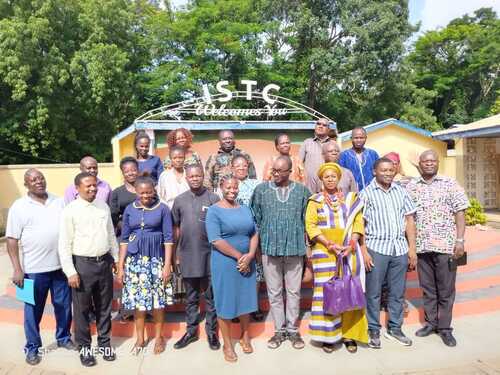
The Millar Institute for Transdisciplinary and Development Studies (MITDS) recently organized a stakeholder’s dialogue in Wa, Upper West, to discuss the innovative grass economy. Apexnewsgh reports The event brought together individuals, organizations, groups, and departments interested in the grass biochar project. Farmers who attended the dialogue were particularly enthusiastic about the potential of grass biochar. They emphasized its ability to improve soil longevity, exceeding three years, unlike chemical fertilizers which only have a one-year span and primarily benefit crops, not the soil. The dialogue provided a platform for participants to make voluntary pledges on promoting and marketing the grass bio project in their communities. The theme of the event was “Reversing Deforestation, Eliminating Bushfires and Land Degradation, Using Grass Economy Innovation as a Vital Entry Point.” The stakeholder’s dialogue was a significant step forward in exploring the potential of grass biochar to address environmental and agricultural challenges in the region. By bringing together diverse stakeholders, MITDS facilitated a collaborative approach to promoting sustainable development and innovation in the Upper West region. Source: Apexnewsgh.com Thanks for reading from Apexnewsgh as a news publishing website from Ghana. We encourage you to freely share this story via social media platform and follow us on; Facebook on APEXNEWSGH-Tv or Please contact Apexnewsgh.com on email apexnewsgh@gmail.com for your credible news publications. Contact: 0248250270/0256336062
Innovative Biochar Production from Grasses: A Laudable Solution to Bushfires and Soil Fertility– Isaac Kofi Ntori

Mr. Isaac Kofi Ntori, a project officer with A-Rocha Ghana, has commended the innovative idea of producing biochar from grasses, describing it as “very laudable”. Apexnewsgh reports Speaking at a stakeholder’s dialogue meeting organized by the Millar Institute for Transdisciplinary and Development Studies in Tamale on Monday, July 8, 2024, Mr. Ntori highlighted the potential of grass biochar production to address two major challenges in the northern region of Ghana: bushfires and soil fertility. According to Mr. Ntori, grasses are a major cause of bushfires, which pose a significant threat to the landscape, agricultural farms, and properties. However, by harvesting these grasses and converting them into biochar, the soil structure and fertility can be enhanced, leading to increased productivity and reduced bushfires. He emphasized that this innovation has multiple benefits, including reduced carbon emissions, increased forest cover, and enhanced environmental and agricultural security. Mr. Ntori believes that this approach has great prospects, particularly in the agricultural sector, and encourages stakeholders to embrace this innovative solution. He believes, by converting grasses into biochar, Ghana can reduce the risk of bushfires, improve soil fertility, and promote sustainable agriculture practices. This laudable innovation he said has the potential to transform the agricultural landscape in Ghana and ensure a more secure and sustainable future. Source: Apexnewsgh.com Thanks for reading from Apexnewsgh as a news publishing website from Ghana. We encourage you to freely share this story via social media platform and follow us on; Facebook on APEXNEWSGH-Tv or Please contact Apexnewsgh.com on email apexnewsgh@gmail.com for your credible news publications. Contact: 0248250270/0256336062
Grass Biochar: The Sustainable Solution to Soil Degradation and Food Insecurity–Bilal Taimako

Mr. Bilal Taimako Shamsudeen , a representative from the Edugha Institute for Social Development (EISD) and founder of Taimako Plants and Herbal Centre, has emphasized the importance of adopting grass biochar as a sustainable solution to reclaim lost nutrients in soil and promote food security. Apexnewsgh reports Speaking at a stakeholder’s dialogue meeting organized by the Millar Institute for Transdisciplinary and Development Studies in Tamale on Monday, July 8, 2024, Mr. Taimako stressed that chemical fertilizers have destroyed lands and the environment, and that grass biochar is the way forward. He expressed his excitement about the conversation around biochar, stating that it is a necessary step to save the environment and ensure food security. According to him, grass biochar solves several environmental issues, including pollution, bush burning, and soil degradation, while also providing employment opportunities, especially for women. Mr. Taimako emphasized that the impact of biochar on food security, health, and education is enormous, and that it is essential to move beyond talk and into action. He encouraged stakeholders to embrace biochar as a better alternative to inorganic fertilizers, which have negative impacts on soil and the environment. “We don’t have a choice; we need to adopt biochar to save our environment and ensure food security,” he emphasized. “Let’s get to work and make a positive impact on our soil, food, and communities.” The meeting aimed to bring together stakeholders to discuss alternative approaches to sustainable agriculture and environmental conservation. Mr. Taimako’s call to action on grass biochar adoption is a significant step towards promoting sustainable practices and ensuring a food-secure future. Source: Apexnewsgh.com Thanks for reading from Apexnewsgh as a news publishing website from Ghana. We encourage you to freely share this story via social media platform and follow us on; Facebook on APEXNEWSGH-Tv or Please contact Apexnewsgh.com on email apexnewsgh@gmail.com for your credible news publications. Contact: 0248250270/0256336062
Prof. Felix Y. T. Longi Advocates for Grass Biochar Adoption in Ghana

Associate Professor Felix Y. T. Longi, a social historian at the University of Development Studies, has thrown his weight behind the promotion of grass biochar as a sustainable alternative to traditional charcoal. Apexnewsgh reports Speaking at a regional stakeholders’ dialogue organized by the Millar Institute for Transdisciplinary and Development Studies on Monday, July 8, 2024 in Tamale , Prof. Longi emphasized the enormous benefits of grass biochar, including environmental protection, climate change mitigation, and improved agricultural production. He envisioned a future where a consortium of like-minded individuals would come together to organize a national or international conference to share research findings and best practices on grass biochar. By adopting grass biochar, Ghana can reduce its reliance on fuel wood and chemical fertilizers, which have harmful environmental and health impacts. Prof. Longi also pointed the importance of decolonizing knowledge production and promoting indigenous knowledge systems. He believes that by embracing grass biochar and organic manure, Ghana can break free from the shackles of colonialism and develop a more sustainable and self-sufficient agricultural sector. The historian emphasized that the time has come for Ghana to take steps towards self-reliance and environmental sustainability, citing examples of other countries that have successfully made the transition. He urged stakeholders to support the grass biochar initiative, which he believes has the potential to transform Ghana’s agricultural landscape. Source: Apexnewsgh.com Thanks for reading from Apexnewsgh as a news publishing website from Ghana. We encourage you to freely share this story via social media platform and follow us on; Facebook on APEXNEWSGH-Tv or Please contact Apexnewsgh.com on email apexnewsgh@gmail.com for your credible news publications. Contact: 0248250270/0256336062
Grass Biochar: Project Supervisor Advocates for Sustainable Agriculture Practices
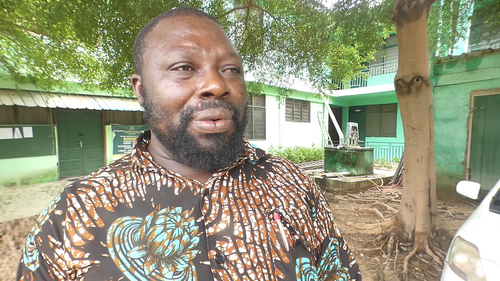
Dr. Maxwell Tengolzor Ba-an, the Charcoal Briquette and BioChar Project Supervisor at Millar Institute for Transdisciplinary and Development Studies (MITDS), recently spoke at a regional workshop in Bolgatanga, emphasizing the importance of biochar in sustainable agriculture. Apexnewsgh reports The workshop brought together stakeholders from various organizations to discuss policies and strategies for climate change mitigation, sustainability, and agriculture. Dr. Ba-an highlighted the benefits of biochar, a product made from grass, which can be used as a sustainable alternative to chemical fertilizers. He explained that biochar improves soil fertility, structure, and water-holding capacity, making it an effective tool for environmental sustainability and climate change mitigation. The project, which has received funding for two years, aims to train women in rural communities to produce biochar and use it to improve their crops. Dr. Ba-an emphasized that biochar is a cost-effective and environmentally friendly solution for rural farmers, unlike chemical fertilizers which are expensive and harmful to the soil. The project has already seen success in the Northern region, where five men’s groups have been trained to produce biochar. Dr. Ba-an expressed his hope for the project to influence national policies and promote sustainable agriculture practices. In his role as field supervisor, Dr. Ba-an oversees the training of women in the production and use of biochar. He emphasized the importance of empowering women in agriculture and promoting sustainable practices to protect the environment and mitigate climate change. The biochar project is a step towards achieving sustainable agriculture and environmental sustainability in Ghana. With its potential to improve soil fertility, reduce chemical fertilizer use, and mitigate climate change, biochar is an innovative solution for rural farmers and a promising tool for sustainable development. Source: Apexnewsgh.com Thanks for reading from Apexnewsgh as a news publishing website from Ghana. We encourage you to freely share this story via social media platform and follow us on; Facebook on APEXNEWSGH-Tv or Please contact Apexnewsgh.com on email apexnewsgh@gmail.com for your credible news publications. Contact: 0248250270/0256336062.