
BoG encourages repatriation of export funds to strengthen national reserve
The Bank of Ghana (BoG) has encouraged exporters to remain committed to the national regulation that required the repatriation of export proceeds for the development of the country. Speaking at an Exporter’s forum in Accra, Eric Kwaku Hammond, the assistant director of the banking department, BoG, said despite the existence of the Foreign Exchange Act, 2006 (Act 725) and other legislation, Ghana was still losing billions of dollars because some exporters failed to repatriate their export proceeds as required by the law. “Unfortunately, the law does not grant the BoG the power to prosecute defaulters (those who fail to repatriate these funds), so the Bank only refer them to the appropriate authorities for redress,” he said. Hammond said repatriating export proceeds into the country was very crucial for building a strong national currency reserve and stabilising the Ghana cedi to become resilient to other foreign currencies, thereby ensuring macro-economic stability. “We need to build our export currency reserves to get enough money to pay for our exports. We need surplus resources,” he said. The forum, which was organised by the Ghana Shippers’ Authority, brought together exporters, transport companies and regulatory agencies, including the Bank of Ghana, Ghana Standards Authority and the National Insurance Commission. It was to discuss issues about their operations and also dialogue on how best to address the challenges faced in successfully transporting products to destination countries. Hammond said due to the important role that such export funding played in enhancing the Gross Domestic Product (GDP) of the country, the Letters of Commitment (LOC), which was a simple word-based Information Technology (IT) infrastructure, was introduced in 2016 by the BoG, to guide exporters in the processes of repatriating their proceeds. He explained that although exporters had at least 60 days after the sale of their products to repatriate funding after which the system would block the account of an exporter, the BoG often allowed some flexibility in enforcing the regulation. Hammond encouraged all exporters to contact Ghana Link Limited, which hosted the platform, to apply for enlistment. Dr Charles Kuranchie, the chief scientific officer of the Standard Directorate, Ghana Standard Authority (GSA), educated exporters on the need to ensure the standard and quality packaging for their export products. He cautioned that there could be negative consequences to the quality of products if they compromised on quality packaging leading to losses of investments. Dr Kuranchie advised exporters to select packages based on considerations, including the weight and type of product, shelf life, as well as temperature, and also ensure proper labeling to guide handlers in taking caution. Teye Kitcher, AfCFTA, spoke about the pursuant of the Single Africa Transport Market (SATM), aimed at connecting the continent to other markets globally, through an unhindered transporting system, eliminating what pertained currently, where airline operations were limited to some countries. He gave some of the benefits of the SATM as opened connectivity of airlines from and to countries globally, reduction in taxes, reduced airline fares and enhanced services due to competition, creation of free-market trading, enhanced tourism, employment opportunities and economic development. Charlse Ansong Dankyi, the senior manager, supervision department at the National Insurance Commission (NIC), underscored the importance of insuring goods in transit to safeguard investment against accidents. The exporters during a panel discussion complained about the LOC impeding their swift operations and cited other challenges such as getting cargo transport for their products and the high cost of transportation, which must be reduced. The panelists encouraged the tightening of partnership and collaboration with the various institutions to help address all concerns of exporters and other systemic challenges for effective operations. Please contact Apexnewsgh.com on email apexnewsgh@gmail.com for your credible news publications. Contact: 05555568093
GRA locks up Grid Petroleum and Sonnidom Ltd for tax default
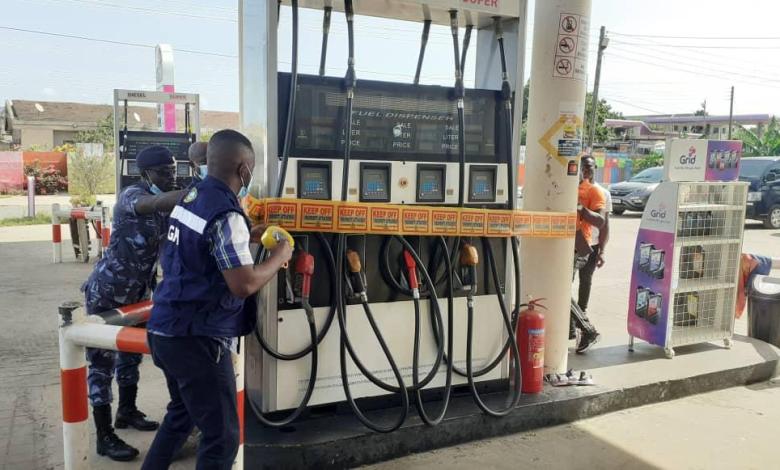
The Ghana Revenue Authority (GRA) has locked up the offices of Grid Petroleum Ghana Limited and Sonnidom Petroleum Limited for defaulting in petroleum taxes and levies. Grid Petroleum Ghana Limited owed the GRA to the tune of GhC1.25 million, while Sonnidom Petroleum Limited is indebted to the Authority an amount of Ghc862,702.13. Nathaniel Okai Tetteh, the chief revenue officer, debt management, compliance and enforcement unit of GRA, made this known in an interview with the media after a special exercise christened: “VAT Distress Action”. The exercise saw unannounced visits to the companies to collect outstanding debts from recalcitrant taxpayers of the Authority. He said the exercise was undertaken after a failed discussions and negotiations with the companies to pay their outstanding taxes to the Authority. Tetteh said the locked-up companies have 10 days to visit the GRA head office and settle their debts to avoid further actions like auctioning their assets. He said GRA would come after companies like Santol Limited, Life Petroleum, Delma Company Limited and Petra Energy that owed the Authority a huge sum of money. He said the exercise was to enforce tax compliance and improve the Authority’s revenue generation. The exercise also forms part of GRA’s comprehensive national tax campaign to encourage more Ghanaians to honour their tax obligations to enable the government to meet its domestic revenue targets, increase social intervention policies and accelerate development across the country. The GRA, in September 2019, launched a task force dubbed: “Operation Collect, Name and Shame,” aimed at collecting overdue taxes and the names of recalcitrant businesses were published in the media and asked to settle their debts. GNA Please contact Apexnewsgh.com on email apexnewsgh@gmail.com for your credible news publications. Contact: 05555568093
Nigeria investigates reports of Boko Haram leader’s death
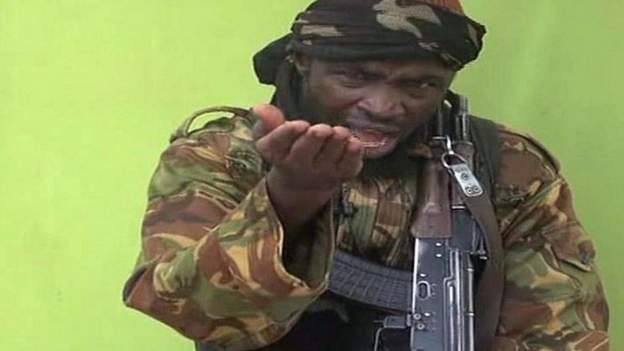
The Nigerian Army says it is investigating reports that Boko Haram leader Abubakar Shekau has either died or was seriously injured during a clash with a splinter group, the Islamic State in West African Province (Iswap). It’s not the first time Shekau has been reported killed. But the militant leader resurfaced each time. Army spokesman Brig Gen Mohammed Yerima told the BBC that the army was still looking into what may have happened, but will not issue a statement until it gets definite proof. One journalist with close links to security agencies has said that Shekau died when Iswap attacked Boko Haram positions in the Sambisa forest, north-east Nigeria. The AFP news agency quotes two sources saying that Shekau survived his attempt to kill himself when he was surrounded. Iswap has not commented. Shekau took over Boko Haram after its founder Muhammad Yusuf was killed by police in 2009. Since then, more than 40,000 people have been killed and over two million displaced from their homes in the deadly insurgency in north-east Nigeria Please contact Apexnewsgh.com on email apexnewsgh@gmail.com for your credible news publications. Contact: 05555568093
Fury ordered to fight Wilder again, placing proposed bout with Joshua in doubt
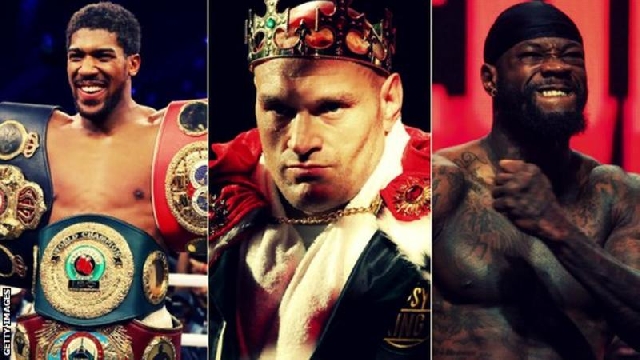
Tyson Fury has been ordered to fight Deontay Wilder for a third time, casting doubt over a proposed August super bout with Anthony Joshua. Fury, 32, won the WBC world heavyweight title from Wilder in a rematch in February 2020 after an initial draw. The pair were due to fight again but delays caused by the Covid-19 pandemic prompted Fury to seek an alternative. On Monday a US judge ruled in mediation that Wilder has a right to face Fury for a third time before 15 September. The American’s team had long argued their fighter had a contractual right to a third fight with Fury. But after delays caused by the pandemic led to a July 2020 contest being postponed, Wilder’s team sought to move the bout to 2021. Fury refused the 2021 date and said he would move on. That prompted mediation overseen by American judge Daniel Weinstein, who has now sided with Wilder and set a 15 September deadline for a third contest. “Until we can reach an accommodation with Deontay Wilder’s people, I can’t say that [Fury’s fight with Joshua] will definitely happen,” Fury’s promoter Frank Warren told BBC Radio 4’s Today Programme. “But we are working hard to get that over the line. We were talking last night and hopefully we can do that. If not then Tyson, if he wishes, will go to the fight with Wilder. They’re the only two options.” Fury’s US promoters Top Rank did not wish to comment on the development when contacted by BBC Sport. Just 24 hours before Monday’s arbitration hearing, Fury confirmed he had agreed to fight fellow Briton Joshua – holder of the IBF, WBA and WBO belts – for all four heavyweight world titles in Saudi Arabia on 14 August. Joshua’s promoter Eddie Hearn has also said several times that the August bout was in place, with terms agreed. The mediation outcome does not necessarily mean a Fury-Joshua fight cannot take place in August but fresh deals will now need to be struck for it to do so. That could mean Wilder being offered money to allow Fury-Joshua to take place. “It’ll cost quite a bit of money. He will want as much as possible so I think it’ll be about the negotiation if we go down that road,” said Warren. Saudi authorities are reportedly putting forward around £106m just to stage the Fury-Joshua contest. Pay-per-view sales and ticket sales will serve to substantially add to the total revenue of the contest. If it goes ahead, Joshua versus Fury will be the first bout in heavyweight history where all four world titles are on the line. ‘Expect a deal’ – analysis BBC Sport’s Luke Reddy Just 24 hours after Fury said he had been in conversation with Saudi organisers and agreed to seal the deal, this Wilder news will come as a blow. How big of a blow is not yet clear. With so much money to be made from Joshua v Fury, one would think a deal will be struck with Wilder whereby he steps aside and perhaps even gets told he can face the winner in 2022. It may suit him to do so given he can pocket a sizeable sum and prepare against an opponent of his choosing short-term – he has been out of the ring for 15 months. There were already countless moving parts to a Joshua-Fury deal, with three promoters, several broadcasters, four sanctioning bodies and a host venue all needing to co-operate to get the fight done. But any postponement would be highly damaging for the sport given so many fans from outside boxing’s hardcore support will tune in to watch it. It is a golden opportunity to draw new people into the sport, and fights with such a crossover appeal are rare. Source: BBC Please contact Apexnewsgh.com on email apexnewsgh@gmail.com for your credible news publications. Contact: 05555568093
Lewis Hamilton says Formula 1 is a ‘billionaire boys’ club’

Lewis Hamilton says Formula 1 has become a “billionaire boys’ club”. The seven-time champion told Spain’s AS newspaper it would not be possible for him to break into the sport from his background if he tried to do so now. “Growing up in a normal working-class family, there is no way I could be here – the guys you are fighting against have that much more money,” he said. “We have to work to change that to make it more accessible, for the rich and for people with more humble origins.” The Mercedes driver was raised on a council estate in Stevenage in Hertfordshire, while his father Anthony worked several jobs to fund his junior career before he was picked up by McLaren and Mercedes aged 13. They funded the rest of his career as he made his way through the ranks to F1. Of the current grid, Canadians Lance Stroll, Nicholas Latifi and Russian Nikita Mazepin, who have all joined F1 in recent years, are the sons of billionaires. And both Max Verstappen, Hamilton’s title rival this year, and Mick Schumacher, who made his debut in 2021, are the sons of former F1 drivers. Hamilton and Mercedes have set up a foundation to try to attract more people from an ethic minority background into motorsport, and he has set up commission to look into why minorities are under-represented. Source: BBC Please contact Apexnewsgh.com on email apexnewsgh@gmail.com for your credible news publications. Contact: 05555568093
Help set up Int’l Association of MPs for Peace – Speaker urged

The National Coordinator of the United Peace Federation-Ghana, Dr Mrs Helen Osei, has appealed to the Speaker of Parliament, Mr Alban Sumana Kingsford Bagbin, to support efforts toward the setting up of the Ghana chapter of the International Association of MPs for Peace (IAPP). The initiative, she said, was to help promote the development of humankind along the path of coexistence and mutual prosperity for future generations. She said efforts made in the 7th Parliament to set up the association in the country proved futile and affected Ghana’s image and commitment at promoting global peace and development. Mrs Osei made the appeal when she led a delegation of the United Peace Federation-Ghana to call on the Speaker on Thursday, 20 May 2021. The International Association of MPs for Peace is an international network of parliamentarians created to take on crucial issues of territorial disputes, religious conflicts, climate change, violent extremism and poverty through the common solidarity and cooperation of the parliamentarians of the world. Mr Bagbin commended the federation for its dedication to building a world of peace centred on universal spiritual and moral values. He expressed regrets for the federation’s inability to see through the setting up of the Association of MPs for Peace during the 7th Parliament and tasked the protocol department to ensure that all the necessary structures are put in place to advertise the association when the second meeting of the first session of the 8th parliament commences next week. Mr Bagbin, who said he had similar challenges in the past, noted that Ghana, and Africa, for that matter, must be able to clearly re-define what their priorities are in order to reconscientise the citizenry. Peace, he said, can only exist where justice is made to prevail and, therefore, charged the federation and its leadership to do more to promote global dialogue and mutual coexistence. The United Peace Federation is an NGO in general consultative status with the Economic and Social Council of the United Nations and supporting the work of the UN achieve the Sustainable Development Goals (SDGs). Classfm Please contact Apexnewsgh.com on email apexnewsgh@gmail.com for your credible news publications. Contact: 05555568093
Lieutenant Colonel Frank Agyeman and three other officers in connection with the arrest and assault of Citi FM journalist Caleb Kudah
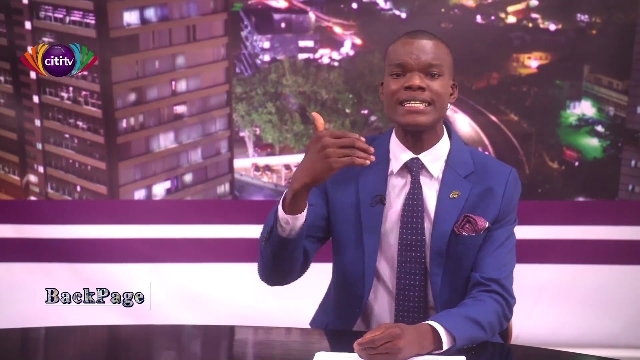
National Security has withdrawn the services of its Director of Operations, Lieutenant Colonel Frank Agyeman and three other officers in connection with the arrest and assault of Citi FM journalist Caleb Kudah. An investigation committee set up by the Ministry of National Security to probe the issue indicated that the “secondment of Lieutenant Colonel Frank Agyeman (Director of Operations) at the Ministry has been reversed”. “The officer is to report to the Chief of Defence Staff for further investigation and appropriate action”. “The three police officers involved have been withdrawn and are to report to the Ghana Police Service for investigation and disciplinary action,” a statement from the ministry said. Apexnewsgh.com/Ghana/Ngamegbulam Chidozie Stephen Please contact Apexnewsgh.com on email apexnewsgh@gmail.com for your credible news publications. Contact: 05555568093
Inappropriate, contravened standard operating procedures as Albert Kan-Dapaah described Caleb arrest
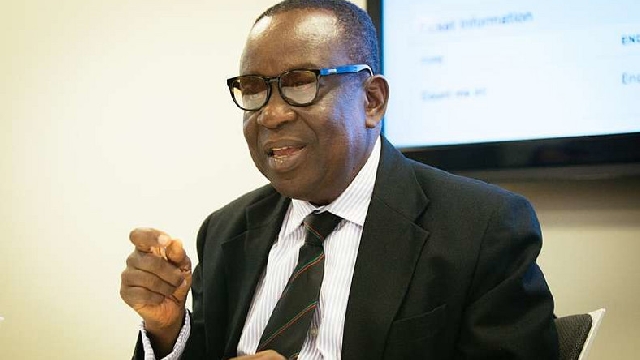
The National Security Minister, Mr Albert Kan-Dapaah, has described the arrest of Citi FM journalist Caleb Kudah as “inappropriate and contravened the ministry’s standard operating procedures”. Apexnewsgh.com/Ghana/Ngamegbulam Chidozie Stephen Please contact Apexnewsgh.com on email apexnewsgh@gmail.com for your credible news publications. Contact: 05555568093
Converting NIB, adb to DBG would’ve been ‘very costly’ – Ofori-Atta
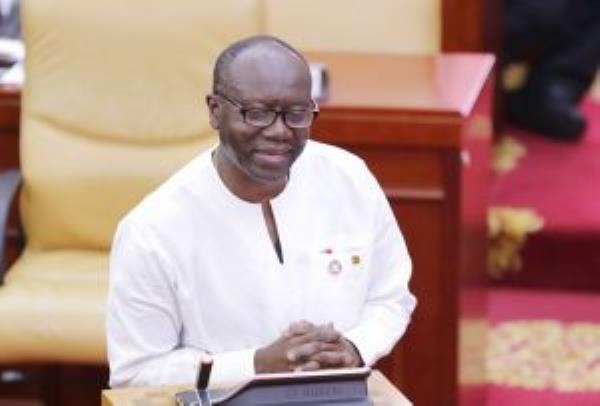
Finance Minister Ken Ofori-Atta has explained that the government decided to set up the Development Bank Ghana (DBG) from the scratch rather than converting one of the state-owned commercials banks such as National Investment Bank (NIB) and the Agricultural Development Bank (adb) for that purpose because it would have been too costly going for the latter option. DBG is an integral feature of the GH¢100-billion Ghana Cares ‘Obaatampa’ Project, which is seeing to the revitalisation of the Ghanaian economy following the onset of COVID-19. The Ministry of Finance and the European Investment Bank (EIB) recently signed an agreement for the provision of a €170-million facility for the establishment of DBG. This signing event took place on Wednesday, 19 May 2021, when President Nana Addo Dankwa Akufo-Addo held a meeting with the President of EIB, Dr Werner Hoyer, as part of his official visit to Belgium. The €170-million facility, according Dr Hoyer, is the largest facility provided by EIB for the establishment of a development bank in Africa or for any other project, for that matter, on the continent. Speaking at the signing ceremony, President Akufo-Addo noted that “the Development Bank Ghana is going to play a very important part in the rapid economic transformation of Ghana, following the onset of COVID-19.” According to him, “we want to restructure the economy, and move it from being a mere producer and exporter of raw materials, to one that places much greater emphasis on value addition activities. We see this Bank (DBG) as one that will play a pivotal role in this”. Dr Hoyer, for his part, was confident that the establishment of DBG will help unlock opportunities for growth in Ghana, as well assist in the rapid recovery of the Ghanaian economy from the ravages of COVID-19. He noted that the establishment of the Bank is in line with the objectives of the European Union, and will help develop Ghana’s private sector, agri-business, manufacturing and ICT initiatives. While describing the decision to establish DBG as “a wise one”, the EIB President added that the bank sees the partnership with Ghana as a fruitful one, indicating that the EIB will follow keenly the development and workings of DBG in Ghana. Some critics, however, raised issues about the move to set up a new bank after the government, through the Bank of Ghana, collapsed some nine local banks in the financial sector clean-up exercise during President Akufo-Addo’s first term of office. One of those critics is A Plus, who questioned why the Akufo-Addo administration spent more than GHS21 billion “to collapse banks that needed about GHS9 billion to survive” but now “borrowing 170 million euros to establish a new national bank when you already have NIB which is struggling; adb which is struggling”, as well as GCB Bank and CBG. “Ghana beyond aid but you are borrowing money to start a national bank”, A Plus observed. Addressing such criticisms at a press conference on Thursday, 20 May 2021, Mr Ofori-Atta said: “Work on the DBG started in 2018 with a task force of industry experts established by the government to recommend the best approach to establish a modern and dynamic development bank”. Based on the recommendation of the task force, he said the government decided to set up DBG “as a new non-deposit-taking-wholesale-bank under the Companies Act”. DBG, as a wholesale and non-deposit taking bank, Mr Ofori-Atta added, “requires no branch network and minimal staff”. “It will, therefore, be very costly – financially and in terms of closure of branches and employment loss – to try to convert adb or NIB into a viable modern development bank”, he noted. “The advantage we foresee of a greenfield approach is that one gets to start from a clean slate, with no legacy financial, governance and other issues. This allows us to focus on the future and move straight into setting up DBG equipped with modern and sound design principles”, Mr Ofori-Atta explained. According to him, the greenfield approach also has the potential to attract more private and international institutional capital “as we have witnessed with EIB’s €170 million facility”. “It also the government’s plan to attract other shareholders, both domestic and international, so as to increase DBG’s capital base and also reduce the government’s share over time”, he added. Read the Finance Minister’s full statement below: A New Engine for Ghana’s Economic Transformation Good Evening Ladies and Gentlemen of the media, senior staff of the Ministry. It is a pleasure to hold a press conference today on the back of the President of the Republic, Nana Akufo-Addo signing of a €170m loan agreement with the European Investment Bank in Brussels yesterday. As it was captured, the European Investment Bank, among other international development institutions, are supporting our effort to establish a new development finance institution here in Accra, the Development Bank Ghana (DBG). DBG is a key pillar in our efforts to quickly recover from the effects of the COVID-19 pandemic and quickly resume our economic transformation path as articulated in the Ghana CARES/Obantanpa Programme. It is intended to be a model institution that supports the financial system to play its role in supporting the private sector to expand and create jobs. DBG will help address two important constraints in our financial system, namely the lack of long-term funding, and the lack of adequate funding to the productive sectors of the economy. Currently, less than 15% of loans given out by banks are for 5 years or longer, making investment in long gestation project very difficult for our private sector. The agriculture and manufacturing sectors receive around 4% and 8%, respectively, of banks loans compared to their shares in GDP and employment and potential for driving economic transformation. Primary Focus Areas of DBG will be: Agribusiness, with a focus on off-farm value-chain activities Manufacturing ICT, software, and allied services, including Business-Process Outsourcing, and Tourism Boosting homeownership through affordable and longer tenure Mortgage Finance DBG is not similar to the existing commercial banks that we have
Polls: We are taking the 2024 election very seriously—Ofosu Ampofu
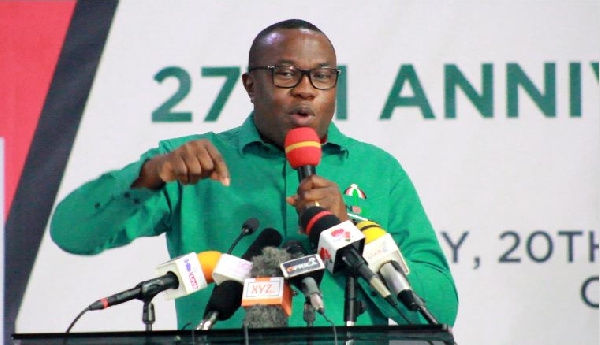
Ofosu Ampofu Chairman of the opposition National Democratic Congress (NDC) has revealed that they are taking the 2024 elections very seriously. According to him, the 2020 election is the last time the party are going to court to settle an election dispute, stressing: “We’ll settle matters of the election at the polling stations and the collation centres”. The opposition NDC challenged the results of the 2020 presidential poll at the Supreme Court but lost to the incumbent government as President Akufo-Addo was declared victorious. However, during the party press conference on Thursday, 20 May 2021, Mr Ofosu-Ampofo said: “We, NDC, are taking the 2024 elections very seriously and we’ll not leave any stone unturned in ensuring that a level-playing field is provided to ensure that we have free and fair elections which outcome would be accepted by everybody”. “I’ve participated in elections since 1992 to 2020. It is only in the 2020 elections that military people invaded collation centres”, Mr Ofosu-Ampofo said. “it is only in the 2020 elections that you have military people – whether they are military or vigilantes, nobody can say but today”. “I’m beginning to believe that they are not regular military people because even DCOP Opare-Addo has stated that the people that he was dealing with were vigilante groups”. “Today, it is like a war zone. Now when you are going for IPAC meetings, military people fully armed with AK-47s are all over the place”, he observed. “You turn round to say that the security of the election is not in your hands, meanwhile, you have militarized your own office”, He said. Apexnewsgh.com/Ghana/Ngamegbulam Chidozie Stephen Please contact Apexnewsgh.com on email apexnewsgh@gmail.com for your credible news publications. Contact: 05555568093