



Dr.Bawumia’s spokesperson Gideon Boako shares his boss view on E-levy
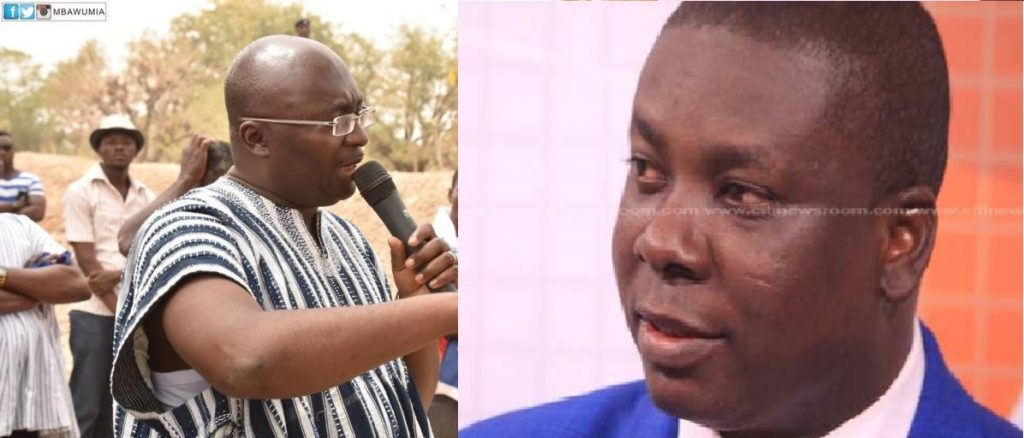
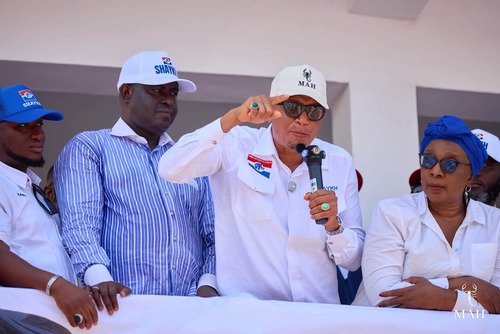
Dr. Gideon Boako, the Spokesperson for Vice President Dr. Mahamudu Bawumia has said, his boss’ muteness on the controversial E-levy during the TESCON lecture on the economy wasn’t a deliberate one. He believes the Vice President has no option than to accept the E-levy because is a government policy. “Whatever commentary anybody passed before such policy came to effect is immaterial. Whether you sat on the table, made your views known in support or in dissent, when the decision is taken it is a collective decision and what you say is immaterial”. “Mind you, you don’t come out from cabinet meetings and send out loud your opinion and push it out, it is not done anywhere. What is important is that when government takes a decision, all actors are bound by it whether you supported it or not,” Dr. Boako said this on TV3 monitored by Apexnewsgh.com “So it is not in the interest of the government or the Vice President himself to come out after cabinet has taken the decision to say that ‘I’m the one who championed the idea’, or to come out to say ‘when this was tabled I didn’t support it’, are you not a team player? He asked Apexnewsgh.com/Ghana Please contact Apexnewsgh.com on email apexnewsgh@gmail.com for your credible news publications. Contact: 05555568093
I had a glimmer of hope; that solidarity would prevail to protect people from the virus when Ghana first received COVAX—Mahama

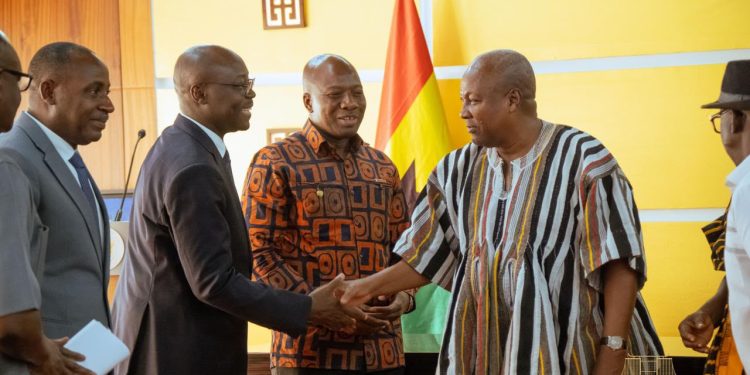
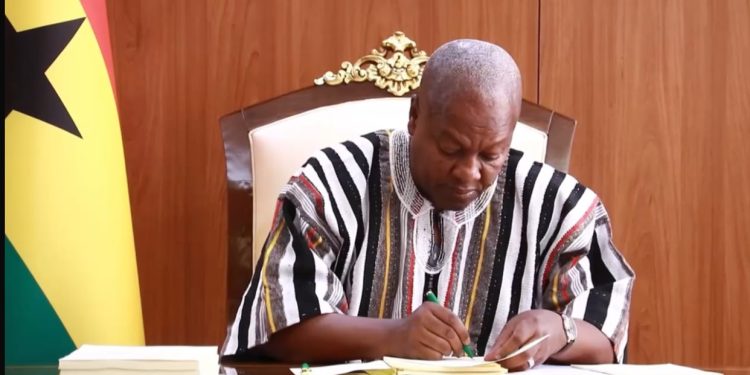
Former Ghanaian president John Dramani Mahama has said: When Ghana became the first country in Africa to receive COVID-19 vaccine doses through the COVID-19 Vaccines Global Access (COVAX) initiative to equitably distribute COVID vaccines, I had a glimmer of hope; that solidarity would prevail to protect people everywhere from the virus. Below is Mr Mahama’s full article: A Pandemic Treaty Cannot Leave Solidarity to Chance When Ghana became the first country in Africa to receive COVID-19 vaccine doses through the COVID-19 Vaccines Global Access (COVAX) initiative to equitably distribute COVID vaccines, I had a glimmer of hope; that solidarity would prevail to protect people everywhere from the virus. Fast forward to today and a third of the world remains completely unvaccinated, including 80% of people in Africa. Moreover, lifesaving treatments are only available in a handful of countries. Many countries did not, and still do not understand the gaps that the pandemic will not end until all people, in every country, are protected from COVID-19. The “me-first” approach has left large swaths of Africa without the tools needed to slow the spread of new variants, stop preventable deaths and build back economies, consequently, holding the entire world back. Obviously, we cannot leave solidarity to chance the next time around. To safeguard our future, we need a new international system anchored in solidarity, transparency, accountability and equity to enable countries at every income level to detect, alert and respond to health threats before they become pandemics. In a new Call to Action, the Panel for a Global Public Health Convention has proposed a bold path forward to address such gaps and dramatically strengthen pandemic prevention, preparedness and response systems through a new Pandemic Treaty or Convention. The new set of recommendations call for a positively incentivized system governed at the heads of state level where compliance with agreed preparedness standards, alert protocols and response efforts are overseen by an independent monitoring and assessment body at arm’s length to the World Health Organization (WHO). Even though WHO’s leadership in setting international standards in preparedness and response and supporting countries achieve targets is still vital, this independent body would add an additional layer of accountability to our international system by having the mandate to call on and call out countries based on performance of pandemic preparedness, detection and response. We must also look through an equitable and realistic lens when we set targets and monitor for performance, as levels of pandemic preparedness will vary by country. For instance, following the 2014–2016 Ebola outbreak in West Africa, many countries strengthened their capacity to contain outbreaks through enhanced laboratory capacity, disease surveillance and crossborder coordination. Many of these systems moved into gear to respond to the growing COVID19 threat back in 2020. However, countries without this recent history may be farther behind on the road to pandemic preparedness – a new Pandemic Treaty must ensure that targets are ambitious and appropriate, and no matter where a country falls on this spectrum, technical and financial support is readily available to enable countries to meet goals. The African Union has done a laudable job establishing a range of continental funds and platforms to pool resources and provide technical and financial assistance to all countries – from the AU COVID-19 Response Fund to the African Vaccine Acquisition Task Team. A new Pandemic Treaty must ensure this kind of collaboration takes place at the international level because global health security is only as strong as its weakest link. A new multilateral financing facility to ensure all countries can access predictable and sustainable funding without incurring catastrophic debt will be a necessary step. And we must consider tools (PPE, test kits and vaccines) and countermeasures that contain outbreaks, as global public goods and services to be financed, produced and distributed as such. Finally, a new Pandemic Treaty must address gaps in our understanding and ability to stop pathogens at their source by reducing the risks of disease spillovers from animals to humans. While Ebola and more recently COVID-19 has added new urgency to address emerging challenges at the intersection of environmental, animal and human health, there is insufficient investment, little oversight and a lack of coordination within countries. A Treaty must encourage more research and enhance coordination among all stakeholders. From stopping outbreaks at the source to alerting the world and responding once an outbreak is underway, we need as much mutual assurance as possible along the timeline of events. Without clear accountability at each stage, calls for solidarity may yet again fail the next time an outbreak with pandemic potential emerges. We have the tools and solutions to prevent this – let’s put them to use through a new, equitable Pandemic Treaty. Apexnewsgh.com/Ghana/Ngamegbulam Chidozie Stephen Please contact Apexnewsgh.com on email apexnewsgh@gmail.com for your credible news publications. Contact: 05555568093
Tempane DCE mourns with the family of a rainstorm victim, as he visited scenes of the affected area in the district

The Tempane District Chief Executive (DCE) Issaka Anabida has visited the bereaved family of a man who died as a result of Wednesday’s heavy rainstorm across the district. Apexnewsgh.com report In Bulpielisi, a community in the Tempane District of the Upper East Region, a shea nut tree fell on a man and instantly took his life. However, visiting the bereaved family, the DCE Mr. Anabida consoled the family and as well promise them NADMO’s support. Meanwhile, the CHPS compound of Bulpielisi had the maternity block completely ripped off and part of the nurse’s bungalow too ripped off as well. A Kindergarten (KG) block was completely ripped off. Following the terrible observation by the DCE, he asked his office to immediately give attention to the health facility by way of roofing the facility to enable the people continue to have access to health care since it’s the only facility available in the community and its environs. In another affected area in a community known as Karateshie , several houses were ripped off and prominent among them is a newly constructed blockhouse which was totally destroyed by the storm. Meanwhile, following the heavy rainstorm in Tempane district, a total of about 20 High tension electricity poles connecting the Basyonde, Karateshie, Kongo, Nagani, and nearby communities were pulled down and the power supply to these above areas mentioned was affected. VRA Officials were however brought swiftly and work has started to restore electricity to the affected areas. Officials of the National Disaster Management Organization (NADMO) were also present to take an assessment of the damages caused. Apexnewsgh.com/Ghana Please contact Apexnewsgh.com on email apexnewsgh@gmail.com for your credible news publications. Contact: 05555568093