


Breaking News: John Ndebugre has passed on
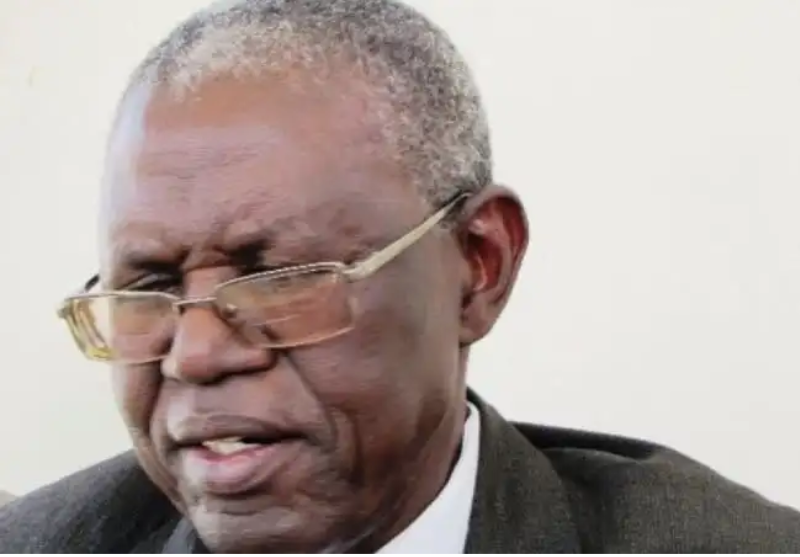
Information reaching Apexnewsgh.com has it that John Akparibo Ndebugre former Member of Parliament (MP) for Zebilla and a private legal practitioner has died at aged 72–Apexnewsgh.com report According to our source, he died at his home town in Zebilla, of the Bawku West District of the Upper East Region on Friday May 6, 2022. The private legal practitioner died after a shot illness. John Akparibo Ndebugre is a Ghanaian politician of the Republic of Ghana. He was the Member of Parliament representing Zebilla constituency of the Upper East Region of Ghana in the 4th Parliament of the 4th Republic of Ghana. He is a member of the People’s National Convention Apexnewsgh.com
All governments since 1959 have paid lip service to our educational system–Robert Ajene

A popular country’s finest educationists and statesmen Mr. Robert Ajene has revealed, that all past government since Nkrumah’s time has exhibited nothing but only lip service to the country’s educational system. Apexnewsgh.com report “All past governments since Nkrumah’s time in 1959 have paid lip service to our educational system and stakeholders look like they are not playing a major role to see that we are in the right track in education”. Mr. Ajene also hold a strong view that, teachers unions formed to help shape the educational system have failed to play their role as expected. “We have teachers unions GNAT and so on, I don’t think they are playing their role to see that the colonial educational system which was given to us and later we find out that we were producing white color job. No single individual or organization can convince me with the role they have played right from the beginning of our educational system till today”. “You see, we only try to change names, labels don’t matter. In this case, our educational system is still there but inside there, we keep on changing. He stressed According to the retired Educationist, “since 1954, Ghana has been trying to change the educational system because we found that people who left Universities were not specially trained, so the mere acquisition of a degree meant that you could do anything. And 1957, I heard those who were responsible, we changed the system and we said, there was too much academic thinking, why can’t we blend this with pragmatism? ‘the using of the hands more than brain’ and many schools were changed over the day to secondary schools and most of them are technical school and they are just standing there by name, the technical aspect is not been taught and I can mention a lot of school SECTEC SECTEC SECTEC, if you send your child there, there is no technical aspect to do. “We have heard about all these, what have we done to change? We set up Polytechnic to train middle-level manpower, how many polytechnics succeeded in doing that before they were changed overnight to Universities. People left polytechnic walking on the street without jobs because the training made them unemployable. That is why we have unemployed graduates. He stressed Mr. Ajene made the revelation during an exclusive interview with Ngamegbulam Chidozie Stephen of Apexnewsgh.com Apexnewsgh.com/Ghana/Ngamegbulam Chidozie Stephen Please contact Apexnewsgh.com on email apexnewsgh@gmail.com for your adverts and credible news publications. Contact: 05555568093
Nigeria and Angola responsible for almost half of OPEC+ oil supply gap
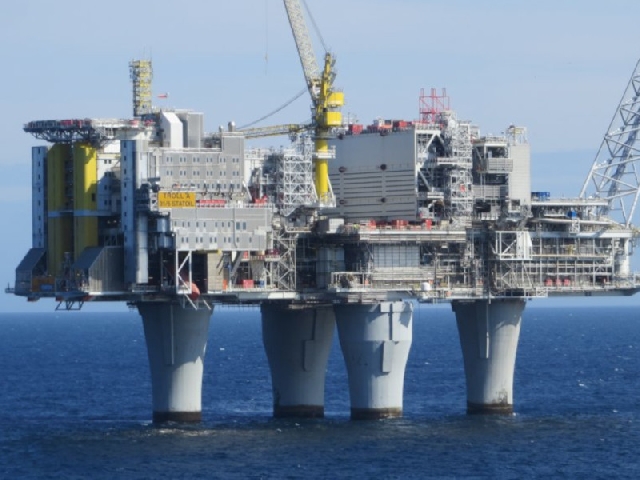
Almost half the shortfall in planned oil supply by OPEC and its allies is down to Nigeria and Angola, data seen by Reuters shows, reflecting a number of factors including moves by Western oil majors away from African projects. OPEC and its allies, known as OPEC+, pumped 1.45 million barrels per day (bpd) – equal to 1.5% of world supply – below its target in March, the OPEC+ figures seen by Reuters show. According to the figures, Angola was responsible for almost 300,000 bpd of the OPEC+ supply shortfall while Nigeria was pumping almost 400,000 bpd below target. The war in Ukraine has also hit Russia’s oil trading and its output was about 300,000 bpd short of its March supply target. OPEC+ production shortfall The OPEC+ shortfall is one of the reasons global oil prices hit a 14-year high in March above $139 a barrel and it has prompted calls by the United States and other consumers for producers to pump more. The Organization of the Petroleum Exporting Countries, however, has repeatedly rebuffed the calls – and one contributing factor is simply that some of its members don’t have oil available to pump. In OPEC’s view, investment cuts after oil prices collapsed in 2015-2016 due to oversupply, along with a growing focus by investors on economic, social and governance (ESG) issues, have led to a shortfall in the spending needed to meet demand. “There was massive underinvestment in the industry over the years, further complicated by the effect of ESG,” OPEC Secretary-General Mohammad Barkindo told Reuters. “There was a contraction of 25% in 2015 and 2016 – unprecedented. There was no significant recovery before 2020, when we registered a 30% contraction in investments in the industry,” he said. Figures from the International Energy Agency (IEA) show there was no significant increase in investment in global oil and gas exploration and production during 2017-2019 – followed by a 32% plunge in 2020. Global upstream oil and gas investment International oil companies are gradually pulling out of Nigeria’s onshore oil production, although they continue to invest in its vast offshore oil and gas resources, where costs remain competitive. Shell, which helped transform Nigeria into a leading producer since the 1930s, did not immediately respond to a request for comment about investment and the reasons for the decline in Nigerian output. Gulf producers boost investments OPEC’s Gulf producers led by Saudi Arabia are largely meeting their OPEC+ targets, and OPEC sources say their relative lack of dependence on outside investors has helped. “The investment shortfall affected more the countries where reliance on foreign investment is more prominent,” an OPEC+ source from a Gulf producer said. Nigerian oil output vs OPEC+ target IEA figures show that in 2019, final investment decisions (FIDs) affecting over eight times more crude reserves in the Middle East were taken than those affecting African reserves. Middle East approvals were also consistently higher from 2011 through 2018. “Saudi Arabia, the United Arab Emirates and Kuwait are increasing investment and that to some extent can help offset declines elsewhere,” said Audun Martinsen, analyst at Rystad Energy. “It also highlights why OPEC is not intervening more because it is quite hard for OPEC to increase production overnight,” Martinsen said. Angolan state oil company Sonangol and Nigeria’s state oil firm NNPC did not immediately respond to Reuters requests for comment on their production decline or the reasons for it. According to a 2021 report from the Arab Petroleum Investments Corporation or APICORP, Middle East and North African producers were still expected to boost energy investment to $805 billion in 2021-2025 – up $13 billion on the previous year’s five-year outlook, despite the impact of the pandemic. In February, Saudi Arabia-based APICORP said it expected rising oil and gas prices to further support energy investment in the region. Too much risk While Western majors are increasingly focusing on the energy transition and selling oil assets, they remain big producers in Africa. Big Western companies are responsible for 40% of output in Nigeria and 60% in Angola, according to Rystad. Rystad sees some potential for new investment in Nigeria and Angola but projects remain “too expensive” for the majors. “Since 2015 the majors have been focusing on cost and developing things in Africa has been too much of a risk with cost overruns,” Rystad’s Martinsen said. “It’s not really part of their key focus any longer.” Angolan production has fallen 50% since 2015 and output is down by about 30% over the same period in Nigeria, he said. In Nigeria production is expected to grow slightly by 200,000 bpd in the coming years, but then decline again after 2024. Shell said last month that oil spills arising from pipeline tapping in the Niger Delta doubled in 2021 to the highest since 2016. Underlining the extent of the decline, exports of key Nigerian crude grade Bonny Light have fallen to just two or three cargoes a month from about eight or nine previously as a result of escalating oil theft. Source: Reuters
The period I most feared for my life was, incidentally, under President Kufuor’s first term–Gabby Otchere-Darko
A leading member of the governing NPP Gabby Otchere-Darko has revealed that during his time as an editor, the period he most feared for his life was, incidentally, under the leadership of President Kufuor’s first term. According to him then, the threats and actual assaults which he endured as a journalist were all from opposition activists incensed by my writings and utterances. Read his full revelation below: As an editor of a newspaper then, the period I most feared for my life was, incidentally, under President Kufuor’s first term – the era of the repeal of the Criminal Libel Law. Significantly, however, the threats and actual assaults which I endured as a journalist were all from opposition activists incensed by my writings and utterances. My writings and comments were not necessarily defamatory, but mainly acerbic, like calling an opposition leader a “poodle” and spicing it up with a caricature. Those days my tongue was like a shredder! My written words could sting like jellyfish and, for some, my words could be as debilitating as necrotizing fasciitis. For some time then Francis Poku had me under constant armed protection. I chose not to make any noise about it at all. I endured it all quietly and continued doing my work. Yes, the era my life was under threat as a journalist was under an NPP government. But the threats and attacks I endured were from opposition elements! How would it have been reported internationally if I had made a big deal of it? That journalists were not safe under President Kufuor? That would have been completely unfair but at least I could have been verily but mischievously cited as proof! Thankfully, I do not remember saying many things that could easily get me into real trouble with the law. Well, there was one tricky publication of October 2003 in the paper I edited on Tony Aidoo and his immigration issues in the UK. The source of that story was authoritatively “unimpeachable.” The case had an interesting ending! What am I trying to say? Not much. Just telling a small part of my story as a troublesome journalist. That, we must forever protect the rights of journalists to speak freely. Take it as you wish! Apexnewsgh.com/Ghana/Ngamegbulam Chidozie Stephen Please contact Apexnewsgh.com on email apexnewsgh@gmail.com for your adverts and credible news publications. Contact: 05555568093
Growing political and social tensions leading to information distortions, the reason for Ghana recent position–MP

Peter Lanchene Toobu, Member of Parliament for Wa West, has said, the latest Ghana’s position on World Press Freedom Index, is a result of growing political and social tensions leading to information distortions and the publication of false news, particularly across social media platforms. Mr. Toobu made the remark during an interview with Morning Starr monitored by Apexnewsgh.com. According to Mr. Toobu, “It is also striking that the new report took into consideration the effect of opinion media, propaganda, disinformation, and fake news and their adverse impact on press freedom ranking for affected countries. This is a result of growing political and social tensions leading to information distortions and the publication of false news, particularly across social media platforms.” He added: “Sometimes when you create a situation of fear and panic and the unknown and people don’t feel safe, security is all about feeling safe. If you don’t feel safe today and you don’t feel safe tomorrow of course the way you do your things will begin to be negatively impacted. So if people don’t feel safe and particularly Journalists they will either decide to speak or they will begin to speak in favor of the one who is probably threatening their security. “In both ways it doesn’t help our democracy. So for me it’s time for all of us to rise to the occasion and say media freedom is a key requirement for constitutional democracy and its guarantee in the constitution. Anything that is happening within our system that is impacting negatively on media freedom we should come together as a people and try and do something about it,” He is of the view that, “the media front can project our democracy positively. The media front can give relevance to our constitution. But to be dropping in ranking whether its economy or media it’s not a good sign for us.” Meanwhile, the Government has blamed Ghana’s poor showing in the latest World Press Freedom Index on the change of methodology by the reporters without borders. “Due to this development, four (4) of the countries (Netherlands, Jamaica, Switzerland, and New Zealand) that ranked top ten (10) in 2021 significantly dropped in ranking, slumping out of the top ten (10) in the year under review,” Information Minister Kojo Oppong Nkrumah said in a statement. Apexnewsgh.com/Ghana/Ngamegbulam Chidozie Stephen Please contact Apexnewsgh.com on email apexnewsgh@gmail.com for your adverts and credible news publications. Contact: 05555568093
Our biggest disease is corruption and the vaccine is transparency–Dr. Bawumia
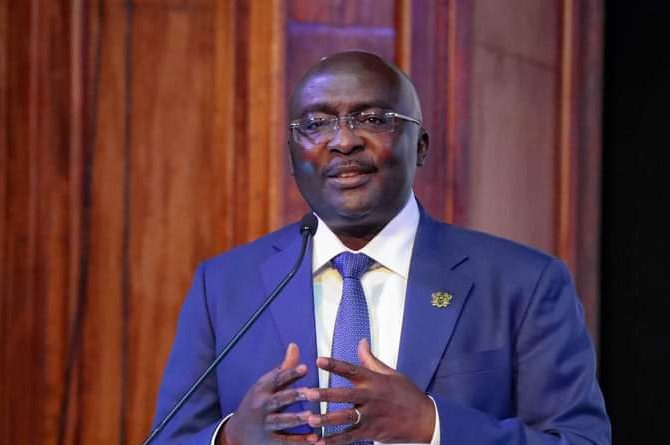
The Vice President Dr. Mahamudu Bawumia has stated, that the Akufo-Addo government’s infusion of digitalization in the provision of government services as part of the fight against corruption is beginning to yield major results, with even more interventions planned to fight it even harder. Speaking at the 2022 edition of the Annual Conference of the Institute of Internal Auditors (Ghana) in Accra on Thursday 5th May, 2022, the vice president stressed that Government is “very, very committed” to the fight against corruption, and will continue to infuse digitalization into the operations of state institutions to ensure more transparency. “Building strong institutions means putting in place the right systems and practices that ensure transparency and brings about efficiency. With this, although corruption may remain a chronic disease, transparency will be its vaccine to reduce the rate of spread. As the saying goes, our biggest disease is corruption and the vaccine is transparency. Corrupt people hate transparency,” he indicated. “I would like to draw your attention to where we are as a country in our digitalization process. We have made tremendous progress in building the digital infrastructure that serves as the bedrock for our digitalized economy as part of the paradigm shift in our economic transformation. “We approached the building of this digital infrastructure on the key pillars of standardizing individual identification using the Ghana Card; solving the address and property systems using GhanaPostGPS; solving under-banking and bringing financial inclusion to most people through a robust mobile money and bank interoperability and digital payment platform; and integration of Government Databases and digitising public service delivery using the Ghana.gov platform.” “Already, we are seeing the impacts of these initiatives including efficient public service delivery by all Ministries, Departments and Agencies on the Ghana.gov portal, combatting corruption by removing the middle-man and “ghost names” in many transactions, bringing more Ghanaians into the formal sector, and driving domestic revenue mobilization, among others. “If you take the Passport Office for instance, in 2017 there were about 16,000 applications for passports generating about Ghs1m. But with the advent of digitization, there were over 498,000 online applications in 2021, generating over Ghs56m. Similar things are happening at the DVLA, the ports, and other institutions. “Recently, due to the introduction of e-tickets, we recorded the highest gate proceeds from a football match in Ghana. We will continue to shine the light of transparency in all aspects of national life.” However, he charged Internal Auditors to play their part in the fight against corruption, given their key role in the governance structure in institutions both public and private. “As internal auditors in a digitalized economy, your ability to provide independent assurance that public sector institutions’ risk management, governance and internal control processes are operating effectively depends first and foremost on your embracing and adoption of digital technology. It is critical for those responsible for governance to embrace digitalization for survival and growth. “In tune with the mission of the Institute of Internal Auditors, the internal audit function must be well-positioned to help organizations accomplish their objectives by providing insight and foresight. This, must be achieved by adopting the systematic disciplined approach to evaluate and improve the effectiveness of risk management, control and governance.” Apexnewsgh.com/Ghana/Ngamegbulam Chidozie Stephen Please contact Apexnewsgh.com on email apexnewsgh@gmail.com for your adverts and credible news publications. Contact: 05555568093
I prefer being an ’embarrassment’ of a lawyer to a ‘dishonest’, ‘NPP propagandist’ of an AG – Edudzi to Dame

The lawyer for the three opposition National Democratic Congress Members of Parliament who filed an application at the Supreme Court that sought an injunction on the implementation of the Electronic Levy by the Ghana Revenue Authority (GRA), Mr Godwin Eduzi Tameklo, has responded to Attorney General and Minister of Justice Godfred Dame for describing his last court performance as “embarrassing”. The Supreme Court, in a unanimous decision, threw out the Minority’s suit on Wednesday, 4 May 2022. The plaintiffs were Minority Leader Haruna Iddrisu, North Tongu MP Samuel Okudzeto Ablakwa and Bawku Central MP Mahama Ayariga. The Supreme Court, in its ruling, however, ordered the Ghana Revenue Authority to keep accurate records of all e-levy deductions to enable a refund to payees if it is later determined that the law was passed unconstitutionally. The court, composed of Nene Amegatcher as President, Her Ladyship Mariama Owusu, His Lordship Professor Ashie Kotey, Her Ladyship Gertrude Torkornoo, Her Ladyship Lovelace Johnson, His Lordship Emmanuel Yony Kulendi and Her Ladyship Professor Henrietta Mensah Bonsu, said the Republic would suffer a great deal if the government is temporarily stopped from deducting the levy from electronic transactions. The plaintiffs had filed an earlier suit at the apex court challenging the passage of the e-levy bill by a one-sided parliament. They claim the number of legislators in the chamber when the bill was passed did not form a quorum as declared by the Supreme Court. The opposition MPs want the Supreme Court to set aside the passage of the e-levy bill by the Majority Caucus present in the chamber of parliament on 29 March 2022 as unconstitutional, null and void. They wanted the court to stop the commencement of the levy until the final determination of the first case. Speaking to the media after the court ruling, Mr Dame told the media: “You saw what happened in court today: It was an embarrassing spectacle”. “The lawyer clearly was not able to demonstrate any form of irregularities with proceedings in Parliament”, he explained, illustrating: “The court asked him [Edudzi Tameklo]: ‘So, is there any record that indicates that X number of MPs walked out at a certain stage?’” “He obviously said no. There was no evidence indicating whether there was a headcount of a number of MPs present in parliament who voted to support the bill”, the Minister of Justice said. “There was also nothing indicated by the lawyer, which suggests there was a walkout of X number of MPs, so, I think we should ignore all that propaganda,” he said. Mr Dame added: “…You do not go to court with speculation and conjecture; you go to court on firm evidence”, insisting: “The applicants were unable to demonstrate any form of irregularity”. He welcomed the ruling, saying: “…I’m fully satisfied with the court’s ruling. I’m content with the outcome and I’m happy that the observation that we made about the application has been affirmed by the court”. “It is very important to note that the court made a finding that: really, nothing irregular has been demonstrated by the applicant and so far as the proceedings in parliament in question were concerned, everything seemed regular and we have demonstrated the same from the processes that we had filed. Meanwhile, South Dayi MP Rockson-Nelson Dafeamekpor has jumped to Mr Tameklo’s defence and tackled the Attorney General on his comments. “You could make your legal argument, you could say that your argument, as canvassed in opposition to the application prevail, that is what we say to lawyers. But don’t tell the general public that his performance today was embarrassing,” he said. In his view, “as a practising lawyer who has also practised before in the Supreme Court on several occasions, I think Edudzi distinguished himself.” “Edudzi was answering about four questions at the time from the judges. The judges didn’t hound the AG in that manner. At a point, four judges were asking Edudzi four different questions at the same time. He was able to respond to each and every one of them for the AG to miss a course and take to the media to say that his performance today was embarrassing, is with all due respect to him, unacceptable,” the NDC MP told Accra-based Joy FM. Responding to the AG himself, Mr Tameklo said: “I will prefer to be an embarrassment than a dishonest Attorney General”, adding: “This Attorney General has no regard for candour and honesty”. “If he did, he would not appear before the apex court of the land with the March 29, 2022 votes and proceedings knowing very well that same has been corrected and that correction has been adopted”, he explained. “It is the lowest that I have seen of an Attorney General and let be on the record”, Mr Tameklo said. “Unfortunately, this is the Attorney General that we have to contend with”, he added. “He sees himself more of an NPP propagandist than the Minister of Justice,” Mr Tameklo added. The NDC lawyer said the “Attorney General’s childhood kernel has been cracked for him”, adding: “You remember not long ago, even after the Supreme Court gave an injunction order against the NDC MP for Assin North, he met the media once again and said what happened to Adamu Sakande should happen to the NDC MP, knowing that there was a substantive matter to be determined”. “So, it is part of his making to prejudge matters before the court,” Mr Tameklo noted. Mr Tameklo said he restrained himself from commenting on the ruling until the AG went on his media attack, contrary to the practice among lawyers, “and, so, when he decided to defer this law, I need to descend on him in equal measure”. —Classfm