



The MITDS Journey
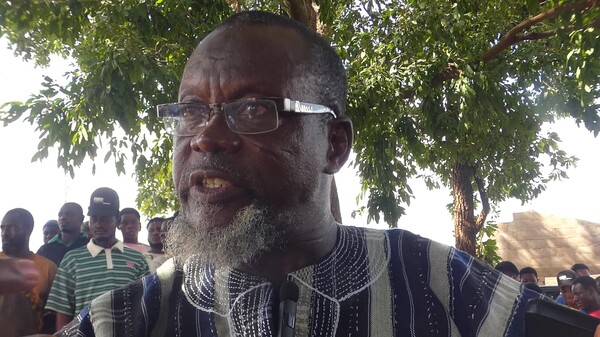
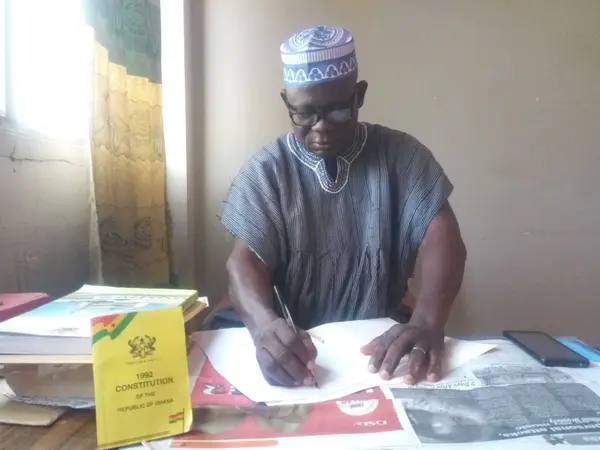
In 1990, Professor David Millar, the President of the Millar Institute for Transdisciplinary and Development Studies (MITDS), had a vision to create an Open University. This vision he shared with his wife, Mrs. Lydia Mamata Millar. With great determination, they both acquired a piece of land for the school facility. Professor and Mrs. Millar worked tirelessly towards their dream, and in 2014, he officially launched the Millar Institute for Transdisciplinary and Development Studies (which he first registered Open University). He became the Foundation President of the Institute and has been its President. He firmly believed that every long journey begins with a first step and that every night ultimately gives way to a new day. Located in Yikene, a community in the Bolgatanga Municipal, MITDS quickly became known as the first private and Open University in the Upper East Region of Ghana. Despite the presence of several local universities in Ghana that have established partnerships with external universities under the Open University Concept, the landscape of tertiary education in Ghana such as MITDS was significantly influenced by Prof. Anamoah-Mensah’s report in 2006. This report challenged Ghanaian universities to transition from traditional on-campus, satellite campus, and distance learning models to Open University Systems. In response to this call, Prof. Millar and his institution, the MITDS (Millar Institute for Tertiary Development Studies), emerged as one of the first fully Ghanaian-owned institutions to address the recommendations put forth by Prof. Anamoah-Mensah. MITDS has taken steps to ensure that it operates within a duly composed and functional Council, ensuring transparent governance. Furthermore, the various structures and programs offered by the institute have obtained the necessary Accreditations Affiliation of MITDS since inception has always been granted by University for Development Studies (UDS). Hence they have since been awarding the degrees. Ghana Tertiary Education Commission (GTEC) provided the legal status of institutional accreditation and reaccreditation, program accreditation and reaccreditation, and institutional audits thus far. In 2014, MITDS was established as an institution. Four years later, in 2018, they held their first graduation ceremony for the inaugural class of students. However, the institution faced challenges in attracting students, leading to low enrollment numbers. According to records from MITDS in 2018, the student population was 105. Out of the total number, 4 students deferred their programmes and 26 were irregular for various reasons. At that time, female enrolment was 30%, which fell short of the school’s target of 50%. To address this issue, Professor Millar, the head of MITDS, announced during the graduation ceremony that they had made the decision to gradually phase out their undergraduate programs, starting with no longer accepting Level 100 or Level 200 students. This decision was described as a temporary measure, and Prof. Millar mentioned that they would assess the situation and reactivate the program if circumstances improved. Currently, MITDS is focusing on expanding their offerings of Master’s and PhD programs. To further promote research, they also actively pursued research grant opportunities that include scholarships for students. In 2018, Professor Millar enthusiastically announced that MITDS has designed and is now offering Post-Graduate Certificate Courses. These courses were developed in response to the high demand from individuals already employed and seeking career-oriented short courses. As a result, MITDS has introduced a range of six-month Post-Graduate Certificate Courses, including: – Policy and Strategy Studies – Information and Informatics – University Administration – Advanced Business Administration – International Relations – Agri-Business Studies In 2018, MITDS collaborated with the University of Bern in Switzerland and engaged in a two-year Community-based Sustainable Food Programme in Kalbeon and Gowrie-Kunkwa. Additionally, MITDS collaborated with ECOLAND Germany (BMZ) to prepare for a Diploma Programme in hands-on Organic Farming and Bio-dynamic Agriculture, which was expected to conclude in October 2021. Professor Millar expressed his satisfaction in giving back to these communities, who have been long-standing partners and social laboratories for MITDS. He also promised to continue cooperation with them whenever the opportunity arises. In response to the One District One Factory policy of the New Patriotic Party, MITDS has identified seven potential projects for implementation. We are currently working towards securing buy-ins for these projects. The projects include: The GARWASI Project (formerly known as the Grass for Charcoal Project). This project has been expanded to include the development of paper for paper bags and toilet rolls using the same technology. Expansion of the Groundnut Sector under Irrigation. Transformation of Groundnut vines into organic fertilizer. Addressing the challenges posed by Fulani Herdsmen. Transformation of the Bolgatanga Meat Factory into a multi-purpose Abattoir. Development of the Bamboo plant for the production of matchsticks and toothpicks. Linking the Wulugu Ranching project with Nasia Rice Production. Establishment of the Pwalugu multi-vegetable Factory. Implementation of the Walewale Organic Fertilizer Factor In 2022, Professor Millar and the MITDS introduced a groundbreaking innovation involving grass. During his graduation speech, Professor Millar announced that MITDS’s flagship program, aimed at promoting a grass economy in northern Ghana has resulted in remarkable accomplishments. These accomplishments include: – The development of Grass Charcoal Briquette (GARWASI PROJECT), an alternative to tree-charcoal in the pursuit of sustainable renewable energy. This project has garnered attention from the FAO, leading to the signing of a ten-month contract worth Ghs 400,000. This contract will enable the introduction of this technology to five communities on a pilot basis, with the potential to expand to twelve additional communities. – Another noteworthy milestone is the successful transformation of everyday grasses into brown paper, which can be utilized for various purposes. In 2018, the school made the exciting announcement that its second and third internal refereed journal, the Ghana Journal for Culture and Development (CULTRAD), had been released for public consumption. Additionally, during that same period, the school published four essential course books, specifically designed for the Masters and PhD programs. These books are readily available for purchase. A few years ago, the institute established a unit dedicated to editing, proofreading, and restructuring final post-graduate thesis works, particularly PhD theses, into published books. This process is similar to what is practiced
62% of pupils in Basic schools cannot read-Education Minister frowns

Education Minister Yaw Osei Adutwum revealed that over the past ten years, there has been a significant increase in the number of primary 2 pupils capable of reading. Specifically, the percentage has risen from a mere 2% to 38%. However, this also implies that 62% of primary 2 pupils still do not possess reading skills. During the launch of the National Education Leadership Institute in Takoradi, Dr. Adutwum stated, “Back in 2015, only 2% of our primary 2 students demonstrated reading ability in this country. However, thanks to President’s investment and efforts, resources were allocated to conduct the National Standardized test in 2022, enabling access to every primary 2 student nationwide.” Dr. Adutwum stated that the recently released test results show that 38% of students have the ability to read, which he finds unsatisfactory. He also mentioned that the remaining 62% cannot read, which is so worrying. According to Dr. Adutwum, it is crucial to cultivate a new generation of education leaders who prioritize learning outcomes and strive to improve the educational landscape in Ghana. He expressed the need to move away from traditional apprenticeship leadership and accelerate the implementation of successful approaches like the Wesley Girls’ model. Dr. Adutwum emphasized the importance of studying and comprehending the factors that contribute to effective schools in Ghana, while also acknowledging the value of apprenticeship experiences. The establishment of the National Education Leadership Institute aims to support this process. Source: Apexnewsgh.com/Ghana For publication please kindly contact us on 0256336062 or Email apexnewsgh@gmail.com
Ngamegbulam Chidozie Stephen of ApexnewsGh receives 2022 ‘CLIMATE CHANGE’ reporter of the year
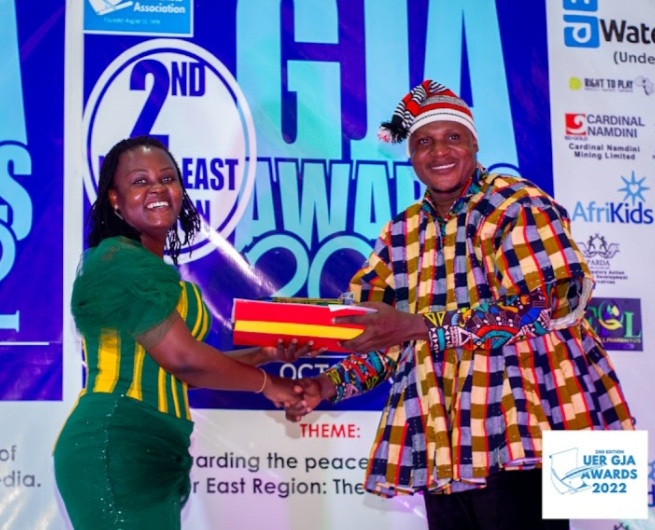
Ngamegbulam Chidozie Stephen, the editor in chief of ApexnewsGh, has been honored at the second edition of the Upper East GJA Awards. Mr. Ngamegbulam, a dedicated media practitioner in the Upper East media landscape, was recognized as the ‘CLIMATE CHANGE‘ reporter of the year in 2022. Since the inception of Apexnewsgh.com in 2020, this diligent journalist has exhibited remarkable dedication and consistency in his reporting, particularly on topics that are beneficial to the people of the Upper East region.In 2019, Mr. Ngamegbulam due to his explicit reports and contribution in the area of humanity won the ‘HUMAN RIGHTS’ category Award. Unlike many other voting award schemes, the GJA awards have implemented a proper process for recognizing its members. This involves the appointment of vetting committees that thoroughly review works submitted by qualified journalists. Below are the 2022 Upper East Regional GJA Award Winners Albert sore – Journalist of the Year Albert Sore – Human Rights Reporting Albert Sore –Agric Reporting Nicholas –Most Promising Journalist of the Year Nicholas Azebire (Dreamz FM)—Child protection Reporting Nicholas Azebire (Dreamz FM)—Disability Reporting Joshua Asaa (A1 Radio)—Sanitation Reporting Joshua Asaa (A1 Radio) —Conflict Reporting Castro Senyalah (Asaase)—Environment Reporting Moses Appiah (A1 Radio) – Education Reporting David Azure (A1 Radio)—Health Reporting Nelson Abagna (GBC- Ural Radio)—Sport reporting Ngamegblam Chidozie Stephen (ApexnewsGh) – Climate Change reporting Anthony Apudeo (GNA)—Tourism reporting Anthony Adongo Apudeo (GNA) – Gender reporting Simon Agana (Word FM) – Water reporting Simon Agana (Word FM)—Development reporting The award ceremony was attended by prominent dignitaries from both within and outside the region. Notable individuals in attendance included Professor David Millar, the Regional CHRAJ Boss Lawyer. Jaladeen-Abdulai, the National GJA Vice President, the National GJA Secretary, a representative of the information minister Alhaji Yusif Fosana, the government spokesperson on social service, retired COP Patrick Akolgo, media veteran Samuel Akapule, representatives from various political parties, the Upper East Regional Minister Stephen Yakubu and more. The Paramount Chief of the Talensi Traditional Area, Tongoraan Kolbilsong Namalteng, chaired the ceremony, which concluded successfully. The 2023 Upper East Ghana Journalists Awards was sponsored by WaterAid Ghana . Other sponsors: Afrikids Ghana Earl International Group (Ghana) Gold Mining Ltd MTN Ghana, Silas Amoah Foundation Endswell Pharmacy Youth Harvest Foundation VRA/NEDCO Widows and Orphans Movement Participatory Action for Rural Development Alternatives (PARDA Bolgatanga Municipal Assembly Source: Apexnewsgh.com|Ghana For publication please kindly contact us on 0256336062 or Email: apexnewsgh@gmail.com