


President Mahama Commissions 11 New Ghanaian Envoys to Serve Worldwide
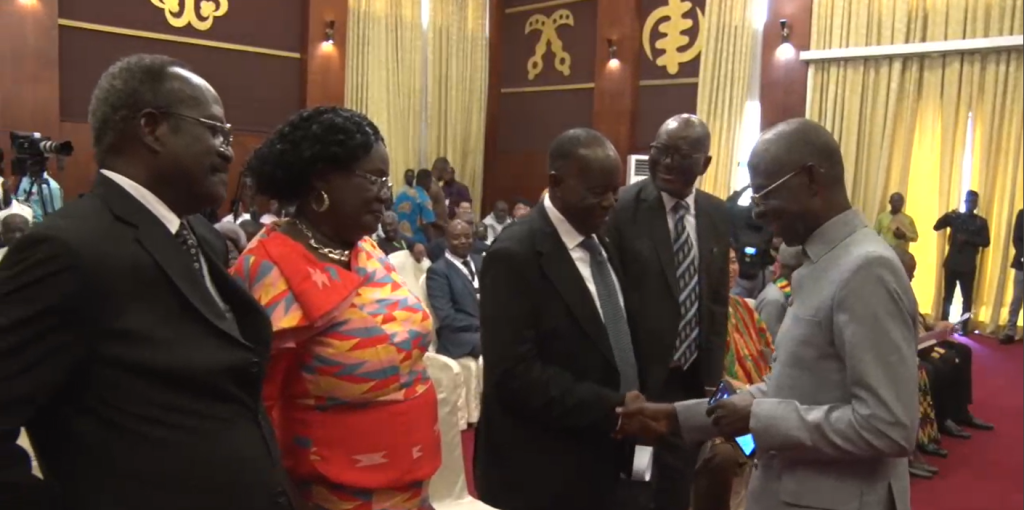
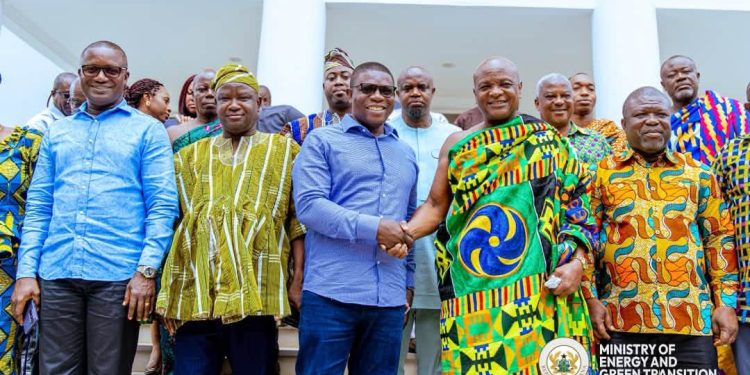
President John Dramani Mahama has officially commissioned 11 new envoys to represent Ghana as Ambassadors and High Commissioners in countries around the world, marking a new chapter in Ghana’s diplomatic outreach. The swearing-in ceremony, held in Accra on Wednesday, October 1, followed the granting of agrément by host countries throughout September 2025. The newly appointed envoys, all non-career diplomats, were handpicked to advance Ghana’s interests abroad under the current administration. Among those commissioned were: Mr. Kwesi Ahwoi – Ambassador to the Republic of Serbia Mr. Kojo Choi – Ambassador to South Korea Captain (Rtd.) George Kofi Nfojoh – High Commissioner to Togo Prof. Dora Francisca Edu-Buandoh – High Commissioner to Canada Alhaji Abdul-Rahman Harruna Attah – High Commissioner to Namibia Dr. Kwame Ampofo – Ambassador to Hungary Mr. Benjamin Anani Quashie – High Commissioner to South Africa Mr. Magnus Kofi Amoatey – Ambassador to Congo Mr. Benedict Batabe Assorow – Ambassador to the Holy See (Vatican) Prof. Mrs. Esi Awuah – Ambassador to Switzerland Mr. Mohammed Abubakari Manaf – Ambassador to Benin Each envoy received a presidential instrument of commission, formally empowering them to assume their diplomatic posts and begin their service. President Mahama’s selections reflect a renewed focus on strengthening bilateral relations and advancing Ghana’s foreign policy priorities. The newly commissioned envoys are tasked with promoting Ghana’s political, economic, and cultural interests while building deeper cooperation and partnerships for mutual development with their host countries. Source: Apexnewsgh.com
President Mahama Leads Talks with U.S. to Resolve 15% Tariff on Ghanaian Exports

President John Dramani Mahama has revealed that the Government of Ghana is actively engaged in negotiations with the United States to address a 15% tariff imposed on Ghanaian exports. The tariff, which was introduced by an executive order from U.S. President Donald Trump on July 31, has raised significant concerns among Ghanaian exporters and policymakers. Speaking at the swearing-in ceremony of the second batch of new Ambassadors and High Commissioners in Accra on Wednesday, October 1, President Mahama highlighted the government’s commitment to finding a resolution. He noted that the ongoing discussions with the U.S. also include the possible renewal of the African Growth and Opportunity Act (AGOA), a key trade preference program that has historically allowed Ghana and other eligible African countries to export goods to the U.S. duty-free. “Negotiations are ongoing with regard to the trade tariffs of 15% and the renewal of AGOA, which was a zero percent tariff on African nations, and so those negotiations are still ongoing,” President Mahama told the assembled diplomats. AGOA, first enacted in 2000, opened the U.S. market to thousands of products from sub-Saharan African countries. Ghana, as a major beneficiary, exported approximately US$340 million worth of goods under the program’s preferential status. However, the most recent extension of AGOA expired on September 30, 2025, making the current talks even more urgent. Key Ghanaian export sectors affected by the new tariff include cocoa derivatives, textiles, gold jewellery, cashew, and shea butter. The outcome of these negotiations will be watched closely, as it holds significant implications for Ghana’s trade prospects and the livelihoods of many exporters. Source: Apexnewsgh.com
Petition Filed for Removal of Supreme Court Judge Justice Yonny Kulendi
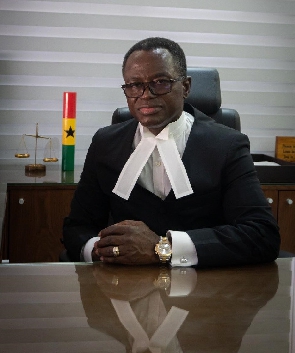
A formal petition demanding the removal of Supreme Court Judge Justice Yonny Kulendi has landed on the desk of President John Dramani Mahama, sparking debate about judicial conduct and accountability in Ghana. The petition, confirmed by Citi News, was submitted by Daniel Marfo Ofori-Atta on September 30, 2025, and officially addressed to the Office of the President. In his letter, Mr. Ofori-Atta accuses Justice Kulendi of improper interference in the ongoing High Court proceedings of the ambulance scandal case, Republic v. Cassiel Ato Forson & 2 Others. According to details cited by Citi News, the complainant argues that Justice Kulendi’s alleged actions violate the Code of Conduct for Judges and Magistrates. Mr. Ofori-Atta contends that such behavior threatens judicial independence and undermines public trust in the legal system. He told Citi News monitored by this platform that the petition has not only been filed but also acknowledged by the Presidency, marking the first formal step in what could become a closely watched constitutional process. While the next steps remain uncertain, Ghana’s 1992 Constitution requires that any move to remove a Justice of the Supreme Court must adhere to the strict process outlined in Article 146, ensuring due process and safeguarding the integrity of the judiciary. Source: Apexnewsgh.com
President Mahama: U.S. Lifts Visa Restrictions on Ghanaians Through Diplomacy—No Money Changed Hands
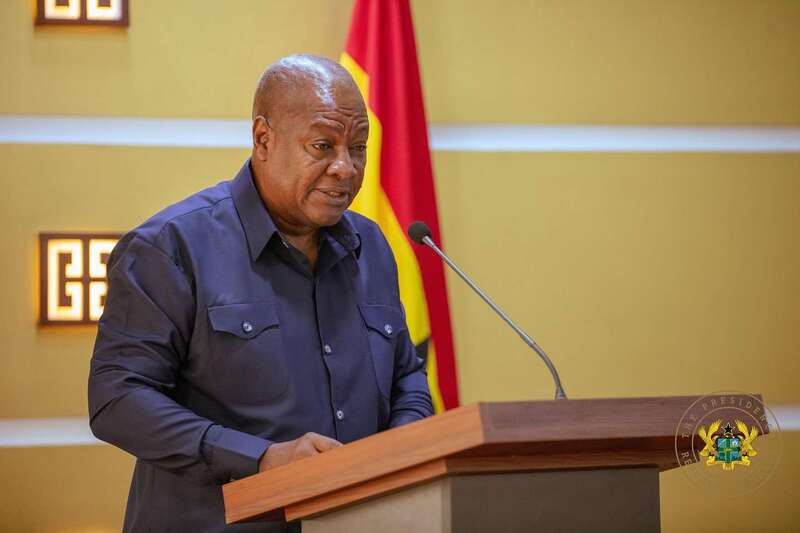
President John Dramani Mahama has announced that the recent lifting of U.S. visa restrictions on Ghanaian nationals was achieved solely through dialogue and negotiation, with no financial deal involved. Addressing the newly sworn-in Ambassadors and High Commissioners on Wednesday, October 1, President Mahama tackled the rumors head-on. He affirmed that the U.S. government’s decision to restore full visa privileges—including five-year multiple-entry B1/B2 visitor visas, was the result of Ghana’s principled diplomatic engagement, not financial settlement. “Many of you are aware that Ghana became the only country subject to U.S. visa restrictions to secure a complete reversal from the Trump administration,” President Mahama said. “Let me state clearly that this outcome was negotiated in Ghana’s best interest… and let me also emphasise that there was no financial consideration as part of the understanding between Ghana and the United States.” The president explained that the discussions were centered on mutual concerns, particularly the issue of visa overstays. He noted that some Ghanaians, especially students and official delegates, had remained in the U.S. beyond the duration allowed by their visas, prompting the original sanctions. “These are people who go and instead of coming back, they decide to stay. And so they [the U.S. authorities] have the record,” he explained. President Mahama urged all Ghanaians seeking visas to respect the conditions of their stay, warning that the actions of a few could jeopardize access for everyone. “Those of you applying for visas, please, when you go, come back, because you affect everybody else,” he cautioned. The visa sanctions, first imposed in July 2025 by the Trump Administration, had reduced the validity of U.S. visas for Ghanaians to just three months. The breakthrough came on September 26, when Foreign Affairs Minister Samuel Okudzeto Ablakwa announced that the U.S. had communicated its decision to restore normal visa issuance during a bilateral meeting at the UN General Assembly in New York. U.S. Under Secretary of State for Political Affairs Allison Hooker described the change as a sign of deepening Ghana–U.S. relations. The news has been widely celebrated in Ghana as a triumph of diplomacy and a testament to the effectiveness of the nation’s foreign policy under President Mahama’s leadership. Source: Apexnewsgh.com
UTAG Steps Up Pressure on Government to End Galamsey
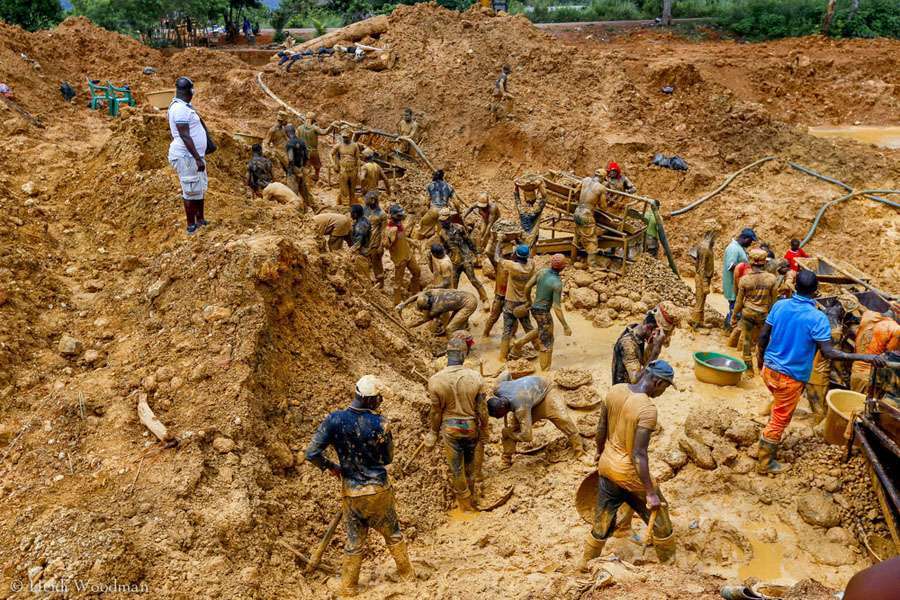
The University Teachers Association of Ghana (UTAG) has sounded a clarion call for urgent action against illegal mining, popularly known as galamsey, signaling a new phase in the nation’s efforts to protect its environment. The Association is preparing to roll out a series of initiatives designed to hold the government accountable and intensify the fight against the ongoing destruction of Ghana’s water bodies and forest reserves. Dr. Ivy Fiador, the newly elected President of UTAG, shared the Association’s concerns with the media, expressing deep worry about the consequences of unchecked galamsey operations. “Water is an essential thing, and that is what we drink. Now it may look like it is far away from us. In a few years, we are likely to be battling more diseases than we normally would. Already, as a nation, we are financially challenged,” she cautioned. Dr. Fiador acknowledged that while illegal mining may appear to provide employment opportunities, the long-term costs far outweigh the short-term benefits. “When you juxtapose the cost implication when you want to restore degraded lands or water, then you realise that the net present value is negative in the long run,” she noted, urging the country to look beyond immediate gains and consider the lasting impact on public health and the economy. UTAG’s upcoming measures aim to put sustained pressure on the government to act decisively, reflecting the Association’s belief that the future of Ghana’s environment and its people depends on immediate intervention. “Unchecked galamsey operations threaten not only public health but also the nation’s economic stability,” Dr. Fiador emphasized. As UTAG prepares to unveil its action plan, the national conversation on illegal mining continues to gather momentum. President John Dramani Mahama is set to meet with over 60 civil society organizations on Friday, October 3, to deliberate on strategies to end galamsey and secure Ghana’s environmental future. Source: Apexnewsgh.com
The Minister for the Interior: Leading the Fight Against Cybercrime in Ghana
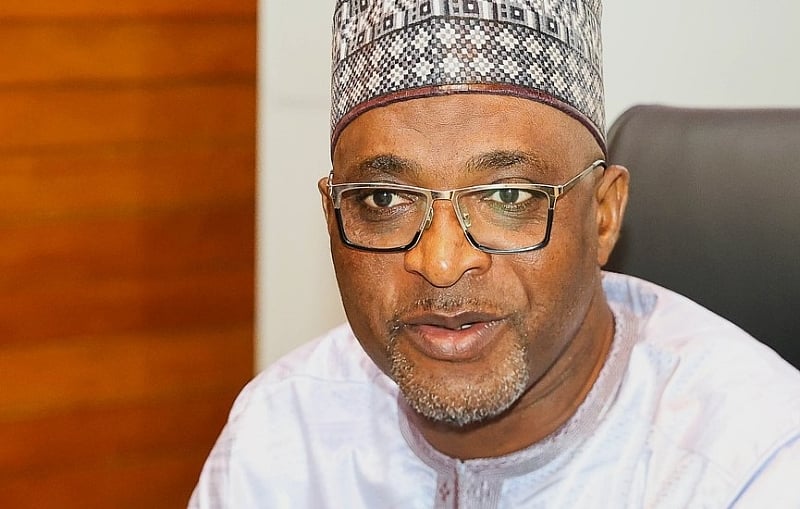
Mohammed Muntaka Mubarak addressed a gathering at the launch of Cybersecurity Awareness Month. His message was clear and compelling: Ghana is making impressive progress in the fight against cybercrime, thanks to the relentless efforts and innovation of the Ghana Police Service. As the audience listened attentively, Mr. Mubarak described the pivotal role of the police’s Digital Crime and Cybersecurity Unit. This specialized team, he explained, is on the front lines, tackling a wide spectrum of cybercrimes, from mobile money fraud and online impersonation to sexual extortion and financial cyber scams. The Unit’s determination to protect citizens from evolving digital threats is matched only by its embrace of cutting-edge technology. “The modern digital forensic lab has been equipped to examine seized digital devices such as mobile phones, computers, and storage media to ensure that credible evidence is produced in court to secure justice for victims,” the minister stated. The audience nodded in approval, recognizing the importance of credible evidence in prosecuting cybercriminals. But the story does not end there. Mr. Mubarak revealed how the Police Service is expanding its reach by leveraging open-source intelligence techniques and an international data-sharing platform. These tools, he said, allow officers to track and neutralize cyber threats before they can escalate, exposing cross-border criminal networks and reinforcing the security of Ghana’s digital infrastructure. However, the minister was quick to point out that technology alone is not enough. “The fight against cybercrime demands continued investment in equipment and knowledge,” he emphasized. To this end, the Ghana Police Service is investing heavily in training investigators, forensic experts, and prosecutors in the latest digital techniques. Collaborations with universities, professional institutions, and global organizations like Interpol are helping to build a new generation of cyber experts, ready to outwit even the most cunning criminals. The minister’s message was one of hope and determination. With the commitment of the Ghana Police Service and support from every corner of society, Ghana stands poised to safeguard its digital future, ensuring that its citizens can thrive in an increasingly connected Source: Apexnewsgh.com
Ghana’s Credit Market Slows Sharply in 2025, Marking Shift from Last Year’s Borrowing Boom

Ghana’s credit market is showing clear signs of fatigue in 2025, according to the Bank of Ghana’s July 2025 Monetary Policy Report, signaling a sharp slowdown after the borrowing surge of 2024. The latest figures reveal that gross loans and advances in the banking sector grew by just 6.1% to GH¢89.7 billion in the first half of 2025, less than half of the 15.6% growth recorded during the same period last year. Lending to individuals and private businesses, which has historically driven credit expansion, slowed to 9.2% (GH¢85.3 billion) by June 2025, compared with 17.7% growth a year earlier. The steepest pullback came from the public sector, where credit contracted by 31.3% to GH¢4.4 billion, far deeper than the 5.0% contraction seen in June 2024. This reflects the government’s ongoing fiscal consolidation efforts under the IMF-supported programme and a focus on reducing debt. Despite the slowdown, certain sectors remain credit magnets: the services sector absorbed 37.2% of total credit (up from 32.8% in June 2024), commerce and finance took 24.4% (up from 23.6%), and manufacturing held steady at 10.6%. Together, these sectors accounted for 72.3% of all loans by June 2025, compared with 67.2% last year. In contrast, mining and quarrying received just 2.8% of loans, down from 3.3%—a notable drop despite its importance in foreign exchange earnings. This cooling trend stands in stark contrast to 2024, when Ghanaian borrowers nearly doubled their appetite for loans despite high interest rates. Private sector and household borrowing surged by 26.3% to GH¢89.1 billion, while gross loans and advances jumped 24.1% to GH¢95.5 billion. Several factors explain the sharp reversal this year: high borrowing costs, with average lending rates at 21 percent as of September 2025; a cautious private sector scaling back investments amid exchange rate volatility; government restraint as public sector credit shrinks due to fiscal consolidation; and banks prioritizing asset quality over rapid expansion. For business leaders, the dip in borrowing suggests subdued investment appetite and may prompt a reassessment of expansion strategies or consideration of alternative financing. Banks could face revenue pressures if loan demand remains concentrated in just three sectors, requiring innovation and broader risk-taking. For policymakers, the data highlight the challenge of balancing fiscal discipline with the need to stimulate private sector growth, possibly through targeted interventions for sectors like agriculture, manufacturing, and SMEs. The bottom line: Ghana’s credit market in 2025 is characterized by selective financing, with robust activity in services and commerce but an overall slowdown that raises questions about the country’s economic momentum and long-term growth trajectory. Source: Apexnewsgh.com
Sylvia Owusu-Ankomah Appointed to Lead Ghana Chamber of Telecommunications and Digital Chamber of Ghana

Sylvia Owusu-Ankomah has been appointed as the new head of the Ghana Chamber of Telecommunications and the Digital Chamber of Ghana, bringing with her a wealth of industry experience and a proven track record in building partnerships and delivering results. Sylvia’s distinguished career spans high-impact roles at leading multinational organizations, including MTN Ghana, Tigo (Millicom Ghana), AirtelTigo (AT Ghana), and Guinness Ghana Breweries PLC (Diageo/Castel Group). Throughout her journey, she has been at the forefront of transformational projects that have shaped Ghana’s telecom and digital landscape. She played a pivotal role in securing regulatory approvals for Ghana’s first landmark telecom merger and led high-stakes public policy advocacy initiatives. Sylvia championed efforts to expand connectivity, enhance regulatory compliance, and strengthen relations between industry and government. At MTN Ghana, she was instrumental in obtaining the 3G License and Submarine Cable Landing rights, cementing MTN’s position as a market leader in data services. At AirtelTigo, she provided executive leadership during one of Ghana’s most complex mergers, overseeing regulatory matters, stakeholder management, and post-merger government relations. She also supported the acquisition of the EMI License from the Bank of Ghana and served as a Council Member of the Ghana Chamber of Telecommunications, giving her deep insight into the Chamber’s mission and governance. Beyond her executive roles, Sylvia has served as Board of Trustee Member of the Ghana Investment Fund for Electronic Communications (GIFEC), contributing to digital inclusion strategies, and as an Advisory Board Member of the Ghana Innovation Hub, championing innovation and entrepreneurship. Most recently, Sylvia served as Director of Corporate Relations at Guinness Ghana, where she led public policy advocacy, sustainability, and strategic communications. Her achievements included safeguarding the company’s operating license, promoting local sourcing, and advancing business sustainability in Ghana. Welcoming her appointment, Stephen Blewett, Chair of the Governing Council and CEO of MTN Ghana, stated: “Sylvia’s appointment represents an exciting new chapter for the Chamber. Her deep roots in the telecom sector, coupled with her proven ability to unite stakeholders and deliver tangible results, position her perfectly to lead the industry Chamber into its next phase of digital growth and innovation.” Sylvia succeeds Ing. Dr. Kenneth Ashigbey, whose nearly eight-year tenure laid strong advocacy foundations for the sector and the Digital Chamber. The Council expressed its gratitude for his leadership and contributions. Sharing her vision, Sylvia said, “I am humbled to lead the Ghana Chamber of Telecommunications and the Digital Chamber of Ghana at such a defining time for Ghana’s digital journey. My mandate is clear – strengthening collaboration across government, industry, and consumers. Together with our members, we will advocate for policies that enable inclusive and sustainable industry growth, safeguard critical telecommunication infrastructure, empower innovation, and ensure Ghana remains at the forefront of Africa’s digital renaissance.” Sylvia holds an MBA in Management from Coventry University (UK), a Public Policy Analysis certificate from the London School of Economics, and a Leading Sustainable Corporations certificate from the University of Oxford’s Saïd Business School. Her appointment underscores the Chambers’ commitment to visionary leadership, serving industry, government, and Ghanaians as a whole. The Chambers have pledged full support as she embarks on this new chapter. About the Ghana Chamber of Telecommunications: The Chamber represents the interests of telecommunication operators and infrastructure companies in Ghana, including AT Ghana, MTN Ghana, Telecel Ghana, and associate members such as ATC Ghana, CSquared, Ericsson, Helios Towers Ghana, Huawei, and Spectrum Fibre Limited. About the Digital Chamber of Ghana: The Digital Chamber unites Ghana’s digital finance ecosystem, bringing together electronic-money issuers and fintech partners—such as AT Money, G-Money, Mobile Money Limited (MTN), Telecel Cash, and Zeepay—to foster innovation, enhance regulatory collaboration, and promote financial inclusion. Source: Apexnewsgh.com
GSA Boss Stands by State of Emergency Call but Backs Mahama’s Anti-Galamsey Measures

The Acting Chief Executive Officer of the Ghana Shippers Authority (GSA), Professor Ransford Gyampo, has reiterated his call for a state of emergency to tackle illegal mining—known locally as galamsey—but says President John Mahama’s current interventions also warrant national support. Speaking to the media, September 30, 2025, Prof. Gyampo described the government’s ongoing efforts as appropriate, if not yet sufficient. “These initiatives may not be enough. Galamsey is still going on. People, including myself, are still calling for radical interventions. I still stand by my call for a state of emergency. But there is also wisdom in what the President is saying, which is giving him time to implement these interventions, and if they fail, he will resort to a state of emergency as a last option. So, I think we must all be seen to be supporting the fight against galamsey,” he said. Prof. Gyampo also revealed that Legislative Instrument (L.I.) 2462, which permits mining in forest reserves, will be revoked when Parliament reconvenes. He welcomed the move, crediting it as proof of President Mahama’s responsiveness to public feedback. “I am happy that the President listens. In the lead-up to the elections in 2024, he promised that the law that encourages people to enter the forest to mine would be repealed. When they came to power, they said they could only take away the bad provisions. But we all said no, the repeal was a promise, so they should repeal it completely. After mounting pressure, today we are told that when Parliament resumes, the law will be repealed. That shows that the President listens,” he added. Source: Apexnewsgh.com