

US indicts Ghanaian Frederick ‘Abu Trica’ Kumi, faces up to 20 years in prison
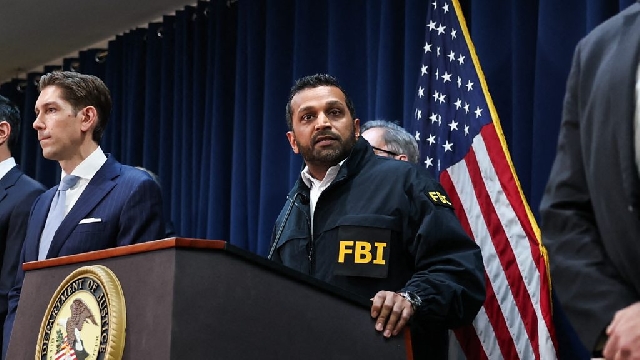
A US federal grand jury has returned a two-count indictment against Ghanaian national Frederick Kumi, also known as Emmanuel Kojo Baah Obeng or “Abu Trica,” accusing him of defrauding elderly Americans of more than US$8 million. According to the recently unsealed indictment, Kumi, 31, was part of a criminal network that, since 2023, orchestrated romance scams targeting elderly victims across the United States. He was arrested in Ghana on December 11, 2025. Prosecutors say Kumi and his associates used Artificial Intelligence (AI) tools to create fake identities and cultivate close, trust-based relationships with victims on social media and online dating platforms. The indictment states that the perpetrators exploited these relationships to solicit money and valuables under false pretences , including fabricated medical emergencies, travel expenses, and investment opportunities. “Victims were often elderly and engaged in romantic but physically distant relationships with perpetrators,” U.S. authorities explained, noting that scammers built credibility through frequent, intimate communication via phone, email, and messaging apps. Funds and valuables obtained from victims were then routed to co-conspirators posing as intermediaries. The indictment further alleges that after the transfers were made, Kumi, a resident of Swedru in Ghana’s Central Region, worked with accomplices to move the proceeds from Ohio and other U.S. states to partners in Ghana and other unspecified locations. Kumi is charged with conspiracy to commit wire fraud, conspiracy to commit money laundering, and a forfeiture count. If convicted, he faces up to 20 years in prison. The statement by the U.S. Attorney’s Office, Northern District of Ohio, explained that if Abu Trica were convicted, a defendant’s sentence will be determined by the court after a review of factors unique to this case, including a defendant’s prior criminal record, if any, his role in the offense, and the characteristics of the violation. In all cases, the sentences will not exceed the statutory maximum, and in most cases, it will be less than the maximum. An indictment is only a charge and is not evidence of guilt, the statement underscored, adding that a defendant is entitled to a fair trial in which it is the government’s burden to prove guilt beyond a reasonable doubt. The statement revealed that the investigation that led to the indictment was conducted by the FBI Cleveland Division and is being prosecuted by Assistant U.S. Attorney Brian M. McDonough for the Northern District of Ohio. The U.S. Attorney’s Office for the Northern District of Ohio thanked the Ghana Attorney General’s Office and Ministry of Justice, Ghana Economic Organised Crime Office (EOCO), Ghana Police Service (GPS), Ghana Cyber Security Authority (GCSA), Ghana Narcotics Control Commission (NACOC) , Ghana National Intelligence Bureau (GNIB), U.S. Drug Enforcement Administration’s Sensitive Investigation Unit, U.S. Department of Homeland Security’s Homeland Security Investigations, U.S. Department of Justice’s Office of International Affairs, and FBI Legal Attaché Office in Accra for their cooperation with this matter. The mission of the Elder Justice Initiative Program, originating from the Elder Abuse Prevention and Prosecution Act of 2017 (EAPPA), is to support and coordinate the US Department of Justice’s enforcement efforts to combat elder abuse, neglect, financial fraud, and scams that target the nation’s elderly population. Source: Apexnewsgh.com
Ethnic conflicts, rising chieftaincy a “major headache” — John Mahama
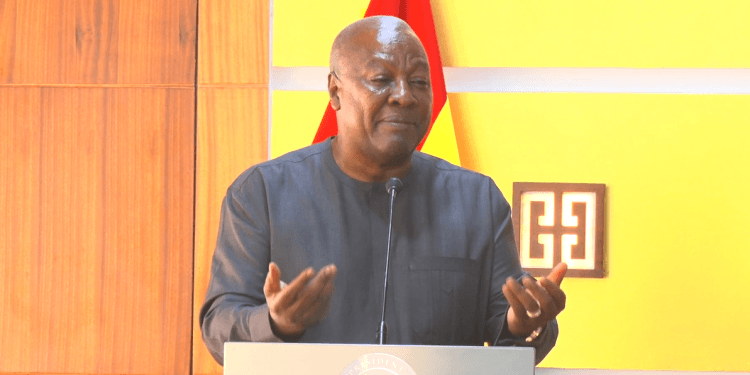
President John Dramani Mahama has raised serious concerns about the rising number of ethnic, land, and chieftaincy-related conflicts across the country, describing the situation as a “major headache” for his administration. Speaking at a meeting with the National Peace Council at the Jubilee House on Wednesday, December 10, the President said the increasing tensions were exerting significant pressure on national security agencies deployed to keep the peace in volatile areas. President Mahama explained that many of the disputes stem from deep-rooted disagreements over chieftaincy, ethnicity, and land, cautioning that their spread poses a threat to national stability. “All of us are concerned about the proliferation of conflicts across our country. There’s a rising intolerance, and it’s as a result of disagreements, first and foremost, to do with chieftaincy. It is putting a lot of pressure on our security services,” he stated. He noted that long-term deployments have stretched security personnel thin in several conflict zones. “A lot of our security services are tied down in conflict areas. Sampa, we have a whole contingent there. If you go to Bawku and Nkwanta, we have a whole contingent there. Recently, Savannah, we had a whole contingent there; we have not withdrawn them yet. And yet, there are so many of these all over the country. It has to do with ethnic and land disputes. It’s become a major headache for the government,” he said. The President called on the National Peace Council to intensify mediation and conflict-resolution efforts to help restore peace in affected communities. “That is why we need to resort to the Peace Council to be able to carry out its mandate,” he appealed. Source: Apexnewsgh.com
Dr. Kojo Asante Condemns Proposed Repeal of Special Prosecutor Act: “A Betrayal of Public Trust”
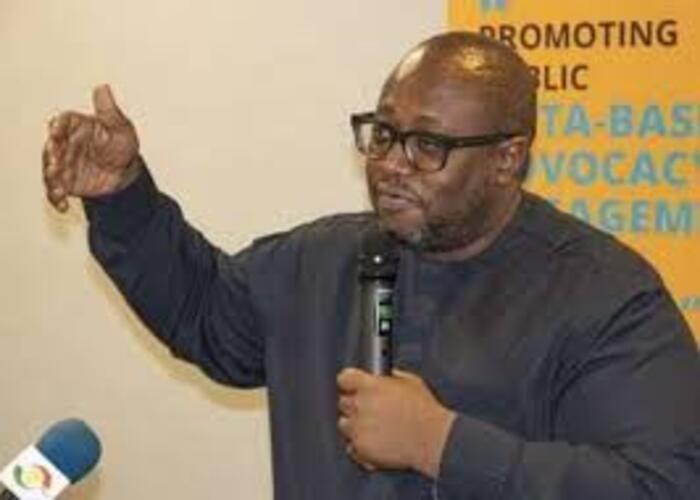
When news broke of a Private Members’ Bill seeking to repeal Ghana’s Office of the Special Prosecutor (OSP) Act, 2017 (Act 959), Dr. Kojo Asante, Director of Policy Advocacy and Engagement at CDD-Ghana, could hardly contain his dismay. For Dr. Asante, a long-time advocate for good governance and transparency, the move felt like a sharp betrayal, not just of promises made, but of the trust of ordinary Ghanaians. The bill, introduced by Majority Leader Mahama Ayariga and Majority Chief Whip Rockson-Nelson Dafeamekpor, aims to dissolve the OSP and return all prosecutorial powers over corruption cases to the Attorney-General, in line with Article 88 of the Constitution. Supporters of the bill argue that the OSP’s eight years have exposed serious issues: overlapping duties, institutional friction, jurisdictional confusion, and sluggish justice processes. But for Dr. Asante, these justifications ring hollow. On Thursday, December 11, 2025, he took to Facebook to express his outrage. “First thing on my mind today, December 11, 2025. If the NDC majority pushes this bill through Parliament, it will be the greatest betrayal of trust. I am shocked and very angry,” he wrote, his words carrying the weight of disappointment felt by many citizens. He went further, questioning whether Parliament was truly representing the will of the people. “This is not what was promised to Ghanaians in the fight against corruption. Ghanaians do not want this, so who are the MPs representing… themselves? Is that what the large majority in Parliament is going to be used for? Ghanaians must let all the MPs know on their socials that they represent us and not themselves,” he urged. Dr. Asante also challenged the urgency behind the bill, pointing out that a constitutional review process is the proper avenue for making such important decisions about the nation’s anti-corruption strategy. He argued that repealing the OSP would undermine the fight against corruption at a time when public accountability is desperately needed. “Now I am convinced more than ever that we need an independent prosecutor for corruption matters. The fact that politicians on all sides have come out to support repeal, while the rest of society wants to keep the OSP, tells the story,” Dr. Asante reflected, highlighting a growing disconnect between political leaders and the people they serve. He warned that dismantling the OSP would weaken the fight against corruption and threaten Ghana’s stability. “The sad part is that with all the threats to the stability of our state and democracy coming from the looting of public resources and impunity, this is what we think we should do to aid the fight against corruption. We have a much bigger problem for the future of this country,” he cautioned. For Dr. Kojo Asante and many Ghanaians, the fate of the OSP is more than a legislative matter, it is a test of the nation’s commitment to transparency, justice, and the rule of law. As the debate rages on, the hope is that the voices of ordinary citizens will not be drowned out by the vested interests of a powerful few. Source: Apexnewsgh.com