



Mr. Gabriel Agambila Champions Upper East Region’s Progress at Jubilee House

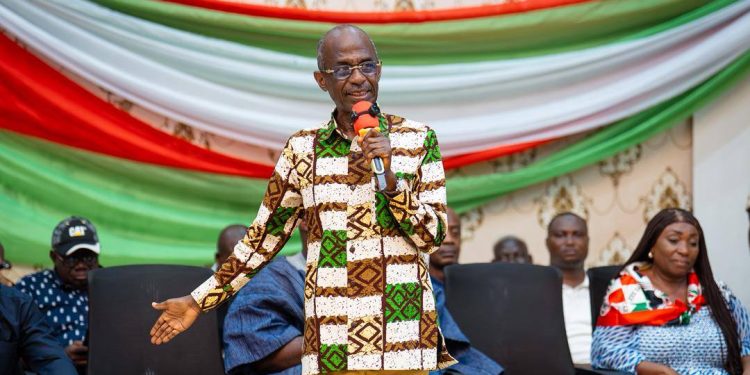
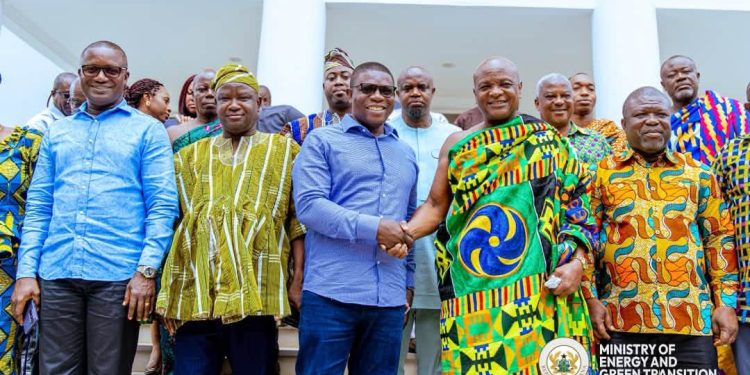
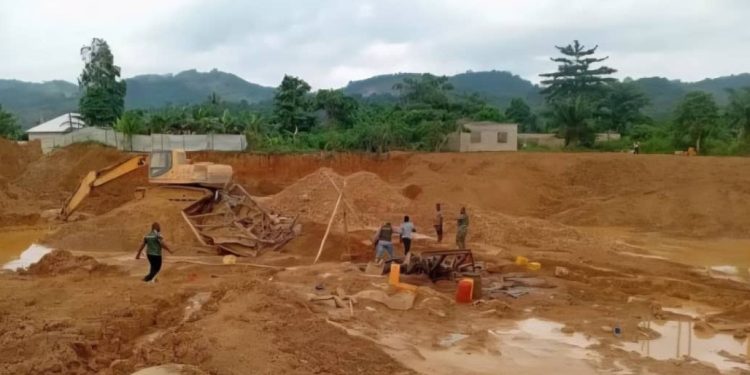
On a bright Tuesday morning, the corridors of Ghana’s Jubilee House welcomed a passionate advocate for the Upper East Region, Mr. Gabriel Agambila. Though living in the diaspora, Mr. Agambila’s heart beats for home, and as the Founder of Alagumgube, he arrived determined to champion transformative projects for his native region. His mission was clear: to engage government officials on the pressing development priorities that have long shaped the dreams of the Upper East people. In a pivotal meeting with the Chief of Staff, Julius Debrah, and Elvis Afriyie Ankrah, Mr. Agambila steered the conversation toward four core issues: critical infrastructure, sports development, cultural preservation, and traditional leadership. One of the most urgent matters raised was the absence of a standard sporting facility in the Upper East Region. “The Upper East Region has never had a sporting stadium with tartan tracks to encourage and nurture athletic talent. This is long overdue and must be addressed to promote sports development in the region,” Mr. Agambila asserted. He passionately appealed for the region’s inclusion among the three earmarked for a modern sports stadium, emphasizing the transformative impact such a project would have on the youth. Turning to aviation infrastructure, Mr. Agambila acknowledged the inclusion of the Bolgatanga Airport project in the national budget. Yet, he pressed for further action, calling on private investors to accelerate the airport’s construction. “Even though the Bolgatanga Airport has been captured in the budget, we are appealing for investors to support the process so the project can be completed within the shortest possible time,” he appealed. Alagumgube, under Mr. Agambila’s stewardship, has already made tangible contributions. The association facilitated land clearing and negotiated additional land for a standard runway, even mobilizing funds from a distinguished son of the region to carry out cadastral planning for the airport site. Cultural and educational issues were not left behind. Mr. Agambila voiced disappointment over the delayed rollout of the Grune language in schools, despite its approval three years prior. He called for immediate steps to preserve the region’s linguistic and cultural heritage. Furthermore, he highlighted the unresolved Bolgatanga chieftaincy matter, urging a swift resolution to ensure that the traditional area could benefit from strong leadership and renewed unity. The government officials present, including the Chief of Staff and Elvis Afriyie Ankrah, commended Alagumgube for its persistent advocacy, particularly its instrumental role in establishing a Passport Office in the Upper East Region. They expressed hope that more regions would benefit from such dedicated organisations championing local development. As the meeting drew to a close, Mr. Agambila offered heartfelt thanks to all who contributed to the airport land clearance and the establishment of the Passport Office. Their collective efforts, he said, stood as a testament to the unity and determination driving the Upper East Region toward a brighter future. Source: Apexnewsgh.com
Naba Yelzoya Kosom Asaga II’s Stirring Address at the 14th BONABOTO National Congress
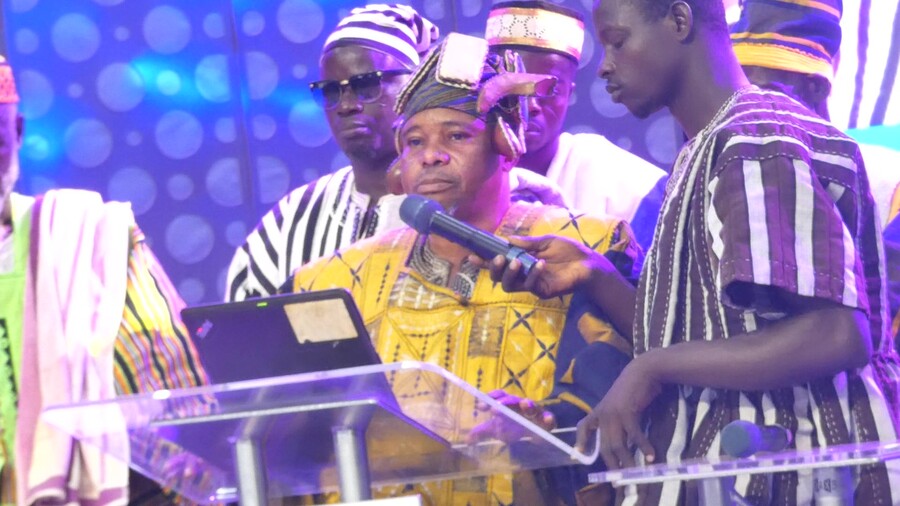
With a deep sense of humility and responsibility, Naba Yelzoya Kosom Asaga II, the Paramount Chief of the Nangodi Traditional Area, welcomed delegates to the Nabdam District for the 14th BONABOTO Biennial National Delegates Congress. His words set a purposeful tone, reminding all present that their gathering was more than a mere event; it was a powerful reaffirmation of unity and collective resolve among the people of Bolgatanga, Nangodi, Bongo, and Tongo. Naba Yelzoya reflected on the roots of BONABOTO, an association founded through reflection, experience, and foresight. He acknowledged that, as in any vibrant community, differing energies and approaches had emerged over time. Rather than allowing these differences to breed rivalry, he stressed, they must be harnessed as sources of strength. “Wisdom provides direction while enterprise provides momentum,” he said, urging leaders and elders to be peacemakers, calming tensions, discouraging unnecessary competition, and guiding their people towards cooperation and mutual respect. Turning to a matter close to his heart, the chief spoke passionately about the proposed BONABOTO College of Education in Nabdam. This initiative, he explained, was not a mere afterthought but the culmination of years of sacrifice and commitment. Land had been secured, and temporary facilities had been identified, with the former Congo Secondary School standing ready for use. He emphasized that education is the foundation for development: “A college of education here will not only train teachers but will strengthen communities, empower our youth, and secure the future of generations yet unborn.” The chief called upon BONABOTO’s leadership to remain faithful to the original promise made to Nabdam, highlighting the region’s historic lack of educational institutions compared to others. Naba Yelzoya reminded delegates that honoring this promise was about more than development; it was crucial for maintaining BONABOTO’s credibility and the unity of their communities. “To protect the credibility of BONABOTO and preserve unity among our communities, we must honor our original commitment,” he declared. The chief approached the sensitive issue of peace, particularly regarding the Baku conflict, a matter that, given his boundary with Bawku, he felt compelled to address. He commended the mediation efforts of Otumfuo Osei Tutu II and the Asantehene, whose statesmanship had laid a crucial foundation for peace. Yet, he cautioned that conflicts rooted in complex histories cannot always be resolved by attempts to restore the past. One side seeks recognition and self-determination, while the other seeks security and continuity, deep-seated concerns that must be acknowledged. “For peace to endure, no side must feel ignored or uncertain about its future,” he advised, insisting that true peace must recognize and respect the identity, history, and legitimate concerns of all parties. In conclusion, Naba Yelzoya called for greater responsibility from all, especially intellectuals and leaders who, by virtue of shared experiences and deep community ties, must not remain mere spectators in the peace process. He advocated for ending the “slave mentality” and urged his people to take up their responsibilities, emphasizing that true independence is born from responsibility. He recommended that the BONABOTO Congress formally establish a Peace Building Committee, composed of respected elders and experienced voices from across the traditional areas. This committee, he envisioned, would engage continuously, build confidence, and help carry the peace process forward with patience and cultural understanding. Thus, Naba Yelzoya Kosom Asaga II concluded, weaving together the themes of legacy, unity, advocacy, culture, and impact, reminding all that their shared journey continues, strengthened by their commitment to each other and to the future. Source: Apexnewsgh.com
BONABOTO at 25: A Story of Unity, Heritage, and Progress in the Upper East Region
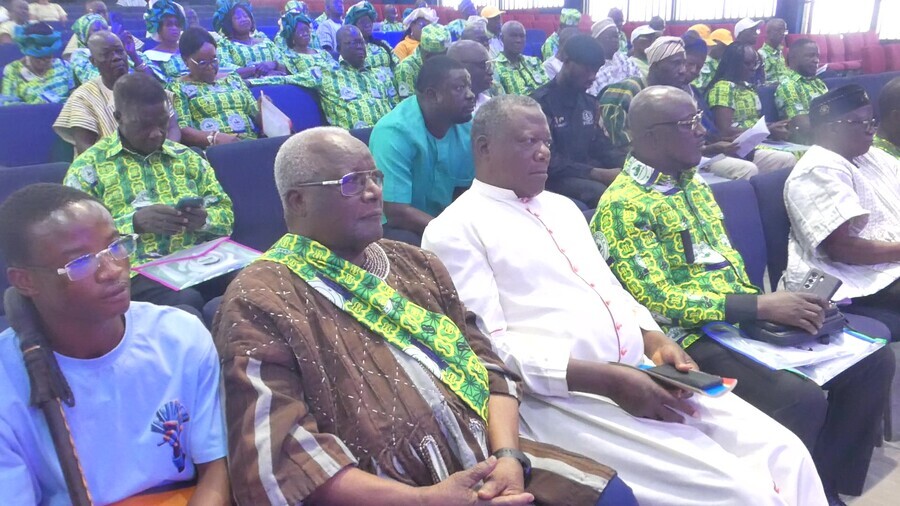
The town of Damolg-Tindongo was alive with color and pride as people gathered from Bolgatanga, Bongo, Nabdam, and Talensi, together known as BONABOTO. The occasion was no ordinary one. This was the 25th anniversary of the BONABOTO Association, a group that had spent a quarter-century standing strong for its people, celebrating their culture, and pushing for development in the Upper East Region. At the heart of the celebration stood Professor Samuel Awinkene Atintono, the National President of BONABOTO. As the crowd settled at Gibeath Ha-Elohim, Prof. Atintono took the stage to reflect on the journey. He spoke with warmth and gratitude, calling the silver jubilee “a celebration of resilience, unity, and collective progress.” BONABOTO’s story, he shared, began in the 1970s. But it was in 2001, with the first national congress, that the association’s voice grew louder and its influence spread. The decision to move congresses beyond Bolgatanga in recent years was no accident; it was a sign of the association’s open arms, welcoming all, no matter their hometown or background. Prof. Atintono was proud to recount how BONABOTO had managed to keep its members united, even though they came from different religions, political beliefs, professions, and villages. The secret, he said, was simple: dialogue, compromise, and a shared purpose. Whenever disagreements arose, members found ways to talk things through and keep moving forward together. Over the years, BONABOTO became more than a social group. It evolved into a respected voice for development across the region. From healthcare to education, from roads and airports to passport services and governance, BONABOTO’s advocacy made a real difference. Their principled, steady approach meant that when BONABOTO spoke, people listened, so did policymakers. But development, Prof. Atintono reminded everyone, cannot grow in places where there is conflict. That’s why BONABOTO worked hard to bring people together, to help settle disputes, and to encourage dialogue among chiefs, politicians, and the wider community. Their efforts helped keep the peace, so progress could continue. Culture and language are also at the heart of BONABOTO’s mission. Prof. Atintono beamed as he spoke of the association’s success in promoting the Gurene language. Thanks to BONABOTO’s efforts, Gurene is now officially recognized in schools by the Ghana Education Service, a huge step in protecting the region’s identity, pride, and knowledge. Education has always been a pillar for BONABOTO. Through the Bonaboto Education Assistance Fund (BEAF), the association has given out over GH¢400,000 to help more than 2,000 bright but needy students. These young people, Prof. Atintono hoped, would become future leaders and keep the flame burning for generations to come. BONABOTO’s caring spirit extended into health and social welfare. There were stories of free medical outreach programs, donations of equipment to the Bolgatanga Regional Hospital from BONABOTO’s UK Branch, and support for setting up a dialysis center in the region, lifesaving help for many. The association also grew stronger within itself. A national secretariat was opened in Bolgatanga, land was secured at Sumbrongo for a permanent home, and branch networks spread across Ghana. A special student wing was created, ensuring that BONABOTO’s vision would live on with the next generation. Prof. Atintono reminded everyone that BONABOTO was not just an organization, but a family. The association’s welfare programs saw them supporting members in times of trouble, during bereavement, sickness, or important family events. This, he said, was the true spirit of BONABOTO: caring for one another, always. Looking to the future, Prof. Atintono challenged the association to renew its unity, involve more young people, find sustainable ways to fund its most important projects, and work even more closely with chiefs and development partners. He said, “This 25th anniversary is not an endpoint. It is just another checkpoint on our journey.” The congress brought together a rich mix of people, government officials, traditional chiefs, academics, professionals, members of the security services, and BONABOTO members from far and wide. As everyone looked back on the association’s achievements, a sense of pride and hope filled the air. The story of BONABOTO, after 25 years, is a story of what can be achieved when a community stands together, united in heritage, purpose, and hope for tomorrow. Source: Apexnewsgh.com/Ngamegbulam Chidozie Stephen
The Broken Chalkboards
Feature Documentary by Ngamegbulam Chidozie Stephen The sun rises early over Ghana’s Upper East Region, casting a golden hue over the flat plains and scattered school compounds. For generations, these institutions, forty-nine senior high schools and several technical and vocational centers, have stood as beacons of hope, preparing the young for brighter futures. But in recent times, a cloud has settled over these grounds. What once were sanctuaries of learning have become, with troubling frequency, sites of unrest. Desks overturned, windows shattered, staffrooms vandalized, student riots, once rare, have become alarmingly common, leaving educators, parents, and leaders searching for answers It began as a whisper, a phone stolen in a dormitory, a rumor of unfair punishment, or the discontent over a meager meal. But these minor sparks soon flared into flames. Reports from ApexNewsGH revealed a disturbing trend: students, once lauded as the torchbearers of the region’s future, were now, in too many cases, undermining their very schools through acts of defiance and destruction. At the Technical and Vocational Education and Training (TVET) office, the atmosphere was somber. Mr.William Aduum, the regional director, sat behind his desk, stacks of disciplinary reports at his elbow. “Parents are not allowed to give phones to their wards to bring to school,” he explained. “But the students sneak them in. They hide them. When a phone is stolen, investigations begin, by the students themselves. Bullying follows. And when a student is pushed too far, trouble seeks him out.” Such incidents, he noted, were no longer isolated. “Every administration since the Fourth Republic has seen at least one or two riots. These disrupt academic activities and leave lasting scars on the educational landscape.” To understand the surge, one must look beyond the headlines. Professor David Miller, President of the Miller Institute for Transdisciplinary and Development Studies, had spent years studying youth behavior. “Rioting in schools, especially second-cycle institutions, is on the ascendancy nationwide,” he said gravely. “There are several causes. The abuse and misuse of drugs is a major one, both in and outside school. Habits formed at home follow students back to the classroom, poisoning the environment.” Professor Miller listed seven factors behind the unrest, four major, cross-cutting causes and three more specific to individual institutions. Alongside drugs, he identified breakdowns in communication, lack of awareness about the consequences of actions, and shifting generational expectations. “This generation is complex, sensitive, and active,” he said. “We need to reform how we communicate with them. Many don’t understand the full impact of their actions.” Reverend Thomas Abukari Thomas, chairman of the Upper East Regional Christian Council, echoed these concerns. As head pastor of the Baptist Church in Bolgatanga, he saw firsthand the devastation wrought by riots. “The government has spent huge sums on infrastructure, which we desperately need. Yet, students destroy these scarce resources, often over misunderstandings or misinformation.” The role of discipline, or the lack thereof, soon surfaced as a recurring theme. Honorable. Volmeng David Nansong, Upper East Regional Secretary for the Parent-Teachers Association, was blunt: “The abolition of corporal punishment is at the root of this. Teachers are afraid to enforce discipline. Back in the day, strikes and riots were rare. Now, security forces have to camp on campus to prevent unrest from spreading. The Ghana Education Service should reintroduce demotion and promotion based on behavior. Students must know there are consequences.” Yet, even as some called for a return to old methods, others pointed to deeper fractures. Alhaji Sumalia Issaka, Chairman of the Upper East Regional Peace Council, spoke of a worrying trend: tribal divisions among students, which sometimes determined who could become a senior prefect or even a headmaster. “If you’re not a Kassena-speaking boy, you can’t be senior prefect in Navrongo. If you’re not Gurune, you can’t lead in Big Boss. This tribalism is spreading to staff appointments too.” In the midst of turmoil, some students tried to uphold the values their schools instilled. One young student from Zamse, known among peers as an “Elephant,” spoke candidly. “It’s unbearable for those of us who want to learn. We’re influenced by friends into acts we don’t support. If you speak out, you become a target. Sometimes, even the innocent end up paying fines for acts they did not commit. We need more education about the dangers of such behavior.” Francis Adingo, President of the Upper East Youth Association, agreed that grievances, if genuine, should be addressed through proper channels. “There are rules and regulations. Peaceful demonstrations are within our rights, but vandalism is not. Substance abuse is a big part of the problem. And parents are often unconcerned; some don’t even check what their children take to school. Weapons have been found in dormitories. Students have burned down dorms, libraries, places meant for their own growth.” With tensions mounting, school leaders scrambled to respond. The regional TVET director, William Aduum, doubled down on counseling. “We’ve mandated all schools to strengthen their guidance and counseling units. One counselor looking after 2,000 students isn’t enough. I’m visiting schools myself to see how we can improve.” Mr. Razak Abdul Korah, Upper East Regional Director of Education, described the escalating riots as a “major concern for all stakeholders.” Investigations were underway, but he believed the ultimate solution lay in civic education. “Some students don’t realize the long-term consequences of their actions. We need to educate and re-educate them, bring in career people and those who have struggled with drugs to share their stories. We used to have civic education in schools. It’s time to bring it back.” Other voices, like that of social justice advocate Mr. Nyeya Yen, pointed to practical causes. “Poor food is a major trigger. A hungry man is an angry man. Corruption, poor salaries, and theft of school supplies all play a role. Sometimes, cooks take food home, and students are left with less. This can lead to riots.” The Upper East Regional Minister, Honorable Donatus Atanga Akamugri, had seen the unrest up close. “Since I took over, I’ve dealt with