







Ghana Breaks Free from Energy Debt Shackles: The Story of a Sector Reborn

When President John Dramani Mahama took office in January 2025, Ghana’s energy sector teetered on the edge of disaster. Years of unpaid bills for gas supplied from the Offshore Cape Three Points (OCTP) field had brought the sector to its knees, and the crucial $500 million World Bank Partial Risk Guarantee (PRG), once a bulwark for investor confidence, had been completely depleted. The stakes were high. The PRG, established back in 2015, had been the foundation for nearly $8 billion in private investment, guaranteeing partners like ENI and Vitol that they would be paid even if Ghana defaulted. Without it, faith in Ghana’s energy landscape was crumbling, and the threat of blackouts and business closures loomed large. But 2025 would prove to be a turning point. In a statement released on January 12, the Ministry of Finance revealed how the Mahama administration, acting with urgency and resolve, set out to rescue the sector. By the close of the year, the government had repaid a staggering $1.47 billion to reset the industry’s fortunes. First, the government moved swiftly to restore Ghana’s credibility on the global stage: it repaid $597.15 million (including interest) drawn from the World Bank guarantee, fully replenishing the facility and signalling to international partners that Ghana meant business. Next, it addressed the mountain of unpaid bills to key gas suppliers. By December 2025, all outstanding invoices to ENI and Vitol—amounting to roughly $480 million—had been settled in full. The government also tackled legacy debts to Independent Power Producers (IPPs), disbursing about $393 million after renegotiating contracts for better value. Among the IPPs paid were: * Karpowership Ghana: $120 million * Cenpower Generation: $59.4 million * Sunon Asogli: $54 million * Early Power: $42 million * Twin City Energy (Amandi): $38 million * AKSA Energy: $30 million * Cenit Energy: $30 million * BXC Company: $10.56 million * Meinergy Technology: $8.82 million No stone was left unturned. The government also opened discussions with upstream partners like Tullow Oil and Jubilee Field partners, agreeing on a roadmap to ensure prompt payment for gas supplies and secure a stable electricity supply to power Ghana’s industries. Already, these efforts have begun to bear fruit. Increased gas production is reducing the country’s dependence on costly liquid fuels, and the Ministry announced that the dark days of runaway energy sector debt are gone for good. With robust budgetary provisions in place, Ghana’s energy sector now stands on a foundation of timely payments, restored confidence, and renewed hope for the future. Source: Apexnewsgh.com
Sudan’s government returns to capital after nearly 3 years of war

Sudan’s military-led government has returned to the country’s capital after nearly three years of operating from its wartime base in the eastern city of Port Sudan. Sudan’s Prime Minister Kamil Idris told reporters on Sunday that the “government of hope” was officially back in Khartoum and would begin efforts to improve services for the city’s beleaguered residents. The military was forced out by the paramilitary Rapid Support Forces (RSF) when civil war erupted between the two sides in 2023. The army recaptured it in a significant breakthrough last March. Khartoum has been recovering from years of fighting. Roughly five million fled the city at the height of the conflict, according to the UN. Those unwilling or unable to leave described a brutal RSF occupation, which included mass looting and fighters taking over civilian homes. Huge swathes of the city lie in ruins. In October, UN official Ugochi Daniels reported that basic services were “barely functioning”. On Sunday, Idris said the government would work on improving electricity, water, healthcare and education in Khartoum. He also declared that 2026 would be a “year of peace” for Sudan, where at least 150,000 people have died since the war erupt. The UN has described the situation as the world’s worst humanitarian crisis and around 12 million people have been forced from their homes. The war began after the head of the army, General Abdel Fattah-al Burhan fell out with his deputy and RSF leader General Mohamed Hamdan Dagalo, leading to a vicious struggle for power. Both the RSF and the Sudanese military have been accused of committing atrocities throughout the conflict. International efforts to broker peace have failed and both sides are backed by foreign powers who have poured weapons into the country. The United Arab Emirates (UAE) has come under particular scrutiny recently over allegations of supporting the RSF, which it strongly denies. Source: bbc.com
Swallowed by Drugs: Upper East Regional Coordinator Issues Warning on Drug Abuse Epidemic
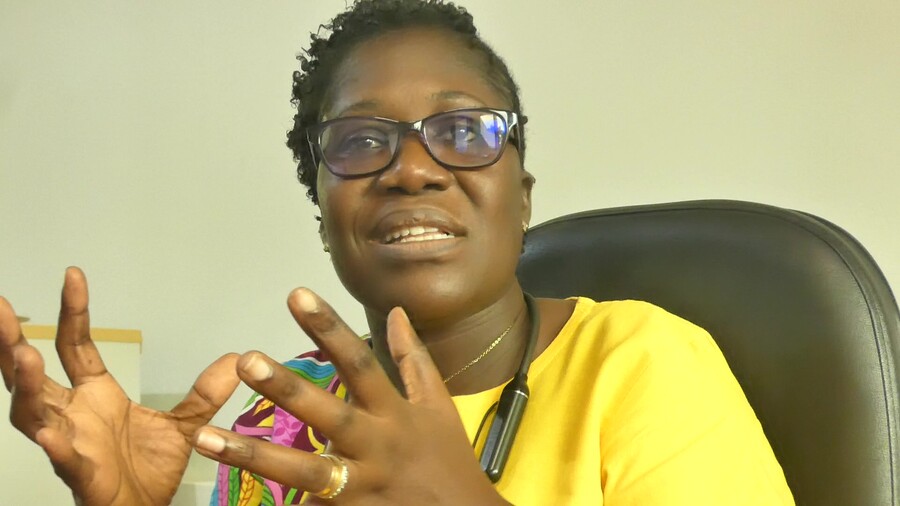
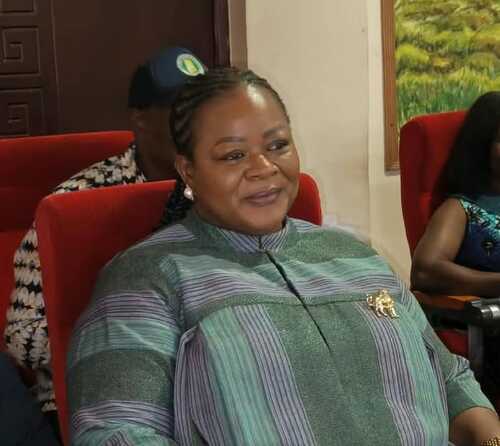
The fight against drug and alcohol abuse among the youth continues to dominate public health discussions, with worrying revelations emerging from the Upper East Region. Gifty Chigayefin Damsongor, the Upper East Regional Mental Health Coordinator, has voiced deep concern about the alarming rise in substance use among young people and its devastating impact on their mental health, education, and family life. She made this important call in a documentary titled “Swallowed by Drugs produced by Apexnewsgh.” “There are a lot of substances the youth are experimenting with, but the most common ones we encounter are alcohol, cannabis, and tramadol,” she explained. “Tramadol comes in different forms, T25, Tramadol 500, and is being misused heavily. On top of that, we now see shisha, nicotine, and even e-cigarettes, which are used in a way that makes it difficult for parents and guardians to detect.” According to Madam Damsongor, many young people underestimate the risks of substances such as energy drinks, which they consume excessively without realizing the long-term consequences. “Some youths don’t consider energy drinks as psychoactive substances. They think they are just normal drinks. But over time, they become addicted without even knowing it,” she said. “Addiction means you are aware of the dangers, yet you cannot stop. That’s when the substance begins to control your brain’s pleasure system.” “You start with a little alcohol and feel the effect. But with time, that same amount no longer satisfies you, so you increase the dose. Before long, you may need 10 bottles to feel what one bottle gave you initially. At that point, the substance has hijacked your brain’s dopamine system.” Madam Damsongor also highlighted how social media and celebrity lifestyles fuel substance abuse. “The youth are curious and easily influenced. When they see adverts for alcohol or celebrities using substances, they are tempted to experiment. Musicians, for example, often rely on substances to overcome stage anxiety. But that performance habit quickly becomes an addiction that extends beyond the stage.” She emphasized that addiction is not only about drugs or alcohol. “We now see behavioral addictions, gambling, pornography, compulsive lying, and even stealing. Some people are addicted to these behaviors in the same way others are addicted to drugs.” “If you’re a responsible and observant parent, you will notice changes. A once-friendly child may suddenly become withdrawn, easily irritated, restless, or perform poorly in school. Some may even experience hallucinations, seeing things that are not real.” She cautioned parents against rushing to prayer camps without medical intervention. “Even if you believe there are spiritual causes, you must first tackle the physical. At the facility, we can run substance tests, detoxify the system, and provide psychotherapy. Afterwards, if you want prayers, you can add that, but ignoring medical treatment is dangerous.” Damsongor recounted how peer and family influences expose children to substance use at a young age. “In many homes, alcohol is kept openly, and children are even sent to buy it. Out of curiosity, they try it, and before long, they are hooked. In other cases, peers introduce them to smoking or drugs. Sadly, I have seen lives destroyed because of what started as mere experimentation.” She called for urgent steps to integrate mental health education into schools to prevent future crises. “If the Ghana Education Service introduces mental health lessons at the JHS and SHS levels, it will help. Students must learn early about the dangers and consequences of substance abuse so they can make informed choices.” “Substance abuse can destroy your health, your education, and your future. If you find yourself addicted, whether to a substance or a behavior, seek help. Mental health experts are available in every district and community. We are here to help you recover and reclaim your life.” Source: Apexnewsgh.com
Swallowed by Drugs: Dr. Denis Warns Drug Abuse Is a Silent Mental Health Time Bomb, Urges Awareness and Stronger Law Enforcement
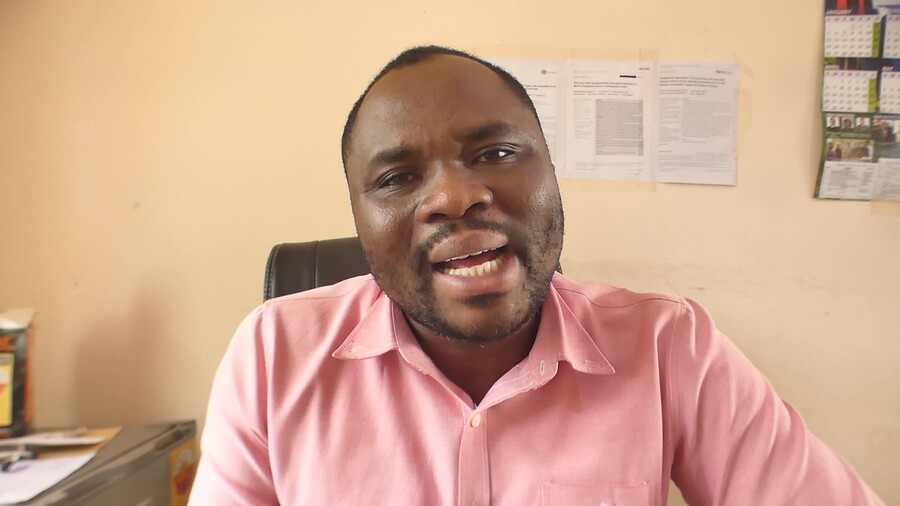
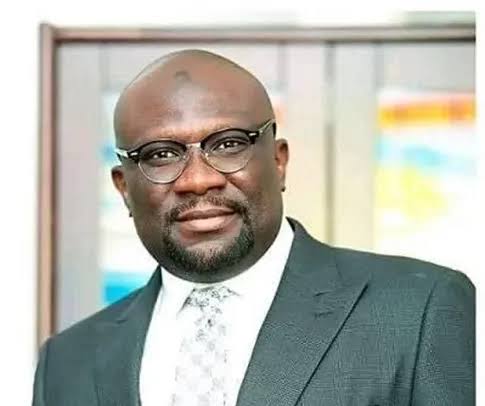
The Medical Administrator of the Presbyterian Psychiatric Hospital, Dr. Denis Bomansang Daliri, has raised alarm over the growing trend of drug and alcohol abuse among the youth, warning that the region faces a “silent mental health time bomb” if urgent steps are not taken. Speaking with Ngamegbulam Chidozie Stephen in a documentary titled “Swallowed by Drug”, Dr. Denis revealed that the majority of young patients admitted to his facility are battling substance abuse, often involving multiple drugs at once. “Currently, the majority of the patients we have, especially the youth, almost everyone admitted actually abuses one substance or the other. Most of them are polysubstance users – mixing alcohol, nicotine, marijuana, tramadol, and more,” he disclosed. Dr. Denis explained that many patients do not come to the hospital claiming they are abusing drugs. Instead, they often present with symptoms like insomnia, hallucinations, or hearing voices. “A person may actually be abusing substances but might not come because of it. They might come because they can’t sleep, or they’re hearing voices. Through our assessment, we’re able to tell them, ‘OK, so you are abusing substances, and this is the reason why you are here,’” he said. He added that the presentations vary depending on the drug: some patients arrive in acute intoxication, others in painful withdrawal, while others may show no symptoms at all but still have long-term dependency. Highlighting the mental health consequences, Dr. Denis noted that many of the substances abused are psychoactive, directly affecting the brain. “These substances play a very big role in destabilizing mental health. They affect your ability to think, your behavior, and in some cases, they trigger psychosis,” he warned. He cited marijuana as an example, saying, “With cannabis, we see what is called cannabis-induced psychosis. The person begins to hallucinate, hear voices, and believe things no one else can see. If the drug is withdrawn, they may return to normal, but the more they continue, the more permanent the damage becomes.” For individuals with a family history of mental illness, he cautioned, the risks are even higher. “If such a person abuses drugs, it can easily trigger a mental health condition that might have otherwise remained hidden,” he explained. Dr. Denis described the youth as particularly vulnerable due to curiosity, peer pressure, and the easy availability of substances. “Their brains are still developing, so anything they get hooked on now, they may be hooked on for life,” he stressed. He also pointed to cultural practices that normalize alcohol consumption and weak border controls that make smuggling drugs easy. “In many places here, alcohol is not even seen as a problem. Young people can walk into a shop, pay, and buy it freely. Combine that with cannabis and cigarettes at drinking spots, and it becomes a deadly mix,” he said. To address the crisis, Dr. Denis emphasized a multi-pronged approach: Law Enforcement: “In our markets, you’ll find someone selling phone accessories but also dealing drugs. Even scrap dealers sell tramadol. Law enforcement must tackle this head-on, and our borders must be secured.” Awareness Creation: “We assume young people know the dangers, but many don’t. Education must start from primary school to prepare their minds before they are introduced to these substances.” Treatment over Punishment: “Substance abuse should not be seen only as a behavioral crime. By the time someone becomes addicted, it has become a biological problem. Arresting and jailing addicts only worsens their plight. What they need is treatment, not punishment.” Rehabilitation Centers: “If someone in the Upper East wants help, they shouldn’t have to travel to Kumasi or Accra. Government must expand rehabilitation centers regionally to make help accessible.” Dr. Denis also cautioned against stigmatizing addicts, noting that rejection only pushes them deeper into addiction. “When we stigmatize and condemn them, they go back to drugs for comfort. But when we accept and support them, they find solace and are more likely to quit,” he advised. He concluded with a strong warning that ignoring the problem will have dire consequences for families and society. “Substance abuse is a silent mental health time bomb. If we don’t strengthen awareness, treatment, and law enforcement now, the cost will be unbearable tomorrow.” Source: Apexnewsgh.com