

UER: 30-Year-Old ‘Sakawa’ Boy Arrested Digging Grave for Human Bones in Bolga
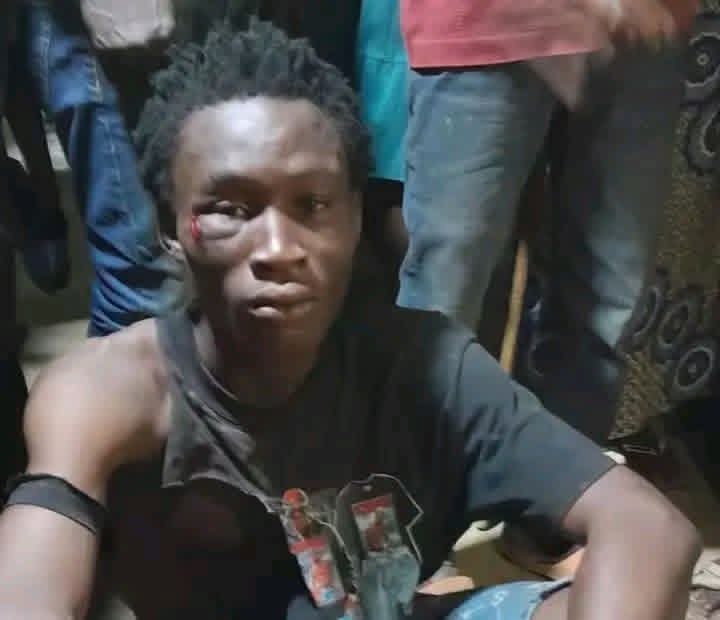
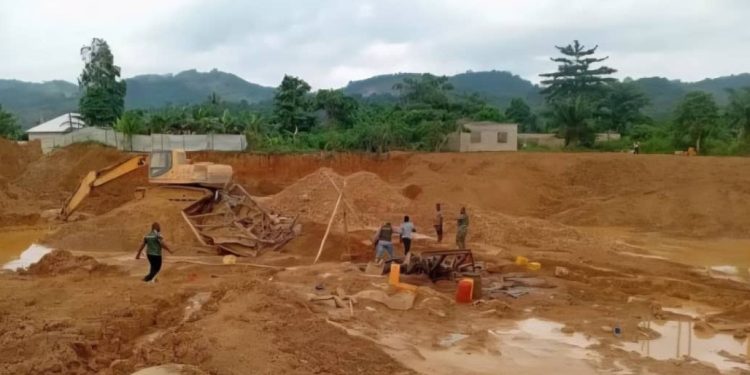
Police in Bolgatanga are now holding a 30-year-old man after he was caught in the act of excavating a grave in the Tindonmolgo community, an incident that has sent shivers through the area and raised urgent fears of ritualistic activities. The suspect, whose nocturnal project was abruptly halted, did not go quietly. It was the vigilant community members who first descended on the cemetery, apprehending the man and holding him for the authorities. When police arrived to take him into custody, a bizarre explanation tumbled out. The digger claimed confusion, a case of mistaken identity in the moonlit night. He insisted he had been trying to dispose of ritual remains and had mistaken the solemn mound of a human grave for a mere anthill. But the disturbed earth told a different story. The careful, though crude, excavation aimed at the final resting place of someone’s loved one pointed to a far more sinister objective: the search for human bones. As the suspect sits in a cell, the Bolgatanga Police have confirmed that intensive investigations are ongoing. Their mission is to peel back the layers of his story, to establish the full circumstances behind the unfortunate incident. Source: Apexnewsgh.com
Journalist Leads Crusade Against Youth Drug and Alcohol Abuse in Schools
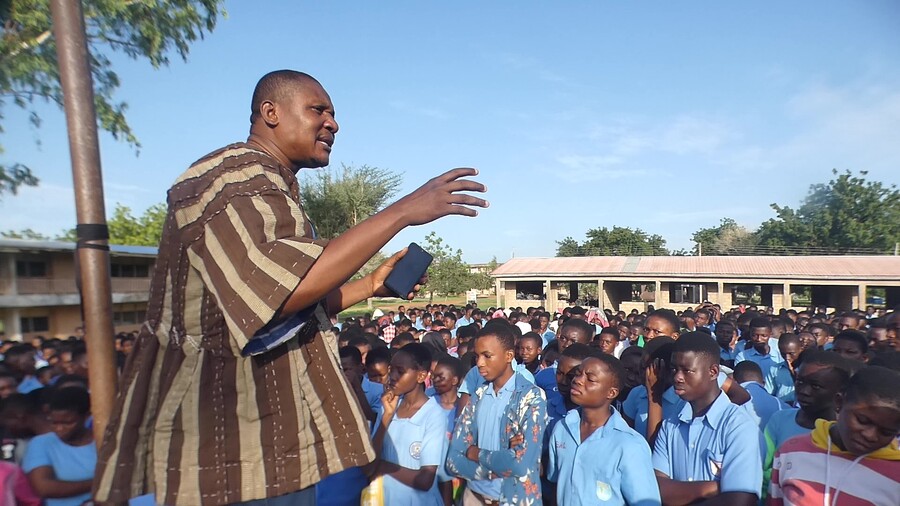
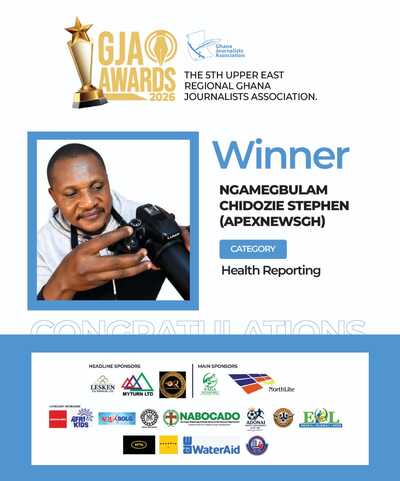
In an intensified effort to curb rampant substance abuse among young people, multiple award-winning journalist Mr. Ngamegbulam Chidozie Stephen has shifted his media campaign to school grounds. His latest stop: Bolgatanga Senior High School (BIGBOSS), where he engaged students on the dire dangers and shattered futures linked to drugs and alcohol. His journey to this podium had begun not in a newsroom, but in the shadows. It had started with a camera lens pointed into places most avert their eyes from: the ghettos. His recent documentary, bearing the grim title “Swallowed by Drugs,” was not just a piece of work; it was a testament to a deepening nightmare. The footage he captured in various ghettos was a brutal, unvarnished portrait of a generation in peril. Young men and women, some barely older than the students now before him, lost in a haze of illicit smoke and cheap alcohol, their eyes hollow, their potential leaching away into the dirt floors of derelict shacks. Watch the full documentary: He had spoken to them, these ghosts of what could have been. Their stories were a broken record of tragedy. “I started in school,” one whispered, his voice thin as paper. “My friends said it would make me feel good, make me forget my problems.” Another, shivering slightly, confessed, “It is part of me now. I cannot stop. My family, they don’t know me anymore.” Many had abandoned their education, their homes, their very identities, seduced and then enslaved by substances that promised escape but delivered only a cage. These were not faceless statistics to Ngamegbulam. They were individuals whose dreams had names: the boy who wanted to be an engineer, the girl who once aced her science exams, the aspiring footballer with lightning in his feet. Their dreams, as he would soon tell the listening students, were now “shaky.” A gentle word for a brutal truth: they were dying. Witnessing this collapse firsthand had transformed Ngamegbulam’s role from documentarian to crusader. If he could expose the problem, he reasoned, he must also try to stem the tide. And so, he had intensified his media campaign, turning his focus upstream, to the schools, to the places where the slide often begins, to the students still perched on the precipice of choice. BIGBOSS was one such stop. “If you care to know,” his voice, calm yet urgent, broke the hall’s quiet. “If you care to know, over 400 million people live with the use of alcohol disorder. Yearly, 3 million people die as a result.” He let the global scale of the tragedy hang in the air before bringing it home, sharply, painfully local. “In Ghana, over 50,000 people find themselves in this abuse. Out of that 50,000, 35,000 are students. Just like you. Thirty-five thousand.” A subtle ripple went through the crowd. The number was no longer an abstract global figure; it was a potential classmate, a friend on the next bench, a reflection in the mirror. The remaining thousands, he noted, were “our mothers and our fathers.” But the youth, the JHS and SHS students, bore the brunt. “That means these people we are talking about,” he continued, leaning into the mic, “their dream of becoming that doctor is shaky. Their dream of becoming a nurse is shaky.” He spoke not with the fire of condemnation, but with the empathy of a witness and the clarity of a guide. He dismantled the false allure of alcohol and drugs brick by brick. It was not just a health issue, he explained; it was a future-annihilator. “Through studies, now and then, it’s just a way to improve yourself. It’s a way to help your family, your society, and your country. But when you engage yourself in alcohol, you will see that those dreams will never come true.” Then, he pivoted to aspiration. He gestured beyond the school walls, towards the seats of power and influence. “You admire those in Parliament. Our MPs. You love what they do, don’t you? And you want to be like them, don’t you?” Heads nodded, almost imperceptibly. “So, how do you think you will be like those people when you engage in drinking alcohol and taking drugs? You cannot be like them.” His alternative was simple, powerful, and rooted in self-interest. “The only way we can be like them is by shying away from alcohol and drug abuse. That is the only way you can represent your community in Parliament. That is the way you can be the Speaker. That is the way you can become a minister. That is the way you can also become a president.” He was not there to lecture, he insisted. He was a messenger, delivering a warning they must carry within themselves. “I am here to actually pass this message to you so that as you are going about your duties… You should know that drug and alcohol abuse is one thing that can actually deny you your dream.” His plea became personal, communal. He asked them to remember this gathering when they returned to their homes and communities, where social gatherings often orbit around “drinks and some other goodies.” He pointed to the worrying trend in the region: “Sports [drinking spots] are becoming the order of the day… The more people patronize all these drinking spots, the more people are going to waste every day.” Then, he gave them a charge, a title to wear with pride. “I want you to be an ambassador in your community. An ambassador in your constituency. You should be in that position of also advising members of your community… because it will never help the society to grow.” He concluded with a humility that resonated deeply. He respected their time, their studies, and their busy lives. But he needed one thing from them before he left. A collective declaration. A line in the sand. “Please, you have to say, ‘Say no to drug and alcohol abuse.’ I want you to say that.” For a heartbeat, there
Central Bank Urges Responsible Reporting as Journalists Call for Capacity Building

At the Bank of Ghana’s annual media engagement in Accra, the spotlight shone on the crucial relationship between financial stability and responsible journalism. Governor Johnson Pandit Asiamah, addressing journalists on Friday, emphasised the influential role of the media in shaping economic expectations as the nation locks in recent gains in macroeconomic stability. Governor Asiamah highlighted that while Ghana had weathered a challenging 2025, disciplined policy choices had restored order to the economy. Inflation, he noted, had plummeted from 23.8 percent a year earlier to just 5.4 percent in December 2025, thanks to tight monetary policy, sound liquidity management, and clearer communication. As Ghana enters 2026, the central bank’s focus, according to Asiamah, would shift to consolidation and embedding reforms rather than implementing swift policy changes. Emphasising the complexity of monetary and financial policy, Asiamah cautioned that misreporting or a lack of context could heighten uncertainty during sensitive periods of adjustment. “Our expectation is not compliance but responsibility, accuracy, balance and context,” he said, pledging continued openness and engagement with the press. The governor outlined several initiatives, including a rules-based auction framework for the foreign exchange market, tighter oversight, and a domestic gold purchase programme, all of which had bolstered confidence and pushed Ghana’s international reserves to over US$13.8 billion, equivalent to 5.7 months of import cover. On the other side of the conversation, the President of the Ghana Journalists Association (GJA) welcomed the central bank’s openness but stressed the need for sustained capacity building. He argued that as economic reporting becomes more technical, amid inflation control, debt restructuring, and financial sector reforms, journalists must be equipped with the right skills. “It’s impossible to expect journalists to explain complex monetary and financial policies to the public without proper training,” the GJA president said, calling for regular workshops and briefings for media professionals nationwide, not just those in Accra. In response, Governor Asiamah announced plans for enhanced media training and a dedicated forum for economic reporters. He also unveiled a new “Governor’s Economic and Financial Story of the Year” award, with the winner set to attend the IMF and World Bank annual meetings, an initiative aimed at encouraging accurate and insightful economic journalism. As Ghana continues its economic recovery, both central bank officials and journalists agree that collaboration and communication will be key in ensuring that the public remains well-informed and confident in the nation’s economic direction. Source: Apexnewsgh.com
COPEC Urges NPA to Scrap Price Floors, Citing Consumer Disadvantage

The Chamber of Petroleum Consumers (COPEC) has intensified its call for the National Petroleum Authority (NPA) to abolish price floors mandated in the 2024 petroleum products pricing guidelines. According to COPEC, the policy, which prohibits Petroleum Service Providers (PSPs) from selling below a regulator-set minimum, is hampering competition and working against the interests of Ghanaian consumers. Speaking to Citi Business News, Duncan Amoah, the Executive Secretary of COPEC, described the price floor as “outdated” and ill-suited for a deregulated downstream petroleum sector. He argued that removing the floor would enable oil marketing companies (OMCs) to pass on lower prices to consumers whenever market dynamics allow. Amoah explained, “If I have cash and can negotiate a better deal, I should be able to benefit from a lower price. The current system, where the NPA sets both price floors and ceilings, restricts the free market and ultimately inconveniences consumers.” His comments come as the second pricing window in January brings some relief at fuel pumps, yet Amoah insists more savings could be realized if price floors did not bind OMCs. He urged the NPA to consider creative solutions and to let market forces determine prices, rather than imposing regulatory limits. Under current NPA guidelines, price floors are set and communicated at the start of every pricing window, with PSPs facing fines of up to GHS5,000 if they sell below the established minimum. Since its introduction, industry players have criticized the policy for stifling healthy competition and denying consumers the full benefits of a deregulated market. COPEC’s renewed advocacy places the spotlight once again on pricing policies in Ghana’s petroleum sector and the ongoing debate over the most effective way to protect consumer interests. Source: Apexnewsgh.com
GPRTU to Crack Down on Overcharging Drivers as Accra Commutes Worsen

As traffic snarls tighten their grip on Accra and the number of available commercial vehicles dwindles, frustration among commuters has reached a boiling point. Complaints about skyrocketing fares during peak hours are now commonplace, prompting the Ghana Private Road Transport Union (GPRTU) to take decisive action against what it describes as exploitation by some commercial drivers. On Sunday, January 18, the General Secretary of the GPRTU, Godfred Abulbire, spoke to Citi News, announcing a forthcoming crackdown on drivers who charge passengers above the approved rates. The Union’s enforcement exercise is set to begin on Monday, January 19, 2026, with GPRTU personnel stationed at known hotspots across the city to catch offenders in the act. “What the drivers fear is banning them from loading,” Abulbire revealed, emphasizing that the Union’s internal task force would be out in full force to ensure compliance. “From what we have discussed, we have decided that on Monday, we will deploy most of our guys to all the vantage points where these exploitations take place to check if indeed these are our cars or not.” To further tighten oversight, GPRTU plans to roll out a new branding system, marking all vehicles under its authority with the Union’s insignia. “We will begin to brand our cars with GPRTU on them. If we see that you then go out to exploit people, we will fish you out and then take you out of the union,” Abulbire warned, signaling that repeat offenders risk losing their membership entirely. The Union’s intervention comes at a time when commuters are increasingly burdened by unpredictable fares, especially as congestion and vehicle shortages worsen during rush hours. GPRTU’s leadership hopes the crackdown will not only deter overcharging but also restore public trust in the city’s commercial transport system. Source: Apexnewsgh.com
The Campaign Manager Sets the Record Straight: The Real Story Behind Eastern Region Campaign Funds
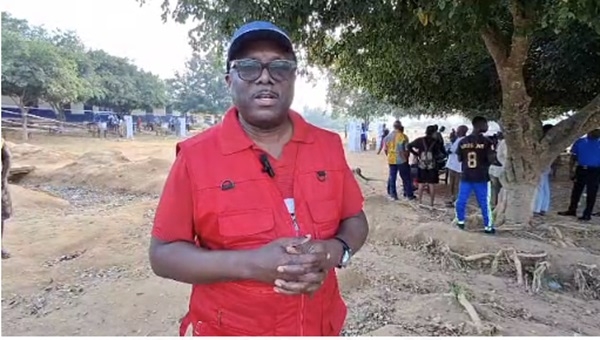
In the thick of political intrigue and campaign fervor, a storm brewed within the New Patriotic Party (NPP) in the Eastern Region. Rumors had begun to swirl, painting a picture of Dr. Bryan Acheampong as the sole financier of the region’s Members of Parliament (MPs) during the 2024 elections. The whispers grew louder after a viral video emerged, showing the Eastern Regional NPP Chairman, Mr. Jeff Konadu, chastising MPs such as Mr. Akwasi Acquah of Akyem Oda and Mr. Kojo Oppong Nkrumah. He accused them of ingratitude, claiming they had benefited financially from Dr. Acheampong’s generosity. Stepping into the fray to clear the air was Mr. Frederick Opare-Ansah, campaign manager for Dr. Mahamudu Bawumia and former MP for Suhum. Mr. Opare-Ansah dismissed the swirling claims as misleading, determined to set the record straight. According to Mr. Opare-Ansah, while it was true that some MPs in the Eastern Region received financial support during the campaign, the story was far more nuanced than the rumors suggested. The funds, he clarified, were not personal gifts from Dr. Acheampong. Instead, they were campaign contributions gathered from various donors, which Dr. Acheampong distributed on behalf of the Bawumia campaign. He explained that Dr. Bawumia had put in place a system to coordinate campaign donations across key regions, including Ashanti, Eastern, Central, and Northern. In the Eastern Region, Dr. Acheampong was tasked with receiving and distributing the funds, but the money itself came from a broad base of supporters. Notable contributors included Mr. Ken Ofori-Atta, Mr. Amoako Atta, private individuals, and direct transfers from the national campaign finance directorate. With these facts laid bare, Mr. Opare-Ansah called on Mr. Jeff Konadu to refrain from spreading misinformation. He urged party leaders to remain truthful and measured in their public statements, warning that unity within the party depended on it. In the end, the campaign manager’s clarification brought much-needed perspective to a heated debate, reminding all involved that the strength of the party lay in transparency and collective effort—not in the ambitions or generosity of a single individual. Source: Apexnewsgh.com
Kennedy Agyapong Emerges as Frontrunner—A Story of Shift and Strategy in NPP’s Flagbearer Race

As the New Patriotic Party (NPP) prepares for its crucial presidential primary, a fresh wind of change is sweeping through its ranks. The story begins with a meticulous study led by Dr. Evans Duah, a respected financial economist and lecturer, who set out to capture the pulse of over 40,000 NPP delegates across all 16 regions of Ghana. After three waves of polling and careful validation of more than 31,000 responses, the tale took a decisive turn. The final chapter of Dr. Duah’s report revealed Kennedy Ohene Agyapong as the clear frontrunner, commanding 52.59% support from party delegates. Former Vice President Dr. Mahamudu Bawumia, once considered a heavyweight, now trailed behind with 36.24%. The numbers, however, only tell part of the story. Agyapong’s rise was not accidental. His campaign, marked by relentless ground-level engagement and targeted outreach in delegate-rich regions like Ashanti and Greater Accra, generated what Dr. Duah described as the “largest positive net movement” among the candidates. Delegates, weary after the party’s 2024 electoral defeat, were now seeking a leader with coalition-building skills and the ability to rejuvenate the party’s prospects. Meanwhile, Bawumia struggled to extend his influence in the southern regions, and the emergence of Dr. Bryan Acheampong as a contender chipped away at the margins but failed to seriously threaten the top two positions. “This isn’t just numbers; it’s a narrative of resilience,” Dr. Duah reflected. The story, he argued, is about a party at a crossroads, and a candidate whose direct approach and rapport with delegates could rewrite the NPP’s future. As the January 31 primary approaches, the suspense builds. In this unfolding drama, success will hinge on each candidate’s ability to consolidate their support and win over the still-undecided delegates. For now, the momentum, and perhaps the future of the NPP, rests in the hands of Kennedy Ohene Agyapong. Source: Apexnewsgh.com
The Broken Chalkboards: The Upper East Regional Education Director’s Battle Against Student Riots and Indiscipline in Schools
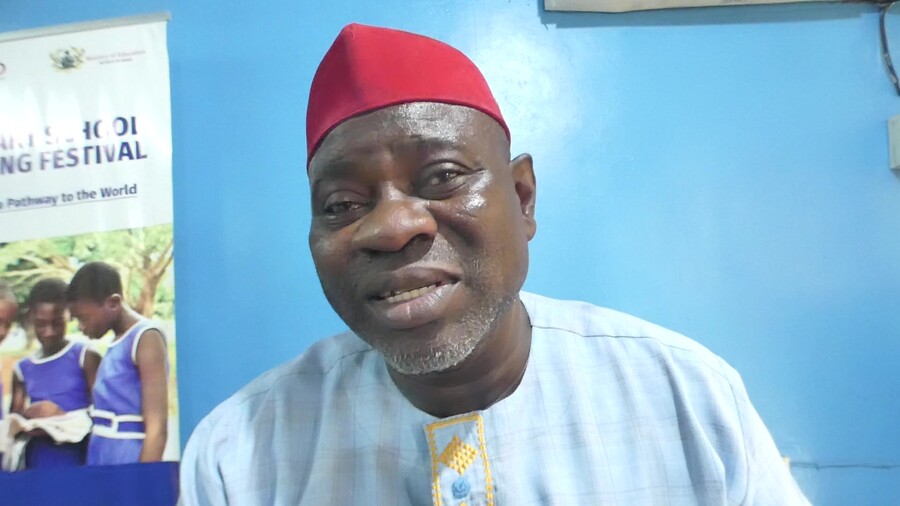
What once were sanctuaries of learning and personal growth have, in recent times, become epicenters of chaos and disruption. The phenomenon of student riots, once rare, now threatens to become a troubling ritual, a recurring storm that leaves behind fractured trust, shattered chalkboards, and an environment far removed from the ideals of education. Razak Z. Abdul-Korah, the Upper East Regional Education Director, has never shied away from confronting uncomfortable truths. In a recent documentary, “The Broken Chalkboards,” produced by Ngamegbulam Chidozie Stephen of Apexnewsgh, Mr. Abdul-Korah spoke candidly about the growing tide of student unrest and painted a comprehensive picture of its causes, impacts, and the necessary path forward. For decades, the schools of the Upper East Region have been pillars of hope—places where young minds are shaped for the future. But lately, a disquieting trend has emerged. Riots, demonstrations, and acts of indiscipline are no longer isolated incidents. They are spreading, springing up across almost all institutions, threatening the peace and stability necessary for effective learning. “It is of concern to everybody in the education space, all stakeholders as well,” Mr. Abdul-Korah began, his tone both measured and urgent. “A peaceful environment should be a creation of almost all stakeholders. So if one stakeholder happens not to be in line, it affects all.” Kindly watch the full video here: https://youtu.be/GSQR3-T6EaE. In his view, the responsibility to maintain peace cannot rest on one group alone. It must be a collective effort; school management, teachers, students, parents, and the wider community all have crucial roles to play. When even a single element falls out of harmony, the entire system feels the strain. Indiscipline, Mr. Abdul-Korah clarified, is not just a problem among students. “Let me even put it, not necessarily only student indiscipline, but indiscipline among staff, indiscipline among students, every level of indiscipline affects the management of the school.” While the recent spate of riots has spotlighted student behavior, the Regional Director was quick to point out that issues of discipline, or the lack thereof, cut across all levels. Sometimes, even administrative offices are not immune, though the manifestations may be less visible. “One trigger leads to another,” he explained. “It is not the best, especially when it goes out into demonstrations.” When discipline breaks down, the cost is not just measured in damaged property or lost learning hours, but in the erosion of trust and the peaceful environment schools strive to maintain. The cost of a riot is profound and far-reaching. “When students revolt against staff, there is mistrust. We are human beings. You may react, but as you go along, it may come in a different form to affect the learners,” Mr. Abdul-Korah stated. Every incident chips away at the fragile bond between teachers and students. Fear and suspicion replace mutual respect, and it can take months, sometimes years, for schools to regain their equilibrium. Learning outcomes suffer, and the ultimate victims are the students themselves. Specific cases, like the disturbances in Gowrie, Bongo, and Zuarungu, were cited. In Gworie, the environment became so inhospitable that learning was all but halted. In Bongo, a single expression of displeasure threatened to spiral out of control. In Zuarungu, the incident’s outcome remains unresolved, hanging over the school community like a specter. Despite the challenges, Mr. Abdul-Korah remains resolute. “We should work to see how to address some of them,” he insisted. Reports are being compiled and sent to the Director General for study and advice. Meanwhile, efforts are underway at the regional level to address concerns as they arise. “Every single actor that can contribute to creating this enabling environment should not be left out.” At every forum, whether with school managers, student bodies, or community elders, the message is the same: peace and discipline are everyone’s responsibility. According to the Regional Director, transparency is key. When the monitoring team visits a school, their first point of contact is the headteacher, ensuring that the purpose of their visit is clear. This openness extends to student forums, where students are encouraged to voice their concerns and see themselves as part of the management process. Many students, Mr. Abdul-Korah observed, do not realize that they are part of the disciplinary and management structures. “If a student is to be disciplined, the student leadership is part of the disciplinary committee. So you are aware, and that is how you are part of the management.” By making student leaders active participants in school management, a sense of ownership and responsibility is fostered. Issues can be raised and resolved through proper channels, reducing the likelihood of escalation. Speaking about effective communication of decisions, the Regional Director pointed out, misunderstandings often arise when decisions, especially disciplinary ones, are not communicated effectively. In one case at Zamse, a student was disciplined, but the reasons were not relayed to the rest of the students, leading to protests. In reality, the action had been recommended by fellow students who felt threatened by their peer’s behavior. “If we’re doing all these things to bring people on board in the management practice, we will reduce the tension,” the Director emphasized. According to Mr. Abdul-Korah, “Once tension is down, you may not see some of these things happening.” By fostering dialogue and quelling rumors, the triggers for riots can be addressed before they explode into full-blown crises. The Director was particularly keen to highlight the role of school management. “The best leader, the best manager certainly has some leadership qualities that drive the activities in his office.” But even the best leaders make mistakes. When they do, the ability to admit fault and correct course is essential. “It’s not everything that as a leader you get 100% right. But as and when, you could do take a decision without taking into consideration the consequences of it.” Sometimes, a careless remark or poorly thought-out decision can spark unrest. School boards and oversight bodies have a critical role to play in reducing tension. But the most effective interventions, Abdul-Korah believes, happen at the
The Broken Chalkboards: Rev. Abukari Thomas Calls for Collective Action and Moral Reform Amid Rising Student Riots in Upper East Region
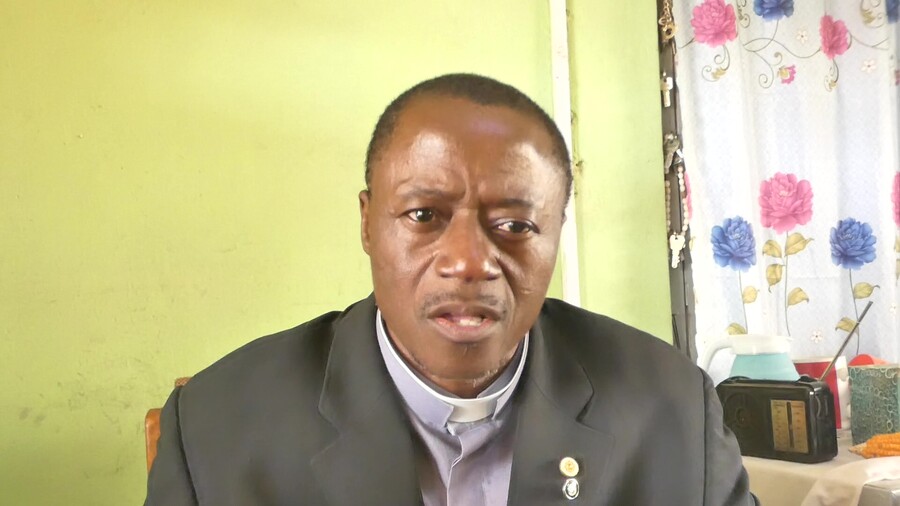
In recent years, the Upper East Region has witnessed a troubling surge in student riots across its educational institutions. This trend has left educators, parents, and leaders grappling for answers. Among those raising their voices for change is Rev. Abukari Thomas, Chairman of the Upper East Regional Christian Council, Bolgatanga and a respected Baptist Church head Pastor, who shared his profound reflections in a documentary “Broken Chalkboards” produced by journalist Ngamegbulam Chidozie Stephen of Apexnewsgh. Rev. Abukari’s insights are a clarion call to society, urging all stakeholders to acknowledge the gravity of campus unrest and to seek solutions rooted in empathy, communication, and moral guidance. His message is not one of blame, but of collective responsibility, a rallying cry to educators, parents, religious leaders, and students themselves to reclaim the original purpose of education and to restore dignity and order in schools. Addressing the matter, Rev. Abukari begins with an earnest appeal: “I come your way to add my voice to things that are happening in our society, which are heartbreaking. For example, we look at our various institutions, we see some emerging trends that are of late not the best for u,s and it would not be appropriate for us to be silent on this issue.” Kindly watch the full video here: https://youtu.be/GSQR3-T6EaE. He observes with concern that nearly 90% of secondary schools in the Upper East have experienced some form of student unrest, a situation unprecedented in recent history. Rather than apportioning blame, he emphasizes the need for unity and shared purpose in seeking solutions. “We all have to find ourselves in getting a solution to this. So my focus here is not to look at who is at fault, but what can be done because we are in the woods and we need to come out.” Rev. Abukari laments the loss of the original vision for schools: environments meant to model, transform, and equip future leaders. He notes, “In our schools, this is a place where people are to be modelled, transformed, equipped, and then they will pick up leadership positions in the near future. But if we see them going all around destroying school properties…it might be a simple misunderstanding, misinformation or miscommunication.” The generational gap, he asserts, has made communication more complex. Today’s students are “sensitive and active,” with access to social media and peer influences sometimes leading them astray. Many, he warns, are unaware of the long-term consequences of their actions, including the destruction of scarce infrastructure. “The government has spent huge sums of amounts of money to put up infrastructure which our region is lacking. There is no institution in our region that we can boast and say that they have enough infrastructure…Why do we then destroy the few?” Rev. Abukari calls for proactive communication between school leadership and students, particularly through student representative councils. He suggests regular engagement, transparency about school management, and education about the realities of funding and resource allocation. “If students know that this is the right channel we are to pass through to get our grievances met, some of these instances we are observing will not be there.” He advocates for empowering student leaders with knowledge about their rights and responsibilities, as well as the costs involved in running a school. “If we explain, they will understand,” he says, reinforcing the need for dialogue over destruction. While acknowledging the importance of child rights, Rev. Abukari cautions that many students misunderstand where their rights begin and end. “You have the right to be educated, so if you have the right to be educated, it means you have the right to be trained and be corrected.” He recommends that corrective measures be made pragmatic and transparent, so that students understand the intention is reform, not punishment. “School authorities, can we let them get to this understanding?” he asks, adding that many students come from troubled homes and need more structured support in school. A critical gap, according to Rev. Abukari, is the lack of effective guidance and counseling offices in schools. He urges management to invest in these services, so students can seek help and receive warm, professional advice. “If we get guidance and counselors to take care, an open office where the students can walk in with their heartfelt issues and walk out warmly received and properly educated, most of these issues that we encounter in our institutions will not be there.” He also proposes the creation of robust reward systems to motivate positive behaviour, complementing disciplinary action. “If we see more awards given to well-disciplined, well-dressed, well-behaved students…I think it will motivate and encourage the students to tow this line.” As a religious leader, Rev. Abukari stresses the role of faith communities in shaping student character. He calls for stronger religious life on campus, with chaplains and imams working together to help students discover purpose and resist negative peer pressure. “Nobody’s destiny is promoted through rioting. Nobody’s destiny is promoted through bad behavior.” Religious institutions, he believes, must step up to provide moral guidance, especially for students from broken homes. “If we religious leaders make sure that we model their religious life in these institutions, I think definitely…the numbers [of riots] should reduce.” Rev. Abukari does not leave out parents and alumni, urging Parent-Teacher Associations and school boards to support rightful discipline and set positive examples. He warns against interventions that undermine necessary corrective measures, noting that “since he did it and went scot-free, there’s nothing wrong.” He encourages alumni to take pride in building their schools, not destroying them: “It’s for us to go through our books, study, come out with flying colors, move to the next level so that you come back one day and say yes, I was a product of this institution.” A sobering reminder is offered to students: school records, including involvement in riots, often follow individuals throughout their lives. “If they pull out the files and you were part of those who burned down the dormitory, you were the gang leader,