



Upper East NPP Former Regional Executive Rally Behind Bawumia for 2028 Comeback
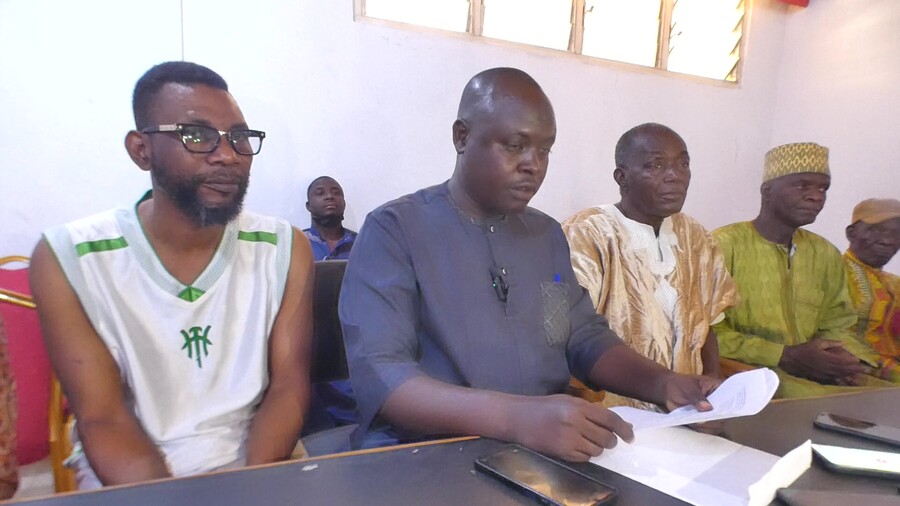
On a pivotal Friday, January 23, 2026, a group of former NPP Regional Executives, thirty-five in number, stepped before the press. They were the former Regional Executives of the New Patriotic Party (NPP) in the Upper East Region, their faces etched with the experience of countless campaigns. Their message was singular and powerful: a full-throated endorsement of Alhaji Dr. Mahamudu Bawumia to lead the party into the 2028 General Elections. With the party’s flagbearership election just days away, on January 31, these former excutive had not made their decision lightly. “After scrutiny of the five aspirants and deep reflection,” their spokesperson declared, reading from a collective statement, “and out of our unwavering love for the party and our collective desire to recapture political power, we have come to the firm conclusion that Alhaji Dr. Mahamudu Bawumia represents the best possible choice for the NPP in 2028.” Their support, they stressed, was unequivocal and unflinching for the immediate past Vice President. They laid out a compelling case, built on four pillars of conviction. First was Leadership and Electability. In the current political climate, they believed Dr. Bawumia’s caliber and competence positioned him best to reclaim victory for the NPP. Second was Experience and Political Consistency. Among the contenders, he stood apart. Having led the party’s ticket in 2024, he possessed invaluable experience. “As has been the tradition in our party,” they noted, “he deserves a second opportunity.” To them, consistency was a proven winning strategy. Third, they pointed to his Competence and Character—a consistent demonstration of resourcefulness, humility, and dedication, qualities they deemed essential for rebuilding party unity and transforming the nation. Finally, they championed his Vision for Ghana, one centered on humanity, inclusive development, and sustainable socio-economic transformation. “His ideas resonate with the aspirations of Ghanaians,” the statement read, praising him as “a positive thinker, a problem solver, and a man of action.” The number was specific and significant: all thirty-five former executives stood united in this declaration. Their conclave ended with a resonant call to action, directed at the party’s delegates. They urged them to rally behind Dr. Bawumia, to entrust him with the flagbearership, and to set the NPP on a course to secure victory in 2028. The message from the Upper East was clear: a battalion of the party’s old guard had mobilized, placing their strategic weight behind Bawumia’s bid to lead the charge back to power. Source: Apexnewsgh.com
Plans Underway for Remand Centre in Bolgatanga to Ease Prison Congestion and Improve Justice Access
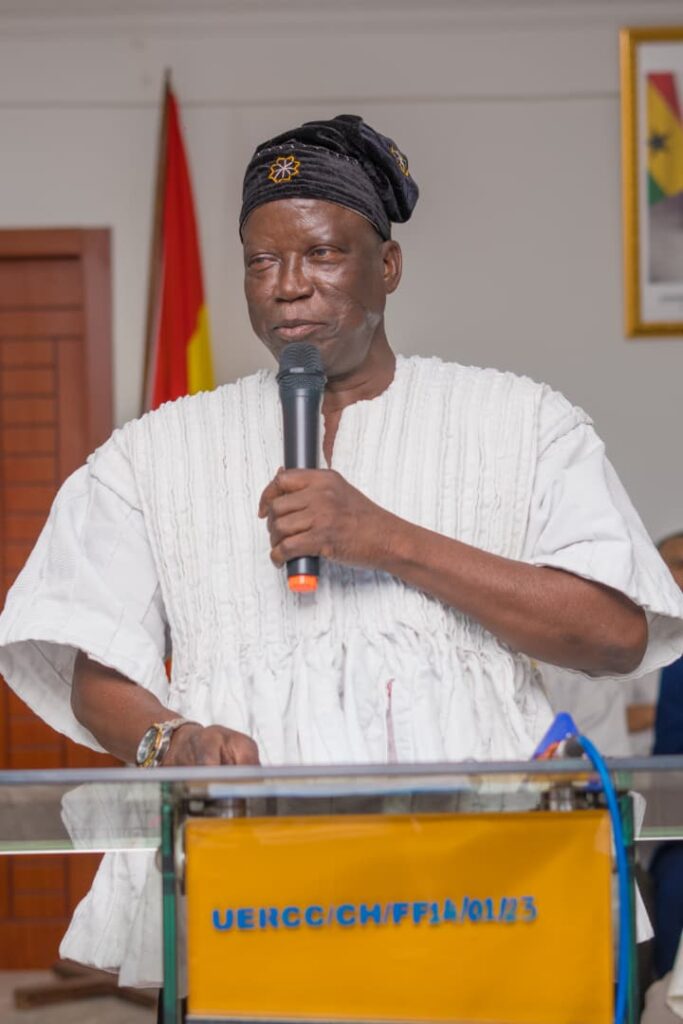
The wheels of justice in Ghana’s Upper East Region are set for a significant boost as the government moves to establish a dedicated remand centre in Bolgatanga. This initiative, announced by Regional Minister Donatus Akamugri Atanga at the first regional press soiree of the current National Democratic Congress (NDC) administration on January 21, 2026, promises to address longstanding challenges faced by both prisoners and the justice system. For years, the absence of a remand facility in Bolgatanga has forced the transportation of remand prisoners to Navrongo, a logistical burden that has only worsened with congestion at the Navrongo Prisons, particularly in the wake of ongoing security concerns in Bawku. The result has been frequent delays in court proceedings and mounting pressure on the Ghana Prisons Service. Minister Atanga explained that, recognising these hurdles, he has initiated consultations with both the Ghana Prisons Service and the Ministry of the Interior to chart a new course. “The establishment of a remand centre in Bolgatanga will ease logistical pressure, reduce delays in court cases, and ensure fairer, more timely access to justice for remand prisoners across the region,” he said. Progress is already visible. On December 22, 2025, the Director-General of the Ghana Prisons Service visited Bolgatanga to meet with the Minister of Prisons. Together, they inspected a proposed site for the new centre. This location could serve as a temporary solution while stakeholders within the municipality work to identify an ideal, permanent parcel of land. Mr. Atanga emphasized that the proposed remand centre is not just a local solution but part of the broader governance and justice reform agenda championed by President John Dramani Mahama. The project underscores the administration’s commitment to human rights, institutional reforms, and expanding access to justice for all Ghanaians. As the search for a permanent site continues, the announcement has brought hope to legal practitioners, prison officials, and families alike. If successful, the Bolgatanga remand centre could become a model for other regions, ensuring that justice is not delayed and that the rights and dignity of all citizens remain at the heart of Ghana’s judicial system. Source: Apexnewsgh.com
Major Gold Finds Spark Renewed Push for Responsible Mining in Upper East Region

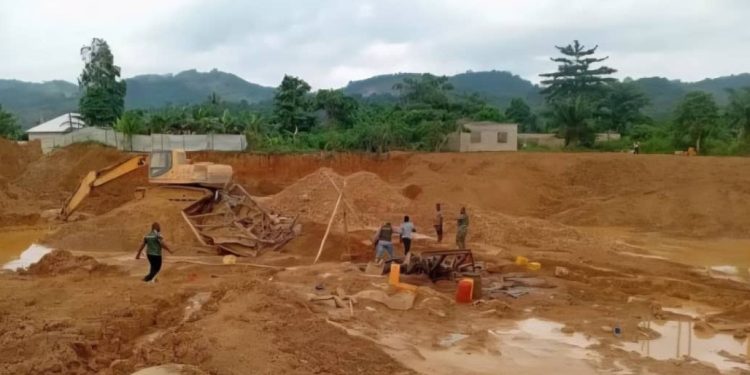
The promise of prosperity glimmers anew in Ghana’s Upper East Region, where government officials have confirmed significant gold deposits in at least ten out of the region’s fifteen districts. The announcement, made by Upper East Regional Minister Donatus Akamugri Atanga at his first press soiree in Bolgatanga, has ignited both hope and responsibility among local communities and policymakers. “About ten out of the fifteen districts have gold deposits that must benefit our people,” Minister Atanga told journalists, underscoring the government’s commitment to ensuring that the region’s mineral wealth would translate into real economic opportunity, without sacrificing environmental integrity. With gold’s lure comes the shadow of illegal mining, or galamsey, which has devastated water bodies, farmlands, and forests across Ghana. Determined to change this narrative, Atanga described how the Regional Coordinating Council (RCC), in partnership with the Minerals Commission, Environmental Protection Agency, traditional authorities, and security agencies, has ramped up monitoring and enforcement. Their efforts aim to protect the region’s natural resources while guaranteeing that mining activities remain both lawful and sustainable. A recent crackdown, led personally by the Minister and the Regional Security Council (REGSEC), saw operations sweep through the Tilli Forest along the Red Volta River and the Naaga Forest. The results were decisive: seventy illegal miners, including foreign nationals from Togo and Burkina Faso, were arrested and mining equipment seized. All suspects now face prosecution in a Circuit Court, a clear signal of the government’s resolve. But enforcement is only one part of the strategy. Atanga emphasized that the government is actively engaging with small-scale miners and local communities, encouraging compliance with mining regulations and promoting safer, more sustainable practices. In areas like Talensi District, where clashes over mining rights have simmered, REGSEC has stepped in to mediate disputes between small-scale miners and large-scale companies, restoring dialogue and defusing tensions. To further empower local communities, the RCC has submitted a list of mining communities, Teshie, Sapeliga, Santeng, Tarkwa, Bongo, Kadema, Naaga, Bechisi, and Nabdam, to the Ministry of Lands and Natural Resources. The goal: to negotiate with concession holders to allocate portions of mining concessions under the government’s Corporate Mining Scheme, offering young people a legal path into the mining sector. “These interventions demonstrate the government’s commitment to curbing illegal mining while creating lawful and sustainable livelihood opportunities for our young people,” Minister Atanga affirmed. As gold fever spreads across the Upper East, the real challenge lies in ensuring that the region’s newfound wealth builds a brighter, more sustainable future for all—where prosperity and environmental stewardship go hand in hand. Source: Apexnewsgh.com
The Broken Chalkboards: Upper East Peace Council Chair Decries Rising Student Riots
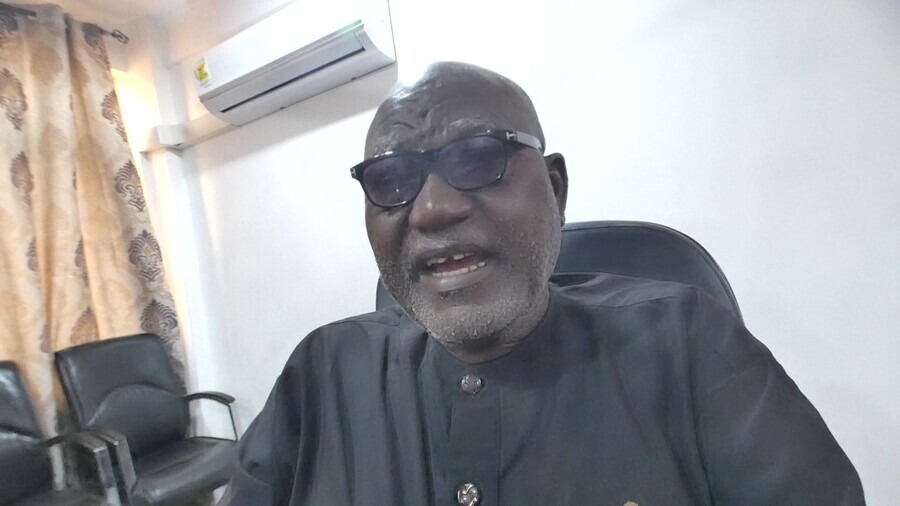
Alhaji Sumaila Issaka, Chairman of the Upper East Regional Peace Council, has voiced grave concern over the growing trend of student riots in the region, a worrying development he believes is fast becoming a destructive norm among secondary schools. In a recent interview for the documentary “The Broken Chalkboards,” produced by Ngamegbulam Chidozie Stephen for Apexnewsgh, Alhaji Issaka laid bare the scale of the problem and the urgent need for dialogue and reform. “It’s been a very difficult situation in this region, especially the way this rioting has been going on. It’s now like a canker and so contagious. The moment Zamstech demonstrates, the next day Gowrie is demonstrating, the next day Bongo is demonstrating, the next day Big Boss, and then on and on,” Alhaji Issaka lamented. He noted that while older institutions such as Navrongo Senior High School, Notre Dame, and Bawku Senior High School, as well as the training colleges, where students are considered adults, rarely report such incidents, the wave of unrest continues unabated among the newer institutions. “What I personally don’t understand is why these demonstrations, when you have an SRC that can present your grievances to the authorities,” he added, underlining his bewilderment at the preference for destructive protest over dialogue. Kindly watch the full video here: https://youtu.be/GSQR3-T6EaE. The Peace Council, Alhaji Issaka revealed, had previously initiated peace clubs in several schools as a proactive measure to curb the violence. However, these efforts were hamstrung by a lack of funding, making it impossible to sustain regular outreach. “It’s been of great disturbance to us, especially the destruction on the campuses,” he said, noting the heartbreak of seeing already scarce resources in one of Ghana’s poorest regions destroyed by students themselves. He recalled, “They will not pass Presec or Achimota and give us a bus here if the supplies are very few. Yet we continue to destroy the few that we have. When we went to school, we didn’t demonstrate, but now it’s like they are so proud of it.” Alhaji Issaka expressed his frustration at the often trivial reasons for these demonstrations. “Most of the time they are so flimsy, so annoying that you cannot tolerate them,” he said. He cited the example of students at Gowrie Senior High School insisting on shower facilities despite vandalizing existing ones, and then demanding the dismissal of the headmistress when standpipes were provided instead. In other cases, students ignored bans on personal electronic devices and overloaded dormitory sockets, leading to repeated fires and costly repairs, only to protest when precautionary measures were implemented. “What bothers me most is that the reasons are so flimsy. And if that is even the case, must you go and damage the property of the school? Then you keep complaining, we don’t have this, we don’t have that,” he said. He recounted students insisting on using coal pots for science practicals instead of the safer Bunsen burners of his own school days, and the paradox of demanding better conditions while destroying what little is available. The recurring destruction, Alhaji Issaka noted, ultimately impacts innocent parents who are forced to pay for damages. “After every investigation, money will be paid. And this money will come from the parents,” he explained, recounting a personal experience at Senegal Senior High, where burned motorbikes had to be replaced, ironically benefitting some teachers but compounding hardship for families. Another disturbing trend is the rise of tribalism in school leadership, a stark contrast to the diversity and harmony of past decades. “To the extent that, if you are not a Kassena-speaking boy, you cannot be Senior Prefect in Navrongo Secondary School. If you are not a Guruni speaking boy, you can’t be the Senior Prefect of Big Boss, Tongo Senior High School. If you are not a Kusasi-speaking boy, you cannot be a Senior Prefect of Bawku Secondary School. Why? So this is what is happening? Even though they are extending it to their heads, insisting that if you are not from that area, you shouldn’t be a head. Really?” he asked incredulously. He reflected fondly on the past, when students and leaders from various backgrounds worked together without division, and called the current climate “a big headache.” Despite setbacks, the Peace Council is determined to revive its outreach efforts. Alhaji Issaka detailed recent and ongoing attempts to coordinate with regional education authorities and NGOs to reintroduce peace-building programs in schools. Plans are in place to divide the council into groups and visit schools across the region, fostering dialogue and conflict resolution skills among students. The council’s goal is clear: to help students understand the importance of using the SRC as a channel for grievances, rather than resorting to violence. “Let the students understand that the SRC is there to represent them at the various meetings. And if they have any grievances, they should pass them to those committee members. So that when they go, they table it,” he advised. Alhaji Issaka believes much of the unrest stems from a lack of awareness and leadership among students, and from the influence of troublemakers. He noted that simple disputes, such as the theft of a phone, which is itself contraband, can quickly escalate into widespread violence and even tribal conflict. “Two students fight, and the Bawku incident crops up. You come, and it’s your kinsman against another man, and you just join the fight.” He urged proper reporting and resolution of issues through the appropriate channels, rather than resorting to mob justice or property destruction. “If you suspect somebody, report him to the authorities. And if they search him and find your phone, they give it to you. But these fights, now, the tribal fighting is in these two schools. Which was not the case before.” Alhaji Issaka closed with an impassioned plea for a return to civility and the prioritization of dialogue, warning that continued unrest threatens not only the schools but the entire region’s progress. “We want us to grow. Yet, we are last in everything.
The Broken Chalkboards: Upper East Regional Minister Urges Discipline and Improved Infrastructure to Tackle School Riots
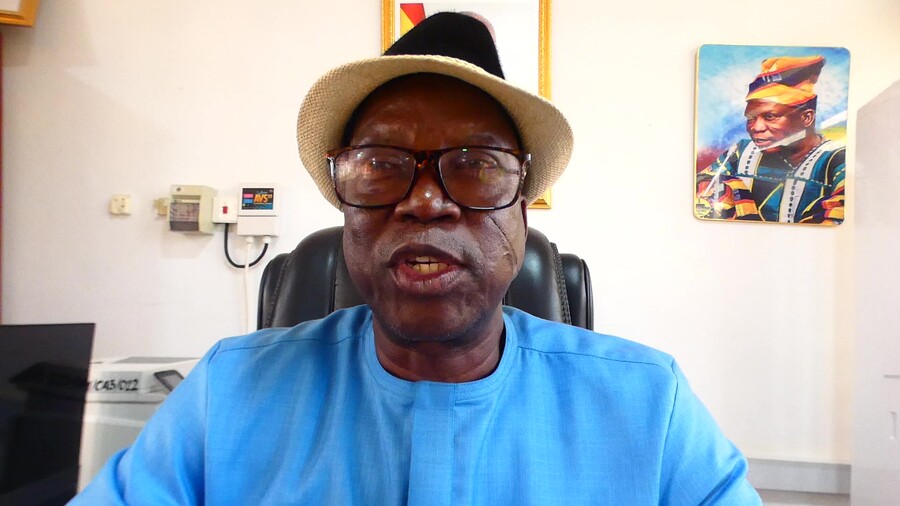
The Upper East Regional Minister, Mr. Akamugri Donatus Atanga, has expressed deep concern over the growing spate of student riots in second-cycle institutions across the region, describing the trend as “worrying and needless.” In a documentary engagement with Apexnewsgh’s Ngamegbulam Chidozie Stephen, the Minister recounted his personal experience since assuming office five months ago. He revealed that the wave of disturbances began under his tenure at St. Benedict’s Secondary School, where a stolen meal sparked clashes that later took on tribal undertones. “Can you steal food and be fighting? Did you steal a tribe? Can you understand that?” he asked, questioning how minor disputes were being allowed to escalate into violent confrontations. He explained that subsequent riots stemmed from issues such as stolen mobile phones, broken water systems, poor sanitation facilities, and disputes over discipline and welfare. For instance, in one case, students rioted after going days without water and being forced to fetch from nearby communities, exposing female students to safety risks. Mr. Atanga identified indiscipline and weak enforcement of school regulations as major drivers of the unrest. He lamented that rules prohibiting items like mobile phones were often flouted with the complicity of some staff. “Until all of us stand by the fact that these are the things we don’t want and we all abide by it, we will face these issues,” he said, urging teachers and school authorities to strictly enforce existing regulations. He also criticized the current disciplinary regime, which he believes has emboldened students to challenge authority. “During our time, when you committed a crime, your masters were allowed to punish you, and nobody could attack them. Today, they say nobody should punish misbehaving students. The teachers are there, but the students are running down the masters,” he noted. The Minister called for a review of disciplinary measures to restore teachers’ authority while protecting students’ rights. “Unless we get back to the drawing board and look at which offenses are punishable, we are likely to keep seeing this indiscipline,” he warned. Beyond discipline, Mr. Atanga highlighted the role of poor infrastructure in fueling discontent, particularly the lack of toilets and water facilities. He urged district assemblies to prioritize school sanitation and water provision through the Common Fund and other initiatives. “It is not proper for a secondary school to be there without a toilet facility, forcing students to share public toilets or practice open defecation. This exposes especially the girls to serious risks,” he stressed. He also cautioned against conflicts among school management and staff, noting that internal divisions often influence and embolden students to riot. “Let us work as brothers and sisters. If you urge students to attack your colleague, remember others are watching, and one day, it will be you,” he advised. The Minister further shared insights into how riot investigations should be handled, warning against hastily labeling injured or present students as culprits. “When you see a student in blood after a riot, don’t immediately conclude he is a bad person. Sometimes those injured are the ones resisting destruction. If you punish the wrong people, you embolden the real perpetrators,” he explained. He urged authorities to focus on identifying ringleaders and dealing with them firmly to deter repeat offenders. “Any student found to be leading riots should be dealt with radically, but we must ensure we get the right people,” he emphasized. Mr. Atanga concluded by urging teachers, parents, assemblies, and students to work together to restore discipline, strengthen regulations, and improve infrastructure. Only through collective responsibility, he said, can the disturbing trend of school riots be curtailed. “If students obey regulations, management cooperates, and facilities are improved, we can reduce the violence. But if we continue to pamper indiscipline, we will be training troublemakers who may carry their misconduct into other schools and communities,” the Minister cautioned. Source: Apexnewsgh.com
Upper East Region Launches 94 Education Projects to Transform Schools and Bridge Infrastructure Gaps
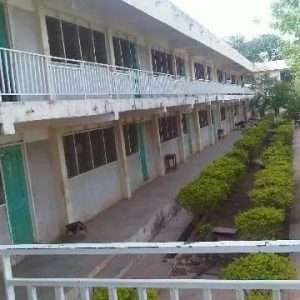
In a sweeping initiative poised to reshape the educational landscape of northern Ghana, the Upper East Regional Coordinating Council (RCC) has unveiled a comprehensive package of 94 infrastructure projects aimed at addressing longstanding deficits in the region’s schools. The announcement, made by Regional Minister Donatus Akamugri Atanga at his inaugural press soiree in Bolgatanga, signals a new era of investment in both basic and secondary education. The ambitious programme, a collaboration between the RCC, local Members of Parliament, and the Ghana Education Trust Fund (GETFund), will touch nearly every corner of the region. Seventeen senior high schools (SHSs), two kindergartens, ten junior high schools, and thirteen primary schools are set to benefit from the intervention. Among the headline beneficiaries is Gambibgo SHS, which is in line to receive an impressive seven new projects, including a modern dining hall, additional dormitories, a science laboratory, and staff accommodations. Bolgatanga Sherigu SHS has been earmarked for 11 projects, ranging from new classroom blocks and dormitories to essential toilet facilities and an administrative block. Other institutions, such as Pusiga SHS, Kanjarga SHS, Azeem-Namoa SHS, Zamse SHS, and Navrongo SHS, will also see significant upgrades. The Bolgatanga Central Technical Institute stands out for its forthcoming six-unit technical workshop, a boost for vocational skills training in the region. “These projects are designed to ease the pressure of the double-track system, create conducive learning environments, and support the gradual phase-out of the system,” Mr. Atanga explained. Basic schools, such as Mognori JHS, Bachonsa JHS, Nyorkokor JHS, Tambalug Primary School, and Zamsa Kindergarten, are also set to see new infrastructure, ensuring that the benefits reach even the youngest learners. But the regional educational revival goes beyond bricks and mortar. The Minister emphasized ongoing reforms to improve the quality of teaching and learning. The government has restored the three-term academic calendar, strengthened Parent-Teacher Associations, and is actively reviewing the national curriculum as part of its broader “reset agenda.” Gender equity and student well-being are also at the heart of the initiative. Over 666,000 sanitary pads have already been distributed to girls in basic and second-cycle schools, a move designed to boost attendance and break down barriers to education for young women. Meanwhile, the B-STEM (Basic Science, Technology, Engineering, and Mathematics) programme has been introduced in 194 schools, and a standards-based curriculum is now fully in place across all 35 public SHSs. “These interventions reflect a holistic commitment to education,” Mr. Atanga concluded. “We are determined to create learning environments where every student can thrive, acquire relevant skills, and contribute to Ghana’s development priorities.” As construction teams prepare to break ground across the region, hope is rising that these investments will close the infrastructure gap, empower students and teachers, and lay the foundation for a brighter future in the Upper East. Source: Apexnewsgh.com