







Chief Justice Clears EC Chair, Deputies, and Special Prosecutor of Removal Petitions

The chapter on a series of high-profile removal petitions has come to a close, following a determination by Chief Justice Paul Baffoe-Bonnie that no prima facie case exists to warrant further investigations against the Chairperson of the Electoral Commission, her deputies, or the Special Prosecutor. According to a statement released by the Presidency on Wednesday, February 18, 2026, President John Dramani Mahama had referred seven petitions for the removal of Electoral Commission Chair Jean Mensa and her deputies, along with three separate petitions targeting Special Prosecutor Kissi Agyebeng, to the Chief Justice. The referrals, made on November 25, 2025, were in line with Article 146 of the 1992 Constitution and Section 15 of the Office of the Special Prosecutor Act, 2017 (Act 959), which requires the Chief Justice to determine if the petitions disclose a case worth investigating. By a letter dated January 26, 2026, the Chief Justice informed President Mahama that none of the petitions established sufficient grounds for removal proceedings against the officeholders. The announcement, signed by Felix Kwakye Ofosu, Spokesperson to the President and Minister for Government Communications, effectively brings an end to current attempts to unseat the Electoral Commissioner, her deputies, and the Special Prosecutor. With this decision, the affected officials remain in office, as the legal threshold for further action has not been met. Source: Apexnewsgh.com
Martin Kpebu Urges Publication of Petitions Against EC Chair, Special Prosecutor

Private legal practitioner Martin Kpebu is calling for full transparency in the ongoing debate over high-profile removal petitions against top public officials. On Wednesday, February 18, Kpebu urged authorities to publish the petitions seeking the removal of Special Prosecutor Kissi Agyebeng, Electoral Commission Chairperson Jean Mensa, and her deputies, arguing that public access is essential for fair and objective discussion. Kpebu’s call follows a recent statement from the Presidency, which revealed that Chief Justice Paul Baffoe-Bonnie had ruled that the petitions failed to establish a prima facie case and would not proceed further. The petitions, seven in all, had been referred to the Chief Justice by President John Dramani Mahama in November 2025, in accordance with Article 146 of the 1992 Constitution and Section 15 of Act 959. Despite this ruling, Kpebu, whose own petition against the Special Prosecutor remains undecided, maintained that Ghanaians deserve to see the actual content of the petitions. “After that, let’s publish the petitions, so the public can comment too. Otherwise, it will just be based on people’s beliefs and biases. Without seeing the petitions, you cannot comment,” he told journalists. A statement issued on February 18, 2026, by the Minister of State in charge of Government Communications, Felix Kwakye Ofosu, confirmed the Chief Justice’s response, dated January 26, 2026, which stated that none of the petitions warranted further action. Kpebu insists that making the documents public would move national debate beyond speculation, allowing citizens to engage with the facts and contribute meaningfully to the discourse. Source: Apexnewsgh.com
NPP Sets September 2026 for National Executive Elections, Extends Mandates of Party Officials

The New Patriotic Party (NPP) has mapped out a detailed timetable for its upcoming national executive elections, with the key poll slated for September 18 to 20, 2026. The announcement, made by General Secretary Justin Kodua Frimpong at a press conference on Wednesday, February 18, lays the groundwork for a series of internal electoral activities designed to ensure a smooth leadership transition within the party. According to Mr. Kodua Frimpong, the process begins with the opening and closing of nominations from August 10 to 14, 2026. Would-be aspirants will then file their nominations from August 15 to 17, followed by a vetting process scheduled for August 20 to 23. The vetting report is set to be presented on August 25, with any appeals to be heard from August 28 to 29. This comprehensive timeline is aimed at ensuring transparency and orderliness throughout the party’s electoral process. “The national executive elections are as follows: The processes and procedures, opening and closing of nominations shall be from August 10 -14, filing of nominations shall be on August 15-17, vetting of aspirants August 20-23, reading of vetting report shall be on August 25, appeals shall be taken from August 28-29. The elections shall be held between September 18-20, 2026,” Frimpong announced. To prevent disruptions during the electoral period, the NPP has also extended the tenure of office for polling station executives, constituency executives, branch executives, electoral area coordinators, and regional executives whose mandates would otherwise expire. Frimpong explained that this measure is intended to maintain order and continuity within the party’s ranks. “This will help not to distort the elections,” he assured. With these measures in place, the NPP is set to embark on a carefully orchestrated internal election process, aiming for a seamless transition of leadership. Source: Apexnewsgh.com
Newly Posted Teachers Give GES One-Month Ultimatum Over Delayed Staff IDs, Unpaid Salaries

A wave of frustration swept through the Ghana Education Service (GES) headquarters on Wednesday, February 18, as the 2024 batch of newly posted teachers staged a picket to demand urgent action over months of unpaid salaries and the delayed issuance of staff IDs. The group, who have been teaching in schools across the country since 2024, is calling on the GES to resolve these issues within one month or face “drastic action.” For many of the teachers, the situation has become dire. Some have not been paid for 12 months, others for as long as 14 months, despite having received financial clearance and diligently working in their assigned schools. The teachers say their documents, which district and regional authorities claimed were submitted, have gone missing at the national office, leaving them in limbo. Speaking to the media, Daniel Aidoo, the convenor for the group, voiced the collective frustration: “All that we are demanding is that they give us our staff IDs and acknowledge us as teachers employed by the Ministry of Education and the Ghana Education Service. We don’t want any back and forth. Whosoever is responsible for the issuance of our IDs should be held accountable.” The teachers are adamant that this cycle of delay and neglect should not be allowed to continue, warning that future batches should not have to endure the same ordeal. They have given the GES a one-month deadline to resolve the issue, stressing that if there is no progress, they will escalate their actions in pursuit of justice and recognition. Source: Apexnewsgh.com
The Speaker of Parliament Calls for a Third Political Force in Ghana

At the Political Inclusion and Consensus Building Forum hosted by the African Centre for Parliamentary Affairs (ACEPA) on Wednesday, February 18, Speaker of Parliament Alban Bagbin took the stage with a powerful message: Ghana’s democracy needs a third strong political force. Reflecting on the nation’s democratic journey since the dawn of the Fourth Republic in 1992, Bagbin shared personal memories of attending the first National Democratic Congress (NDC) congress in Cape Coast. He recalled the striking diversity among delegates, which fostered a sense of unity and national purpose. Bagbin noted that he had also been present at several New Patriotic Party (NPP) congresses, where he observed a similar commitment to engagement and inclusiveness. But Bagbin expressed concern that Ghana’s political landscape has become increasingly limited, dominated by just two major parties. “Now, we seem to have only two strong, vibrant, surviving parties,” he remarked. “For me, I think we need a third force.” His call for broader political competition is rooted in the belief that a vibrant, multiparty system will deepen Ghana’s democracy and offer voters more choices. As the country looks ahead, Bagbin’s words serve as an invitation for new voices and movements to help shape Ghana’s political future. Source: Apexnewsgh.com
The Speaker’s Disappointment: No Female Candidates in Ayawaso East By-Election
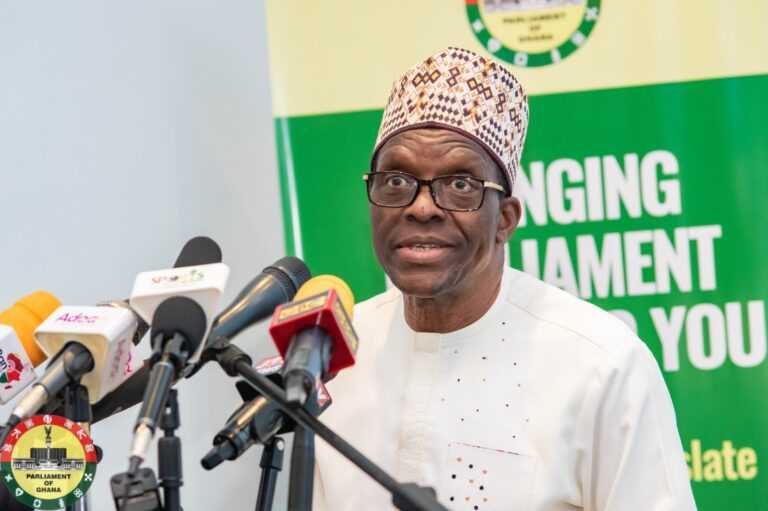
On a Wednesday filled with anticipation at the Political Inclusion and Consensus Building Forum, the Speaker of Parliament, Alban Bagbin, delivered a message tinged with both hope and disappointment. Organized by the African Centre for Parliamentary Affairs (ACEPA), the event was intended to spotlight the path toward greater political inclusion in Ghana. Yet, Bagbin’s remarks cast a shadow over the proceedings. As the Ayawaso East by-election approaches on March 3, Bagbin confessed he had been eagerly waiting for at least one political party to present a woman as its parliamentary candidate. “I was waiting for any party to have fielded a female candidate in the Ayawaso East by-election. I will personally support the candidate because we need more of our women in Parliament. Unfortunately, the parties have disappointed me,” he lamented. Bagbin emphasized that the journey to representation in Parliament begins at the party level. “Political parties are the gateways to representation. Parliament is the arena where representation becomes decision-making. Therefore, inclusion must begin in parties and mature in Parliament,” he said, urging parties to open their doors wider to women and other underrepresented groups. The by-election was called after the unfortunate passing of the sitting MP, Mahama Naser Toure, who died in January while receiving treatment at the Korle Bu Teaching Hospital. Now, five men are vying for the seat: Baba Jamal of the National Democratic Congress (NDC) holds the first spot on the ballot, Ibrahim Iddrisu of the Liberal People’s Party (LPP) is second, and the New Patriotic Party (NPP) candidate, Yussif Baba Ali, is third. Two independent candidates, Alhaji Mohammed Umar Sanda and David Kannor, fill the fourth and fifth positions, respectively. The competition has not been without controversy. The NDC has revoked the membership of Alhaji Mohammed Umar Sanda for contesting as an independent, citing a breach of party rules. As the by-election draws near, Bagbin’s call for greater female participation echoes in the halls of Parliament and beyond, a reminder that true representation starts with bold choices at the party level. Source: Apexnewsgh.com
Dawadawa Is More Than a Seasoning — It Is Heritage in Flavor
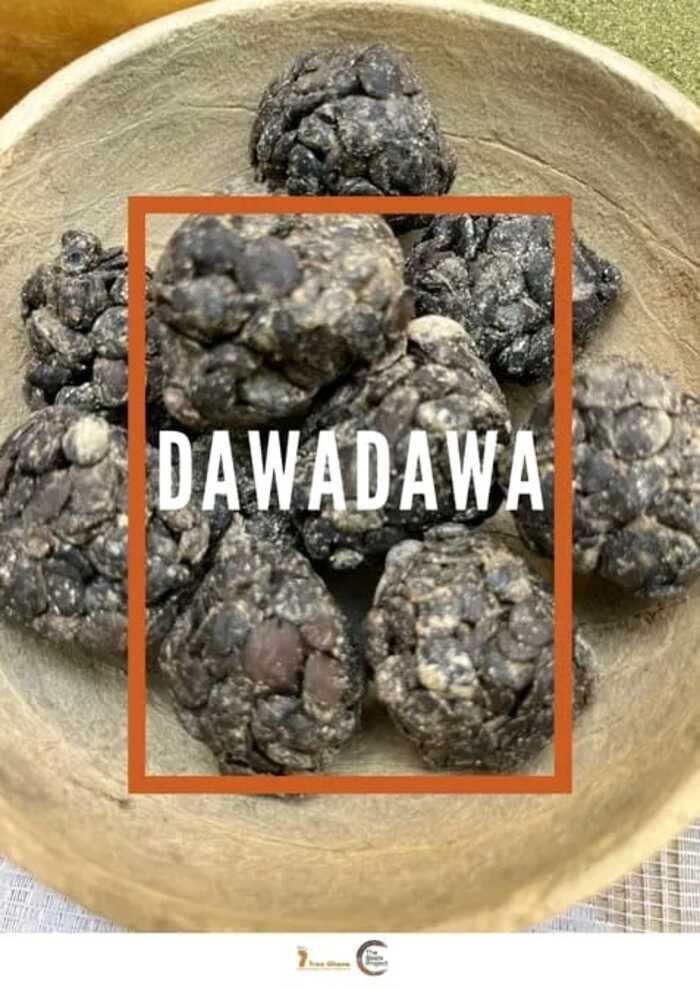
Dawadawa is more than a seasoning. It is memory, nutrition, economy, and sustainability woven together in flavor. In many West African kitchens, there is a defining moment when a pot of soup begins to deepen in character. Onions have softened, peppers have blended into the base, and palm oil or shea butter shimmers with heat. Then comes the quiet but transformative addition — a small ball or paste of fermented locust beans. The aroma shifts instantly, earthy and complex. That unmistakable scent signals something profound: dawadawa has entered the dish. Made from the fermented seeds of the African locust bean tree, scientifically known as Parkia biglobosa, dawadawa has nourished communities across West Africa for generations. Known by different names — iru among the Yoruba, soumbala in parts of the Sahel — it remains one of the region’s most treasured indigenous condiments. Its essence is simple yet powerful: carefully fermented seeds shaped by knowledge passed down through time. The African locust bean tree stands resilient across the savannah landscapes of Ghana, Burkina Faso, Mali, and northern Nigeria. It thrives in dry climates where other crops struggle, offering shade, soil enrichment, and food security. The tree’s long pods contain sweet yellow pulp enjoyed as a snack, but it is the hard brown seeds that become dawadawa. For many rural communities, this tree is not just vegetation; it is livelihood, nourishment, and ecological stability. The tree contributes quietly to sustainable agriculture. It enriches soils through nitrogen fixation, reduces erosion, and integrates naturally into traditional parkland farming systems. Farmers often preserve it within their fields rather than cutting it down, recognizing its value. Long before climate resilience and regenerative agriculture became global buzzwords, West African communities were practicing them through their relationship with this tree. Dawadawa is not simply harvested; it is crafted through labor and patience. The process begins during harvest season when ripe pods are collected. The pods are boiled to soften the pulp and release the seeds. After washing, the seeds undergo hours of cooking to soften their tough coats. Women — often working collectively — remove the seed coats by pounding and washing, a physically demanding task that requires strength and skill. Once cleaned, the seeds are boiled again and then wrapped in leaves or placed in covered containers to ferment naturally over several days. It is during fermentation that transformation occurs. Microorganisms break down complex compounds, producing the deep umami flavor that defines dawadawa. The seeds darken, soften, and develop their characteristic pungent aroma. No artificial additives are required. Time, heat, and microbial life do the work. This fermentation knowledge is rarely written down. It is carried in memory and practice, passed from mothers to daughters and elders to apprentices. Women know by touch, scent, and experience when fermentation is complete. The craft reflects an intimate understanding of natural processes, developed long before modern food science offered explanations. Beyond its distinctive flavor, dawadawa is nutritionally significant. It is rich in protein, making it an essential supplement in communities where access to animal protein may be limited. It contains beneficial fats, calcium, iron, and B vitamins. Fermentation enhances digestibility and increases the availability of nutrients. In households with constrained incomes, a small portion can transform a simple pot of soup into a nutrient-dense meal. In northern Ghana, dawadawa defines beloved soups such as ayoyo and groundnut soup. In Nigeria, iru enriches egusi and ogbono soups. Across the Sahel, soumbala flavors stews served with millet or couscous. Each region shapes and prepares it slightly differently, yet the shared cultural thread remains strong. For many in the diaspora, its aroma evokes childhood kitchens, communal meals, and the steady rhythm of family life. Unlike imported bouillon cubes that increasingly fill market shelves, dawadawa carries no anonymous industrial origin. It carries the story of harvest seasons, of women gathered under shade trees pounding seeds, of conversation and laughter during fermentation days. In this way, it anchors communities to ancestral foodways even as globalization reshapes consumption patterns. Women stand at the center of dawadawa production and trade. Across Ghana’s Upper East, Northern, and Upper West regions, they harvest, process, and sell the condiment in local markets. Income from sales supports households, pays school fees, and strengthens women’s financial independence. The work is demanding, but it is also empowering. On market days, woven baskets lined with leaves display carefully shaped balls of fermented seeds. Buyers inspect texture, inhale aroma, and negotiate prices. Knowledge of quality is shared openly — whether fermentation is adequate, whether moisture levels are right, whether the product will store well. Markets become spaces of both commerce and cultural exchange. Modern discussions about sustainable food systems often emphasize reducing carbon footprints, promoting biodiversity, and strengthening local supply chains. Dawadawa embodies these principles naturally. Its primary ingredient grows locally with minimal external inputs. Production requires no imported chemicals. Distribution typically happens within short distances between producers and consumers. The African locust bean tree supports biodiversity and integrates into agroforestry systems. By preserving the tree, farmers maintain ecological balance. In a world increasingly reliant on long and fragile global supply chains, dawadawa demonstrates the resilience of localized food systems grounded in community knowledge. Yet challenges persist. Urbanization and shifting dietary preferences have led some consumers to favor imported seasonings perceived as more convenient. Younger generations may see traditional processing methods as labor-intensive. Climate change threatens tree populations through prolonged droughts and land degradation. Limited access to improved equipment can also constrain production quality and scalability. Within these challenges lie opportunities. Cooperatives can strengthen bargaining power. Improved packaging and hygiene standards can expand markets while preserving authenticity. Agroforestry initiatives can promote tree conservation and planting. Culinary education can reintroduce youth to the value of indigenous foods. When tradition meets innovation respectfully, resilience grows. Dawadawa’s importance extends beyond nutrition and economics. Food is one of the most enduring carriers of culture. Even as languages evolve and clothing styles change, taste memories remain. Preparing dawadawa teaches patience and cooperation. It honors processes that cannot be rushed without