










GUTA President Blasts Parliament Over Foreign Business Dominance, Warns Politicians Will Feel the Pinch After Office

The President of the Ghana Union of Traders Association (GUTA) has delivered a stinging rebuke to Ghana’s political class, holding both sides of Parliament responsible for what he describes as a systemic failure to protect local businesses from being crowded out by foreign enterprises. Clement Boateng made no effort to soften his message as he addressed members of the Minority Caucus, laying the blame squarely at the feet of successive political administrations across party lines. His central charge: that lawmakers, through inaction and weak oversight, have allowed foreign investors, particularly from China, to entrench themselves in sectors of the economy that were historically the preserve of Ghanaian entrepreneurs. The sectors Boateng identified paint a broad and troubling picture. Retail trade, construction, mining, finance, telecommunications, and small-scale commerce, areas once dominated by indigenous business owners, have, in his view, increasingly fallen under the influence of foreign players. The consequence, he argued, has been the gradual marginalisation of local entrepreneurs who find themselves unable to compete on an uneven playing field. Nowhere has this been more damaging, Boateng suggested, than in the mining sector, where the surge in foreign activity has not only displaced Ghanaians economically but has also wreaked havoc on the environment. He pointed specifically to the contamination of vital water bodies, a crisis that has drawn widespread public concern and underscored the real human cost of unchecked foreign involvement in the industry. The GUTA President also turned his attention to the regulatory frameworks that should, in theory, offer some protection. He singled out the Ghana Investment Promotion Centre Act, which contains provisions safeguarding local participation in certain sectors, but argued that the law exists largely on paper. Weak enforcement, he contended, has rendered these protections meaningless in practice, a failure he attributed to a lack of political will. Perhaps his sharpest warning, however, was directed personally at the lawmakers in the room. Boateng reminded them that many of them are active business people themselves, and cautioned that once they exit public office and return fully to private enterprise, they will be forced to confront the very same challenges they are currently doing so little to address. It was, in effect, a warning that the consequences of their inaction would one day come home to roost. Source: Apexnewsgh.com
Tema Microlight Crash: Lawmakers Demand Transparent Probe, Stronger Aviation Safety Standards
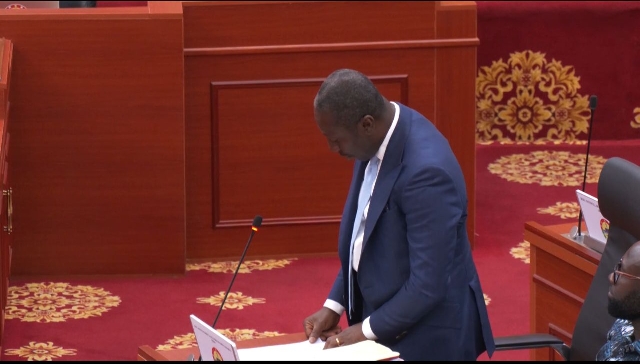
The fatal microlight aircraft crash in Tema that claimed the lives of two brothers has sparked urgent calls from both sides of Parliament, with lawmakers demanding accountability, transparency, and sweeping reforms to aviation safety standards. Leading the charge from the Minority side, Minority Leader Alexander Afenyo-Markin has called for a thorough, transparent, and time-bound investigation into the crash, and has made clear that the findings must not be buried in bureaucratic silence. The Effutu Member of Parliament is insisting that the results of the probe be made public, that aviation safety protocols be comprehensively reviewed and strengthened, and that the bereaved families receive adequate support as they come to terms with their devastating loss. Beyond the immediate tragedy, Afenyo-Markin raised a broader and troubling question: how was a private aircraft permitted to operate over a densely populated area in the first place? His concern points to what he sees as a worrying pattern, noting the recent uptick in aircraft-related incidents and questioning whether existing oversight mechanisms are fit for purpose. On the other side of the aisle, Majority Chief Whip Rockson-Nelson Dafeamekpor echoed the gravity of the moment as he presented a statement on the tragedy. While sharing in the grief over the loss of the two brothers, Dafeamekpor directed his message squarely at those responsible for operating microlight aircraft, urging them to strictly observe maintenance and safety standards to ensure that such a devastating incident is never repeated. Dafeamekpor also called on the Ghana Air Force to step up its engagement with private aircraft owners, stressing the need for a collaborative approach to safety that protects not only pilots but the communities over which these aircraft fly. Both lawmakers agreed on one thing: the incident has left a deep wound, on the bereaved family, and on all those touched by the tragedy. Whether their calls translate into meaningful reform now rests with the relevant authorities. Source: Apexnewsgh.com
NIA Rolls Out Strict New Data Protection Guidelines for Agencies Accessing National Identity Register

Ghana’s National Identification Authority (NIA) has taken a decisive step to tighten control over how personal data is handled across the country, rolling out new guidelines governing the security, storage, and retention of information drawn from the National Identity Register (NIR), effective March 19, 2026. The directive, which targets user agencies, institutions that access the national database in the course of their operations, marks a significant move by the Authority to close gaps in data protection and hold organisations to a higher standard of accountability when dealing with sensitive personal information. The NIA’s authority to issue such guidelines is firmly grounded in law. The new requirements are anchored in the National Identity Register Act, 2008 (Act 750) and its amendment, the National Identity Register (Amendment) Act, 2017 (Act 950), both of which vest the Authority with the mandate to regulate how personal data from the NIR is managed across institutions. At the core of the guidelines is a clear principle: personal data must be securely stored and retained only for as long as it is genuinely needed. Beyond that, the NIA is pushing for a culture shift, one that places responsible data management at the heart of how user agencies operate. The guidelines are also designed to significantly reduce the risk of unauthorised access, misuse, or loss of personal information, while bringing Ghana’s data handling practices in line with both domestic legislation and internationally recognised standards on information security. The timing of the directive reflects a broader strategic push by the NIA to shore up public trust in Ghana’s national identification system. In an era where data breaches and privacy concerns are increasingly in the spotlight globally, the Authority appears determined to ensure that the NIR, which holds some of the most sensitive personal information of Ghanaian citizens, is treated with the highest level of care. User agencies have been put on notice: compliance with the new requirements is not optional. The NIA has signalled that it will be intensifying its oversight of how personal information from the National Identity Register is handled, leaving little room for institutions to fall short of the standards now expected of them. Source: Apexnewsgh.com
MTN Ghana Launches Game Changing Sim Swap Self-Service – Customers Swap Anytime, Anywhere
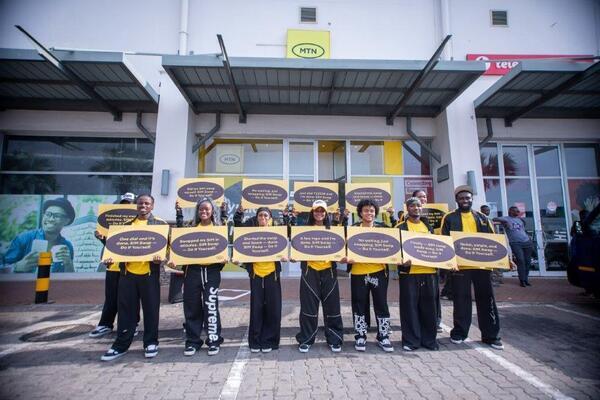
In its commitment to delivering convenient, secure and innovative digital solutions for customers, MTN Ghana has launched Sim Swap Self-Service. This innovative solution empowers customers to replace their SIM cards whenever and wherever they may be, eliminating the need to visit a physical service centre for assistance. The launch was held simultaneously across six locations, Accra, Kasoa, Koforidua, Kumasi, Ho and Tamale, demonstrating MTN’s commitment to digital transformation and enhancing customer experience. Speaking at the event, Jemima Kotei Walsh, the Chief Customer Experience Officer of MTN Ghana, shared the vision behind the new self-service SIM swap initiative. She underscored MTN’s dedication to harnessing technology for customer empowerment, describing the launch as a milestone that would reshape how customers interact with their mobile services. She explained that, for years, SIM swaps meant a trip to a service center or an online request that required assistance. Now, however, MTN Ghana is proud to enable customers to complete this vital service on their own, conveniently, securely and wherever they happen to be. “The need for SIM swaps has always been high, with MTN Ghana handling roughly 250,000 of such requests each month across its service centers. The self-service will ease these burdens by reducing lines, waiting times and giving customers more control and flexibility over their accounts. Before the full rollout, a pilot program had already demonstrated the value of the initiative with more than 18,000 customers successfully swapping their SIMs independently or with very little help at MTN branches. This success was more than just numbers, it was proof of digital empowerment and a shining example of customer-driven innovation in action,” she added. Beatrice Hemen, Director of Consumer Affairs at the National Communications Authority (NCA), praised the new solution, emphasizing that telecom users frequently report SIM swap concerns. “The Authority consistently receives a significant number of SIM swap-related complaints. Empowering customers to handle the process themselves marks a major step forward,” she commented. She added that the initiative will give customers greater choice and help shape Ghana’s telecommunications ecosystem. Commenting on the innovative Sim Swap Self-Service, the Chief Executive Officer of MTN Ghana, Mr. Stephen Blewett, stated that MTN continues to drive forward its vision for a dynamic digital future and remains dedicated to developing innovative solutions that consistently exceed customer expectations and enhance their daily experiences. The SIM Swap Service offers a range of advantages for customers. Users can conveniently swap their SIM cards at any time, saving valuable time and effort. Whether a device is lost, stolen, or damaged, the service allows for quick replacement, even for individuals located outside Ghana. It ensures rapid restoration of mobile services with little interruption, provides robust security through digital authentication and empowers customers to manage their accounts independently, eliminating reliance on service center staff. Security is a fundamental aspect of this innovation. The self-service SIM swap platform incorporates state-of-the-art biometric facial recognition, guaranteeing that only the legitimate owner can carry out the swap. This technology significantly reduces the risk of fraud and shields customers from threats posed by forged or compromised identification cards. Attendees witnessed a live walkthrough of the self-service SIM swap, demonstrating how users can complete the process seamlessly through MTN’s digital platforms, either via the myMTN App or by USSD dialling *1333#. This digital approach replaces traditional manual checks with a secure biometric facial-recognition scan that verifies the user against their registered SIM information, ensuring both ease and security. The event wrapped up with a lively, coordinated display featuring placards that illustrated each step of the SIM swap process, visually emphasizing how straightforward and effortless the new service is for customers. Source: Apexnewsgh.com