



GEXIM@10: Ghana Braced for Oil and Gold Price Swings, BoG Governor Assures
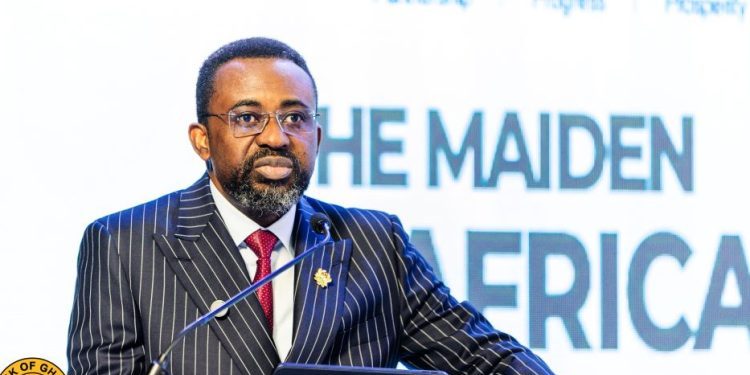
Dr. Johnson Asiama has highlighted Ghana’s preparedness to withstand global commodity shocks, emphasizing the critical role of reserves in safeguarding economic stability. Addressing delegates at the 10th Anniversary International Conference of the Ghana Export-Import Bank in Accra on Wednesday, March 25, Bank of Ghana Governor Dr. Johnson Asiama delivered a measured but candid assessment of the country’s economic vulnerabilities and the defences being built against them. At the heart of his remarks was a familiar challenge: Ghana’s fortunes remain deeply tied to the unpredictable rhythms of global commodity markets. Oil and gold, the twin pillars of the country’s export earnings, are subject to forces largely beyond its control, and Dr. Asiama made no attempt to downplay that reality. “Ghana is exposed to fluctuations in global commodity prices, particularly oil and gold, which make up a significant portion of our export earnings,” he acknowledged. But the Governor was equally clear that exposure does not mean vulnerability. The strategy, he explained, has been deliberate and forward-looking, centred on building reserves robust enough to absorb external shocks and keep the economy on an even keel when global markets turn hostile. “Our strategy is to ensure that we are prepared, building reserves that can absorb shocks and sustain the economy through uncertain times,” he said. “This level of reserves gives us some distance to navigate potential crises, but we must remain vigilant.” That note of vigilance was not incidental. Dr. Asiama went on to flag a scenario that keeps policymakers up at night — the prospect of simultaneous shocks hitting multiple commodity sectors at once. Ghana’s buffer strategy partly relies on one sector compensating for weakness in another, but that calculation has its limits. “We are hopeful that one sector, like gold, may offset the impact from another, such as oil. However, prolonged volatility could challenge our ability to maintain economic gains,” he cautioned. It was a frank admission that even a well-prepared economy has a ceiling on how much pressure it can absorb, and a reminder that the work of building resilience is never truly finished. The Governor’s address came at a symbolically fitting moment. The Ghana Export-Import Bank’s decade-long journey has unfolded against a backdrop of global economic uncertainty, and Dr. Asiama’s remarks reinforced a broader message: that prudent fiscal and monetary planning is not merely good practice, it is Ghana’s first and most important line of defence in a world where commodity shocks can arrive without warning and linger without mercy. Source: Apexnewsgh.com
IES Sounds Alarm: Ghana’s Power Sector Drifting Into Dangerous Territory
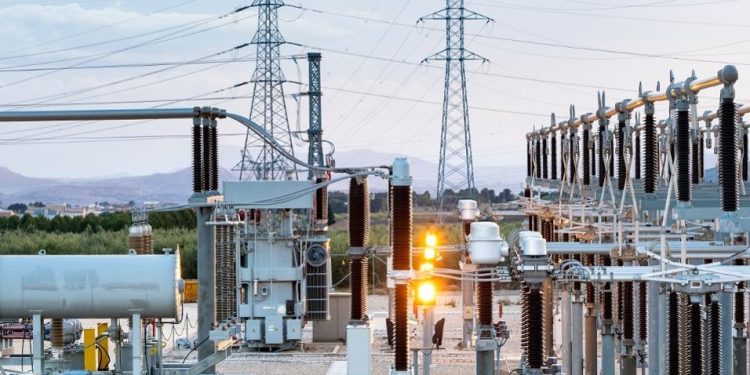
Ghana’s power sector is edging into a “higher-risk zone” as rising electricity demand continues to outstrip critical investments in transmission infrastructure. Ghana’s power sector is drifting into dangerous territory, and the alarm is growing louder. As electricity demand climbs on the back of stronger economic activity and rising household consumption, the infrastructure meant to carry that power across the country is struggling to keep pace. The result, analysts warn, is a system under mounting stress, and one that may not hold if urgent action is not taken. That is the sobering assessment of the Institute for Energy Security (IES), whose latest analysis paints a picture of a grid buckling under the weight of its own growth. Peak demand has now surpassed 4,280 MW, a figure that reflects a busier, more energetic economy, but the transmission network has not grown with it. “The system is increasingly characterised by congested transmission corridors, rising technical losses, overloaded infrastructure, and ageing, obsolete equipment,” the IES analysis noted, warning that these combined pressures “pose a direct threat to grid stability, system reliability, and the efficiency of power delivery.” In plain terms: Ghana’s power system is entering a higher-risk zone, and without timely intervention, supply shortfalls, especially during peak demand periods, are no longer a distant possibility. The economic stakes could hardly be higher. A power sector riddled with inefficiencies drives up operational costs for businesses, erodes industrial productivity, and slows economic growth. For a country with ambitious development targets, an unreliable grid is not just an inconvenience; it is a structural liability. The IES is not merely sounding the alarm. It is also offering a roadmap out. The think tank is calling on government, regulators, and development partners to treat transmission network reinforcement as a matter of national strategic importance. The proposals it has put forward are wide-ranging and technically specific, but they share a common thread: the grid needs to be modernised, expanded, and made more resilient, now, not later. At the heart of the recommendations is the need to upgrade existing transmission infrastructure with high-capacity conductors to ease system overloading and reduce technical losses. Alongside this, the IES is pushing for the development of additional high-voltage transmission circuits to boost bulk power transfer across the grid and shore up supply to major load centres, particularly when demand peaks. Reinforcing key transmission corridors is also on the list, to create alternative power flow paths and reduce the risk of single-point failures that could cascade into wider outages. Investments in reactive power compensation, the think tank adds, would improve voltage stability and support the integration of renewable energy sources, an increasingly important consideration as Ghana looks to diversify its energy mix. The replacement of ageing transformers and substation equipment, the IES argues, has become non-negotiable. These are the bottlenecks quietly undermining system reliability, and clearing them is essential to meeting modern technical standards. Expanding transformation capacity at critical nodes would not only accommodate growing demand but also build in the redundancy needed for a more stable supply. Reducing both technical and commercial losses across the network is equally critical, improving transmission efficiency and making power delivery more cost-effective for consumers and operators alike. Finally, the IES points to the untapped potential of stronger regional interconnection. Boosting cross-border electricity trade would not only improve Ghana’s competitiveness in the West African power market but also open the door to generating revenue through electricity exports. The message from the Institute is unambiguous: the decisions made today about transmission infrastructure will shape the reliability and competitiveness of Ghana’s power sector for decades to come. “Decisive action is not optional,” the IES stated. “It is imperative.” Source: Apexnewsgh.com
Galamsey Fight: NAIMOS Cries Out for Vehicles, Funds to Sustain Operations
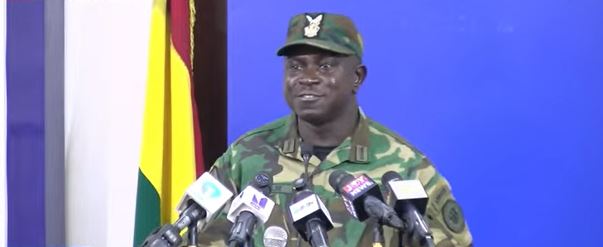
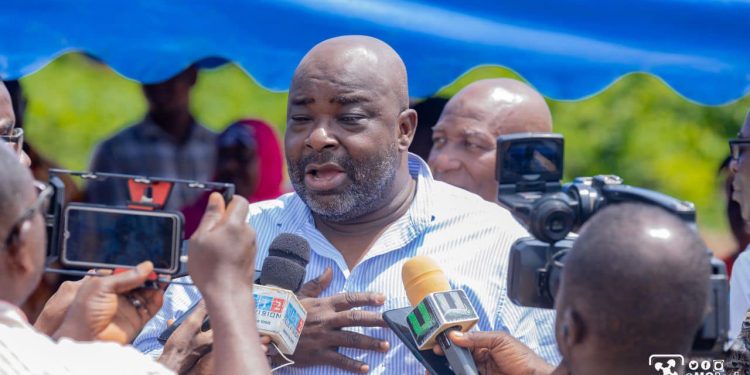
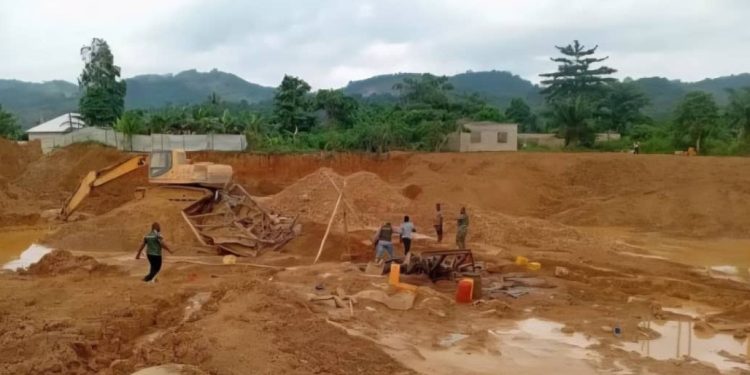
The National Anti-Illegal Mining Operations Secretariat has called for increased logistical and financial support to strengthen its operations against illegal mining. The men and women fighting Ghana’s galamsey menace need more than resolve; they need resources. That was the candid message from Col. Dominic Buah, Director of Operations at the National Anti-Illegal Mining Operations Secretariat (NAIMOS), as he addressed journalists at the Secretariat’s Editors’ Forum and Quarterly Press Briefing on Wednesday, March 25. Standing before the gathering, Col. Buah did not mince words. The fight against illegal mining, he made clear, is being waged with one hand tied behind its back. Operational vehicles are in short supply, funds are stretched thin, and the tools needed to sustain the campaign in the field are simply not enough. “We need vehicles, we need money, we need all the resources,” he said plainly. His appeal was directed not only at the government but at the private sector and civil society as well. Col. Buah urged corporate organisations and non-governmental bodies to step in and fill the gap, offering a straightforward incentive: public recognition. “Corporate bodies who want to support, why not? We will acknowledge you and then make it known to the whole nation,” he said, framing contributions as both a patriotic duty and an opportunity for goodwill. But the briefing was not all about stretched budgets and resource gaps. Col. Buah had a sharper message for a different audience, the illegal miners themselves. NAIMOS’s operations in the field have not gone unchallenged. In several mining communities, anti-galamsey task force members have met with resistance, raising serious concerns about the safety of personnel on the ground. Col. Buah addressed this directly and without ambiguity. He warned that his operatives would not stand down in the face of armed confrontation. The Secretariat’s personnel, he stressed, are trained, equipped, and prepared to defend themselves, and anyone who tests that readiness will face the full consequences. “We will not stand and watch anyone use weapons against us. We are better trained in weapons and therefore warn that anybody who dares, NAIMOS will deal with them ruthlessly,” he declared. He pressed the point further, leaving no room for misinterpretation: “It is a problem we are trying to address, and we have the right to self-defence, and let no galamseyer miss that. If you go to the field with weapons and you try to fire them, a lot more will be at you.” The message from NAIMOS on Wednesday was twofold: a hand extended to potential partners and a firm warning to those who would stand in the way of the law. The Secretariat is asking for help, but it is also making clear it will not be intimidated. Source: Apexnewsgh.com
ECOWAS Court Saves AG From Deadline Miss in Torkonoo Rights Battle
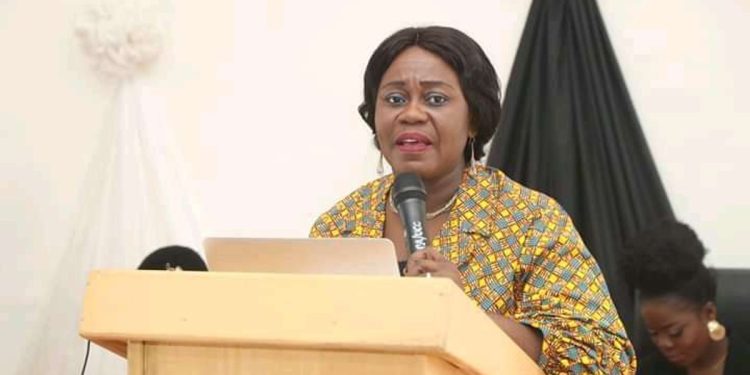
The ECOWAS Community Court of Justice has granted an application by Deputy Attorney-General Dr Justice Srem Sai to regularise a defence filed out of time in a human rights case brought by former Chief Justice Gertrude Torkonoo. When former Chief Justice Gertrude Torkonoo found herself removed from office under Article 146 proceedings of Ghana’s 1992 Constitution, she did not go quietly. Convinced that the process had trampled on her fundamental human rights, she took her fight to the Human Rights Court. But the battle did not end there. Following her subsequent dismissal, Justice Torkonoo carried her case further, this time to the ECOWAS Community Court of Justice, amending her application to challenge not just her suspension, but her outright removal from the bench. The ECOWAS court had earlier allowed that amendment, though not without resistance. The Attorney-General objected, but the court overruled those objections and directed the state to file its defence within 30 days. It was a clear instruction with a firm deadline, March 1, 2026. The Attorney-General’s office, represented by Deputy Attorney-General Dr Justice Srem Sai, missed it. When the defence was eventually filed, it arrived late, accompanied by a quiet appeal to the court’s discretion to admit it anyway. Justice Torkonoo’s counsel was having none of it. They argued that the filing was out of time, that no formal application for an extension had ever been made, and urged the court to strike out the defence entirely. Dr Srem Sai pushed back. His position was that the state had never been properly served with the court’s directive in the first place, that the Attorney-General’s office had been in the dark about the timeline until a hearing notice landed on their desk. Once aware, he told the court, the defence was filed without delay, even with a public holiday interrupting the process. He appealed to the court to act in the interest of justice. The court was not entirely persuaded by that reasoning. It pointed out that under common law practice, counsel who are present in court when an order is delivered are deemed to have notice of it, no separate service required. It also noted that the proper course of action would have been to file a formal application for an extension of time, not simply attach a request to the late defence. Counsel for Justice Torkonoo pressed the point further, reminding the court that the directive had been issued in the presence of the Attorney-General’s own representatives, making any claim of ignorance difficult to sustain. Yet, in a notable turn, Justice Torkonoo’s legal team stopped short of opposing the state’s oral request for an extension. They asked only that, should the court grant it, they be given the opportunity to file a response. In its ruling, the ECOWAS Community Court of Justice granted the extension of time, admitted the state’s amended defence, and gave Justice Torkonoo’s side seven days to file their reply. The procedural battle has been settled, for now. The deeper fight over the former Chief Justice’s removal from office continues. Source: Apexnewsgh.com