




Ghana Eyes GH₵15.23 Billion From Home: Government Lays Out Ambitious Domestic Borrowing Plan

The government is not looking abroad for this one. In a structured and deliberate push to fund its 2026 budget and keep its debt obligations in check, Ghana is turning to its own domestic market, and it is going in big. Between March and June 2026, the government plans to raise GH₵15.23 billion from the domestic market, according to an issuance calendar published by the Bank of Ghana. The plan is detailed, purposeful, and sends a clear message: the government intends to finance its ambitions from within, while simultaneously bringing order and predictability to a market that has weathered significant turbulence in recent years. The funds, once raised, will serve a dual purpose, refinancing existing debt that is coming due and providing the financial fuel needed to keep the 2026 budget running. The targets are anchored in the Net Domestic Financing framework outlined in the 2026 Budget Statement and Economic Policy, giving the exercise both structure and accountability. For everyday investors and market participants, the mechanics are familiar. The government will continue its weekly issuance of 91-day, 182-day, and 364-day treasury bills through the primary auction market, short-term instruments that have long been a staple of Ghana’s domestic borrowing toolkit. But this time, authorities are signalling a deliberate shift in strategy. Consistent with its broader debt management goals, the government is actively seeking to wean itself off short-term borrowing. In its place, medium- to long-term bonds will be scaled up, a move designed to reduce rollover risk, extend the maturity profile of Ghana’s debt, and build a more stable foundation for public finance. Bond issuances, however, will not begin immediately. The Bank of Ghana noted that it will commence only after restrictions tied to the Domestic Debt Exchange Programme (DDEP) expire, with settlement expected within two working days of each transaction. The DDEP, which reshaped Ghana’s domestic debt landscape, continues to cast a long shadow, but the government appears intent on moving forward carefully and within agreed boundaries. To further strengthen the market, the government also plans to reopen existing instruments. The strategy is aimed at boosting liquidity in the secondary market and helping to build out benchmark yield curves, technical tools that give investors a clearer picture of interest rate expectations across different time horizons. Taken together, the issuance calendar is more than a borrowing schedule. It is a statement of intent. The government has reaffirmed its commitment to transparency and predictability in the domestic debt market, signalling to investors that they can plan ahead with greater confidence. For a country that has spent recent years navigating one of the most difficult debt restructuring episodes in its history, the structured calendar represents a step toward stability, a sign that Ghana is not just borrowing, but borrowing with a plan. Source: Apexnewsgh.com
Finish What Was Started: Akufo-Addo Calls on Government to Complete Agenda 111 Hospitals
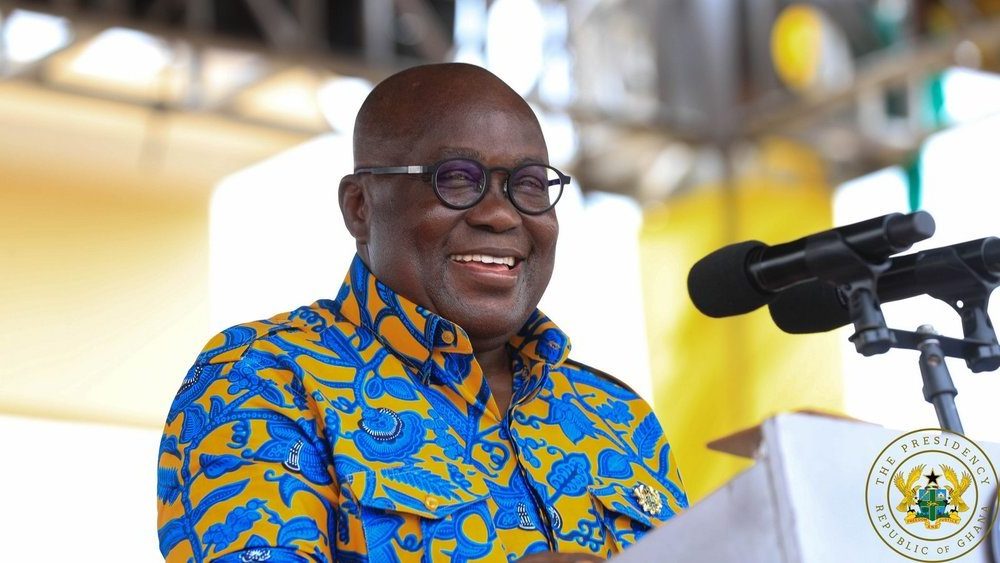
The launch of the Kyebi Government Hospital’s centenary celebrations over the weekend became more than a milestone event. It became a platform for an urgent national conversation about the state of Ghana’s healthcare infrastructure, and the fate of 111 hospitals that remain unfinished. Former President Nana Addo Dankwa Akufo-Addo, whose administration launched the ambitious Agenda 111 initiative to construct hospitals across all 111 districts in Ghana, used the occasion to make a direct appeal to the current government: complete the hospitals. Not for political credit, he urged, but for the people who need them. “We must also be honest, not every project was realised, not every project was completed,” the former president acknowledged, with a candour rarely heard in political circles. “At some facilities, we reached advanced stages that could not be finished before our term ended. Agenda 111 must be continued. Continuity, not disruption, is how health systems succeed.” It was a moment of rare self-reflection, paired with a clear call to action. Healthcare, Akufo-Addo stressed, must never become a casualty of political rivalry. But while the former president looked outward to the unfinished hospitals scattered across the country, the Overlord of Akyem Abuakwa State, Osagyefuo Amoatia Ofori Panin, turned attention to the very ground they stood, a hospital that has served the community for a hundred years, and yet still lacks the basic tools of modern medicine. “I am not the only one frustrated, but the nurses and doctors over there are equally frustrated,” the Overlord said, his voice carrying the weight of decades of unmet expectations. “100 years later, there is no scan machine in Kyebi Hospital, there is no quality laboratory in Kyebi Hospital.” His words painted a sobering picture: a facility old enough to have witnessed a century of Ghanaian history, still struggling to provide the standard of care its patients deserve. Osagyefuo Ofori Panin called on all stakeholders to rally around the hospital and invest in its transformation. Inside the wards, the situation is even more telling. The Medical Superintendent of the Kyebi Government Hospital, Dr. Isaac Adu-Opoku Antwi, revealed that children and pregnant women are currently sharing the same ward spaces, a reality that, he said, is directly undermining the quality of care being delivered. He made a pointed appeal to government for the construction of a dedicated maternity block, a children’s ward, a physiotherapy unit, and residential accommodation for health workers. Taken together, the voices that rang out at Kyebi over the weekend told a single, consistent story: Ghana’s healthcare system is crying out for investment, completion, and political will. The Kyebi Government Hospital turns 100 this year. The question now is what the next chapter will look like, and whether those in power will answer the call. Source: Apexnewsgh.com
Tragedy at Accra Newtown: School Building Collapse Kills Three, GES Orders Students to Stay Home

The school bells will not ring at Accra Newtown Experimental D/A School, not for now, and not until it is safe. A devastating building collapse at the institution has claimed three lives, left twenty people seriously injured, and sent shockwaves through the education community, prompting the Ghana Education Service (GES) to issue an immediate directive: students must stay away. The tragedy, which has cast a dark shadow over the school and its surrounding community, has also reignited urgent questions about the state of school infrastructure across the country, questions that authorities can no longer afford to answer slowly. On Monday, March 30, 2026, the Director-General of GES, Prof. Ernest Kofi Davis, visited the scene for a briefing with security officials before speaking to Citi News. His message was measured but firm. An emergency meeting, he confirmed, would be convened to determine the path forward. Until the remaining structures can be thoroughly assessed and declared safe, no student will be permitted on the premises. “We are going to work with the regional and the national team,” Prof. Davis said. “We will work with the estate department to ensure that the other structure is indeed fit for that purpose. If they are not, we will advise the students not to go into such areas.” The caution is well-founded. With one building already reduced to rubble and lives already lost, the priority now is ensuring that what remains standing does not become the next hazard. GES says it will work closely with its estate department to carry out urgent structural assessments before any decision is made about resuming academic activities. Beyond the immediate grief and disruption, the collapse at Accra Newtown has exposed a deeper, more troubling reality: the fragile condition of school buildings that thousands of Ghanaian children walk into every day. For many, the tragedy is not just a story about one school. It is a warning about many others. As the investigations and assessments get underway, families are left mourning, students are left in limbo, and the nation is left confronting an uncomfortable truth: the infrastructure meant to educate Ghana’s children must also be safe enough to protect them. Source: Apexnewsgh.com
No Tomatoes, Big Trouble: How Burkina Faso’s Export Ban Is Squeezing Ghana

Walk into any Ghanaian kitchen and you will almost certainly find tomatoes. They are the backbone of soups, stews, and sauces, a quiet but indispensable pillar of daily life. Now, that pillar is under threat, and the consequences could ripple far beyond the kitchen. Ghana is grappling with renewed economic pressure after Burkina Faso indefinitely suspended fresh tomato exports to the country, a decision that has laid bare just how deeply Ghana depends on its northern neighbour for one of its most consumed agricultural commodities. Between 70 and 80 percent of Ghana’s tomato supply comes from Burkina Faso, a trade relationship valued at approximately $400 million annually. When that tap is turned off, the effects are swift and far-reaching. The issue came into sharp focus at the 14th WTO Ministerial Conference in Yaoundé, where Ghana’s Minister for Trade, Agribusiness and Industry, Elizabeth Ofosu-Adjare, held bilateral talks with the Burkinabè Ambassador on the sidelines of the summit. The conversation was frank. The suspension, the Minister made clear, is not a minor inconvenience, it is a major economic concern. Madam Ofosu-Adjare warned that the disruption threatens far more than food supply. A prolonged shortage of tomatoes, she cautioned, could trigger price hikes, stoke inflationary pressures, and strain the budgets of ordinary Ghanaian households already navigating a difficult economic climate. Agro-processing businesses that depend on tomato supply would also feel the pinch, and livelihoods across the entire value chain hang in the balance. Burkina Faso, for its part, framed the suspension not as an act of hostility, but as a calculated industrial policy. The Burkinabè delegation explained that the export ban is designed to feed raw materials into newly established tomato processing factories at home, a strategy aimed at retaining value domestically and accelerating industrial growth. In short, Burkina Faso is doing what many developing nations aspire to do: processing its own produce rather than exporting it raw. For analysts watching the situation, the crisis is less a surprise and more a long-overdue wake-up call. Ghana’s heavy reliance on external sources for key agricultural commodities has always carried risk. The suspension, they argue, only makes the urgency more visible, and more costly. The country must invest seriously in irrigation infrastructure, boost local tomato production, and build out agro-processing capacity if it is to reduce its vulnerability to exactly these kinds of external shocks. Despite the tension, both countries left the Yaoundé talks with their diplomatic ties intact. They reaffirmed their commitment to strong bilateral relations and pledged to work toward a mutually beneficial resolution. Ghana is expected to intensify engagement with Burkina Faso while simultaneously exploring alternative supply sources and accelerating efforts to grow more at home. For Madam Ofosu-Adjare, the stakes could not be clearer. Resolving the impasse, she stressed, is not simply a matter of trade policy, it is about safeguarding Ghana’s economic stability and food security. The tomato is small. The problem it has revealed is not. Source: Apexnewsgh.com
Audit Bites Back: Rans Logistics Returns GH₵19.1 Million to the State
One week after Ghana’s Auditor-General released a damning special report flagging a string of financial infractions, one of the companies at the centre of the controversy quietly did what many thought might take months: it paid up. Rans Logistics, a firm cited for overpayments tied to grain transportation contracts and the mysterious disappearance of thousands of tonnes of rice and maize, has refunded GH₵19.1 million to the state. The swift repayment came before investigators had even wrapped up their work, sending a clear signal that the audit was drawing blood. Deputy Finance Minister Thomas Nyarko Ampem broke the news on Monday, March 30, 2026, while appearing before Parliament’s Public Accounts Committee (PAC), which is currently scrutinising the audit’s findings. Standing before the committee, he walked them through the timeline with quiet satisfaction. “On March 10, I presented the findings of the audit to Parliament,” he said. “Exactly a week later, on March 17, one of the companies identified, Rans Logistics, has gone ahead to refund GH₵19.1 million to the state.” But the refund, significant as it is, does not close the chapter on Rans Logistics. The Deputy Minister revealed that the audit had also uncovered that the company was paid for more than 7,000 metric tonnes of rice that were never accounted for, grain that, on paper, simply vanished. “We are expecting the value of these 7,000 metric tonnes of rice to be reimbursed as well,” Nyarko Ampem told the committee. “The Attorney General is working with his team to recommend the right course of action for all identified infractions.” For the Deputy Minister, the episode is proof that accountability mechanisms can work, and work fast, when applied with intent. The audit, he stressed, was never about punishment for its own sake. It was about protecting the public purse. “This example shows the importance of the audit,” he said. “It was intended to protect state resources, and it is already beginning to achieve its purpose.” As Parliament’s PAC continues to dig into the full scope of the Auditor-General’s report, the Rans Logistics repayment stands as an early, and telling, result. The investigation is far from over, but the message to other flagged entities is already written on the wall. Source: Apexnewsgh.com
Ketu North MP Meets Over 600 Youths Failed by Security Recruitment, Promises Support
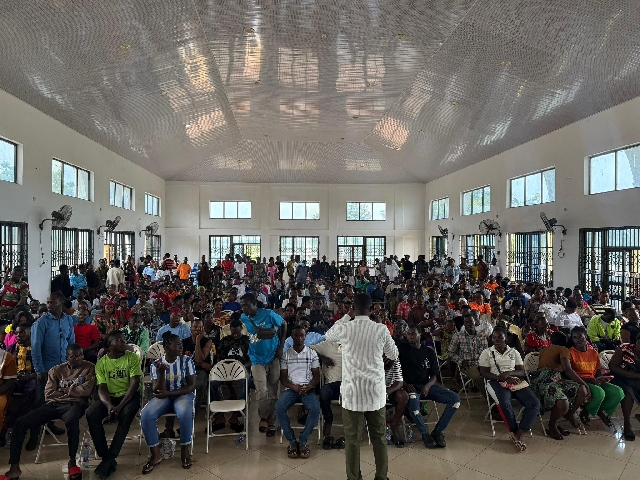
The Member of Parliament for Ketu North, Edem Agbana, has convened a meeting with more than 600 young constituents who applied to join various security agencies but were unsuccessful in their bids for enlistment. The engagement, held on Sunday, brought together the affected applicants in what the MP described as a deliberate effort to offer encouragement and a sense of direction to those left disheartened by the recruitment process. Mr. Agbana disclosed that the meeting was driven by the emotional toll the failed applications had taken on many of the youth, several of whom had reached out to him personally, expressing deep concern about their futures. For many, he noted, joining the security services represented far more than a career choice; it was seen as a vital lifeline out of unemployment and poverty. Addressing the gathering, the MP urged the young people to resist despair and remain open to alternative pathways, while also taking time to respond to their concerns and questions surrounding the recruitment exercise. He shed light on the highly competitive nature of the process, pointing out the stark reality that authorities are often tasked with selecting around 10,000 recruits from a national pool of over 500,000 applicants. Beyond words of encouragement, the meeting took a practical turn as discussions shifted toward identifying tangible opportunities for the youth. Employment prospects and entrepreneurship, particularly in agriculture and small-scale businesses, featured prominently in the conversation. In a bid to turn engagement into action, Mr. Agbana revealed plans to establish a database of the applicants, which would serve as a tool for connecting them with job openings as they emerge. He called on individuals and organisations with employment opportunities to partner in supporting the youth. The MP also extended an assurance to those with entrepreneurial ambitions, pledging to offer assistance where he is able. While acknowledging that unemployment remains one of the country’s most pressing challenges, Mr. Agbana expressed cautious optimism, voicing confidence that ongoing government initiatives will help broaden economic opportunities and drive job creation across both the public and private sectors. Source: Apexnewsgh.com
Ghana’s Foreign Ministry Rallies Staff to Welcome Minister After Historic UN Victory
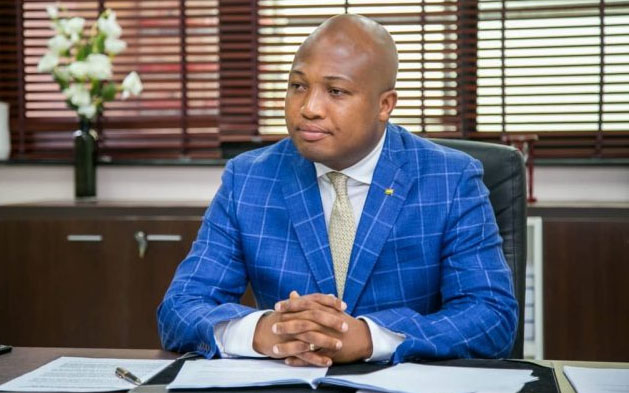
The Ministry of Foreign Affairs and Regional Integration has directed all directors and staff to gather at the Accra International Airport to receive the Minister for Foreign Affairs, Samuel Okudzeto Ablakwa, as he returns home from a landmark diplomatic mission. According to an official circular issued by the Ministry, Minister Ablakwa is expected to touch down from New York, United States, on Monday, March 30, 2026, at 6:45 a.m. He will be received at the airport’s VIP Lounge, where assembled staff are expected to extend a warm welcome befitting the occasion. The homecoming comes on the heels of a significant diplomatic achievement — Ghana’s successful leadership in steering the adoption of a historic resolution at the United Nations General Assembly (UNGA). The resolution formally recognises the trafficking of enslaved Africans and racialised chattel enslavement as the gravest crime against humanity, a milestone celebrated as a triumph for Ghana and the broader African world. The Ministry underscored the importance of the occasion in its circular, urging directors to make their presence felt as a show of solidarity and appreciation for the Minister’s efforts on the world stage. The directive was issued by Divina A. Seanedzu, Director of Human Resource and Administration at the Ministry, who called for full cooperation from all invitees. Copies of the circular were also forwarded to the Chief Director, Coordinating Directors, and the Head of the Delivery Unit, ensuring the message reached all relevant stakeholders ahead of the Minister’s arrival. Source: Apexnewsgh.com