





The Untold Story of Tema Oil Refinery’s Remarkable Turnaround
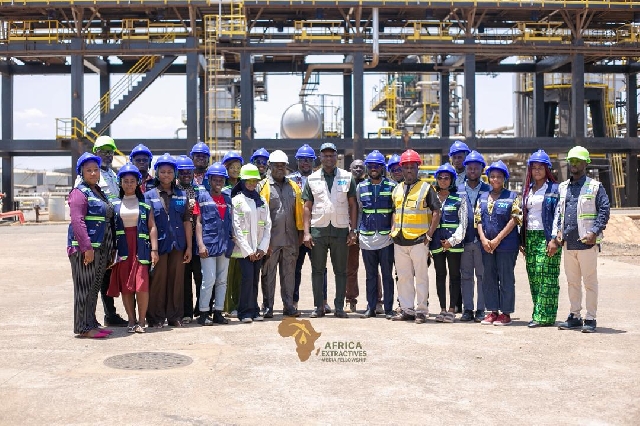
Not long ago, Ghana’s Tema Oil Refinery (TOR) was a shadow of its former self, debt-ridden, operationally crippled, and hemorrhaging talent. Today, its furnaces are burning again. But the man who helped turn the tide says the journey back from the brink was anything but straightforward. Edmond Kombat, Managing Director of TOR, offered a candid and at times sobering account of the refinery’s recent history during an engagement with fellows of the African Extractive Media Fellowship (AEMF), describing the state of the institution before its revival as “depressing” and nearly beyond recovery. Kombat traced the refinery’s descent from a relatively stable footing in 2016 to what he characterised as a near-collapse by 2024. At the heart of the crisis was a debt burden that had once been brought under control, reduced from $650 million to approximately $300 million before 2017, only to balloon again to around $517 million in the years that followed. The financial deterioration was accompanied by operational shutdowns, poor maintenance, and mounting liabilities across the board. The scale of the financial obligations was staggering. TOR had accumulated significant debts to the Ghana Revenue Authority, the Electricity Company of Ghana (ECG), Ghana Water, and various staff-related funds. Years of unaudited accounts and massive cumulative losses compounded the institutional rot. On the ground, the physical infrastructure told an equally grim story: 17 storage tanks were out of service, and key processing plants sat idle. Beyond the balance sheet, Kombat painted a picture of an institution hollowed out from within. Internal divisions, low staff morale, and a high attrition rate saw skilled workers depart for opportunities in the Middle East and at larger facilities such as the Dangote Refinery. “The place was so depressing that it almost looked like there was no way out,” he admitted. Rather than waiting for a government bailout, management took a different approach upon assuming leadership, one focused on internal reform and rebuilding trust from the ground up. Central to this effort was addressing the human resource grievances that had long festered within the institution. Over 300 staff petitions were reviewed, resulting in promotions and salary adjustments designed to restore confidence and reignite productivity. With limited financial capacity, TOR turned to unconventional revenue strategies to keep the lights on. The refinery extended its operational hours, attracted regional clients — including Burkina Faso — for petroleum storage services, and worked to rebuild confidence among private petroleum service providers. According to Kombat, these measures helped stabilise revenue streams and provided the foundation for initial restoration works. The clearest sign that TOR’s recovery was real came on December 19, 2025, when the refinery resumed refining operations after years of inactivity — a milestone that few had believed possible just months earlier. In a testament to the capability of its workforce, the primary processing unit, known as the Crude Distillation Unit (CDU), was successfully restored by in-house engineers without any external technical support. Work is now ongoing to rehabilitate the secondary processing unit, the Residual Fluid Catalytic Cracker (RFCC), which is expected to further enhance output and product value once operational. The rebuilding effort has extended to critical infrastructure across the refinery. Storage tanks are being rehabilitated, the loading gantry is being modernised, and a recruitment drive is underway to address an ageing workforce. To date, over 400 temporary workers and 300 permanent staff have been engaged as part of the recovery phase. Kombat was emphatic about the strategic importance of TOR to Ghana’s energy security. The refinery holds a unique position in the national petroleum supply chain, it is one of the few facilities capable of producing aviation fuel and premix fuel, and boasts storage capacity estimated at one million metric tonnes, with connections to key national and regional supply routes. Allowing such an asset to fall into irreversible disrepair, he warned, could have serious consequences, especially in an era of heightened geopolitical tensions that continue to disrupt global oil markets. Yet for all the progress made, Kombat was careful not to overstate where TOR stands today. “We are just scratching the surface,” he said, stressing that the refinery’s recovery remains in its early stages and that continuity in both management and policy direction will be essential to consolidating the gains achieved so far. The story of TOR’s revival is still being written, but for the first time in years, it appears to have a fighting chance at a different ending. Source: Apexnewsgh.com
Ghana’s 24-Hour Economy Authority and NPA Sign MoU to Drive Round-the-Clock Petroleum Operations
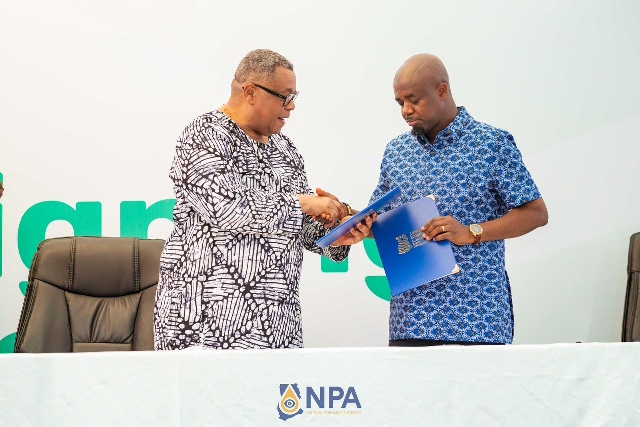
Ghana has taken a significant step toward operationalising its 24-hour economy agenda, with the 24-Hour Economy Authority and the National Petroleum Authority (NPA) signing a Memorandum of Understanding (MoU) to expand round-the-clock operations across the country’s downstream petroleum sector. The agreement was signed in Accra on March 31, 2026, establishing a formal framework for operational readiness, security coordination, and institutional collaboration, all in service of the government’s broader economic transformation agenda. Under the terms of the MoU, the NPA will take the lead in developing and enforcing operational standards for 24-hour activities across the petroleum value chain. These standards will span a wide range of areas, including lighting, security, staffing, digital fuel monitoring, and fire safety at fuel stations, refineries, storage depots, and tanker operations. The 24-Hour Economy Authority, for its part, will coordinate broader support systems, overseeing the deployment of security agencies and driving cross-government collaboration to assist operators who receive certification under the new framework. Officials say the partnership is critical to ensuring a reliable and uninterrupted fuel supply as Ghana pushes forward with its 24-hour economy programme, which is anchored in expanding agro-processing, manufacturing, and logistics infrastructure nationwide. Presidential Adviser on the initiative, Augustus Goosie Tanoh, underscored that the programme is about more than simply keeping the lights on longer. It is designed, he said, to build industrial capacity and stimulate demand across key economic sectors, a structural shift, not just an extension of business hours. Implementation will begin with a nationwide pilot targeting approximately 10 percent of the downstream petroleum sector, with an immediate focus on security deployment. The initiative brings together a broad coalition of stakeholders, including petroleum industry groups, transport unions, and key state agencies such as the Ghana Police Service and the Ghana Revenue Authority. Chief Executive of the NPA, Godwin Kudzo Tameklo, said the agreement squarely aligns the Authority’s regulatory mandate with the national development agenda. He stressed that clear and enforceable standards would be put in place to ensure safety, protect consumers, and safeguard critical infrastructure. The 24-hour economy programme, he added, forms part of a wider national strategy to boost productivity, promote value addition, and accelerate inclusive economic growth across Ghana. Source: Apexnewsgh.com
GPRTU Warns of Fare Hikes as Fuel Prices Surge, Government Urged to Act

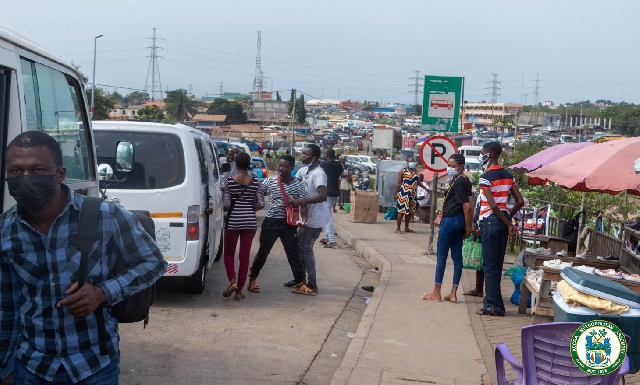
Transport operators in Ghana are running out of patience, and options. Samuel Amoah, Deputy Industrial and Public Relations Officer of the Ghana Private Road Transport Union (GPRTU), has issued a stern warning to authorities: act now or face the consequences of higher transport fares. Speaking to the media, Amoah acknowledged the government’s position that current economic pressures are beyond its immediate control, but made clear that transport operators cannot afford to absorb the rising costs indefinitely. “What the government and the president is saying is, it is something they can’t control right now, but the transport operators may be forced to,” he stated. The union has already moved beyond words. Amoah revealed that GPRTU issued a formal release giving the government a two-day window to respond with concrete action. “We came up with this release and gave the government two days to do something about it. If they fail to do [that]…then we have no option but to organise ourselves to request an increment of transport fares for our members,” he warned. The ultimatum comes against the backdrop of a sharp jump in fuel prices following new pricing guidelines issued by the National Petroleum Authority (NPA). For the April 1 to April 15 pricing window, the NPA has set minimum ex-pump prices at GHS 13.30 per litre for petrol and GHS 17.10 per litre for diesel. The figures represent a steep climb from the previous pricing window, which ended March 31, when petrol was pegged at GHS 11.57 per litre and diesel at GHS 14.35 per litre, increases of roughly 14.9% and 19.2%, respectively, within a single pricing cycle. The fuel price surge has been largely attributed to escalating geopolitical tensions in the Middle East, which continue to rattle global oil markets and push crude prices higher. For transport operators already navigating tight margins, the latest price adjustments have pushed the sector to a breaking point. With the government yet to respond to the union’s demands, the clock is ticking. If no relief measures are forthcoming, Ghanaian commuters may soon find themselves digging deeper into their pockets at the bus stop. Source: Apexnewsgh.com
Ghana’s Inflation Tumbles to 3.2% in March 2026 — Lowest Since 2021 CPI Rebasing
Ghana’s inflation rate fell to 3.2% in March 2026, its lowest level since the rebasing of the Consumer Price Index in 2021, signaling a remarkable turnaround for an economy that was battling runaway prices just a year ago. The milestone arrives even as rising global fuel costs, fanned by the simmering geopolitical tensions in the Iran–U.S.–Israel conflict, threaten to reignite price pressures. The latest data released by the Ghana Statistical Service (GSS) paints a picture of steady disinflation, with the headline rate posting a sharp year-on-year decline from 22.4% recorded in March 2025, a drop of more than 19 percentage points in twelve months. On a month-on-month basis, however, overall prices nudged up only marginally, rising just 0.1% between February and March, suggesting that the broader downward trend remains intact. Breaking down the numbers, food inflation eased slightly to 2.3% from 2.4% the previous month, while non-food inflation moderated to 3.9%. A notable concern, however, emerged in the services sector, where inflation surged to 7.2%, a signal that cost pressures in transport, energy, and utilities have not yet fully dissipated. On the goods side, prices offered consumers some welcome relief, declining by 1.0%. Locally produced items saw inflation tick up modestly to 4.9%, while imported goods recorded a deflation of 0.6%, reflecting the relative stability of the Ghanaian cedi against major trading currencies. The regional picture told a more uneven story. The North East Region recorded the highest inflation in the country at 8.6%, while the Savannah Region stood at the opposite end of the spectrum, posting a deflationary rate of minus 4.6%, a stark reminder that the benefits of macroeconomic stabilization are not uniformly felt across Ghana’s diverse regions. In the financial sector, the sustained easing of inflation is beginning to filter through to lending conditions. Average lending rates from commercial banks eased to around 21.5% in March, down from 22.1% in February, reflecting the Bank of Ghana’s cautious but growing optimism about the inflation outlook. The sustained decline in inflation, even against the backdrop of global fuel-related shocks, points to strengthening macroeconomic fundamentals and is raising expectations of further interest rate cuts in the near term. Yet, the sharp rise in services inflation serves as a reminder that the battle against underlying cost pressures is far from over. For Ghanaian households and businesses alike, the direction of travel is encouraging, but the road to full price stability remains a work in progress. Source: Apexnewsgh.com