



Strategic Leadership and Electoral Reclamation: The Necessary Calling for the NPP
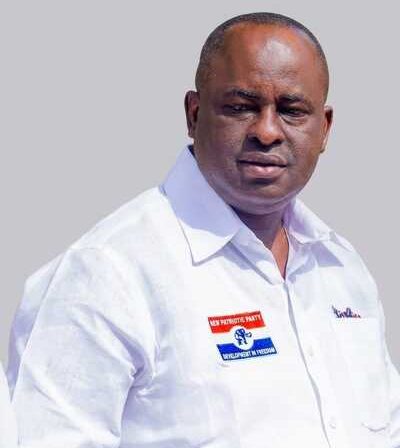
The New Patriotic Party (NPP) stands at a critical historical junction. Navigating a highly competitive political landscape requires recognising that traditional partisan rhetoric and legacy campaigning are no longer sufficient to guarantee victory. The contemporary Ghanaian electorate is younger, more discerning, digitally connected, and increasingly impatient with standard political promises. For the NPP, “Electoral Reclamation” is not merely about winning the next election cycle; it is about reclaiming the party’s core identity as the pioneer of property-owning democracy, economic competence, and institutional development. To achieve this, the party must treat strategic leadership not as an abstract ideal, but as an immediate operational necessity. To reclaim lost ground, the NPP must first objectively diagnose its recent electoral vulnerabilities. A clinical look at recent voting patterns reveals three distinct challenges: The Squeezed Centre and Floating Voters: The party has faced significant pushback from middle-class, urban, and independent voters who historically favoured the NPP’s technocratic appeal but have grown weary of macroeconomic pressures. The Youth Demography: Ghana’s demographic tilt means first-time and young voters hold the balance of power. This cohort is less moved by historical party loyalty and highly motivated by immediate economic survival, job creation, and digital governance. Grassroots Apathy: Internal friction, perceived elitism, and communication gaps between leadership and local party faithful have occasionally dampened the enthusiasm of the party’s most vital asset: its grassroots mobilisers. Strategic leadership begins from within. If the NPP is to present itself as the fit instrument to lead Ghana forward, it must demonstrate peerless organisational discipline internally. – Institutionalising Unity and Healing Factions: Political transition and internal primaries invariably leave bruises. Strategic leadership demands a deliberate, structured reconciliation mechanism that integrates aggrieved factions into the mainstream campaign machinery. – Merit-Based Party Administration: Transitioning party operations from ad-hoc electioneering to a continuous, data-driven corporate structure. Constituency and regional executives must be equipped with modern management tools, KPIs, and resource flows that do not dry up between election cycles. – Balancing the Technocrat and the Politician: The NPP’s greatest strength has often been its policy depth. However, policy must be translatable. Leadership must ensure that complex socio-economic interventions are coupled with empathetic, grassroots-friendly political marketing. Reclamation requires a proactive strategy to dominate the national narrative and re-secure critical voting blocs. – Message Discipline and Narrative Control: The party must move away from defensive politics. The narrative must aggressively focus on forward-looking solutions, contrasting the party’s structural development achievements with the alternatives. Every party communicator must speak from a unified, fact-checked script. – Aggressive Digital and Youth Mobilisation: The battle for the minds of the youth is happening online. The party must deploy sophisticated, decentralised digital campaign structures-utilising micro-influencers, localised content, and interactive platforms- to meet young voters where they live. – Grassroots Empowerment: Reclaiming lost constituencies requires decentralising resources directly to the polling station level. When local foot soldiers feel valued, adequately resourced, and respected, their capacity for door-to-door mobilisation remains unmatched. The NPP has historically been the party that rises to meet national challenges with intellectual rigour and democratic resilience. The current political climate does not favour the complacent. By embracing a renewed framework of disciplined leadership, internal unity, and modernised voter engagement, the NPP can successfully answer this calling, not just to win an election, but to secure its legacy as the definitive architect of Ghana’s progress. Hafiz Bin Salih (PhD) Member, National Council (NPP) Former Upper West/East Regional Minister Source: Apexnewsgh.com
Government Reassures: Win-Win Mining Partnerships Not Nationalisation
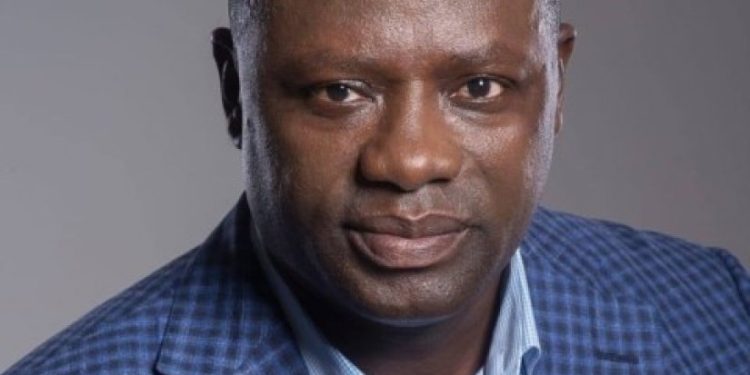
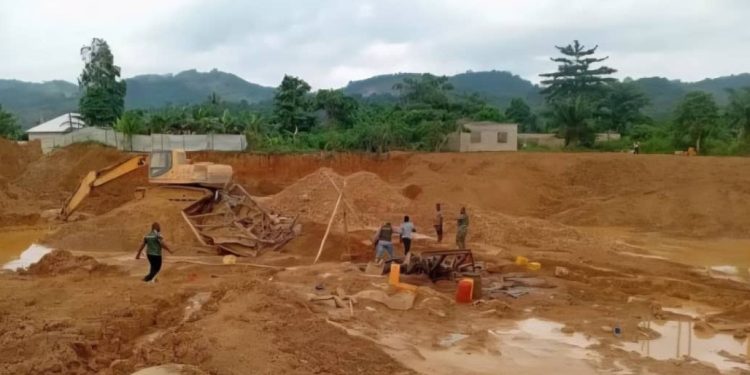
Amid renewed public debate over the renewal of mining leases and the future of resource ownership in Ghana, the government has reiterated its stance that fostering mutually beneficial partnerships with investors should not be mistaken for nationalisation of the country’s mines. Speaking at the 19th West African Mining and Power Expo (WAMPEX) on Wednesday, June 3, Lands and Natural Resources Minister Emmanuel Armah-Kofi Buah addressed concerns about Ghana’s mining policy and the investment climate. He emphasized the government’s commitment to providing a stable, transparent, and investor-friendly environment, assuring stakeholders that Ghana remains open for business. “To our partners and our investors, I wish to reaffirm that Ghana remains committed to providing a stable, predictable, fiscal, legal certainty, and transparent environment for investors. So, forget about all the noise you’re hearing. You are hearing it from me. That is what we are focused on,” the Minister declared. Buah clarified that a partnership model where investors earn competitive returns while contributing to local empowerment, value addition, and skills transfer is not the same as nationalising the mining sector. “A win-win partnership where investors get a good return on their investment and, in return, leave a lasting legacy of empowerment, value addition, and expertise cannot be nationalism of mines. It cannot,” he stated. The Minister also called on investors to strengthen collaborations that foster value addition and urged policymakers and regional institutions to align development frameworks for accelerated progress. “So, let me conclude by reemphasising Ghana’s commitment to building a mining sector that is modern, responsible, resilient, and globally competitive. The opportunity before us is very important. Therefore, if we act with vision, discipline, and partnership, we can turn West Africa’s natural wealth into jobs, industries that guarantee security and lasting prosperity for our people,” Buah urged. The government’s message comes at a pivotal moment for Ghana’s mining sector, as it seeks to balance investor interests with sustainable development and local empowerment. Source: Apexnewsgh.com
Ghana’s Disinflation Trend Shows Signs of Reversal as Inflation Rises to 3.7% in May
Ghana’s prolonged period of disinflation may be losing momentum, with headline inflation rising for the second month in a row to 3.7% in May 2026. According to the latest Consumer Price Index (CPI) figures released by the Ghana Statistical Service on June 3, inflation ticked up by 0.3 percentage points from April’s 3.4%. Every month, price growth also edged higher to 1.1%, compared to 1.0% in the previous month, hinting at a gradual but persistent build-up in price pressures. The consecutive increases mark a notable shift after a stretch of steady disinflation, though the current inflation level is still well below the 18.4% seen in May 2025. Driving this renewed upward movement is a surge in food prices. Inflation for Food and Non-Alcoholic Beverages jumped to 3.3% in May from 2.2% in April. Food inflation every month nearly doubled, rising to 2.0% from 0.8%, pointing to fresh strains on household budgets. In contrast, non-food inflation eased slightly to 4.1% from 4.2%, suggesting that while overall inflation remains contained, food has become the main engine behind the latest increases. Locally produced items continued to exert the greatest inflationary pressure, with an annual rate of 5.0%, up from 4.7% in April, and accounting for more than 92% of the overall inflation outcome. Imported inflation also inched up but remained muted at 0.9%. Breaking it down by classification, services saw the highest inflation rate at 9.9%, compared to just 1.4% for goods, reflecting persistent price pressures in service-related costs. Regionally, the North East Region recorded the highest inflation rate at 10.1%, while the Savannah Region experienced deflation at -3.0%. Despite the recent uptick, the Ghana Statistical Service emphasized that inflation has dropped sharply from 18.4% in May 2025 to 3.7% in May 2026, signaling a broad improvement in macroeconomic stability. However, the agency cautioned that the emerging pressure from food prices now warrants closer monitoring. Source: Apexnewsgh.com
Court Clarifies Presidential Powers Over Security Appointments
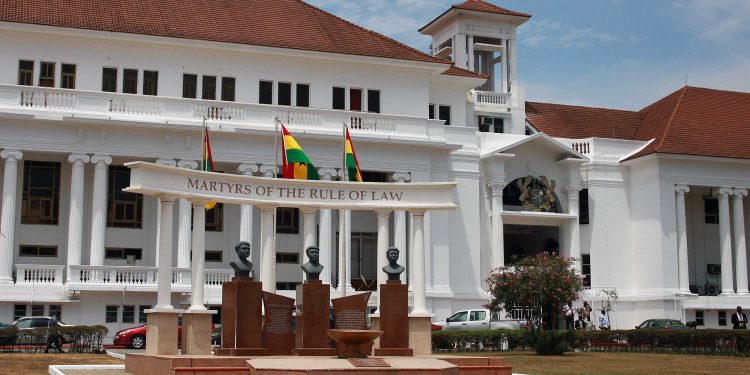
The Court has drawn a clear distinction between the appointments of the Inspector-General of Police (IGP) and the Director-General of Prisons, and those of other high-ranking security officials, clarifying the extent of presidential authority under Ghana’s Constitution. The case, brought before the Court in 2024 by IMANI Africa and security analyst Professor Kwesi Aning, sought a declaration that the President does not possess unfettered power to terminate or remove the heads of specific security agencies. The plaintiffs argued that Article 191 of the Constitution provides certain protections for public office holders, which should extend to these agencies. However, the Court’s decision stated that the offices of the IGP and Director-General of Prisons do not fall within the categories protected by Article 191. Instead, the Court found that the appointments of the Chief Fire Officer and the Comptroller-General of the Ghana Immigration Service are governed by statutory provisions. These positions, the Court held, remain within the President’s discretion, as the Constitution mandates the President to constitute and oversee the country’s security architecture. The ruling provides clarity on the constitutional and statutory frameworks governing key security appointments in Ghana, reinforcing the President’s role while also affirming the limits set by the law. Source: Apexnewsgh.com
Christian Council of Ghana Backs President Mahama’s Cautious Approach to Anti-LGBTQ+ Bill
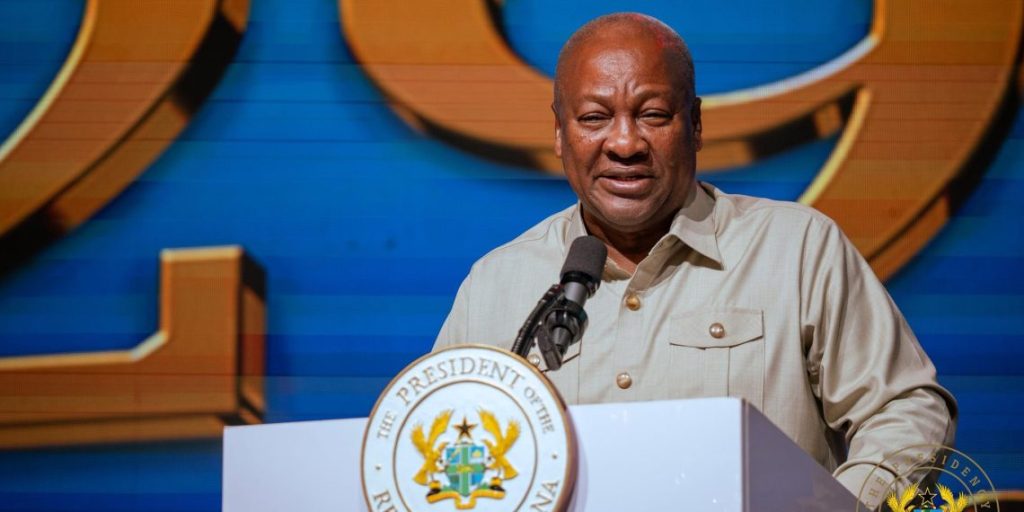
The Christian Council of Ghana has publicly defended President John Dramani Mahama’s decision to subject the Human Sexual Rights and Family Values Bill, widely known as the anti-LGBTQ+ bill, to further review before taking any final action. During his recent visit to the United Kingdom, President Mahama indicated that the contentious bill would undergo additional scrutiny to ensure full compliance with constitutional requirements before any decision to assent to it. This measured approach has sparked debate among Ghanaians, with opinions divided over the appropriate next steps for the legislation. Speaking to the media, Rev. Jehodia Godwin Amuzu, Coordinator for Interfaith and Ecumenical Relations at the Christian Council, described the president’s stance as both prudent and constitutionally sound. He emphasized that President Mahama has every right to consult legal and constitutional advisers to guarantee the bill’s legal robustness. “The president has to give the bill to his advisors for them to go through to be sure that the bill satisfies every constitutional requirement. Otherwise, anybody who goes to court can cause the bill to be struck out,” Rev. Amuzu explained. He urged patience, underscoring that such scrutiny is part and parcel of democratic governance. “Nobody can just give a fiat when the law does not permit that. So, let’s give the president the benefit of the doubt,” he added. Rev. Amuzu also reminded the public that President Mahama had previously assured religious leaders of his intention to assent to the bill if it is found to be constitutionally sound and presented to him. “In one of our encounters with him, he indicated that when the bill is brought to him, he will assent to it,” Rev. Amuzu recalled, noting that the bill’s non-state-sponsored nature calls for extra diligence to ensure it is “fit for purpose.” Welcoming recent calls by Speaker of Parliament Alban Bagbin for lawmakers to reconsider the bill, Rev. Amuzu described such parliamentary engagements as a hallmark of healthy democracy. “We are not in an authoritarian regime. So, once we embrace democracy, we have to embrace other techniques of democracy,” he said, stressing the importance of checks and balances and active citizenship. These remarks come against the backdrop of renewed debate over the future of the anti-LGBTQ+ bill and the dynamic roles of both the executive and Parliament in shaping its destiny. Source: Apexnewsgh.com