





Petroleum Tanker Drivers Begin Three-Day Strike Over Poor Yard Conditions at Kumasi Depot

Members of the Ghana National Petroleum Tanker Drivers Union have launched a three-day sit-down strike, protesting what they describe as the worsening and hazardous state of the parking yard at the Kumasi Bulk Oil Storage and Transportation (BOST) Depot. The drivers accuse BOST officials of neglecting urgent calls to rehabilitate the yard, which has become increasingly unsafe, especially during rains. Union members say the situation not only endangers their safety but also hampers their ability to efficiently carry out their duties. Beyond the deplorable yard conditions, the drivers have also raised concerns about persistent fuel shortages during offloading at the depot. They attribute these shortages to faulty machinery and equipment used for offloading petroleum products, a problem they say has gone unaddressed despite repeated complaints. Union leaders report that multiple engagements with BOST management have yet to yield solutions. Now, with their grievances unresolved, the drivers have resorted to industrial action, sparking fears of fuel supply disruptions. Industry observers warn that if the strike is prolonged, it could trigger widespread fuel shortages across the country. Dominic Brenya, Chairman of the Ghana National Petroleum Tanker Drivers Union, affirmed that the strike will continue until their concerns are addressed. The union is demanding immediate intervention to rehabilitate the yard and repair faulty offloading equipment to ensure safety and operational efficiency. Source: Apexnewsgh.com
Ghana Water Ltd Refutes Claims of Withholding River Pollution Data
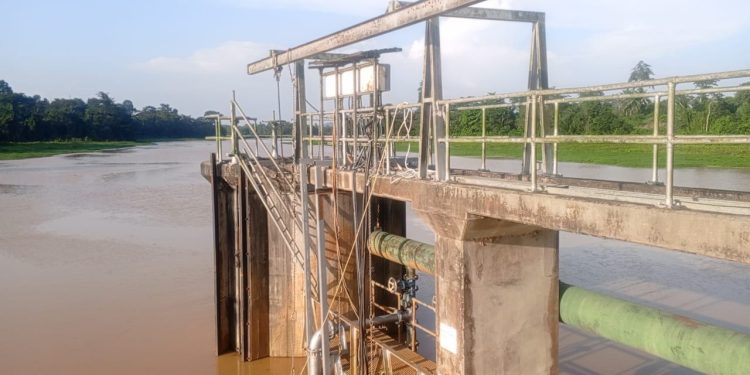
Ghana Water Ltd (GWL) has firmly denied allegations that its staff were threatened or instructed to withhold data on river turbidity and pollution levels, responding to accusations that surfaced in a video circulating on social media involving a Joy News journalist. In a statement released on Monday, August 17, 2026, GWL described the allegations as inaccurate and misrepresentative of the company’s mandate and operations. The utility company clarified that it routinely conducts internal turbidity tests as part of its water treatment processes and shuts down treatment plants whenever turbidity levels surpass established safety thresholds. However, GWL emphasized that it does not hold official data on the quality of natural river bodies. “GWL does not hold official data on natural river bodies,” the statement read, noting that the responsibility for monitoring and maintaining turbidity data lies with the Water Resources Commission (WRC) and the Environmental Protection Agency (EPA). Addressing additional claims made by the journalist, GWL stated that its records showed no evidence of the journalist visiting the Kwanyako treatment plant, contradicting assertions that access to information was denied. The company also rejected rumors that the Presidency had issued any directive instructing GWL to withhold river turbidity data. “It is therefore totally untrue that the Presidency has directed GWL to withhold river turbidity data,” the statement stressed. GWL encouraged the public to distinguish between the specific mandates of the water utility, the WRC, and the EPA when interpreting reports about river pollution and turbidity. The company urged viewers and readers to approach the claims presented in the viral video with caution. Source: Apexnewsgh.com
Rethinking Development: How Millar Open University is Putting African Culture at the Heart of Higher Education
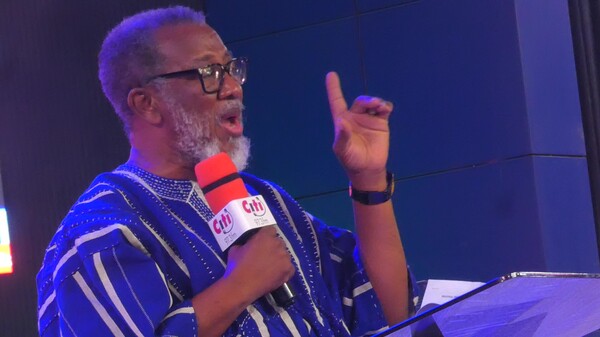
Since time immemorial, Africa’s cultural identity has been defined by its most vibrant symbols: the thunder of drums, the kaleidoscope of traditional fabrics, the aroma of local cuisine, and the spirited energy of dance and festival. Yet, beyond these visible expressions lies a deeper, often overlooked dimension: culture as a living science and a reservoir of collective knowledge that shapes how communities govern, manage resources, confront climate change, and define wellbeing itself. This is the intellectual frontier being explored at Millar Open University, a pioneering institution that is challenging mainstream approaches to higher education by placing African culture at the epicenter of knowledge production and development. For Professor David Millar, the university’s founder and guiding voice, the reduction of culture to mere spectacle obscures its true power: its ability to organize societies, solve problems, and inform every facet of daily life. “Culture isn’t just about art or entertainment,” Professor Millar insists. “It is a science, a system of knowledge that equips communities to respond to challenges.” At Millar Open University, the case is made that development cannot be separated from culture. Every project, whether in healthcare, governance, finance, or environmental protection, unfolds within a cultural context. This means that imported solutions, no matter how well-intentioned, risk failure if they ignore the knowledge systems and values of the people they seek to help. Professor Millar’s argument upends a longstanding hierarchy in global knowledge production. While Western science is often treated as the universal standard, indigenous knowledge is relegated to folklore or belief. But what if science itself can be interpreted through a cultural lens? At Millar Open University, the answer is a resounding yes: the institution advocates for a multicultural approach to science, where different societies, European, Asian, African, can each contribute their intellectual traditions to a richer, more nuanced understanding of the world. “Take Western science and view it through a cultural perspective,” Millar explains. “This justifies the idea of multicultural science.” This approach aligns with global debates on decolonisation, reparations, and the legitimacy of African knowledge systems. The university views these not as side issues, but as central to the way knowledge is produced and validated. Professor Millar points to the important but often underrecognized work of African Studies centers at the University of Ghana and elsewhere, arguing that such conversations need to move from the academic margins to the mainstream. Millar Open University’s commitment to flexibility is as radical as its intellectual vision. Unlike many open universities that rely exclusively on distance learning and massive enrollment, Millar’s model blends physical and virtual engagement in a monthly rhythm. Students, most of whom are already employed professionals, engage in remote learning for most of the month, then converge on campus for intensive, face-to-face sessions. This structure caters to adults juggling work, family, and academic ambitions. Around 98 percent of PhD students and 70 percent of master’s students are employed before enrolling. Rather than serving as a launchpad for young people entering the workforce, the university acts as a transformative platform for professionals seeking to challenge and expand the knowledge they already possess. Perhaps most distinctively, the university promotes “unlearning and relearning.” Students are encouraged not just to acquire new skills, but to question received wisdom and reconsider their fields from indigenous perspectives. An accountant might explore local financial traditions; a doctor might study non-communicable diseases through alternative frameworks. The aim is not to reject conventional knowledge, but to interrogate its universality and foster intellectual pluralism. Located in Ghana’s eastern corridor, Millar Open University deliberately maintains a rural orientation, even as it attracts urban students. The goal is to offer education outside the usual urban-centric models and professional networks, making advanced study accessible without requiring relocation or loss of employment. Flexible fee arrangements and limited scholarships make the institution more accessible, though it relies primarily on tuition for sustainability. The university’s approach finds its most profound expression in its relationship with indigenous communities. Professor Millar challenges the notion that development should be measured solely by material wealth. In many communities, wellbeing is defined by social relationships, happiness, and communal belonging, not just by cars, homes, or bank balances. Recognizing these values makes traditional knowledge and institutions relevant to contemporary debates about development and climate change. Sacred landscapes and traditional institutions are treated as vital sources of environmental knowledge. Customary rules protecting forests, groves, and water bodies reflect centuries of climate adaptation, long before the concept entered global policy discourse. Instead of asking only what communities can learn from modern science, Millar Open University asks what science can learn from communities that have managed their ecosystems for generations. To illustrate these ideas, Professor Millar often references “The Gods Must Be Crazy,” using its story of a Coca-Cola bottle’s disruptive arrival in a remote community as a metaphor for development’s unintended consequences. The lesson: technology or aid is not inherently beneficial. Its impact depends on the cultural system it enters. While ICT is central to Millar Open University’s model, enabling research supervision and communication, the institution deliberately preserves monthly in-person sessions. For a university that sees culture as lived experience, face-to-face engagement remains essential. With 14 years of operation, national accreditation, and academic affiliations, including a partnership with the University for Development Studies, Millar Open University is not an academic outlier. Its research networks extend to Zimbabwe, South Africa, the Netherlands, and beyond, positioning its cultural approach within a global intellectual conversation. The university’s success is not measured in job creation, but in the transformation of professional practice. Its graduates, already positioned in academia, public administration, and other sectors, bring new ways of thinking to their fields. A health worker might integrate biomedical and indigenous knowledge; a policy-maker might draw on traditional concepts of governance and wellbeing; a researcher might see a shrine as a form of ecological management. Ultimately, Millar Open University’s radical proposition is that culture is not just about what people do, but how they know and live. It challenges the separation of African culture from science, policy, and