




NACOC Declares Frank Danquah Wanted Amid Heightened Narcotics Scrutiny
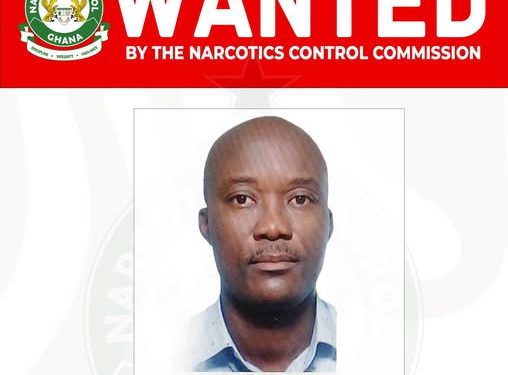
The Narcotics Control Commission (NACOC) has officially declared Frank Danquah, born September 11, 1978, a wanted man in connection with suspected narcotics-related offenses. The announcement, made public on September 22, 2026, comes as authorities intensify efforts to clamp down on drug trafficking across Ghana. In its public notice, NACOC appealed to citizens for help in locating Mr. Danquah, encouraging anyone with information about his whereabouts to reach out via the Commission’s toll-free hotline, 0800 307 307. While details about the specific offenses remain undisclosed, NACOC’s wanted-persons page notes that individuals on the list are typically sought under the Narcotics Control Commission Act, 2020 (Act 1019), a law covering importation, exportation, possession, and prohibited business involving narcotics. This latest development comes at a time when Ghana’s narcotics-control systems are under increased public scrutiny. Earlier this month, authorities began investigating the interception of approximately 3.9 tonnes of suspected cocaine shipped from Ghana to France. Six individuals have already been remanded in connection with the case, after prosecutors revealed that containers released from Tema Port for export had shown suspicious scan images. NACOC has not linked Frank Danquah to the France cocaine case in its notice. However, the timing of the wanted declaration underscores the broader efforts underway to strengthen enforcement and accountability within Ghana’s fight against illegal drugs. As the search for Frank Danquah intensifies, NACOC urges the public to assist in ensuring that those involved in narcotics offenses are brought to justice. Source: Apexnewsgh.com
GRA Launches VAT Compliance Drive, Targets 30% Gap by 2028
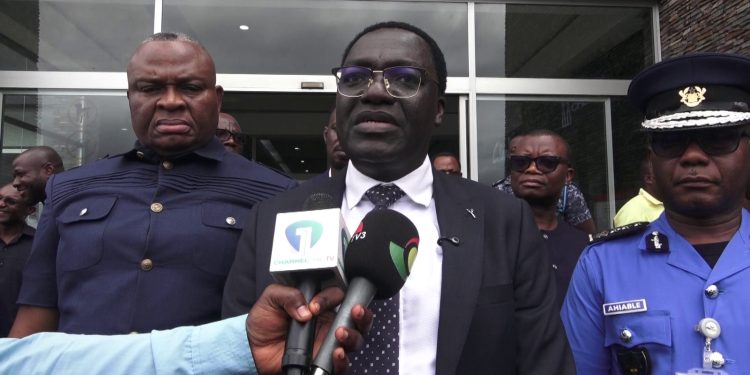
The Ghana Revenue Authority (GRA) has set an ambitious goal: to cut the country’s Value Added Tax (VAT) gap in half by the end of 2028. Currently, Ghana’s VAT gap, representing the difference between expected and actual VAT collections, stands at 60%. The GRA aims to reduce this to around 30% within the next four years. Dr. Martin Kolbil Yamborigya, Commissioner for the Domestic Tax Revenue Division, announced the new target during the launch of the GRA’s VAT Compliance Campaign. Speaking to journalists after visiting shops at the Accra Mall to assess adherence to VAT requirements, Dr. Yamborigya outlined the Authority’s VAT Strategic Plan. “According to our VAT strategic plan, we are hoping that between now and the end of 2028 we should be able to close this gap from the current 60% to about 30%,” he said. Achieving this, he explained, will require a significant increase in VAT collections and a commitment to broader compliance from both businesses and individuals. “That means that at least we should be able to collect 30% more in addition to what we are currently collecting,” he added. The GRA’s long-term objective, Dr. Yamborigya emphasized, is to foster a culture of consistent compliance, rather than relying solely on enforcement. “In the long run we expect every Ghanaian to comply so that the tax will be collected,” he stated. The Commissioner was quick to assure businesses that the ongoing VAT Compliance Campaign is focused on education, not intimidation. “This campaign is not meant to harass businesses and we don’t also intend to disadvantage any business,” he said. During compliance visits to the Accra Mall, officials discovered that some businesses were not consistently issuing VAT invoices. Rather than taking immediate punitive action, the GRA engaged with these businesses, encouraging them to improve their invoicing practices. “We realized that they were not religiously issuing VAT invoices and we only encourage them to make sure they do the right thing,” Dr. Yamborigya explained. “If we were not to show human face, we probably would have called for their arrest immediately,” he added, underscoring the Authority’s preference for education and engagement over punishment, unless non-compliance is shown to be deliberate. “We are going to be more engaging, we are going to be more educative. But where we find out that the non-compliance is deliberate, that’s what we apply.” Through this approach, Dr. Yamborigya said, the GRA is working to ensure that taxpayers understand their obligations and are given every opportunity to comply. “So we continue to show human face by ensuring that people know and understand their tax obligations and comply,” he concluded. With education at the forefront and enforcement as a last resort, the GRA hopes to boost compliance and close the VAT gap, strengthening Ghana’s revenue base for the future. Source: Apexnewsgh.com
High Court Adjourns Bail Hearing of Salomey Baffoe in Ghana Jollof False Information Case

High Court in Accra has adjourned the bail application hearing of Salomey Baffoe, accused of abetting social media personality Ghana Jollof in the publication of false information. The hearing, originally scheduled for earlier this week, will now take place on September 24, following a request from the prosecution for more time to respond. During the proceedings, Assistant State Attorney Carl Afedzi Forson explained to the court that he was not the main attorney on the case and that the Attorney-General’s office had only received the bail application on Friday. With Monday being a public holiday, the application had not yet been assigned to a lawyer, prompting the prosecution to seek a short adjournment. However, Salomey Baffoe’s counsel, Nana Agyei Baffour Awuah, opposed the request, arguing that matters involving a person’s liberty should not be subjected to the same procedural delays as civil cases. He pointed out that there was proof of service and that the State had not indicated any issue with short service. He further stressed that bail applications could be heard over weekends, and that further delay could see Baffoe spending nearly two weeks in custody before her bail application was even heard. The court acknowledged the seriousness of the liberty at stake and cautioned the prosecution against taking the matter lightly. Ultimately, the case was adjourned to September 24, with the court directing the Republic to file and serve any processes it intended to rely on by 9:00 a.m. on the day of the hearing. The story continues to unfold as both sides prepare for the next appearance, with the issue of timely justice and due process at the forefront. Source: Apexnewsgh.com
Ghana’s Public Transport Fares to Rise by 8% After Weeks of Negotiation

For weeks, passengers and drivers across Ghana anxiously awaited news on transport fares. The air was thick with speculation as fuel prices climbed, spare parts became more expensive, and vehicle maintenance costs soared. Behind the scenes, intense discussions were underway between the government and the nation’s leading transport unions. It all began when the Ghana Private Road Transport Union (GPRTU) and the Ghana Road Transport Coordinating Council (GRTCC) tabled a bold proposal: a 30% increase in fares to keep up with rising costs. The unions argued that without such an adjustment, the viability of commercial transport was at risk. Their representatives, including GPRTU’s Deputy Public Relations Officer, Samuel Amoah, insisted the 30% increment was essential and negotiations were ongoing. On September 8, union leaders met with the Ministry of Transport. The government acknowledged the unions’ concerns and proposed a GH¢2 per litre intervention on diesel to help cushion operators. The two sides agreed to form a joint team, made up of the Ministry, GPRTU, and GRTCC—to carefully review the true cost of running commercial vehicles. As negotiations progressed, it became clear that compromise was needed. The unions stood firm on their request, but the government sought to balance the interests of operators and the traveling public. After much deliberation, all parties agreed on a more modest 8% increase in fares. Starting Saturday, September 26, 2026, commuters will feel the change as new fares take effect nationwide. The 8% adjustment will impact trotros, shared taxis, and other public transport services, following the fare structure hammered out by the government and transport unions. While smaller than initially requested, this new rate reflects a hard-fought compromise after weeks of debate, a story that echoes the daily negotiations of life on Ghana’s busy roads. Source: Apexnewsgh.com