





RISE-Ghana Exposes Weak Unit Committees, Dysfunctional Area Council in Bolgatanga East
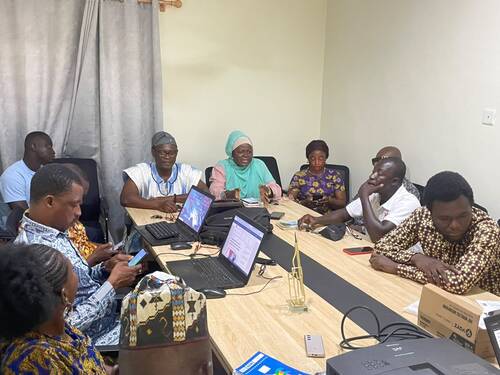
A new evaluation by RISE-Ghana has exposed significant weaknesses in grassroots governance in the Bolgatanga East District of the Upper East Region, raising concerns about the functionality of Unit Committees, community participation and the ability of residents to hold local authorities accountable. The assessment revealed that although Unit Committees exist across the district, many are only semi-functional, with some meeting infrequently, operating with fewer than the expected five members and lacking adequate training to perform their responsibilities effectively. The evaluation also found that Bolgatanga East, which has approximately 60 electoral areas, has only one Area Council, located at Zuarungu. The council was reportedly not holding meetings, raising further questions about the effectiveness of the district’s grassroots governance arrangements. The findings were presented to selected journalists by the Executive Director of RISE-Ghana, Awal Ahmed Kariama, as part of an evaluation conducted under the Evidence for Development (E4D) project, supported by the Centre for Democratic Development Ghana (CDD-Ghana). The initiative seeks to strengthen local government accountability, promote evidence-informed policymaking and improve the responsiveness of public institutions to the needs of citizens. One of the key findings was the limited functionality of Unit Committees, which are expected to serve as important links between communities and local government authorities. According to the evaluation, respondents described five-member Unit Committees operating at the electoral-area level, but their meeting frequency varied considerably, ranging from monthly meetings to gatherings held only twice a year. The assessment also identified gaps in committee membership, with some electoral areas having fewer than the expected five members. These shortcomings raise concerns about whether the committees have the membership, organisational capacity and consistency required to perform their responsibilities effectively. Unit Committees play an important role in grassroots governance. They are expected to help identify community needs, mobilise residents for development activities, monitor local projects and communicate concerns to the appropriate authorities. However, when committees meet irregularly or lack the capacity to carry out these functions, communities risk losing an important avenue for participating in decisions that affect their lives. The evaluation further indicated that some committee members had not received adequate orientation or training from the district assembly to enable them to understand and perform their duties effectively. This gap in capacity development could undermine the ability of the committees to engage residents, monitor development initiatives and contribute meaningfully to local decision-making. RISE-Ghana also identified a possible misunderstanding of the statutory responsibilities of Unit Committees among some members and community stakeholders. According to the findings, several respondents described the primary responsibility of Unit Committees as supporting Assembly Members. However, Ghana’s Local Governance Act, 2016 (Act 936), provides for specific functions for local government structures, including responsibilities that extend beyond assisting elected Assembly Members. The evaluation suggests that this perception could limit the independence and effectiveness of Unit Committees in carrying out their own responsibilities. When committee members see themselves mainly as assistants to Assembly Members, their potential contribution to community mobilisation, local monitoring and accountability may not be fully realised. The assessment also raised concerns about community involvement in committee activities. A chief in Yarigabisi reportedly stated that he was not invited to Unit Committee meetings. The reported exclusion highlights the importance of ensuring that traditional authorities and other relevant community stakeholders have appropriate opportunities to participate in grassroots governance. For Unit Committees to function effectively, their activities must be sufficiently inclusive, with residents able to raise concerns, discuss development priorities and receive information about decisions affecting their communities. Beyond the challenges facing Unit Committees, the evaluation found that Bolgatanga East has only one Area Council, situated at Zuarungu, despite having approximately 60 electoral areas. Kariama observed that the district should have at least two Area Councils to support effective local administration and improve coordination of grassroots development activities. According to the evaluation, the Secretary to the District Planning Coordinating Unit stated that the Area Council did not hold meetings, while an Assembly Member described it as “not functioning at all”. An ineffective Area Council could weaken coordination between communities and the district assembly, particularly where local concerns require collective attention or follow-up. The situation raises questions about how effectively the existing structure serves communities across the district and whether adequate mechanisms are in place to ensure that local development concerns receive attention. The evaluation therefore points to the need for the district assembly to examine both the functionality and adequacy of its grassroots governance arrangements. Another concern identified by RISE-Ghana was the absence of a reliable, consolidated record of the district’s local government sub-structures. The assessment found that two senior respondents provided different figures for the number of electoral areas and Assembly Members. Additionally, no respondent could state the total number of Unit Committee members across the district. The inability to establish consistent figures raises concerns about the quality of information available to support planning, supervision and resource allocation. Accurate records are essential for determining whether all electoral areas have functioning committees, identifying vacancies, organising training and monitoring the performance of grassroots structures. Without reliable information, the district assembly may struggle to identify gaps and determine where support is most urgently required. For an evaluation focused on evidence-informed policymaking, the absence of a clear record of the structures expected to support grassroots governance represents a significant institutional challenge. RISE-Ghana’s findings point to the need for a comprehensive review and documentation of Unit Committees and other local government structures in the district. The evaluation also uncovered weaknesses in communication between communities and the district assembly, particularly in the feedback provided after residents submit concerns. According to respondents, community concerns are generally channelled to the assembly through Assembly Members. However, information about the progress or resolution of those concerns often fails to return to the affected communities promptly. Some respondents described feedback as slow, delayed or entirely absent. Others said they were simply told that an issue was “on the way” without receiving a definite timeline for action. Focus group discussions highlighted examples of communities repeatedly requesting a maternity room without receiving a
Bolgatanga East Health Crisis: Only One of Four Motorcycle Ambulances Functional as 380 Patients Rely on Private Transport
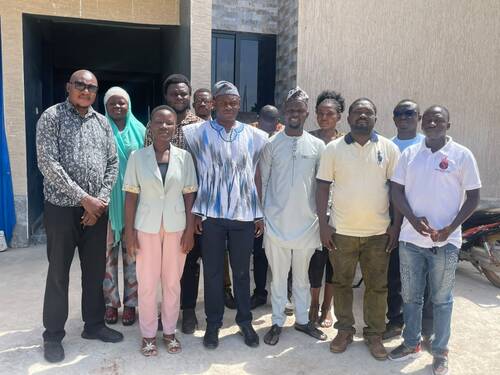
The state of emergency healthcare delivery in the Bolgatanga East District of the Upper East Region has come under scrutiny following an evaluation by RISE-Ghana, which has uncovered significant gaps in emergency transportation, referral coordination and local governance structures. The findings paint a troubling picture of a district where patients requiring urgent medical attention may have to depend on private vehicles to reach higher-level health facilities, while the majority of the district’s available motorcycle ambulances remain out of service. Speaking to selected journalists in the Upper East Region, the Executive Director of RISE-Ghana, Awal Ahmed Kariama, disclosed that the evaluation identified serious weaknesses in the district’s health referral system, raising concerns about the ability of communities to access timely and effective emergency healthcare. The evaluation was conducted under the Evidence for Development (E4D) project, supported by the Centre for Democratic Development Ghana (CDD-Ghana), as part of efforts to strengthen local government accountability and improve public service delivery. One of the most concerning findings was the limited availability of emergency transportation across the district. According to Kariama, Bolgatanga East has only four motorcycle ambulances, commonly referred to as Motor Kings, although at least 16 are reportedly required to meet the district’s needs. More worrying is that only one of the four available units was operational at the time of the assessment in 2026, leaving the district with a severely limited emergency transport capacity. The implications for residents, particularly those in remote communities, could be significant. In emergencies where every minute matters, the absence of reliable transportation can complicate access to timely treatment and referrals to higher-level facilities. The evaluation also examined referral records for 2025 and found that approximately 380 out of 395 patients referred to higher-level health facilities travelled using private means of transport. The patients were referred from facilities within the district, including those in Zuarungu, to higher-level facilities such as the Bolgatanga Hospital. The findings suggest that the district’s formal emergency transportation arrangements are not adequately supporting patients who need to be transferred for further medical care. For families already struggling with the cost of healthcare, having to arrange private transportation during an emergency may create additional financial and logistical difficulties. The evaluation further revealed that some communities have resorted to local arrangements to bridge the gap. Of the 20 health respondents interviewed, 15 identified community-based support mechanisms, including volunteer escorts and community transport funds, as ways of assisting patients who need referrals. While these arrangements demonstrate community solidarity, they also highlight the extent to which residents are having to find their own solutions to gaps in the formal healthcare system. Beyond the shortage of operational emergency transport, RISE-Ghana identified weaknesses in communication between referring health facilities and the institutions receiving patients. According to Kariama, several health facilities lacked effective systems for ensuring that information about referred patients was communicated promptly and that feedback was received from the receiving facilities. An effective referral system requires more than transporting a patient from one facility to another. It also depends on clear communication between health workers, proper documentation, timely feedback and continuity of care. When these elements are missing, healthcare professionals may struggle to track patients’ progress, coordinate treatment and determine whether referrals have achieved their intended purpose. Kariama said RISE-Ghana had shared the findings with the district health directorate, which indicated that it would take immediate steps to address some of the challenges. Among the proposed measures is the development of standard operating procedures to guide referrals and improve communication between health facilities. The directorate also intends to convene discussions on activating community support mechanisms as an immediate response while longer-term efforts are made to mobilise resources for additional emergency transport systems. Such interventions could help reduce the burden on patients and families, although their effectiveness will depend on implementation, adequate resources and sustained monitoring. The findings also raise broader questions about the adequacy of relying on a single ambulance to serve an entire district. Even where a district has access to a conventional ambulance, the availability of smaller, community-based emergency transport systems can be important, particularly in areas where distance, road conditions and accessibility make it difficult to reach patients quickly. For Bolgatanga East, the limited number of operational motorcycle ambulances means that patients in different communities may face competing demands for the same resources. The situation highlights the need for a coordinated emergency transport system that links community-level health facilities with referral centres and provides reliable alternatives when conventional ambulance services are unavailable. Strengthening this system will require collaboration among the district assembly, health authorities, community leaders, development partners and other stakeholders. Source: Apexnewsgh.com/ Ngamegbulam Chidozie Stephen