


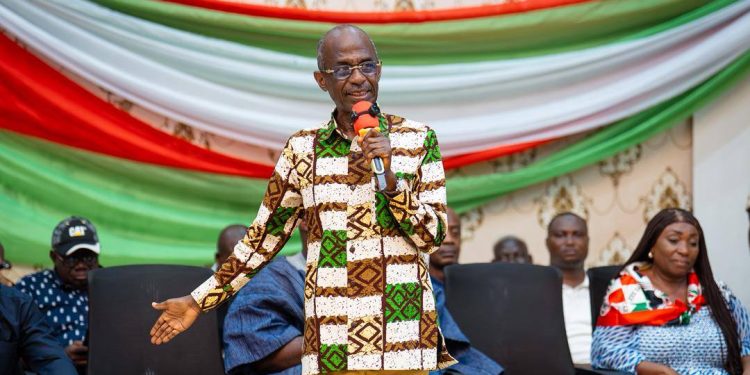


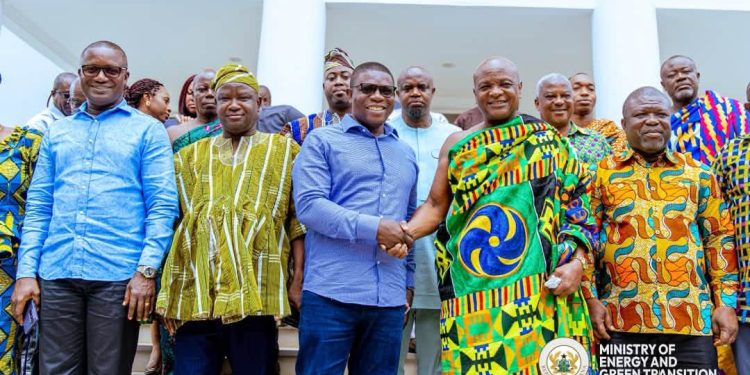


With a deep sense of humility and responsibility, Naba Yelzoya Kosom Asaga II, the Paramount Chief of the Nangodi Traditional Area, welcomed delegates to the Nabdam District for the 14th BONABOTO Biennial National Delegates Congress.
His words set a purposeful tone, reminding all present that their gathering was more than a mere event; it was a powerful reaffirmation of unity and collective resolve among the people of Bolgatanga, Nangodi, Bongo, and Tongo.
Naba Yelzoya reflected on the roots of BONABOTO, an association founded through reflection, experience, and foresight. He acknowledged that, as in any vibrant community, differing energies and approaches had emerged over time. Rather than allowing these differences to breed rivalry, he stressed, they must be harnessed as sources of strength. “Wisdom provides direction while enterprise provides momentum,” he said, urging leaders and elders to be peacemakers, calming tensions, discouraging unnecessary competition, and guiding their people towards cooperation and mutual respect.
Turning to a matter close to his heart, the chief spoke passionately about the proposed BONABOTO College of Education in Nabdam. This initiative, he explained, was not a mere afterthought but the culmination of years of sacrifice and commitment. Land had been secured, and temporary facilities had been identified, with the former Congo Secondary School standing ready for use.
He emphasized that education is the foundation for development: “A college of education here will not only train teachers but will strengthen communities, empower our youth, and secure the future of generations yet unborn.” The chief called upon BONABOTO’s leadership to remain faithful to the original promise made to Nabdam, highlighting the region’s historic lack of educational institutions compared to others.
Naba Yelzoya reminded delegates that honoring this promise was about more than development; it was crucial for maintaining BONABOTO’s credibility and the unity of their communities. “To protect the credibility of BONABOTO and preserve unity among our communities, we must honor our original commitment,” he declared.
The chief approached the sensitive issue of peace, particularly regarding the Baku conflict, a matter that, given his boundary with Bawku, he felt compelled to address. He commended the mediation efforts of Otumfuo Osei Tutu II and the Asantehene, whose statesmanship had laid a crucial foundation for peace.
Yet, he cautioned that conflicts rooted in complex histories cannot always be resolved by attempts to restore the past. One side seeks recognition and self-determination, while the other seeks security and continuity, deep-seated concerns that must be acknowledged. “For peace to endure, no side must feel ignored or uncertain about its future,” he advised, insisting that true peace must recognize and respect the identity, history, and legitimate concerns of all parties.
In conclusion, Naba Yelzoya called for greater responsibility from all, especially intellectuals and leaders who, by virtue of shared experiences and deep community ties, must not remain mere spectators in the peace process. He advocated for ending the “slave mentality” and urged his people to take up their responsibilities, emphasizing that true independence is born from responsibility.
He recommended that the BONABOTO Congress formally establish a Peace Building Committee, composed of respected elders and experienced voices from across the traditional areas. This committee, he envisioned, would engage continuously, build confidence, and help carry the peace process forward with patience and cultural understanding.
Thus, Naba Yelzoya Kosom Asaga II concluded, weaving together the themes of legacy, unity, advocacy, culture, and impact, reminding all that their shared journey continues, strengthened by their commitment to each other and to the future.
Source: Apexnewsgh.com