
SCRAS Project Records 51.1% Adoption of Sustainable Farming Practices Among 7,200 Farmers – NABOCADO
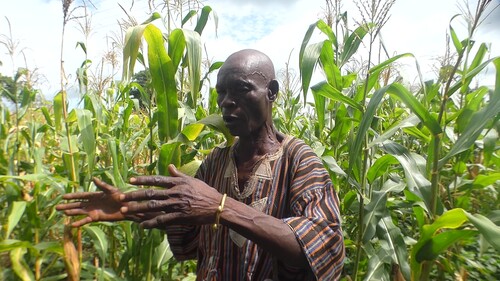
The Monitoring, Evaluation and Accountability Coordinator of NABOCADO, Dr. Michael Ayamga, has disclosed that 51.1 percent of the 7,200 farmers supported under the organisation’s SCRAS Project have comprehensively adopted sustainable agricultural practices. According to him, the farmers are spread across six districts and 16 rural communities where the project is being implemented. Dr. Ayamga made the disclosure during an exchange learning activity organised under the Strengthening of Smallholder Farmers’ Resilience towards a Changing Climate and Promotion of Environmentally Friendly Agriculture in the Diocese of Navrongo-Bolgatanga SCRAS Project. He explained that the project focuses on promoting sustainable agriculture, climate change adaptation and mitigation, as well as women’s enterprise development to help farming households diversify their sources of livelihood. Dr. Ayamga said 51.1 percent of the farmers have so far comprehensively adopted the sustainable agricultural practices being promoted by the project. He explained that “comprehensive adoption” refers to farmers who have consistently adopted compost application and at least two other sustainable farming practices on their fields over a number of years. He, however, noted that almost all the farmers supported by the project have adopted at least one or two of the sustainable practices. The target crops under the project include millet, sorghum, beans and groundnuts, with Dr. Ayamga indicating that assessments have recorded an average 13 percent increase in yields across the crops. He said although the project had set a target of a 15 percent increase, the results represented progressive improvement and farmers were being encouraged to continue adopting the practices to further improve or sustain their yields. According to him, the yields recorded by farmers using sustainable practices are not significantly different from those of farmers who rely heavily on external inputs such as synthetic fertilisers. Dr. Ayamga said the SCRAS Project also encourages farmers to develop and use local solutions to address challenges affecting agricultural production. He said the innovations cover areas including soil fertility, pest control and post-harvest storage. According to him, assessments conducted by the project indicate that the adoption of plant-based and other locally available solutions has contributed significantly to reducing post-harvest losses. He noted that food shortages are not caused only by low agricultural yields, but are also linked to poor storage practices, which can result in significant quantities of harvested produce being destroyed. He said the use of plant-based materials and shrubs to control pests in storage facilities has contributed to a 64 percent reduction in post-harvest losses among participating farmers. Dr. Ayamga further disclosed that local innovations promoted under the project have also contributed to reducing livestock losses, particularly among guinea fowl farmers. He explained that many smallholder farmers rear guinea fowls, chickens, goats and other livestock as an alternative source of income when they are unable to immediately sell their farm produce. However, guinea fowl mortality has been a major challenge. According to him, the adoption of locally developed interventions has resulted in a 44 percent reduction in guinea fowl mortality among participating farmers. He said farmers visited during the exchange learning activity had been able to raise guinea fowls beyond the stages where mortality is usually high. On climate change, Dr. Ayamga said the project works directly with communities to develop Community Climate Change Adaptation Action Plans. He explained that communities identify the climate-related hazards they face and, with support from the project, develop practical measures they can implement to reduce the impact of those hazards. He stressed that communities may not be able to prevent climate-related events from occurring, but they can strengthen their capacity to withstand their effects. According to him, 26 communities across the six districts have so far developed such climate change adaptation plans. He said the plans are guiding communities in implementing adaptation and mitigation activities. Tree planting and the integration of trees into farming systems, he added, are among the activities being implemented under the plans. Dr. Ayamga said the interventions are intended to strengthen the adaptive capacity of communities so that households can continue their livelihood activities and secure food even when climate-related hazards occur. The NABOCADO coordinator also highlighted the project’s focus on women’s economic empowerment. He further explained that the project recognises the vulnerability of women who depend heavily on agriculture for their livelihoods and therefore promotes alternative income-generating activities. According to him, women are supported with technical training, basic record-keeping and financial management skills to enable them to establish and manage sustainable businesses. He disclosed that approximately 2,580 women are currently engaged in various livelihood and income-generating activities across the project communities. He said the livelihood diversification programme is intended to reduce households’ overdependence on a single source of income, particularly agriculture, which can be severely affected by climate change. Dr. Ayamga emphasised that the SCRAS Project is not primarily an input-distribution programme but a knowledge-based intervention designed to encourage farmers and communities to adopt sustainable practices. He explained that the project engages communities over several years to allow farmers to understand, test and eventually adopt the practices. According to him, demonstration farms play an important role in the process, with early adopters serving as examples for other farmers. He said Bongo and Talensi have been part of the programme since 2011 and are expected to exit the project this year. Builsa South and West Mamprusi were subsequently brought into the programme in 2017 and are expected to exit next year. Dr. Ayamga said communities that have been engaged for several years are increasingly becoming learning centres for farmers from newer project areas because of their experience with sustainable agricultural practices. He explained that farmers from newer communities are taken to these established communities to observe and learn from farmers who have already adopted the practices and experienced their benefits over time. The Monitoring, Evaluation and Accountability Coordinator disclosed that the SCRAS Project is currently being implemented in Kassena-Nankana West, Builsa South, Bongo, West Mamprusi, Nabdam and Talensi. However, the farmers could barely contain their excitement as NABOCADO Team visited their various farms. Smiling and exchanging cheerful words, they
NABOCADO Promotes Sustainable Farming Practices to Help Smallholder Farmers Build Climate Resilience
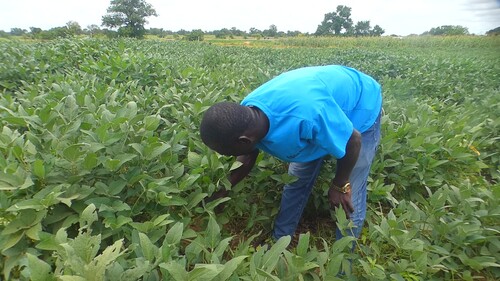
The Director of Livelihood and Agriculture Programme at the Navrongo-Bolgatanga Catholic Diocesan Development Organization (NABOCADO), Dominic Avea Aniah, has highlighted a range of sustainable agricultural practices being promoted among smallholder farmers to improve productivity, build resilience to climate change and reduce dependence on agrochemicals. With conviction, Mr. Aniah described a new chapter unfolding for the region’s farmers. Gone were the days of relying solely on expensive chemical fertilizers and external inputs. Instead, NABOCADO was ushering in a wave of sustainable, climate-smart practices, methods designed not only to boost yields but also to build resilience against the ever-shifting climate. He spoke of compost, made from farm residues and livestock droppings, now replacing synthetic fertilizers. He explained how integrating cereals and legumes, especially nitrogen-fixing beans, replenished soil nutrients and nurtured healthier crops. Crop rotation, he emphasized, was more than tradition: it was a shield against pests and the notorious Striga weed, which once choked maize and other cereals. “When you rotate with soybean, Striga loses its grip,” Mr. Aniah explained, his voice confident. The exchange was not just talk. On demonstration farms, local farmers saw firsthand the results of these innovations. One plot, Mr. Aniah pointed out, had switched from maize to soybean this season. The difference was clear: healthier plants, fewer weeds, and less need for costly inputs. Other demonstration sites showcased cover cropping and plant-based products for pest control, showing that nature’s own resources could replace many chemicals. The project, funded by Misereor and Bistum Münster, spread across six districts, Kassena-Nankana West, Builsa South, Bongo, West Mamprusi, Nabdam, and Talensi, touching the lives of over 5,000 farmers. Women found new opportunities too, forming savings and lending groups to start businesses and strengthen their households. Mr. Aniah reminded everyone that the goal was not just bigger harvests, but sustainable progress. Compost, he said, released nutrients gradually, building up the soil year after year, unlike synthetic fertilizers that quickly faded. The SCRAS Project, he concluded, was about practical, affordable farming, methods that protected both land and livelihoods for generations to come. As the activity ended and farmers prepared to return home, they carried with them more than just new knowledge, they carried hope for a greener, more resilient future for their farms and communities. Meanwhile, beneficiary farmers, Abdul-Rauf Mahamadu, Yin Bugmah, and Assibi Tiia, stood at the edge of a demonstration farm, their faces beaming with satisfaction. Not long ago, these fields had been like any others in Keta, West Mamprusi, and Nabdam: tilled heavily, dependent on expensive fertilizers, and often plagued by stubborn weeds. But this year was different. Their journey began when NABOCADO, through the SCRAS Project, invited them to a series of farmer training sessions. “We had always done things the old way,” Abdul-Rauf recalled, his hands tracing the lines of the healthy soybean stalks. “But NABOCADO showed us another path.” For the first time, the farmers learned to make and use compost, embrace zero tillage, and practice crop rotation, techniques that sounded strange at first, but soon revealed their worth. “Before the training, we didn’t know what compost was for or that you could plant without ploughing the land,” Abdul-Rauf explained. “Now, our crops are stronger and the soil is happier.” Season after season, they had planted maize and soybeans the same way, never pausing to consider the toll on the land. But with NABOCADO’s guidance, they rotated their crops: soybeans where maize once grew, and vice versa. The result? Lush, green fields and the promise of harvests bigger than ever before. Abdul-Rauf’s eyes sparkled as he estimated four to five bags of soybeans and up to seven of maize from the demonstration plot. The cost savings were equally striking. Gone were the days of buying bag after bag of fertilizer, herbicides, and insecticides, expenses that often left them with little or nothing after the sale of their grain. “Sometimes, after subtracting all we spent, we made no profit at all,” Abdul-Rauf admitted. But with compost and the new methods, input costs dropped dramatically. “We hardly had to buy anything. And the results are even better than before.” The farm’s transformation drew attention from across the community. Fellow farmers came to watch and learn, eager to try the new practices themselves. Even passing traders stopped to marvel at the thriving soybeans. “They ask me, ‘How did you do it?’ and I tell them, it’s thanks to NABOCADO’s training.” As the sun set behind the demonstration farm, Abdul-Rauf spoke for his friends and neighbors. “We are grateful to NABOCADO for opening our eyes. We hope more farmers will join us on this new journey, for the good of our land and our future.” Source: Apexnewsgh/Ngamegbulam Chidozie Stephen
STRIGA: Agric Director Urges Media to Intensify Awareness on Parasitic Weed
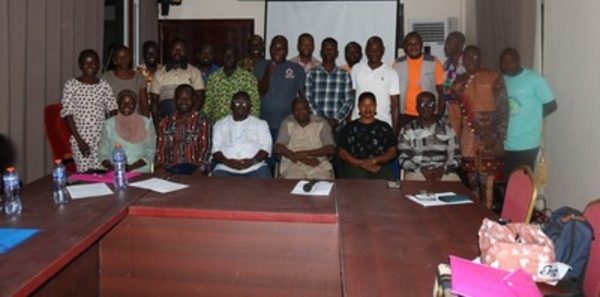
The Upper East Regional Director of Agriculture, Alhaji Zakaria Fuseini, has challenged journalists to take a more active role in educating the public and amplifying farmers’ concerns in the fight against Striga, a persistent agricultural challenge in northern Ghana. Speaking at a sensitisation forum for media practitioners on Striga control in northern Ghana held on Thursday, September 17, 2026, at the Blue Sky Hotel in Zuarungu, Alhaji Fuseini said the media could become a critical link between agricultural experts, policymakers and farmers. The programme was organised by the Forum for Natural Regeneration (FONAR) in collaboration with the Ghana Journalists Association (GJA), Upper East Region Chapter. Alhaji Fuseini said Striga repeatedly appeared in reports submitted by agricultural extension officers across the region, describing it as a problem farmers encounter season after season. He observed that while farmers had considerable practical experience dealing with the weed, many still lacked sufficient public information on its causes, persistence and effective control measures. He said this was where the media could make a significant difference. MoFA, he explained, had been working with farmers through improved seed varieties, agronomic recommendations and agricultural extension services. However, because extension services operate largely at the district and community levels, he said the media was needed to take the message to a much wider audience. Alhaji Fuseini therefore urged journalists to use the forum to interrogate agricultural policies and interventions rather than simply reproduce statements from officials. He specifically encouraged journalists to ask why some farmers struggle to obtain certified seeds, why certain interventions require several seasons before results become visible, and what additional measures government could introduce to strengthen Striga control. He stressed that constructive scrutiny would help ensure that challenges confronting farmers were properly identified and addressed. The Regional Director further pointed out that agricultural practices and land restoration must work together in tackling Striga. He explained that MoFA’s agronomic interventions and FONAR’s land restoration initiatives represented complementary approaches rather than competing solutions, with healthy soils and proper crop management both important to addressing the problem. Participants were also expected to receive technical education on the biology of Striga, factors responsible for its persistence and recommended control measures before, during and after planting. The forum also included a planned farm visit, where journalists were expected to interact directly with farmers and examine their experiences with Striga control. Alhaji Fuseini said such firsthand experiences were crucial because farmers ultimately provided the practical test of whether recommendations being promoted by experts were producing results. He urged journalists to ensure that farmers remained central to their reporting, saying their experiences should inform public discussion about agricultural challenges and solutions. He thanked FONAR, the GJA Upper East Region Chapter and participating media practitioners for supporting the initiative and expressed hope that the forum would strengthen public education and reporting on Striga and agricultural development in northern Ghana. Source: Apexnewsgh.com/Ngamegbulam Chidozie Stephen
GJA Upper East Chairman Challenges Journalists to Lead the Fight Against Striga
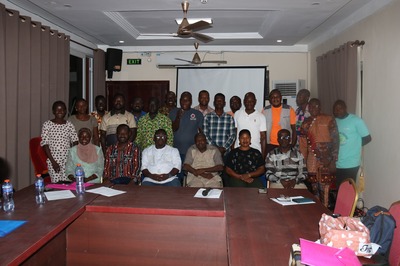
The Upper East Regional Chairman of the Ghana Journalists Association (GJA), Mr. Albert Sore, has challenged journalists to look beyond headline-making agricultural crises and investigate the less visible problems that continue to undermine farmers’ livelihoods. Mr. Sore said Striga was one such challenge that had affected farmers for years but had not received the level of sustained media attention that issues such as floods, drought and rising food prices often attract. He made the remarks on Thursday, September 17, 2026, at the Blue Sky Hotel in Zuarungu, Bolgatanga East, during a day’s sensitisation forum for media practitioners on Striga control in Northern Ghana. The engagement brought together journalists, FONAR and officials from the Ministry of Food and Agriculture to deepen media understanding of the parasitic weed and its implications for farmers. Mr. Sore said journalists could play an important role in ensuring that technical knowledge about Striga reached farming communities and the wider public. He admitted that many media practitioners might not yet have a full understanding of the weed, including why it persists, how it damages crops and what farmers can realistically do to control it. He therefore urged journalists to use the forum to engage experts critically and ask the difficult questions that farmers themselves would want answered. He particularly encouraged participants to use the field visit to understand the lived experiences of farmers, including the length of time they had battled Striga, the costs involved, the methods they had attempted and the support they needed. According to him, such firsthand accounts would enable journalists to produce stories that went beyond simply describing the existence of the problem. Mr. Sore argued that agriculture deserved consistent media attention because several challenges affecting food production develop gradually and may remain unnoticed until their effects become severe. He urged journalists to continuously follow agricultural interventions and hold discussions on whether such interventions were producing the desired results. At the same time, he cautioned media practitioners to maintain professional standards by relying on verified facts and avoiding sensational reporting, particularly when dealing with technical agricultural matters. He said farmers needed accurate, balanced and consistent reporting that could help inform policymakers, development partners and the public. Mr. Sore stressed that the sensitisation programme should not end with the day’s activities. He called on individual journalists and media houses to continue returning to the Striga story, investigate interventions being implemented and report on both progress and outstanding challenges. He commended FONAR and MoFA for recognising the media as an important partner and expressed the hope that the engagement would lead to stronger collaboration between the GJA, FONAR, MoFA and other stakeholders in addressing agricultural challenges in Northern Ghana. He concluded by urging journalists to make the most of the engagement and use the knowledge gained to tell farmers’ stories accurately, responsibly and meaningfully. Source: Apexnewsgh.com/Ngamegbulam Chidozie Stephen
FONAR Calls for National Action as Striga Threatens Cereal Production in Northern Ghana
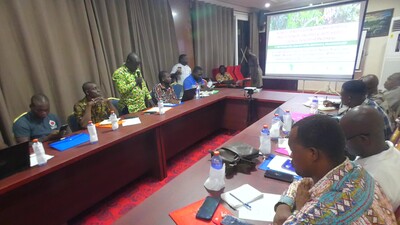
The Executive Director of the Forum for Natural Regeneration (FONAR), Mr. Sumaila S. Saaka, has called for increased national investment and coordinated action to tackle the growing threat posed by Striga, commonly known as witchweed, to cereal production in Northern Ghana. According to Mr. Saaka, Striga should no longer be treated merely as a farmer’s private challenge but as a national food security threat requiring sustained government attention and investment. He made the call on Thursday, September 17, 2026, when he delivered the opening remarks at a sensitization forum for media practitioners on Striga control in Northern Ghana, held at the Blue Sky Hotel in Zuarungu in the Bolgatanga East District of the Upper East Region. The forum was organised in collaboration with the Ministry of Food and Agriculture (MoFA) and the Ghana Journalists Association (GJA), Upper East Region Chapter. Mr. Saaka explained that Striga poses a serious threat to staple cereal crops, particularly sorghum, millet and maize, because the parasite attaches itself to the roots of crops and draws away essential water and nutrients before becoming visible above the soil. He noted that by the time the characteristic purple flowers of Striga become visible, significant damage may already have been done to the affected crops. “For a farmer in the Upper East Region watching sorghum, millet or maize wither in a field that received good rains, Striga is a very familiar and very painful reality,” he said. The FONAR Executive Director stressed that the organisation views Striga not only as an agricultural pest but also as an indication of deeper challenges associated with declining soil fertility and land degradation. He said declining soil fertility, loss of tree cover and depletion of organic matter from farmlands create conditions that allow Striga to thrive. Mr. Saaka therefore advocated an integrated approach that combines direct Striga control measures with long-term land restoration. He said FONAR’s work in promoting Farmer Managed Natural Regeneration (FMNR), climate-smart agroforestry and integrated soil fertility management was aimed at restoring the health and productivity of degraded agricultural lands. “Where soil fertility declines, where tree cover is lost, where organic matter is stripped from the land season after season, Striga finds exactly the conditions it needs to thrive,” he stated. Mr. Saaka also urged journalists to use their platforms to educate farmers and the wider public about Striga and the available control measures. He said accurate and well-informed journalism could help reach farming communities with practical information while also holding institutions accountable for interventions aimed at addressing the problem. “A single well-researched broadcast can reach many farming households that no extension officer ever will,” he said, adding that well-told stories could help replace myths and misinformation about Striga with practical knowledge. He encouraged media practitioners to pay particular attention to the experiences of farmers affected by Striga, describing their lived experiences as an important measure of whether interventions are producing the desired results. Mr. Saaka further called on the government to invest in community-level biocontrol and awareness programmes, alongside measures to restore degraded soils and strengthen pest-control interventions. He argued that cereal production in Northern Ghana should receive sustained attention as part of the country’s broader food security strategy. According to him, Striga infestation could result in substantial yield losses in affected areas, particularly in parts of the Upper East and Upper West Regions. He warned that continued inaction could contribute to early food shortages and worsen the economic pressures confronting farming households. “Government cannot treat Striga as a farmer’s private burden. It is a national food security threat, and it demands national investment,” Mr. Saaka said. FONAR seeks stronger collaboration Mr. Saaka said FONAR, MoFA and the media needed to strengthen collaboration in addressing the Striga challenge. He explained that the forum was expected to help journalists understand what Striga is, why it persists, the relationship between the weed and soil health, and the range of available control measures. He stressed that the agronomic recommendations promoted by MoFA’s extension officers and FONAR’s land restoration and natural regeneration approaches should be viewed as complementary rather than competing interventions. The forum also provided an opportunity for journalists to hear directly from a farmer affected by Striga and to visit an affected farm as part of efforts to gain a practical understanding of the problem. Mr. Saaka expressed the hope that the engagement would mark the beginning of a sustained working relationship between FONAR, MoFA and media organisations in promoting public awareness and action on Striga. He also expressed appreciation to the Awaken Trees Association of Austria for funding the activity, as well as MoFA and the GJA Upper East Regional Chapter for their partnership in organising the forum. Source: Apexnewsgh.com/Ngamegbulam Chidozie Stephen
School Infrastructure, Teacher Accommodation Top Talensi DCE’s Education Agenda
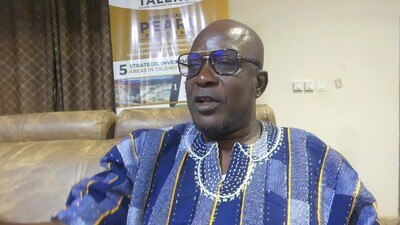
The Talensi District Chief Executive (DCE), Hon. John Millim Nabwomya, has pointed out number of interventions and achievements recorded in the education sector since taking over as District Chief Executive Hon. Nabwomya made the disclosure during an exclusive engagement with Ngamegbulam Chidozie Stephen of Apexnewsgh on the “SPEAKOUT UPPER EAST” programme. According to the DCE, the Talensi District Assembly, with support from the government and other stakeholders, has undertaken a number of projects aimed at improving teaching and learning, providing educational infrastructure and addressing some of the challenges confronting teachers and pupils in the district. Hon. Nabwomya said the Assembly has completed a school block at Gazore under the Social Cohesion (SOCO) programme. Although the facility is yet to be formally handed over, he said it is already being used by pupils. He further disclosed that the Assembly has commissioned a three-unit classroom block with an office at Gbey in the Gazore area. Another three-unit classroom block at Gatu is also expected to be handed over shortly, he said. The DCE also highlighted the completion and handover of a three-unit classroom block at the Tongo Senior High Technical School in the Baare Electoral Area. According to him, the facility includes an office for the head of the school and a changing room for girls and was also completed under the SOCO programme. Hon. Nabwomya said the Assembly has also procured educational furniture to improve the learning environment in schools across the district. He disclosed that approximately 1,200 dual desks have been procured, alongside 24 hexagonal tables for kindergarten pupils and about 240 chairs. He said the furniture was being assembled and prepared for distribution to beneficiary schools. The DCE further spoke about the Assembly’s response to rainstorm damage that affected several schools in the district. He explained that a heavy rainstorm in May caused significant damage to a number of school buildings, with some roofs ripped off. The Assembly, he said, used its internally generated funds (IGF) to begin repairing some of the affected schools. However, he noted that the situation at Gare Primary School became particularly challenging after another heavy rainstorm in August caused further damage to a section of the school that had already been affected. Faced with limited resources, Hon. Nabwomya said he sought assistance from benevolent individuals, including Dr. Martin Kolbil Yamborigya, the Commissioner in charge of Domestic Tax Revenue at the Ghana Revenue Authority. He said the Assembly’s engineers were instructed to assess the damage and prepare an estimate for the rehabilitation. According to the DCE, the affected school block was eventually reroofed using what he described as high-quality aluminium roofing sheets. He said the facility has since been put back into use. Hon. Nabwomya identified teacher accommodation as one of the major challenges affecting education delivery in the district. He explained that teachers posted to remote communities sometimes come from other regions and are faced with difficulties securing accommodation close to their schools. According to him, where teachers are forced to live in nearby towns and travel long distances to their schools every day, valuable teaching time could be lost. To address the challenge, he said the Assembly is conducting feasibility work towards constructing 10 self-contained rooms for teachers, together with a mechanised borehole, a 3,500-litre polytank mounted on a concrete stand and electricity. The proposed accommodation facilities, he explained, will be located at strategic points to serve teachers from clusters of surrounding communities. He said one such facility is currently being commissioned, while preparations are underway for two additional projects. The DCE explained that the cluster approach would allow teachers stationed in nearby communities to access accommodation without necessarily having to travel long distances from larger towns. The Assembly, according to Hon. Nabwomya, has also been supporting programmes organised by the District Education Directorate to promote girl-child education. He cited recent support provided for a Girl Child Day programme organised by the Girl Child Coordinator at the District Education Office. The initiative, he said, was aimed at encouraging girls to remain in school and supporting efforts to reduce challenges that could lead to girls dropping out. Hon. Nabwomya said the interventions form part of the Assembly’s broader commitment to improving educational infrastructure, teacher welfare and the learning environment across Talensi District. He expressed appreciation to the government, development partners, traditional authorities, individuals and other stakeholders whose support, he said, has contributed to the progress recorded in the education sector. The engagement formed part of Apexnewsgh’s “SPEAKOUT UPPER EAST” programme, which provides a platform for district-level leaders to account to residents on development initiatives, achievements and challenges. Source: Apexnewsgh.com
Talensi DCE Outlines Key Health Sector Achievements Under His Administration

The Talensi District Chief Executive (DCE), Hon. John Millim Nabwomya, has outlined a number of interventions and achievements recorded in the district’s health sector since he assumed office. Hon. Nabwomya made the revelations during an exclusive engagement with Ngamegbulam Chidozie Stephen of Apexnewsgh on the “SPEAKOUT UPPER EAST” programme. According to the DCE, the health sector in Talensi District has witnessed significant improvements through the completion of critical infrastructure, restoration of essential services and collaboration between the assembly, traditional authorities, communities and private sector actors. One of the major achievements highlighted by the DCE is the completion of the Tindongo CHPS Compound, which he said was constructed ahead of schedule. He explained that construction of the facility commenced following a sod-cutting ceremony on October 25, 2025, with the contractor initially given nine months to complete the project. However, the project was completed in six months and subsequently handed over. Hon. Nabwomya noted that the project had particular significance for the Tindongo community, as an earlier attempt to complete it had stalled after the NDC government left office in 2016. He explained that one of the challenges that affected the project was the facility’s distance from the nearest electricity connection point. The assembly therefore used internally generated funds to procure and install electricity poles to connect the CHPS compound to the national grid. The facility, according to the DCE, has also been equipped with a mechanised borehole and polytank to provide a reliable water supply. He said the 20-bed facility also includes a daycare centre and a casework room equipped with a projector, providing additional support for healthcare delivery and community activities. Another major intervention highlighted by the DCE was the restoration of the district’s only ambulance, which had reportedly remained out of service for about three years. Hon. Nabwomya said the ambulance had been left grounded after its engine was removed and sent to Kumasi for repairs, but despite repeated assurances, the engine was not returned. Concerned about the impact of the situation on emergency healthcare delivery, the DCE said he sought support from Unity Mining, a group of small-scale miners operating in the area. He explained that rather than accepting cash directly, the assembly instructed the group to pay the money into the assembly’s official account to ensure transparency and accountability. The funds, he said, were subsequently used to procure a new engine and other necessary parts to restore the ambulance. According to Hon. Nabwomya, the ambulance is now fully operational and has become a major emergency response asset serving Talensi and neighbouring districts. The DCE also spoke about measures taken to address accommodation challenges confronting health professionals in the district. He cited the case of a newly posted doctor who was reportedly evicted from his residence, saying the district leadership responded by renovating an unused government bungalow. The renovation, he said, was completed within 72 hours, allowing the doctor to secure accommodation and continue working in the district. Hon. Nabwomya further attributed some of the improvements in healthcare delivery to regular field visits by himself and his team. He recounted a visit to the chief’s compound at Wakii, where health workers reportedly complained about unstable electricity supply and inadequate water. The challenges, he said, were addressed promptly, contributing to improved working conditions and helping facilitate the return of a midwife to the facility. He noted that the presence of the midwife has contributed to the safe delivery of newborns in the community. The DCE stressed that his administration places considerable emphasis on monitoring projects and health facilities to ensure that public resources are used appropriately. He said joint inspections are conducted with relevant sector directors and engineers to assess ongoing projects and ensure that contractors adhere to approved specifications before facilities are handed over. Beyond infrastructure and emergency healthcare, Hon. Nabwomya said the assembly has also continued to support vulnerable groups, including persons with disabilities. He explained that funds have been distributed to persons with disabilities to enable them to establish income-generating activities and improve their livelihoods. The DCE said the combination of health infrastructure, emergency response, staff welfare, regular monitoring and support for vulnerable groups forms part of the assembly’s broader efforts to improve the wellbeing of residents. He maintained that the progress recorded in the district has been made possible through collaboration among the assembly, traditional leaders, communities, health workers and development partners. The engagement formed part of Apexnewsgh’s “SPEAKOUT UPPER EAST” programme, which provides a platform for district leaders to account to residents on development interventions, achievements and challenges. Source: Apexnewsgh.com
20 NEDCo Transformers Destroyed in Upper East and North East Regions Between January and August 2026 — PURC

The Upper East Regional Office of the Public Utilities Regulatory Commission (PURC) has disclosed that 20 transformers belonging to the Northern Electricity Distribution Company (NEDCo) within Upper East and North Region were reportedly destroyed between January and August 2026, raising concerns about the impact of illegal electricity-related activities on power distribution across the region. According to the Upper East Regional Office of the PURC, led by Mohammed Adam Sulaiman, the destruction of the transformers is among a number of challenges affecting both electricity consumers and NEDCo as a distributor. Mr. Sulaiman made the revelation during an exclusive engagement with Apexnewsgh, where he spoke about some of the challenges confronting consumers and the electricity distribution company in the Upper East and North East regions. He said threats and attacks against NEDCo staff linked to illegal electricity use and nonpayment of electricity bills are gradually gaining ground in some communities, creating additional challenges for the effective delivery of electricity services. According to him, some of the concerns include the nonpayment of electricity bills, meter bypassing, meter tampering and illegal direct connections from distribution lines. He explained that such activities could damage NEDCo’s electrical infrastructure, including transformers and electricity meters, thereby affecting the reliability and sustainability of electricity distribution. Mr. Sulaiman also clarified that not all power outages should be attributed to NEDCo, noting that some interruptions could result from natural causes such as windstorms, which may damage electricity infrastructure and disrupt power supply. PURC urges consumers to seek lawful redress The PURC Regional Director stressed the importance of fairness in the provision of public utility services, explaining that the Commission exists to protect the interests of both consumers and utility service providers. He noted that consumers have a legitimate interest in receiving a quality and reliable supply of electricity, while utility service providers also have a legitimate interest in receiving payment for the services they provide. Mr. Sulaiman therefore appealed to consumers to remain calm and refrain from taking the law into their own hands whenever they encounter challenges involving electricity or water services. He encouraged affected consumers to seek redress through the PURC, rather than resorting to threats, attacks or other unlawful actions against utility workers. “PURC is a creation of the law, and so we apply the law in whatever we do,” he emphasised. The concerns, according to the information presented during the engagement, affect communities in parts of the North East Region, including Nasuan, Chirifoyili and Wundua, as well as Tongo and Bongo in the Upper East Region. The PURC’s call comes amid growing concerns over the need for stronger collaboration between consumers, utility providers and regulators to address illegal electricity connections, payment challenges, infrastructure damage and disputes over power supply. Source: Apexnewsgh.com
Dangote Launches Africa’s Biggest IPO, Opening Oil Refinery to Public Investment

In a landmark move for African capital markets, billionaire industrialist Aliko Dangote on Monday launched Africa’s largest-ever initial public offering (IPO), opening a roughly 3% stake in his state-of-the-art oil refinery to public investors. The offering, dubbed a “people’s IPO” by Dangote, aims to raise as much as $2.1 billion to fund further expansion of the refinery, already the continent’s largest. Dangote, Africa’s richest man, said the IPO is designed to “democratise wealth creation,” giving ordinary Nigerians a chance to share in the refinery’s success. The minimum investment is set at just 10 shares, about $4, making entry accessible through fintech and digital investment platforms. The IPO is expected to raise at least 2.15 trillion naira ($1.6 billion), but could reach $2.1 billion if oversubscribed and the company issues more shares. The launch comes on the heels of a July private placement that raised $2.5 billion for a 6% stake, valuing the company at $40 billion. The IPO, however, moves the refinery’s valuation closer to $49 billion. While retail investors will pay a higher price per share than the institutional buyers in July, company officials say the earlier discount was due to lockup periods and other conditions. Interest in the IPO is high: Nigerian investment app Bamboo reported record traffic, with some users temporarily unable to log in as excitement surged. “I’ll buy 2,000 shares,” said Lagos business owner Chris Chijioke, citing Dangote’s track record despite concerns over pricing. Institutional investors in the refinery already include the Africa Finance Corporation, sovereign wealth funds, and development finance institutions. The United Arab Emirates’ ADNOC has also shown interest, according to Dangote, though details remain under wraps due to confidentiality agreements. Built at a cost of $20 billion and operational since 2024, the refinery has redefined Nigeria’s fuel market. It processes 700,000 barrels of crude daily, with ambitions to double that by 2029. Analysts say the plant has transformed Nigeria from a net importer to a net exporter of refined petroleum products, cementing its role as an economic powerhouse. Dangote revealed plans to eventually list all his conglomerate’s companies, including cement, sugar, and salt divisions, and suggested a possible secondary listing for the refinery in the United States within three to four years. “This IPO is a huge event for Nigeria and a symbol of African self-reliance,” said Charles Robertson, head of macro strategy at FIM Partners. With excitement running high and Nigeria’s equities market booming, the Dangote refinery IPO is poised to reshape the continent’s investment landscape. Source: Apexnewsgh.com
NDC Sets October Dates for Constituency Elections, Urges Calm and Order
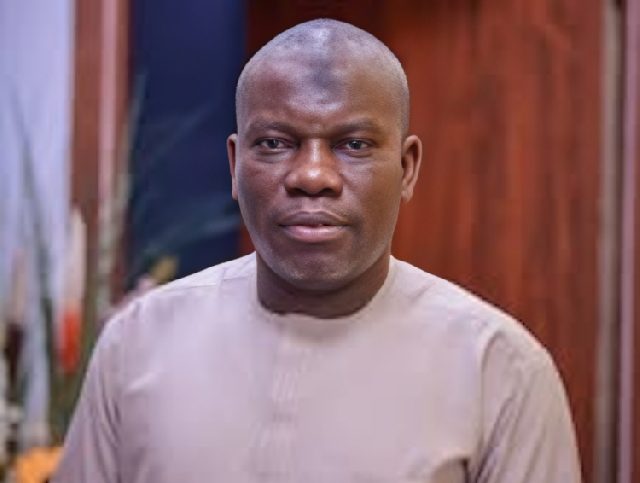
The National Democratic Congress (NDC) has announced that its constituency-level elections will be held on October 24 and 25, with party officials emphasizing the importance of peace and order throughout the process. Mahdi M. Gibrill, the party’s Director of Elections and IT, shared the news in a recent media engagement. According to Mr. Gibrill, the electoral guidelines have been carefully crafted to ensure that the upcoming polls are smooth, transparent, and free from conflict. “The arrangements and guidelines put in place are intended to ensure that the constituency elections are conducted smoothly, peacefully, and without unnecessary misunderstandings or conflict,” he stated. Mr. Gibrill also appealed to party members and supporters to exercise restraint in their language and behavior during the electoral period. “We are appealing to all party members to be mindful of their language and conduct and to avoid insults or actions that could create tension and undermine the peace of the elections,” he cautioned. Urging broad participation, he encouraged all members to respect the laid-down procedures and contribute to a peaceful, transparent, and orderly election. “We expect all members to conduct themselves responsibly and ensure that the elections are peaceful, transparent, and orderly,” Mr. Gibrill concluded. Source: Apexnewsgh.com