
Ga Mantse Escapes Unhurt in Oti Region Road Accident
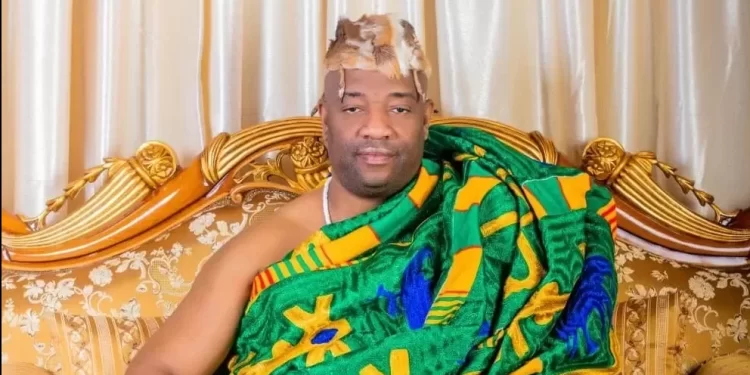
The Ga Mantse, King Tackie Teiko Tsuru II, is reported to be in stable condition and unharmed after being involved in a road accident in the Oti Region in the early hours of Thursday. The incident occurred at around 2:00 am as the King was making his way back to Accra from Tamale, where he had paid a private visit to the Yaa Naa, the overlord of the Northern Region. The visit was part of ongoing efforts to foster unity and strengthen ties among Ghana’s traditional authorities. According to sources close to the palace, while the Ga Mantse emerged from the crash without injury and remains in good spirits, his driver was not as fortunate. The driver sustained critical injuries and was promptly rushed to hospital for medical attention. The palace has assured the public that the King is safe, and traditional engagements with other chiefs will continue as planned. Source: Apexnewsgh.com
NAIMOS Foils Bribery Attempt After Seizing Illegal Mining Equipment in Bekwai
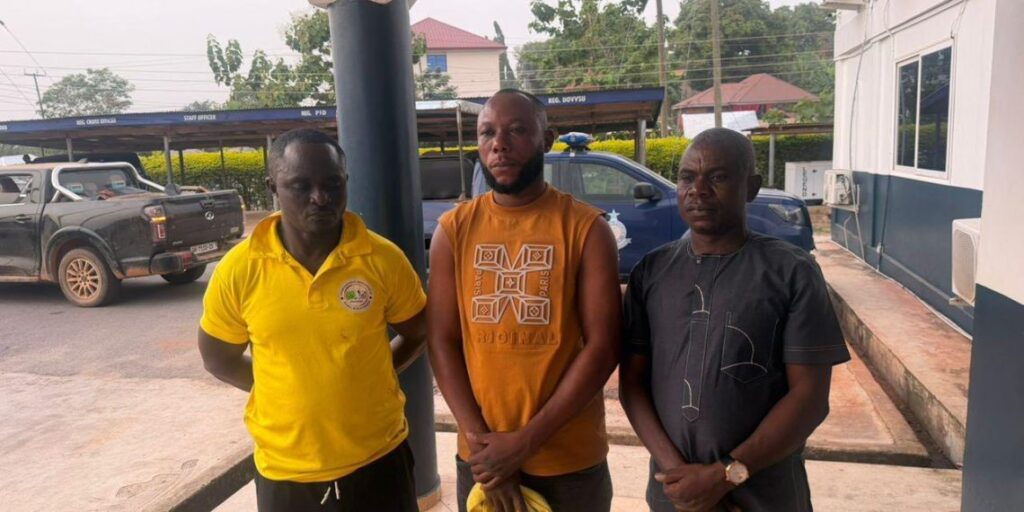
The fight against illegal mining in the Ashanti Region took a dramatic turn on Wednesday, February 18, 2026, when the National Anti-Illegal Mining Operations Secretariat (NAIMOS) foiled a bribery attempt by three suspected galamsey operators in the Bekwai Municipality. The NAIMOS task force, continuing its crackdown on galamsey, returned to the Edwinase and Kokotro sites, locations previously targeted for illegal mining. At Kokotro, the team uncovered an active galamsey operation perilously close to the town, raising concerns for public safety, property, and the environment. During the operation, the task force dismantled makeshift structures and destroyed industrial pumping machines and other illegal mining equipment. They also seized a Liugong excavator, two Liugong monitors, and an unregistered motorcycle as evidence. As the team made their way back to base, three men, Emmanuel Koblah, Samuel Addai, and Kofi Frimpong, approached them in a Black Tundra F150 with registration GR 4743–16. Claiming to own the Kokotro site, the men attempted to bribe the task force with GHC 119,825.00 in a bid to reclaim their seized equipment. The task force immediately rejected the offer, arresting the trio on the spot and handing them over to the Bekwai Police Station for further investigation and prosecution. The attempted bribe, the excavator monitors, and the vehicle have all been secured at NAIMOS headquarters as evidence. NAIMOS issued a stern warning to all illegal miners and their associates: any attempt to bribe officers will result in swift arrest and prosecution. The Secretariat also called on local authorities and security agencies to intensify surveillance of previously raided sites to prevent a resurgence of illegal mining activities. Source: Apexnewsgh.com
Bank of Ghana Governor Warns Banks Against Overreliance on Interest Income Amid Easing Rates
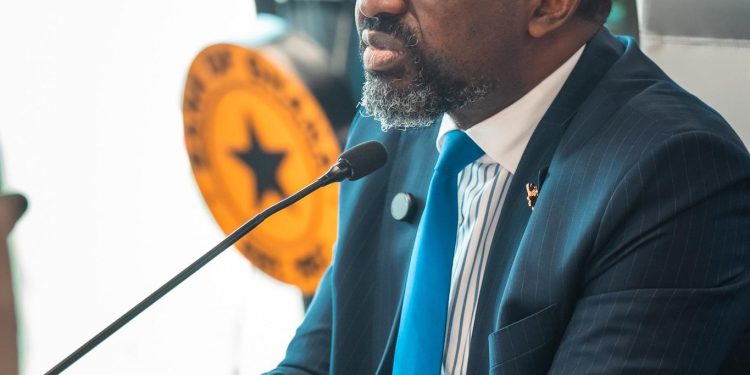
Banks in Ghana are being urged to rethink their profit strategies as the country’s interest rate environment continues to normalize. Governor of the Bank of Ghana, Dr. Johnson Asiama, delivered this cautionary message to banking executives at a recent Monetary Policy Committee (MPC) meeting, where he revealed that nearly 68 percent of industry profitability currently stems from net interest income, the spread earned on loans and government securities versus what is paid on deposits. Dr. Asiama acknowledged that while interest income remains a core aspect of banking, excessive dependence on it exposes banks to the risks of fluctuating interest rates and sovereign market dynamics. “There is nothing inherently problematic about net interest income,” he noted, “however, a high dependence on it increases sensitivity to interest rate cycles and sovereign exposure dynamics.” A recent review by the central bank highlighted limited financial intermediation, with loans comprising less than a fifth of total industry assets, while asset concentration in government and central bank securities remains high. This means banks’ profitability is closely tied to monetary policy decisions. The warning comes as Ghana’s macroeconomic landscape shows signs of stability. The Bank of Ghana recently cut its benchmark policy rate by 250 basis points to 15.5 percent, citing rapid disinflation and anchored inflation expectations. Headline inflation dropped dramatically from 23.8 percent in December 2024 to just 3.8 percent in January 2026, the lowest since the adoption of inflation targeting. Real GDP expanded by 6.1 percent in the first three quarters of 2025, led mainly by growth in services and agriculture. This easing cycle has already led to falling money market yields. Treasury bill rates have declined for three consecutive weeks, with the 91-day bill now at 8.61 percent, the 182-day at 10.68 percent, and the 364-day at 11.06 percent, well below the year’s start. While this spells relief for government borrowing, it also signals shrinking margins for banks that rely heavily on these investments. Dr. Asiama urged banks to diversify their revenue streams beyond interest income, suggesting a stronger focus on transactional banking, trade finance, payments services, treasury operations, and other fee-based businesses that are less sensitive to changing rates. On asset quality, the Governor acknowledged that non-performing loans have improved but remain above the desired benchmark. With credit growth expected to accelerate as rates fall, he emphasized the need for strong underwriting and sectoral risk assessment to avoid a build-up of bad loans. To further strengthen the sector, the central bank will enhance its supervisory framework to include business model analysis, enabling early risk detection and timely regulatory action. Dr. Asiama’s message signals a strategic shift for Ghana’s banks, urging them to move toward a more diversified and resilient business model, one that can weather shifting monetary conditions and foster deeper financial intermediation. Source: Apexnewsgh.com
Accra Tomato Traders Warn of Imminent Shortage and Price Hikes Amid Supply Chain Threats
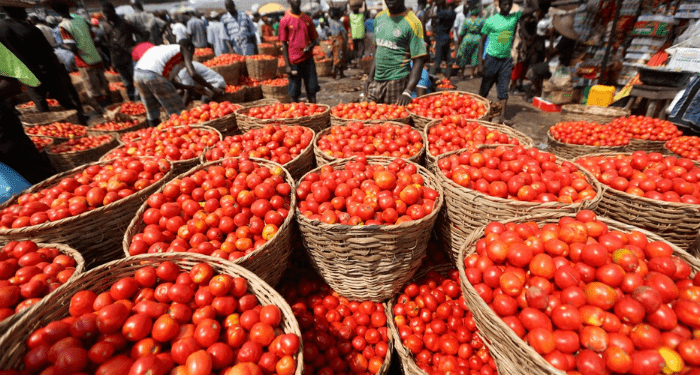
Tomato traders and importers in Accra are sounding the alarm over a looming tomato shortage and potential price hikes, urging the government to urgently invest in local irrigation infrastructure. Without such action, they warn, Ghana’s heavy dependence on imports from Burkina Faso, a trade route now fraught with peril, will continue to threaten food security and the livelihoods of thousands. The warning follows recent terrorist attacks in Burkina Faso that claimed the lives of eight Ghanaians and left others injured, disrupting the critical cross-border tomato supply chain. The incident has heightened fears among traders, many of whom now question the safety of continuing their operations. Esther Owusu Ansah, a tomato importer with more than three decades of experience, told Citi Business News that traders may soon stop traveling to Burkina Faso if adequate security is not guaranteed. “Our drivers have families, and they cannot risk their lives just to transport tomatoes,” she emphasized, noting that while security escorts are provided up to Paga, the journey beyond remains unpredictable. “We are even beginning to reconsider importing tomatoes altogether,” she added, expressing a growing sentiment among importers. Fellow trader Adwoa Pinnaman echoed these concerns, stressing the urgent need for the government to invest in irrigation systems and dams to support local tomato farming. “Many of the tomatoes we get are usually rotten,” she lamented, pointing out that significant sums are spent supporting Burkina Faso’s economy instead of strengthening Ghana’s own agricultural sector. Otumfuo Charity, Queenmother of the CMB Underbridge branch and an executive member of the Ghana National Tomato Traders Association, raised another issue: the threat of smuggling. She warned that some traders from Togo exploit the current disruption by selling tomatoes meant for Togolese markets directly in Ghana. “We will not accept this, and we will issue a warning against such practices,” she asserted. Meanwhile, drivers and transporters distributing tomatoes across Ghana say their business has almost ground to a halt. Kwame Siaw, a driver at the CMB Underbridge branch, worried that many may be forced into unsustainable alternative jobs if the shortage persists. Veteran driver Peter Boahen added, “With fewer tomatoes on the market, prices will become more expensive. Since the main trucks that transport tomatoes from Burkina Faso are no longer coming, we will be left sitting here idle. How then will we take care of our families?” The traders’ collective message is clear: without prompt investment in local production, Ghana faces continued supply disruptions, rising prices, and growing economic hardship. Source: Apexnewsgh.com
Ministry Unveils Plans for Digital Church Registry Amid Thousands of Unregistered Churches
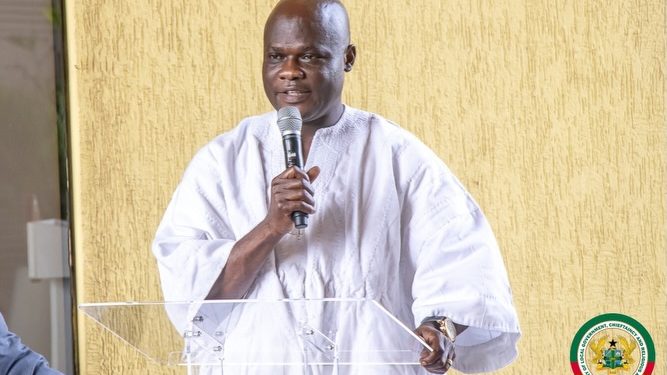
A sweeping effort to bring order and transparency to Ghana’s burgeoning religious sector is on the horizon, as the Ministry of Local Government, Chieftaincy and Religious Affairs announces plans for a nationwide digital registry of churches. On Wednesday, February 18, 2026, Minister Ahmed Ibrahim addressed Parliament, revealing that while over 2,200 churches are formally registered in Greater Accra as of 2025, thousands more operate nationwide without official recognition. Minister Ibrahim outlined the government’s intention to introduce a digital platform to streamline the registration process and provide accurate, real-time data on churches across the country. “We will establish a formal collaboration with the Registrar General’s Department, the Office of the Attorney General, and the Ministry of Justice to assess records of churches registered as companies limited by guarantee,” he stated. He further explained that metropolitan, municipal, and district assemblies would keep local registers of churches under their jurisdictions, while the new digital platform would empower churches to update their operational status regularly. This initiative, he said, aims to ensure accurate, comprehensive, and up-to-date data, critical for governance, planning, and regulatory oversight. Recent regional surveys show that in Greater Accra, 98.1% of churches are single-owner entities, with the remainder affiliated to larger denominations. Though the Registrar General’s Department does not publish a consolidated national figure, available data suggest that the total number of churches in Ghana is in the several thousands. The proposed digital registry will be linked to the Registrar General’s database, enabling verification of operational churches and enhancing transparency in the sector. Minister Ibrahim concluded, “This is a timely step toward modernising our administrative systems and strengthening accountability in the religious sector, which has experienced rapid growth in recent decades.” The Ghana Statistical Service, meanwhile, continues to track religious affiliations rather than registrations, with 71.2% of Ghanaians identifying as Christians, according to the 2021 Population and Housing Census. Source: Apexnewsgh.com
Chief Justice Clears EC Chair, Deputies, and Special Prosecutor of Removal Petitions
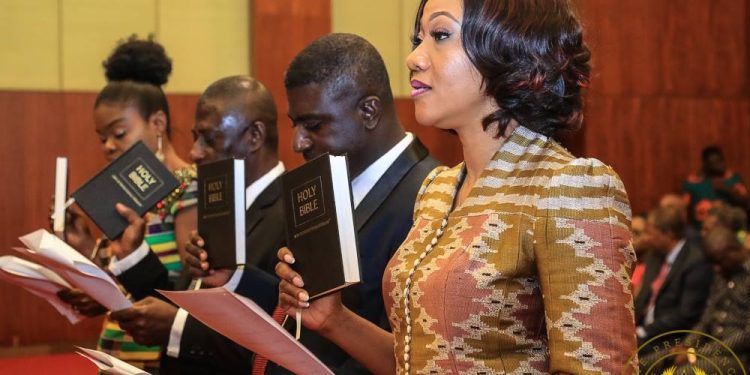
The chapter on a series of high-profile removal petitions has come to a close, following a determination by Chief Justice Paul Baffoe-Bonnie that no prima facie case exists to warrant further investigations against the Chairperson of the Electoral Commission, her deputies, or the Special Prosecutor. According to a statement released by the Presidency on Wednesday, February 18, 2026, President John Dramani Mahama had referred seven petitions for the removal of Electoral Commission Chair Jean Mensa and her deputies, along with three separate petitions targeting Special Prosecutor Kissi Agyebeng, to the Chief Justice. The referrals, made on November 25, 2025, were in line with Article 146 of the 1992 Constitution and Section 15 of the Office of the Special Prosecutor Act, 2017 (Act 959), which requires the Chief Justice to determine if the petitions disclose a case worth investigating. By a letter dated January 26, 2026, the Chief Justice informed President Mahama that none of the petitions established sufficient grounds for removal proceedings against the officeholders. The announcement, signed by Felix Kwakye Ofosu, Spokesperson to the President and Minister for Government Communications, effectively brings an end to current attempts to unseat the Electoral Commissioner, her deputies, and the Special Prosecutor. With this decision, the affected officials remain in office, as the legal threshold for further action has not been met. Source: Apexnewsgh.com
Martin Kpebu Urges Publication of Petitions Against EC Chair, Special Prosecutor
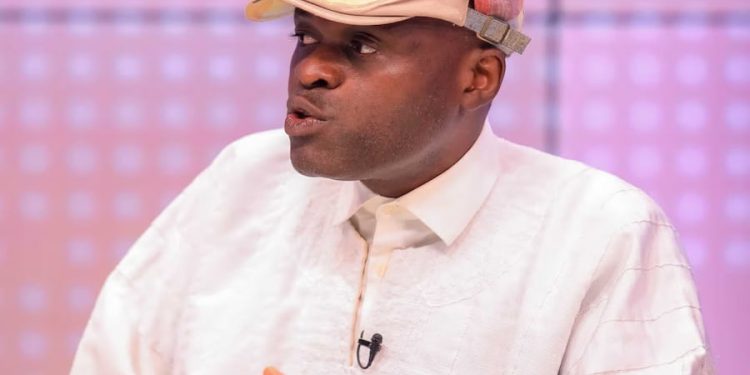
Private legal practitioner Martin Kpebu is calling for full transparency in the ongoing debate over high-profile removal petitions against top public officials. On Wednesday, February 18, Kpebu urged authorities to publish the petitions seeking the removal of Special Prosecutor Kissi Agyebeng, Electoral Commission Chairperson Jean Mensa, and her deputies, arguing that public access is essential for fair and objective discussion. Kpebu’s call follows a recent statement from the Presidency, which revealed that Chief Justice Paul Baffoe-Bonnie had ruled that the petitions failed to establish a prima facie case and would not proceed further. The petitions, seven in all, had been referred to the Chief Justice by President John Dramani Mahama in November 2025, in accordance with Article 146 of the 1992 Constitution and Section 15 of Act 959. Despite this ruling, Kpebu, whose own petition against the Special Prosecutor remains undecided, maintained that Ghanaians deserve to see the actual content of the petitions. “After that, let’s publish the petitions, so the public can comment too. Otherwise, it will just be based on people’s beliefs and biases. Without seeing the petitions, you cannot comment,” he told journalists. A statement issued on February 18, 2026, by the Minister of State in charge of Government Communications, Felix Kwakye Ofosu, confirmed the Chief Justice’s response, dated January 26, 2026, which stated that none of the petitions warranted further action. Kpebu insists that making the documents public would move national debate beyond speculation, allowing citizens to engage with the facts and contribute meaningfully to the discourse. Source: Apexnewsgh.com
NPP Sets September 2026 for National Executive Elections, Extends Mandates of Party Officials
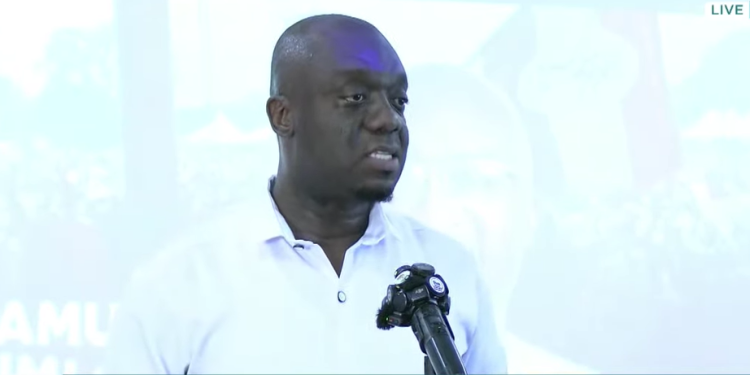
The New Patriotic Party (NPP) has mapped out a detailed timetable for its upcoming national executive elections, with the key poll slated for September 18 to 20, 2026. The announcement, made by General Secretary Justin Kodua Frimpong at a press conference on Wednesday, February 18, lays the groundwork for a series of internal electoral activities designed to ensure a smooth leadership transition within the party. According to Mr. Kodua Frimpong, the process begins with the opening and closing of nominations from August 10 to 14, 2026. Would-be aspirants will then file their nominations from August 15 to 17, followed by a vetting process scheduled for August 20 to 23. The vetting report is set to be presented on August 25, with any appeals to be heard from August 28 to 29. This comprehensive timeline is aimed at ensuring transparency and orderliness throughout the party’s electoral process. “The national executive elections are as follows: The processes and procedures, opening and closing of nominations shall be from August 10 -14, filing of nominations shall be on August 15-17, vetting of aspirants August 20-23, reading of vetting report shall be on August 25, appeals shall be taken from August 28-29. The elections shall be held between September 18-20, 2026,” Frimpong announced. To prevent disruptions during the electoral period, the NPP has also extended the tenure of office for polling station executives, constituency executives, branch executives, electoral area coordinators, and regional executives whose mandates would otherwise expire. Frimpong explained that this measure is intended to maintain order and continuity within the party’s ranks. “This will help not to distort the elections,” he assured. With these measures in place, the NPP is set to embark on a carefully orchestrated internal election process, aiming for a seamless transition of leadership. Source: Apexnewsgh.com
Newly Posted Teachers Give GES One-Month Ultimatum Over Delayed Staff IDs, Unpaid Salaries

A wave of frustration swept through the Ghana Education Service (GES) headquarters on Wednesday, February 18, as the 2024 batch of newly posted teachers staged a picket to demand urgent action over months of unpaid salaries and the delayed issuance of staff IDs. The group, who have been teaching in schools across the country since 2024, is calling on the GES to resolve these issues within one month or face “drastic action.” For many of the teachers, the situation has become dire. Some have not been paid for 12 months, others for as long as 14 months, despite having received financial clearance and diligently working in their assigned schools. The teachers say their documents, which district and regional authorities claimed were submitted, have gone missing at the national office, leaving them in limbo. Speaking to the media, Daniel Aidoo, the convenor for the group, voiced the collective frustration: “All that we are demanding is that they give us our staff IDs and acknowledge us as teachers employed by the Ministry of Education and the Ghana Education Service. We don’t want any back and forth. Whosoever is responsible for the issuance of our IDs should be held accountable.” The teachers are adamant that this cycle of delay and neglect should not be allowed to continue, warning that future batches should not have to endure the same ordeal. They have given the GES a one-month deadline to resolve the issue, stressing that if there is no progress, they will escalate their actions in pursuit of justice and recognition. Source: Apexnewsgh.com
The Speaker of Parliament Calls for a Third Political Force in Ghana

At the Political Inclusion and Consensus Building Forum hosted by the African Centre for Parliamentary Affairs (ACEPA) on Wednesday, February 18, Speaker of Parliament Alban Bagbin took the stage with a powerful message: Ghana’s democracy needs a third strong political force. Reflecting on the nation’s democratic journey since the dawn of the Fourth Republic in 1992, Bagbin shared personal memories of attending the first National Democratic Congress (NDC) congress in Cape Coast. He recalled the striking diversity among delegates, which fostered a sense of unity and national purpose. Bagbin noted that he had also been present at several New Patriotic Party (NPP) congresses, where he observed a similar commitment to engagement and inclusiveness. But Bagbin expressed concern that Ghana’s political landscape has become increasingly limited, dominated by just two major parties. “Now, we seem to have only two strong, vibrant, surviving parties,” he remarked. “For me, I think we need a third force.” His call for broader political competition is rooted in the belief that a vibrant, multiparty system will deepen Ghana’s democracy and offer voters more choices. As the country looks ahead, Bagbin’s words serve as an invitation for new voices and movements to help shape Ghana’s political future. Source: Apexnewsgh.com